Moderate
Gardner's Killifish (Fundulopanchax gardneri)
22–25°C · pH 6–7.2
£7.99

The Clown Killifish (Pseudoepiplatys annulatus) is a small, peaceful freshwater killifish with surface-oriented behaviour that reaches up to 4 cm. It suits keepers who can provide a planted, covered aquarium; OATA’s killifish guidance suggests at least three together, while this animal’s keeping range is 22–26°C, pH 5.5–7.0 and 2–8°dGH. Sold as a pack of two live fish.
Pseudoepiplatys annulatus
The Clown Killifish (Pseudoepiplatys annulatus) is a small, peaceful freshwater killifish with surface-oriented behaviour that reaches up to 4 cm. It suits keepers who can provide a planted, covered aquarium; OATA’s killifish guidance suggests at least three together, while this animal’s keeping range is 22–26°C, pH 5.5–7.0 and 2–8°dGH. Sold as a pack of two live fish.
Maintain these water conditions for optimal health and vibrant colors
The Clown Killifish (Pseudoepiplatys annulatus) is a small, peaceful freshwater killifish with surface-oriented behaviour that reaches up to 4 cm. It suits a keeper who can provide calm companions, a secure cover, abundant shelter and consistently clean water. This is not a fish to place casually into a busy aquarium: its size, peaceful temperament and preference for company all need to be considered before it joins an established community.
OATA’s killifish guidance describes killifish as generally small and peaceful fish that do not appreciate boisterous tank mates. It also recommends soft to medium water, a planted aquarium and an essential cover. Those requirements make this fish a better match for a deliberately planned aquarium than for an energetic mixed display.
Begin with the aquarium rather than the fish’s small appearance. A larger volume is easier to keep stable, while a mature biological filter is essential for processing waste. Check the water, cover, planting and existing livestock together; passing only one of those checks is not enough.
One purchase supplies a pack of two live Clown Killifish. The pack quantity describes how many fish are supplied; it does not mean that two fish form the complete social group recommended in OATA’s guidance. Plan for at least three killifish in total, then add livestock gradually so the biological filter can adjust to the extra waste and feeding.
Sex is guaranteed only when the selected option explicitly states male or female. This 2 × Clown Killifish listing has no sex-guaranteed option. OATA suggests two females to each male when planning a killifish group, but this pack should not be assumed to contain that ratio. Apply the ratio only when the sex of each fish has been assessed separately.
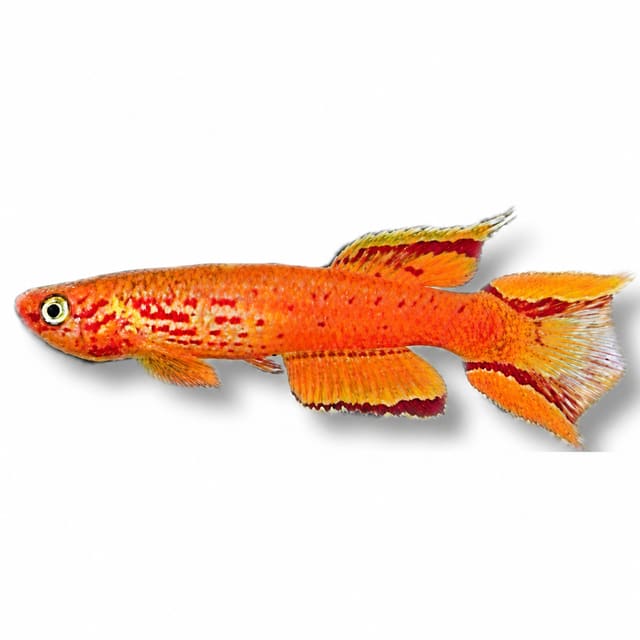
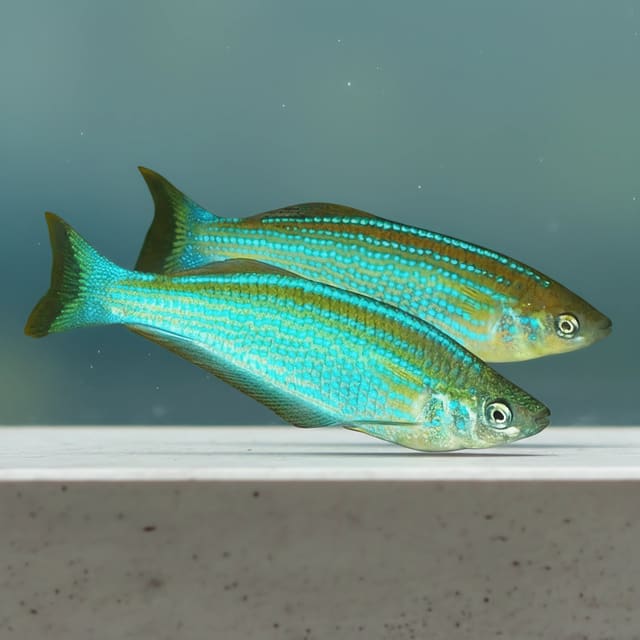
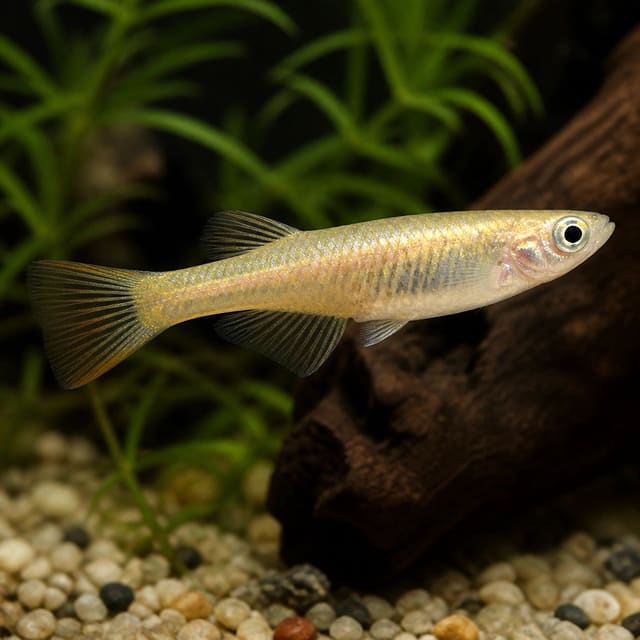
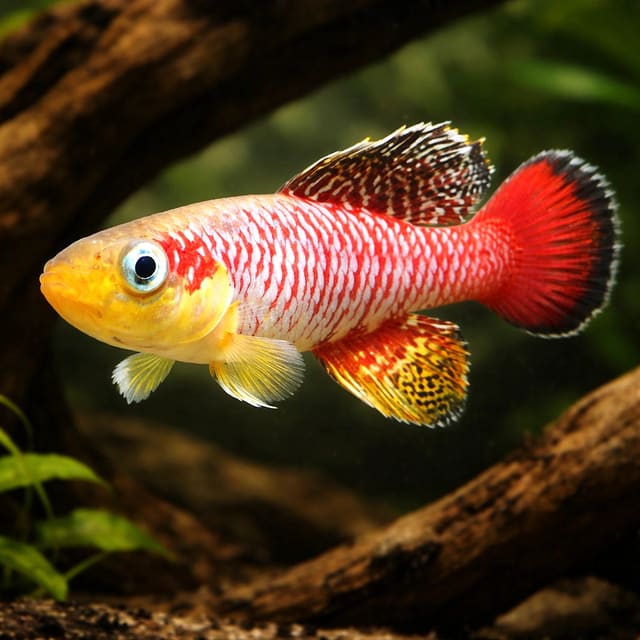
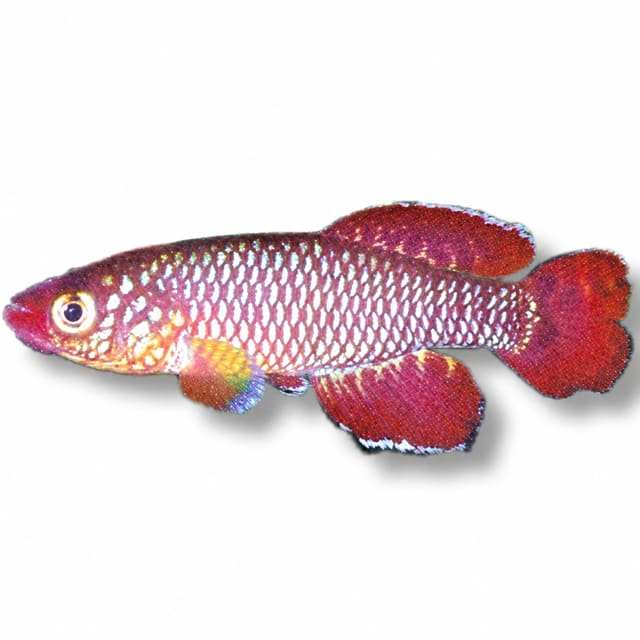
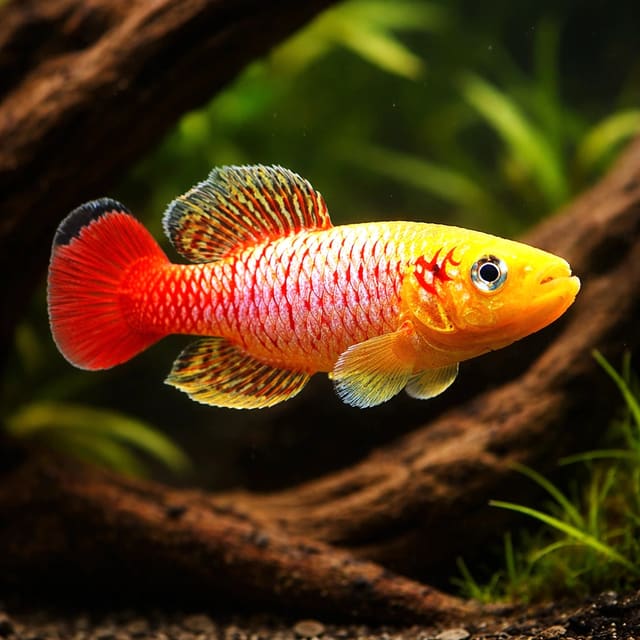
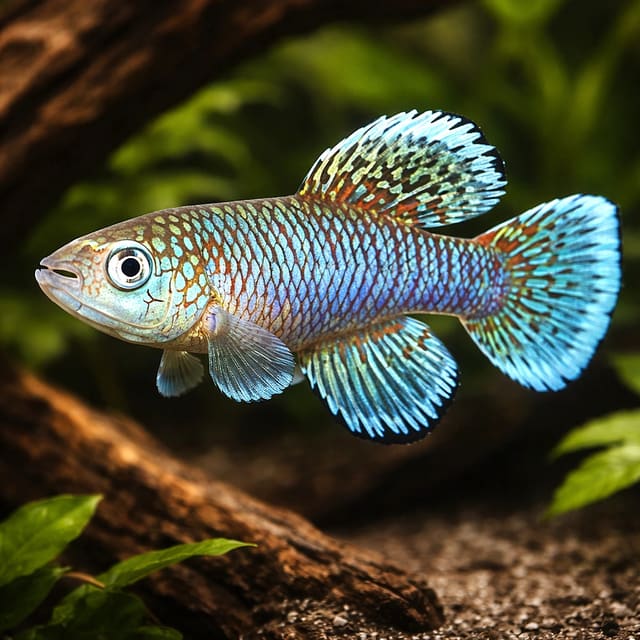
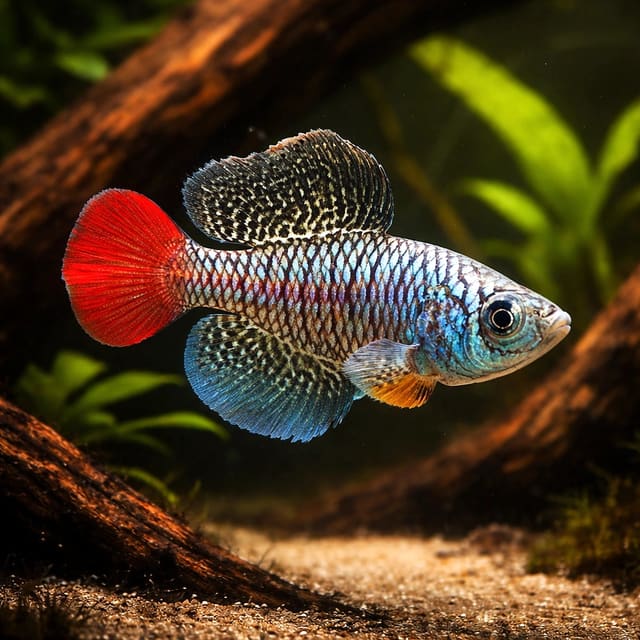
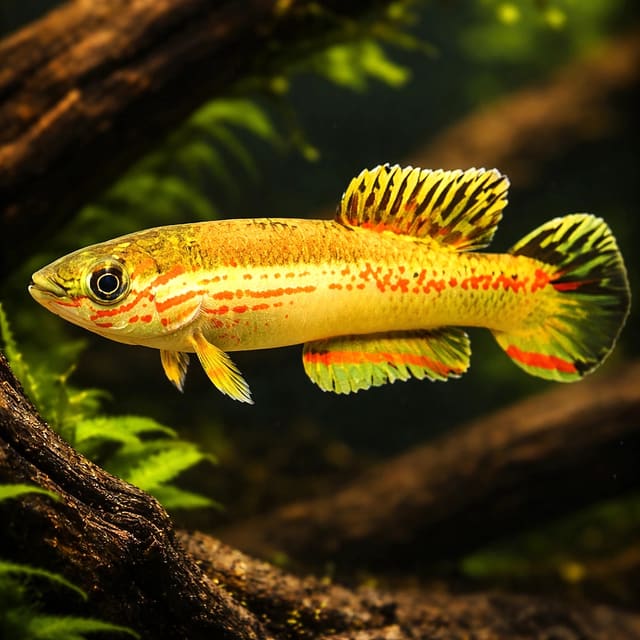
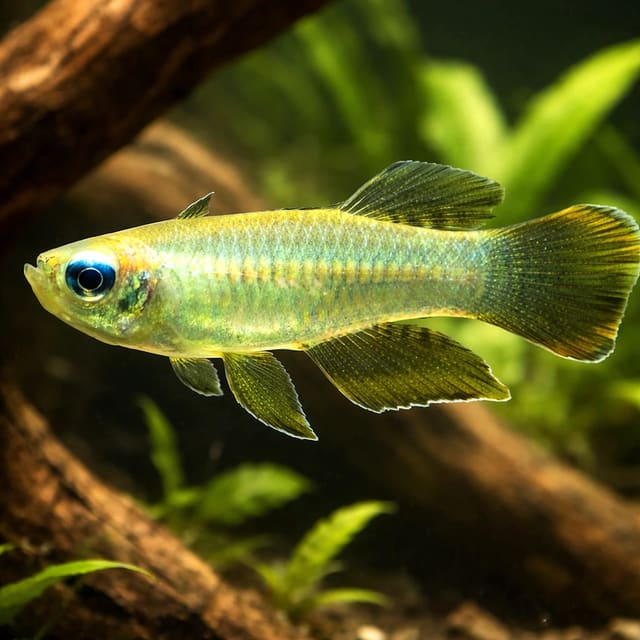
The gallery shows two fish for a useful visual impression, but imagery and offer quantity serve different purposes. The gallery images are representative of this type of animal rather than photographs of the exact animal supplied, so colours can look slightly different from the live animal.
The purchase decision should therefore cover both the two fish in this pack and the aquarium’s capacity for an appropriate longer-term group. If another killifish is to be added, do so slowly and only after testing confirms that ammonia and nitrite remain at zero.
Keep the aquarium at 22–26°C, pH 5.5–7.0 and 2–8°dGH. These are general keeping ranges for this animal. Stability matters alongside the readings: test regularly, correct the cause of any deterioration and avoid abrupt changes during routine maintenance.
For housing, OATA recommends at least 40 litres for a small group of the smallest killifish and at least 90 litres for a group of larger species over 7 cm. Use the 40-litre group figure conservatively for this fish, which reaches up to 4 cm, and favour additional water volume because larger aquariums maintain temperature and water quality more steadily.
| Suits | Not suited to |
|---|---|
| A filtered aquarium of at least 40 litres for a small group of the smallest killifish | An unfiltered aquarium or a container chosen only from the fish’s small appearance |
| Water at 22–26°C, pH 5.5–7.0 and 2–8°dGH | Water outside the planned range or an aquarium with unstable readings |
| A covered, planted aquarium with shelter | An uncovered aquarium with little cover |
| A carefully planned group of at least three | Treating this two-fish pack as a complete social plan |
| Calm, screened community fish | Boisterous, long-finned, aggressive, predatory or fin-nipping fish |
Ammonia and nitrite should be zero mg per litre. Keep nitrate no more than 20 mg per litre above the normal level in the tap water used for the aquarium. These chemical limits, the group plan and the aquarium volume should all pass before the fish are introduced.
Use a filtered, securely covered aquarium with gravel or sand and plenty of shelter. OATA recommends heavy planting with live plants, particularly where multiple males may be present. If live plants are not used, plastic plants and suitable ornaments such as plant pots or model caves can provide alternative cover.
A cover is essential because killifish can jump. Check the entire top of the aquarium rather than relying on a lid that leaves open spaces around equipment. The aim is a properly covered aquarium that still allows the filter and other equipment to operate as intended.
Flow should maintain water quality without turning the aquarium into a turbulent environment. The Clown Killifish is a calm, surface-oriented fish, while OATA warns that killifish do not appreciate boisterous companions. Observe where the fish hold position: normal use of the surface and cover is more reassuring than persistent hiding or struggling in one part of the aquarium.
Do not use planting as a substitute for water volume or filtration. Plants and ornaments provide cover, but the filter deals with waste and the water volume buffers changes. A small group of the smallest killifish still needs at least 40 litres under OATA’s planning guidance.
Use a well-established biological filter before introducing the fish. The RSPCA’s aquarium welfare guidance explains that fish release toxic ammonia, which a working biological filter converts first to nitrite and then to the safer nitrate. Ammonia and nitrite are both dangerous, so a filter is not an optional extra.
Prepare and mature the aquarium before livestock arrives. Our first tropical aquarium guide explains the preparation sequence, while the fish should be introduced only after testing shows ammonia and nitrite at zero.
Check the filter for blockages as part of weekly maintenance. When cleaning is necessary, rinse the media lightly in aquarium water removed during a partial water change. Do not run the filter media under the tap. Chlorine or chloramine may kill the beneficial bacterial population established in the media.
Treat replacement tap water with a suitable conditioner before it enters the aquarium. This removes harmful chlorine or chloramine and protects both fish and filter bacteria. Match routine replacement water closely enough to avoid abrupt temperature or chemistry changes.
Every extra fish and every increase in feeding creates more waste. Beneficial bacteria need time to increase in response. Adding too many fish too quickly can cause new tank syndrome, in which the filter cannot process the increased waste and ammonia or nitrite rises.
This pack contains two fish, but the biological load must be considered alongside every fish already present and any further killifish included in the social plan.
Maintain 22–26°C, pH 5.5–7.0 and 2–8°dGH. Use the water chemistry guide to understand each measurement, then compare your readings with the planned range using the water matcher.
Test ammonia and nitrite at least once per week and keep both at zero mg per litre. Nitrate should not exceed 20 mg per litre above the normal level in the tap water used for the aquarium. Record readings consistently so a gradual change is seen before it becomes a larger welfare problem.
Increase investigation rather than making random chemistry changes if a reading moves outside the plan. Look for overfeeding, a blocked filter, excess waste or stocking that has increased faster than the filter can accommodate.
| What you find | What to do |
|---|---|
| Ammonia or nitrite above zero | Pause additions, test again and address filtration, waste and feeding immediately |
| Nitrate rising beyond the limit | Review waste removal, feeding and the regular water-change routine |
| pH or hardness outside the plan | Check the source and replacement water before making a gradual correction |
| Temperature outside 22–26°C | Check the aquarium equipment and restore a stable value within the range |
Use small live and frozen foods such as daphnia, brine shrimp or tubifex as the staple diet, with suitable flake as a supplement. OATA recommends feeding killifish only the amount they can eat within a few minutes, once a day.
Match each piece of food to the fish’s tiny size and surface-oriented feeding behaviour. Distribute a measured, modest amount where the fish can reach it, then watch the whole group rather than assuming that food added to the aquarium has been eaten evenly.
Overfeeding harms water quality as uneaten food breaks down and releases waste. This is especially important while the biological filter is adjusting to new livestock. The correct portion is therefore defined by what the fish finish promptly, not by a fixed number of food items.
Keep the once-daily feeding schedule while rotating small live or frozen daphnia, brine shrimp and tubifex. Suitable flake can supplement this staple diet. Every item still counts towards the few-minutes portion, so variety should not increase the total amount offered.
| Observation | Response |
|---|---|
| Food remains after a few minutes | Reduce the next portion and check for trapped waste |
| One fish repeatedly misses food | Spread a small portion across more than one accessible point |
| Both fish lose interest | Test water quality and check for other changes in condition or behaviour |
| More fish join the group | Increase food cautiously while monitoring ammonia, nitrite and leftovers |
Do not respond to poor appetite by repeatedly adding more food. A reduced intake is one of OATA’s warning signs, so combine feeding observation with water testing and a broader health check.
Plan space around an adult size of up to 4 cm rather than treating the purchase quantity or initial appearance as the fish’s final requirement. The aquarium and stocking plan should continue to provide swimming room, shelter and stable water as the fish develop.
OATA recommends an aquarium of at least 40 litres for a small group of the smallest killifish. The larger the aquarium, the more stable temperature and water quality tend to be, which gives the keeper more room to manage normal changes in waste and feeding.
Do not use colour or fin shape to promise the sex of these fish. OATA notes that male killifish are generally more colourful and have more developed finnage than females, but the offer carries no sex guarantee. Group planning should therefore be adjusted only after the fish can be assessed individually.
A larger aquarium is not a reason to stock quickly. Add fish slowly so the biological filter can adapt, and verify zero ammonia and nitrite before each planned increase. Space, filtration and group composition should progress together.
Arrange for someone to receive the parcel because live fish must not be left unattended. Follow the steps below in order and complete the inspection on the day the parcel arrives.
The aquarium should already be mature, filtered, covered and within the planned water range before the parcel is opened. Test ammonia and nitrite in advance rather than trying to prepare the aquarium after the fish arrive.
For a Live Arrival Guarantee claim, the video must show the sealed parcel, the continuous opening and the fish still inside the sealed bag. Keep the order number with the video and contact Tropical Fish Co on the same day if anything has gone wrong. The current requirements are set out in the delivery and Live Arrival Guarantee policy.
Once released, give the fish access to the planted cover prepared for them and observe swimming, breathing and balance. Keep the cover secure, leave the filter running and protect the planned temperature and water chemistry.
Use the first week to confirm that both fish are feeding, swimming appropriately and using the aquarium without persistent stress signs. The first month should establish a repeatable pattern of feeding, testing, water changes and observation rather than a series of reactive changes.
If either fish shows a meaningful health change, test the water first and seek prompt guidance from Tropical Fish Co. Do not begin a disease treatment from appearance alone; water quality, behaviour, breathing, condition and feeding should be considered together before the next action is chosen.
Choose only calm community fish that match the aquarium’s water and space plan. OATA describes killifish as generally peaceful and says they do not appreciate boisterous tank mates. Some killifish can live in community aquariums, while others do best in a dedicated aquarium because they may be shy and prone to bullying.
Avoid boisterous fish and long-finned fish. OATA says some male killifish may be aggressive towards long-finned species. Avoid large, aggressive, predatory and fin-nipping fish. A peaceful, small fish should not be placed where it will be chased, bitten, crowded or treated as prey.
| Check | Decision |
|---|---|
| Temperament | Reject boisterous, aggressive, predatory or fin-nipping fish |
| Fins | Avoid long-finned fish because some male killifish may be aggressive towards them |
| Relative size | Reject combinations in which one fish may eat the other |
| Water and space | Proceed only when all animals fit the same stable water plan and aquarium volume |
Do not treat a peaceful label as a complete compatibility decision. A fish can be peaceful yet too active, too large, long-finned or unsuitable for the same water. Equally, adequate water chemistry does not make a boisterous tank mate acceptable.
Shrimp require caution because small young shrimp may be eaten. Screen invertebrates for size, water needs and predation risk rather than assuming that a small fish is harmless to every small animal.
Where the result remains uncertain after these checks, use a dedicated killifish aquarium instead of experimenting with the animals. Compatibility should be decided before introduction, not after chasing or injury has begun.
Plan for at least three killifish in total. OATA suggests this minimum and gives a planning ratio of two females to each male to reduce stress on females or other aquarium inhabitants. More can be kept when that ratio, aquarium space, shelter and filter capacity are all considered.
This pack contains two fish and carries no sex guarantee, so it should not be treated as proof of a complete group or of the suggested ratio. Establish the sex of individual fish separately before using sex as part of the group plan.
Cover becomes particularly important when more than one male is present. OATA recommends a heavily planted aquarium to provide shelter, especially for multiple males. Increase usable shelter as well as headcount; an extra fish without extra cover can change the social pressure in the aquarium.
If the filter cannot maintain zero ammonia and nitrite after an addition, stop increasing the group and correct the water-quality problem. Social planning cannot be separated from biological capacity: a larger group is appropriate only when the aquarium can support it safely.
The Clown Killifish reaches up to 4 cm. Plan the aquarium around that adult size rather than the fish’s size when supplied.
OATA recommends at least 40 litres for a small group of the smallest killifish. Use a filtered, covered aquarium and favour more water volume for greater stability.
OATA suggests keeping at least three killifish together, with two females to each male as the planning ratio. Add fish slowly and apply that ratio only after individual sex has been assessed.
It needs moderate care, including a mature, filtered and covered aquarium, regular water testing, consistent maintenance and protection from boisterous tank mates.
Use small live and frozen foods such as daphnia, brine shrimp or tubifex as staples, with suitable flake as a supplement. OATA recommends only what the fish finish within a few minutes, once a day.
Keep it at 22–26°C and pH 5.5–7.0, with 2–8°dGH. Keep ammonia and nitrite at zero mg per litre.
It is peaceful, but OATA says some male killifish may be aggressive towards long-finned fish. Avoid long-finned, boisterous, aggressive and fin-nipping tank mates.
Consider only calm community fish that match its water, space and size requirements. Avoid boisterous, long-finned, aggressive, predatory and fin-nipping fish; use a dedicated aquarium when a combination remains uncertain.
Tropical Fish Co’s policy says fish are hand-bagged in oxygen and packed in an insulated box, with a heat pack when the weather calls for it. Be present to receive the parcel, film it continuously from sealed, inspect the fish in the sealed bag and float the bag for 20–30 minutes before release.
No reviews for this item yet. Bought one? Honest reviews only, good or bad.
What customers say about ordering from us
I have a small group of long finned mountain minnows. So was delighted to be able to order ten of this variety to increase the genetics in my tank . The ones I recieved are healthy but it’s to early to give a verdict on wether they are of a long finned type since they are small currently.
Gordon Walker · 23 Sept 2026
100% success travel and "installation". Pleased with quality of purchase. The Siamese fighter a bit "shy" so have not yet seen him at his best yet but looking good. Happy customer. GG
George E Garratt · 21 Sept 2026
Reviews of our shop, collected by Judge.me, an independent third-party review collector. Newest first.