Gunther's Nothobranch (Nothobranchius guentheri)
22–25°C · pH 6–7
£11.99

Compact Uruguayan annual killifish supplied at 3-4 cm. Best in a covered species setup around 20-23 C with live/frozen foods and peat or coco-coir spawning media.
Adult size is the maximum length this species reaches at full maturity (scientific sources). The livestock you receive will be younger and smaller. Product-photo provenance and any image-specific limitations are stated on the listing.
Matilebias affinis
Save when buying multiple fish. Each quantity is one fish; sex and pair formation are not guaranteed unless the selected variant explicitly states them.
Confirm your email, then we’ll send an availability message for this exact item if it returns within 180 days.
This request is only for this product—no newsletter or other promotions. A mail-provider retry may very rarely duplicate the same availability message. Unconfirmed addresses are removed after 48 hours. See our privacy policy.
Compact Uruguayan annual killifish supplied at 3-4 cm. Best in a covered species setup around 20-23 C with live/frozen foods and peat or coco-coir spawning media.
Adult size is the maximum length this species reaches at full maturity (scientific sources). The livestock you receive will be younger and smaller. Product-photo provenance and any image-specific limitations are stated on the listing.
Maintain these water conditions for optimal health and vibrant colors
Affinis Pearl Killifish is a compact South American annual killifish best presented under the current FishBase and Eschmeyer name Matilebias affinis. The supplier label uses Cynolebias afinis, and many specialist aquarium references still use Austrolebias affinis, so those names are kept here once as helpful synonym context for keepers checking older labels.
This SKU is supplied at 3-4 cm. It is a specialist annual killifish, not a throw-in community fish. The right buyer is usually a keeper who enjoys quiet species aquariums, live or frozen foods, covered tanks and the unusual seasonal life cycle of South American pearlfish.
This fish benefits from careful naming because supplier, hobby and current scientific sources do not all use the same name. FishBase lists the accepted name as Matilebias affinis, places it in Rivulidae/Cynolebiinae and gives northern Uruguay as the distribution. Eschmeyer's Catalog of Fishes records the original name Cynolebias affinis from floodlands of Tres Cruces Creek in Tacuarembo, Uruguay, and shows the later valid usages as Austrolebias affinis and then Matilebias affinis. GBIF still presents Austrolebias affinis and lists Cynolebias affinis as a synonym, so both names are useful search context.
The practical care below follows that Uruguayan annual-killifish evidence. It does not treat the fish as a generic warm tropical community species. Cooler, stable water, a secure lid, calm surroundings, small protein-rich foods and bottom-spawning media matter more than generic warm-water advice.
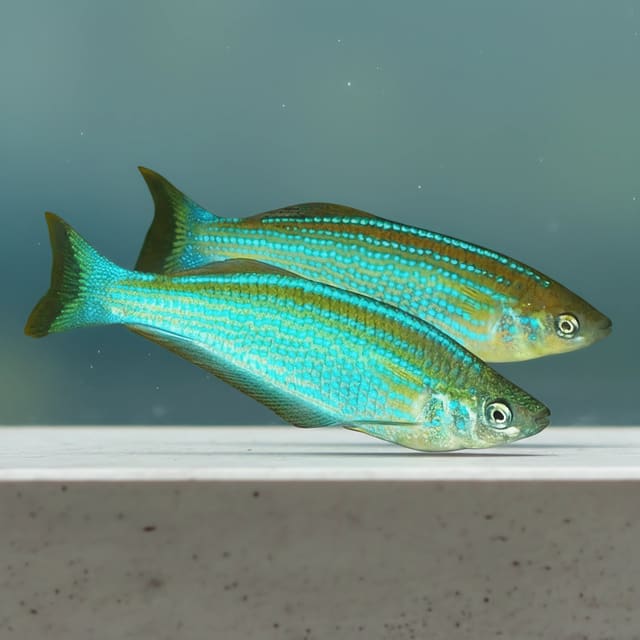
The original reference photo for SKU 3077 shows a short, deep-bodied male with an olive-green to green-gold body, a turquoise sheen around the lower head and bright blue-green pearly spots across the flanks and rounded fins. The spotting continues through the dorsal, anal and caudal fins, giving the fish the jewel-like look that makes the pearl-fish name feel appropriate.
In a home aquarium, this fish looks best under gentle lighting with darker substrate, leaf litter tones, fine plants and floating cover. Strong shop-style lighting can flatten the colour; a calmer annual-killifish setup usually shows the blue-green spotting and fin pattern more naturally. Females and younger fish are expected to be plainer, so do not judge the species only by display-male photographs.
Matilebias affinis is tied to temporary wetland and floodland habitats in Uruguay's Negro River/Tacuarembo region. Annual killifish use seasonal water in a very different way from permanent-river community fish. Adults grow, feed and spawn while the pools hold water, and the eggs survive in damp substrate when conditions change.
That life history explains the aquarium care. The tank should be quiet, covered and easy to maintain. Keep current gentle, avoid aggressive tankmates, feed properly and keep the bottom clean without making the setup sterile. Peat, coco coir, fine sand or a removable spawning container gives the fish a natural place to investigate and spawn.
A dedicated 30-40 litre aquarium is a sensible minimum for a pair or small group, with more space useful if keeping more than one male. Use a secure lid with no obvious gaps, because small killifish are capable jumpers. A sponge filter or other gentle filtration is preferred, and regular small water changes are better than letting waste build up and then making big corrections.
Use subdued lighting, floating plants, Java moss, fine-leaved plants and visual breaks. A dark back panel and darker substrate make the pearly spotting easier to see. If breeding is a goal, add a small tub or area of peat/coco-coir spawning medium so eggs can be collected without tearing apart the whole aquarium.
Avoid the old broad 20-26 C guidance for routine care. FishBase gives 18-24 C, and Killi.co.uk breeding reports for Austrolebias affinis repeatedly sit around 20-23 C. Running this fish too warm long term can shorten the useful adult phase and make egg management less forgiving.
This is a small carnivorous annual killifish. Offer suitably sized live and frozen foods such as baby brine shrimp, daphnia, mosquito larvae, grindal worm, white worm in moderation, small bloodworm and finely chopped frozen foods. Some individuals may learn prepared micro foods, but the core diet should not depend on dry food alone.
Feed small portions and watch that each fish gets food. Annual killifish can be enthusiastic, but they are still easily outcompeted by faster community fish. Remove leftovers quickly, especially in small breeding tanks, because water quality is one of the easiest ways to either protect or lose this kind of fish.
Affinis Pearl Killifish are best kept species-only, especially if you want natural behaviour or breeding. Killi.co.uk's community-tank framing ranges from doubtful to possible only with very calm or similarly sized fish, which matches the practical risk: the fish is not built for a busy mixed aquarium full of fast feeders.
If tank mates are used, choose only tiny, calm species that share the same cooler water and do not compete hard for food. Avoid fin nippers, boisterous tetras, barbs, cichlids, predatory fish and anything large enough to intimidate them. For most keepers, a dedicated annual-killifish setup is the cleaner and kinder choice.
Matilebias affinis is a bottom-spawning annual killifish. FishBase notes bottom spawning and an incubation period of around four months, while Killi.co.uk breeder reports describe peat or similar spawning substrate, 20-23 C water and incubation reports from about eight to ten weeks through to roughly three months depending on method and temperature.
Condition adults with small live and frozen foods, provide peat or coco coir, then collect and store eggs damp rather than wet. Fry usually need very small first foods, with newly hatched brine shrimp becoming important as soon as they are able to take it. Breeding is rewarding, but it is not a casual community-tank accident; it needs planning, clean water and careful egg handling.
We pack live fish for specialist courier delivery, with oxygen, insulation and heat or cool support used according to weather. Dispatch timing is chosen around fish welfare rather than rushing a box out at the wrong moment. Your order is covered by our Live Arrival Guarantee when the delivery and acclimation steps are followed.
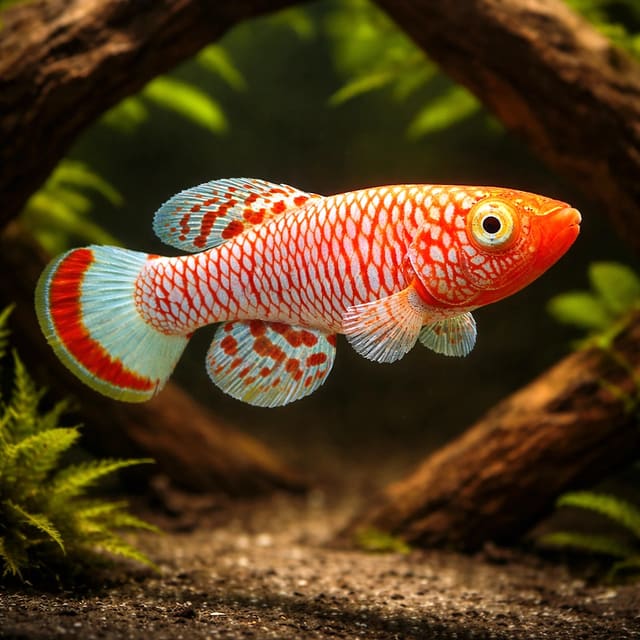
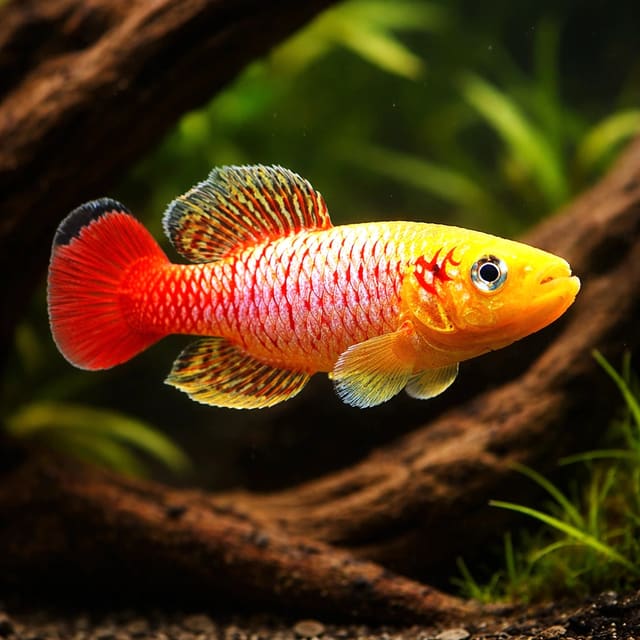
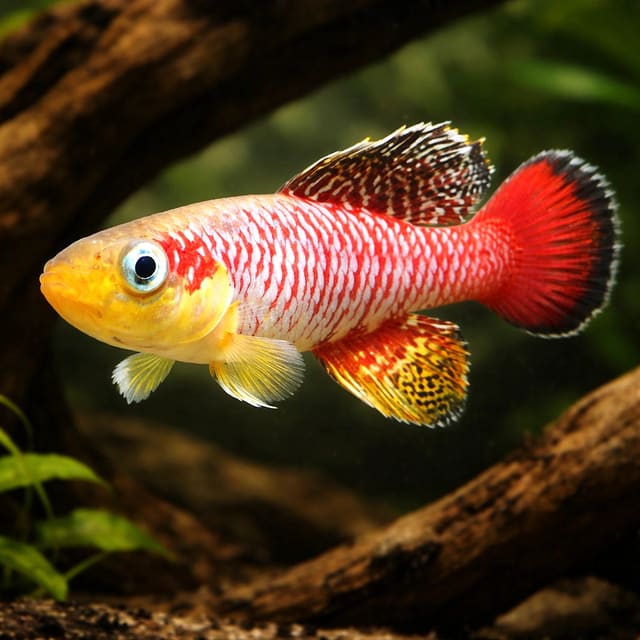
This listing uses the original reference photo plus supporting scene images, so you can see both the real supplier fish and the sort of calm, covered setup that suits it. If you are looking for a rare annual killifish for a planned species aquarium, Affinis Pearl Killifish is a small but fascinating choice.
No reviews for this item yet. Bought one? Honest reviews only, good or bad.
What customers say about ordering from us
I have a small group of long finned mountain minnows. So was delighted to be able to order ten of this variety to increase the genetics in my tank . The ones I recieved are healthy but it’s to early to give a verdict on wether they are of a long finned type since they are small currently.
Gordon Walker · 23 Sept 2026
100% success travel and "installation". Pleased with quality of purchase. The Siamese fighter a bit "shy" so have not yet seen him at his best yet but looking good. Happy customer. GG
George E Garratt · 21 Sept 2026
Reviews of our shop, collected by Judge.me, an independent third-party review collector. Newest first.