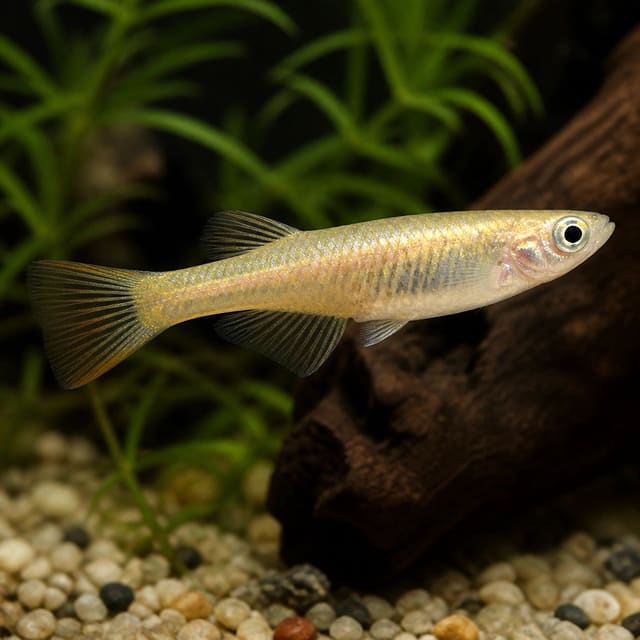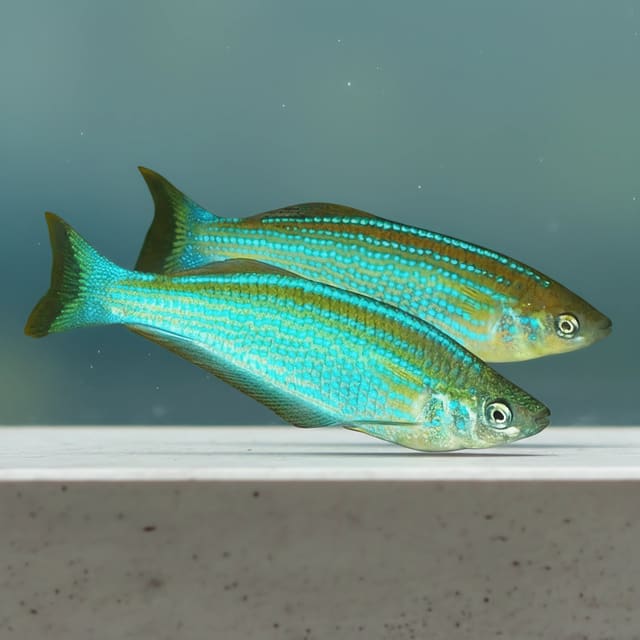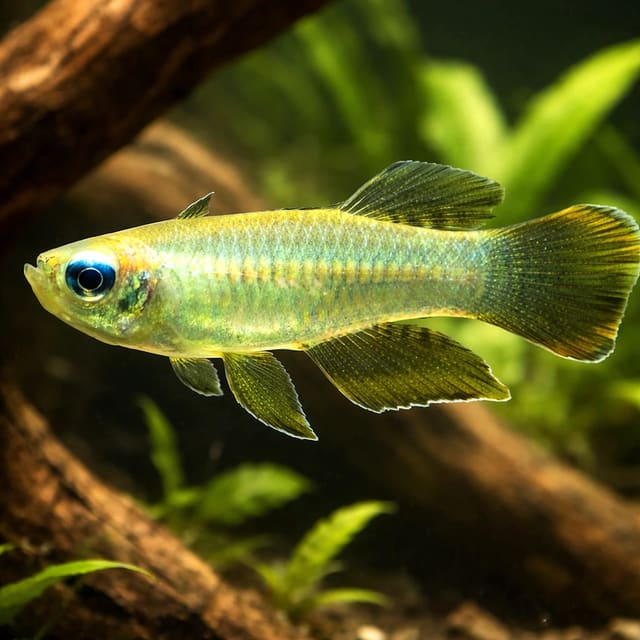
Lampeye (Aplocheilichthys normani)
22–26°C · pH 6.5–7.2
£3.99

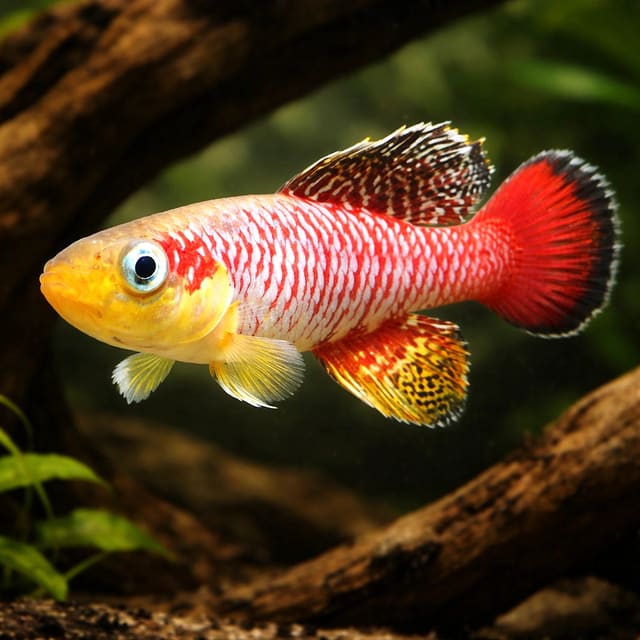
Gunther's Zanzibar Gold Nothobranch is a small annual killifish from Zanzibar for experienced keepers who can provide a covered, quiet aquarium, stable soft water and carefully portioned small foods.
Adult size is the maximum length this species reaches at full maturity (scientific sources). The livestock you receive will be younger and smaller. Product-photo provenance and any image-specific limitations are stated on the listing.
Nothobranchius guentheri
Save when buying multiple fish. Each quantity is one fish; sex and pair formation are not guaranteed unless the selected variant explicitly states them.
Gunther's Zanzibar Gold Nothobranch is a small annual killifish from Zanzibar for experienced keepers who can provide a covered, quiet aquarium, stable soft water and carefully portioned small foods.
Adult size is the maximum length this species reaches at full maturity (scientific sources). The livestock you receive will be younger and smaller. Product-photo provenance and any image-specific limitations are stated on the listing.
Maintain these water conditions for optimal health and vibrant colors
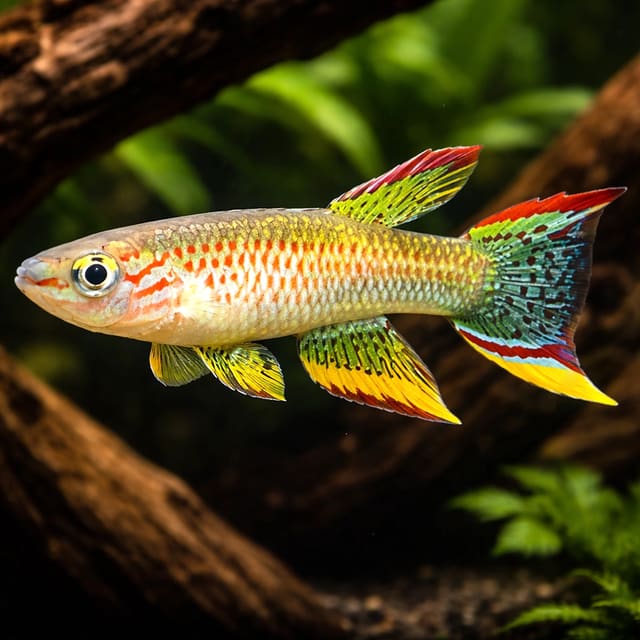
Gunther's Zanzibar Gold Nothobranch is the gold trade form of Nothobranchius guentheri, a very small annual killifish from Unguja Island in the Zanzibar archipelago. It is a specialist choice for a keeper who enjoys close observation, measured feeding and steady water care rather than a fish to add casually to a lively mixed aquarium.
One purchase supplies one live fish. The supplier grade is 2.5–3.5 cm; that is the dispatch grade, while the published species record is 3.5 cm standard length for male or unsexed fish. Standard length is kept as the measurement label here, without converting it to total length.
Sex is guaranteed only when the selected option explicitly states male or female. This Gunther's Zanzibar Gold Nothobranch listing has no sex-guaranteed option.
The practical attraction is not simply the colour. This is an annual fish whose natural history is tied to temporary fresh waters, and its care rewards a calm, deliberate routine. The species profile records warm, soft water and describes it as difficult to maintain in an aquarium. That combination makes it better suited to an experienced keeper who is willing to check water, prevent escapes and watch feeding closely.
If this is your first livestock setup, work through the first tropical aquarium guide before choosing fish. To see other fish in the same retail group, browse the killifish collection, then compare their water, social behaviour and adult measurements rather than choosing on colour alone.
| Customer name | Gunther's Zanzibar Gold Nothobranch |
|---|---|
| Scientific name | Nothobranchius guentheri |
| Family | Nothobranchiidae |
| Sold unit | One live fish per purchase |
| Dispatch grade | 2.5–3.5 cm |
| Recorded maximum | 3.5 cm SL for male/unsexed fish |
| Recorded water | 22–25°C; pH 6.0–7.0; 4–10 dGH |
| Best suited to | Experienced keepers with a covered, quiet aquarium |
| Store care assessment | Advanced |
The species profile places this freshwater fish on Unguja Island, Zanzibar, and records temporary pools, swamps, ditches and small streams among its habitats. It is one of the annual fishes: the eggs can withstand the seasonal drying of those waters. That history explains why this tiny fish is interesting to specialists, but it does not turn a home aquarium into a temporary pool. In captivity the useful lesson is to provide dependable water quality, appropriate warmth and a secure environment.
The common name “redtail notho” is also used for the species. A concise natural-history summary records mosquito larvae and other planktonic animals in its wild diet. Aquarium feeding still needs to follow a balanced keeper routine rather than relying on one wild prey item.
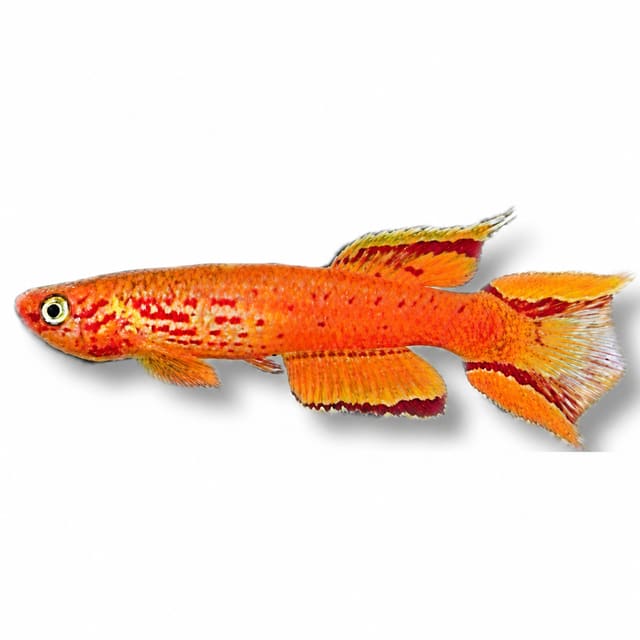
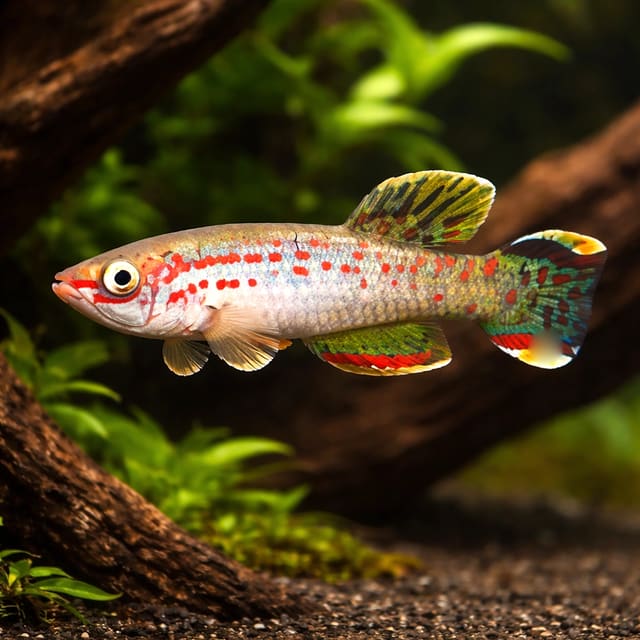
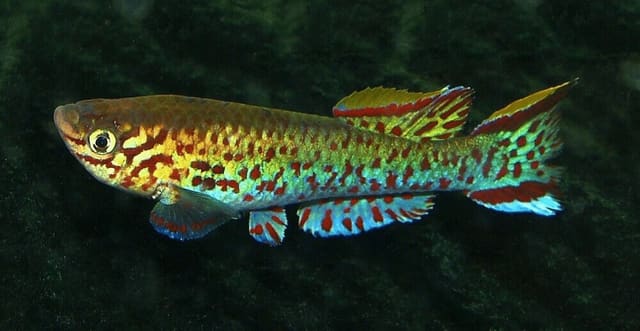
This gold listing is not a promise that every fish will match the saturation, fin spread or pose shown in the gallery. Live animals vary, and colour can respond to age, sex, condition, lighting and surroundings. Judge suitability from the care requirements first; treat appearance as individual rather than guaranteed.
Gallery images have been digitally enhanced to improve image quality. Natural colour, pattern, size and maturity can vary between live animals.
The useful species-level planning range is 22–25°C, pH 6.0–7.0 and 4–10 dGH. These values describe warm, soft freshwater. The aim is not to chase a single midpoint with rapid chemical changes; it is to establish a repeatable temperature and chemistry that remain inside the recorded range.
Measure the source water and the aquarium before purchase. The water chemistry guide explains what the common readings mean, while the water matcher provides a practical way to compare measured values with the range on this page. If the aquarium needs major correction, make that change before livestock is introduced and confirm that the result holds over time.
OATA's broad group-level guidance recommends an aquarium of at least 40 litres for a small group of the smallest killifish. That is a planning floor for a group, not a species-specific optimum for N. guentheri. Aquarium shape, usable swimming footprint, planting, number of fish, filtration and the keeper's ability to maintain stable conditions all matter. More water usually changes temperature and chemistry more slowly, which gives a greater margin when feeding or maintenance varies.
Prepare the tank before the fish. A newly filled aquarium may look clear while lacking the biological capacity to process waste. Confirm ammonia and nitrite at zero, check temperature and pH with reliable equipment, and introduce livestock gradually so the filter can respond to the new waste load. The RSPCA aquarium guidance explains why a well-set-up, maintained filter is fundamental rather than optional.
A small fish can be easy to overlook in a large or densely furnished aquarium. Design the layout so cover is available but routine observation remains possible. That balance helps you notice reduced appetite, damaged fins or altered swimming early, without stripping the aquarium of shelter.
For killifish generally, OATA strongly recommends a partial water change of 25% at least once each week. Treat that as the starting rhythm, then use test results and the aquarium's actual loading to judge whether the routine is keeping water steady. Replacement water should be conditioned for chlorine or chloramine and brought close to the aquarium's temperature before it is added.
Test ammonia and nitrite regularly and keep both at zero. OATA's group guidance says nitrate should not exceed 20 mg per litre above the normal tap-water level. A rising result is a prompt to examine feeding, stocking, trapped debris, plant decay and maintenance rather than disguising the number with an abrupt chemistry change.
If the filter needs cleaning, do not run it under the tap because chlorine or chloramine may kill the beneficial bacteria established in the media. Rinse it lightly in aquarium water removed during the water change, as OATA advises. The aim is to clear a blockage while retaining the bacterial population that processes waste.
Daily observation should be brief but deliberate. Healthy-fish checks include clear bright eyes, intact scales, undamaged fins, expected swimming and a prompt feeding response. Changes such as persistent surface hanging, unusual bottom sitting, erratic movement, faster or slower gill motion, fading or darkening, loss of condition, white spots, fluffy growths or a sudden refusal of food deserve attention. Test the water first because ammonia, nitrite, temperature or pH problems can affect several signs at once.
Make adjustments from evidence rather than from appearance alone. One missed meal is different from repeated refusal; one short burst of chasing is different from a fish kept away from food throughout the day. Notes help separate a pattern from a single moment and make any conversation with an aquatic retailer more useful.
A single water test is a snapshot. A simple weekly record shows whether nitrate is rising faster, pH is drifting or maintenance is restoring the same stable conditions each time. Record the date, temperature, pH, ammonia, nitrite and nitrate, then add a short note on feeding and behaviour. This need not become a complicated spreadsheet; a small notebook beside the test kit is enough.
If one result moves unexpectedly, repeat the test before making a large intervention. Check whether the reagent is in date, whether the sample tube was rinsed correctly and whether the reading fits what you see in the aquarium. Then look for practical causes such as an uneaten meal, blocked flow, decaying plant matter or a missed water change. Addressing the cause keeps the routine understandable and reduces the temptation to swing pH or hardness back and forth.
Watch the fish alongside the numbers. Normal appetite and swimming do not make ammonia acceptable, but a behavioural change can be the first prompt to test between scheduled checks. In the same way, perfect-looking water readings do not rule out food competition or persistent chasing. Husbandry works best when measurement and observation inform each other.
The species' small size does not reduce the importance of filtration or mature water. Small meals, regular waste removal and restrained stocking make it easier for the filter to keep pace. The most effective care often looks uneventful: predictable readings, a secure lid, clean flow, modest feeding and fish that behave consistently from day to day.
OATA describes killifish as omnivorous. Its group guidance supports a good-quality flake or granule as the regular prepared food, with small live or frozen items such as daphnia, brine shrimp or tubifex adding variety. Choose particles the fish can take cleanly; a suitable ingredient list is not useful if each piece is too large.
The routine is once a day, offering only what the fish can eat within a few minutes. Start with a modest amount and watch every fish. If pieces fall beyond reach or remain after the feeding period, reduce the next portion and remove the waste. Uneaten food breaks down and adds to the nitrogen load that the filter must process.
Wild records mention mosquito larvae and other planktonic animals. That is useful biological context, but it is not a reason to feed uncontrolled outdoor larvae or to make one prey item the whole diet. The aquarium routine can combine a dependable prepared food with clean, appropriately sourced live or frozen variety.
Feeding is also a daily health check. A fish that normally approaches food but begins hanging back, chewing and rejecting particles, or missing several feeds may be responding to water quality, competition or ill health. Check temperature, ammonia and nitrite, then review whether another fish is blocking access. Correcting the setting is more useful than simply adding extra food, which can worsen water quality if appetite is poor.
Because this fish is small, portion errors are easy to make. Measure with the same small spoon or pinch each day until you know what the aquarium consumes. If more fish are added, increase food gradually while watching both consumption and test results; the filter's biological load rises with feeding, not merely with the number printed on a stock list.
Nothobranchius guentheri occurs in temporary waters, and its drought-resistant eggs are the feature behind the term “annual fish”. FishBase records it as a bottom spawner with an egg-incubation period of three to four months. These facts explain the species' natural history; they are not a complete home-breeding method.
For ordinary keeping, concentrate on the adult fish's immediate needs: covered water, appropriate warmth, soft chemistry, food it can take and a low-pressure environment. There is no need to imitate seasonal drying in a display aquarium. A keeper who wants to breed annual killifish should first arrange a dedicated, fully researched project rather than improvising from a short natural-history note.
OATA's killifish guidance treats the cover as essential. Plants and suitable ornaments provide retreat areas, while an open observation and feeding zone lets the keeper see whether each fish is active and eating. Use furnishings that are secure and easy to maintain; the fish gains more from dependable cover and water quality than from an elaborate layout that traps waste.
The species is recorded from still or small temporary freshwater habitats, but that does not remove the aquarium's need for filtration. In a closed system, waste continues to accumulate until the keeper and filter remove or transform it. Gentle presentation and effective biological filtration can coexist when the outlet is positioned thoughtfully.
This is also why the store assessment is advanced. The fish is small, the water range is relatively focused, escape prevention matters, and the offer does not let the buyer select a sex. None of those points is difficult in isolation, but together they favour a keeper who already has reliable testing habits and can adapt the social plan to the animals received.
Compatibility begins with pace and access to food. OATA describes killifish generally as small, peaceful fish that do not appreciate boisterous tank mates. Some species work best in a species-focused aquarium; others can live in a calm community. For this specialist annual fish, a species-focused setup is the cautious starting point, especially when the keeper cannot guarantee the sex of the animal supplied.
OATA's broad group advice suggests at least three killifish, normally two females to one male, to reduce pressure on females. That guidance assumes the keeper can identify or source the intended sexes. This listing does not offer that control, so do not buy three fish and assume the ratio will appear. Build the decision around aquarium space, cover and the actual animals, and be ready to separate fish if one is persistently chased or excluded from food.
No named fish is a universal safe companion. Match water first, then adult size, feeding speed and behaviour. Observe the aquarium at meals and at quieter times: a fish may appear peaceful in open water yet guard a preferred feeding or cover area.
For a comparison within the broader killifish choice, see Gardner's Killifish. It is a separate product with its own care profile, not a suggested tank mate. Comparing them is useful when deciding whether an annual Nothobranchius or another killifish type better fits the aquarium you want to run.
Keep the aquarium stable before the parcel arrives. Adding fish, changing filtration and rearranging the entire tank on the same day makes it harder to understand any later problem. Confirm temperature, pH, ammonia and nitrite in advance, and make sure the lid closes after all equipment is in place.
For a Live Arrival Guarantee claim, the store requires a continuous unboxing video that begins with the parcel still sealed, shows the outer box being opened and shows the fish still in the sealed bag before anything is disturbed. Someone must be at the delivery address, the parcel must be opened and inspected on the day it arrives, and the store should be contacted that day with the order number and evidence if anything has gone wrong. Read the current delivery and Live Arrival Guarantee policy before dispatch.
Once the arrival condition has been recorded, the policy says to acclimatise slowly by floating the bag for 20–30 minutes before releasing the fish. Follow the current instructions attached to the order and keep the process calm. Avoid feeding a large compensatory meal immediately; let the fish orientate, then return to the normal modest feeding routine.
Test water if behaviour changes rather than assuming the fish is merely shy. A secure, quiet aquarium gives the new arrival somewhere to settle while still allowing the keeper to see it. Keep notes during the first week so changes in appetite, colour or swimming are easier to judge.
FishBase records Nothobranchius guentheri to 3.5 cm standard length for male or unsexed fish. Keep the SL label with that figure; it is not a converted total-length maximum. The supplier's 2.5–3.5 cm figure is the dispatch grade.
The species record gives 22–25°C, pH 6.0–7.0 and 4–10 dGH. Establish those conditions before purchase, keep ammonia and nitrite at zero, and favour steady readings over sudden correction.
OATA's broad guidance recommends at least 40 litres for a small group of the smallest killifish. That is a group-level planning floor rather than a species-specific minimum; allow for the number of fish, usable footprint, planting, filtration and water stability.
OATA generally suggests at least three killifish, with two females per male. Because this product is not sex-selectable, do not assume that buying three will produce that ratio; plan enough space and cover to respond to the actual fish.
It is better for an experienced keeper. The species profile describes it as difficult to maintain in an aquarium, and successful care combines a secure lid, soft stable water, close feeding observation and a carefully chosen social setting.
Use appropriately small, good-quality flake or granules, with small live or frozen foods such as daphnia, brine shrimp or tubifex for variety. Feed once daily and offer only what is eaten within a few minutes.
Killifish are generally described as peaceful, but OATA notes that males of some species may be aggressive towards long-finned fish and that male rivalry needs thought. Watch access to food and intervene if one fish is repeatedly pursued.
Choose calm fish that match the warm, soft-water range and will not outcompete a very small killifish. A species-focused aquarium is the cautious choice; avoid treating any named species as a guaranteed companion.
Tropical Fish Co hand-packs live fish in oxygen with an insulated box and a heat pack when weather calls for it, then uses a licensed live-animal courier. For a Live Arrival Guarantee claim, record one continuous video from the sealed parcel through opening to the fish still in the sealed bag, and contact the store on the day of arrival with the order number.
The species identity, distribution, environmental range, annual-fish biology and 3.5 cm SL record come from FishBase. The redtail notho natural-history summary adds the wild diet context. OATA's UK killifish care sheet supports broad aquarium guidance on cover, group planning, food, filtration, maintenance and compatibility. RSPCA guidance supports the explanation of biological filtration. Tropical Fish Co's delivery page controls packing, acclimatisation and Live Arrival Guarantee wording.
Species-level figures and broad killifish advice are deliberately kept separate. The quick facts use the species record for temperature, pH, hardness and adult measurement. The 40-litre and three-fish figures remain labelled as group-level planning guidance and are not stored as species-specific care cards.
No reviews for this item yet. Bought one? Honest reviews only, good or bad.
What customers say about ordering from us
I have a small group of long finned mountain minnows. So was delighted to be able to order ten of this variety to increase the genetics in my tank . The ones I recieved are healthy but it’s to early to give a verdict on wether they are of a long finned type since they are small currently.
Gordon Walker · 23 Sept 2026
100% success travel and "installation". Pleased with quality of purchase. The Siamese fighter a bit "shy" so have not yet seen him at his best yet but looking good. Happy customer. GG
George E Garratt · 21 Sept 2026
Reviews of our shop, collected by Judge.me, an independent third-party review collector. Newest first.