Moderate
Gardner's Killie Nsuka (Aphyosemion gardneri green)
20–24°C · pH 6–7.4 · 40L
£7.99

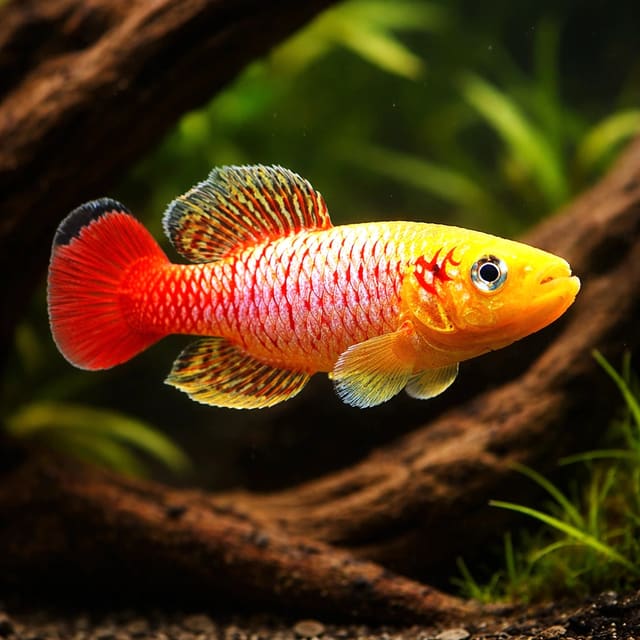
Gunther's Nothobranch (Nothobranchius guentheri) is a freshwater killifish endemic to Unguja Island in the Zanzibar archipelago that reaches 3.5 cm standard length. It suits attentive keepers who can maintain the FishBase and OATA overlap of 22–25°C, pH 6.0–7.0 and 4–10°dH in a covered, established filtered aquarium. Sold individually at a 2.5–3.5 cm dispatch size.
Adult size is the maximum length this species reaches at full maturity (scientific sources). The livestock you receive will be younger and smaller. Product-photo provenance and any image-specific limitations are stated on the listing.
Nothobranchius guentheri
Save when buying multiple fish. Each quantity is one fish; sex and pair formation are not guaranteed unless the selected variant explicitly states them.
Gunther's Nothobranch (Nothobranchius guentheri) is a freshwater killifish endemic to Unguja Island in the Zanzibar archipelago that reaches 3.5 cm standard length. It suits attentive keepers who can maintain the FishBase and OATA overlap of 22–25°C, pH 6.0–7.0 and 4–10°dH in a covered, established filtered aquarium. Sold individually at a 2.5–3.5 cm dispatch size.
Adult size is the maximum length this species reaches at full maturity (scientific sources). The livestock you receive will be younger and smaller. Product-photo provenance and any image-specific limitations are stated on the listing.
Maintain these water conditions for optimal health and vibrant colors
Gunther's Nothobranch, also called the Redtail notho, is a small freshwater killifish in the family Nothobranchiidae. Its scientific name is Nothobranchius guentheri. It is endemic to Unguja Island in the Zanzibar archipelago of eastern Tanzania and reaches a recorded maximum of 3.5 cm standard length. This fish suits an attentive keeper who can establish a filtered aquarium, maintain stable water and choose calm companions carefully.
Wikipedia's Redtail notho summary describes the species as endemic to Zanzibar, where it inhabits intermittent rivers and intermittent freshwater marshes. It feeds in nature on mosquito larvae and other planktonic creatures. Maintain stable aquarium conditions rather than attempting to reproduce the seasonal drying of its wild habitats.
FishBase identifies Nothobranchius guentheri as a freshwater, benthopelagic African rivuline endemic to Unguja Island. Benthopelagic describes its use of water around the bottom and open water, so arrange accessible feeding and shelter areas rather than planning around one narrow aquarium level.
| Suits | Not suited to |
|---|---|
| Attentive keepers able to maintain stable, tested water | An unfiltered or immature aquarium |
| A covered aquarium with gravel or sand and shelter | Open-topped housing |
| A planned killifish group with a known ratio | A random purchase treated as a known sex ratio |
| Carefully screened calm companions | Long-finned species or boisterous tank mates |
FishBase reports an Endangered assessment for the species. That conservation category concerns the wild species and its natural range. Never release aquarium animals, plants or transport water into rivers, ponds or drains that lead to natural waterways.
One purchase supplies one live animal at a dispatch size of 2.5–3.5 cm. This is the dispatch size; use the recorded adult maximum when planning permanent space.
FishBase records a maximum of 3.5 cm standard length for male or unsexed fish. The 3.5 cm figure is a maximum record rather than a guaranteed length for every individual. Because the dispatch size overlaps that recorded maximum, do not infer age, maturity or remaining growth from size alone.
Sex is guaranteed only when the selected option explicitly states male or female. This Gunther's Nothobranch listing has no sex-guaranteed option.
That condition matters when planning a group. Ordering two provides two unsexed animals rather than a confirmed male-and-female pair, while ordering three provides three unsexed animals and still requires a deliberate sex-ratio plan. Base the initial aquarium capacity on the total number ordered and retain enough flexibility to respond to the behaviour that develops.
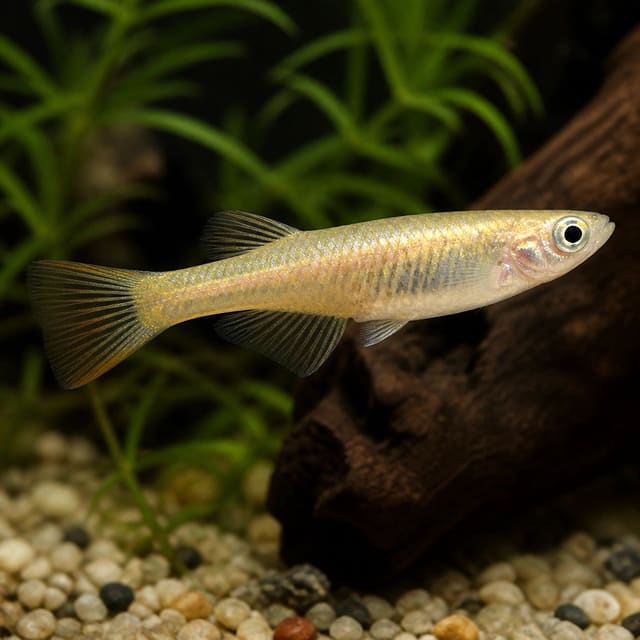
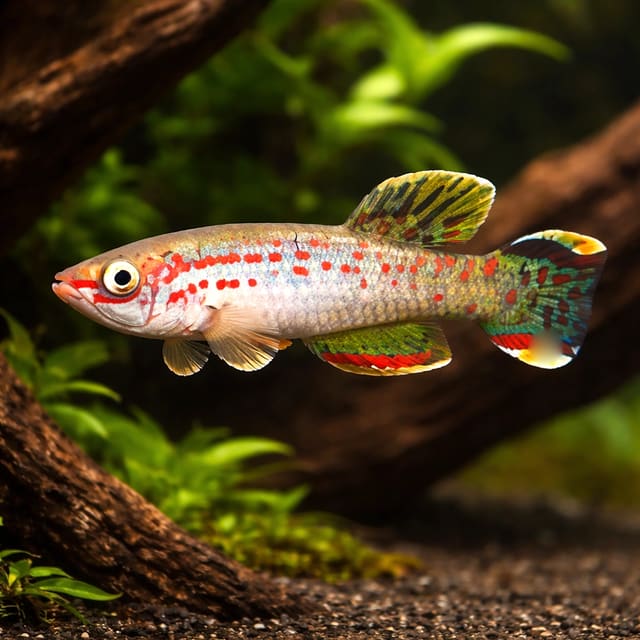
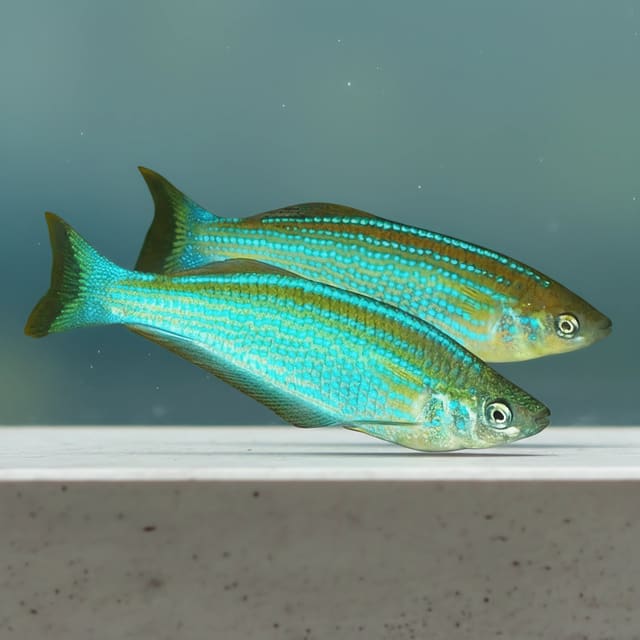
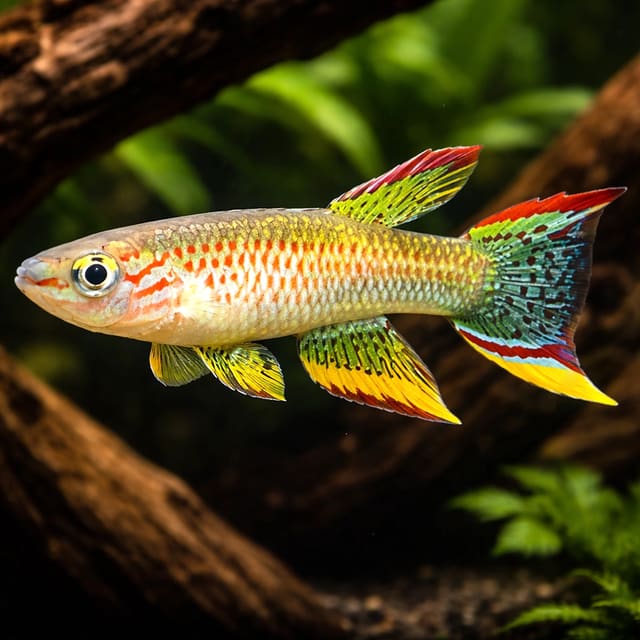
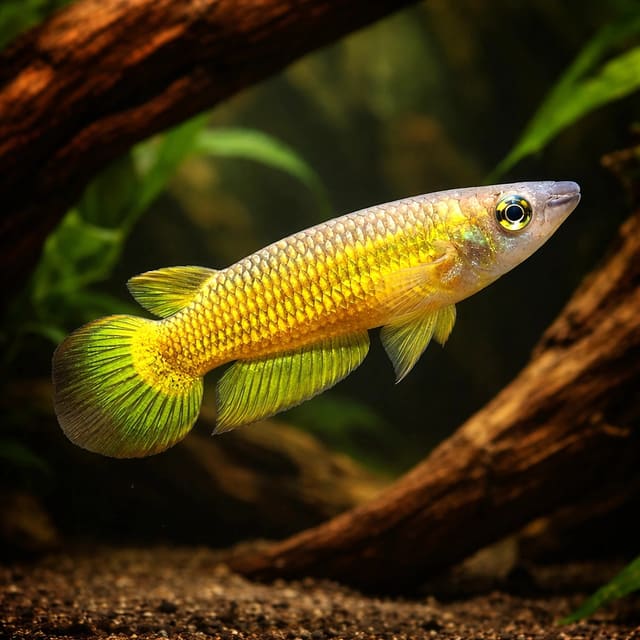
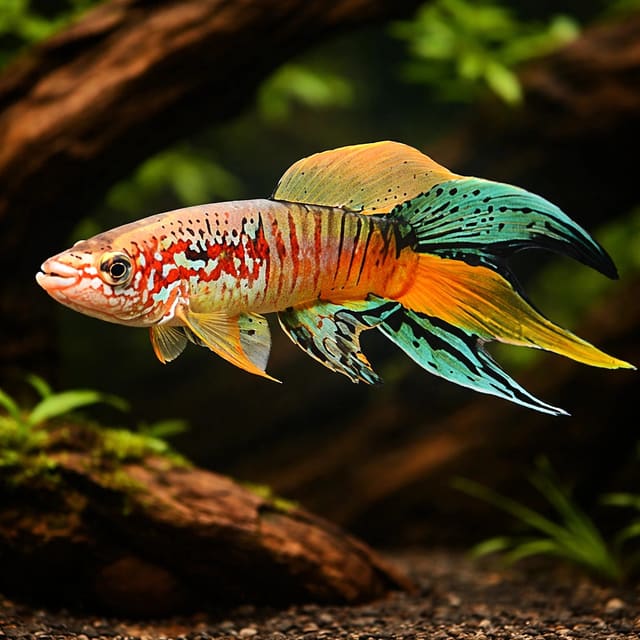
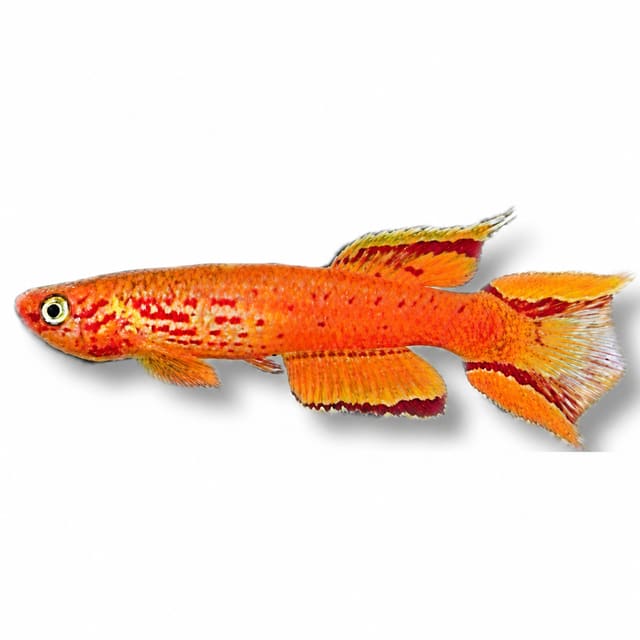
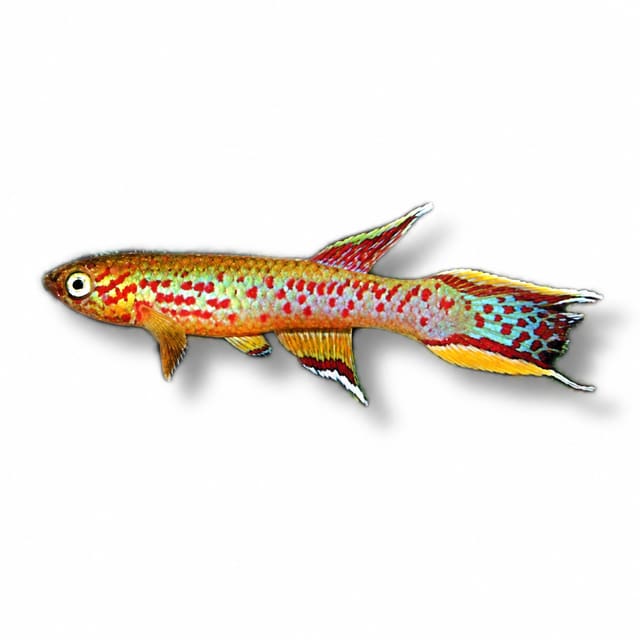
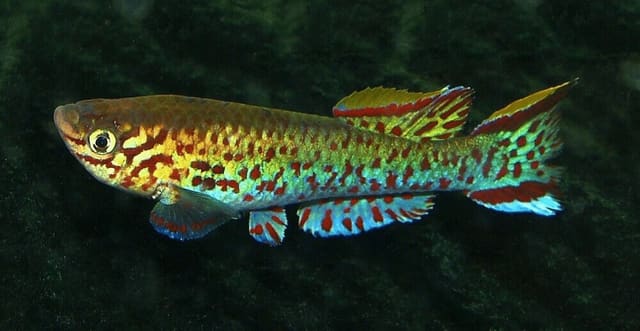
Some gallery images have been digitally enhanced to improve image quality. They show the listed type of animal rather than guaranteeing the exact markings of the individual supplied, so natural colour and pattern can vary.
| Offer detail | What to plan for |
|---|---|
| Purchase unit | One live animal per purchase. |
| Dispatch size | 2.5–3.5 cm. |
| Adult-size reference | Up to 3.5 cm standard length for male or unsexed fish. |
| Group purchase | Capacity for every animal without assuming a sex ratio. |
OATA's killifish guidance gives 22–27°C, pH 6.0–7.5 and 4–12°dH as broad group-level aquarium values. FishBase places this species in a narrower recorded environmental range of 22–25°C, pH 6.0–7.0 and 4–10°dH. Use the overlap of both ranges for routine aquarium planning: 22–25°C, pH 6.0–7.0 and 4–10°dH.
For water quality, use zero mg/l ammonia, zero mg/l nitrite and nitrate no more than 20 mg/l above the normal tap-water level. These figures make testing a purchasing decision, not an optional task after the animal arrives. Use the water matcher to compare measured values with the stated ranges.
OATA recommends an aquarium of at least 40 litres for a small group of the smallest killifish and advises keeping at least three, with two females for each male. The 40-litre figure is a group-planning floor. This offer does not create a known ratio, so aquarium capacity and social planning must be considered separately.
| Decision | Figure to use |
|---|---|
| Routine temperature screen | 22–25°C. |
| Routine pH screen | 6.0–7.0. |
| General hardness screen | 4–10°dH. |
| Carbonate hardness screen | 3–10°dKH. |
| Ammonia and nitrite | Zero mg/l for both. |
| Nitrate | No more than 20 mg/l above normal tap water. |
| Small-group aquarium | At least 40 litres. |
| Group starting point | At least three, with two females per male. |
Larger aquariums generally provide more stable temperature and water quality. Choose extra capacity when other fish share the system, when decoration reduces open water or when the intended social arrangement needs more cover.
Prepare the aquarium and establish its biological filter before introducing the fish. The RSPCA's aquarium welfare guidance explains that fish release toxic ammonia and that a working biological filter supports bacteria that convert ammonia to nitrite and then to safer nitrate. A filter is therefore essential even when the animal is small and the water appears clear.
Use the first tropical aquarium guide to plan filter maturation before livestock arrives. Maturity refers to the aquarium and biological filter, not to water that has merely stood for a few days. Test results showing zero ammonia and zero nitrite are the practical checks that matter.
Fit an aquarium cover and keep it in place. OATA calls a cover essential for killifish. Check that equipment can operate safely without leaving unnecessary openings around filter pipes, cables or feeding access points.
Use aquarium gravel or sand as the base. Live planting is the preferred form of cover in OATA's guidance, especially where multiple males are kept together. Plastic aquarium plants and suitable ornaments such as plant pots or model caves can provide shelter when live plants are not used.
Arrange shelter across more than one part of the aquarium. A layout with several covered areas gives fish more choices than one ornament surrounded by open water. Keep enough accessible space to see each fish feed and to remove settled waste during maintenance.
Choose the largest practical aquarium rather than trying to match the fish to the smallest container. Extra water volume gives temperature and water chemistry more stability, while extra layout space makes shelter and observation easier to organise.
Measure the aquarium rather than judging it by clarity. Clear water can still contain ammonia, nitrite or an unsuitable pH. The water chemistry guide explains the values to test and why each one matters.
Test at least once each week. Use the same general point in the maintenance cycle when possible, because comparable readings are easier to interpret. Add an extra test before increasing the fish population and whenever swimming, breathing, colour, feeding or hiding changes.
| Result | Immediate decision |
|---|---|
| Ammonia above zero | Do not add more fish; investigate filtration and waste. |
| Nitrite above zero | Do not increase stocking; treat the result as a water-quality warning. |
| Nitrate rising beyond the limit | Review maintenance, stocking and feeding before the next increase. |
| pH moving between tests | Check replacement water and avoid abrupt correction. |
| Stable readings in range | Continue the same measured routine rather than changing it without a reason. |
Temperature, pH and hardness must be considered together. A temperature inside 22–25°C does not compensate for detectable ammonia, and a suitable pH does not make an immature filter safe. Likewise, a fish's small adult size does not reduce the need for stable biological filtration.
Keep a short written log with the date, readings, water change and any behavioural change. A sequence of values shows whether the aquarium is stable and makes it easier to connect a developing problem with increased feeding, new fish or interrupted filter operation.
In nature, the Redtail notho eats mosquito larvae and other planktonic creatures. Make appropriately sized animal foods the main aquarium diet. OATA's group guidance recommends small live or frozen foods such as daphnia, brine shrimp or tubifex and says killifish will also take good-quality flake or granules.
Feed once a day and offer only what the fish can eat within a few minutes. This schedule controls the amount of uneaten material entering the aquarium. Excess food breaks down and releases waste, making it harder for the filter to keep ammonia and nitrite at zero.
| Food choice | How to use it |
|---|---|
| Daphnia | Use as an appropriately sized live or frozen animal food. |
| Brine shrimp | Include as part of the live or frozen rotation. |
| Tubifex | Use in appropriately small portions as part of the rotation. |
| Good-quality flake | Use as additional variety when the individual accepts it. |
| Suitable granule | Match the food size to the fish and confirm that it is swallowed. |
Begin with less food than you expect to need, observe the fish, then add a little more only while it is still feeding. The phrase “within a few minutes” is a limit, not a target for leaving food in the aquarium for the full period. Stop when interest falls or pieces begin settling beyond reach.
When several fish share the aquarium, watch individuals rather than the group as a whole. One active animal eating repeatedly can make a feeding look successful while another receives little. Spread a measured portion across more than one accessible point if this allows every fish to feed without increasing the total amount.
Use the species' recorded animal prey to shape the main diet, while OATA's killifish guidance supplies the once-daily schedule, portion limit and suitable variety.
Complete the aquarium before the animal travels. The filter must be established, the cover fitted, shelter arranged and the planned temperature, pH and hardness checked. Test ammonia and nitrite immediately before introduction and proceed only when both read zero mg/l.
Read the delivery and Live Arrival Guarantee policy before ordering so that its receipt responsibilities and claim conditions can be followed.
Increase the number of fish in an aquarium slowly. OATA explains that the beneficial bacteria established while the filter matures must increase as fish numbers and feeding increase. Adding too many animals too quickly can produce new tank syndrome, with ammonia and nitrite rising beyond healthy levels.
At each daily feed, check whether the new fish reaches food and eats. Look for normal balance and swimming, clear bright eyes, intact scales and undamaged fins. Observe breathing and note whether hiding is becoming more frequent rather than simply recording one moment.
Keep the normal testing and maintenance schedule in place instead of compensating with extra food or rapid chemistry changes. If another fish is planned, wait until the filter continues to produce zero ammonia and zero nitrite under the changed waste load.
| First-week observation | Decision it informs |
|---|---|
| Eats within the measured feed | Continue the same portion and variety. |
| Cannot reach food | Review competition and feeding access. |
| Hides more each day | Review shelter, disturbance and tank mates. |
| Breathing rate changes | Test water and check equipment. |
| Fins become damaged | Review decor and social interactions promptly. |
Carry out a partial water change of 25% at least once a week. Use a siphon to remove solid waste from the gravel or sand while water is removed. The aim is to control accumulating waste without replacing the established biological filter or making abrupt changes to the aquarium.
Treat replacement tap water with an aquarium water conditioner to remove harmful chlorine or chloramine before it enters the aquarium. Prepare the replacement water carefully and keep the routine consistent. The regular testing plan shows whether the weekly change is holding nitrate within the stated limit.
Check the filter for blockages as part of the weekly routine. When filter media needs cleaning, rinse it lightly in aquarium water removed during the partial water change. Do not rinse established media under the tap, because chlorine or chloramine may kill beneficial bacteria.
| Weekly task | Reason |
|---|---|
| Test the water | Confirms ammonia and nitrite remain at zero and tracks nitrate. |
| Change 25% at least once a week | Removes part of the accumulated dissolved waste. |
| Siphon visible debris | Stops solid waste remaining in the substrate. |
| Condition tap water | Removes chlorine or chloramine before replacement. |
| Check filter flow | Reveals blockages that may reduce filtration. |
| Rinse media only when needed | Preserves more of the established bacterial population. |
A calendar sets the minimum rhythm, while measurements show how well the aquarium is coping. If nitrate rises more rapidly after adding animals or increasing food, review the waste load rather than assuming the same routine will always produce the same result.
Use maintenance time to inspect places where uneaten food or solid waste collects. Rearrange only what prevents cleaning or observation; shelter remains important. Check the cover again after moving equipment, because a cable or filter adjustment can change how securely it fits.
This routine links water quality, filter care and observation without treating them as separate jobs. Stable husbandry comes from repeating supported actions and checking their results.
Learn the fish's usual swimming, feeding, colour and hiding pattern. Individual fish vary, so a change from the animal's normal presentation can be more useful than one isolated pose. OATA recommends watching swimming, colour, temperament, breathing, appearance, body condition and food intake.
| Change you see | First check to make |
|---|---|
| Hanging at the surface | Test water and check filter operation. |
| Sitting on the bottom | Compare with normal behaviour and test water. |
| Erratic swimming | Check water values and recent social pressure. |
| Darker or paler colour | Review whether behaviour, breathing or feeding also changed. |
| More hiding | Observe disturbance, shelter use and tank-mate behaviour. |
| Faster or slower gill movement | Test ammonia and nitrite and check equipment. |
| White spots or fluffy growth | Record the appearance and seek health guidance. |
| Loss of fins or scales | Inspect interactions and aquarium objects. |
| Weight or condition change | Confirm how much the individual actually eats. |
| Reduced food intake | Check water, food size and feeding competition. |
Start with water testing because ammonia and nitrite must remain at zero. Check temperature and filter operation at the same time. A normal-looking aquarium is not enough to rule out a water problem, and adding extra food does not solve a fish's inability to reach or swallow it.
Observe the whole aquarium before assigning one cause. Fin damage may coincide with chasing, but it can also appear near unsuitable ornaments. Reduced feeding can accompany competition, changed behaviour or a visible health problem. Record what occurred and when so that advice can be based on a sequence rather than a single description.
If a change persists or you are concerned about the animal's health, test the water and contact us for further guidance. Give the readings, aquarium volume, recent additions, maintenance history, feeding pattern and the specific change observed.
Continue essential filtration and stable husbandry while seeking guidance. The priority is to identify water-quality, equipment, feeding and social factors promptly rather than allowing a small change to progress unnoticed.
OATA advises that killifish require some companionship and suggests keeping at least three, with two females for each male, to reduce stress on females or other aquarium inhabitants. More may be kept when the same ratio is maintained. Treat this as a planned social arrangement, not a reason to add an arbitrary number of animals.
This offer supplies one unsexed animal per purchase, so plan the intended sex ratio separately. A purchase of three animals therefore cannot be treated automatically as one male and two females. Plan the aquarium for the full number ordered, and do not depend on the hoped-for composition of a group.
| Question | Decision required |
|---|---|
| How many animals? | Provide capacity and shelter for the total quantity. |
| What ratio is intended? | Use the recommended two females per male only with a known arrangement. |
| Can the aquarium support them? | Check volume, filtration, cover, shelter and feeding access. |
| Can every fish be observed? | Arrange feeding and cover so exclusion can be noticed. |
Use at least 40 litres as OATA's starting floor for a small group of the smallest killifish. More water provides greater environmental stability, while additional layout space makes it easier to distribute shelter. Aquarium volume alone cannot create the intended social ratio, so litres and group composition remain separate checks.
When multiple males are part of a planned group, use heavy planting or alternative aquarium-safe shelter from the outset. Watch for a fish receiving less food, hiding more than normal, developing damaged fins or being repeatedly displaced from one part of the aquarium.
For a stocking and compatibility assessment, ask us with the aquarium volume, dimensions, measured water values, existing animals and intended quantity. Social outcomes for this species remain uncertain, so the assessment must consider the complete aquarium rather than the killifish count alone.
Some killifish do best in a species-focused aquarium because they can be shy and vulnerable to bullying. Others can live in community aquariums when companions are selected carefully. For Gunther's Nothobranch, use a conditional compatibility screen rather than a universal tank-mate list.
Avoid long-finned species. OATA notes that some male killifish may be aggressive towards them. Boisterous companions are also a poor match for killifish because they may create disturbance or dominate feeding. Screen larger fish by mouth size, because some fish are capable of eating smaller species.
| Compatibility check | Question to answer |
|---|---|
| Water | Can both animals remain within suitable temperature, pH and hardness? |
| Activity | Will the companion behave calmly rather than constantly disturbing the killifish? |
| Feeding | Can the killifish reach its once-daily portion before food is taken? |
| Fins | Is the proposed companion free from the long fins identified as a concern? |
| Mouth size | Could either fish swallow or injure the other? |
Matching one factor is not enough. A fish may share the same temperature range but still be too active at feeding time. Another may be calm but require different hardness. Complete all five checks before treating the combination as reasonable.
After introduction, watch feeding access, hiding, fin condition, breathing and swimming. Increased hiding, reduced intake or damaged fins are reasons to reassess the combination. Do not wait for every warning sign to appear at once.
A species-focused aquarium removes many community variables but still requires the same filter, cover, water testing, food control and social planning. It should not be treated as permission to ignore group composition or water quality.
Browse the killifish collection when comparing identities and care requirements. Similar catalogue placement does not make two animals compatible; apply the same water, activity, feeding, fin and mouth-size screen to every possible combination.
Gunther's Nothobranch reaches a FishBase-recorded maximum of 3.5 cm standard length for male or unsexed fish; plan the aquarium around that adult-size reference.
OATA recommends an aquarium of at least 40 litres for a small group of the smallest killifish, with a filter, secure cover, gravel or sand and shelter.
OATA suggests at least three killifish, with two females per male, but this offer supplies unsexed animals; plan capacity for every fish and retain flexibility if the group composition differs.
FishBase describes this species as difficult to maintain in an aquarium, so it suits an attentive keeper able to establish filtration, test water, control feeding and monitor social behaviour.
The species eats mosquito larvae and other planktonic creatures in nature. Feed appropriately sized daphnia, brine shrimp or tubifex once daily, offering only what it can eat within a few minutes; good-quality flake or granules can add variety when accepted.
Use the overlap between FishBase's species range and OATA's broad killifish guidance: 22–25°C, pH 6.0–7.0 and 4–10°dH, with ammonia and nitrite at zero mg/l.
OATA advises avoiding long-finned species because some male killifish may be aggressive towards them; also monitor this fish for chasing, increased hiding, reduced feeding or damaged fins.
Consider only calm fish that share its water requirements, cannot swallow it and will not dominate feeding. Avoid long-finned species, and treat boisterous or large-mouthed fish as poor matches.
The Tropical Fish Co delivery policy requires someone to receive the parcel. Film every delivery continuously from the sealed parcel as it is opened with the fish still in the bag, float the bag for 20–30 minutes, and never pour the bag water into the aquarium.
No reviews for this item yet. Bought one? Honest reviews only, good or bad.
What customers say about ordering from us
I have a small group of long finned mountain minnows. So was delighted to be able to order ten of this variety to increase the genetics in my tank . The ones I recieved are healthy but it’s to early to give a verdict on wether they are of a long finned type since they are small currently.
Gordon Walker · 23 Sept 2026
100% success travel and "installation". Pleased with quality of purchase. The Siamese fighter a bit "shy" so have not yet seen him at his best yet but looking good. Happy customer. GG
George E Garratt · 21 Sept 2026
Reviews of our shop, collected by Judge.me, an independent third-party review collector. Newest first.