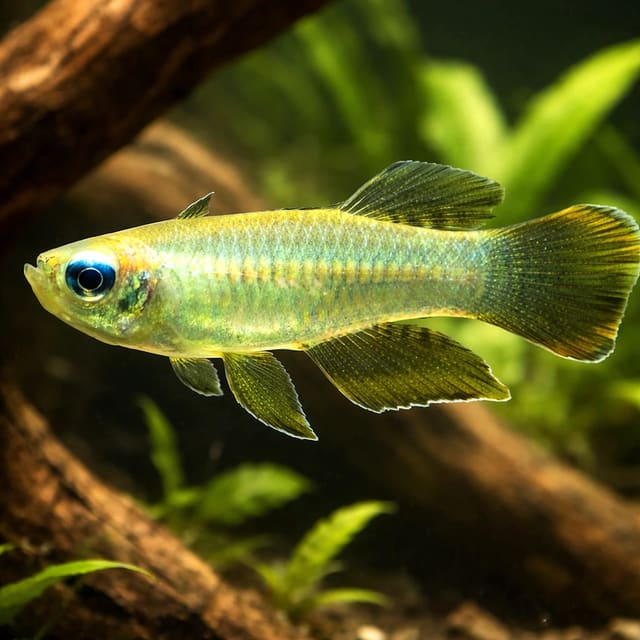
Lampeye (Aplocheilichthys normani)
22–26°C · pH 6.5–7.2
£3.99
The Tomoki Medaka Ricefish, Japanese Rice Fish is a small, generally peaceful ricefish supplied individually at a dispatch grade of 2–2.5 cm. Plan for a group of 8 or more in a planted aquarium with a base of at least 45 × 30 cm, about 41 litres or more, and water at 16–22°C. Screen companions for the same cool-water requirements and a calm temperament.
Adult size is the maximum length this species reaches at full maturity (scientific sources). The livestock you receive will be younger and smaller. Product-photo provenance and any image-specific limitations are stated on the listing.
Oryzias latipes
Save when buying multiple fish. Each quantity is one fish; sex and pair formation are not guaranteed unless the selected variant explicitly states them.
The Tomoki Medaka Ricefish, Japanese Rice Fish is a small, generally peaceful ricefish supplied individually at a dispatch grade of 2–2.5 cm. Plan for a group of 8 or more in a planted aquarium with a base of at least 45 × 30 cm, about 41 litres or more, and water at 16–22°C. Screen companions for the same cool-water requirements and a calm temperament.
Adult size is the maximum length this species reaches at full maturity (scientific sources). The livestock you receive will be younger and smaller. Product-photo provenance and any image-specific limitations are stated on the listing.
Maintain these water conditions for optimal health and vibrant colors
The Tomoki Medaka Ricefish is a slender freshwater fish associated with the Japanese rice fish. FishBase places the underlying species, Oryzias latipes, in Adrianichthyidae, the ricefish family. FishBase now lists it as Oryzias latipes. Adults occur naturally in ponds, marshes, paddy fields and small lowland flows, with a preference for slow-moving streams. Populations also inhabit brackish water and some coastal tide pools.
That natural history points towards a planted aquarium with open swimming room rather than a bare, turbulent set-up. Dense vegetation and surface plants provide cover, while open areas let the fish move freely. A dark substrate, roots and bogwood can complete the layout without filling every part of the aquarium.
The species is generally peaceful, but its temperate to subtropical requirements narrow the choice of companions. It suits a keeper prepared to measure water, maintain a mature biological filter and select tank mates by temperature, water chemistry and temperament rather than by size alone. A species-focused group is often the clearest plan.
The Tomoki name distinguishes this offer, while the care decisions here follow the established requirements of the underlying Japanese rice fish. You can also browse our killifish collection when comparing similarly sized fish, but compare every candidate’s temperature and social needs before combining them.
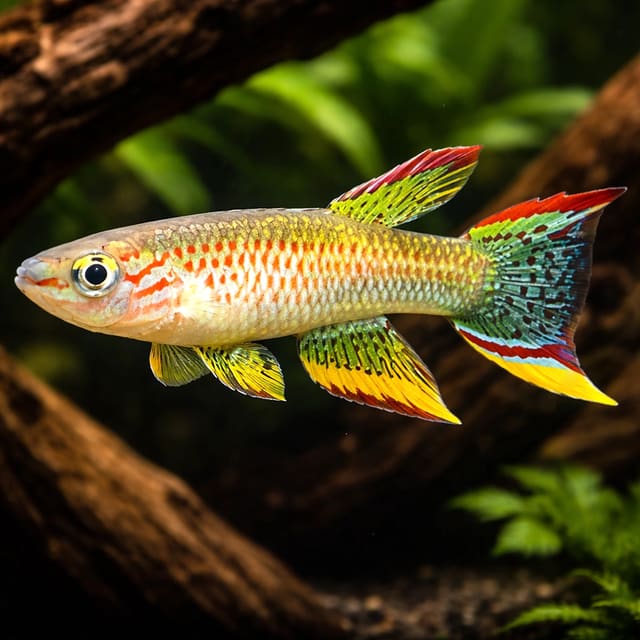
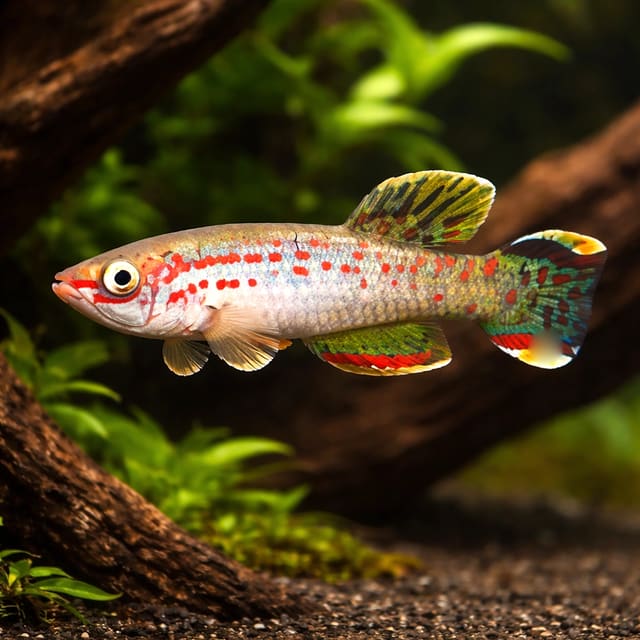
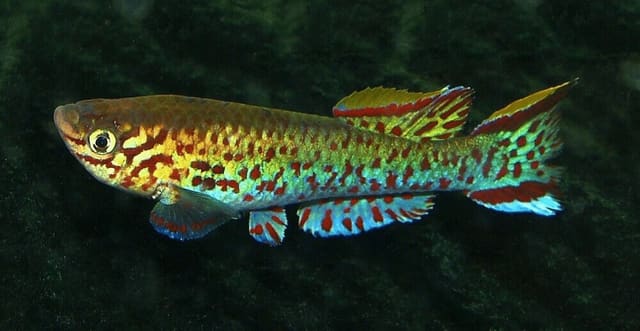
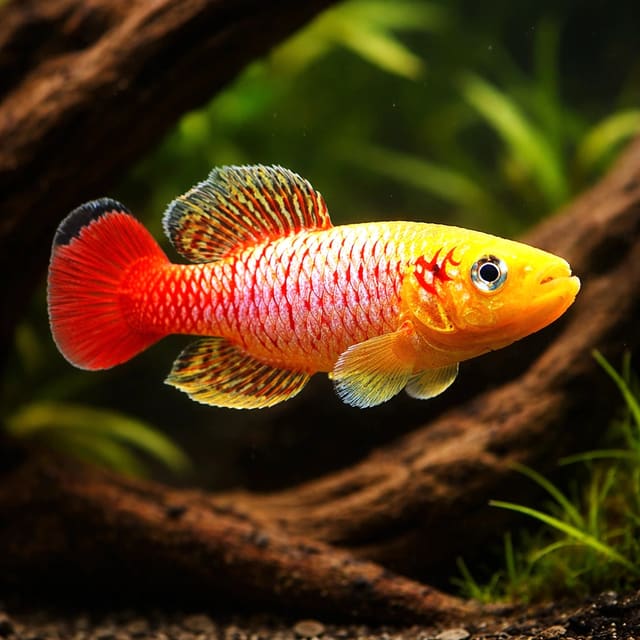
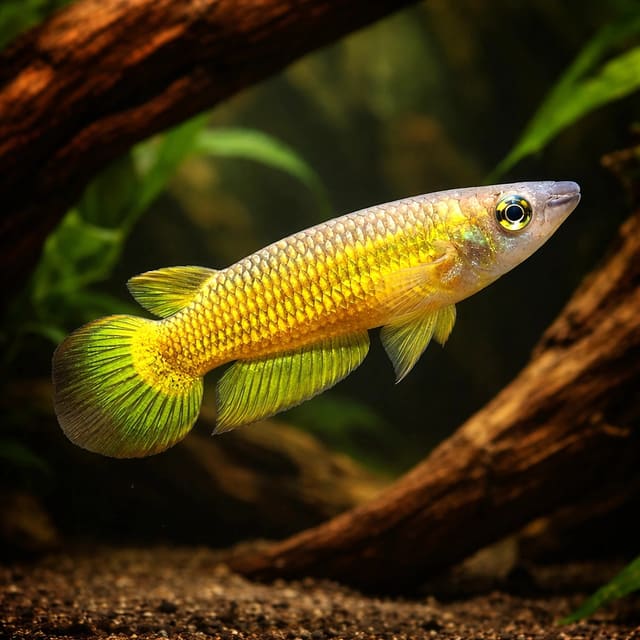
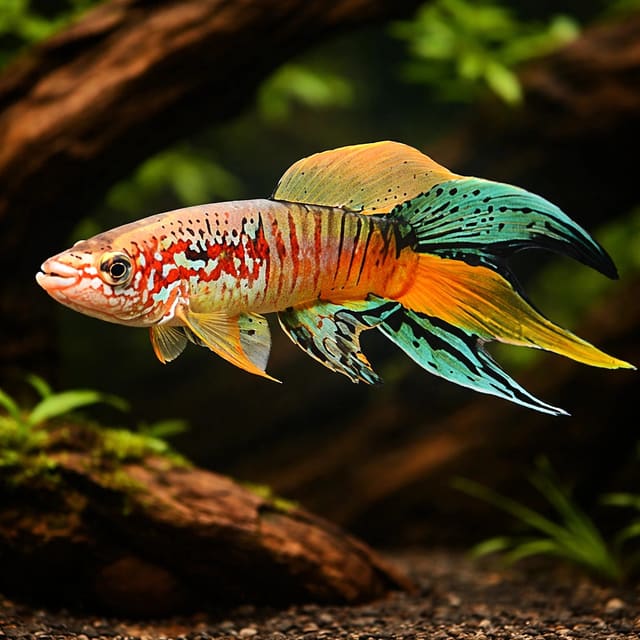
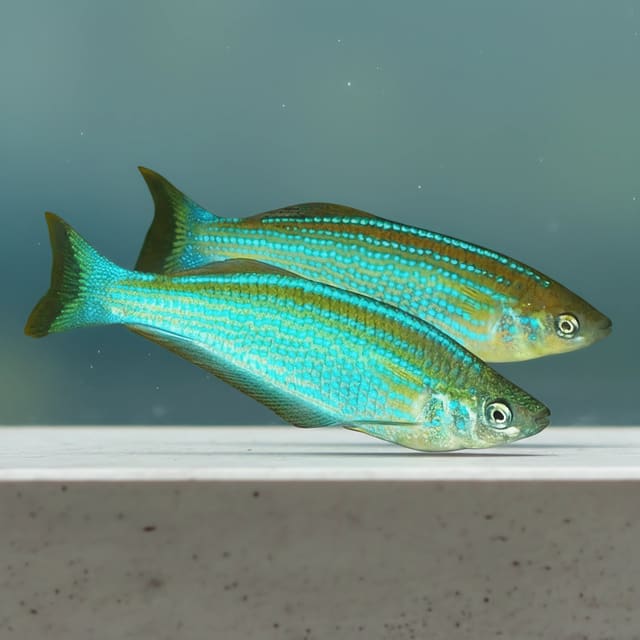
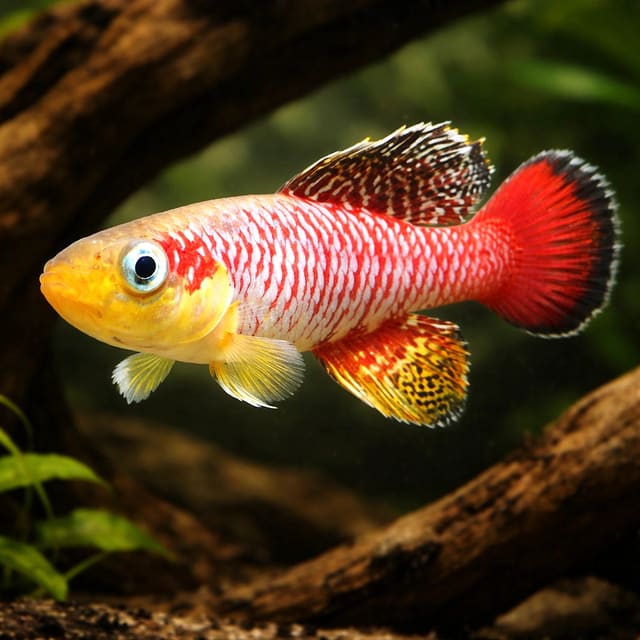
The gallery images are representative of this type of animal rather than photographs of the exact animal supplied, so colours can look slightly different from the live animal.
Small dispatch dimensions should not determine the final aquarium. FishBase records a maximum of 4 cm standard length, while Seriously Fish gives a typical aquarium length of 36 mm standard length. Use the 4 cm maximum as the safer planning reference for space, planting and companion selection.
Seriously Fish recommends a base of at least 45 × 30 cm, approximately 41 litres, for a group. The footprint is important because it provides room for open swimming areas alongside dense planting. A taller aquarium with a narrow base may hold a similar volume without offering the same usable layout.
| Decision | Planning figure |
|---|---|
| Maximum recorded length | Up to 4 cm standard length |
| Recommended aquarium base | At least 45 × 30 cm |
| Approximate volume | About 41 litres or more |
| Social group | 8 or more |
| Routine temperature | 16–22°C |
A group of 8 or more tends to behave more confidently and display more effectively. Treat eight as the starting point rather than a reason to crowd a small aquarium. Extra fish increase feeding and waste, so additional group members may justify a larger footprint and greater filtration capacity.
For example, a 45 × 30 cm base can meet the stated starting footprint for a group when its approximate volume is 41 litres and the rest of the set-up is suitable. If décor leaves little open water, or if companions are added, choose more space rather than relying on the nominal volume alone.
One purchase quantity supplies one animal. The dispatch grade for this offer is 2–2.5 cm; this is the size at dispatch, not the adult-size expectation. Plan the permanent aquarium around a fish that may reach up to 4 cm standard length.
Sex is guaranteed only when the selected option explicitly states male or female. This Tomoki Medaka Ricefish, Japanese Rice Fish listing has no sex-guaranteed option.
| Suits | Not suited to |
|---|---|
| Keepers planning a planted aquarium for 8 or more fish at 16–22°C | A solitary display or a permanently warmer community aquarium |
| A base of at least 45 × 30 cm with cover and open swimming space | Cramped layouts or communities with boisterous companions |
This fish is a sensible choice when those conditions can be prepared before arrival. Its small body does not remove the need for stable water, weekly maintenance or careful compatibility screening.
Use 16–22°C, pH 6.5–8.5 and 5–25 dGH for routine aquarium planning. These aquarium ranges come from the Seriously Fish species account. FishBase reports an environmental range of 18–24°C, pH 7.0–8.0 and 9–19 dH from the wild species; those values sit within or overlap the wider aquarium chemistry range but do not justify running the aquarium permanently above 22°C.
OATA’s killifish figures are group guidance: 22–27°C, pH 6.0–7.5 and 4–12 dGH. For this animal, the direct aquarium range of 16–22°C takes priority and the broader killifish temperature must not widen it. OATA’s waste limits remain useful: ammonia and nitrite should both be zero, while nitrate should stay no more than 20 mg/l above the normal tap-water level.
| Value | Routine target |
|---|---|
| Temperature | 16–22°C |
| pH | 6.5–8.5 |
| General hardness | 5–25 dGH |
| Ammonia | 0 mg/l |
| Nitrite | 0 mg/l |
| Nitrate | Up to 20 mg/l above tap water |
Start by testing the aquarium and the replacement water. Use our water matcher to compare measured values with these ranges. A reading inside the range still needs to remain steady; repeated abrupt adjustments can create a less stable environment than a consistent reading near one end.
This species experiences seasonal temperature changes and is most comfortable at 16–22°C. Seriously Fish warns that permanent exposure to warm conditions is likely to shorten its lifespan. In many well-insulated homes, the aquarium may remain in range without artificial heating, but use a thermometer rather than assuming that room temperature and water temperature are identical.
Some wild populations come from freshwater while others encounter brackish conditions. Do not add marine salt as a routine default. Base the aquarium on measured freshwater values unless there is a clear reason to manage a particular population differently.
A heavily planted arrangement gives this fish shelter while preserving the calm visual structure associated with its natural habitats. Seriously Fish recommends a dark substrate, patches of dense vegetation and open areas. Twisted roots, bogwood and surface vegetation can be used as additional structure.
A useful worked layout for a 45 × 30 cm base is to plant the rear and one side densely, place a root or piece of bogwood alongside those plants, and leave the remaining central area open. This creates cover without turning the whole aquarium into a thicket. More fish or added companions call for more usable space, not simply more decoration.
Filtration is essential. Seriously Fish recommends turnover of four to five times the aquarium volume per hour. For an aquarium of about 41 litres, that corresponds to a filter rated at approximately 165–205 litres per hour. Check the manufacturer’s rating and arrange the outlet so the aquarium retains calmer areas rather than producing strong flow across the entire footprint.
The RSPCA explains why a well-established biological filter is vital: fish release toxic ammonia, bacteria convert it to nitrite, and further bacteria convert nitrite to the safer nitrate. A running filter alone is not enough; the bacterial population must be established and maintained.
Do not use the fish’s small size as a reason to omit filtration or reduce the footprint. An aquarium of about 41 litres with the recommended base gives more stable conditions than a much smaller container and provides room for the planted-and-open layout this group needs.
Prepare and mature the biological filter before adding fish. Our first aquarium guide explains how to prepare a filtered aquarium before livestock arrives. Test ammonia and nitrite and proceed only when both read zero.
Add fish gradually when building the group or introducing companions. Each addition increases waste and feeding, while the beneficial bacterial population needs time to respond. Adding too many fish too quickly can produce new tank syndrome, with ammonia or nitrite rising to harmful levels.
Tap water may contain chlorine or chloramine that can harm the filter’s bacteria. Rinsing media in removed aquarium water reduces the bacterial loss associated with cleaning. The goal is to restore flow without stripping away the biological population that processes fish waste.
Use our water chemistry guide to understand the values being tested and why they matter. Record the result before and after maintenance if a reading changes unexpectedly. That makes it easier to distinguish a normal nitrate reduction after a water change from a developing ammonia or nitrite problem.
Regular maintenance protects the fish more effectively than chasing a perfect-looking aquarium. Clear water can still contain ammonia or nitrite, so visual appearance never replaces testing.
In nature, this fish acts as a micropredator, taking small insects, worms, crustaceans and other zooplankton. In the aquarium it accepts suitably sized dried foods, but small live and frozen items should also form part of the feeding plan.
Use good-quality, suitably sized flakes or granules as the practical dried component. Suitable live or frozen choices include Daphnia, Artemia and chopped bloodworm. Match every item to the fish’s small mouth rather than offering a large piece and assuming it will break apart.
The time rule is more useful than a fixed pinch because food density and particle size vary. Start conservatively. If every particle disappears quickly and each fish reaches food, the amount is close to useful; if food remains after a few minutes, the portion was too large.
Rotate appropriate dried, live and frozen foods rather than relying on one item. The daily ration can include suitably sized flakes or granules alongside small Daphnia, Artemia or chopped bloodworm. Rotation reflects the animal’s natural use of varied small prey while keeping the schedule simple.
Overfeeding affects more than body condition. Uneaten food breaks down and adds waste, increasing the demand on the biological filter and contributing to poorer water quality. If ammonia, nitrite or nitrate changes unexpectedly, review feeding quantity alongside filtration, stocking and maintenance.
Observe whether all members of the group reach food. Surface cover and planting should not prevent food from reaching the open area. If one part of the group consistently misses the meal, spread a modest ration across more than one point while keeping the total amount within the few-minute limit.
Arrange for someone to receive the live-fish parcel; it must not be left unattended. Have the aquarium running within 16–22°C, confirm ammonia and nitrite are zero, and complete disruptive maintenance before the delivery window rather than while the fish is acclimatising.
Follow our delivery and Live Arrival Guarantee policy. Float the bag in the aquarium for 20–30 minutes before releasing the fish, and keep the transport water out of the aquarium rather than pouring the bag water into the tank.
Keep the recording continuous from the sealed parcel through opening and showing the fish inside the sealed bag. Include the video and order number if making a Live Arrival Guarantee claim, and contact us the same day.
During the first day, look for the normal healthy signs used in routine fish checks: clear, bright eyes; intact scales; undamaged fins; and appropriate swimming behaviour. A change in breathing, posture, colour or interest in food is a reason to test the water rather than guessing at a cause.
These checks connect introduction with the established care routine. They are more useful than making several unmeasured changes at once because the test results and observations show which part of the aquarium needs attention.
Learn the group’s normal swimming, colour, breathing and feeding pattern. A change is more useful than a single isolated pose: fish may differ slightly from one another, but persistent departures from their usual condition deserve attention.
| What you see | What to do first |
|---|---|
| Hanging at the surface | Test ammonia and nitrite and check filter flow |
| Sitting on the bottom | Check temperature and water quality |
| Erratic swimming | Test the water and review recent changes |
| Faster or slower gill movement | Check water quality and filter operation |
| Darker or paler colour | Compare behaviour, feeding and test results |
| Reduced interest in food | Remove leftovers and test the water |
| White spots or fluffy growth | Record the change and seek health guidance |
| Damaged fins or missing scales | Review companions and aquarium structure |
Water testing comes first because ammonia and nitrite are toxic and should remain at zero. Also check the filter for a blockage and confirm the temperature remains within 16–22°C. If a recent addition, larger meal or interrupted filter coincided with the change, include that detail when assessing the problem.
Do not respond to every symptom by adding a treatment. Different problems can produce similar changes in breathing, colour or appetite, while an incorrect treatment may distract from a water-quality fault. Continue removing uneaten food and keep the filter operating while the readings are checked.
If you are concerned about a health change, test the water and contact us with the results, temperature, recent maintenance and a clear description of the behaviour or appearance. Those details make the next decision more precise than a symptom name alone.
Daily observation should be brief but consistent. Watch at feeding time, when activity and appetite are easy to compare, then complete the more detailed water and equipment checks during weekly maintenance.
This is a generally peaceful fish, but it is not an automatic fit for every community. The decisive screen is whether the other animals can share 16–22°C, pH 6.5–8.5 and 5–25 dGH without requiring a permanently warmer aquarium.
Seriously Fish identifies diminutive Dermogenys, Pseudomugil and Brachygobius species as possible companions when their conditions match, and many neritid snails may also be suitable. These are candidates for assessment rather than universal tank mates; each exact species still needs to fit the aquarium’s water, footprint and temperament.
Use caution with long-finned fish. OATA notes that some male killifish may act aggressively towards long-finned companions, while killifish can themselves be stressed by boisterous tank mates. A calm appearance in a shop aquarium is not a substitute for checking the intended species and the permanent set-up.
Avoid keeping this fish with other Oryzias species when preserving separate lineages matters, because hybridisation between ricefish species has been demonstrated experimentally. A species-focused aquarium removes that risk and simplifies temperature, feeding and group planning.
For a mixed aquarium, contact us with the aquarium dimensions, temperature, pH, hardness, current inhabitants and intended numbers. That permits a stocking and compatibility assessment based on the whole aquarium rather than a name-only pairing.
Plan for 8 or more. Seriously Fish describes the species as mostly non-aggressive towards its own kind and notes that it behaves more confidently in a group of at least eight. A lone fish or very small group should not be the default plan.
Group size and aquarium size must be considered together. The recommended 45 × 30 cm base and approximately 41-litre volume are the starting point for a group, not a fixed allowance for unlimited additions. Increase the footprint when keeping more fish, adding companions or using décor that substantially reduces open swimming room.
| Situation | Decision |
|---|---|
| Starting a species group | Plan for at least 8 in about 41 litres or more with a 45 × 30 cm base |
| Adding beyond 8 | Increase usable space and monitor waste production |
| Adding another fish species | Reassess footprint, temperature, chemistry and feeding competition |
| Keeping other Oryzias | Avoid the combination when preventing hybridisation |
| Fish hide or lose feeding access | Review companions, planting and group size |
Dense vegetation provides cover, while open water lets the group move and feed together. Surface plants can add cover, but they should not block the entire feeding area. Arrange wood and roots as natural structure while retaining open swimming room.
Watch confidence through ordinary behaviour: whether fish leave cover, move normally, reach food and maintain their usual colour and breathing. Persistent hiding after introduction can point to unsuitable companions, insufficient cover or a group plan that needs adjustment.
When expanding the group, add fish gradually and test ammonia and nitrite after the increased waste load. Both should remain at zero. The social benefit of a larger group depends on the aquarium remaining biologically stable, so group planning and filter capacity belong in the same decision.
It is a small, generally peaceful member of Adrianichthyidae, the ricefish family. The underlying Japanese rice fish inhabits ponds, marshes, paddy fields and slow-moving lowland waters.
One purchase quantity supplies one animal. Plan the aquarium for the complete social group rather than a solitary fish.
The dispatch grade is 2–2.5 cm. This is the size at dispatch; plan the permanent aquarium around the maximum recorded adult length of up to 4 cm standard length.
Use a heavily planted aquarium with open swimming areas, surface vegetation, a secure lid and a mature filter. A base of at least 45 × 30 cm, approximately 41 litres or more, is recommended for a group.
Plan for a group of 8 or more. It is mostly non-aggressive towards its own kind and tends to behave more confidently in a group of at least eight.
Maintain 16–22°C, pH 6.5–8.5 and 5–25 dGH. Keep ammonia and nitrite at 0 mg/l, and keep nitrate no more than 20 mg/l above the normal tap-water level.
Feed suitably sized flakes or granules with small live or frozen foods such as Daphnia, Artemia and chopped bloodworm. Offer only what the group can finish within a few minutes, once daily.
Start filming before opening the sealed parcel, then open it in one continuous take and show the fish still inside the sealed bag. Float the bag for 20–30 minutes before release, keep the transport water out of the aquarium and include the video with your order number if making a Live Arrival Guarantee claim.
It may live with small, calm animals sharing 16–22°C, pH 6.5–8.5 and 5–25 dGH. Avoid boisterous companions and other Oryzias species when preventing hybridisation.
No reviews for this item yet. Bought one? Honest reviews only, good or bad.
What customers say about ordering from us
Easy website plenty of info on fish your buying great to pick a time slot
TRACEY DURRANT · 7 Oct 2026
Got some lovely fish thank you
Kevin Mackie · 7 Oct 2026
Reviews of our shop, collected by Judge.me, an independent third-party review collector. Newest first.