By Connor Boyle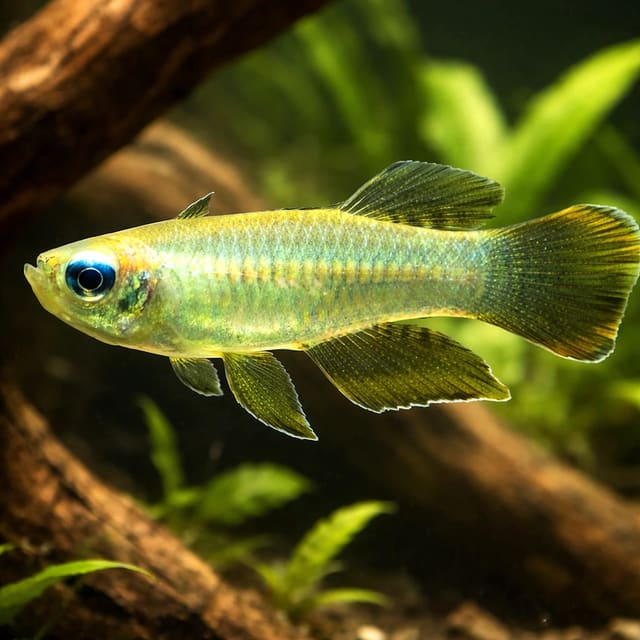
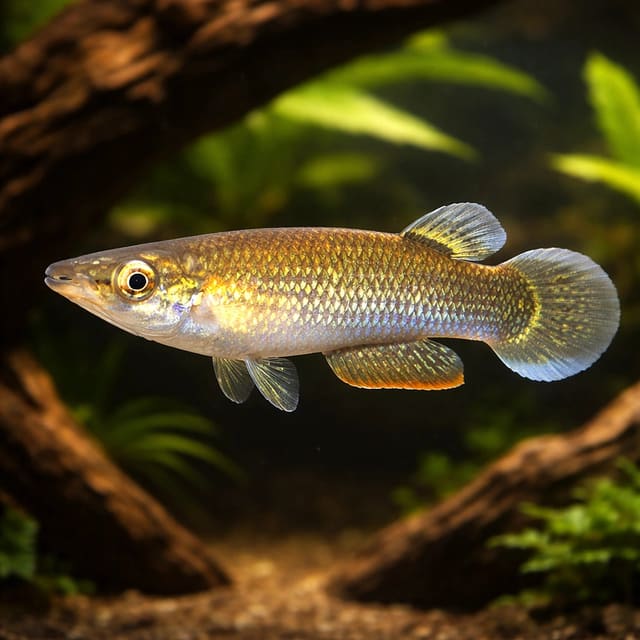
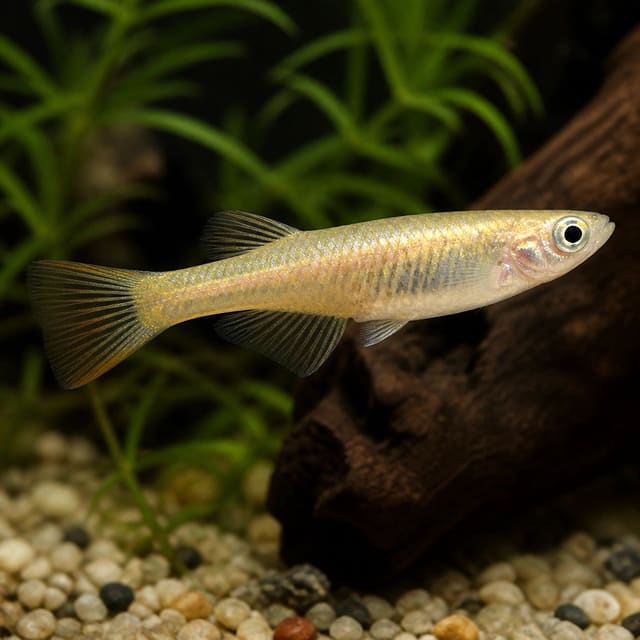
Lampeye (Aplocheilichthys normani)
22–26°C · pH 6.5–7.2
£3.99
Killifish · Buying Guide
Killifish made simple: annual vs non-annual, the types we stock - Aphyosemion, Gardner's, Nothobranchius, lampeyes - plus care. See our live killis.
9 products in stock today
Live prices and stock. Every fish covered by our Live Arrival Guarantee.
22–26°C · pH 6.5–7.2

22–25°C · pH 6–7.2
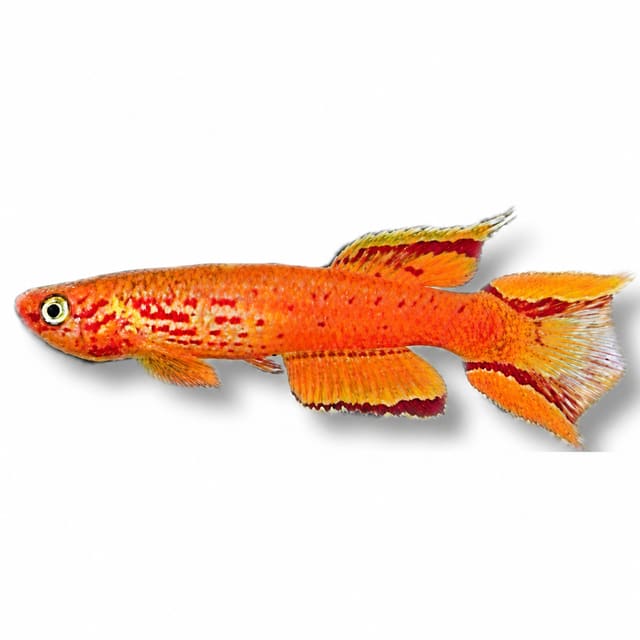
21–24°C · pH 6–7

22–26°C · pH 6–7.2 · 20L
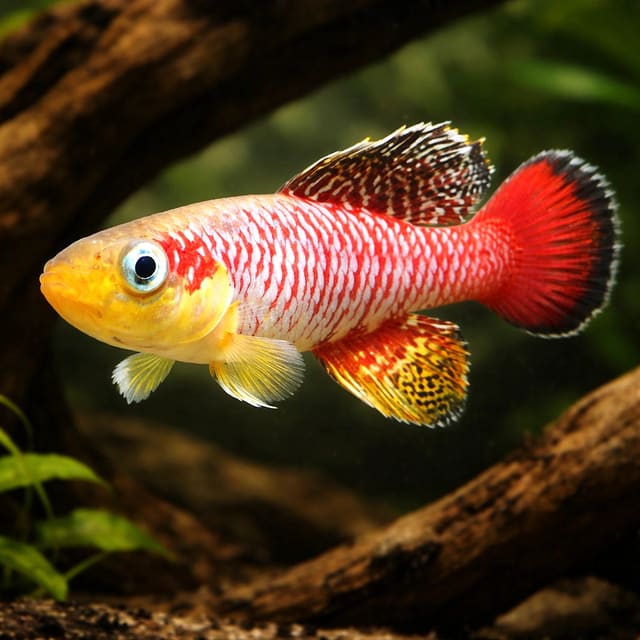
22–25°C · pH 6–7
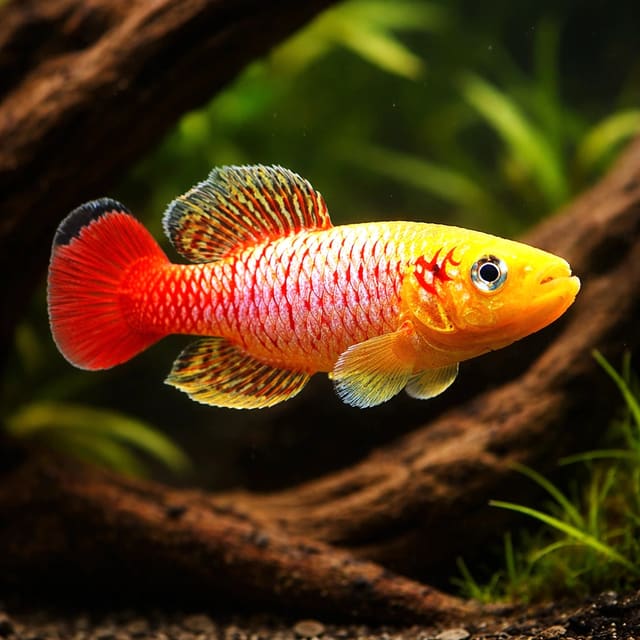
22–25°C · pH 6–7
16–22°C · pH 6.5–8.5 · 41L

20–24°C · pH 6–7.5 · 40L
Our trained assistant knows this killifish page inside out. Ask it anything — water parameters, tank mates, how many to buy — or have it read the guide aloud while you set up your tank.
You've seen a photo of a killifish - probably a Nothobranchius blazing red and electric blue, or a Gardner's killi in steel-blue and gold - and now you're trying to work out whether you can keep one. Most guides make this harder than it needs to be: they either treat "killifish" as a single fish with one care sheet, or they dump two hundred species on you with no way to tell the easy ones from the projects. Both leave you stuck.
I'm Connor Boyle, and the coldwater and oddball fish are my corner of Tropical Fish Co. Killis are the species I get asked about most by people who've fallen for a picture and have no idea where to start. Here's the honest framing the trade rarely spells out: killifish aren't one fish - they're a whole family of small egg-layers split into two very different camps [1]. Get that split right and everything else falls into place; get it wrong and you'll be disappointed when a "delicate" fish dies on schedule.
This page is the conversation I'd have across the counter when someone asks "can I keep a killifish?" - what the types are, the all-important annual versus non-annual divide, which killis suit a community and which want a tank of their own, and exactly which ones we have in stock. It pairs with our water chemistry guide (killis are fussy about water) and our first tropical tank guide if you're still setting up.
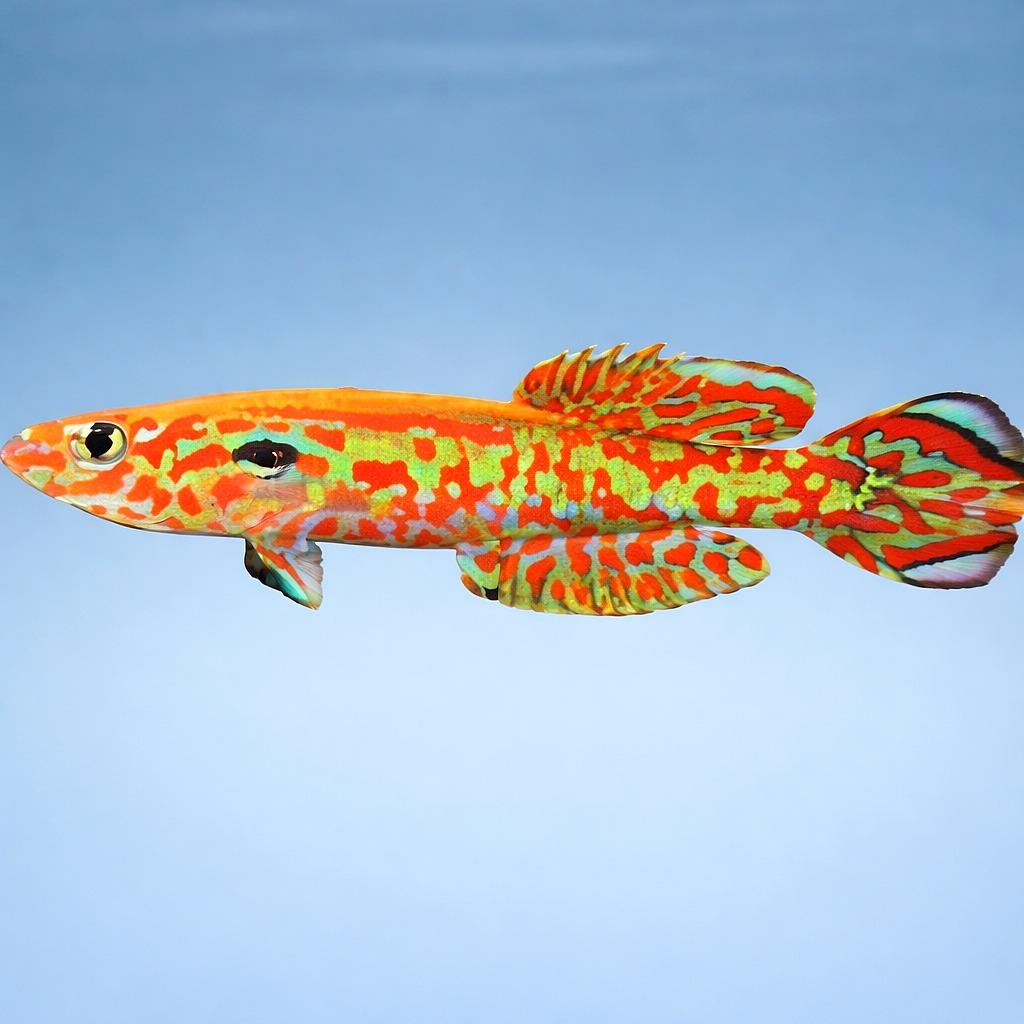
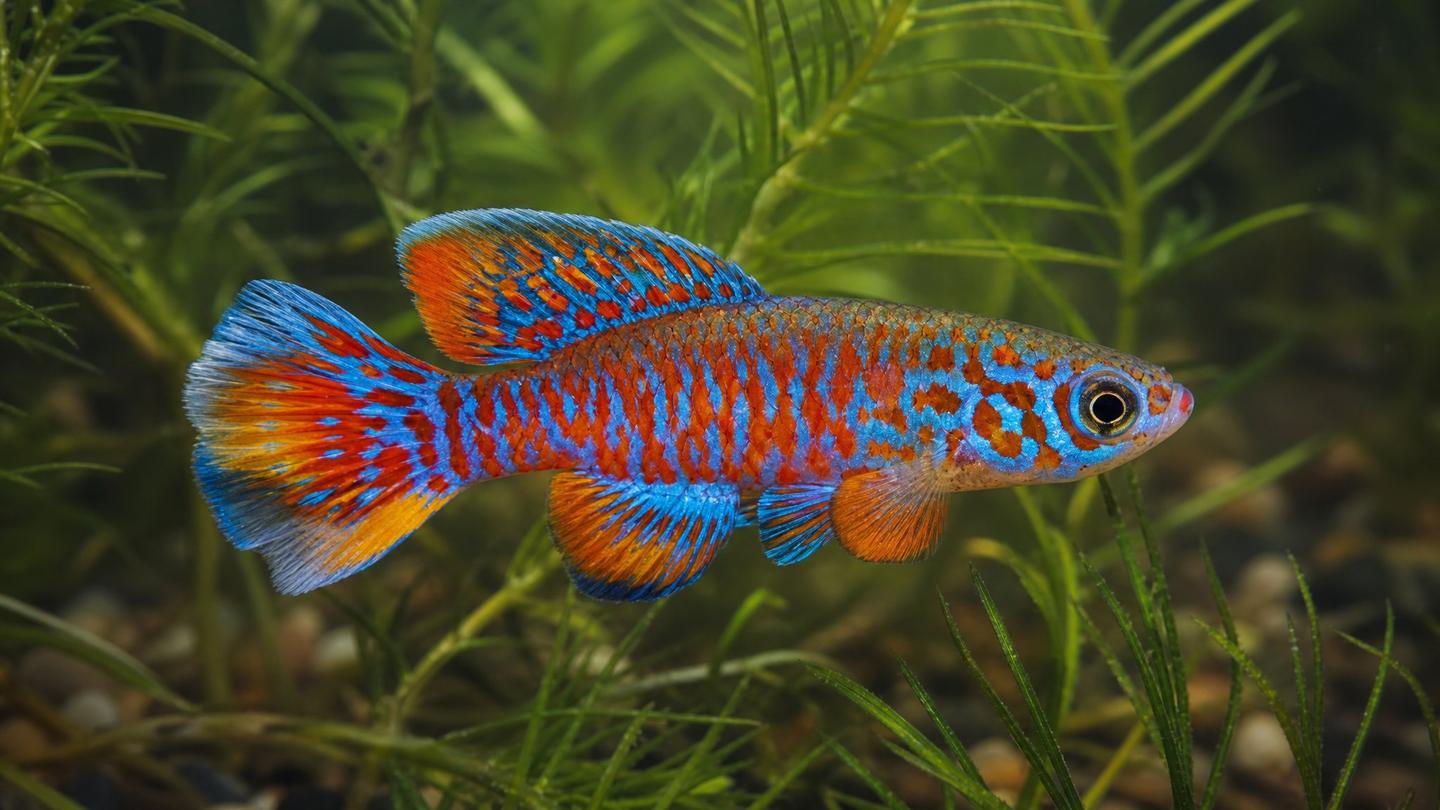
One of our Gardner's killifish (Fundulopanchax gardneri) - a non-annual, beginner-friendly killi that lives 2-3 years and shows off the electric blue-and-gold most people picture when they think "killifish". Credit: Tropical Fish Co.
Killifish hide some of the strangest biology in the freshwater hobby. These are the facts that actually change how you think about keeping them:
Here's the part that makes the decision easy. Killifish span several genera, and the practical differences come down to annual vs non-annual, water, and difficulty - so that's what the table compares. (Adult size is broadly similar - most are 3-6 cm - so I've kept the focus on what actually varies between groups.)
| Group (genus) we stock | Annual? | Water | Difficulty | Notes |
|---|---|---|---|---|
| Lampeye (Aplocheilichthys) | Non-annual | Soft, pH ~6.0-7.5 | Easy | Peaceful shoaling killi; community-friendly; iridescent "lamp" eye |
| Lyretail / Cape Lopez (Aphyosemion) | Non-annual | Soft, slightly acidic | Easy | The classic beginner killi; long-finned males; species tank or calm community |
| Gardner's-type (Aphyosemion / Fundulopanchax gardneri) | Non-annual | Soft, pH ~6.0-7.2 | Easy-moderate | Steel-blue & gold; hardy and widely bred; great first "fancy" killi |
| Panchax (Aplocheilus) | Non-annual | Soft to neutral | Easy-moderate | Surface predator of insects; bold; keep with a tight lid |
| Nothobranch (Nothobranchius) | Annual | Very soft, acidic | Moderate-advanced | The jewels - intense colour, short life, peat-spawned eggs; species tank |
| Ricefish / medaka (Oryzias) | Non-annual | Soft to medium | Easy | A killi relative (Asian ricefish); peaceful, surface shoaler |
New to killis? Start at the top - a lampeye, an Aphyosemion australe, or a Gardner's. They're long-lived and forgiving. The Nothobranchius near the bottom are the dazzling annuals: stunning, but a short-lived, soft-water, species-tank project rather than a first fish.
If this is your first killifish, choose a non-annual - a lampeye, an Aphyosemion australe, or a Gardner's killi. They live two to five years, tolerate a sensible range of soft water, and behave like ordinary nano fish [4]. Once you've got soft water dialled in and a tank running smoothly, the annual Nothobranchius are the natural next step - and far more rewarding when you understand their life cycle going in.
Here are the killis we have in stock right now, listed so you can see the full range from easy non-annuals to the prized annual Nothobranchius:
Almost every killifish question comes back to this split, so it's worth a section of its own.
Annual killis evolved in temporary pools that dry out each year. The whole life cycle is compressed into a single wet season: hatch, grow fast, blaze with breeding colour, spawn into the mud, and die as the pool dries. The eggs then sit dormant in damp earth until the rains return and trigger a hatch [2]. In the aquarium this means three things: spectacular colour, a short life of roughly 3-12 months [5], and breeding that revolves around damp peat rather than plants. The Nothobranchius we stock - guentheri, rachovii, patrizii, eggersi - are all annuals.
Non-annual killis come from permanent streams and swamps. They live a normal small-fish span of 2-5 years, breed by scattering eggs among fine-leaved plants or spawning mops, and generally ask far less of you [4][5]. The Aphyosemion (australe, gardneri, hjersseni), the lampeyes and the panchax are all non-annuals.
A Nothobranchius furzeri living under three months hasn't been kept badly - that's the species' natural span, the shortest documented for any vertebrate, and it's exactly what evolution selected for in a fish whose home pool dries up annually [3][2]. Judge an annual killi by its colour, vigour and appetite while it's with you, not by how many years it lasts. If a multi-year fish is what you want, the answer is a non-annual, not "a better-kept Nothobranchius".
This follows directly from the type:
This is the single most common way keepers lose a killi. Most killifish are surface-oriented and accomplished jumpers - Aquarium Co-Op puts it bluntly: they "love to jump out of the water, so you must have a close-fitting lid and cover even the smallest hole" [5]. Cover the whole tank, including the cut-outs around your filter and heater cables. A glass lid or fine mesh isn't optional - it's part of the setup.
Day-to-day, killifish are not difficult fish - they're just specific. Get these right and most types look after themselves:
For tank mates, choose by type. The community-suitable killis pair well with small, peaceful nano fish, and a planted tank with cover keeps everyone calm:
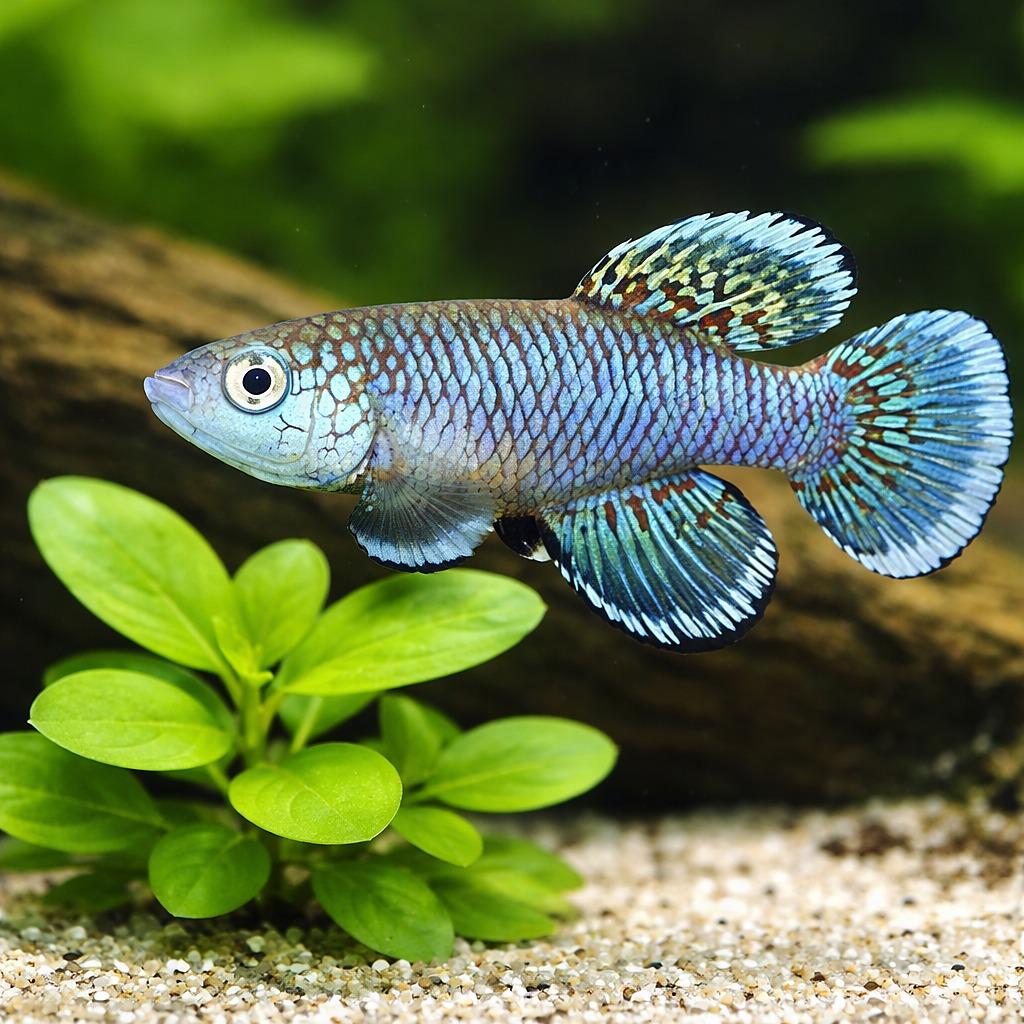
One of our Nothobranchius eggersi blue - an annual killi from East Africa. This is the type that races through life in months and leaves drought-proof eggs in the substrate. Spectacular colour, but a soft-water, species-tank project rather than a beginner's first fish. Credit: Tropical Fish Co.
This is the fish that gives killifish their dazzling reputation - and their misleading "difficult" label. An eggersi or a rachovii isn't hard to feed or house; what's different is the life cycle. Kept in soft, slightly acidic water in a species tank, fed well on frozen and live foods, an annual Nothobranchius will reward you with colour that genuinely rivals a marine fish [5]. Just go in knowing it's an annual - a few vivid months, with breeding built around damp peat [2] - and you'll get exactly what this remarkable fish is meant to give.
A note on UK water before you buy: most British tap water away from the soft-water north and west is on the hard, alkaline side, which is the opposite of what killis want. For non-annuals like australe and Gardner's that's usually manageable, but for soft-water annuals you'll likely want to cut your tap with RO or rainwater - see our water chemistry guide for how to do it safely.
Killis travel well for their size, but they're small, soft-water fish that don't like sudden swings - and the moment the bag opens is the moment a jumper looks for an exit. Our live-animal courier delivers in an insulated, oxygenated bag; your job is a calm, lidded handover. The killifish-specific protocol:
Have the tank cycled, soft-watered and securely lidded before they arrive. For a shoaling lampeye, introduce the group together; for territorial species, give them planting and line-of-sight breaks so no single male dominates from day one.
Killifish have one of the most dedicated followings in the hobby, and the UK is unusually well served:
A common thread across all of them: experienced killi keepers think in terms of the life cycle first. Learn whether your fish is an annual or a non-annual, give it soft water and a proper lid, and you'll fit right in.
Now you know killifish are two hobbies in one - the easy, long-lived non-annuals and the dazzling, short-lived annuals - the choice comes down to which suits you. Pick the type, give it soft water and a tight lid, and you'll be keeping some of the most beautiful freshwater fish there are.
Every claim above is sourced - see the References block below. If you're torn between an easy non-annual and a dazzling annual, or you're not sure your water suits a Nothobranchius, ask us first. We'd rather match you to the right killi than sell you the rarest one.
Visual route into the rest of our UK live-fish range.
Material factual claims cite the sources below; store policy and cautious inference are labelled in the article. Sources are grouped by type so you can judge their weight at a glance.
Peer-reviewed evidence that N. furzeri has a ~3-month captive life - the shortest documented for a vertebrate - and is used as an ageing model.
Source for family (Nothobranchiidae), max size 6.5 cm, pH 6.0-7.2, temperature 22-25 C and 60 cm minimum aquarium.
Documents the annual life cycle - eggs encased in dry mud, hatching at the next rains - and 'shortest lifespan ever reported for a vertebrate'.
Confirms australe is non-annual (permanent streams/swamps), pH 5.5-7.0, temperature 21-32 C, 50-60 mm, and 'ideal for aquarists new to killifishes'.
Independent cross-check: annuals 'only live for a few months', killis are top-dwelling jumpers needing a close-fitting lid, typical lifespan 2-5 years.
Visual walkthrough of a small non-annual killi - tank, lid, low flow and floating-plant cover.
The UK's national killifish club: regional shows, egg/fish auctions and breeders' records - the authority on keeping killis in Britain.
Fishkeeping moves fast and we want every guide spot-on. If you think something here is wrong, out of date, or could be clearer, tell us — our team reads every message and updates the page.
Suggest an editLearn which freshwater aquarium water parameters to test, how to read ammonia, nitrite, nitrate, pH, GH and KH, and when a result needs action.
Set up a tropical fish tank in 10 evidence-led steps: choose the tank, install filter and heater, cycle safely, test the water and add fish carefully.
Marine & Coldwater Specialist · 9+ years in the hobby
Connor kept a reef aquarium for four years before switching to coldwater native fish and goldfish — he now runs a 400-litre river-community tank modelled on the Thames chalk streams. He writes Tropical Fish Co's coldwater, native-UK, and future marine guides.