Easy
Tomoki Medaka Ricefish, Japanese Rice Fish (Oryzias latipes tomoki)
16–22°C · pH 6.5–8.5 · 41L
£11.99

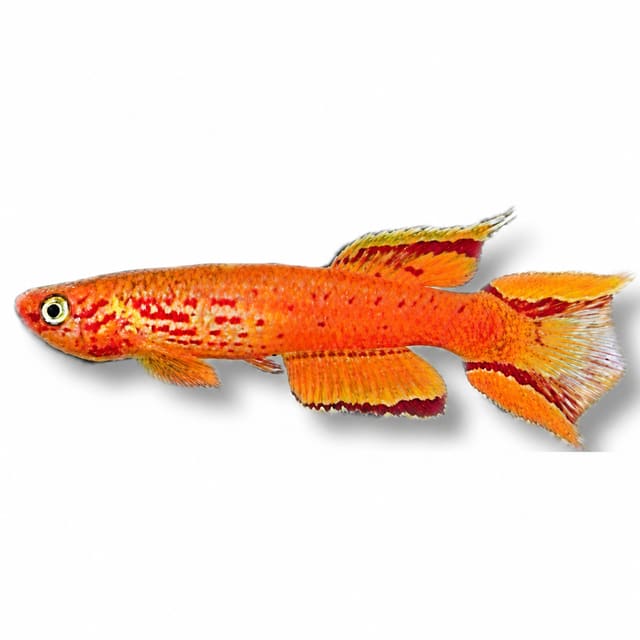
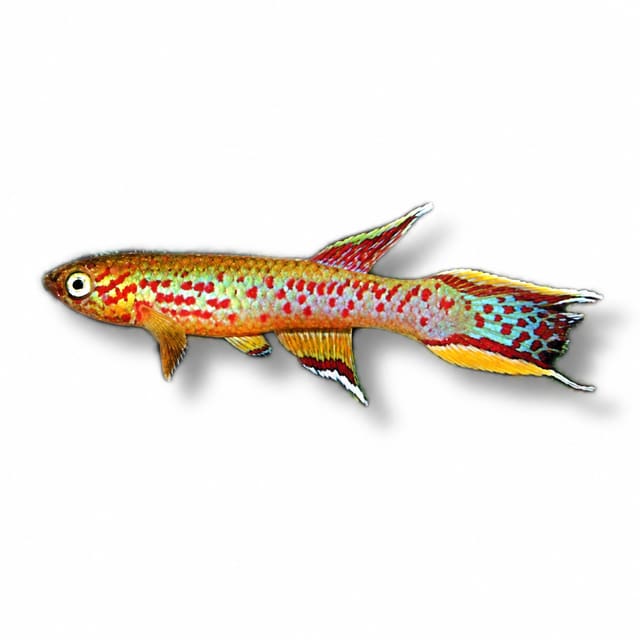
The Lampeye (Aplocheilichthys normani) is a small African freshwater killifish that reaches 4.5 cm. It suits a mature, filtered and covered aquarium; OATA suggests at least three and gives 4–12°dH, while 22–26°C and pH 6.5–7.2 are the FishBase and OATA overlap. Sold individually in dispatch sizes from 1–2 cm to 4–5 cm.
Adult size is the maximum length this species reaches at full maturity (scientific sources). The livestock you receive will be younger and smaller — pick a size above for the actual shipping size. Product-photo provenance and any image-specific limitations are stated on the listing.
Aplocheilichthys normani
Shoaling fish: kept in a group they feel safer, stay calmer and show their best colour.
Minimum of 2 per order.
The Lampeye (Aplocheilichthys normani) is a small African freshwater killifish that reaches 4.5 cm. It suits a mature, filtered and covered aquarium; OATA suggests at least three and gives 4–12°dH, while 22–26°C and pH 6.5–7.2 are the FishBase and OATA overlap. Sold individually in dispatch sizes from 1–2 cm to 4–5 cm.
Adult size is the maximum length this species reaches at full maturity (scientific sources). The livestock you receive will be younger and smaller — pick a size above for the actual shipping size. Product-photo provenance and any image-specific limitations are stated on the listing.
Maintain these water conditions for optimal health and vibrant colors
Lampeye is the established shop name for Aplocheilichthys normani, a small African freshwater killifish suited to a keeper prepared to maintain a group in a mature, filtered and covered aquarium. FishBase now lists it as Poropanchax normani and treats Aplocheilichthys normani as a synonym. FishBase gives a maximum recorded length of 4.5 cm total length for a male or unsexed fish, making that figure the decisive reference when planning permanent space.
The Wikipedia species summary also calls it Norman’s lampeye and places it among the African lampeyes and livebearers in Procatopodidae. That group name describes its zoological relationship; it should not be used to infer breeding behaviour for an individual aquarium animal. Its native range is African, while FishBase places it in freshwater river systems across a wide area extending from Senegal and neighbouring West African countries through to Cameroon, Chad, the Central African Republic and the White Nile in Sudan.
The main decisions are not about the small dispatch size alone: allow for the 4.5 cm maximum recorded adult length, provide companionship, keep water within the stated range and screen out companions that are boisterous or long-finned.
It belongs in the killifish part of the aquarium plan, and you can browse the current killifish collection when comparing related fish. Similar catalogue placement does not make two fish compatible, so compare adult size, temperament, water needs and feeding access before combining them.
One purchase supplies one animal in the selected size. Use the live size selector to choose 1–2 cm, 2–3 cm or 4–5 cm. The size you select is the size supplied, not the adult size. A smaller fish therefore needs the same long-term planning as a larger one, with the aquarium arranged around the FishBase maximum of 4.5 cm total length rather than its dimensions at dispatch.
| Selected size | What it means |
|---|---|
| 1–2 cm | One animal within this dispatch size |
| 2–3 cm | One animal within this dispatch size |
| 4–5 cm | One animal within this dispatch size |
Sex is guaranteed only when the selected option explicitly states male or female. This Lampeye listing has no sex-guaranteed option.
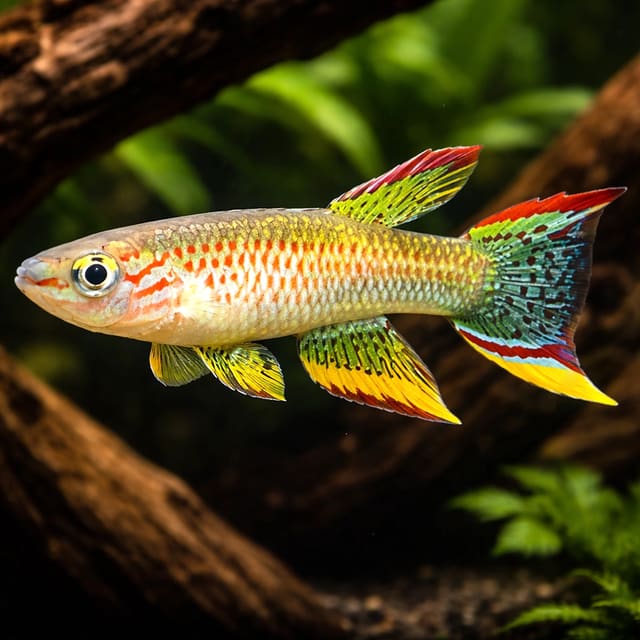
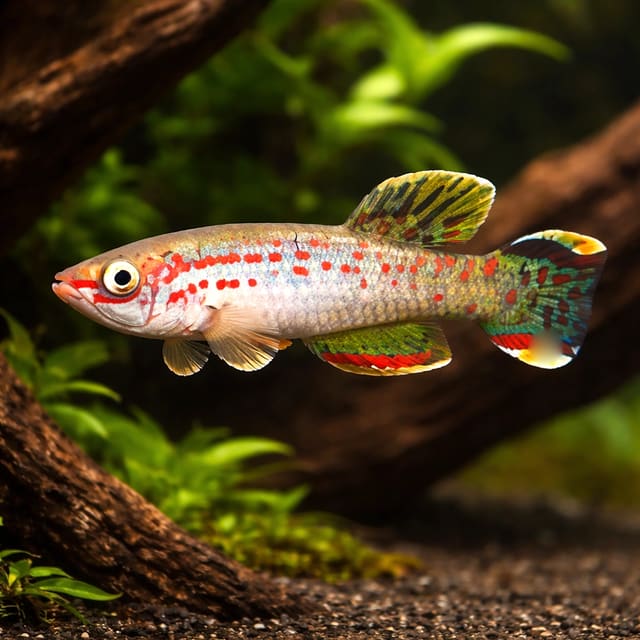
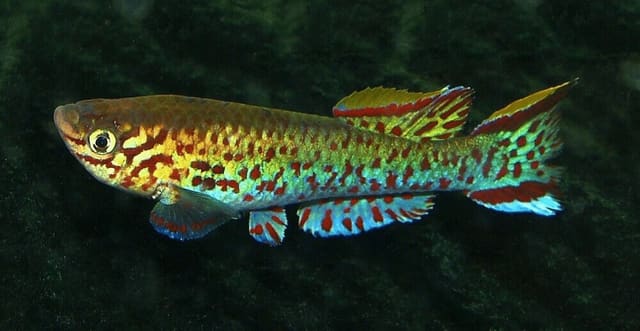
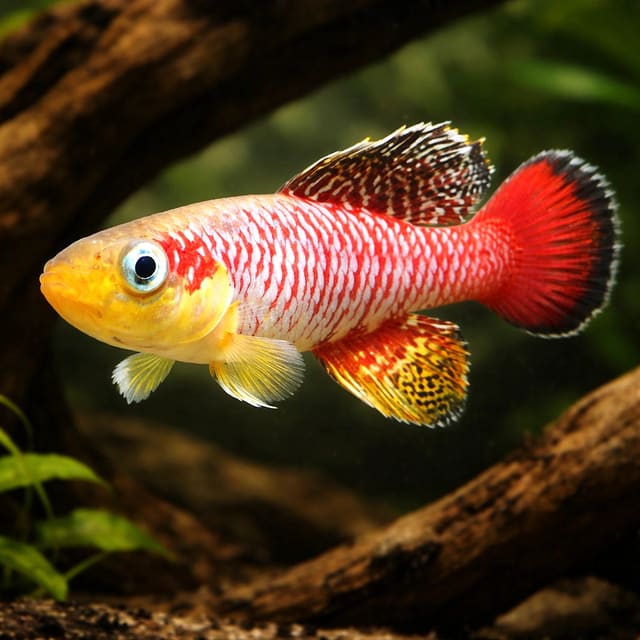
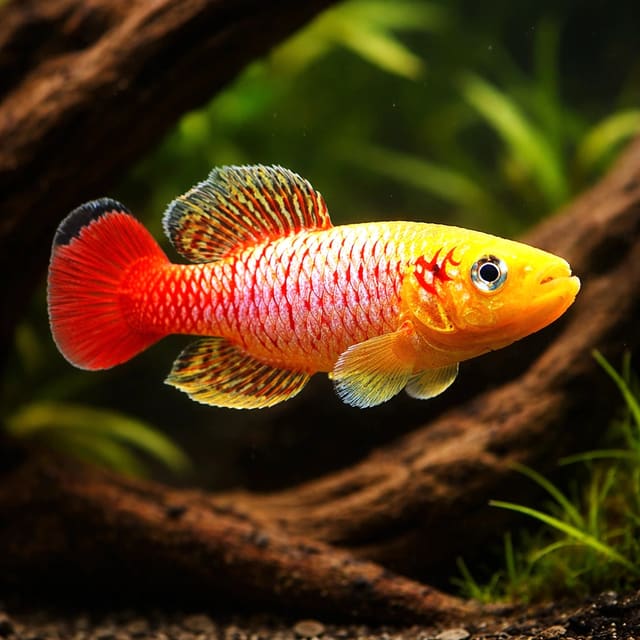
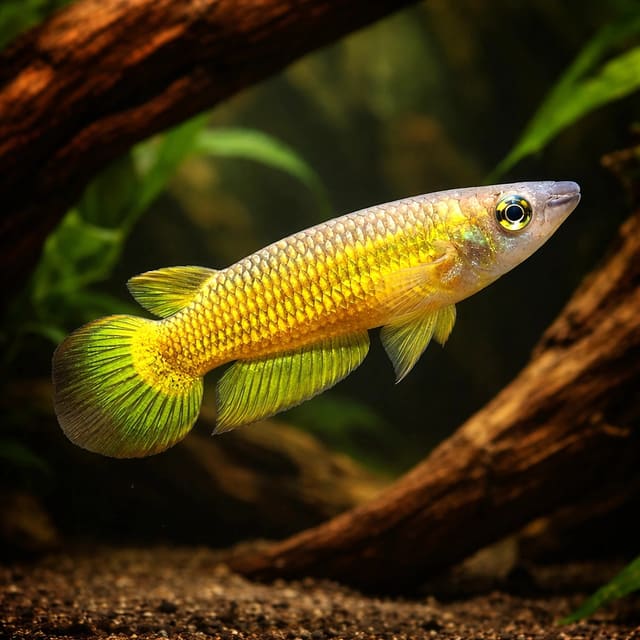
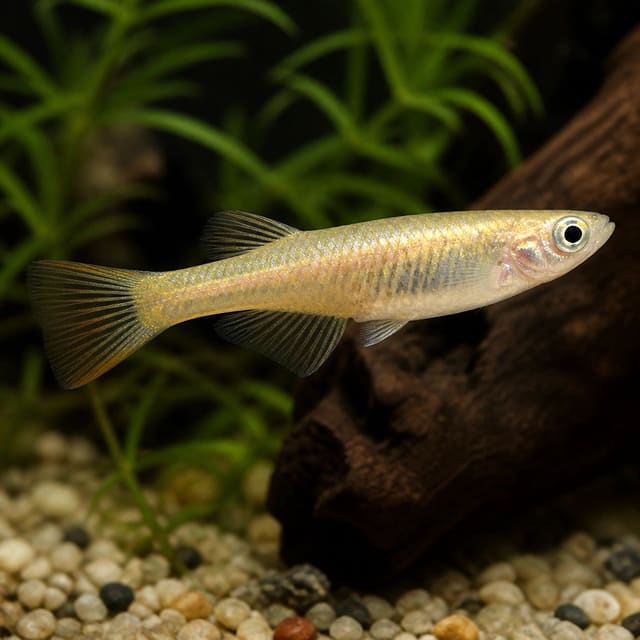
The gallery images are representative, based on reference photographs of this species, so colours can look slightly different from the live animal.
Keep the aquarium at 22–26°C and pH 6.5–7.2, the overlap between FishBase’s species figures and OATA’s killifish guidance. OATA gives 4–12°dH for killifish as group guidance. It also recommends at least 40 litres for a small group of the smallest killifish and suggests keeping at least three. Treat 40 litres as the starting point, then favour more water volume where the group, other inhabitants or layout require extra room.
| Decision | Starting point |
|---|---|
| Adult planning length | Up to 4.5 cm total length |
| Temperature | 22–26°C |
| pH | 6.5–7.2 |
| General hardness | 4–12°dH |
| Small-group aquarium | At least 40 litres |
| Companionship | At least three killifish |
| Suits | Not suited to |
|---|---|
| A mature, filtered and covered aquarium | An unfiltered or uncovered aquarium |
| A planned group of at least three | A permanent single-fish plan |
| Calm companions with overlapping water needs | Boisterous or long-finned tank mates |
| Water at 22–26°C and pH 6.5–7.2 | Water outside the working range |
A working filter and a fitted aquarium cover are essential parts of that plan. Use gravel or sand, add live plants where practical and provide shelter with plants or suitable ornaments. Before ordering livestock, read the current delivery and Live Arrival Guarantee policy for the shop’s dispatch arrangements and claim process.
Begin with an aquarium of at least 40 litres for a small group, rather than treating the body length of one dispatch-size fish as the space calculation. OATA advises buying as large an aquarium as is reasonable because greater water volume produces more stable environmental conditions. The useful question is therefore whether the finished aquarium can accommodate the whole planned group, its shelter, its filter and any carefully screened companions.
| Part of the aquarium | Action |
|---|---|
| Filter | Run a properly established biological filter continuously. |
| Cover | Keep a secure aquarium cover fitted. |
| Base | Use aquarium gravel or sand. |
| Cover and shelter | Add live plants, or use aquarium-safe artificial plants and ornaments. |
| Open water | Leave enough unobstructed space for every fish to move and feed. |
Live plants are useful because they create cover without removing the need for swimming room. If live planting is not part of the design, plastic plants, plant pots, model caves or other suitable ornaments can provide shelter. Cover becomes especially important when several males may be present, because the sex of these animals is not selected and OATA recommends planted shelter when multiple male killifish are kept together.
For a simple example, three fish in a 40-litre aquarium meet the stated group starting point, provided the tank is mature, filtered and otherwise appropriately stocked. Adding more fish does not leave that calculation unchanged: extra livestock increases waste, feeding demand and competition for space. Review the complete population before increasing the group rather than adding individuals solely because their current size looks small.
A mixed community needs another layer of planning. Deduct space occupied by hardscape, account for existing fish and check whether all inhabitants reach food without being displaced. More volume can improve stability, but it does not compensate for an immature filter, incompatible behaviour or unsuitable water. Make those decisions separately and retain the largest practical aquarium as a margin for long-term care.
A filter is an essential life-support system, not an optional way to make the aquarium look clean. The RSPCA’s aquarium welfare guidance explains that fish release toxic ammonia. Beneficial bacteria in a working biological filter convert ammonia to nitrite, which is also toxic, and then to the safer compound nitrate.
Our first tropical aquarium guide explains how to prepare and mature a first setup before livestock arrives. Use that process even when the intended fish are small. A newly filled aquarium is not biologically ready simply because its heater and filter are running.
Every fish and every portion of food increases the amount of waste the filter must process. OATA warns that stocking too quickly can cause new tank syndrome, in which the bacterial population cannot deal with the increased load. Ammonia and nitrite can then reach unhealthy levels and may make fish ill or cause death.
A worked decision is straightforward: if ammonia or nitrite is detectable before introduction, postpone adding fish and continue preparing the aquarium. If both are zero but the filter has only supported a lighter population, increase stocking gradually rather than making several unrelated additions together. If a previously stable result changes after fish are introduced, test again, reduce avoidable feeding waste and deal with water quality promptly.
Do not use a larger aquarium as a substitute for biological maturity. More water can slow a change in concentration, but only an established, maintained filter provides the bacterial processing described above. Keep the filter running and protect its bacterial population during every later cleaning.
Set the heater and choose the aquarium water around 22–26°C, pH 6.5–7.2 and 4–12°dH. The temperature and pH are the FishBase and OATA overlap, while OATA also gives a carbonate-hardness range of 3–10°dKH for killifish. These figures work together: temperature alone cannot make an aquarium suitable when pH, hardness or nitrogen waste falls outside the intended limits.
| Measurement | Action limit |
|---|---|
| Temperature | Keep within 22–26°C. |
| pH | Keep within 6.5–7.2. |
| General hardness | Plan for 4–12°dH. |
| Carbonate hardness | Plan for 3–10°dKH. |
| Ammonia | Maintain zero mg/l. |
| Nitrite | Maintain zero mg/l. |
| Nitrate | Do not exceed 20 mg/l above the normal tap-water level. |
Test at least once each week and use a consistent routine so changes are noticed. The shop’s water chemistry guide explains what the main measurements mean, while the water matcher helps compare measured aquarium values with the stated range.
If ammonia or nitrite is above zero, treat that as an immediate water-quality problem. Check the filter, review recent stocking and feeding, and carry out the appropriate maintenance steps rather than assuming the fish will adapt. If nitrate is rising, check whether weekly water changes, waste removal and feeding quantities are keeping pace with the aquarium population.
Stability remains important, but stability outside the working range is not the goal. Measure replacement tap water as well as aquarium water when interpreting hardness, pH and nitrate. The nitrate limit is written relative to the normal tap-water level, so a tank reading has to be compared with that baseline rather than judged in isolation.
FishBase places this species in a tropical freshwater environment and gives 22–26°C and pH 6.5–7.2. Keep aquarium decisions within those species figures and avoid abrupt, unnecessary changes. Record test results in a simple dated log so a gradual drift can be acted on before it becomes a sudden welfare issue.
Use a good-quality flake or granule as the routine food. Killifish are described by OATA as omnivorous and may also benefit from small live or frozen items such as daphnia, brine shrimp or tubifex. Choose food pieces small enough for the dispatch size being cared for, rather than assuming a food sold for larger community fish will be manageable.
Feed once a day and offer only what the fish can eat within a few minutes. This is the clearest supported portion control because it adjusts to group size and fish size without relying on a fixed pinch or scoop. Observe whether each fish reaches food during that short feeding period, particularly in a community aquarium.
| What you see | What to do |
|---|---|
| Food is eaten within a few minutes | Keep the portion controlled and continue observing access. |
| Food remains uneaten | Reduce the next portion and remove avoidable waste during maintenance. |
| One fish is repeatedly displaced | Reassess companion behaviour and food distribution. |
| Interest in food falls | Test water and check for other changes in behaviour or appearance. |
Overfeeding creates more than a messy substrate. Uneaten food breaks down and releases waste into the water, increasing the burden on the biological filter. Feeding more frequently than the once-daily guidance also changes the waste calculation, so do not use repeated meals as a routine response when one fish is losing access to food.
Flake or granule provides the regular base, while the named live or frozen foods add supported variety. Introduce a different food in a portion the group can finish within a few minutes. Watch actual consumption instead of judging success by whether food entered the aquarium.
Keep at least three killifish rather than planning for a single animal. OATA says killifish require companionship and suggests two females for each male to reduce stress on females and other inhabitants. That ratio can only be applied when sex is known; do not assign sex from dispatch size, colour, finnage or a gallery image.
| Situation | Planning response |
|---|---|
| Starting without other killifish | Plan for at least three animals and adequate aquarium capacity. |
| Adding to an existing group | Count the complete group and reassess the total biological load. |
| Sexes are known | Use the suggested ratio of two females to each male. |
| Sexes are not known | Provide shelter, observe interactions and avoid claiming a ratio. |
| Several males may be present | Use plentiful plant cover and monitor behaviour. |
Because one purchase supplies one animal, building a group requires the matching purchase quantity rather than treating one selection as a pack. The aquarium must be able to support the resulting number before the group is ordered. Dispatch size and purchase quantity answer different questions: size describes the selected animal’s dimensions when supplied, while quantity determines how many animals are supplied.
More than three may be kept when aquarium capacity, filtration and the suggested sex ratio allow it. Do not turn that permission into a universal target such as ten, fifteen or twenty fish. The correct number depends on the complete population and the space needed to maintain stable water and low-stress interactions.
Group guidance says male killifish are generally more colourful and have more developed finnage than females, but those tendencies are not a dependable sex selection method for this offer. Use behaviour as a welfare check, not as proof of sex. Hiding more than normal or a change in aggression calls for a review of cover, space, group composition and water quality.
Companionship does not remove the need for individual observation. At the daily feed, check that each fish emerges, swims appropriately and gains access to food. This short check reveals whether the planned group is functioning without turning normal variation between fish into a fixed promise about temperament.
Prepare the aquarium before the fish arrives. Confirm that the cover is fitted, the filter is established, temperature is within 22–26°C and the planned water falls within pH 6.5–7.2 and 4–12°dH. Ammonia and nitrite must both test at zero mg/l before any fish is added.
Do not add fish to correct or test an unfinished setup. A heater can reach its setting quickly, while a biological filter depends on a living bacterial population capable of processing waste. Water clarity cannot replace ammonia and nitrite tests.
At each daily feed, look for appropriate swimming, normal breathing, intact fins and scales, and interest in food. Confirm that no individual is repeatedly displaced by another fish. Keep the meal small enough to be eaten within a few minutes, because excess food creates a preventable increase in waste just as the filter adjusts to the new population.
Use the first weekly test as a formal checkpoint even when the fish look settled. Ammonia and nitrite must remain at zero, while nitrate should stay within 20 mg/l above the normal tap-water level. A normal-looking group does not justify skipping these measurements.
Allow the filter’s bacterial population to respond whenever fish numbers or feeding increase. Do not combine the Lampeye group with several other new additions merely to complete the aquarium at once. A staged plan makes it easier to identify which change affected waste levels, feeding competition or behaviour.
If swimming, breathing, colour, hiding or feeding changes, test the water first and inspect the setup. Prompt measurement turns a vague concern into an actionable result: correct water quality, restore feeding access or reconsider an interaction instead of waiting for the change to resolve by itself.
Carry out a 25% partial water change at least once every week. Use a siphon to remove solid waste from the gravel where needed, and treat replacement tap water with a conditioner that removes chlorine or chloramine before it enters the aquarium.
If filter media needs cleaning, rinse it lightly in aquarium water removed during the partial water change. Do not rinse it under the tap, because chlorine or chloramine may kill part of the beneficial bacterial population. This method protects the biological function while removing enough debris to restore flow.
| Change noticed | First response |
|---|---|
| Hanging at the surface, sitting on the bottom or erratic swimming | Test water and check filtration. |
| Faster or slower gill movement | Test water promptly and inspect the fish. |
| Darker or paler colour | Review water, hiding and interactions. |
| More aggression or hiding | Check group dynamics, shelter and space. |
| White spots, fluffy growths or damaged fins and scales | Check water and seek health guidance. |
| Reduced food intake or changing body condition | Confirm feeding access and test water. |
These signs do not all point to the same cause, so avoid choosing a treatment from appearance alone. Start with measurable water quality and a close check of behaviour, breathing, body condition and feeding. If you remain concerned about a health change, contact us for further guidance.
Keep a dated note of test results, water changes and any unusual observation. A short log can show whether nitrate has climbed gradually, whether a feeding change preceded waste accumulation or whether behaviour altered after stocking. That makes the next care decision concrete while preserving a consistent weekly routine.
Compatibility should be decided by behaviour, water requirements, adult size and feeding access rather than by a generic community-fish label. OATA describes killifish as generally small and peaceful but says they do not appreciate boisterous tank mates. It also notes that some killifish do best in a dedicated aquarium because they can be shy and prone to being bullied.
| Question | Decision rule |
|---|---|
| Is it boisterous? | Avoid companions likely to bully or continually disturb the group. |
| Does its water range overlap? | Use only fish whose routine care fits the same aquarium conditions. |
| Will it dominate food? | Reject a combination that prevents every Lampeye from feeding. |
| Is it long-finned? | Avoid it because OATA says community killifish should not be mixed with long-finned species. |
| Will the full population fit? | Recalculate space and filtration for adult sizes and total numbers. |
| Can behaviour be monitored? | Provide cover and a practical way to separate fish if interactions fail. |
Do not publish a universal list of named companions. A species may look appropriately small while requiring different water, behaving too forcefully at feeding time or becoming less suitable at adult size. The complete aquarium matters more than a shared retail category.
A promising community candidate is calm, fits 22–26°C, pH 6.5–7.2 and 4–12°dH, leaves the killifish able to eat and does not overload the aquarium. A dedicated setup remains a valid choice when a mixed population creates too much uncertainty. If you want a stocking and compatibility assessment, contact us with the aquarium volume, measured water, existing fish and intended group size.
A compatibility decision continues after introduction. Calm behaviour on the first day is useful, but the arrangement must also work during feeding, around shelter and as the fish settle. Observe changes in aggression, hiding, swimming and food intake rather than waiting for physical damage.
Feeding provides a practical daily compatibility check. Every member of the group should have a fair opportunity to consume suitable food within the few-minute feeding period. If one fish consistently misses food, adding extra meals may worsen water quality without solving the underlying competition.
Boisterous and long-finned companions belong in the avoid category under OATA’s killifish guidance. Other candidates require individual screening rather than a blanket promise.
Large aquarium volume improves stability but cannot convert incompatible behaviour into a dependable pairing. Shelter can reduce pressure and provide retreat, but it should not be used to justify repeated bullying. If the group hides more than normal, changes aggression or stops feeding properly, test the water and review interactions as separate possible causes.
When changing the community, make one controlled stocking decision at a time. Slow additions protect the biological filter and make behavioural outcomes easier to interpret. Recheck ammonia and nitrite after the population changes, maintain the normal weekly routine and be ready to revise the combination if feeding or welfare deteriorates.
The Lampeye reaches a FishBase maximum recorded length of 4.5 cm total length. Plan its permanent aquarium around that adult figure rather than its size when supplied.
Start with at least 40 litres for a small group. OATA gives this as killifish group guidance; use a mature biological filter, secure cover, gravel or sand, and plants or aquarium-safe ornaments for shelter.
OATA’s killifish guidance suggests keeping at least three and, where sex is known, two females to each male. Sex is not guaranteed for this offer, so provide cover and monitor interactions without assuming a ratio.
FishBase describes it as easy to maintain in an aquarium, but it still needs a mature filter, a secure cover, weekly testing, a 25% water change at least once a week and a properly planned group.
OATA’s killifish guidance recommends good-quality flake or granule once a day, limited to what the fish eat within a few minutes. Small live or frozen daphnia, brine shrimp or tubifex can add variety.
Keep it at 22–26°C and pH 6.5–7.2, the FishBase and OATA overlap. OATA’s killifish guidance also gives 4–12°dH, with ammonia and nitrite at zero mg/l.
OATA describes killifish as generally peaceful but says some males may be aggressive towards long-finned fish. Avoid long-finned and boisterous companions, and monitor aggression, hiding and feeding access.
Consider calm fish whose water requirements overlap and that allow every Lampeye to feed. Avoid boisterous and long-finned tank mates, then assess adult size, total stocking and behaviour before combining species.
Someone must be present to receive the parcel. Film every delivery continuously from the sealed parcel as it is opened, showing the fish still in the sealed bag; float the bag for 20–30 minutes, then release the fish without pouring the bag water into the aquarium.
No reviews for this item yet. Bought one? Honest reviews only, good or bad.
What customers say about ordering from us
I have a small group of long finned mountain minnows. So was delighted to be able to order ten of this variety to increase the genetics in my tank . The ones I recieved are healthy but it’s to early to give a verdict on wether they are of a long finned type since they are small currently.
Gordon Walker · 23 Sept 2026
100% success travel and "installation". Pleased with quality of purchase. The Siamese fighter a bit "shy" so have not yet seen him at his best yet but looking good. Happy customer. GG
George E Garratt · 21 Sept 2026
Reviews of our shop, collected by Judge.me, an independent third-party review collector. Newest first.