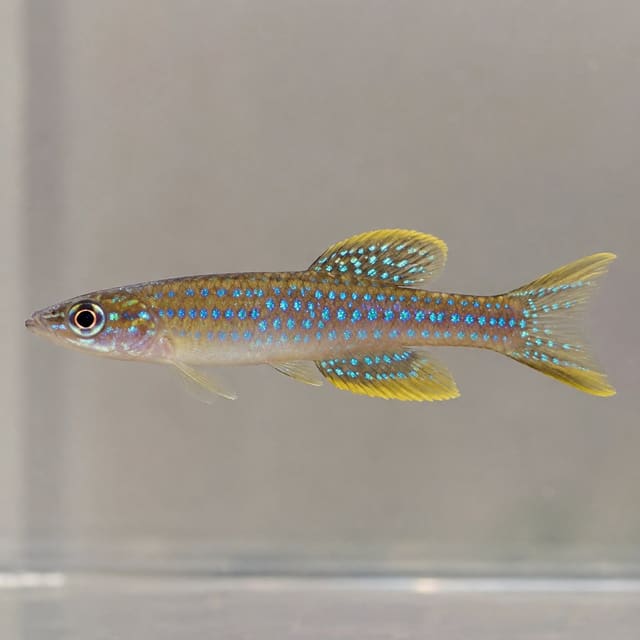

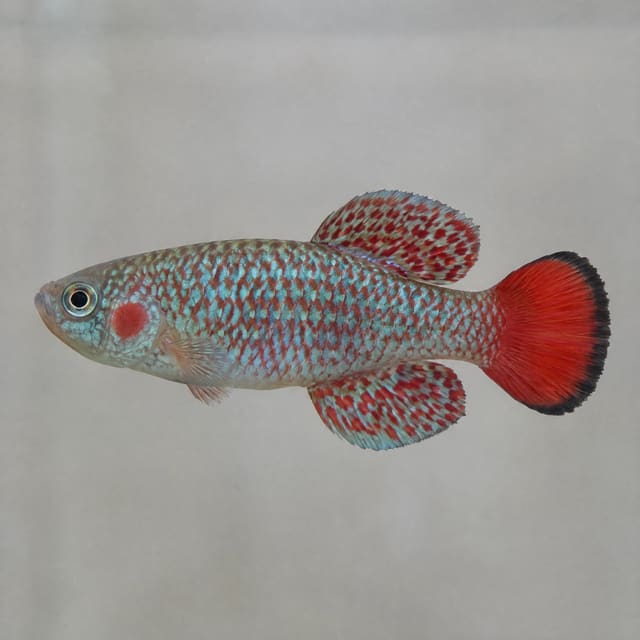
Aphyosemion australe with the Cap Esterias label: a non-annual lyretail killifish for a covered, planted aquarium. Select the listed size option.
Breeding SpeciesFreshwater FishKillifishLive FishModerate CareRare FishUK Delivery
Care at a Glance
Scientific Name
Aphyosemion australe
Max Adult Size
up to 6 cm
Care Level
Moderate
Temperament
Peaceful
Temperature
21–24°C
pH Range
6–7
Hardness
5–12 dGH
Diet
Carnivore - live foods preferred, frozen foods
Adult size is the maximum length this species reaches at full maturity (scientific sources). The livestock you receive will be younger and smaller — pick a size above for the actual shipping size. Product-photo provenance and any image-specific limitations are stated on the listing.
Too much to read? Just ask Aqua.
Aqua, our 24/7 AI assistant, can answer questions about Lyretail Killifish (Aphyosemion australe 'Cap Esterias'). Talk or type.
Water Parameters
Temperature
21–24°C
21°CGuidance range24°C
pH Level
6–7
6Guidance range7
Water Hardness
5–12 dGH
5 dGHGuidance range12 dGH
Aphyosemion australe
Lyretail Killifish (Aphyosemion australe 'Cap Esterias')
Moderate Care
Peaceful
£10.99
Multi-Buy Pricing
— from £8.80 eachSave when buying multiple fish. Each quantity is one fish; sex and pair formation are not guaranteed unless the selected variant explicitly states them.
Selected fish
£20.24You save £1.74
- Live arrival guaranteed. Email photos the same day if anything is wrong. An unboxing video is optional; we recommend one when practical to help us review problems faster. How it works
- £19.95 delivery, half price from £100, free from £200, or free on the whole order with free delivery fish packs.
- Check our reviews (opens Google Business Profile in a new tab) on Google.
Aphyosemion australe with the Cap Esterias label: a non-annual lyretail killifish for a covered, planted aquarium. Select the listed size option.
Breeding SpeciesFreshwater FishKillifishLive FishModerate CareRare FishUK Delivery
Care at a Glance
Scientific Name
Aphyosemion australe
Max Adult Size
up to 6 cm
Care Level
Moderate
Temperament
Peaceful
Temperature
21–24°C
pH Range
6–7
Hardness
5–12 dGH
Diet
Carnivore - live foods preferred, frozen foods
Adult size is the maximum length this species reaches at full maturity (scientific sources). The livestock you receive will be younger and smaller — pick a size above for the actual shipping size. Product-photo provenance and any image-specific limitations are stated on the listing.
Too much to read? Just ask Aqua.
Aqua, our 24/7 AI assistant, can answer questions about Lyretail Killifish (Aphyosemion australe 'Cap Esterias'). Talk or type.
Water Parameters
Read the full care guidance when planning conditions for your aquarium.
Temperature
21–24°C
21°CGuidance range24°C
pH Level
6–7
6Guidance range7
Water Hardness
5–12 dGH
5 dGHGuidance range12 dGH
Aphyosemion australe is a non-annual African lyretail killifish. This offer carries the Cap Esterias label. Plan a covered, planted aquarium with calm feeding areas and suitably sized live and frozen foods. The species reaches a published maximum total length of 6 cm, including the tail.
This listing offers Aphyosemion australe under the Cap Esterias label. The name is retained as supplied; a documented collection code or locality breeding line has not been established. Choose from the actual size options shown for the listing. A size grade does not guarantee a male, female, pair or trio.
🔹 Quick Facts
- Scientific Name: Aphyosemion australe (Cap Esterias label)
- Care Level: Moderate
- Aquarium planning: A covered planted tank; published length recommendation 60 cm
- Temperature: 21-24°C (70-75°F)
- pH Range: 6.0-7.0
- Lifespan: A non-annual species; longevity varies with stock and care
- Temperament: Peaceful, but males can spar
- Diet: Carnivore; live and frozen foods preferred
Classification
- Order: Cyprinodontiformes
- Family: Nothobranchiidae
- Genus: Aphyosemion
Aphyosemion australe is an African killifish in the family Nothobranchiidae. It is a non-annual species. Cap Esterias is the supplied label here; it does not establish a documented collection history for the fish offered.
Where Do Cap Esterias Lyretail Killifish Come From? Natural Habitat Explained
Aphyosemion australe is an African freshwater killifish; published records include Gabon and Congo and other West-Central African countries. The supplier label Cap Esterias does not demonstrate where this batch was collected or bred.
Understanding this background helps explain the best Aphyosemion australe water parameters. These fish are adapted to soft to moderately soft water, mild acidity, and stable temperatures rather than hot tropical extremes. In practical terms, Aphyosemion australe ideal water conditions usually mean pH 6.0-7.0, hardness around 5-12 dGH, and cooler tropical temperatures than many community fish. That is why keepers researching killifish temperature requirements, killifish water hardness, and Aphyosemion australe pH level often find this species forgiving when the basics are right but sensitive to neglect and overheating.
This species is also a good fit for a killifish biotope aquarium. A dark substrate, dried leaves, floating plants, and gentle filtration create a much more natural result than a bright, open tank. Because they are top-dwellers, they feel secure under cover. Their behaviour improves noticeably when the aquarium includes broken sightlines, plant roots, and calm corners.
Many aquarists discover Cap Esterias Lyretail while searching broader terms such as freshwater fish UK for sale, miscellaneous tropical fish, or oddball tropical fish. It deserves more attention than that. This is not just an unusual fish; it is a highly expressive species with a clear ecological niche. For keepers interested in the wider world of killifish UK, it also provides a useful introduction before moving on to more specialised fish such as Hypsolebias Picturatus «Volta Das Pedras» or if you plan to buy nothobranchius rachovii later on.
💡 Expert Tip
Mimicking the natural habitat with floating cover, low flow, leaf litter tones, and subdued lighting improves colour, reduces stress, and encourages natural surface-feeding and courtship displays.
How to Set Up the Perfect Tank for Cap Esterias Lyretail Killifish
The best Aphyosemion australe care guide starts with the lid. Like many killies, Cap Esterias Lyretail is an excellent jumper. Even a small gap around airline tubing can be enough for a fish to escape. If you only remember one point from this page about killifish aquarium requirements, make it this: use a fully covered aquarium.
Tank Size Requirements
Use aquarium length, cover and fish interactions when planning space. FishBase cites an aquarium length of 60 cm for Aphyosemion australe. A nominal litre capacity is not enough to establish suitability, and a recommended social arrangement does not define the quantity or sexes supplied. Keep extra males only where planting and sightline breaks allow fish to retreat, and observe for persistent chasing.
A useful layout leaves space for floating cover, a spawning mop if needed and calmer territories. Check the aquarium footprint and fish interactions rather than treating a nominal litre capacity as sufficient by itself.
Water Parameters
FishBase gives 21–24°C, pH 6.0–7.0 and 5–12 dH as published reference ranges for Aphyosemion australe. These are species-level recommendations, not measured holding or bag water. Acclimatise carefully to suitable stable conditions and avoid abrupt changes in temperature or water chemistry.
21-24°C
Temperature
6.0-7.0
pH
5-12 dGH
Hardness
60 cm
Published aquarium length recommendation
Filtration
Use gentle filtration. An air-driven sponge filter is excellent for breeding tanks, while a small internal filter with adjustable flow works in display aquariums. Strong current is not ideal because these fish come from still or slow water. They feed near the top and appreciate calm surface zones. If you are building a planted setup, sponge filtration also protects fry and preserves microfauna. Pair the tank with a reliable aquarium heater suited to cooler tropical ranges and a thermometer so seasonal room changes do not catch you out.
Substrate
The best killifish substrate preference is usually a dark sand or fine gravel. Dark substrate deepens body colour and helps shy fish settle faster. It also supports the look of a natural killifish biotope aquarium. Keep depth modest, around 2-4 cm, unless you are planting heavily. Avoid sharp gravel that traps waste and makes maintenance harder.
Plants and Decor
Aphyosemion australe for planted tank layouts are highly recommended. Use floating plants to diffuse light, plus rooted species such as Java fern, Cryptocoryne, Anubias, and mosses. Fine-leaved plants and mops provide spawning sites. If you enjoy comparing species, this fish also sits nicely alongside other elegant killies such as Aphyosemion Australe «Gold» - Gold Lyretail and Fundulopanchax gardneri «Akure» in a dedicated fish room, though not mixed in the same breeding tank. Add driftwood, leaf litter tones, and shaded corners to create security.
Lighting
Moderate to low lighting is best. Bright light without floating cover can make them skittish. Run lighting for 6-8 hours at first, then adjust depending on plant growth and algae. In display tanks, a slightly warm spectrum often brings out blue and red patterning beautifully in the male.
Quick Setup Checklist
- Use a tightly fitted lid with no jumping gaps
- Plan space for the fish selected, with plant cover and room to retreat
- Keep water at 21-24°C and pH 6.0-7.0
- Choose dark substrate and gentle filtration
- Add floating plants, moss, and shaded cover
- Perform regular small water changes, not large swings
💡 Pro Tip
Use a mature biological filter and test the water before adding fish. Ammonia and nitrite should remain at zero as the filter processes waste; elapsed time alone does not establish readiness. Add stock gradually and continue testing.
What Do Cap Esterias Lyretail Killifish Eat? Complete Feeding Guide
The correct Aphyosemion australe diet is heavily protein-based. These are carnivorous micropredators, not algae grazers and not true flake-only community fish. In nature they take insect larvae, tiny aquatic invertebrates, and surface prey. In captivity, the best results come from variety: quality frozen foods, occasional live foods, and carefully selected prepared foods. This is one reason they stand out among colourful killifish species; rich diet and low stress produce noticeably better finnage and colour.
Staple Foods
A practical Aphyosemion australe feeding guide includes frozen bloodworm, daphnia, cyclops, brine shrimp, and finely sized carnivore granules. Many fish accept high-quality micro pellets once settled, but newly imported or shy fish often respond best to frozen foods first. For aquarists comparing killifish vs guppy, this is a major difference: guppies are far less demanding in diet, while killies usually need more protein and better food quality.
Supplemental Foods
Live baby brine shrimp, grindal worms, white worms, and mosquito larvae are excellent supplemental foods. They are especially useful when conditioning adults for Aphyosemion australe breeding. If you are wondering whether this is the easiest killifish to breed, it is not the absolute easiest, but it is among the more achievable species once feeding is consistent.
Treats and Conditioning Foods
Before spawning, use small live foods 1-2 times daily for 7-10 days. This improves egg production in females and display intensity in males. It also helps answer the common keeper question of how to get the most from the most colourful killifish look seen in photos. Good food, dark décor, and calm water matter more than additives.
| Time | Food | Amount |
|---|---|---|
| Morning | Small carnivore granules or frozen cyclops | What they finish in 1-2 minutes |
| Evening | Frozen brine shrimp, daphnia, or bloodworm | Light meal, no leftovers |
Feeding Frequency and Portion Control
Feed adults once or twice daily in small portions. Juveniles do better with 2-3 smaller meals. Because they are surface-focused fish, watch carefully to ensure food is actually taken and not drifting into the filter. Remove leftovers quickly. This species has a small stomach and does not benefit from heavy feeding.
Foods to Avoid
Avoid oversized pellets, low-protein flakes as the sole diet, and fatty foods used too often. Also avoid medicated foods unless clearly needed. If you keep invertebrates in the same system, be cautious with treatments and copper. Customers searching nano fish UK, colourful freshwater fish UK, or peaceful killifish for community tank options often underestimate how much diet quality affects long-term success with killies.
⚠️ Feeding Warning
Overfeeding causes ammonia spikes, oily surface films, and bacterial issues. Cap Esterias Lyretails look best when fed little and often, not heavily in one sitting.
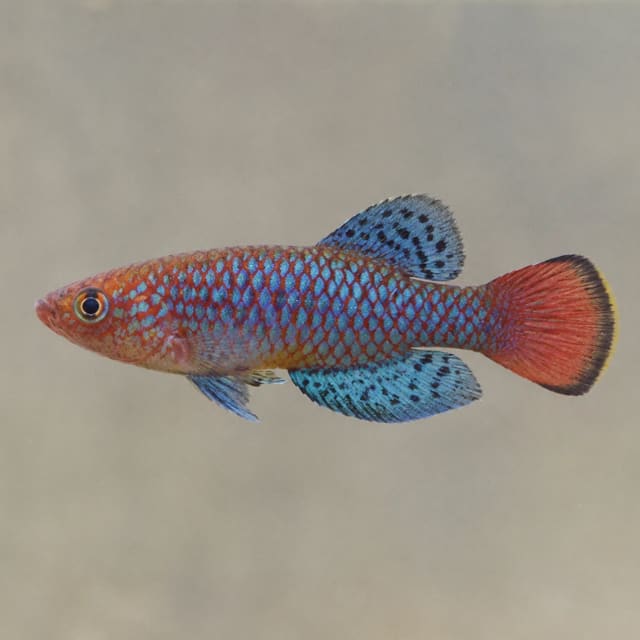
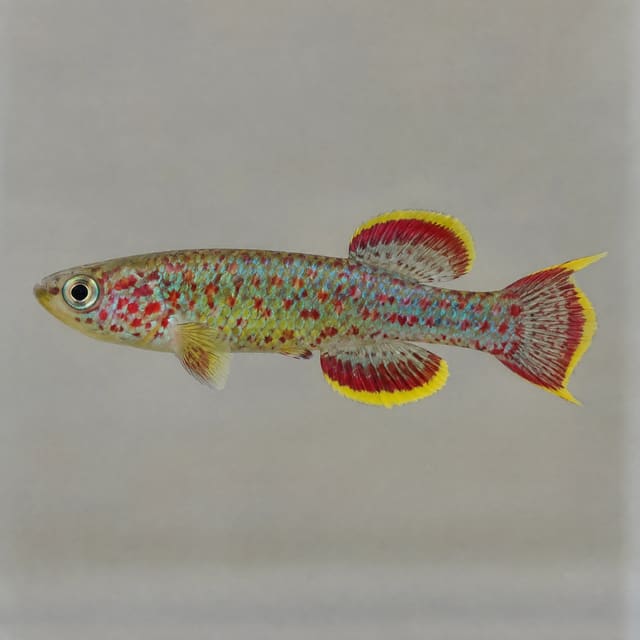
Pseudepiplatys Annulatus - Clown Killifish — A useful comparison species if you are choosing between larger lyretails and tiny surface-feeding killies with similar frozen-food needs.
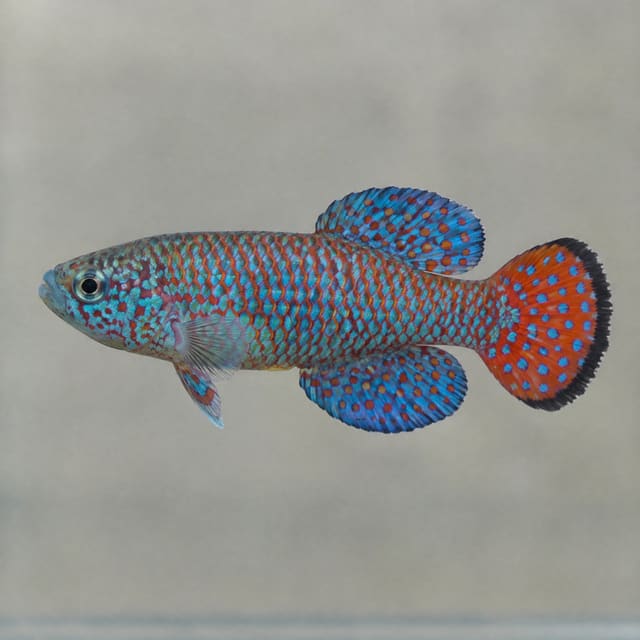
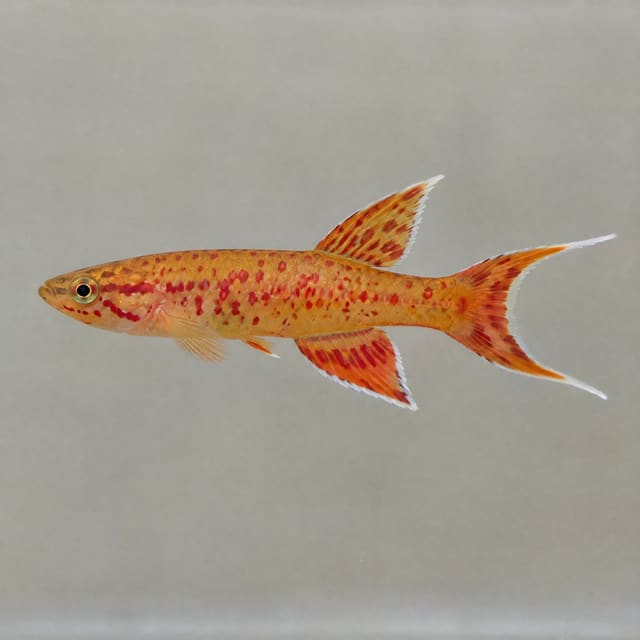
Aplocheilus lineatus «Gold» — Another panchax fish worth considering if you prefer a bolder feeder with a more elongated body shape.
Cap Esterias Lyretail Killifish Appearance: Colors, Patterns & Varieties
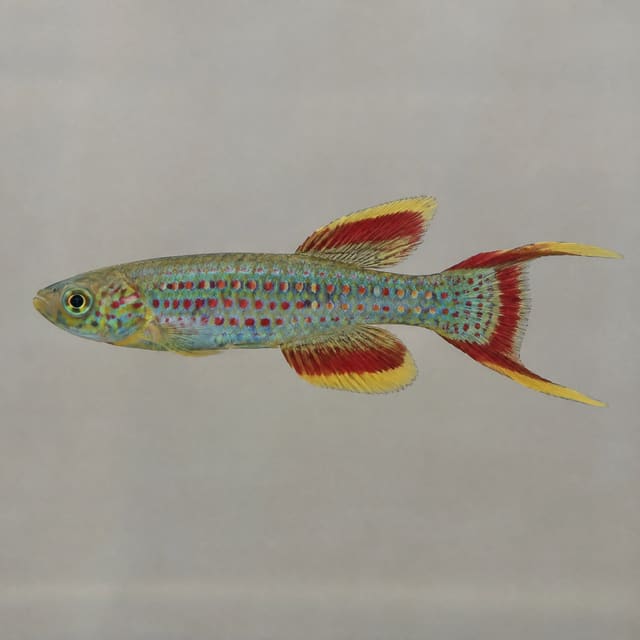
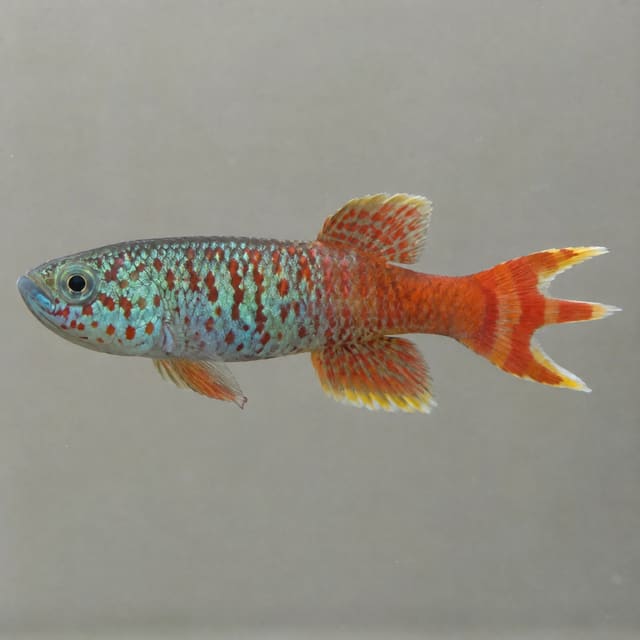
Adult lyretail killifish size is usually around 5-6 cm, with males appearing larger because of extended finnage. The body is streamlined, slightly laterally compressed, and built for surface and mid-upper water movement rather than bottom browsing. Males are the stars: blue to green iridescence across the flanks, red spotting or streaking, yellow edging, and the classic lyre extension on the caudal fin. Under good lighting and dark décor, the metallic sheen is exceptional.
Females are smaller, rounder, and much plainer, usually tan to olive with reduced patterning and shorter fins. That difference makes sexing straightforward, which is helpful if you are looking for a true male-and-female pair rather than searching vague terms like female killifish for sale uk. In a settled trio, the male spends much of the day displaying to females and patrolling the upper levels.
Mature males generally have more elaborate finnage and stronger colour than females, but appearance depends on age and condition. Size grades do not guarantee sex or a documented locality breeding line. Use the actual listing options and ask about availability if a particular sex is needed.
To maximise colour, use dark substrate, floating cover, and a meaty diet. Stress, harsh lighting, and sparse décor wash fish out quickly. In mature display tanks, this species can rival many fish marketed as the most colourful killifish while remaining more practical than some ultra-rare imports.
What Fish Can Live With Cap Esterias Lyretail Killifish? Compatibility Guide
Aphyosemion australe tank mates should be peaceful, not too fast, and not aggressive fin-nippers. This species is often described as a peaceful killifish for community tank that is broadly true, but there are limits. Males may spar with each other, and very active community fish can outcompete them at feeding time. The best companions are calm top-to-mid dwellers that enjoy similar water and do not harass long fins.
Ideal Tank Mates
In a species-focused setup, a trio works beautifully on its own. If you want a mixed aquarium, choose small peaceful fish and keep stocking light. Related species should not be mixed if you want to preserve bloodlines. For hobbyists exploring other killies, suitable separate-tank alternatives include Aphyosemion Australe «Gold» - Gold Lyretail, Fundulopanchax amieti, Tanganyika Killifish (Lamprichthys tanganicanus), and Epiplatys Dageti Monroviae - Red-Chinned. These are not all direct tank mates, but they are excellent options if you are building a dedicated killifish UK collection.
Some customers compare this species with golden wonder killifish for sale listings or ask about rocket panchax. Those fish are usually larger, more predatory, and not ideal in the same setup. Likewise, if you are browsing medaka fish for sale, medaka for sale uk, or celebes rainbowfish for sale uk, note that water style and behaviour differ enough that careful planning is needed.
Species to Avoid
Avoid fin-nippers such as tiger barbs, large cichlids, boisterous danios, and anything big enough to view them as food. Also avoid mixing with similar killifish populations if breeding purity matters. This is especially important for keepers involved with the british killifish association or anyone interested in line maintenance. Do not combine them casually with pike killifish for sale species, blue gularis killifish for sale uk, or large predatory surface fish.
Community Tank Examples
A planted species aquarium makes feeding and interactions easier to observe. A mixed community needs additional space and carefully matched water conditions and temperament; no fixed volume automatically makes a combination suitable.
Invertebrates
Snails are usually safe. Very small shrimp shrimplets may be eaten, while adult shrimp may be ignored depending on tank layout. Dense moss and roots improve survival. They are not suitable companions for delicate oddities such as freshwater flounder for sale uk or tropical eels for sale uk, which have very different care needs.
| Species | Compatible? | Notes |
|---|---|---|
| Pseudepiplatys Annulatus - Clown Killifish | ⚠️ Caution | Similar niche; best kept separately to avoid feeding competition in mixed killifish aquariums. |
| Tanganyika Killifish (Lamprichthys tanganicanus) | ❌ Avoid | Different water chemistry and activity level. |
| Small peaceful snails | ✅ Yes | Useful clean-up crew and generally ignored. |
💡 Compatibility Tip
Always quarantine new arrivals for 2-4 weeks. Killifish are hardy when settled, but they do not appreciate sudden disease exposure, aggressive tank mates, or rushed introductions.
How to Breed Cap Esterias Lyretail Killifish: Complete Breeding Guide
If you are researching how to breed killifish, Cap Esterias Lyretail is an excellent place to start. This is a non-annual species, so you are not dealing with the strict dry-storage cycle associated with many annuals. That alone makes it easier for home aquarists. Aphyosemion australe breeding is still classed as moderate because egg collection, fungal control, and fry feeding need attention, but it is very achievable.
Breeding Setup
A separate covered, planted breeding aquarium or one fitted with spawning mops allows closer observation. Specialist reports for Aphyosemion australe describe successful spawning in moderately soft, acidic water, including at 20–23°C. These observations are guidance rather than a guarantee for any particular stock.
Spawning Behaviour
The male courts the female with flared fins and short bursts of display. Spawning usually occurs in mops, moss, or fine roots. Eggs are adhesive and can be collected every few days. This species is often discussed as one of the easiest killifish to breed among medium-sized African killies because adults spawn readily when well fed.
Egg Care and Hatching
This non-annual species can spawn in fine plants or mops. Specialist keepers report both collecting eggs and raising fry in planted permanent setups. Use a separate, clean rearing plan if you want to observe eggs and feed fry; hatching time and success vary, and medication should not be used routinely without a clear reason.
Fry Care and Growth
Newly hatched fry are small but usually large enough for microworms, vinegar eels, and newly hatched brine shrimp soon after free swimming. Feed little and often. Maintain pristine water with gentle daily changes. Cover is important because fry also stay near the surface. Growth is steady, and sex differences become visible as males colour up.
Common Challenges
The main problems are fungal eggs, fry starvation from oversized first foods, and adults eating eggs if left too long. Stable water and regular collection solve most issues. If you are deciding whether to buy Aphyosemion australe UK, Aphyosemion australe for sale UK, or order Aphyosemion australe online UK for breeding, start with unrelated healthy stock and avoid mixing populations. That matters to serious keepers and to those connected with the british killifish association.
Advanced Breeding Tip
Rotate two or three spawning mops and collect eggs every 2-3 days rather than leaving adults with them continuously. This improves hatch rates, reduces egg predation, and helps you track incubation dates more accurately.
Cap Esterias Lyretail vs Similar Species: Which Should You Choose?
Choosing between killifish species can be confusing because many are beautiful, many are sold under location names, and care differences are not always obvious from a photo. A good best killifish species comparison looks at size, behaviour, and breeding style, not just colour. Cap Esterias Lyretail is often compared with clown killifish and gold lyretails because all are attractive surface-oriented fish, but they suit different aquariums.
| Feature | Cap Esterias Lyretail | Clown Killifish |
|---|---|---|
| Max Size | 6 cm | 3.5-4 cm |
| Care Level | Moderate | Moderate |
| Temperature | 21-24°C | 22-26°C |
| Best For | Colourful species tank or planted soft-water setup | Tiny surface fish in calm nano-style aquariums |
In the Aphyosemion australe vs clown killifish debate, Cap Esterias Lyretail is the better option if you want a larger, bolder display fish with obvious male-female contrast and easier visual impact. Clown killifish are charming but much smaller and can be fussier in mixed tanks. If you are browsing clown killifish for sale uk, choose them for tiny, peaceful displays; choose Cap Esterias Lyretail only for a suitable covered, planted aquarium.
| Feature | Cap Esterias Lyretail | Gold Lyretail |
|---|---|---|
| Body Pattern | Colour depends on stock and condition | Golden-yellow body tones |
| Temperament | Peaceful, males spar | Similarly peaceful |
| Breeding | Moderate, mop spawner | Moderate, mop spawner |
| Best For | Naturalistic planted tanks | Warm-toned display tanks |
| Alternative | Fundulopanchax gardneri «Akure» | Aphyosemion Australe «Gold» - Gold Lyretail |
If you want a classic African killifish with manageable care, this fish is often the better choice than chasing every rare killifish for collectors listing. It keeps the excitement of a specialist species without requiring the same level of seasonal egg handling as annuals. That balance is why many aquarists searching killifish for sale UK eventually settle on Cap Esterias Lyretail.
Common Health Problems in Cap Esterias Lyretail Killifish & How to Prevent Them
Good killifish health starts with stable water, a secure lid, and careful feeding. Healthy fish are alert, surface-active, eager to feed, and brightly coloured. Males should display regularly, and females should hold good body weight without bloating. Faded colour, clamped fins, loss of appetite, or hiding at the bottom usually point to stress, poor water quality, or disease.
Signs of a Healthy Fish
Look for clear eyes, intact fins, smooth scales, and steady but not frantic movement. A healthy Cap Esterias Lyretail will patrol the upper levels and respond quickly to food. Because they are top-dwellers, sudden reluctance to rise for feeding is an early warning sign.
Common Diseases and Symptoms
The most common issues are external parasites, bacterial infections after transport stress, fungal eggs during breeding, and injuries from jumping or rough décor. White spot can occur after temperature swings. Fin damage is often social rather than infectious, especially if too many males are kept in a small tank. Poor water quality can also cause lethargy and secondary infections.
Treatment Options
Start with testing water and correcting the cause. Increase aeration, perform small water changes, and isolate affected fish if needed. Use medications carefully and always confirm dosing for small fish. If invertebrates are present, avoid copper-based treatments in the main display. During treatment, keep lighting subdued and feeding light. In breeding projects, remove suspect eggs promptly to prevent fungus spreading.
Prevention Tips
Prevention is simpler than cure: quarantine new fish, avoid overstocking, offer suitable varied foods and keep water stable. This is a non-annual species, and individual longevity depends on stock and husbandry.
⚠️ Medication Warning
NEVER use copper-based medications with invertebrates in the same system. Copper is lethal to shrimp and can upset biological balance in planted aquariums.
Quarantine Protocol
- Use a separate covered tank for 2-4 weeks
- Observe feeding response and swimming behaviour daily
- Test ammonia and nitrite frequently
- Treat only when symptoms are clear
- Do not share nets or equipment with the display tank
Understanding Cap Esterias Lyretail Killifish Behavior in the Aquarium
Aphyosemion australe behaviour is one of the reasons this fish becomes a favourite so quickly. It is active without being frantic, curious without being pushy, and full of small displays that reward close observation. Males patrol the top third of the aquarium, flare at rivals, and court females with elegant fin movements. Females are calmer and spend more time weaving through cover.
This is not a schooling fish. The best social setup is a pair or trio, usually one male with two females. In larger aquariums you can keep multiple males, but only with enough broken sightlines. If the tank is too bare, one male may dominate and stress the others. In planted tanks with floating cover, their behaviour becomes much more natural and less defensive.
To encourage the best behaviour, provide calm water, a dark background, and regular live or frozen foods. They are especially engaging in the hour after lights come on and before feeding. For aquarists moving from guppies or other community fish, Cap Esterias Lyretail offers a more specialised but much more nuanced top-water personality.
Why Buy from Tropical Fish Co?
Check the actual size options and ask about any particular sex or breeding requirements before ordering. A locality label, a representative photograph or an aquarium social arrangement does not establish what sexes or quantities are supplied.
Prepare the aquarium before the fish arrive, including a secure lid, mature filtration and an appropriate food supply. Check the current delivery information and livestock policy for available destinations and arrival-support terms.
For delivery, fish are packed in insulated boxes with professional bagging methods, and heat packs are used in winter when conditions require them. Tracked delivery helps reduce time in transit, and careful packing protects delicate fins. If you need Aphyosemion australe delivery UK, we pack this species with the same attention we would want for our own breeding fish. We also include practical acclimation advice because these fish settle best when the first 24 hours are calm, dim, and unrushed.
Whether you want to buy Aphyosemion australe UK for a planted display, start a breeding trio, or add something more refined to a collection of rare fish UK, this is a species worth buying properly the first time. Order your Cap Esterias Lyretail today with confidence and give it the covered, planted soft-water setup it deserves.
Why Choose Tropical Fish Co for Cap Esterias Lyretail Killifish
- Check the available size options before choosing fish
- Prepare a covered, mature aquarium with suitable foods
- Packed for UK transit with insulation and seasonal heat protection for safer arrival
You Might Also Like
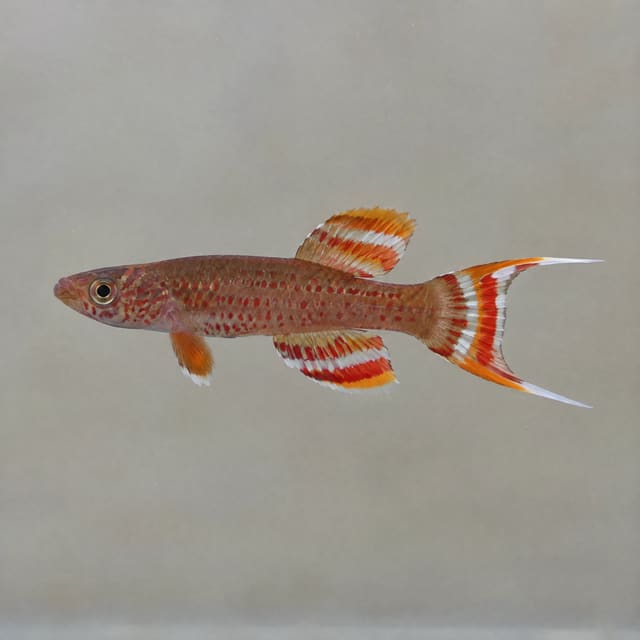
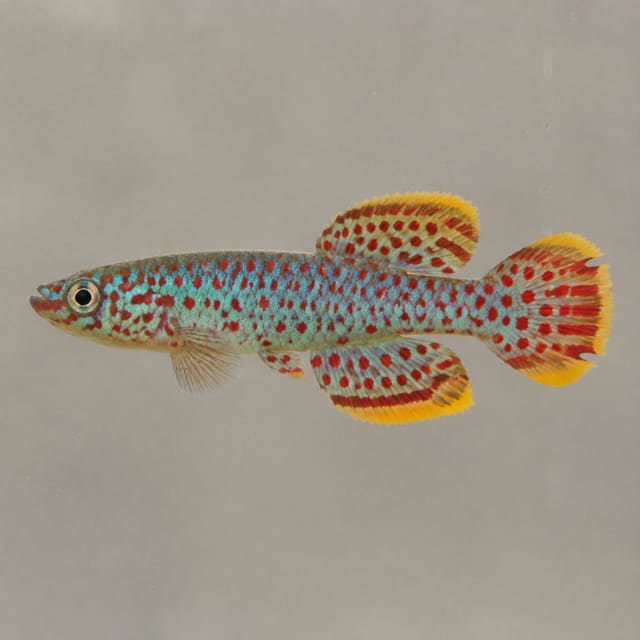
If you enjoy Cap Esterias Lyretail, explore other specialist killies and related oddballs. The elegant Aphyosemion Australe «Gold» - Gold Lyretail offers a warmer colour palette and similar display appeal. For a tiny surface species, consider Pseudepiplatys Annulatus - Clown Killifish. If you prefer other killifish, look at Fundulopanchax gardneri «Akure» or Fundulopanchax amieti. For more unusual surface fish, Epiplatys Dageti Monroviae - Red-Chinned is well worth a look. You can also browse the wider killifish collection if you are comparing blue lyretail killifish for sale, least killifish for sale uk, or other specialist freshwater killifish UK options.
Customer Reviews
No reviews for this item yet. Bought one? Honest reviews only, good or bad.
What customers say about ordering from us
4.7 on Google Maps, rated 4.7 out of 5 (opens in a new tab)4.4 · 123 shop reviews read them, rated 4.4 out of 5
- 5 out of 5Verified buyer
Easy website plenty of info on fish your buying great to pick a time slot
TRACEY DURRANT · 7 Oct 2026
- 4 out of 5Verified buyer
Got some lovely fish thank you
Kevin Mackie · 7 Oct 2026
Reviews of our shop, collected by Judge.me, an independent third-party review collector. Newest first.
Licensed Courier
Moved by UK carriers licensed to handle live animals
Trained Packing
Hand-packed with oxygen bags, poly box, heat pack
Live Arrival Guarantee
Email photos the same day; an optional unboxing video helps us review problems faster — claim terms apply
Pay Later Available
Klarna & PayPal Pay in 3 at checkout
You Might Also Like
Moderate
Moderate
Moderate
Moderate
More in This Category
Moderate
Moderate
Easy
Moderate