Easy
Tomoki Medaka Ricefish, Japanese Rice Fish (Oryzias latipes tomoki)
16–22°C · pH 6.5–8.5 · 41L
£11.99

Gardner's Killifish Akure (Aphyosemion gardneri, accepted as Fundulopanchax gardneri), sold as one live fish in the approximate 3–4 cm supply grade. Plan a mature, securely covered planted aquarium with calm feeding areas and carefully assessed companions.
Aphyosemion gardneri
Save when buying multiple fish. Each quantity is one fish; sex and pair formation are not guaranteed unless the selected variant explicitly states them.
Minimum of 2 per order.
Gardner's Killifish Akure (Aphyosemion gardneri, accepted as Fundulopanchax gardneri), sold as one live fish in the approximate 3–4 cm supply grade. Plan a mature, securely covered planted aquarium with calm feeding areas and carefully assessed companions.
Gardner's Killifish Akure is a small West African freshwater fish best appreciated in an aquarium arranged around cover, calm movement and careful feeding. Its attraction is more than colour: in a quieter planted display, you can watch an individual investigate its surroundings and find food without a crowd of faster fish dominating every meal. A secure cover matters from the outset because killifish can jump when startled.
One purchase supplies one live fish. The supply grade for this listing is approximately 3–4 cm; there is one sale option, rather than a choice of sizes. That is a purchase-size band, not a promise about the fish's final adult length. Sex is guaranteed only when the selected option explicitly states male or female. This Gardner's Killifish Akure listing has no sex-guaranteed option.
The familiar aquarium name Aphyosemion gardneri is retained here alongside Akure, the trade name identifying this offer. FishBase accepts Fundulopanchax gardneri and lists Aphyosemion gardneri as a synonym. These names therefore connect the same species in older and newer references. Akure is kept outside the scientific binomial; the offer does not establish a documented collection locality or breeding lineage for the individual fish.
At species level, Gardner's killi is also known as the blue lyretail and occurs in Nigeria and Cameroon. It belongs to Nothobranchiidae, the African rivulines. This broad natural range is useful background when reading about its habitat, but the main practical questions are closer to home: whether your water is suitable, whether the tank is mature, and whether each fish can feed and withdraw from attention.
FishBase records a maximum length of 6.5 cm total length, labelled male/unsexed. Total length includes the tail. This is a recorded measurement with a stated scope, rather than an exact prediction for every fish. Allow for growth beyond the purchase grade and give an adult enough horizontal room and planted shelter. FishBase's aquarium note specifies a minimum aquarium length of 60 cm.
A species-focused display makes it easier to observe feeding and manage social pressure. A quiet mixed aquarium may be considered after the needs of all its residents have been checked, but a small fish is not automatically a safe addition to a busy nano community. Strong current, relentless activity and competition for food can make an otherwise attractive aquarium a poor home for a killifish.
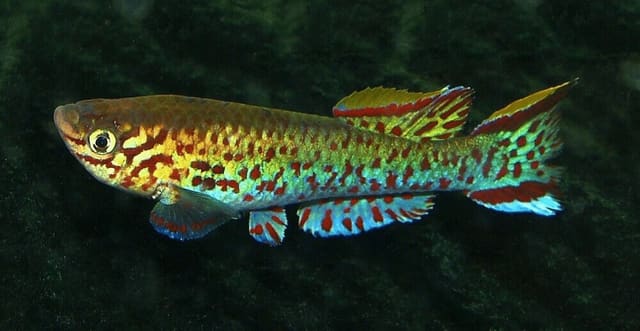
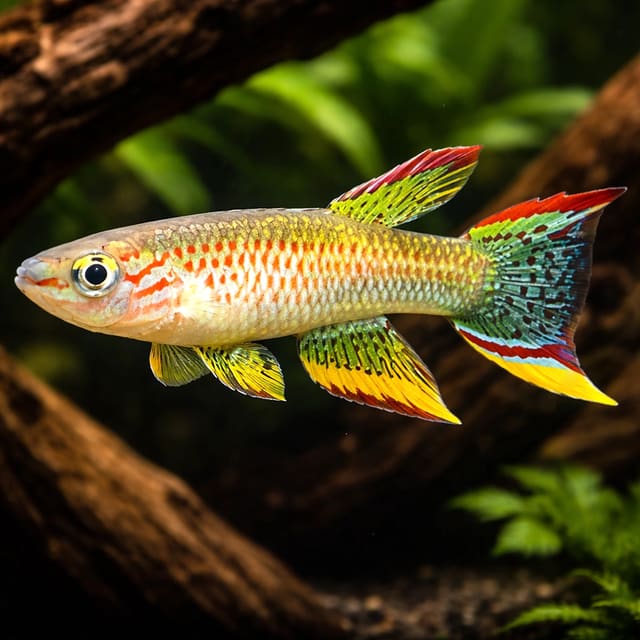
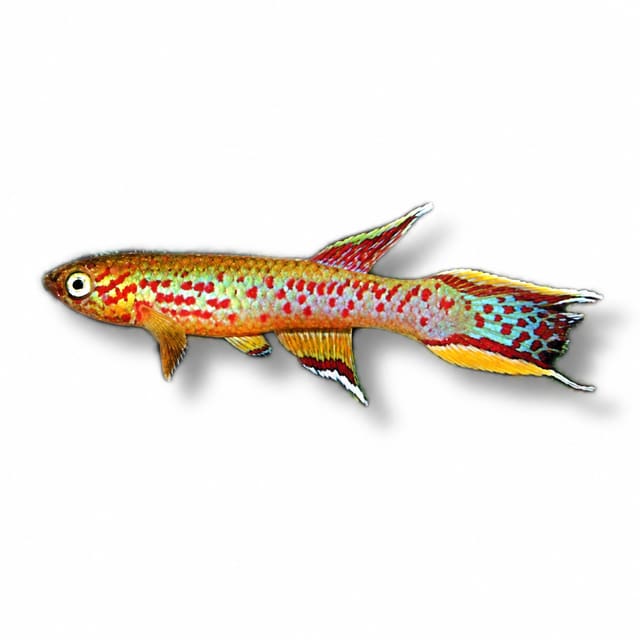
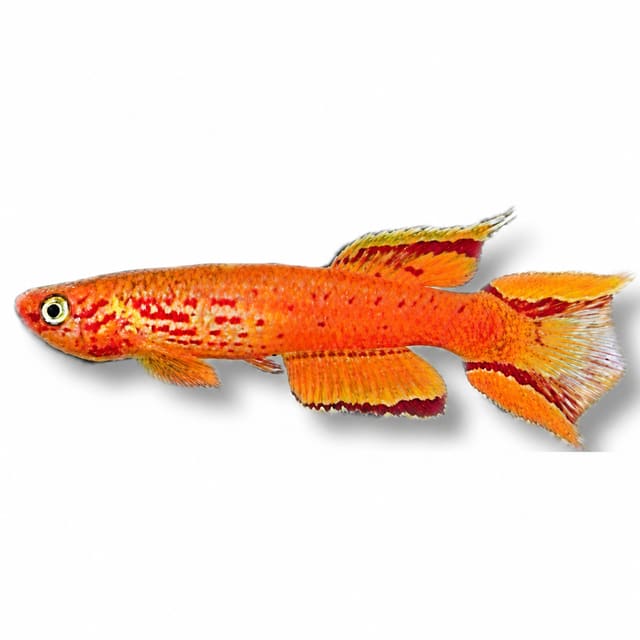
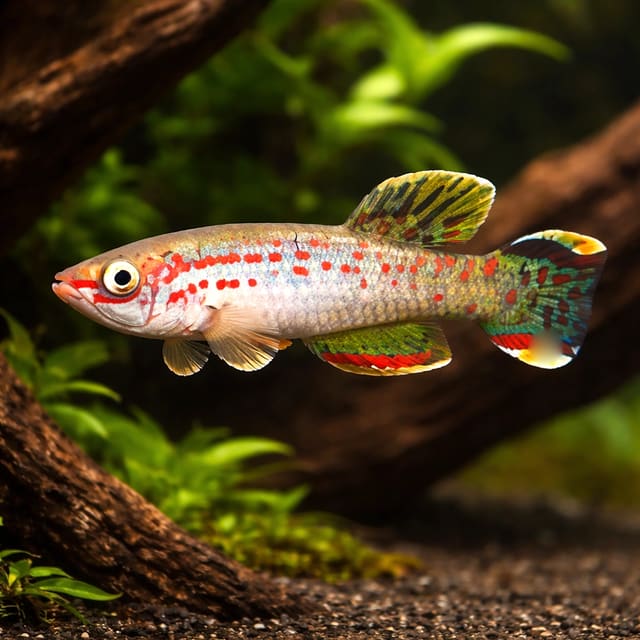
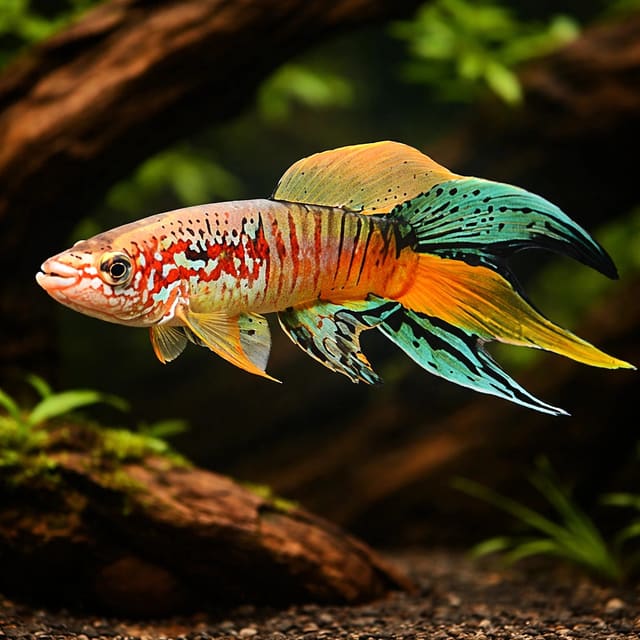
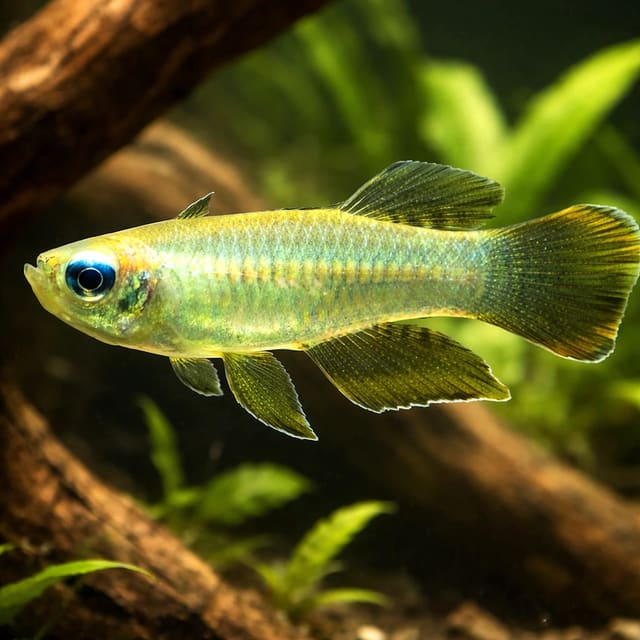
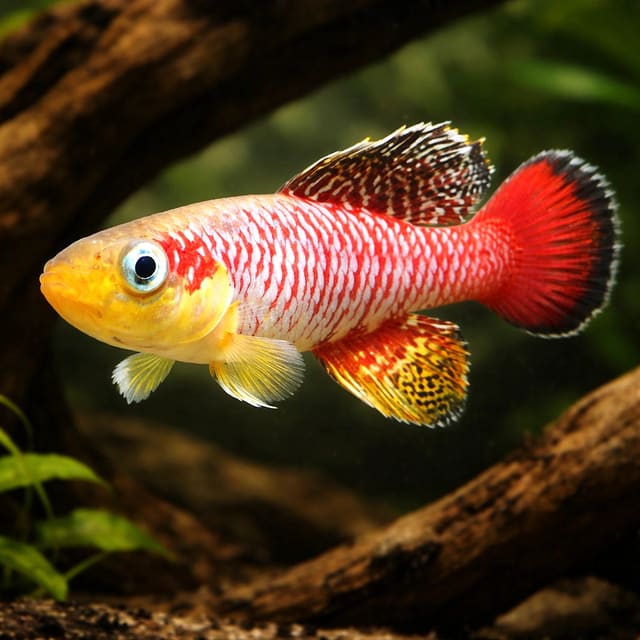
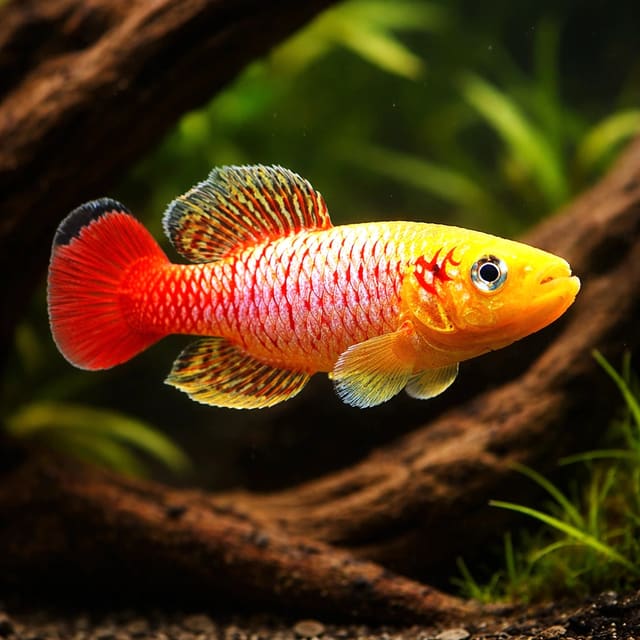
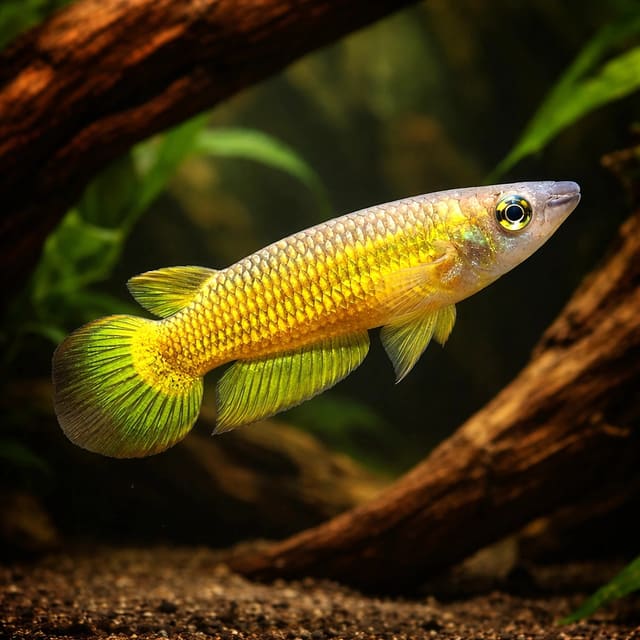
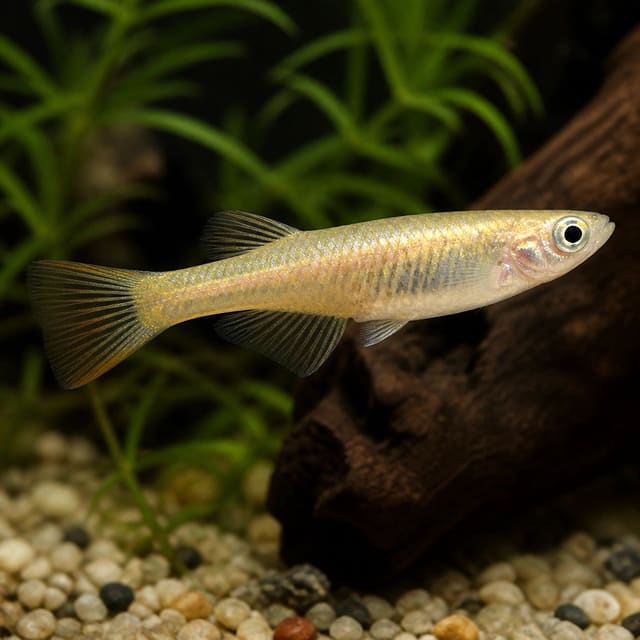
The gallery images are representative of this type of animal rather than photographs of the exact animal supplied, so colours can look slightly different from the live animal. Judge a settled fish by its condition and normal behaviour as well as its appearance. A striking display is most rewarding when the fish can choose between cover and open water without being disturbed whenever it emerges.
This fish suits a keeper who enjoys a planted layout and is willing to watch what happens at feeding time. You should be able to test water, carry out regular maintenance, keep openings covered and reassess the arrangement if another fish becomes persistently intimidating. These are practical responsibilities rather than a reason to make the aquarium complicated. Accessible equipment and a repeatable routine help much more than a collection of unnecessary treatments.
Before ordering, decide where the adult fish will live and how you will manage any future additions. A beautiful plant arrangement should still leave you able to inspect the fish and reach the filter. Consider the killifish collection when comparing species, then match each animal to its own care needs. Related product suggestions are choices to research separately; they do not describe a ready-made stocking combination.
Use the species-level 60 cm minimum aquarium length from FishBase as the starting point for selecting the tank. Length alone cannot establish how many fish will be comfortable: width, cover, filtration and social behaviour also matter. A tall, narrow aquarium does not gain useful escape routes simply by holding more water. Look at the space the fish can actually use once wood, equipment and plants have been installed.
For wider context, OATA's general killifish advice recommends at least 40 litres for a small group of the smallest species, and larger accommodation as fish size and numbers increase. That is group-level guidance, not a species-specific litre minimum for this Akure offer. Use it alongside the species length recommendation and seek advice on the complete stocking plan. Choosing the smallest figure from separate care sheets can leave important parts of the plan unresolved.
Plant the tank so that fish can move behind cover without entering a dead end. A clump along the rear and another breaking up the middle can provide different routes through the aquarium. Leave visible feeding areas so you can check that each fish eats, and retain some open swimming space. Dense cover is useful when it gives choices; a solid mass that hides every individual can make it difficult to notice a problem.
OATA recommends gravel or sand with plentiful live planting for killifish. Where live plants are unsuitable, smooth artificial planting and appropriate ornaments can still provide shelter. Check that the layout has resting places rather than only tall stems with bare lower sections. Smooth edges and stable placement make routine work easier and reduce the chance of an animal being trapped during maintenance.
Arrange wood and plants with the filter outlet in mind. Shelter should remain usable when the filter runs, rather than sitting in the path of its strongest jet. OATA notes that smaller killifish appreciate gentle current. Observe how the fish moves between open areas and cover: a comfortable layout should allow it to pause and feed without being swept away from its chosen position.
A planted aquarium does not require every surface to look immaculate. Concentrate cleaning on uneaten food, accumulated waste and restricted equipment, while keeping the plants healthy enough to provide cover. Remove decaying plant material when you see it. During pruning, keep an eye on where fish are resting and avoid moving every shelter at once; leaving a familiar refuge reduces the disturbance caused by necessary work.
Aquarium covers are essential for killifish because they can jump. Check the openings around cables, pipes and feeding hatches before livestock arrives. The vulnerable point may be an awkward corner rather than the main lid panel. Make it straightforward to open only the area you need for feeding, then close it as soon as the task is finished.
Maintenance changes the usual boundaries of the tank. Prepare your bucket, siphon and tools before lifting the cover, and keep the fish in view while working. A startled fish can move quickly when a hand enters the water or an ornament shifts. If equipment needs to be repositioned, check the resulting gap when you replace the lid instead of assuming it still fits as before.
OATA advises keeping the aquarium away from direct sunlight, draughts, heat sources, loud noise and sudden movement. A stable position helps both temperature management and the fish's ability to settle. Normal aquarium lighting should provide a day-and-night pattern. Give the fish shaded areas within the tank so it does not depend on the whole room being dark to find cover.
Use a heater and thermometer appropriate to the aquarium and room conditions, and a filter capable of supporting the intended livestock. A new filter running in clear water is not yet a mature biological filter. The first tropical aquarium guide explains the preparation that needs to happen before introducing fish. Plan the setup while it is empty, when changes are easier and no animal has to wait through them.
OATA's broad aquarium guidance for killifish gives 22–27°C, pH 6.0–7.5 and general hardness of 4–12 dGH. It describes soft to medium water and is a group guide, not an individually established optimum for this species. Confirm your planned water conditions with the retailer before purchase, especially if your source water falls towards the edges of a general range.
FishBase lists environmental values of 22–25°C, pH 6.0–7.2 and hardness of 5–8 dH for Fundulopanchax gardneri. These figures describe the environmental record and should not be silently substituted for a complete aquarium care prescription. Keeping those different uses clear helps when comparing references: an environmental record and a broad husbandry range answer different questions.
| Water check | How to use it |
|---|---|
| Temperature, pH and hardness | Measure your aquarium and replacement water; discuss the results before adding fish. |
| Ammonia and nitrite | Both should be zero according to OATA's aquarium guidance. |
| Nitrate | OATA advises no more than 20 mg/l above normal tap-water levels; follow the trend as well as a single reading. |
| Changing water conditions | Prepare replacement water carefully and avoid sudden changes during routine maintenance. |
The water chemistry guide helps distinguish pH, hardness and waste measurements. Record the units with your results: a hardness result without its units is easy to misinterpret. A record of the water you actually use is more useful than an assumption based on what is typical in your area.
If you use the water matcher, enter measured values and treat the result as a starting point for discussion. A numerical match cannot assess whether a fish is being bullied, whether food reaches it, or whether the aquarium has enough cover. Water suitability and social suitability both need to be right.
Fish release ammonia into the water. A working biological filter supports bacteria that process ammonia to nitrite and then nitrate; ammonia and nitrite are both toxic. This is why the RSPCA regards a well-established, maintained filter as essential. Plants and clear water do not remove the need to confirm that the aquarium can safely handle its livestock load.
Increase stocking gradually. OATA explains that adding fish and food faster than the filter's bacterial population can respond may lead to new tank syndrome. Think of a new purchase as an increase in the aquarium's workload. Test during the settling period and pay attention after extra feeding, filter work or any interruption to normal operation.
OATA recommends testing at least weekly and uses a partial water change of 25% each week as a general killifish maintenance baseline. Adapt the routine to the measured condition of your aquarium with appropriate advice. Use tap-water conditioner for replacement water to deal with chlorine or chloramine, and prepare it so that refilling does not abruptly change the fish's conditions.
During the water change, remove accumulated solid waste with a siphon and inspect the filter for blockages. If filter media needs cleaning, rinse it lightly in water removed from the aquarium. Running mature media under the tap can damage the bacterial population that processes waste. Clean enough to restore function while preserving the filter's biological role.
Work methodically around the tank. First check the fish and equipment, then take any planned measurements, remove water and waste, and refill carefully. Once finished, confirm that the heater and filter are operating and the lid is secure. These small final checks are easy to overlook when the aquarium looks tidy, yet they matter more to the fish than freshly cleaned glass.
A short log can include test results, maintenance and anything unusual about appetite or behaviour. You do not need to record every movement. The useful information is a change from the fish's normal pattern: an individual that starts missing meals, a rising nitrate trend, or a filter whose flow repeatedly slows sooner than expected.
When you ask for advice, provide the tank dimensions, livestock, temperature, test results and recent changes. These details make it easier to distinguish an environmental problem from a social or feeding issue. Avoid changing several things at once without a clear reason; careful observations are most useful when you can relate them to what actually happened in the aquarium.
OATA's general killifish feeding advice includes a good-quality flake or granule together with small live or frozen foods such as Daphnia, brine shrimp and tubifex. Use appropriately sized food and check actual acceptance. A food being suitable for the group does not mean every newly introduced individual will immediately recognise it or compete successfully for it.
Offer small portions where the fish can find them. If food disappears rapidly, make sure it reached the killifish rather than only its faster neighbours. Watch for a fish taking and retaining food, and check its condition over time. A meal is successful when the intended animal eats, not simply when the aquarium surface is clear again.
OATA suggests feeding only what the fish consume within a few minutes, once daily, as broad group guidance. Uneaten food adds waste as it breaks down, so reduce the amount if leftovers remain. If feeding is difficult, review food size, presentation, disturbance and water quality before repeatedly adding more. Ask the retailer what the fish has been taking if you need a practical starting point.
Have the aquarium ready and tested before the delivery day. Check that the filter is functioning, the temperature is stable and the cover fits securely. Prepare a quiet place to inspect the parcel and the instructions needed for transfer. A fish should not have to wait in its transport bag while the keeper starts arranging a new aquarium.
Follow the acclimation guidance on Tropical Fish Co's delivery page and avoid sudden environmental changes. Handle the bag carefully and keep the work calm. After transfer, give the fish access to its shelter and observe without repeatedly chasing it into the open. The first useful signs are controlled movement, steady breathing and an ability to rest undisturbed.
OATA recommends looking for changes in swimming, colour, breathing, feeding and body condition. Observe at ordinary times as well as during meals, because the feeding rush may hide an animal that spends the rest of the day under pressure. Check fins and scales when the fish is visible, and notice whether it can move through the aquarium without being repeatedly intercepted.
Persistent hiding, clamped or damaged fins, unfamiliar spots or growths, loss of balance and a marked change in breathing deserve attention. Test water and check equipment when something changes. If concern remains, contact the retailer or an aquatic health professional with your observations. A photograph can help describe an external sign, but it is most useful alongside the water results and a clear account of the fish's behaviour.
Set up an observation or separation aquarium properly if you need one. A spare container does not automatically provide the filtration, cover and stable conditions required by a fish. Planning this before a compatibility problem occurs gives you a usable option and avoids making a hurried choice between leaving a fish under pressure and moving it into unsuitable water.
Show another responsible keeper the normal routine before leaving the aquarium in their care. Point out the lid openings, usual food amount, equipment checks and who to contact if something changes. Written feeding instructions help prevent well-intentioned overfeeding. Make sure the person knows which fish should be seen at meals rather than assuming any activity means every animal is doing well.
Long-term care also means having a plan if your circumstances change. Keep the species and offer details so that another keeper can identify the fish accurately. Contact an experienced retailer or responsible keeper early if rehoming becomes necessary. Aquarium animals and plants should never be released into natural waterways, and waste water and substrate should be disposed of so that aquarium organisms cannot escape into them.
OATA's general killifish advice suggests at least three fish, with two females to each male, to reduce pressure on females or other inhabitants. This is broad group advice rather than a species-specific instruction to buy three fish from an unsexed listing. Establish whether the intended arrangement can actually be achieved before adding animals. Ordering a number does not itself create the recommended balance.
Cover helps fish avoid constant eye contact, but it cannot make an incompatible arrangement safe by itself. Watch whether each individual can rest and feed. Brief movement between plants is different from being repeatedly driven into the same corner. If one fish is excluded from meals or never leaves shelter, review the arrangement promptly and separate animals when necessary.
A species-focused aquarium keeps the social picture simpler to understand. You can see whether a problem concerns the killifish themselves without also having to account for a busy mixture of unrelated fish. This approach is particularly useful when learning how individuals respond to the layout and feeding routine. More species do not necessarily produce a more interesting or comfortable display.
For a mixed aquarium, OATA cautions that shy killifish may be bullied and that boisterous tankmates are unsuitable. Its group guidance also warns that some male killifish show aggression towards long-finned fish. These cautions support careful selection and observation, not a promise that every calm-looking small fish will be compatible. Avoid a combination that depends on one resident simply enduring the others.
Check prospective companions for compatible water, adult size, activity and feeding behaviour. Consider what the tank looks like during feeding and after the lights change, not just when everyone is resting. A fish that occupies another part of the aquarium can still monopolise food or disturb cover. Keep a realistic separation option for any community trial.
It is easy to watch the most colourful or confident animal and miss the one being pushed away. Make a point of finding every fish during routine checks. A good arrangement allows the quieter individual to appear, feed and rest without constant interruption. Torn fins and weight loss are late signs; changes in access to food and shelter can reveal trouble earlier.
If the aquarium becomes too busy, removing a source of pressure may be more effective than adding further fish. Recheck the whole plan before purchasing another species as a distraction. The aim is a stable home that suits the animals already present, with enough space and attention available for any additions you choose to make.
FishBase records 6.5 cm total length, labelled male/unsexed. Total length includes the tail; this is a recorded maximum with that scope, not a guaranteed final length for every individual.
FishBase gives a minimum aquarium length of 60 cm. Choose the remaining dimensions and stocking plan around adult fish, cover and stable water; OATA's 40-litre advice is broad guidance for small groups of the smallest killifish, not a species-specific volume minimum.
OATA's broad killifish guidance suggests at least three, with two females per male. Confirm that a suitable social arrangement can be achieved and observe every fish's feeding and access to shelter; an arbitrary number of fish does not ensure that balance.
A prepared keeper needs a mature filtered aquarium, secure cover, water tests and time to observe feeding and social behaviour. Establish those basics and discuss the stocking plan before choosing this fish.
OATA's group guidance includes quality flake or granules and small live or frozen Daphnia, brine shrimp and tubifex. Match food size to the fish and check that it actually eats; remove leftovers rather than letting food accumulate.
OATA's broad killifish aquarium guidance is 22–27°C and pH 6.0–7.5, with general hardness of 4–12 dGH. These are group ranges, not a species-specific optimum; confirm your measured water and planned conditions before purchase.
OATA warns that some male killifish may be aggressive towards long-finned companions and that shy individuals can be bullied. Watch for repeated pursuit, missed meals and restricted access to shelter rather than relying on a peaceful label.
A quiet, carefully assessed community may be possible, while boisterous fish and problematic long-finned combinations should be avoided. Check adult size, water needs, feeding access and behaviour; no companion is universally safe.
Tropical Fish Co hand-packs fish in oxygen-filled bags and insulated boxes, with a heat pack when conditions require it, for a licensed live-animal courier. Be present for the confirmed delivery, inspect the parcel that day and follow the delivery-page guidance. For a Live Arrival Guarantee claim, provide the continuous unboxing video showing the sealed parcel being opened and the fish still in the sealed bag, and contact the team the same day.
FishBase's Gardner's killifish record connects the scientific names and provides the labelled length record, environmental context and aquarium-length note. The blue lyretail overview provides general name and distribution background.
OATA's killifish care sheet covers group-level aquarium care. The RSPCA aquarium environment guidance explains the importance of filtration. Read Tropical Fish Co's delivery and Live Arrival Guarantee policy before arranging your arrival day.
No reviews for this item yet. Bought one? Honest reviews only, good or bad.
What customers say about ordering from us
I have a small group of long finned mountain minnows. So was delighted to be able to order ten of this variety to increase the genetics in my tank . The ones I recieved are healthy but it’s to early to give a verdict on wether they are of a long finned type since they are small currently.
Gordon Walker · 23 Sept 2026
100% success travel and "installation". Pleased with quality of purchase. The Siamese fighter a bit "shy" so have not yet seen him at his best yet but looking good. Happy customer. GG
George E Garratt · 21 Sept 2026
Reviews of our shop, collected by Judge.me, an independent third-party review collector. Newest first.