Easy
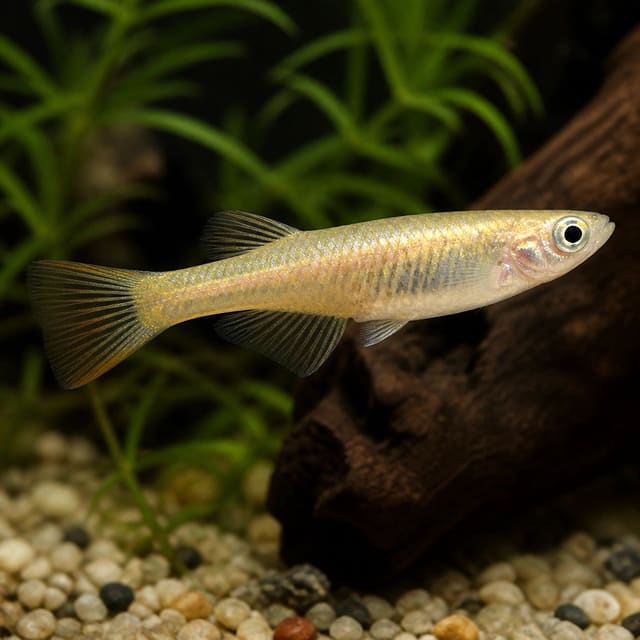
Tomoki Medaka Ricefish, Japanese Rice Fish (Oryzias latipes tomoki)
16–22°C · pH 6.5–8.5 · 41L
£11.99

Annulatus (Epiplatys annulatus) is a small, peaceful killifish that reaches 4 cm. Keep at least three at 22–26°C, pH 6.0–7.0 and 4–10°dH. Sold individually in 0.5–1 cm, 1.0–1.5 cm and 1.5–2 cm dispatch sizes.
Adult size is the maximum length this species reaches at full maturity (scientific sources). The livestock you receive will be younger and smaller — pick a size above for the actual shipping size. Product-photo provenance and any image-specific limitations are stated on the listing.
Epiplatys annulatus
Save when buying multiple fish. Each quantity is one fish; sex and pair formation are not guaranteed unless the selected variant explicitly states them.
Annulatus (Epiplatys annulatus) is a small, peaceful killifish that reaches 4 cm. Keep at least three at 22–26°C, pH 6.0–7.0 and 4–10°dH. Sold individually in 0.5–1 cm, 1.0–1.5 cm and 1.5–2 cm dispatch sizes.
Adult size is the maximum length this species reaches at full maturity (scientific sources). The livestock you receive will be younger and smaller — pick a size above for the actual shipping size. Product-photo provenance and any image-specific limitations are stated on the listing.
Maintain these water conditions for optimal health and vibrant colors
Annulatus (Epiplatys annulatus), also called the Clown Killifish, Banded Panchax or Rocket Killifish, is a small, peaceful killifish that reaches 4 cm. It suits a keeper who can prepare a mature, covered and well-planted aquarium, test the water every week and choose quiet companions. Its surface-dwelling habit makes floating cover and gentle water movement especially useful.
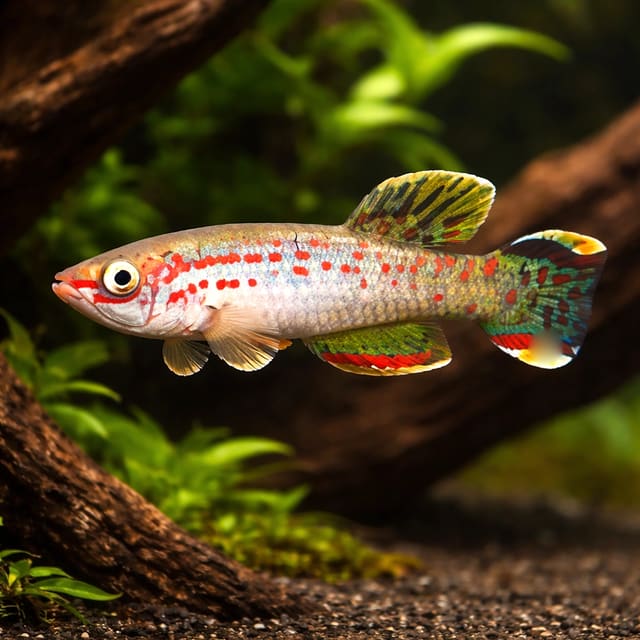
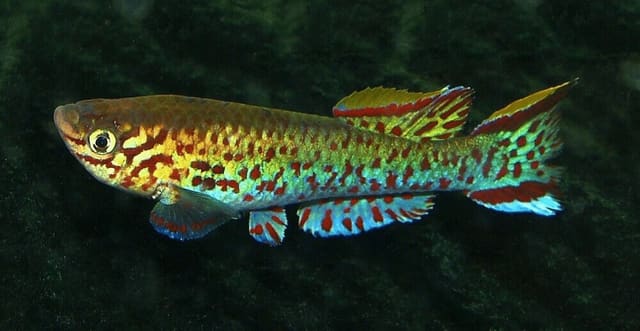
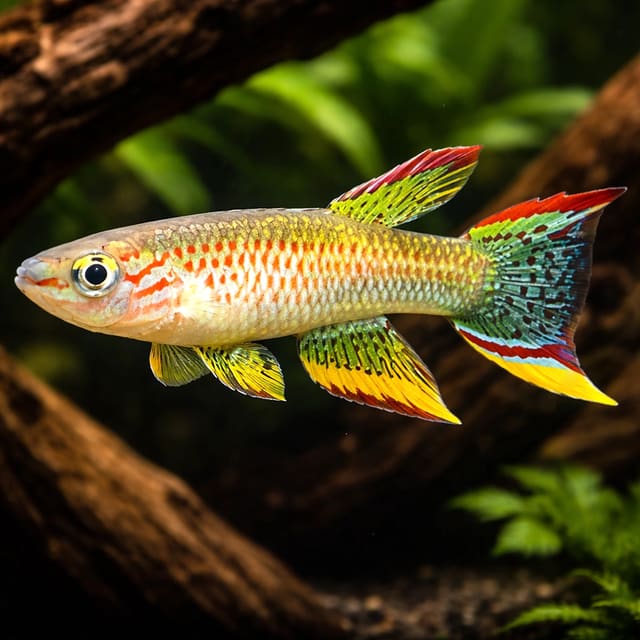
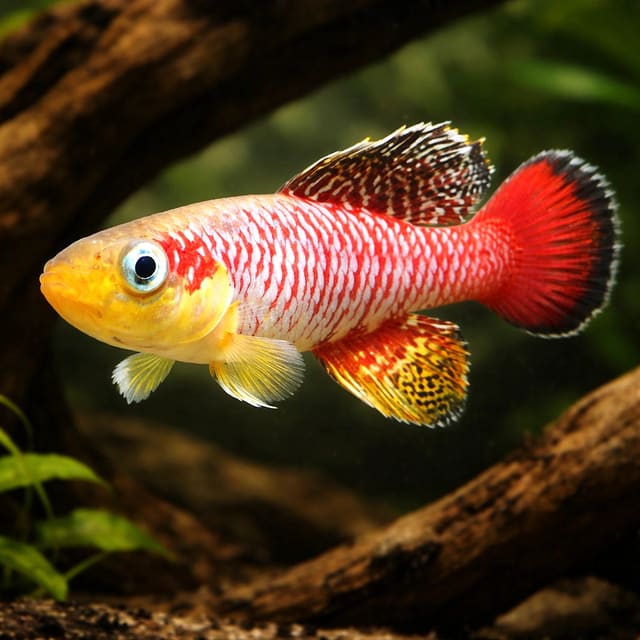
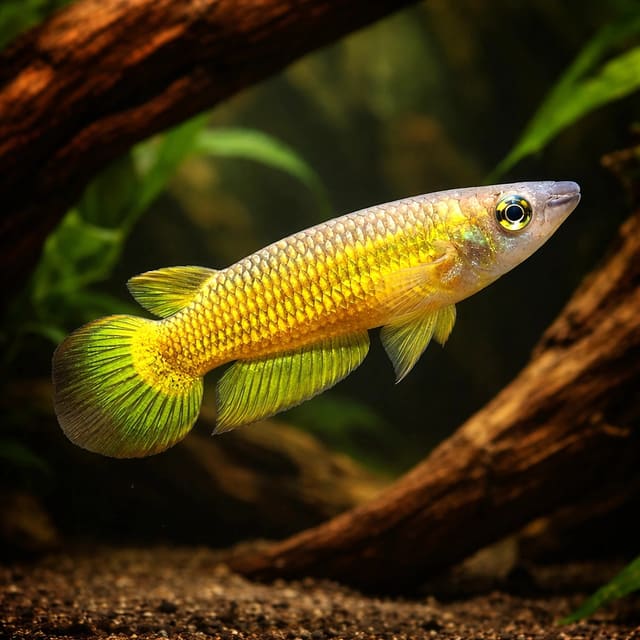
The fish has a cream-to-golden body crossed by dark bars. Males show blue, red and yellow highlights and longer fins. Use appearance for observation rather than sex selection.
Keep at least three and use at least 40 litres for a small group. OATA’s killifish guidance gives 22–27°C, pH 6.0–7.5 and 4–12°dH for the group. For Annulatus, use the narrower working range of 22–26°C, pH 6.0–7.0 and 4–10°dH. Keep ammonia and nitrite at zero, and do not let nitrate rise more than 20 mg per litre above the normal tap-water level.
| Suits | Not suited to |
|---|---|
| Calm, mature planted aquariums | Unfiltered or newly prepared aquariums |
| Groups of at least three | Keeping without companionship |
| Soft water | Water outside 22–26°C, pH 6.0–7.0 or 4–10°dH |
| Quiet companions after screening | Boisterous, predatory or fin-nipping fish |
| Keepers prepared to test weekly | Set-ups without a secure cover |
One purchase supplies one Annulatus from the size selected on the live selector. The labels are 0.5–1 cm, 1.0–1.5 cm and 1.5–2 cm. These measurements describe the fish at dispatch and help you judge how carefully it must be introduced around existing livestock.
The size you select is the size supplied, not the adult size. Plan the permanent aquarium around the 4 cm adult length, the group and the needs of every other animal rather than using a dispatch measurement as a space guide. A small fish still needs stable water, an established biological filter and room to move away from companions.
Sex is guaranteed only when the selected option explicitly states male or female. This Annulatus listing has no sex-guaranteed option.
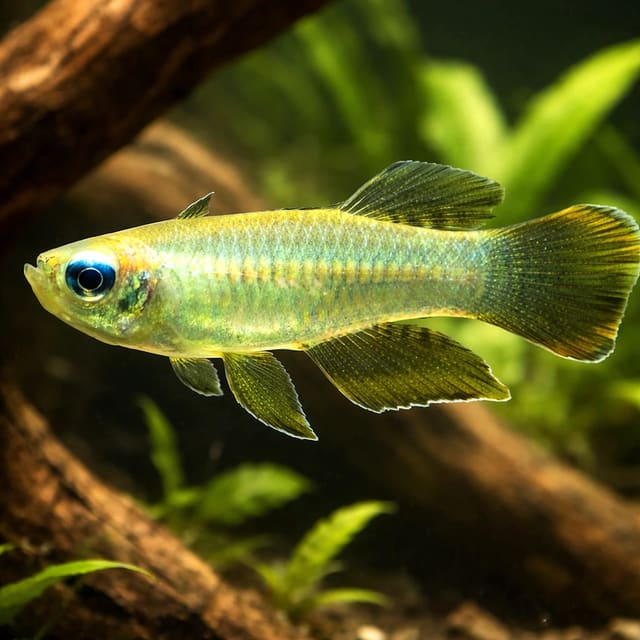
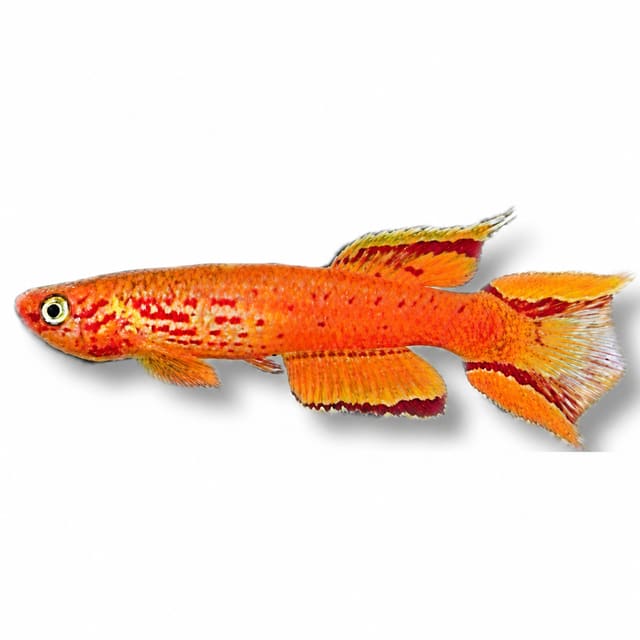
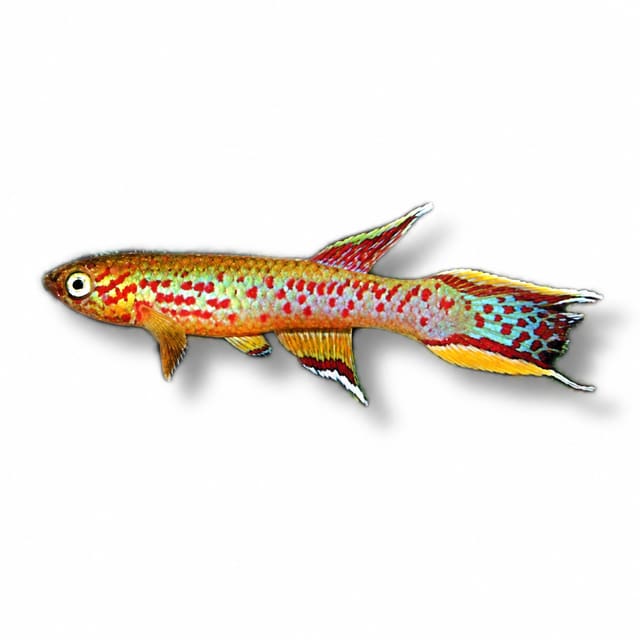
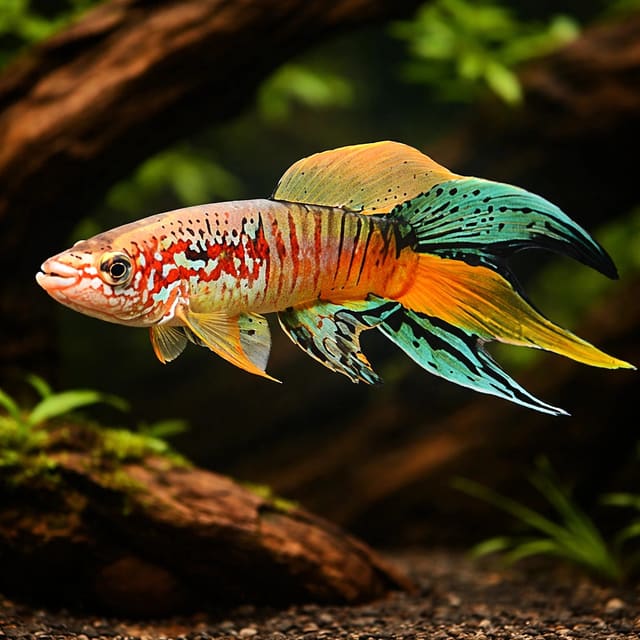
Some gallery images have been digitally enhanced to improve image quality. They show the listed type of animal rather than guaranteeing the exact markings of the individual supplied, so natural colour and pattern can vary.
Browse the killifish collection when comparing this fish with other killifish. Compare adult dimensions, water ranges and social needs before deciding whether two different products belong in the same aquarium.
Plan for an adult length of 4 cm. Measure space for the whole group and leave clear swimming room beneath the surface cover rather than filling every part of the upper water with plants. Use the 4 cm adult length wherever size affects stocking, feeding access or compatibility.
OATA notes that most killifish are approximately 6 cm, while larger panchax can reach up to 10 cm. Those figures describe the wider killifish group and explain why a tank planned for one small species should not automatically be used for every killifish. Plan for Annulatus to reach 4 cm.
Use at least 40 litres for a small group of the smallest killifish. More water usually changes temperature and waste concentration less abruptly, which gives the filter and keeper more time to respond. Extra volume does not cancel the need for weekly testing, a secure cover or restrained stocking.
Floating plants can provide shelter, but retain open feeding and swimming areas. Position the filter outlet so that it maintains water movement without turning the surface into a fast-flowing channel. Dense planting below can create visual breaks and retreats, especially when several fish share the aquarium.
Calculate space from adult sizes, not from the measurements of newly dispatched fish. Include substrate, ornaments, plants and filter placement when judging usable room. If adding Annulatus to an occupied aquarium, assess the present waste load and increase livestock slowly so the biological filter can adapt.
Prepare a mature aquarium of at least 40 litres for a small group, with a secure cover, a working filter and plenty of shelter. Killifish can jump, so close gaps around cables, filter pipes and feeding openings. Use aquarium gravel or sand and add live plants where possible.
For a new set-up, follow the first tropical aquarium guide before arranging livestock. Maturing the biological filter allows beneficial bacteria to develop before fish waste increases. Add animals gradually because every added fish and every increase in feeding asks the bacterial population to process more ammonia.
The RSPCA explains that aquarium filters are vital because fish release toxic ammonia. In a working biological filter, beneficial bacteria convert ammonia to nitrite and then to the safer nitrate. The filter must run continuously and be checked for blockages.
Use dense planting and floating cover while retaining open surface patches for feeding and swimming. Java fern, Anubias and Cryptocoryne provide submerged shelter, while floating plants can break up exposed areas. Plant choice is less important than providing secure cover without crowding the entire surface.
Annulatus is a shy surface-dwelling fish, so direct the outlet away from its main resting and feeding area. The aim is filtered, oxygenated water without forcing the fish to swim continually against a strong current. Watch the group after installation: if every fish avoids the outlet side, reduce or redirect the flow while preserving filtration.
Maintain 22–26°C, pH 6.0–7.0 and general hardness of 4–10°dH. Keep carbonate hardness within OATA’s 3–10°dKH guidance and prioritise stability over repeatedly adjusting water to chase a single reading.
Ammonia and nitrite must remain at zero mg per litre. Nitrate should not exceed the normal tap-water level by more than 20 mg per litre. Test the tap water as well as the aquarium so the nitrate result has a meaningful baseline.
Use the water chemistry guide to understand what each test means. Record temperature, pH, hardness, ammonia, nitrite and nitrate so that changes can be spotted across several readings rather than guessed from one result.
The water matcher can compare measured aquarium values with the required range. Enter real test results rather than estimates. If a result is outside the working range, identify whether the tap water, accumulated waste, an unconditioned water change or a filter problem is the likely cause before making another change.
A temperature of 24°C is within the 22–26°C range, but that does not make an ammonia reading above zero acceptable. Likewise, a pH of 6.5 cannot compensate for rising nitrite. Treat temperature, chemistry and biological filtration as connected checks with separate limits.
When water is within range, keep the routine consistent. Sudden swings can be more disruptive than a stable reading near one end of the range. Condition replacement water before adding it, match the routine carefully and investigate unexpected movement in pH or hardness rather than adding products without knowing the cause.
At least once every week, change 25% of the aquarium water. Test ammonia and nitrite at least weekly, check nitrate against the tap-water baseline and inspect the filter for blockages. Treat replacement tap water with conditioner before it enters the aquarium so chlorine or chloramine cannot harm the fish or filter bacteria.
For a 40-litre aquarium, 25% is 10 litres. For a 60-litre aquarium, it is 15 litres. Base the calculation on the actual water volume where practical, allowing for substrate and décor, then use the same measured container so the routine remains consistent.
Use a siphon to lift solid waste from accessible areas of gravel or sand during the water change. Work around plant roots and shelters rather than dismantling the entire layout. Uneaten food and trapped waste can break down into toxic compounds, so removing them supports the filter instead of replacing its role.
If filter media needs cleaning, do not run it under the tap. Rinse it lightly in aquarium water removed during the partial water change. This reduces the loss of beneficial bacteria while clearing enough debris to restore flow. Never replace all biological media at the same time.
If ammonia or nitrite appears above zero, treat that as an immediate water-quality problem. Stop increasing livestock or food, check the filter and continue testing while restoring safe conditions.
Feed once a day and offer only what the fish can eat within a few minutes. Offer appropriately sized small live or frozen foods such as daphnia, brine shrimp or tubifex as staples alongside a fine, good-quality flake.
Choose particles small enough for the dispatch size and watch that every fish can take them. Annulatus spends much of its time near the surface, so place food where the group is actively feeding rather than allowing all of it to sink behind plants or décor.
Start with a small amount. If food remains after a few minutes, reduce the next portion and siphon out accessible leftovers. If the food disappears instantly, observe whether every fish ate before increasing the amount. A dominant or bolder fish finishing the meal does not show that the whole group received enough.
Alternate the fine flake with appropriately sized live or frozen items. Daphnia and brine shrimp give useful variety, while tubifex must also be sized so the fish can take it. Thaw frozen food before portioning it and avoid adding more liquid or food than the group will consume.
A reduced appetite can be an early warning. Test ammonia, nitrite, nitrate and temperature before assuming the fish merely dislikes the meal. Also look for altered breathing, hiding, colour change or difficulty reaching food. Correct water-quality or access problems before repeatedly offering larger portions.
Overfeeding raises the amount of uneaten material and fish waste that the biological filter must process. A measured daily portion therefore protects both body condition and water quality.
Prepare the covered, filtered aquarium and confirm its temperature and water tests before the parcel is received. Keep ammonia and nitrite at zero and have the permanent stocking plan settled before opening the delivery.
The fish is hand-bagged in pure oxygen and packed in an insulated poly box, with a heat pack when the weather calls for it. A licensed live-animal courier carries the parcel. Read the delivery and Live Arrival Guarantee policy before the delivery date.
Keep the order number and continuous unboxing video. For a Live Arrival Guarantee claim, send both on the same day. The video must begin with the parcel sealed, show it being opened and show the fish still inside the sealed bag.
The aquarium’s ammonia, nitrite, temperature and other values should already have been checked before receipt. Do not use the floating period as time to finish the set-up or repair a filter. The fish needs a prepared destination as soon as the arrival sequence is complete.
Keep the first week predictable. Run the filter continuously, maintain 22–26°C and check that the group uses the planted cover, open surface and feeding area. Avoid adding several further fish immediately, because every stocking increase adds waste before the biological bacteria have expanded to process it.
After release, confirm that each fish is swimming in an appropriate position and is not being driven continually away from cover. Check the lid, filter flow and temperature. Do not make unnecessary changes to the layout while the fish is locating shelter.
Offer a very small portion once daily and watch each fish rather than only the food. Reduce the next portion if food remains after a few minutes. If one fish takes everything, spread the food across more than one surface patch while keeping the total portion controlled.
Test ammonia and nitrite rather than relying on clear-looking water. Both must remain at zero. Check nitrate against the normal tap-water level and make sure it remains within 20 mg per litre of that baseline. Record results so a rising pattern is visible.
Wait until feeding, behaviour and water tests are steady. A plan to keep more than three can work, but increase numbers slowly and keep the recommended sex ratio in mind when deliberately assembling a sexed group. Do not use extra plants or a larger filter as a reason to skip observation.
Before the first scheduled 25% water change, compare the week’s test results, inspect the filter flow and note whether every fish reaches food within a few minutes. Siphon accessible waste, condition the replacement water and confirm that the filter restarts afterwards. Then check the cover, temperature and swimming behaviour again. This combined checkpoint helps distinguish a single unusual moment from a developing change in water quality, equipment performance, feeding access or behaviour before more livestock is considered.
A stable first week does not replace routine maintenance. Continue the weekly 25% water change, weekly tests and filter checks after the fish appears settled.
Watch for a change from each fish’s normal swimming, colour, breathing, temperament, body condition or feeding. OATA highlights hanging at the surface, sitting on the bottom, erratic swimming, unusual hiding, altered aggression, faster or slower gill movement, white spots, fluffy growths, lost fins or scales, weight change and reduced appetite as signs that need attention.
Check ammonia and nitrite first; both must be zero. Then check temperature, nitrate and filter flow. A fish hanging at the surface or breathing differently may be responding to a water-quality or equipment problem, so do not begin with random medication.
Compare affected and unaffected fish. Look for fin damage, missing scales, spots, growths or a change in body condition. Check whether a companion is chasing or excluding the fish from shelter and food. Separate observation from assumption: record what changed and when.
Confirm that the food is small enough and reaches more than one feeding position. Remove leftovers, test the water and look for altered breathing or hiding. Do not repeatedly increase food when the problem may be water quality, bullying or illness.
Contact us for further guidance after testing the water and recording the signs. Give the aquarium volume, temperature, pH, ammonia, nitrite, nitrate, recent maintenance, tank mates and the time the change began. Those details make the next decision more precise.
Good observation works best as a routine. A short daily check during feeding can reveal a problem earlier than an occasional long inspection.
A species-only aquarium is the clearest compatibility plan for Annulatus. A calm community can work when every companion shares the water range, cannot swallow or bully the fish, does not nip fins and will not dominate the surface feeding area.
Peaceful microfish of a similar size and snails can be considered after screening. They still need compatible water, enough space and a calm feeding pattern. Peaceful shrimp require extra caution because young shrimp may be eaten; do not treat co-existence with adult shrimp as protection for shrimplets.
| Screening question | Decision |
|---|---|
| Does it share 22–26°C, pH 6.0–7.0 and 4–10°dH? | Continue only if all values overlap. |
| Is it boisterous, predatory or a fin-nipper? | Avoid the mix. |
| Will it dominate surface food? | Choose another companion or separate the fish. |
| Does the aquarium have planted retreats and open surface room? | Add cover or reduce the stocking plan. |
| Can the filter support the added waste? | Increase livestock slowly and test. |
Compatibility beyond these rules depends on the exact aquarium and animals. Send us the aquarium volume, measured water values, present livestock and adult sizes for a stocking assessment before combining uncertain companions.
Keep at least three Annulatus. OATA suggests at least three killifish for companionship and recommends two females to each male when deliberately assembling a sexed group, reducing stress on females and other inhabitants. More can be kept when the same ratio, aquarium space and filter capacity are considered.
Use at least 40 litres for a small group and provide dense planting, floating shelter and a secure cover. Leave several usable surface areas so one fish cannot control the only feeding or resting position. A larger aquarium can make environmental conditions more stable, but it still needs weekly maintenance and observation.
Males in the wider killifish group are often more colourful and have more developed finnage, but colour and fin shape should not be used to promise the sex of an individual. Observe whether any fish is repeatedly chased, confined to one corner or excluded from food.
If one fish hides more than usual or loses feeding access, first check water quality and the layout. Add visual breaks or redistribute cover while preserving open surface space. If pressure continues, reduce the social conflict rather than assuming it will disappear as the fish settle.
Do not place a full community into a newly matured aquarium at once. Every extra fish and extra meal increases the waste presented to the filter. Add livestock gradually, test ammonia and nitrite and pause further additions unless both remain at zero.
A mixed selection of different fish does not replace a group of at least three Annulatus. Companionship guidance concerns the killifish group itself, while community screening answers whether other kinds of animals can share the aquarium.
It reaches 4 cm. Plan the permanent aquarium around that adult length rather than the dispatch measurement.
Use at least 40 litres for a small group. OATA gives this as broad guidance for groups of the smallest killifish.
OATA suggests at least three killifish and, when deliberately assembling a sexed group, two females to each male.
It needs moderate care and some fishkeeping experience. Maintain 22–26°C, test ammonia and nitrite weekly and complete a 25% water change at least once a week.
Feed once daily, offering appropriately sized small live or frozen daphnia, brine shrimp or tubifex as staples alongside a fine, good-quality flake; give only what it can eat within a few minutes.
Keep it at 22–26°C and pH 6.0–7.0, with general hardness of 4–10°dH; these working values sit within OATA’s broad killifish guidance.
It is generally peaceful, but some male killifish may be aggressive towards other long-finned species. Avoid long-finned companions, boisterous fish and known fin-nippers.
Consider peaceful microfish of similar size and snails only after matching water, space and temperament. Peaceful shrimp need caution because young shrimp may be eaten; a species-only aquarium is the clearest plan.
It is hand-bagged in pure oxygen, packed in an insulated poly box with a heat pack when the weather calls for it, and carried by a licensed live-animal courier. Receive the parcel in person, start filming while it is sealed, open it in one continuous take, keep the fish in the sealed bag on camera, then float the bag for 20–30 minutes before releasing.
No reviews for this item yet. Bought one? Honest reviews only, good or bad.
What customers say about ordering from us
I have a small group of long finned mountain minnows. So was delighted to be able to order ten of this variety to increase the genetics in my tank . The ones I recieved are healthy but it’s to early to give a verdict on wether they are of a long finned type since they are small currently.
Gordon Walker · 23 Sept 2026
100% success travel and "installation". Pleased with quality of purchase. The Siamese fighter a bit "shy" so have not yet seen him at his best yet but looking good. Happy customer. GG
George E Garratt · 21 Sept 2026
Reviews of our shop, collected by Judge.me, an independent third-party review collector. Newest first.