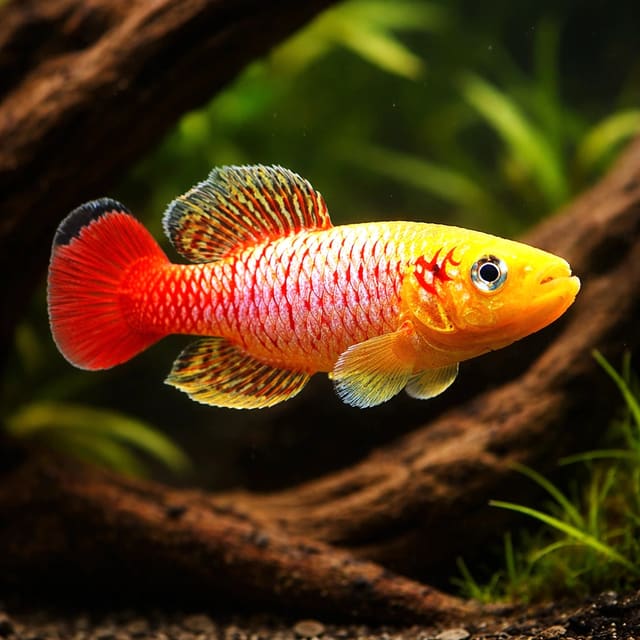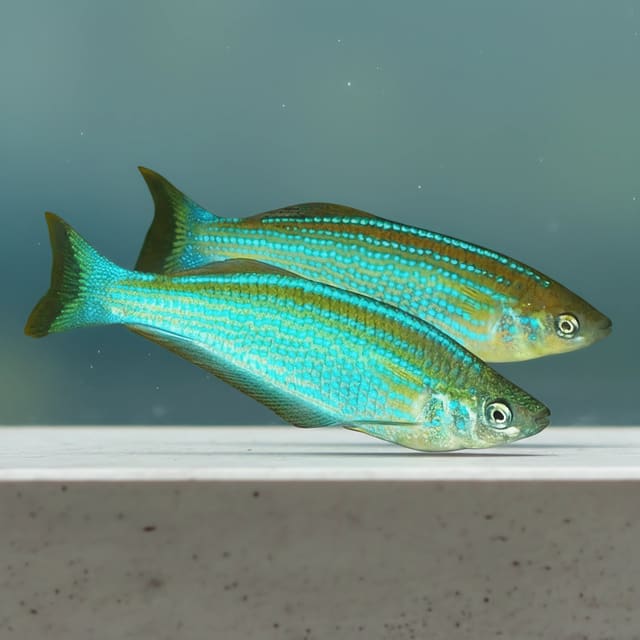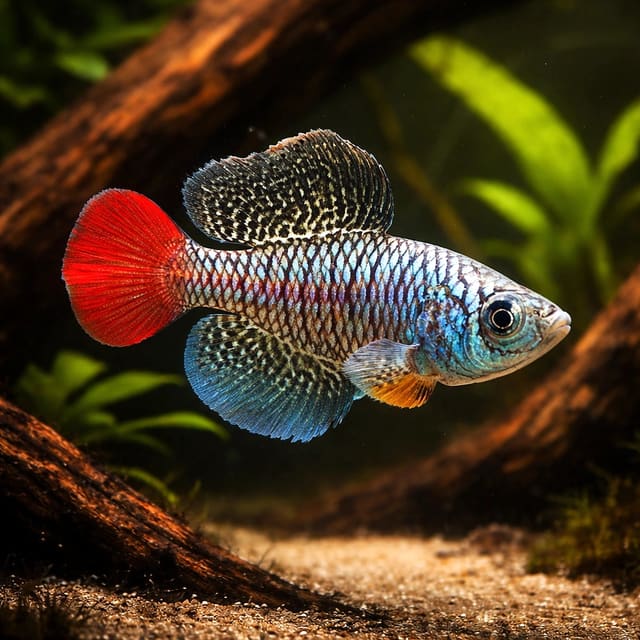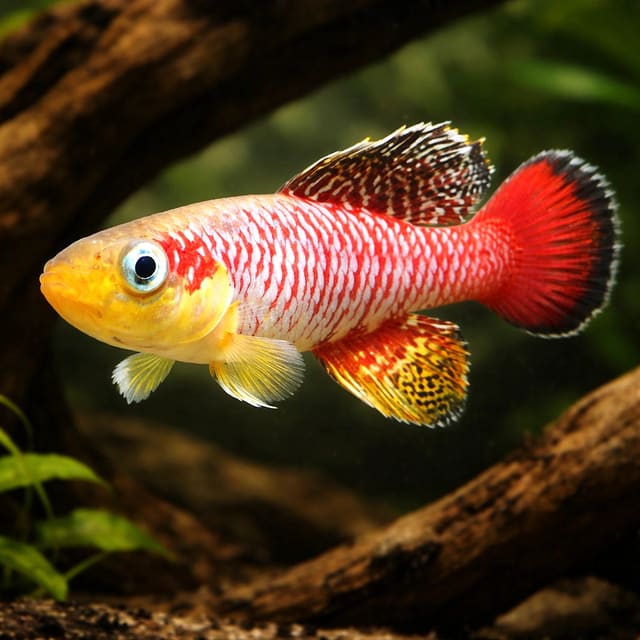
Gunther's Nothobranch (Nothobranchius guentheri)
22–25°C · pH 6–7
£11.99

Cool-water South American annual killifish with dark pearly markings. Supplied 2.5-4 cm; best in a covered species setup with peat or coir spawning media.
Adult size is the maximum length this species reaches at full maturity (scientific sources). The livestock you receive will be younger and smaller. Product-photo provenance and any image-specific limitations are stated on the listing.
Argolebias nigripinnis
Save when buying multiple fish. Each quantity is one fish; sex and pair formation are not guaranteed unless the selected variant explicitly states them.
Confirm your email, then we’ll send an availability message for this exact item if it returns within 180 days.
This request is only for this product—no newsletter or other promotions. A mail-provider retry may very rarely duplicate the same availability message. Unconfirmed addresses are removed after 48 hours. See our privacy policy.
Cool-water South American annual killifish with dark pearly markings. Supplied 2.5-4 cm; best in a covered species setup with peat or coir spawning media.
Adult size is the maximum length this species reaches at full maturity (scientific sources). The livestock you receive will be younger and smaller. Product-photo provenance and any image-specific limitations are stated on the listing.
Maintain these water conditions for optimal health and vibrant colors
The Black Pearlfish, also known as the Blackfin Pearlfish, is a specialist South American annual killifish now listed by FishBase as Argolebias nigripinnis. Aquarium and trade sources may also use Austrolebias nigripinnis or the older supplier name Cynolebias nigripinnis, so those names are kept here as synonym context rather than repeated as forced keywords. This listing is for fish supplied around 2.5-4 cm when available.
This is not a warm, busy community-tank killifish. It is a cool-water annual species from temporary pools and floodplain habitats in southern South America. The appeal is its whole life history: dark pearly males, paler patterned females, heavy feeding, deep-diving spawning and eggs adapted to survive a dry season in the substrate. It is a rewarding fish for experienced keepers who enjoy maintaining specialist conditions and, ideally, raising the next generation.
Males are the showpiece fish. They can show a deep blue-black to smoky body with pale pearly spotting across the body and fins, and the best colour is usually seen in subdued light over a darker base. After stress or a losing display, males may look much paler, so a pale fish is not automatically a female. Females are lighter, usually smaller and more softly marked, with irregular brownish spotting rather than the dramatic male sheen.
A calm aquarium shows the fish at its best. Use low glare lighting, leaf litter or botanicals if they suit your maintenance style, and floating plants to break up the surface.
FishBase places the species in the lower Parana and Uruguay River basins, while other aquarium literature describes southern South American populations from Argentina, Uruguay, Paraguay and southern Brazil. These are seasonal waters, not permanent tropical display aquariums. Annual killifish persist because their eggs are buried in pond sediments and survive the dry period in diapause; when the rains return and pools refill, larvae hatch and grow quickly.
That annual rhythm matters in the aquarium. Adults are short-lived compared with many tropical fish, often around a year in captivity, and warmer water can shorten that further. They feed hard, mature quickly and put a lot of energy into spawning. Keeping them cool, clean and well fed is kinder than trying to make them fit a standard 26-28 C tropical community.
Use a covered species aquarium with gentle filtration, stable water and plenty of visual cover. A sponge filter or guarded low-flow filter is ideal. The lid matters because killifish can jump, especially during feeding, chasing or water-change disturbance. A darker base, leaf litter, floating plants and shaded areas all help them settle.
For ordinary display care, a fine sand base with removable spawning containers works well. For breeding, provide a deep container of boiled/rinsed peat moss or prepared coir. South American annuals are often described as deep divers: the pair may push into the soft medium to deposit eggs well below the surface. The breeding medium should be removable so eggs can be stored correctly outside the main tank.
Keep water quality high. These fish have large appetites, but uneaten food in a small specialist tank turns quickly into poor water. Feed generously enough to condition them, then remove leftovers and keep up with regular water changes. Stable clean water is more important than chasing a very narrow pH number.
Argolebias nigripinnis is a carnivorous micro-predator. Offer small live and frozen foods: daphnia, cyclops, brine shrimp, mosquito larvae, bloodworm, whiteworm and grindal worm are all useful depending on fish size. Some individuals may learn to take fine prepared foods, but this species should not be bought on the assumption that dry food alone will be enough.
The key balance is heavy feeding with clean water. Conditioning foods bring colour, growth and spawning readiness, but overfeeding without maintenance is a common route to illness. Feed small portions, watch the fish eat, and remove what is left.
This is best treated as a species-only annual killifish. It is not a general community fish recommendation. A pair or one male with two females is usually a better plan than multiple males in a small tank. Males can display and spar, and females need cover from persistent attention. Watch the group and be ready to separate fish if one individual is being pressured.
Avoid warm community tanks, aggressive fish, fin nippers, fast competitive feeders and anything large enough to intimidate them. Tiny shrimp, fry and very small invertebrates are also unsafe because this is a small predator. The most reliable setup is quiet, covered, species-focused and easy to inspect.
Black Pearlfish is an annual bottom-spawning killifish. Condition breeders with live or high-quality frozen foods, then give them a deep soft spawning medium such as peat moss or coir in a removable container. After spawning, eggs are kept in moist medium for a dry incubation period; FishBase lists a broad 2-4 month incubation reference, while aquarium reports vary by temperature and strain.
This is specialist breeding work rather than a casual community-tank event. The storage medium must stay moist, not flooded and not bone dry. Fry need very small first foods, frequent feeding and excellent water quality. Keepers who enjoy learning annual killifish techniques will find the process fascinating; keepers wanting a long-lived easy community fish should choose a different species.
This fish is suitable for keepers who can provide cool, stable specialist conditions and understand the annual life cycle. If you keep a standard warm community tank at 26-28 C, choose a different killifish from a warmer permanent-water habitat.
When livestock is available, it is packed carefully and sent through a licensed live-animal courier service, with our Live Arrival Guarantee terms applied to eligible orders. The product page keeps availability and price from Shopify inventory, so stock status is controlled live rather than written into the description.
Care facts were checked against FishBase for current taxonomy, water range, size, diet, distribution and incubation notes; Aquarium Glaser for aquarium temperature/lifespan and trade-name context; Killi.co.uk and British Killifish Association material for practical annual-killifish keeping, lower-temperature guidance, spawning medium and conditioning notes; and the U.S. Fish & Wildlife ecological risk summary for annual-pool biology.
No reviews for this item yet. Bought one? Honest reviews only, good or bad.
What customers say about ordering from us
I have a small group of long finned mountain minnows. So was delighted to be able to order ten of this variety to increase the genetics in my tank . The ones I recieved are healthy but it’s to early to give a verdict on wether they are of a long finned type since they are small currently.
Gordon Walker · 23 Sept 2026
100% success travel and "installation". Pleased with quality of purchase. The Siamese fighter a bit "shy" so have not yet seen him at his best yet but looking good. Happy customer. GG
George E Garratt · 21 Sept 2026
Reviews of our shop, collected by Judge.me, an independent third-party review collector. Newest first.