Spotted / Red-Chinned Panchax (Epiplatys dageti) – 3–5cm Sizes
22–23°C · pH 6–7
£7.99

West African Fundulopanchax amieti Edea-Yaounde line for calm, covered planted aquariums with small foods and peaceful tank mates.
Fundulopanchax amieti
Save when buying more.
Confirm your email, then we’ll send an availability message for this exact item if it returns within 180 days.
This request is only for this product—no newsletter or other promotions. A mail-provider retry may very rarely duplicate the same availability message. Unconfirmed addresses are removed after 48 hours. See our privacy policy.
West African Fundulopanchax amieti Edea-Yaounde line for calm, covered planted aquariums with small foods and peaceful tank mates.
Maintain these water conditions for optimal health and vibrant colors
Amiet's Lyretail Killifish (Fundulopanchax amieti) is a colourful West African killifish for aquarists who enjoy quiet planted tanks, careful feeding and species-specific behaviour. This listing is for the Edea-Yaounde locality line, often written with the collection reference C 89-31, so the name is more precise than a generic lyretail killifish label.
The useful search terms are already in the name: Amiet's Lyretail Killifish, Fundulopanchax amieti, Edea-Yaounde killifish and planted aquarium killifish.
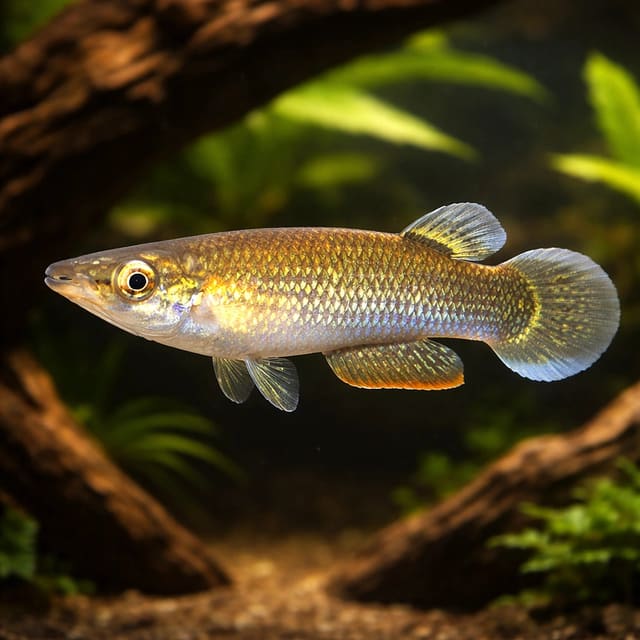
Amiet's Lyretail is admired for the contrast between the male's colour, the lyre-shaped tail and the more subtle patterning of the female. In the right aquarium it is active without being frantic: it explores plant cover, pauses under floating shade and feeds best when food is small enough to be taken confidently from the surface or mid-water.
The species comes from Cameroon in the Lower Sanaga system, where published references describe rainforest brooks and swampy margins rather than open, fast community-tank water. That background matters in the aquarium. A peaceful, covered, mature setup will usually show the fish better than a bright, busy tank full of boisterous feeders.
| Common name | Amiet's Lyretail Killifish |
|---|---|
| Scientific name | Fundulopanchax amieti |
| Locality / line | Edea-Yaounde, often associated with C 89-31 |
| Adult size | Usually around 6-7 cm, with males reported to about 7 cm total length |
| Best aquarium style | Covered planted aquarium with floating cover, gentle flow and shaded areas |
| Minimum aquarium | 60 litres or larger for a pair or trio; more space for extra males |
| Temperature | 22-25 C for a stable display; avoid sudden swings and overheating |
| pH guide | Slightly acidic to neutral water is ideal; FishBase records a natural pH range around 5.8-7.2 |
| Temperament | Peaceful with calm fish, but males may spar and shy fish can be outcompeted |
| Diet | Small carnivorous foods: fine frozen foods, live foods and quality micro pellets once accepted |
| Care level | Intermediate, mainly because the tank must be covered, calm and consistently maintained |
Set this killifish up as if you are designing a calm observation tank rather than a high-energy community display. Use fine-leaved plants, moss, floating plants or shaded hardscape so the fish can break line of sight. A dark background and restrained lighting help the colours read more clearly and also stop the fish feeling constantly exposed.
A tight lid is not optional. Killifish are excellent jumpers and small gaps around filter pipes or feeding holes can become escape routes. Cover those gaps before the fish arrives, then keep maintenance calm and predictable. Sudden netting, uncovered buckets and open lids during feeding are the moments when accidents usually happen.
| Tank feature | Recommended approach | Why it helps |
|---|---|---|
| Lid | Fully covered aquarium with pipe gaps closed | Prevents jumping and keeps the fish secure during feeding |
| Plants | Java moss, fine stems, floating plants or dense corners | Gives females and quieter fish retreat space |
| Flow | Gentle filtration, no harsh blasting across the tank | Matches the quiet edge habitat these fish prefer in aquaria |
| Lighting | Moderate lighting softened by floating cover | Reduces stress and improves colour display |
| Maintenance | Small regular water changes with stable temperature | Supports long-term health without shocking a small fish |
Fundulopanchax amieti is often more forgiving than its delicate appearance suggests, but it still rewards stability. Published aquarium and species references place it in freshwater with slightly acidic to neutral conditions, and keeper reports commonly describe successful maintenance around the low-to-mid twenties Celsius.
Do not chase exact numbers every day. Instead, keep the water clean, mature and consistent. If your tap water is extreme, adjust slowly and avoid sudden swings. A tank that has been running for a while, with plants and steady filtration, is a better home than a brand-new aquarium with perfect numbers on paper.
| Parameter | Target range | Notes |
|---|---|---|
| Temperature | 22-25 C | Short periods a little outside this range are less dangerous than rapid changes |
| pH | About 6.0-7.2 | Soft to neutral water suits the species well |
| Hardness | Soft to moderate | Keep stable; avoid aggressive mineral swings |
| Nitrate | Keep low with regular maintenance | Small carnivorous fish do best in clean mature water |
| Flow | Gentle | Surface movement is useful, but avoid strong current |
Amiet's Lyretail is a small carnivorous killifish, so tiny meaty foods are the main route to good condition. Offer fine frozen foods such as cyclops, daphnia, mosquito larvae or finely sized bloodworm where appropriate. Live foods are useful for conditioning, but they should come from clean sources and be sized so the fish can take them easily.
Many killifish will learn prepared foods, but do not rely on large flakes being eaten properly. Fine granules or micro pellets are easier to portion and less likely to be spat out. Feed small amounts, watch the fish eat, then stop before food disappears into plants and spoils the water.
| Food type | Use | Feeding note |
|---|---|---|
| Fine frozen foods | Daily or rotating staple | Thaw and offer small portions |
| Live foods | Conditioning and enrichment | Excellent for colour and spawning condition when cleanly sourced |
| Micro pellets | Convenient backup or mixed diet | Introduce gradually and remove uneaten food |
| Large flakes | Occasional only if accepted | Crush finely; many killifish ignore oversized pieces |
This species is best viewed as a peaceful specialist fish, not a generic community filler. It can live with calm tank mates of similar size, but it should not be mixed with fin nippers, fast barbs, pushy cichlids or fish that dominate every feeding. If the tank is too busy, the killifish may hide, lose colour and miss food.
A species aquarium is often the cleanest choice, especially if you want to observe pairs, trios or breeding behaviour. If you do choose tank mates, pick quiet fish that share similar water and temperature needs. Small, gentle surface or mid-water species can work, but always leave enough cover so the killifish can retreat.
| Combination | Suitability | Reason |
|---|---|---|
| Pair or trio of Amiet's Lyretail | Excellent | Lets you focus the tank around the species |
| Calm small community fish | Possible | Works only when food competition and fin nipping are controlled |
| Fast barbs or boisterous livebearers | Avoid | Too much movement and feeding pressure |
| Large predatory fish | Avoid | The killifish is small enough to be intimidated or eaten |
| Multiple males in a small tank | Use caution | Males may display and spar; extra space and cover matter |
This listing is tagged for pair-style keeping because Amiet's Lyretail is normally most rewarding when you can watch male and female behaviour together. A pair can work in a quiet, planted tank. A trio with one male and two females can spread attention and reduce pressure, provided the aquarium has enough cover.
When adding the fish, keep lights low and let them settle before heavy feeding. Look for a male claiming visible space while females use plant cover freely. If one fish is being trapped in a corner, add more visual barriers or separate the group before stress becomes a health issue.
Fundulopanchax amieti is a bottom-spawning, non-seasonal killifish in FishBase records, and keeper reports often use spawning mops, moss or peat-style substrates. The eggs are not the reason most buyers choose this fish, but breeding behaviour is one of the joys of keeping it well.
If you want to breed them, prepare a separate plan instead of leaving everything to chance in a display tank. Offer clean live foods, add spawning media, then decide whether eggs or adults will be moved. Reported incubation times vary with temperature and method, so treat breeding as a careful project rather than a guaranteed outcome.
| Breeding cue | Practical meaning |
|---|---|
| Male displays near plants or mops | The tank layout is giving him usable territory |
| Females stay visible and feed well | Cover is probably adequate |
| Persistent chasing | Add cover, increase space or separate fish |
| Egg collection desired | Use spawning mops or a dedicated breeding setup |
Live fish are packed carefully and shipped with live-animal handling in mind. On arrival, keep the room calm, check the bag before opening, and follow the acclimation instructions supplied with the order. Do not pour transport water into the aquarium, and avoid exposing the fish to sudden temperature or light changes.
The Live Arrival Guarantee applies when the delivery and acclimation steps are followed. If there is ever a problem, photograph the sealed bag promptly and contact us straight away so the support record is clear. The aim is not just to send a fish, but to give you the best chance of settling it properly.
| Time after arrival | What you want to see | What to do |
|---|---|---|
| First hour | Fish upright, resting under cover | Keep lights low and avoid chasing |
| First day | Short explorations, steady breathing | Offer only a tiny test feed if settled |
| First week | Improved colour and confident feeding | Build a varied small-food routine |
| Ongoing | Visible display, no constant hiding | Adjust cover or tank mates if stress appears |
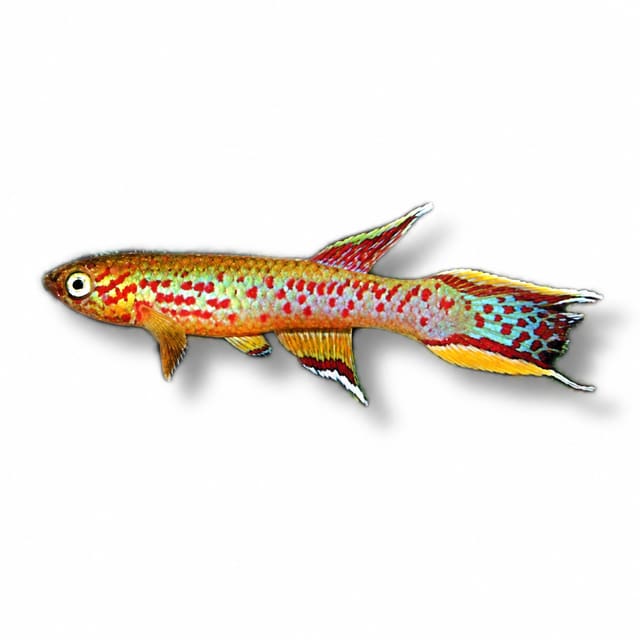
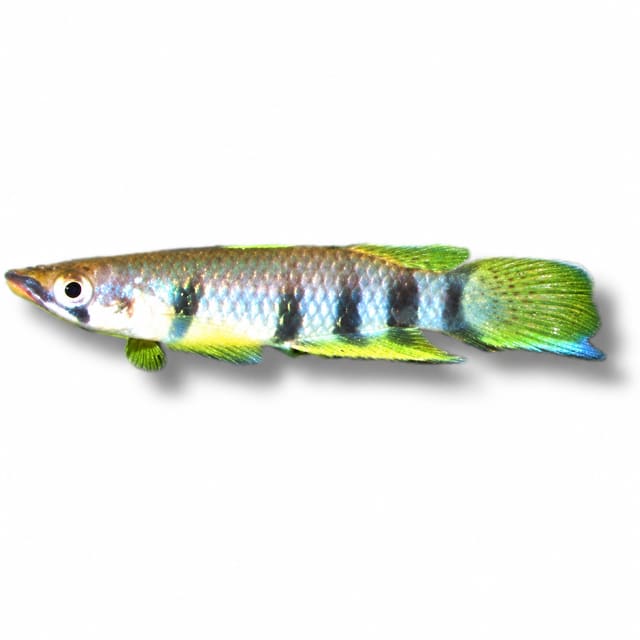
This product currently includes four SKU-specific aquarium visuals for Amiet's Lyretail Killifish. They are kept on the listing because they help buyers understand body shape, planted-tank presentation and the kind of calm aquascape that suits the fish.
No reviews for this item yet. Bought one? Honest reviews only, good or bad.
What customers say about ordering from us
I have a small group of long finned mountain minnows. So was delighted to be able to order ten of this variety to increase the genetics in my tank . The ones I recieved are healthy but it’s to early to give a verdict on wether they are of a long finned type since they are small currently.
Gordon Walker · 23 Sept 2026
100% success travel and "installation". Pleased with quality of purchase. The Siamese fighter a bit "shy" so have not yet seen him at his best yet but looking good. Happy customer. GG
George E Garratt · 21 Sept 2026
Reviews of our shop, collected by Judge.me, an independent third-party review collector. Newest first.