Moderate
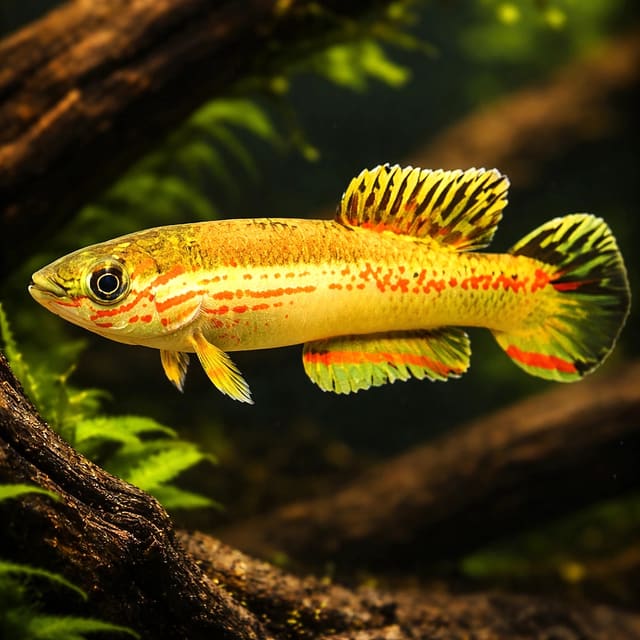
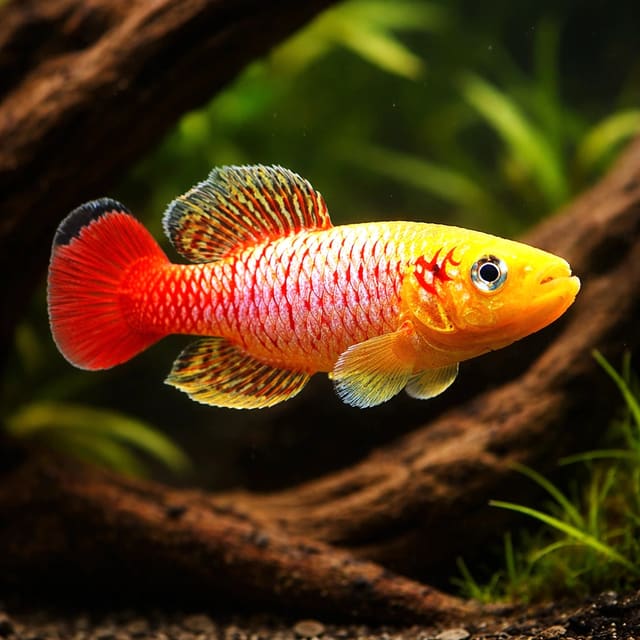
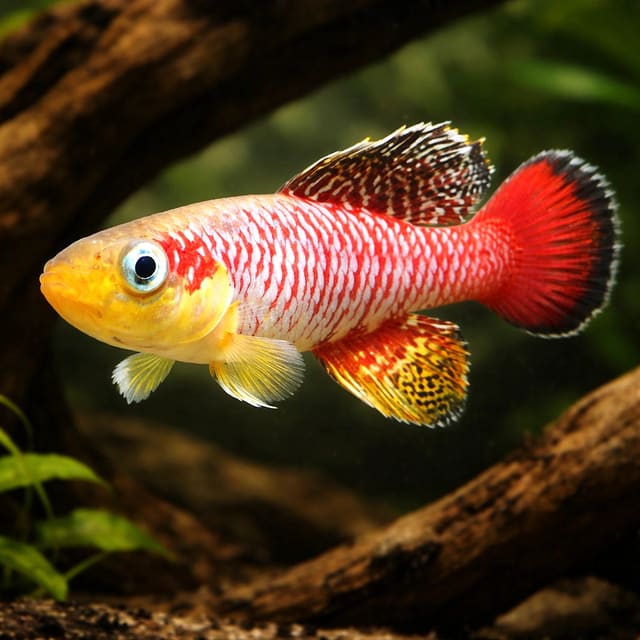
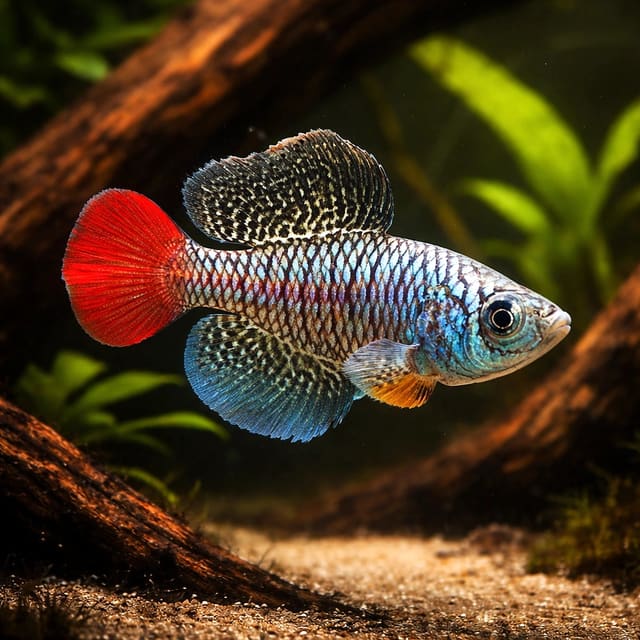
Somalia Nothobranch (Nothobranchius patrizii)
23–26°C · pH 6–7
£7.99

Florida flagfish supplied in size options. A cooler planted-aquarium killifish with algae-grazing behaviour, bold colour and semi-aggressive breeding temperament.
Adult size is the maximum length this species reaches at full maturity (scientific sources). The livestock you receive will be younger and smaller — pick a size above for the actual shipping size. Product-photo provenance and any image-specific limitations are stated on the listing.
Jordanella floridae
Save when buying multiple fish. Each quantity is one fish; sex and pair formation are not guaranteed unless the selected variant explicitly states them.
Confirm your email, then we’ll send an availability message for this exact item if it returns within 180 days.
This request is only for this product—no newsletter or other promotions. A mail-provider retry may very rarely duplicate the same availability message. Unconfirmed addresses are removed after 48 hours. See our privacy policy.
Florida flagfish supplied in size options. A cooler planted-aquarium killifish with algae-grazing behaviour, bold colour and semi-aggressive breeding temperament.
Adult size is the maximum length this species reaches at full maturity (scientific sources). The livestock you receive will be younger and smaller — pick a size above for the actual shipping size. Product-photo provenance and any image-specific limitations are stated on the listing.
Maintain these water conditions for optimal health and vibrant colors
American Flagfish (Jordanella floridae) is a compact North American killifish best known for two things: mature males can show bright red, blue-green and spangled colour, and the fish is a useful grazer in mature planted aquariums. It is also known as the Florida flagfish, a name that reflects its native range in Florida and the male's flag-like pattern when settled and in good condition.
This listing covers the American Flagfish product with size options on the Shopify product. The 2-3 cm option is SKU 3112, and the larger sibling size remains preserved as its own variant. The content below is product-level care guidance for Jordanella floridae, not a variant, price or stock change.
FishBase records Jordanella floridae as a freshwater and brackish, benthopelagic species from Florida drainage systems, with adults reaching about 6.5 cm total length and a subtropical 18-22 C reference range. Aquarium trade sources commonly keep the species across a wider range, but it should not be treated as a high-heat tropical fish. It is usually at its best in a mature, cooler-to-standard planted aquarium with grazing surfaces, cover and tank mates chosen with care.
Choose American Flagfish if you want a characterful small fish for a planted aquarium rather than a delicate show fish for a soft, hot community. It suits keepers who enjoy natural behaviour: browsing algae, inspecting plant leaves, displaying around cover and moving with a confident, slightly scrappy killifish energy. It can be hardy, but it is not a fish to drop into every community without thought.
The best keeper for this species can provide a mature tank, steady water quality, vegetable-rich foods and a layout with visual breaks. It is especially interesting for aquarists who keep cooler planted tanks, livebearer-style communities, Florida biotope-inspired aquariums or algae-prone aquascapes where a small grazer with personality is welcome.
The original reference photo has been added to this product as an additional image, so buyers can see the supplier line alongside the existing planted-aquarium gallery images. It shows the classic flagfish shape: compact, slightly deep-bodied, with an upturned mouth, clear fins and spangled green-blue and red markings. Mature males are normally the more colourful sex, while females and subdominant fish can look plainer, olive-brown or tan, especially during stress, shipping or early settling.
The gallery images already on the product remain in place because they help show presentation, planting context and scale. The new source photo does not replace them; it simply anchors the page to the real supplier fish for this SKU.
Jordanella floridae is native to Florida and is associated with vegetated sloughs, ponds, lakes and sluggish streams, with records also noting brackish tolerance. In the wild it uses plant cover, algae-coated surfaces and calmer margins rather than fast open water. Published notes describe feeding on worms, crustaceans, insects and plant matter, which matches the mixed diet and grazing behaviour seen in aquariums.
For the home aquarium, this points toward a planted, mature, well-lit but sheltered setup. Robust plants, algae-coated hardscape, floating cover and gentle-to-moderate filtration all make sense. A sterile new tank with no grazing surfaces is a poor match, even if the water numbers look acceptable.
Use an established aquarium of at least 80 litres for a small group. If you want multiple males, or if the tank is also a community, plan closer to 100 litres or more and build the layout with breaks in the line of sight. Dense planting helps weaker fish move away from dominant males, and open patches let the group feed and display without constant contact.
Robust plants are best. Java fern, Anubias, Vallisneria, Cryptocoryne, floating plants and tougher stem plants are all sensible choices. Very soft, delicate leaves may be nibbled, especially if the diet lacks vegetable matter. Rocks, wood and broad leaves give the fish places to browse, and a little natural algae is an asset rather than a failure with this species.
Use a secure lid or well-covered top. Flagfish can jump when startled, during chasing or when exploring the upper levels. Filter flow should keep the water clean and oxygenated without turning the tank into a river. Stable maintenance, mature filtration and a sensible stocking level matter more than chasing an exact number.
A practical everyday range is 18-24 C. FishBase gives a cooler 18-22 C reference range, while commercial aquarium care sheets often describe broader tolerance. The careful compromise is simple: avoid sustained high tropical temperatures, especially if the fish is expected to live long-term. Room-temperature or lightly heated planted aquariums can suit it well when the room is stable.
Keep pH around 6.5-8.0 and hardness in a moderate, stable range. The species is adaptable, but sudden swings are still stressful. Ammonia and nitrite must be zero, and nitrate should be controlled with regular water changes. Because the fish eats plant matter and grazes constantly, it appreciates a clean but not over-sanitised aquarium with biofilm and algae available on surfaces.
American Flagfish are omnivores with a strong plant and algae component. Offer spirulina flake, algae wafers, quality small granules, blanched courgette, spinach or other suitable green foods, then add small frozen or live foods such as daphnia, brine shrimp, bloodworm and mosquito larvae. The aim is variety without turning the diet too meaty.
They can help with soft green algae and hair algae, but they are not a magic cure for an unbalanced tank. Think of them as active grazers that support algae control while still needing proper feeding. If they are hungry enough to attack delicate plants, the diet or stocking plan may need adjustment.
This is a bold, active fish with more attitude than many small community species. Males can become territorial, especially around spawning areas or when more than one male is kept in a cramped tank. Females are usually calmer, but the group still needs cover and space. A ratio with more females than males is often easier than keeping several males together in a small aquarium.
When settled, American Flagfish are rewarding to watch. They browse leaves and decor, pick at algae, display to each other and come forward confidently at feeding time. Their behaviour is one of the reasons the species remains popular with planted-tank keepers who want a useful fish that still feels lively and individual.
Good companions are robust, peaceful fish that tolerate similar cooler-to-standard temperatures and will not be shredded by occasional fin nips. Similar-sized livebearers, zebra danio-type fish, white cloud mountain minnows in suitable temperatures, peaceful barbs and some calm bottom dwellers can work in a large, planted tank. Snails are usually a good fit.
Avoid long-finned, slow or delicate fish such as fancy guppies, bettas and many fancy varieties. Also avoid tiny fry, very small shrimp, timid nano fish, aggressive cichlids and any setup where the flagfish will be kept too warm just to suit other species. Amano shrimp may work in some mature planted aquariums, but shrimplets and very small shrimp are at risk.
Breeding behaviour is one of the most interesting parts of keeping Jordanella floridae. Males colour up, claim a spawning area and may guard eggs. FishBase notes male parental care and eggs associated with algal-covered rocks, while aquarium keepers often use dense plants, spawning mops, broad leaves or surface-cover structure to give the pair a place to spawn.
If you want fry, use a species tank or remove eggs to a safe hatching container. Community tanks usually produce few surviving young because eggs and fry are easy snacks. Feed fry very fine foods at first, then move them to newly hatched brine shrimp and crushed prepared foods as they grow.
This page was checked against FishBase for accepted name, habitat type, adult size, feeding and temperature context; the Catalog of Fishes for current valid name and taxonomy; USGS NAS for native range and size summary; and established aquarium care sources for practical planted-tank husbandry. Reference media was used for the exact source photograph and supplied product context.
American Flagfish are dispatched by live-animal courier when weather, route timing and livestock condition are suitable. Orders are packed around oxygen, temperature and journey time, and livestock is covered by our Live Arrival Guarantee. Please have a mature, covered aquarium ready before dispatch day, with vegetable-based foods and a little frozen food available for the first week.
No reviews for this item yet. Bought one? Honest reviews only, good or bad.
What customers say about ordering from us
I have a small group of long finned mountain minnows. So was delighted to be able to order ten of this variety to increase the genetics in my tank . The ones I recieved are healthy but it’s to early to give a verdict on wether they are of a long finned type since they are small currently.
Gordon Walker · 23 Sept 2026
100% success travel and "installation". Pleased with quality of purchase. The Siamese fighter a bit "shy" so have not yet seen him at his best yet but looking good. Happy customer. GG
George E Garratt · 21 Sept 2026
Reviews of our shop, collected by Judge.me, an independent third-party review collector. Newest first.