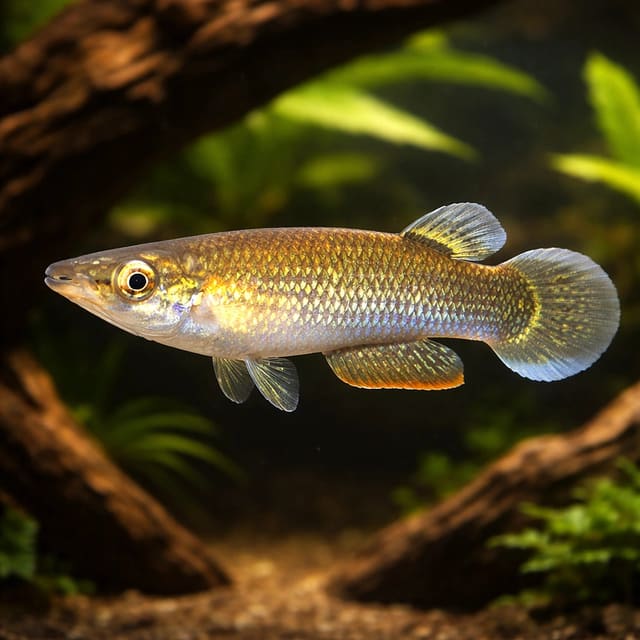
Blue Panchax Killifish (Aplocheilus panchax)
£7.99

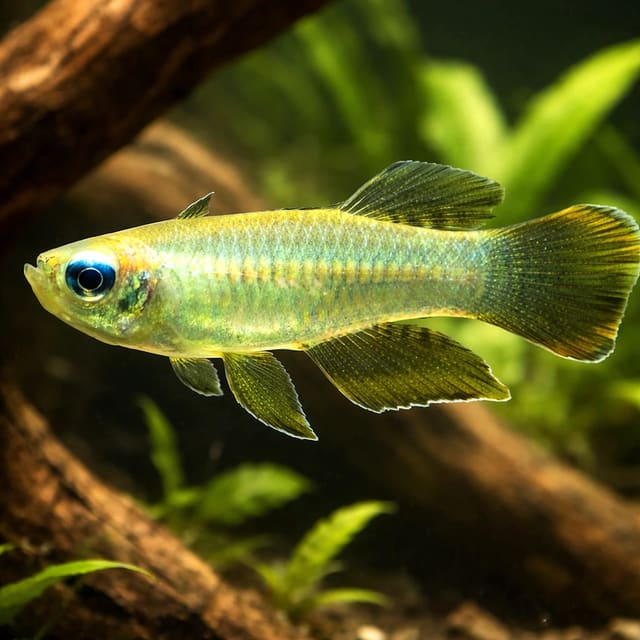
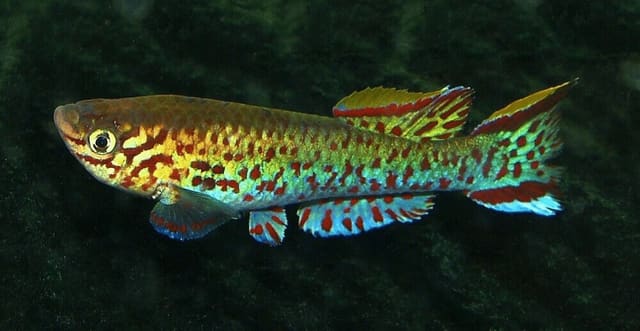
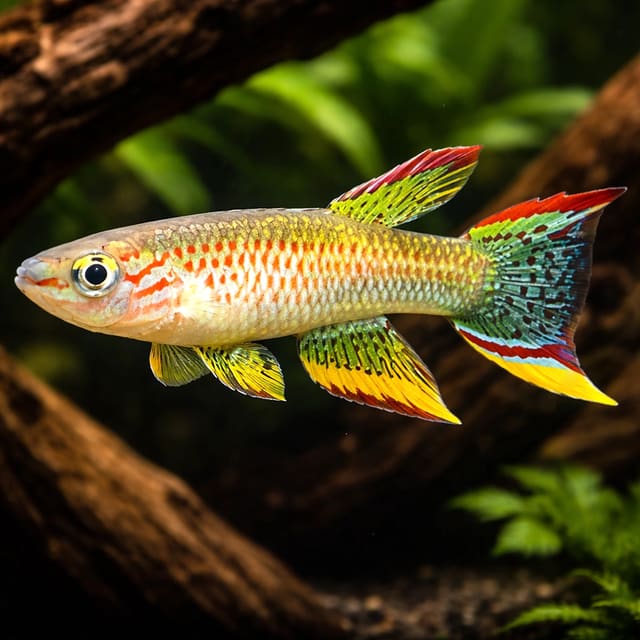
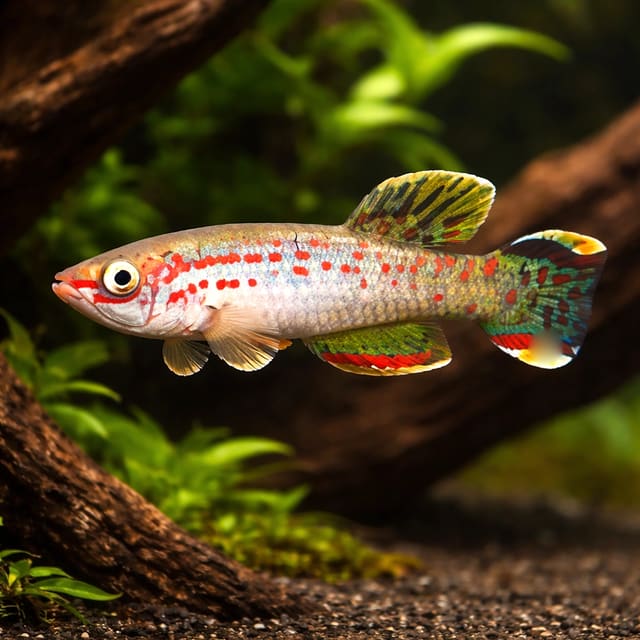
The Spotted / Red-Chinned Panchax (Epiplatys dageti) is a freshwater African rivuline from coastal West Africa with a recorded maximum length of 6 cm. It suits a covered, filtered aquarium planned for at least three fish; use 22–23°C, pH 6.0–7.0 and 5–12°dH as the overlap between FishBase and OATA guidance. Sold individually in 3–4 cm and 4–5 cm sizes.
Adult size is the maximum length this species reaches at full maturity (scientific sources). The livestock you receive will be younger and smaller — pick a size above for the actual shipping size. Product-photo provenance and any image-specific limitations are stated on the listing.
Epiplatys dageti
Save when buying multiple fish. Each quantity is one fish; sex and pair formation are not guaranteed unless the selected variant explicitly states them.
The Spotted / Red-Chinned Panchax (Epiplatys dageti) is a freshwater African rivuline from coastal West Africa with a recorded maximum length of 6 cm. It suits a covered, filtered aquarium planned for at least three fish; use 22–23°C, pH 6.0–7.0 and 5–12°dH as the overlap between FishBase and OATA guidance. Sold individually in 3–4 cm and 4–5 cm sizes.
Adult size is the maximum length this species reaches at full maturity (scientific sources). The livestock you receive will be younger and smaller — pick a size above for the actual shipping size. Product-photo provenance and any image-specific limitations are stated on the listing.
Maintain these water conditions for optimal health and vibrant colors
Spotted / Red-Chinned Panchax is the common-name pairing used here for Epiplatys dageti. FishBase identifies Epiplatys dageti as the Redchin panchax, a freshwater African rivuline in the family Nothobranchiidae. It records the fish from around Monrovia in Liberia, through southern Côte d’Ivoire and into south-western Ghana. This fish suits a keeper ready to manage a covered, biologically filtered aquarium, maintain measured water conditions and plan for a small social group. FishBase also describes it as benthopelagic, so provide usable cover and swimming space throughout the aquarium.
The wider Epiplatys genus consists of African rivulines in Nothobranchiidae. That genus background establishes its African killifish context without assigning the habits of every other Epiplatys species to this fish. Similar common names are therefore a reason to check the scientific name rather than treating different panchax as interchangeable.
OATA describes killifish generally as small and peaceful, but also notes that they may be unsettled by boisterous companions. The decisive choices are the quality of the filter, the security of the cover, the number of fish planned and the behaviour of every intended tank mate.
FishBase records a maximum of 6 cm total length for male or unsexed fish. Treat that as the maximum recorded planning reference rather than the size every individual is guaranteed to attain. The 3–4 cm and 4–5 cm labels describe dispatch sizes, so leave room for growth and assess companions using the 6 cm reference.
| Suits | Not suited to |
|---|---|
| A covered, established aquarium with biological filtration | An aquarium without a well set up and maintained filter |
| A plan for at least three fish under OATA killifish guidance | Planning one fish as a solitary display |
| Measured water within 22–23°C, pH 6.0–7.0 and 5–12°dH | Water outside the shared FishBase and OATA ranges |
| Calm companions that pass water, adult-size and feeding checks | Boisterous or long-finned tank mates |
| A keeper prepared to test water and complete weekly maintenance | A setup where ammonia or nitrite is above zero |
Keep the aquarium plan centred on those practical needs. Colour, pictured markings and dispatch size should never be used to infer sex, temperament or eventual appearance. For other animals in the same broad retail group, browse the current killifish collection and compare each scientific identity and complete care plan separately.
One purchase supplies one animal. Use the live size selector to choose approximately 3–4 cm or 4–5 cm at dispatch. The size you select is the size supplied, not the adult size. Both sizes represent the same species and should be housed around the same maximum recorded adult-length reference of 6 cm total length.
Sex is guaranteed only when the selected option explicitly states male or female. This Spotted / Red-Chinned Panchax listing has no sex-guaranteed option. Order quantity therefore controls the number of fish, but it does not create a guaranteed male-to-female composition.
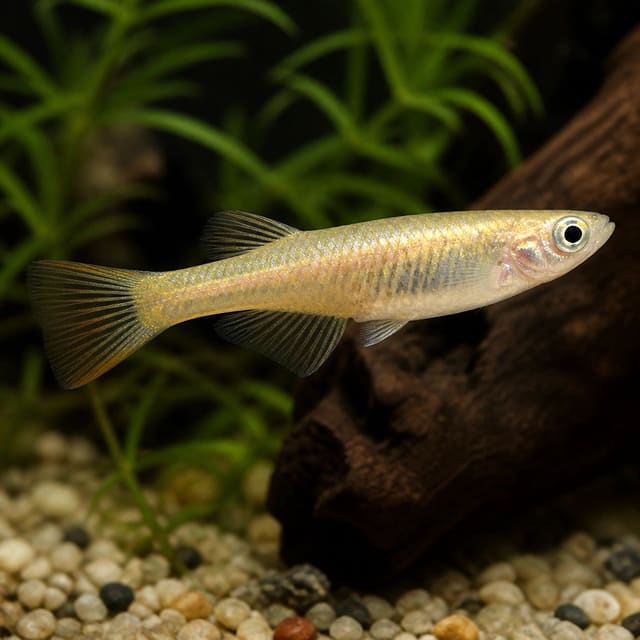
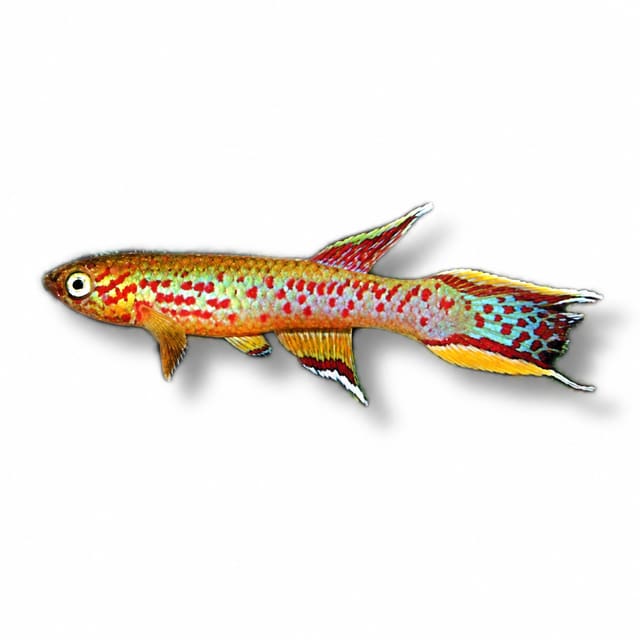
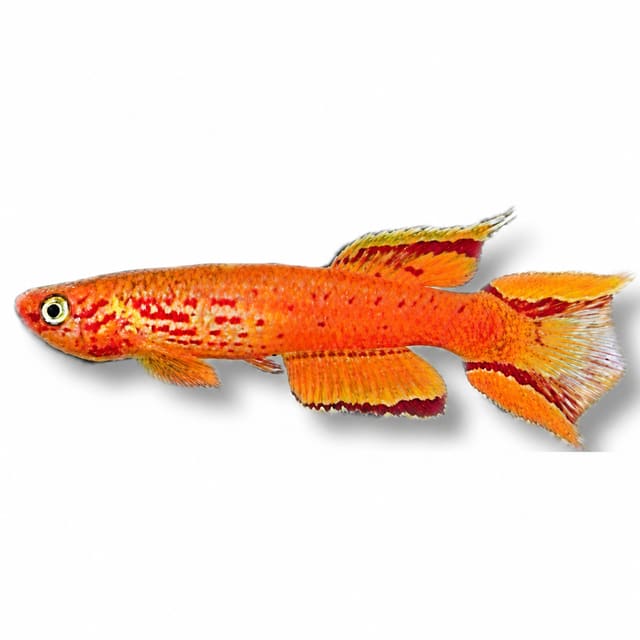
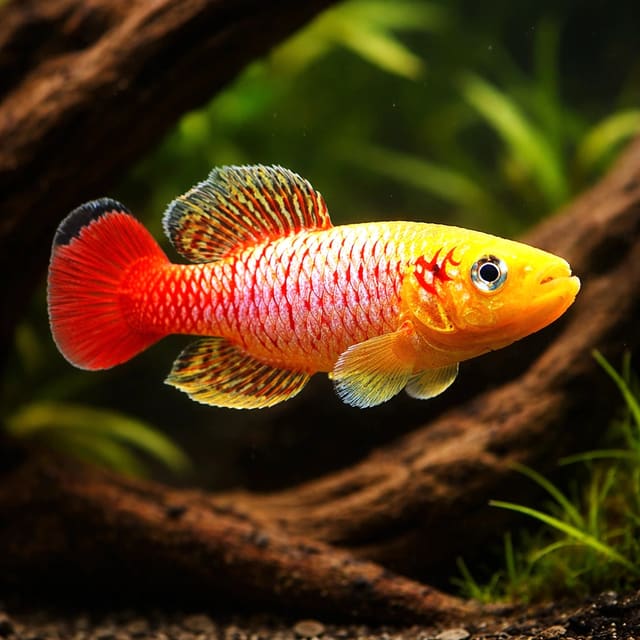
The gallery images are representative, based on reference photographs of this species, so colours can look slightly different from the live animal. Use the size selector for dispatch size and the written identity for species choice; do not use an image to decide sex or exact future colour.
OATA’s killifish guidance gives 22–27°C, pH 6.0–7.5, 4–12°dH, at least three fish and an aquarium of at least 40 litres for a small group of the smallest killifish. These are group-level figures. FishBase records Epiplatys dageti in environmental conditions of 21–23°C, pH 6.0–7.0 and 5–12 dH. A practical aquarium target within both sets of values is therefore 22–23°C, pH 6.0–7.0 and 5–12°dH.
| Number or size | How to use it |
|---|---|
| 3–4 cm | Approximate dispatch size |
| 4–5 cm | Approximate dispatch size |
| 6 cm total length | FishBase maximum recorded adult-size reference |
| 22–23°C | Planning overlap for aquarium temperature |
| pH 6.0–7.0 | Planning overlap for acidity |
| 5–12°dH | Planning overlap for general hardness |
| At least 40 litres | OATA baseline for a small group of the smallest killifish; increase for total stocking |
Begin with at least 40 litres as a baseline, then choose more space when the aquarium will contain additional fish or needs more planted refuges. Volume alone does not make a setup suitable: the filter must be established, the cover must fit securely, and measured water values must fall within the plan before the group is introduced.
Set the aquarium to 22–23°C, pH 6.0–7.0 and 5–12°dH for a practical overlap between the species’ recorded environmental values and OATA’s aquarium guidance for killifish. Measure the aquarium rather than relying on a heater dial or a general description of local tap water. Temperature, pH and hardness answer different questions, and a suitable reading in one column does not cancel an unsuitable result in another.
Use the aquarium water chemistry guide to distinguish pH, GH, KH, ammonia, nitrite and nitrate before changing anything. After measuring the values, use the water matcher to compare the aquarium with the stated planning range.
If ammonia or nitrite is above zero, pause new additions and deal with the biological-filtration problem. Test again after corrective maintenance rather than assuming a water change has settled it. When nitrate rises, compare it with the tap-water baseline and review feeding, stocking and the weekly maintenance routine.
If pH, GH or temperature lies outside the plan, avoid a sudden correction. First test the replacement water, confirm the result with a suitable aquarium test and decide whether a repeatable preparation method can hold the desired value. Stability comes from understanding the starting water and using the same controlled process at each change.
| Observation | First action |
|---|---|
| Ammonia or nitrite above zero | Stop further stocking and assess filtration |
| Nitrate trend rising | Review weekly changes, feeding and total stocking |
| pH shifting between tests | Measure KH and compare aquarium and tap water |
| Temperature outside 22–23°C | Check the water with a thermometer and adjust gradually |
Use an aquarium of at least 40 litres as OATA’s baseline for a small group of the smallest killifish, then increase the volume according to the complete stocking plan. FishBase’s 6 cm maximum for Epiplatys dageti provides the adult-size reference, while the OATA figure supplies the aquarium baseline. More water gives the filter and keeper a larger buffer against rapid changes, but it does not replace regular tests or maintenance.
A cover is essential for killifish. Fit it before the fish arrive and return it securely after feeding, testing or maintenance. Check the areas around filter fittings and other equipment whenever anything is moved. Plants may make a group feel less exposed, but planted cover and a physical aquarium cover perform different jobs.
| Part | Required function |
|---|---|
| Aquarium | At least 40 litres for a small-group baseline, with more capacity for additional stocking |
| Cover | Closes the aquarium securely around equipment |
| Filter | Provides established biological filtration |
| Substrate | Aquarium gravel or sand |
| Plants | Provide cover, especially where several fish share the aquarium |
| Alternative shelter | Plastic plants and suitable ornaments when live plants are not used |
OATA recommends a heavily planted aquarium and specifically connects cover with keeping multiple males together. Use live planting where practical. If live plants are not part of the setup, add aquarium-safe artificial plants and suitable ornaments so fish can move away from one another rather than remaining continuously exposed.
Prepare and mature the filter before livestock arrives. The first tropical aquarium guide explains how to establish the system before fish are introduced. A newly filled aquarium is not ready merely because its temperature has reached the target; the biological filter must be able to process waste while ammonia and nitrite remain at zero.
OATA advises keeping at least three killifish for companionship. Its broader composition guidance is two females to each male, intended to reduce pressure on females and other inhabitants. The retail size choice controls size rather than sex, so build enough aquarium capacity for a group without treating an order of three as a guaranteed ratio.
Add up the complete adult stocking plan before deciding quantity. One purchase supplies one animal, meaning a planned group of three requires three purchase units. If other fish already occupy the aquarium, include their adult sizes and waste load when deciding whether the 40-litre baseline remains adequate. Increase the aquarium size rather than compressing a mixed community into the minimum figure.
| Choice | What it controls |
|---|---|
| Purchase quantity | The number of animals supplied |
| Size choice | The approximate 3–4 cm or 4–5 cm dispatch size |
| Adult plan | Space calculated using the maximum 6 cm reference |
| Social baseline | At least three under OATA killifish guidance |
| Sex ratio | Not guaranteed by quantity or dispatch size |
Plants and ornaments help distribute shelter when several fish share the aquarium. Arrange more than one covered area so an individual can move away from another fish. During feeding, watch whether each animal can leave cover and obtain food. A fish that repeatedly misses meals or remains concealed needs attention even when there is no obvious fin damage.
Increase numbers gradually rather than adding the entire intended community in rapid succession. OATA explains that the beneficial bacteria in a mature filter must increase as fish numbers and feeding rise. Stocking too quickly can leave the bacterial population unable to process the additional waste, causing ammonia or nitrite to rise.
Use tests to decide whether the filter has handled each addition. Ammonia and nitrite must remain at zero, while nitrate should stay within the stated limit above the tap-water baseline. If either toxic compound appears, pause further additions and correct the water-quality problem. Add further livestock only after the aquarium is stable again.
OATA describes killifish as omnivorous and recommends a good-quality flake or granule as the regular aquarium food. It also advises small live or frozen items such as daphnia, brine shrimp or tubifex. Use food that is appropriately sized for the fish in front of you, particularly when feeding fish dispatched at 3–4 cm or 4–5 cm.
Feed once a day and offer only what the fish can consume within a few minutes. That time limit is a practical portion control: uneaten food breaks down and adds waste to the aquarium. More food is not a substitute for observing whether each member of the group actually reaches the meal.
| Food | How to use it |
|---|---|
| Good-quality flake | Use an appropriately sized amount as a prepared staple |
| Good-quality granule | Choose a size each fish can take comfortably |
| Daphnia | Offer as a small live or frozen addition |
| Brine shrimp | Use as another live or frozen choice |
| Tubifex | Offer in a suitably small live or frozen portion |
Watch the whole group during the few-minute feeding window. If one fish receives most of the food, distribute small portions to more than one place rather than increasing the total indiscriminately. If food remains after the group stops feeding, remove accessible leftovers and reduce the next portion.
Use feeding response as a daily health observation. OATA lists reduced intake or loss of interest in food among the changes that can signal a problem. Compare the individual with its usual behaviour: a sudden refusal matters more than whether it takes exactly the same number of flakes as another fish.
Keep the schedule consistent enough to make changes easy to spot. A once-daily observed meal provides food while limiting the accumulation of uneaten material. Weekly water testing then shows whether feeding and stocking remain within the filter’s capacity.
The RSPCA explains why biological filtration is vital: fish release toxic ammonia, established bacteria convert it to toxic nitrite and further bacteria convert nitrite to the safer nitrate. A working filter must therefore be set up before fish arrive and maintained without destroying the bacterial population that processes waste.
Follow OATA’s recommendation for a 25% partial water change at least once a week. Use a siphon to remove solid waste from the gravel or sand where needed. Treat replacement tap water with a conditioner that removes chlorine or chloramine before it enters the aquarium.
If filter media needs cleaning, rinse it lightly in water removed during the partial change. Do not run it under the tap because chlorine or chloramine may kill beneficial bacteria. Clean only as much as needed to restore operation rather than trying to make every mature surface look unused.
Test at least weekly even when the fish appear settled. Regular results establish the aquarium’s normal pattern and may reveal a deteriorating condition before behaviour changes. Test promptly after a filter blockage, interruption, unusually heavy feeding or any sign of distress.
| Result | Maintenance response |
|---|---|
| Ammonia above zero | Pause stocking and deal with waste processing immediately |
| Nitrite above zero | Pause stocking and assess biological filtration |
| Nitrate more than 20 mg/l above tap water | Review water changes, feeding and stocking |
| Blocked filter | Rinse media lightly in removed aquarium water |
| Cover displaced | Refit it securely before leaving the aquarium |
Prepare the aquarium before arranging the arrival of livestock. The filter should already be mature, the cover fitted, plants or alternative shelter positioned and the intended water values stable. Test immediately before introduction and require ammonia and nitrite to be zero milligrams per litre.
Read the current delivery and Live Arrival Guarantee policy before the order is dispatched.
OATA advises increasing fish numbers slowly because every addition increases waste and feeding. The filter’s beneficial bacteria need time to increase with that new load. An aquarium that processed the waste from its previous inhabitants may still be overwhelmed when too many animals are added together.
| Checkpoint | Decision |
|---|---|
| Before introduction | Require zero ammonia and zero nitrite |
| After the first feeds | Confirm every fish eats and behaves appropriately |
| During the first week | Test ammonia and nitrite and watch for any rise |
| Before another addition | Proceed only when water quality remains stable |
Once the fish enter the aquarium, allow them to use the prepared cover and observe without repeatedly disturbing the layout. Check swimming behaviour, breathing, body condition and response to the next scheduled feed. Count how many animals eat rather than judging the group only by the most visible individual.
During the first week, compare behaviour from day to day. OATA highlights surface hanging, sitting on the bottom, erratic swimming, unusual hiding, changes in aggression, altered breathing and reduced feeding as signs requiring attention. Test water promptly when any of these appears.
A small ammonia or nitrite reading is not a reason to continue stocking and hope the filter catches up. Pause additions, reduce avoidable waste and restore safe water quality. Keep testing until both compounds remain at zero. Only then should the next stage of the stocking plan be considered.
Use daily observation to learn the group’s normal swimming, colour, temperament, breathing, appearance, body condition and feeding response. OATA recommends watching all of these because a change can identify a developing problem before it becomes more serious.
Healthy fish should have clear, bright eyes, undamaged fins, intact scales and appropriate swimming behaviour. Look for ulcerations, bumps, white spots, fluffy growths, missing fins or scales, and any increase or decrease in body weight and condition. No single observation replaces a water test, so combine appearance with behaviour and measured water quality.
| Change noticed | First response |
|---|---|
| Hanging at the surface or sitting on the bottom | Test ammonia, nitrite and temperature |
| Erratic swimming | Check water quality and observe interactions |
| Faster or slower gill movement | Test water promptly and check filter operation |
| Darker or paler colour | Compare behaviour, breathing and feeding as well |
| More aggression or hiding | Review shelter, group interactions and tank mates |
| Reduced food intake | Confirm whether one fish or the whole group is affected |
| White spots or fluffy growths | Record the change and seek appropriate health guidance |
Start with ammonia and nitrite because even small amounts can stress killifish. Confirm that the filter is operating, inspect it for blockages and check when the last partial water change was completed. Correct measured husbandry problems while avoiding abrupt alterations to pH, hardness or temperature.
When one fish hides or misses food, watch the group long enough to distinguish a health change from social pressure. Redistribute plants or suitable ornaments if one area contains all the shelter. Spread the normal feeding portion between several positions if a companion controls access to food.
When several fish change at the same time, investigate shared conditions first: water quality, filter operation, recent stocking and feeding load all affect the entire aquarium. Record the readings and visible signs so that the pattern is clear. Contact us for health guidance when changes continue after immediate water-quality checks.
Continue the weekly baseline even when no problem is visible: a 25% partial water change at least once a week, regular tests, conditioned replacement water and careful filter maintenance. Consistency gives you a reliable normal condition against which sudden changes can be recognised.
OATA describes killifish generally as small and peaceful but says they do not appreciate boisterous tank mates. It also warns that some may be shy and prone to bullying, while some males may be aggressive towards long-finned species. Apply those cautions directly: avoid boisterous companions and avoid long-finned species.
A named universal tank-mate list would ignore differences between individual species and aquarium layouts. Screen each candidate for adult size, temperament, water requirements, social needs and feeding behaviour. For this fish, the water comparison should include 22–23°C, pH 6.0–7.0 and 5–12°dH, while the size comparison should use the maximum recorded 6 cm total length rather than the dispatch size.
| Check | Pass condition |
|---|---|
| Water | Both animals can be maintained within the same stable measured range |
| Adult size | The combination remains appropriate at full planning size |
| Temperament | The candidate is calm rather than boisterous or bullying |
| Fins | The candidate is not a long-finned species |
| Feeding | Every fish can obtain its once-daily portion within a few minutes |
Reject a proposed companion when any essential requirement conflicts. Matching temperature alone is insufficient if the other fish needs harder water, behaves boisterously or prevents this group from feeding. Likewise, a similar adult length does not make two fish compatible when their social behaviour differs.
Layout changes can reduce pressure but cannot make a fundamentally unsuitable combination safe. Use plants and suitable ornaments to create shelter, then watch for increased hiding, reduced feeding, altered breathing, damaged fins or changes in aggression. Those signs mean the community plan needs reassessment rather than another decorative addition.
Other killifish require the same individual scrutiny. OATA describes the group as diverse, and one shared retail label does not establish identical behaviour or care. Compare scientific identities and adult requirements before combining them.
For a stocking and compatibility assessment, contact us with the aquarium volume, measured water values, current inhabitants and the number of Panchax planned. That information allows the whole community to be considered rather than approving a companion name in isolation.
A compatibility decision continues after the fish enter the aquarium. OATA’s warning signs include altered aggression, increased hiding, unusual swimming, changed breathing, damaged fins, declining body condition and reduced feeding. Check those indicators daily while a new community settles.
| What you see | What to do |
|---|---|
| Every fish reaches food | Keep portions small and continue observation |
| One fish repeatedly misses food | Separate feeding positions and assess competition |
| Persistent hiding after a new addition | Review bullying, shelter and the suitability of the companion |
| Fin damage or rising aggression | Prepare to separate the incompatible animals |
| Several fish breathe unusually | Test ammonia, nitrite and temperature immediately |
Feeding provides a useful worked check. Offer the normal once-daily amount that can be eaten within a few minutes. If a faster fish takes everything while the Panchax remain hidden, adding more food may only increase waste. Spread the existing portion between more than one place and decide whether the community still allows all fish to feed appropriately.
Hiding also needs context. Plants and ornaments should provide shelter, but a fish forced to remain concealed and lose condition is not benefiting from the community. Observe which animal approaches when it tries to leave cover. Persistent pressure means the social combination, not merely the amount of decoration, needs to change.
Test water whenever behaviour changes because a community-wide water problem can resemble a compatibility failure. If ammonia or nitrite is above zero, pause all further stocking and correct filtration and maintenance first. If measured water is safe and one species consistently causes chasing, food exclusion or fin damage, prepare a separate suitable aquarium rather than waiting for the condition to worsen.
Do not add another species to distract from aggression or hiding. Additional stocking increases biological load and may intensify competition. Stabilise the present aquarium, identify the cause and make one controlled change at a time.
FishBase records a maximum length of 6 cm total length for Epiplatys dageti. Plan the aquarium and assess companions using that adult-size reference rather than the 3–4 cm or 4–5 cm dispatch size.
Use a covered, biologically filtered aquarium of at least 40 litres for a small group. That volume is OATA’s killifish baseline for a small group of the smallest species, so increase it for additional stocking.
OATA’s killifish guidance advises at least three for companionship and suggests two females to each male. Sex is not guaranteed here, so plan adequate capacity without assuming that quantity will create that ratio.
FishBase describes Epiplatys dageti as easy to maintain in an aquarium. The keeper must still provide a mature biological filter, a secure cover, measured water, at least three fish and a 25% water change at least once a week.
Feed good-quality flake or granules once daily, adding small live or frozen foods such as daphnia, brine shrimp or tubifex for variety. Give only what the fish can eat within a few minutes.
Keep it at 22–23°C, pH 6.0–7.0 and 5–12°dH, the overlap between FishBase’s environmental range for Epiplatys dageti and OATA’s aquarium guidance for killifish.
OATA describes killifish generally as peaceful but says some males may be aggressive towards long-finned species. Avoid long-finned species and watch the group for chasing, hiding, damaged fins or food exclusion.
Screen calm fish individually for compatible water, adult size, temperament and access to food. Avoid boisterous tank mates and long-finned species, and treat the outcome of any other combination as uncertain until behaviour is observed.
Someone must be present to receive it. Film every delivery continuously from the sealed parcel as it is opened, with the fish still in the sealed bag; float the bag for 20–30 minutes before release and never pour the bag water into the aquarium.
No reviews for this item yet. Bought one? Honest reviews only, good or bad.
What customers say about ordering from us
I have a small group of long finned mountain minnows. So was delighted to be able to order ten of this variety to increase the genetics in my tank . The ones I recieved are healthy but it’s to early to give a verdict on wether they are of a long finned type since they are small currently.
Gordon Walker · 23 Sept 2026
100% success travel and "installation". Pleased with quality of purchase. The Siamese fighter a bit "shy" so have not yet seen him at his best yet but looking good. Happy customer. GG
George E Garratt · 21 Sept 2026
Reviews of our shop, collected by Judge.me, an independent third-party review collector. Newest first.