Advanced
Gunther's Zanzibar Gold Nothobranch (Nothobranchius guentheri)
22–25°C · pH 6–7
£10.99

Small Tanzanian annual killifish with vivid red fins and a seasonal life cycle. Difficult care; best in a covered species-first setup with small live and frozen foods.
Adult size is the maximum length this species reaches at full maturity (scientific sources). The livestock you receive will be younger and smaller. Product-photo provenance and any image-specific limitations are stated on the listing.
Nothobranchius rubripinnis
Save when buying multiple fish. Each quantity is one fish; sex and pair formation are not guaranteed unless the selected variant explicitly states them.
Confirm your email, then we’ll send an availability message for this exact item if it returns within 180 days.
This request is only for this product—no newsletter or other promotions. A mail-provider retry may very rarely duplicate the same availability message. Unconfirmed addresses are removed after 48 hours. See our privacy policy.
Small Tanzanian annual killifish with vivid red fins and a seasonal life cycle. Difficult care; best in a covered species-first setup with small live and frozen foods.
Adult size is the maximum length this species reaches at full maturity (scientific sources). The livestock you receive will be younger and smaller. Product-photo provenance and any image-specific limitations are stated on the listing.
Maintain these water conditions for optimal health and vibrant colors
The Red-Finned Notho (Nothobranchius rubripinnis) is a small Tanzanian annual killifish kept for its vivid red fins, compact shape and fascinating seasonal life cycle. It is not a beginner fish. The appeal is in keeping a rare, short-lived specialist species well: clean water, calm tankmates or a species-only setup, frequent small foods and a breeding plan if you want to continue the line.
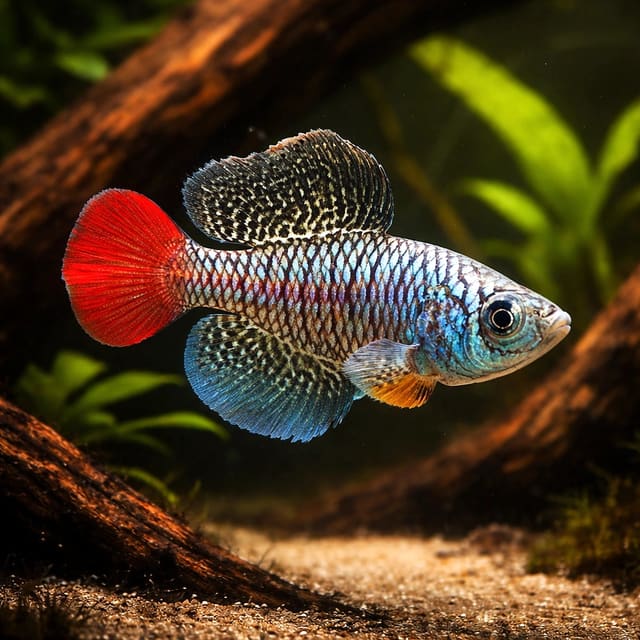
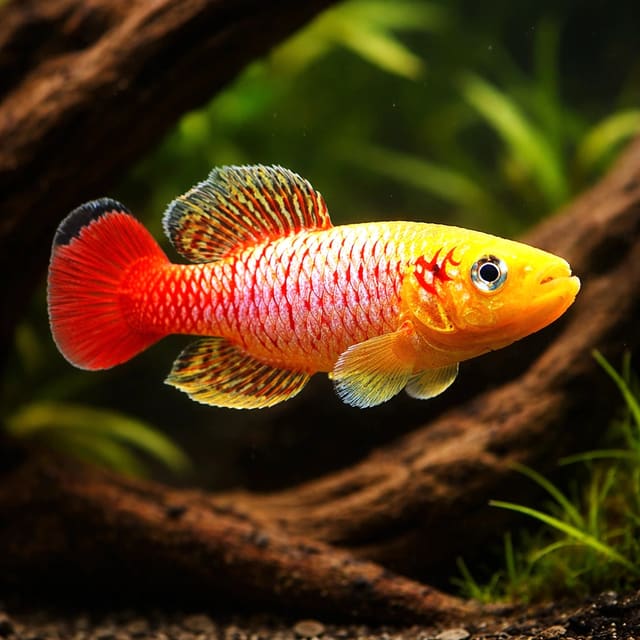
This listing is for 2.5-3.5 cm stock. Young fish may still be developing their strongest colour, especially if they are newly imported, recently settled or female. Males typically show the strongest red in the caudal, dorsal and anal fins, with blue-green body tones that look best under subdued lighting and against a dark, planted background.
The accepted spelling used by FishBase, WildNothos and current aquarium references is Nothobranchius rubripinnis. Some older supplier text shows a one-n spelling; this listing uses the double-n scientific name.
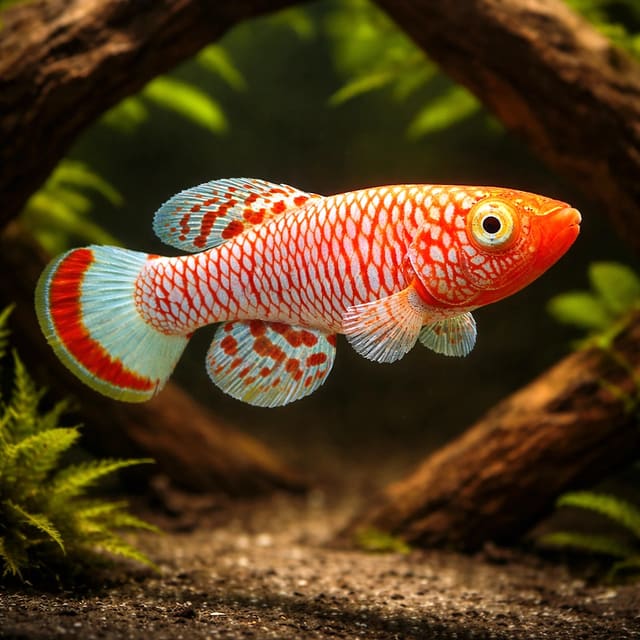
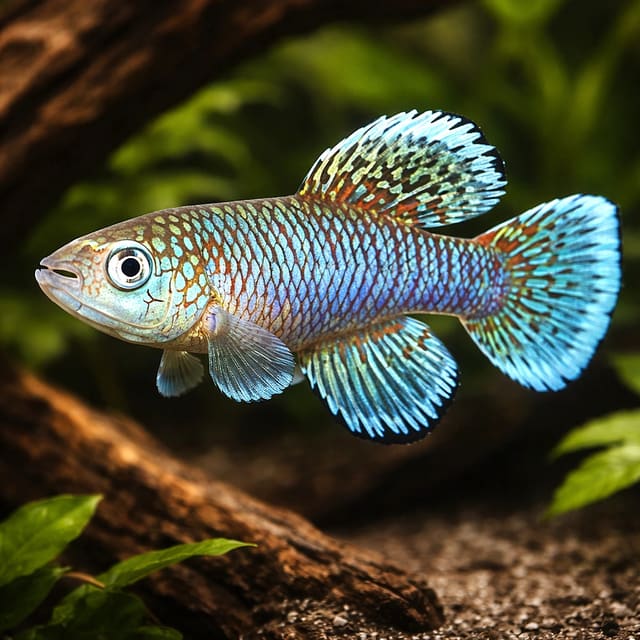
The product gallery keeps the existing aquarium visuals and adds the original reference photo for this SKU. Use that source photo for the clearest idea of the stock identity and use the additional images as habitat and presentation references.
Nothobranchius rubripinnis is associated with coastal Tanzania, especially seasonal freshwater habitats around the Mbezi and Luhule/Luhute river systems south of Dar es Salaam. These habitats can be temporary pools, swamps and shallow seasonal waters. They are not fast-flowing river fish; they are adapted to quiet, plant-rich water where the bottom contains mud, plant debris and fine sediment.
Like other annual nothos, the adults live quickly. They mature, feed, display and spawn while water is available. Eggs survive in the substrate through a dry period and hatch when water returns. That natural rhythm is the reason this species is so interesting, but it is also why it needs more thought than a standard community fish.
Use a mature aquarium of at least 40 litres for a pair, trio or carefully managed small group. A tight lid is essential because killifish can jump through surprisingly small gaps. Keep filtration gentle, avoid strong current, and use floating plants, Java moss, fine-leaved plants, leaf litter or root cover to break up sightlines.
A dark substrate helps the fish feel secure and makes the red fins stand out. If breeding is planned, offer peat fibre, coir, fine sand in a container, or suitable spawning mops so eggs can be collected without disturbing the whole tank. Keep the aquarium calm rather than bright and busy.
Do not rush this fish into an immature tank. Small annual killifish can look tough because they are active and bold, but they do poorly in unstable water or tanks with leftover food building up in the substrate.
Feed as a small carnivorous micro-predator. Daphnia, baby brine shrimp, adult brine shrimp, mosquito larvae, small bloodworm and similar frozen or live foods are ideal. Fine quality prepared foods can be useful, but they should not be the whole diet if you want strong colour and breeding condition.
Offer small portions once or twice daily and remove uneaten food. This is especially important in a species tank with gentle filtration, where waste can settle quickly. A varied diet also helps females condition without becoming overburdened and helps males maintain strong display colour.
Red-Finned Notho is best treated as a species-first fish. Males can display hard, chase females and spar with rival males, especially in a small or open aquarium. Serious damage is usually reduced by using cover, keeping a sensible sex ratio and avoiding cramped conditions, but this is not a peaceful shoaling fish.
If tankmates are used, choose only small, calm species that will not outcompete them for food or nip fins. Avoid large fish, fast midwater feeders, boisterous barbs, fin-nippers, aggressive cichlids and most tiny shrimp. For most keepers, a dedicated notho setup is the better and kinder choice.
This is a bottom-spawning annual killifish. Provide peat, coir or another suitable spawning medium, condition adults with live and frozen foods, and collect eggs carefully. FishBase and specialist notho references describe an incubation period of around two to four months under suitable conditions.
Breeding is rewarding but precise. Eggs need to stay damp rather than wet, temperature should be steady, and fry need tiny first foods as soon as they hatch. If you have never bred annual killifish before, research the method before the fish arrive rather than trying to work it out after eggs have been laid.
Every live fish order is packed for a licensed live-animal courier service and covered by our Live Arrival Guarantee. First-time customers can use code WELCOME10 for 10% off an eligible first order at checkout. For this specialist species, we recommend having the tank ready before ordering so the fish can be acclimated quietly and fed small foods on arrival.
No reviews for this item yet. Bought one? Honest reviews only, good or bad.
What customers say about ordering from us
I have a small group of long finned mountain minnows. So was delighted to be able to order ten of this variety to increase the genetics in my tank . The ones I recieved are healthy but it’s to early to give a verdict on wether they are of a long finned type since they are small currently.
Gordon Walker · 23 Sept 2026
100% success travel and "installation". Pleased with quality of purchase. The Siamese fighter a bit "shy" so have not yet seen him at his best yet but looking good. Happy customer. GG
George E Garratt · 21 Sept 2026
Reviews of our shop, collected by Judge.me, an independent third-party review collector. Newest first.