Tanganyika Pearl Killifish (Lamprichthys tanganicanus)
23–25°C · pH 8–8.5 · 180L

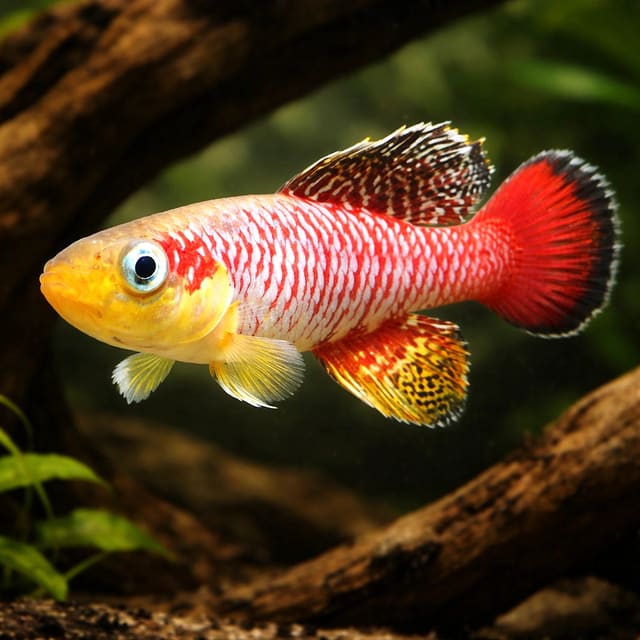
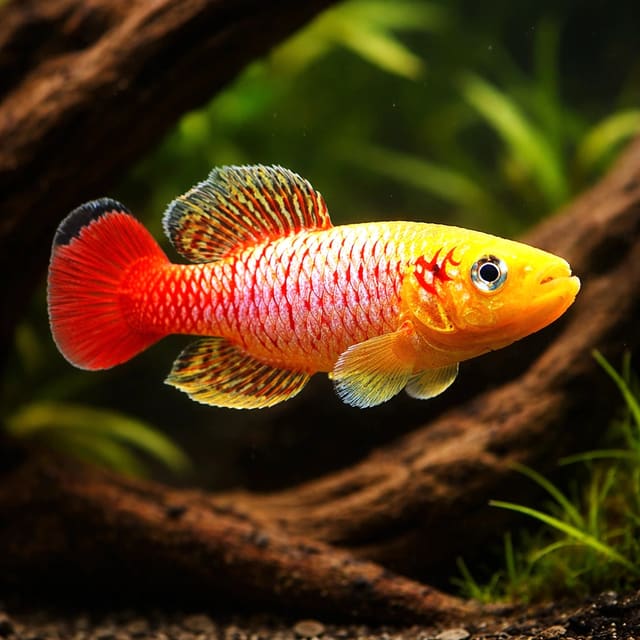
One male and one female Nothobranchius korthausae 'Mafia Island TZN 08-04'. A specialist annual killifish pair for a mature, covered 40L+ aquarium with gentle flow.
Adult size is the maximum length this species reaches at full maturity (scientific sources). The livestock you receive will be younger and smaller — pick a size variant above for the actual shipping size. Product-photo provenance and any image-specific limitations are stated on the listing.
Nothobranchius korthausae
Save when buying multiple fish. Each quantity is one fish; sex and pair formation are not guaranteed unless the selected variant explicitly states them.
Confirm your email, then we’ll send an availability message for this exact item if it returns within 180 days.
This request is only for this product—no newsletter or other promotions. A mail-provider retry may very rarely duplicate the same availability message. Unconfirmed addresses are removed after 48 hours. See our privacy policy.
One male and one female Nothobranchius korthausae 'Mafia Island TZN 08-04'. A specialist annual killifish pair for a mature, covered 40L+ aquarium with gentle flow.
Adult size is the maximum length this species reaches at full maturity (scientific sources). The livestock you receive will be younger and smaller — pick a size variant above for the actual shipping size. Product-photo provenance and any image-specific limitations are stated on the listing.

23–25°C · pH 8–8.5 · 180L

22–25°C · pH 6–7 · 45L

23–26°C · pH 6–7

22–24°C · pH 6–7
Maintain these water conditions for optimal health and vibrant colors
This listing is for one male and one female Nothobranchius korthausae carrying the supplied locality name “Mafia Island TZN 08-04”. The price is for the complete pair, not one fish and not a packet of eggs. Korthaus’s Notho is a small, vividly coloured annual killifish from seasonal freshwater habitats in coastal Tanzania. It rewards careful keepers with intense male colour, courtship, substrate-spawning behaviour and a remarkable life cycle, but it needs more deliberate planning than an ordinary mixed-community fish.
The pair should have a mature, tightly covered aquarium of at least 40 litres, with 60 litres preferred for easier water stability and more space for the female to move away from courtship. Use gentle filtration, broken sight lines and a varied carnivorous diet. A practical maintenance range is 23–28°C, pH 6.0–7.5 and roughly 2–12 dGH. The fish are sold as a male-and-female pair, but spawning, fertility, egg production, colour intensity and lifespan cannot be guaranteed. The four existing gallery images are representative views, not photographs of the exact pair dispatched.
| Sale unit | One male and one female live fish |
|---|---|
| Scientific name | Nothobranchius korthausae Meinken, 1973 |
| Supplied locality name | Mafia Island TZN 08-04 |
| Other useful names | Korthaus’s Notho; Mafia Island Killifish |
| Family | Nothobranchiidae |
| Adult planning size | Up to about 5 cm; females are usually smaller than males |
| Minimum aquarium for this pair | 40 litres, tightly covered; 60 litres preferred |
| Temperature | 23–28°C |
| pH | 6.0–7.5, kept stable |
| General hardness | About 2–12 dGH |
| Temperament | Usually manageable as a pair; males court persistently and may be territorial |
| Diet | Carnivorous micro-predator; small live and frozen foods are important |
| Swimming area | Mainly middle and upper water |
| Care level | Moderate to specialist |
One product quantity contains two living fish: one male and one female. The historic product name and current sale-unit record agree on that quantity. The collection code belongs to the population name; it is not a stock-keeping code and does not mean eggs are included. The pair is supplied live under the size, condition and availability shown when the product is in stock.
Sexing adult N. korthausae is normally clear because the male develops strong body and fin colour while the female remains much plainer. Even so, live animals vary with maturity, condition, lighting and stress. A newly arrived male may be subdued and a female may be fuller or slimmer than a gallery representation. The listing does not promise a particular shade of red, a particular pattern, previous spawning, pregnancy, fertility or a fixed remaining lifespan. Contact the team before dispatch if any product-level detail shown at checkout is unclear.
The locality label is valuable to killifish keepers because populations are traditionally maintained separately. It should remain attached to the fish and any offspring in your records. Do not deliberately cross this pair with another population or species if you intend to distribute eggs or juveniles under the TZN 08-04 name. Aquarium stock can pass through several keepers, so the supplied trade identity is preserved in good faith; the listing does not claim a new genetic verification or that the pair is wild-caught.
Nothobranchius korthausae is an accepted species in the family Nothobranchiidae. It is associated with Mafia Island and nearby coastal Tanzania, where members of the species have been recorded from shallow pools, swamps, ditches and small streams. Many of these waters shrink greatly or disappear during the dry season. That changing habitat explains the fish’s rapid growth, early reproduction and ability to produce embryos that can pause development in damp substrate.
The TZN 08-4 field locality was documented during a January 2008 survey on Mafia Island. It was a shallow depression across a small road, partly shaded by bushes, with decaying leaves rather than dense aquatic vegetation. The field record measured 28.7°C, pH 5.79 and 56 ppm total dissolved solids, and described red-form males. Those figures are useful evidence about that collection moment, but they are not a recipe to chase with chemicals. Other Mafia Island locations in the same survey differed in depth, vegetation, pH and dissolved solids. In an aquarium, stable water, excellent hygiene and gradual changes matter more than reproducing a single field reading to two decimal places.
The code also carries more meaning than the phrase “rare fish”. A locality population is a record of where founding fish were collected. Responsible keepers retain that record, avoid casual hybridisation and label breeding substrate and egg containers carefully. This protects the usefulness of captive lines for future aquarists. It is one reason this pair is better suited to somebody who enjoys observation, record keeping and specialist husbandry than to an impulse purchase for a general community aquarium.
The word annual describes a life-history strategy, not a reason to accept poor care. In seasonal habitats, adult fish reproduce while water is present and embryos survive adverse periods in the substrate through diapause or slower development. Captive adults do not die because a calendar reaches a particular date, and aquarium lifespan varies with age at purchase, temperature, genetics, nutrition and health. Nevertheless, this is naturally a comparatively short-lived fish. Buy the pair because you can provide good welfare now and because you value its natural history, not because you expect the multi-year lifespan of many larger community species.
Males are the visual focus of the pair. A settled male can show rich red or red-orange colour, metallic blue-green highlights, darker scale edges and contrasting unpaired fins. The exact balance changes with the population, individual, age, lighting and display behaviour. The TZN 08-4 field account is particularly associated with red males, but no live fish should be sold as if it were a colour swatch. Stress during transport commonly suppresses colour, and the strongest display may appear only after the fish is feeding confidently in a suitable aquarium.
Females are smaller and deliberately understated by comparison, usually tan, grey-brown or lightly olive with mostly transparent fins. That difference is normal sexual dimorphism, not poor quality. The female’s welfare is central to the setup: she needs cover, feeding access and places to break the male’s line of sight. A male displaying constantly can look impressive while placing too much pressure on his companion, so judge the aquarium by the condition and behaviour of both fish.
Plan for an adult length of up to about 5 cm. Historic British Killifish Association notes described males around 35–40 mm and females around 25–30 mm, while broader aquarium references commonly allow approximately 5 cm. Small body size does not make a tiny uncycled container appropriate. Water stability, escape prevention and behavioural space set the aquarium requirement, not length alone.
Experienced fishkeepers may find the day-to-day maintenance straightforward, but breeding and egg incubation are specialist skills. A first-time killifish keeper can succeed by preparing carefully and seeking species-specific guidance. A first-time aquarist is usually better served by learning cycling, testing and stable feeding routines with a more forgiving species before taking on a locality-coded annual pair.
Use a mature aquarium of at least 40 litres for the supplied pair. A 60-litre aquarium is preferred because it provides more dilution, more usable horizontal area and more options for visual barriers. Footprint matters more than height. The fish occupy the middle and upper levels but repeatedly move through cover, inspect food and court near spawning areas. A longer tank lets the female leave the male’s immediate view without forcing either fish into a cramped corner.
A secure lid is essential. Killifish can pass through surprisingly small gaps, especially when startled, chasing or reacting to food. Cover openings around cables, pipes and airline tubing without blocking ventilation. Lowering the water slightly is an extra precaution, not a substitute for closing gaps. Check the lid again after every maintenance session; an opening created for a hose can be enough for a fish to leave the aquarium.
Create structure around the edges while preserving open feeding space. Fine-leaved plants, floating plants, small pieces of wood, smooth hardscape and leaf litter can break lines of sight. Use materials that are aquarium safe and easy to inspect. Dense cover should not trap waste or prevent you from finding both fish. The female needs more than one retreat so the male cannot guard a single hiding place.
Dark sand or fine gravel suits a display aquarium and helps the fish feel less exposed. Breeders often place a removable container of prepared peat or another appropriate spawning medium inside the aquarium. Keeping the spawning material in a tray makes collection easier and avoids turning the whole substrate into an incubation project. If you do not intend to breed, a conventional easy-clean substrate is acceptable; the pair still needs cover and gentle flow.
An air-driven sponge filter is an excellent choice because it provides biological filtration and surface movement without a powerful current. A small internal or external filter can work when the outlet is baffled and all intakes are safe. Aim for steady circulation rather than stagnant water, but do not turn the aquarium into a fast stream. Observe where the pair chooses to rest. Fish constantly sheltering behind equipment may be telling you that flow is excessive.
Warm water carries less dissolved oxygen, and rich frozen foods increase the load on the filter. Keep the surface moving, avoid overcrowding and remove uneaten food. An air stone can add resilience during hot weather, but it does not replace biological filtration or water changes. Any power interruption deserves attention because a small warm aquarium can lose oxygen faster than a large lightly stocked one.
Moderate light with shaded areas generally produces more confident behaviour than an exposed, intensely lit tank. Floating plants diffuse glare and give the fish overhead security. Leave open surface area for gas exchange and feeding. A regular day-night schedule is preferable to erratic lighting. Do not use colour-enhancing lamps to judge health; appetite, posture, breathing and fin condition are more reliable than apparent redness under a particular spectrum.
A sensible maintenance range is 23–28°C, pH 6.0–7.5 and around 2–12 dGH. Keep ammonia and nitrite at 0 mg/L and control nitrate through stocking discipline, plant growth and regular partial water changes. The broad pH range reflects real variation among Mafia Island habitats and aquarium experience. It does not mean abrupt movement from one end of the range to the other is harmless.
Test your source water before ordering. If it is very hard and alkaline, do not make a sudden large change with untreated rainwater or pure reverse-osmosis water. If it is extremely soft, do not add unmeasured mineral products after the fish arrive. Choose a repeatable preparation method, record the result and match replacement water for temperature and chemistry. Stability is created by consistent practice, not by adding products until a test reaches a fashionable number.
| Measure | Working target | What matters most |
|---|---|---|
| Temperature | 23–28°C | Stable heat, good oxygenation and no rapid swings |
| pH | 6.0–7.5 | Consistency; avoid chasing pH with repeated chemical dosing |
| Hardness | About 2–12 dGH | Soft to moderately hard water prepared the same way each time |
| Ammonia | 0 mg/L | Any measurable result needs immediate investigation |
| Nitrite | 0 mg/L | Any measurable result is unsafe |
| Nitrate | Kept low and stable | Trend and husbandry matter more than a single isolated reading |
Change a modest portion of water on a regular schedule, adjusting frequency to feeding, nitrate and aquarium volume. Siphon debris from accessible areas without stripping every surface clean at once. Rinse filter media in removed aquarium water when flow drops; do not replace all mature biological media together. After a heavy live-food feeding or spawning period, inspect the substrate for uneaten material because small annual-fish aquariums can deteriorate quickly when food disappears into peat or plants.
Historic killifish literature sometimes recommends salt to help manage velvet or other problems. Do not treat routine salt as a substitute for quarantine, oxygen, hygiene or diagnosis. Salt can affect plants, invertebrates and other fish, and treatment concentrations differ from background use. If disease is suspected, check water quality first and follow a defined species-appropriate plan rather than adding an unmeasured amount to a community aquarium.
Nothobranchius korthausae is a small carnivorous micro-predator. Offer a rotation of suitably sized frozen or live foods such as daphnia, Cyclops, baby brine shrimp, small mosquito larvae and chopped or appropriately sized bloodworm. Quality micro-pellets may be accepted, particularly once the fish is settled, but prepared food should not be assumed to replace variety. Ask what the fish is currently taking if a diet transition concerns you.
Feed small portions once or twice daily according to condition, temperature and water quality. The pair should finish the food promptly. Distribute it so the female can eat without entering the male’s courtship space every time. Watch each fish swallow food rather than judging success by an empty feeding spoon. A confident male may intercept everything at the front while a female remains hidden and slowly loses condition.
| Food type | Role | Practical note |
|---|---|---|
| Daphnia or Cyclops | Regular small prey | Useful movement and manageable particle size |
| Baby brine shrimp | Conditioning and fry food | Rinse before feeding and avoid excess shells |
| Small mosquito larvae | Varied live or frozen prey | Use a safe, disease-controlled source |
| Bloodworm | Occasional rich food | Choose an appropriate size and do not make it the only diet |
| Micro-pellet | Convenient supplement | Confirm acceptance; remove rejected food |
Live foods must come from a controlled source. Wild-collected prey from fish-bearing or polluted water can introduce parasites, predators or contaminants. Frozen food should remain frozen until use and should not be repeatedly thawed. Rich feeding is often used to condition breeding fish, but more food also means more waste. Increase water observation and maintenance at the same time as food quantity.
Appetite is one of the best daily health indicators. A newly arrived pair may take time to recognise an unfamiliar food, but persistent refusal, weight loss, spitting, abnormal faeces or isolation needs investigation. Do not keep offering larger meals to a fish that is not eating; uneaten food will damage the environment while the underlying problem remains.
This species is often described as reasonably peaceful for a Nothobranchius, but that description needs context. The male is territorial and courts the female. Displaying, following and short chases can be normal; relentless pursuit, torn fins, hiding at every feeding or exclusion from open water are not. Plants and hardscape reduce direct sight lines, while the preferred 60-litre volume gives the female more usable space.
The supplied pair is usually best treated as a species-focused project. That arrangement makes feeding, health checks, population-label integrity and egg collection easier. It also avoids the mismatch between a deliberate annual-fish setup and a busy community. A pair-only aquarium is not empty or boring: courtship, hunting and use of the spawning substrate provide plenty to observe when the environment is well designed.
If companions are considered, they must be peaceful, small enough not to intimidate the pair, large enough not to be treated as prey, and genuinely compatible with the same temperature and water. They must not dominate live food or occupy every upper-water refuge. Bottom-dwelling fish still add biological load and can disturb spawning substrate. Compatibility is never guaranteed from a species name alone, and the minimum aquarium for the pair should be increased when any other fish are added.
| Situation | Guidance | Reason |
|---|---|---|
| One male and one female | Recommended sale unit; monitor courtship | The female still needs retreats and equal feeding access |
| Additional male Nothobranchius | Avoid in a small aquarium | Territorial pressure and population mixing can increase |
| Fast barbs or boisterous livebearers | Avoid | Likely feeding and activity mismatch |
| Long-finned or very timid fish | Avoid | Stress, food competition and fin damage are possible |
| Ornamental shrimp or tiny fry | Not guaranteed safe | The pair are opportunistic micro-predators |
| Quiet compatible fish in a larger tank | Case-by-case only | Water, feeding, adult size and available cover all matter |
Do not mix locality-coded Nothobranchius simply because the adults look different. Females can be difficult to identify across related species, and accidental crosses or mislabelled eggs can permanently damage a captive line. Keep labels outside the aquarium as well as on any peat or egg container. If you want to compare related fish without mixing them, view Gunther’s Nothobranch, Somalia Nothobranch and Rachovi’s Nothobranch in separate suitable setups.
The fish offered here are live adults, but breeding is a major reason aquarists keep this species. The male displays and guides the female towards a soft spawning medium. The pair presses into or over the material and deposits eggs. In nature, embryos remain in the bottom substrate as the habitat changes. In captivity, breeders collect the spawning medium, store it at the correct moisture and temperature, inspect development and rewet when the embryos are ready.
Breeding should begin with healthy, settled adults rather than an urgent attempt immediately after arrival. Condition the pair with varied foods and confirm that the female can feed and rest. A removable container of prepared aquarium-safe peat or another established annual-killifish medium can be placed where the pair can enter without being trapped. It must be deep enough for natural spawning behaviour but arranged so the fish cannot become wedged under a lid or hard decoration.
Collecting substrate on a schedule helps protect eggs and keeps dates meaningful. Label every batch with species, locality code, parent group and collection date. The locality should read Nothobranchius korthausae “Mafia Island TZN 08-04”, matching the supplied record. Never rely on memory when several bags or species are present. A single unlabelled container can create years of uncertainty for everyone who later receives the fish.
After collection, excess water is gently removed until the spawning medium is damp rather than waterlogged or bone dry. The material is then stored in a sealed, labelled container under a species-appropriate incubation regime. Historic BKA notes reported approximately six to eight weeks for the strain they maintained, but incubation is not a fixed countdown. Temperature, moisture, parental stock and embryo diapause all affect development. The TZN 08-04 pair should not be sold with a promise that every egg will be ready on one date.
Learn to inspect eggs for visible development and distinguish a healthy embryo from fungus or an unfertilised egg. Open containers only as needed and avoid large changes in moisture. If you are new to annual fish, use a recognised killifish organisation or experienced breeder as a live reference before collecting the first batch. Written instructions are valuable, but direct observation of correctly prepared substrate can prevent expensive mistakes.
When embryos are ready, breeders rewet the substrate with suitable clean water under controlled conditions. Hatching may occur quickly, but not every viable embryo necessarily hatches together. Some remain in diapause and may need a later cycle. Do not discard the substrate after the first hatch without checking it. Equally, do not repeatedly flood undeveloped eggs because impatience can reduce success.
Newly hatched fry require immediate access to correctly sized live food, clean water and gentle aeration. Newly hatched brine shrimp is commonly useful once fry can take it; smaller first foods may be required for the smallest individuals. Feed little and often, siphon waste carefully and make small matched water changes. Growth can be rapid, which is part of the annual strategy, but rapid growth is not permission to overload a small fry container.
Egg production should never come at the female’s expense. Reduce breeding pressure if she becomes thin, hides continuously or develops fin damage. Separating the pair temporarily can be the correct decision. Fertility varies, and an apparently healthy pair may not spawn immediately. The sale guarantees the stated live-fish unit at dispatch under the store’s terms; it does not guarantee eggs, hatch rate, sex-linked colour in offspring or a commercial breeding return.
Healthy fish should balance normally, respond to food, breathe without obvious distress and hold their fins appropriately once settled. The male’s colour is useful but not sufficient on its own. Check the female’s body condition, both fishes’ gill movement and whether each animal has a normal route to food and cover. A quick daily pair count prevents a hidden or escaped fish from going unnoticed.
Quarantine new livestock in a mature, covered system where observation and treatment are possible without exposing an established collection. Do not share wet nets, siphons, spawning substrate or containers between tanks unless they have been cleaned appropriately. Locality-coded collections are often kept in several small aquariums, which makes equipment discipline particularly important.
Annual killifish literature frequently discusses velvet or Oodinium. Warning signs can include clamped fins, rubbing, lethargy, reduced appetite, rapid breathing or a fine dusty appearance under suitable light. Those signs are not unique to one disease. Test ammonia, nitrite, temperature and oxygenation first, then obtain a proper diagnosis before treatment. Avoid combining medicines speculatively, and check every product’s suitability for the fish, plants, filter and any invertebrates present.
Weight loss deserves prompt attention. It may result from food competition, unsuitable food, internal disease, age or persistent courtship pressure. A fish that stops feeding can decline quickly, so do not wait for extreme thinness. Record when appetite changed, what foods were offered and the water readings. That information is much more useful than a general description that the fish “looks unhappy”.
Never release aquarium fish, eggs, water, plants or spawning substrate into the wild. The species has a restricted natural distribution, and captive animals or pathogens can harm local ecosystems even far from Tanzania. Dispose of unwanted wet material responsibly and arrange rehoming through an experienced keeper or association when necessary.
Prepare the aquarium before ordering: fully cycled, heated, covered and tested. On arrival, keep the room calm and aquarium lighting low. Follow the livestock acclimation instructions supplied with the order rather than extending the process unnecessarily. Our acclimation timer can help organise the stages, while the delivery and Live Arrival Guarantee page explains the evidence and contact steps that apply to eligible livestock orders.
After release, give the pair immediate access to cover. Confirm that both fish are upright and breathing, then avoid repeated netting or rearranging. Offer a small familiar food when appropriate and remove it if ignored. During the first week, check ammonia and nitrite more often than usual, verify the lid after every visit and watch the female’s access to food. Delay breeding manipulation until both fish have recovered from transport and are behaving normally.
New customers can use WELCOME10 for 10% off a first order, subject to the current code terms shown in the store journey. The discount does not alter livestock eligibility, delivery requirements or guarantee evidence. Check the dispatch day and ensure somebody can receive the parcel; a specialist pair should not spend longer in transit because the delivery was unexpected.
Korthaus’s Notho is a compact annual species best appreciated as a pair or breeding project. Gunther’s, Somalia and Rachovi’s Nothobranch share the annual-fish theme but differ in size, temperament, population identity and exact care. The Tanganyika Pearl Killifish is a larger, more open-water species with very different group and aquarium needs. Similar category labels do not make these fish interchangeable.
If your priority is a peaceful shoaling community display rather than a locality pair, browse the wider killifish collection and compare adult size, social structure, feeding and breeding strategy. Some killifish are non-annual plant spawners; others are seasonal substrate spawners. Some tolerate prepared food readily; others perform best with frequent live and frozen prey. Choose the biology that fits the aquarium you can maintain, not simply the brightest photograph.
| Planning question | Korthaus’s Notho pair | Why it matters |
|---|---|---|
| Display or project? | Both, with a strong breeding and locality interest | The annual life cycle adds husbandry beyond appearance |
| Community or species tank? | Species-focused is preferred | Feeding, courtship and record keeping are easier to control |
| Dry food only? | Not recommended | Varied small live and frozen foods support condition |
| Open-top aquarium? | No | Escape gaps present a serious risk |
| Guaranteed long lifespan? | No | Annual fishes are naturally comparatively short-lived |
| Eggs included? | No | This product is one live male-and-female pair |
One product quantity includes two live fish: one male and one female Nothobranchius korthausae. The displayed product price is for the complete pair. Eggs, peat and breeding equipment are not included.
It is the supplied collection/locality label for the population. Field literature commonly renders the same 2008 locality as TZN 08-4. Keep that information with the pair and any offspring, and do not mix populations if you plan to distribute them under the locality name.
No. The existing gallery contains representative aquarium views, not photographs of the exact fish dispatched. Male colour, female shade, size, fin condition and display intensity vary with age, individual and settling. The locality identity does not guarantee one exact colour pattern.
Use a mature, tightly covered aquarium of at least 40 litres, with 60 litres preferred. Provide gentle filtration, shaded areas, open feeding space and several visual barriers so the female can move away from courtship.
They are best described as moderate to specialist. Routine water care is manageable, but their food preferences, short annual life history, jumping ability, pair dynamics and substrate-spawning method require preparation. They are not a good first fish for an uncycled aquarium.
They are annual killifish and normally have a shorter adult life than many community species. Captive lifespan varies with age, temperature, genetics and care, so a precise remaining lifespan cannot be promised for a live pair. Good welfare remains essential throughout their life.
Peat or another established annual-fish spawning medium is needed only if you intend to collect eggs using that method. A male-and-female pair may spawn when mature and well conditioned, but fertility, egg number, incubation time and hatch rate are not guaranteed.
A species-focused aquarium is preferred. Carefully chosen peaceful companions may be possible in a larger tank, but they add feeding competition, biological load and identification risks. Avoid aggressive fish, fin nippers, extra male Nothobranchius in small tanks and any animal likely to eat or be eaten by the pair.
The longstanding URL contains historic search wording and is preserved to protect indexing and links. It does not define the sale unit. The title, facts table, structured care data and this FAQ are the current authority: the product is one live male-and-female pair, not eggs.
Taxonomy and distribution were checked against GBIF and FishBase. Size, behaviour and historic breeding practice were compared with the British Killifish Association species profile. Locality, colour-form and water observations came from Bela Nagy’s 2008 Mafia Island field report. The annual life-cycle explanation was checked against a peer-reviewed review of Nothobranchius biology.
Aquarium recommendations are conservative guidance for this specific male-and-female pair. They combine published evidence with practical welfare margins and should be increased when tank mates, layout or local water reduce usable space or stability. No guide can replace observation of the actual fish, testing the actual aquarium and responding early when behaviour or water quality changes.