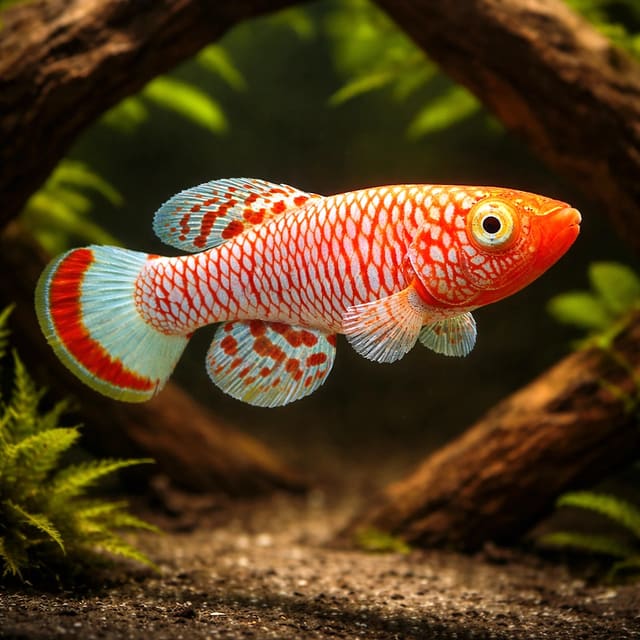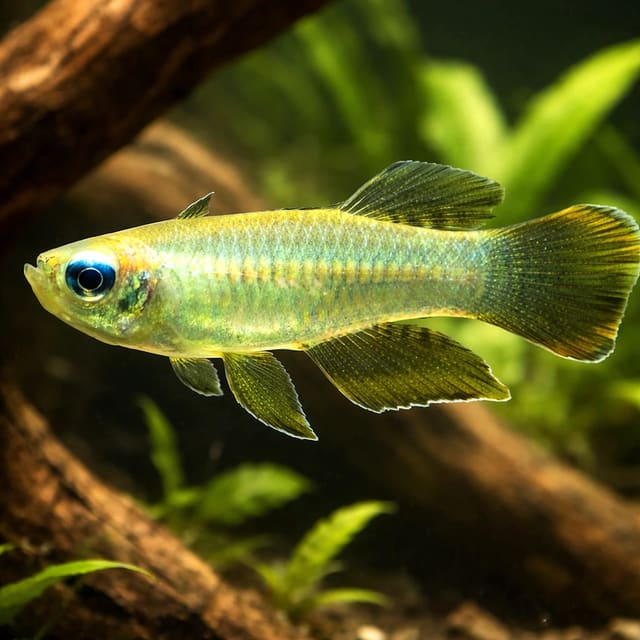
Lampeye (Aplocheilichthys normani)
22–26°C · pH 6.5–7.2
£3.99

The Gold Striped Panchax (Aplocheilus lineatus) is a killifish from India and Sri Lanka that reaches 10 cm. It suits a prepared keeper with a mature, securely covered aquarium; the FishBase and OATA temperature overlap is 22–25°C, while OATA suggests at least three killifish and gives pH 6.0–7.5 and 4–12°dH for the group. Sold individually in dispatch sizes from 3–4 cm to over 5 cm.
Adult size is the maximum length this species reaches at full maturity (scientific sources). The livestock you receive will be younger and smaller — pick a size above for the actual shipping size. Product-photo provenance and any image-specific limitations are stated on the listing.
Aplocheilus lineatus
Save when buying multiple fish. Each quantity is one fish; sex and pair formation are not guaranteed unless the selected variant explicitly states them.
Minimum of 2 per order.
The Gold Striped Panchax (Aplocheilus lineatus) is a killifish from India and Sri Lanka that reaches 10 cm. It suits a prepared keeper with a mature, securely covered aquarium; the FishBase and OATA temperature overlap is 22–25°C, while OATA suggests at least three killifish and gives pH 6.0–7.5 and 4–12°dH for the group. Sold individually in dispatch sizes from 3–4 cm to over 5 cm.
Adult size is the maximum length this species reaches at full maturity (scientific sources). The livestock you receive will be younger and smaller — pick a size above for the actual shipping size. Product-photo provenance and any image-specific limitations are stated on the listing.
Maintain these water conditions for optimal health and vibrant colors
The Gold Striped Panchax (Aplocheilus lineatus) is a golden aquarium variant of a killifish from India and Sri Lanka that reaches 10 cm total length. Also known as Golden Wonder Killifish, it suits a prepared keeper who can provide mature filtered water, a securely covered aquarium and companions that cannot be swallowed. FishBase places it in the killifish family Aplocheilidae, records freshwater and brackish environments and gives the maximum length.
A Wikipedia account of the striped panchax describes populations in streams, rivers, swamps and paddy fields. In nature it eats insects, crustaceans and even small fishes. It also has a parietal eye that helps it detect prey and predators above the surface, and it can jump very well.
Those traits shape the main keeping decisions. The aquarium needs a secure cover, companions must be screened against the adult mouth size, and food should include varied prepared and suitable animal-based choices. Browse the current killifish collection if you are comparing this larger panchax with other members of the group.
One purchase quantity supplies one animal of the selected option. The live size selector shows the dispatch labels 3–4 cm, 4–5 cm and over 5 cm. The size you select is the size supplied, not the adult size.
Plan every size around the recorded maximum of 10 cm. A smaller fish may need appropriately sized food and careful protection from larger existing livestock, but it does not justify a smaller permanent aquarium. The over 5 cm label is also a dispatch description rather than a promise of adulthood, age, final length or colour.
Sex is guaranteed only when the selected option explicitly states male or female. This Gold Striped Panchax listing has no sex-guaranteed option. Do not use size, colour or gallery appearance to plan a male-to-female ratio.
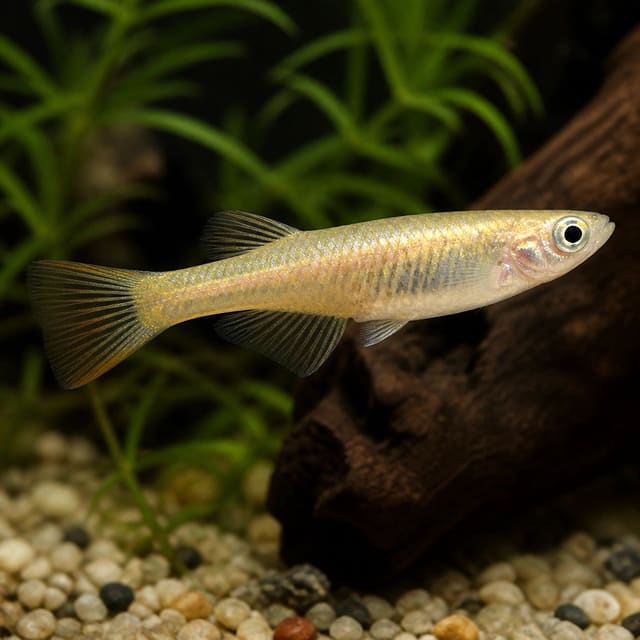
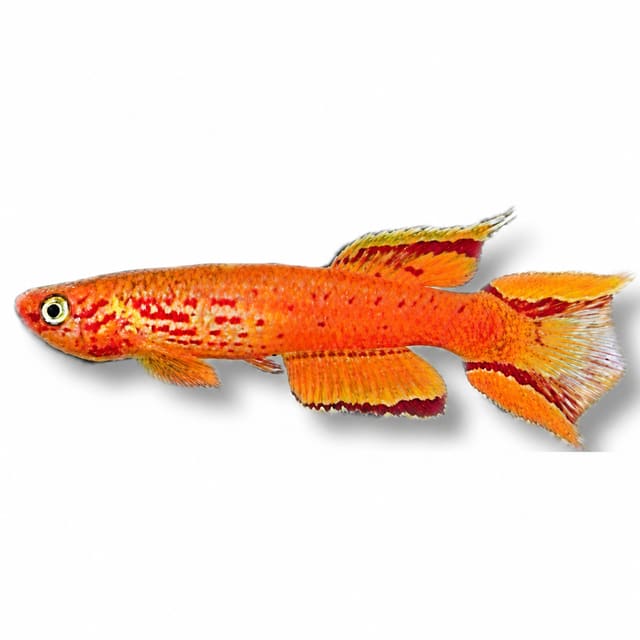
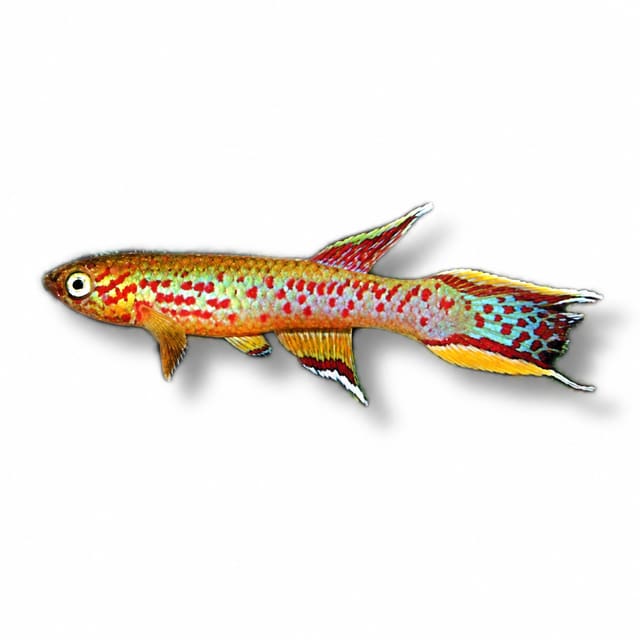
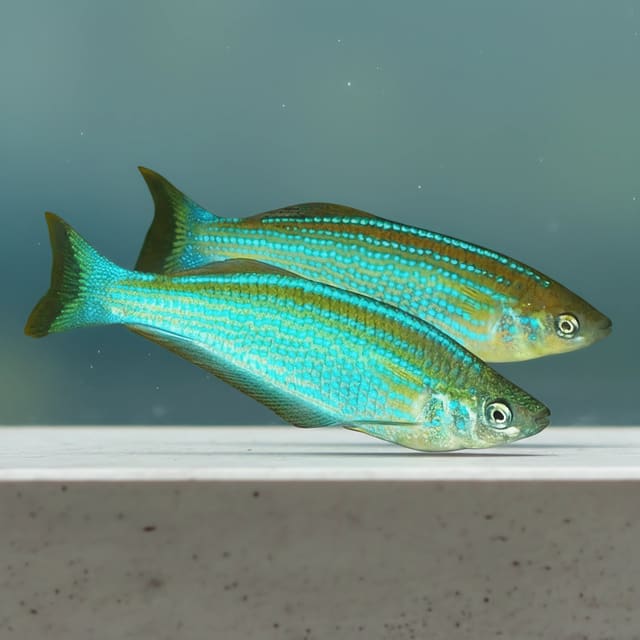
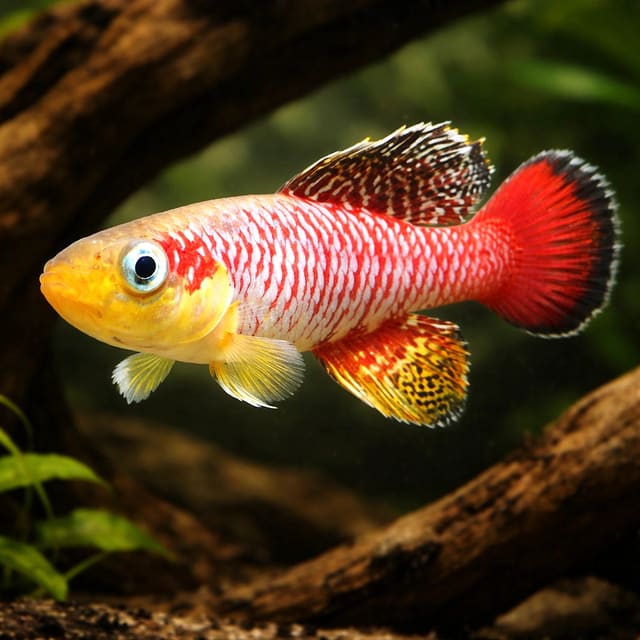
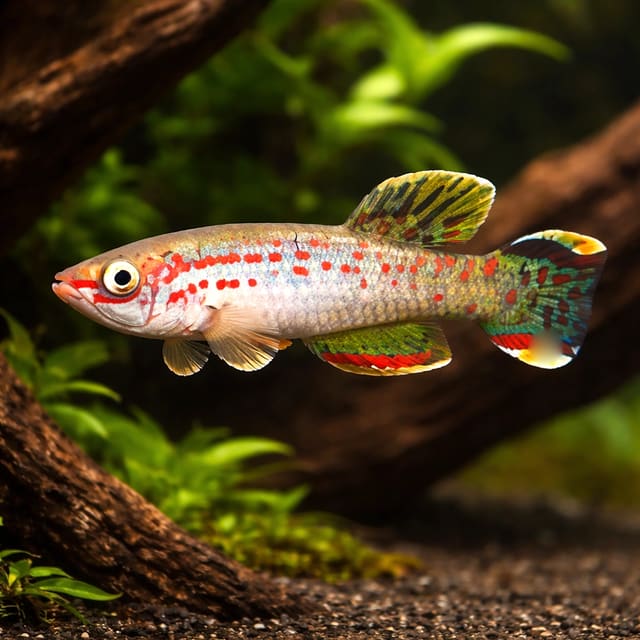
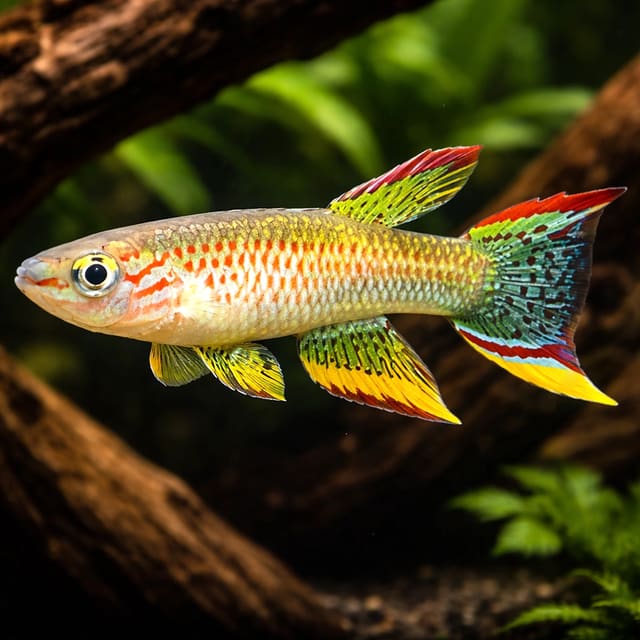
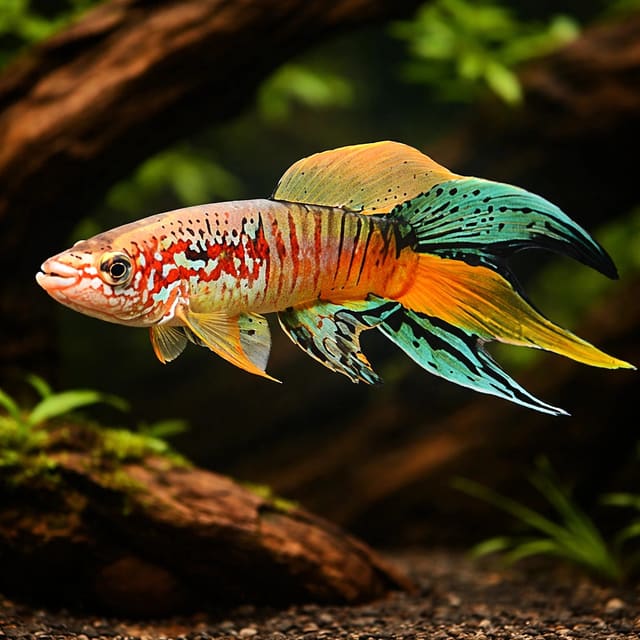
Some gallery images are representative, based on reference photographs of this species, and none shows the exact animal supplied, so colours can look slightly different from the live animal.
OATA's freshwater killifish guidance gives 22–27°C, pH 6.0–7.5 and general hardness of 4–12°dH for the group; FishBase records 22–25°C for this species, so use their shared 22–25°C range as the routine aquarium range. OATA also recommends at least three killifish and at least 90 litres for a group of larger species over 7 cm. Since this panchax can reach 10 cm, use the larger-species figure when planning a group.
| Suits | Not suited to |
|---|---|
| A mature, filtered aquarium with a secure cover | An uncovered aquarium |
| A planned group of at least three in at least 90 litres | A setup unable to accommodate the adult group |
| Calm companions too large to swallow | Small, boisterous or long-finned tank mates |
| Stable water at 22–25°C | An aquarium subject to abrupt temperature changes |
| Decision | Planning point |
|---|---|
| Adult length | Plan for up to 10 cm total length. |
| Temperature | Keep within 22–25°C and avoid abrupt change. |
| Water chemistry | Use pH 6.0–7.5 and 4–12°dH as group guidance. |
| Group plan | At least three; use at least 90 litres for a larger-species group. |
| Water quality | Maintain ammonia and nitrite at 0 mg/L. |
| Physical security | Use an essential, securely fitted aquarium cover. |
The group recommendation includes two females to each male to reduce stress on females or other inhabitants. Because sex is not guaranteed here, do not assume that ordering three creates that ratio. Build in enough cover and have a practical separation plan if the resulting social mix causes sustained pressure on one fish.
Start with the adult outcome rather than the dispatch measurements. For example, a plan for three animals must accommodate three fish that may each reach 10 cm, not three fish that remain at the selected size. Check that the aquarium reaches at least 90 litres, that the mature filter can support the complete group and that shelter does not leave one fish without a retreat.
Then test the social uncertainty. If the sexes cannot be selected, the intended two-females-to-one-male ratio may not result. A workable plan therefore includes daily feeding observations and a way to separate an animal if persistent exclusion develops. If either the adult-space check or the separation check fails, reduce or postpone the planned quantity rather than relying on the fish remaining small.
Choose a stable point within 22–25°C that also suits every other animal in the aquarium. Test rather than estimating: pH should remain within 6.0–7.5, general hardness within 4–12°dH and carbonate hardness within 3–10°dKH. Use the water chemistry guide to understand what each measurement means, then compare your results with the stated ranges through the water matcher.
Ammonia and nitrite must both remain at 0 mg/L. Nitrate should not exceed 20 mg/L above the normal level in the tap water used for the aquarium. Record the tap-water result as well as the aquarium result so that the rise caused by livestock, feeding and decomposing waste is clear.
If ammonia or nitrite appears, reduce the immediate waste burden, inspect the filter and increase monitoring. Do not feed more while uneaten food is already breaking down. A water change can dilute pollution, but the cause still needs attention: common triggers include excessive feeding, rapid stocking, interrupted filtration or damaged biological media.
A single acceptable test is a checkpoint, while repeated results show whether the routine is holding. Record temperature, pH, ammonia, nitrite and nitrate before the weekly water change, then note the volume changed and any filter work. Comparing results taken at the same point each week makes a rising waste trend easier to recognise.
If nitrate approaches 20 mg/L above the tap-water baseline before the next scheduled change, reassess feeding, waste removal and stocking rather than waiting for the pattern to worsen. If pH or temperature begins moving towards an edge of the range, check equipment and replacement water before making a rapid correction. The aim is a stable repeatable routine, not frequent movement between the minimum and maximum values.
The RSPCA explains why a working biological filter is vital: fish release toxic ammonia, beneficial bacteria convert it to nitrite, and further bacteria convert nitrite into the safer nitrate. A newly filled aquarium may look clean while lacking enough bacteria to process the waste produced after fish are introduced.
Prepare and mature the aquarium before choosing a dispatch date. The first tropical aquarium guide sets out the wider preparation sequence. Confirm with tests that ammonia and nitrite are both 0 mg/L, and make sure the filter is operating continuously with a flow that reaches the whole aquarium.
Check the filter for blockages during routine maintenance. When media needs cleaning, do not run it under the tap because any chlorine or chloramine present may kill the beneficial bacterial population that has established in the media. Instead, rinse it lightly in aquarium water removed during a partial water change. Avoid replacing or deep-cleaning every piece of media at the same time.
Beneficial bacteria need time to respond when more fish and more food increase the waste load. Add livestock gradually rather than filling the planned community in one step. Test after each addition and wait for consistently safe results before making another change. This reduces the risk of new tank syndrome, in which the filter cannot yet process the extra ammonia and nitrite.
Filter capacity must cover the whole planned group at adult size, not only the smallest dispatch size. Check that water continues moving after plant growth, maintenance and repositioning of decorations. A blocked intake, stalled impeller or interrupted power supply can quickly turn an established setup into a water-quality emergency.
After livestock or feeding increases, make the next decision from measured results. Confirm that ammonia and nitrite remain at 0 mg/L, watch whether food is cleared within a few minutes and check the filter for reduced flow. Continue monitoring until the results and behaviour remain steady before considering another addition.
If either toxic-waste reading rises above zero, stop increasing the population. Carry out the appropriate water-quality response, inspect the filter and reduce excess feeding while the biological capacity catches up. Adding the remaining planned fish during that period compounds the waste load and removes the chance to identify whether the filter has stabilised.
A fitted aquarium cover is essential because this fish can jump very well. Inspect every opening around cables, pipework, filter returns and feeding flaps. A lid that covers the main glass but leaves equipment gaps is not secure enough. Recheck the perimeter after maintenance because moving one cable can reopen an escape route.
Do not rely on the fish appearing calm. Feeding, chasing, a sudden movement or a change in its surroundings can still produce a jump. Close the cover immediately after feeding and keep it closed while working elsewhere around the aquarium. If equipment needs a larger cut-out, fit an appropriate guard rather than leaving the space open.
OATA recommends a well-planted aquarium for killifish, particularly where several males may be kept. Live plants provide shelter and help divide lines of sight. If live planting is unsuitable, use aquarium-safe artificial plants and ornaments such as suitable caves or plant pots. Gravel or sand can be used as the substrate.
A larger aquarium gives more ways to separate fish visually and produces more stable environmental conditions. For a planned group of this larger panchax, begin with at least 90 litres and increase space when the wider community, behaviour or quantity of fish demands it. Litres are only part of the decision: the layout must also provide cover and usable swimming room.
Trace the entire edge of the cover after installing the heater, filter and lighting cables. Test every feeding flap and removable panel in its normal closed position. Repeat the check after each water change, because equipment moved for cleaning can leave a new gap even when the main lid has not changed.
View the shelters from several sides before adding fish. Each refuge should be reachable without forcing an animal past the same narrow route, while open areas must remain available for swimming and feeding. If one decoration blocks circulation or creates a trap, move it before the fish must navigate around it.
Killifish are omnivorous in aquarium care and should receive a good-quality flake or granule as the prepared part of the diet. Suitable small live or frozen additions include daphnia, brine shrimp and tubifex. The species' natural diet of insects, crustaceans and small fishes explains why varied animal-based foods are useful, but it does not remove the value of a balanced prepared food.
Feed once a day and give only what the fish can eat within a few minutes. Start with a small amount, watch every individual, and stop before food begins accumulating on the substrate or entering the filter. Uneaten food decomposes and adds toxic waste, so generous portions can undermine otherwise good filtration and maintenance.
| What you observe | What to do |
|---|---|
| Food is repeatedly spat out | Offer a smaller flake or granule size. |
| One fish takes every item | Distribute a controlled portion across more than one feeding point. |
| Food remains after a few minutes | Remove the excess and reduce the next portion. |
| The fish ignores one food but behaves normally | Try another supported prepared, frozen or live option. |
| Interest in all food suddenly falls | Test water and assess breathing, behaviour and appearance. |
Smaller dispatch sizes need food that fits easily into the mouth. Crush suitable flake or select a finer granule rather than expecting a small fish to manage oversized pieces. Increase particle size only as the fish grows and handles the existing portion cleanly.
Use live foods from a dependable culture and keep feeding equipment clean. Variety means rotating appropriate foods, not serving several full portions in one day. Judge success through steady appetite, normal behaviour, sound body condition and water tests that remain within the required limits.
Offer the first small part of the daily feed and watch how quickly it is taken. Add another small part only while the fish are feeding cleanly, then stop before food drifts away uneaten. This approach makes the portion responsive to the animals without turning appetite into permission to overfeed.
For a group, count feeding access as well as the total food used. If one animal repeatedly misses the meal, divide the same controlled portion between separate points rather than adding an unrestricted extra feed. If all fish lose interest, test water and compare breathing and swimming before changing several foods at once.
Prepare the permanent aquarium before the animal arrives. Confirm that the cover fits, the filter runs correctly and ammonia and nitrite are both 0 mg/L. Check temperature, pH and hardness against the intended ranges. Make changes before introduction rather than trying to correct several values while a newly transported fish is settling.
Increase fish numbers slowly so the biological filter can respond to the additional waste and feeding. Ordering several animals for an OATA-style group still requires a mature filter able to support the planned increase. If other livestock has recently been added, wait for stable results before increasing the load again.
Observe breathing, swimming, colour, appetite and access to cover each day. Test ammonia and nitrite at least weekly, and test promptly if behaviour changes. Keep feeding controlled while the filter adjusts. A shy fish may use shelter, but worsening breathing, erratic swimming or complete loss of interest in food calls for immediate water and equipment checks.
Review the current delivery and Live Arrival Guarantee policy before arranging the order. Have the aquarium ready in advance so the animal can move into stable, filtered conditions without avoidable delay.
| Checkpoint | Decision |
|---|---|
| Water | Ammonia and nitrite remain at 0 mg/L. |
| Breathing | Gill movement does not become persistently faster or slower. |
| Swimming | The fish moves appropriately without erratic swimming. |
| Feeding | Food is taken in a few minutes without excess remaining. |
| Shelter | Each fish can reach cover without continual exclusion. |
Record these observations at a similar time each day so changes are easier to separate from momentary activity. If one checkpoint worsens, test water and inspect equipment before adding livestock or increasing food. If the readings and behaviour remain steady, continue the established routine rather than changing temperature, chemistry, layout and diet simply because the fish is new.
Learn the normal appearance and behaviour of each fish after it settles. Healthy fish should have clear, bright eyes, intact scales, undamaged fins and appropriate swimming behaviour. Regular observation makes a change easier to recognise than judging the animal against a generic picture.
| Change | First response |
|---|---|
| Hanging at the surface or sitting on the bottom | Test water and inspect filtration and circulation. |
| Erratic swimming | Check ammonia, nitrite, temperature and equipment promptly. |
| Faster or slower gill movement | Assess water quality and seek qualified guidance if it persists. |
| Darker or paler colour | Look for accompanying changes in breathing, feeding or social pressure. |
| More aggression or hiding | Check cover, group structure and whether one fish is being excluded. |
| White spots or fluffy growth | Seek a diagnosis before choosing any treatment. |
| Loss of fins or scales | Inspect tank mates, decor and the affected fish closely. |
| Reduced feeding | Test water, check food size and assess access at feeding time. |
Water quality is the first check because even small amounts of ammonia or nitrite can stress killifish. Correct the environmental cause rather than treating abnormal behaviour as a personality trait. Keep notes on test results, feeding and visible changes so a retailer or aquatic veterinary professional receives a clear timeline if further help is needed.
Continue changing 25% of the water at least once every week and inspect the filter for blockages. Stable care is more useful than repeatedly altering temperature, chemistry, decor and food at the same time. Change one controllable factor at a time unless a toxic water result demands immediate action.
Write down what changed, when it began and which fish are affected. A colour change alongside normal breathing and feeding calls for continued observation, while colour change combined with erratic swimming or reduced feeding adds reasons to test immediately. Pairing signs prevents one visible feature from driving the whole response.
After correcting an environmental problem, continue checking the same measurements and behaviours. Improvement should appear in the affected checkpoint rather than only in the appearance of the aquarium. If the warning signs persist despite safe water and working equipment, contact us for health guidance with the recorded timeline and test results.
OATA suggests keeping at least three killifish for companionship. Its proposed ratio is two females to each male, intended to reduce stress on females or other aquarium inhabitants. Apply that ratio only when the sexes are known; this offer does not guarantee sex, so three selected animals do not automatically create one male and two females.
Use at least 90 litres for a group because this panchax belongs in the larger, over-7 cm planning category and can reach 10 cm. More space may be needed when several males, additional species or limited cover increase competition. A larger aquarium also keeps temperature and water quality more stable and gives fish more ways to move away from one another.
If one animal is repeatedly excluded from food or shelter, add visual cover only when the aquarium still has adequate swimming space. Where that does not stop sustained pressure, separate the fish rather than assuming the nominal group recommendation will resolve the problem.
Adding more animals is not an automatic cure for aggression. Every additional fish increases waste, feeding competition and the demand on the filter. Reassess aquarium volume, biological capacity and the unknown sex mix before increasing the group, then add livestock slowly enough for the filter to adjust.
Use the daily meal to compare access because every fish should have a chance to take the controlled portion. Check shelters again when the aquarium is quiet: one animal using cover by choice differs from one that cannot leave without being chased. Inspect fins and scales from the same viewing positions so small changes are noticed.
At the weekly water change, combine those observations with the recorded ammonia, nitrite and nitrate results. A socially calm group still needs a filter coping with its waste, while safe water does not excuse sustained exclusion. Continue only when both the environmental and behavioural checks remain workable.
Use a conditional screen rather than a universal companion list. OATA describes killifish as generally peaceful but advises that they do not appreciate boisterous tank mates. It also says not to keep them with long-finned species because some male killifish may behave aggressively towards them. Most importantly for this animal, golden panchax have large mouths and can eat smaller species.
| Question | Decision rule |
|---|---|
| Can it be swallowed? | Reject it if the adult panchax could take it as prey. |
| Is it boisterous? | Reject companions likely to keep the killifish under continual pressure. |
| Does it have long fins? | Choose a different candidate because some males may target long-finned fish. |
| Does its water match? | Proceed only when temperature, pH and hardness needs overlap. |
| Can every fish feed? | Provide enough access and observe the first meals closely. |
| Is there enough room? | Count the whole adult community, not just the panchax group. |
Calm fish that are too large to swallow and share the required water ranges are the most suitable category for assessment, but individual behaviour remains uncertain. Observe feeding, hiding, fin condition and access to shelter after introduction. Separate animals when sustained harassment, injury or exclusion shows that the combination is failing.
Begin with predation because a water match cannot make a swallowable fish suitable. Next remove boisterous and long-finned candidates. Only then compare the remaining candidate's temperature, pH and hardness needs with the aquarium and assess whether adult numbers fit the space and filter.
For example, a calm candidate that shares 22–25°C still fails if its adult size leaves it vulnerable to the panchax's mouth. A larger calm fish passes that first screen but still needs overlapping pH and hardness requirements, enough room and fair feeding access. When an existing community makes any part of that assessment uncertain, ask us for a stocking and compatibility assessment before mixing the animals.
Gold Striped Panchax reaches 10 cm total length. FishBase records that maximum for the species, so plan the permanent aquarium and companions around a 10 cm adult rather than the dispatch size.
FishBase gives a minimum aquarium size of 80 cm, while OATA recommends at least 90 litres for a group of larger killifish over 7 cm. Use a securely covered, mature and filtered aquarium with enough shelter for the planned group.
OATA suggests at least three killifish, ideally two females to each male. Sex is not guaranteed for this offer, so provide cover, monitor feeding and shelter access, and keep a separation plan for sustained harassment.
FishBase describes it as easy to maintain in an aquarium, but the keeper must provide mature filtered water, a secure cover, a suitable group plan and carefully screened companions. It is not suited to an uncovered setup or a community containing swallowable fish.
In nature it eats insects, crustaceans and even small fishes. Feed good-quality flake or granules once daily, supported by suitable small live or frozen daphnia, brine shrimp or tubifex, and give only what is eaten within a few minutes.
Keep it at 22–25°C, the overlap between FishBase's recorded 22–25°C environment and OATA's 22–27°C killifish guidance. OATA gives pH 6.0–7.5 and general hardness of 4–12°dH for the group; keep ammonia and nitrite at 0 mg/L.
OATA describes killifish as generally peaceful, but some males may be aggressive towards long-finned fish. Avoid long-finned and boisterous companions, then watch for chasing, fin damage, hiding or exclusion within the aquarium.
Assess calm fish that are too large to swallow and share its temperature, pH and hardness requirements. Avoid smaller species, boisterous tank mates and long-finned fish; each combination still needs enough space, feeding access and close observation.
Tropical Fish Co hand-packs live fish in pure oxygen inside an insulated box, using a heat pack when the weather calls for it, and uses a licensed live-animal courier. Someone must be present to receive the parcel. Start filming every delivery before opening the sealed parcel and record continuously through opening with the fish still in the sealed bag; then float the bag for 20–30 minutes and never pour the bag water into the aquarium.
No reviews for this item yet. Bought one? Honest reviews only, good or bad.
What customers say about ordering from us
I have a small group of long finned mountain minnows. So was delighted to be able to order ten of this variety to increase the genetics in my tank . The ones I recieved are healthy but it’s to early to give a verdict on wether they are of a long finned type since they are small currently.
Gordon Walker · 23 Sept 2026
100% success travel and "installation". Pleased with quality of purchase. The Siamese fighter a bit "shy" so have not yet seen him at his best yet but looking good. Happy customer. GG
George E Garratt · 21 Sept 2026
Reviews of our shop, collected by Judge.me, an independent third-party review collector. Newest first.