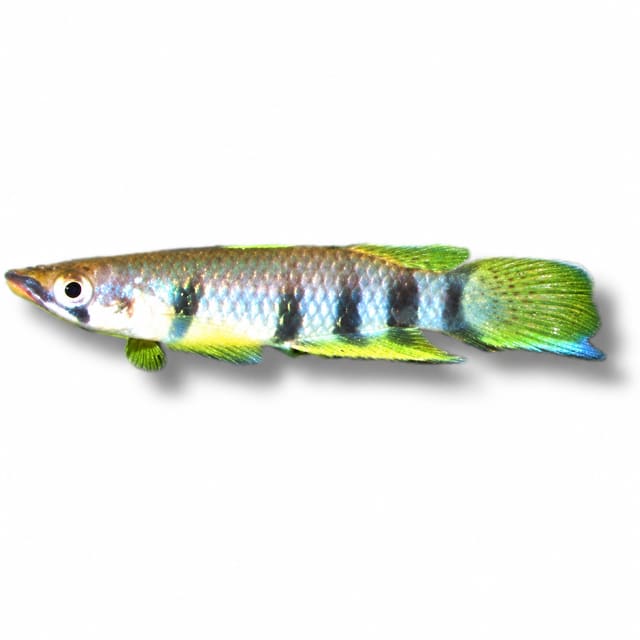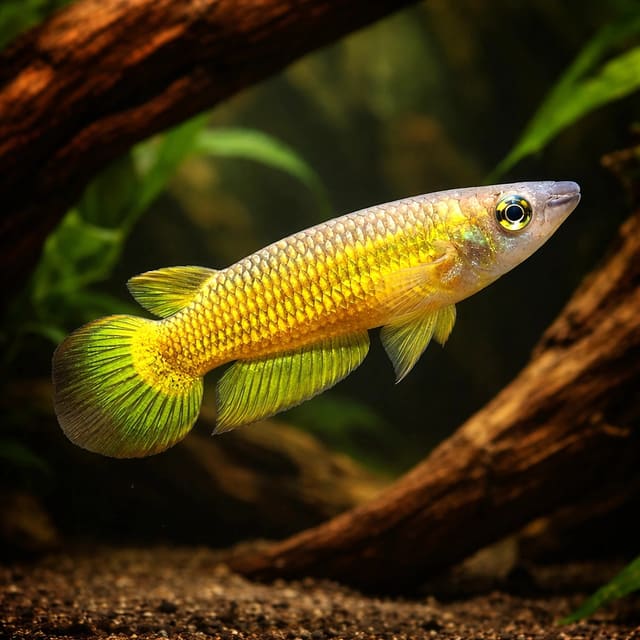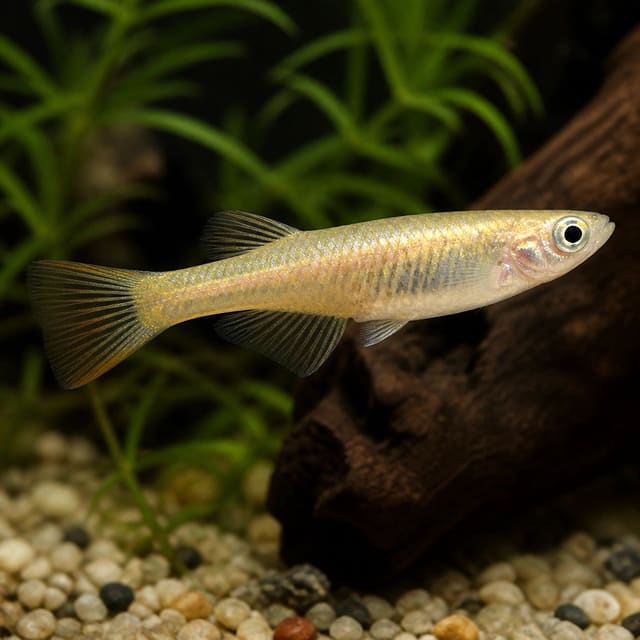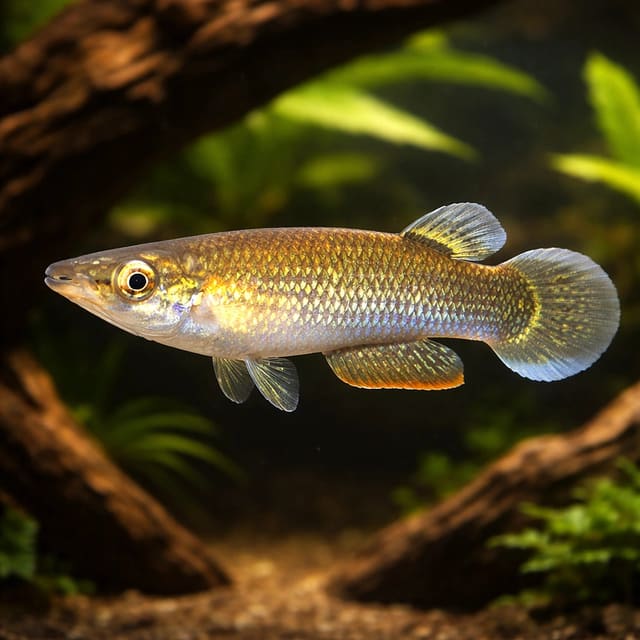
Blue Panchax Killifish (Aplocheilus panchax)
£7.99

A hardy, surface-dwelling killifish with striking striped or golden coloration, ideal for aquarists wanting an active and eye-catching predator. Easy care, semi-aggressive. 22-28C, pH 6.5-8.0.
Adult size is the maximum length this species reaches at full maturity (scientific sources). The livestock you receive will be younger and smaller — pick a size above for the actual shipping size. Product-photo provenance and any image-specific limitations are stated on the listing.
Aplocheilus lineatus
Save when buying multiple fish. Each quantity is one fish; sex and pair formation are not guaranteed unless the selected variant explicitly states them.
Confirm your email, then we’ll send an availability message for this exact item if it returns within 180 days.
This request is only for this product—no newsletter or other promotions. A mail-provider retry may very rarely duplicate the same availability message. Unconfirmed addresses are removed after 48 hours. See our privacy policy.
A hardy, surface-dwelling killifish with striking striped or golden coloration, ideal for aquarists wanting an active and eye-catching predator. Easy care, semi-aggressive. 22-28C, pH 6.5-8.0.
Adult size is the maximum length this species reaches at full maturity (scientific sources). The livestock you receive will be younger and smaller — pick a size above for the actual shipping size. Product-photo provenance and any image-specific limitations are stated on the listing.
Maintain these water conditions for optimal health and vibrant colors
The Panchax Lineatus (Aplocheilus lineatus), also known as the striped panchax or golden wonder killifish, is a hardy, surface-dwelling killifish native to India and Sri Lanka. This striking species reaches 7 cm in length and is available in two primary color forms: the wild-type striped form with bold horizontal black stripes on a golden-yellow background, and the selectively bred golden wonder form with vibrant yellow-gold coloration and minimal striping. Both forms display elegant, elongated bodies and large, predatory eyes adapted for hunting at the water surface. Unlike many delicate killifish, A. lineatus is robust, adaptable, and well-suited to community aquariums with appropriately sized tankmates, making it an excellent choice for aquarists seeking an active, eye-catching surface predator. Available for sale UK from specialist suppliers, this species brings movement, color, and character to any well-planted aquarium.
Aplocheilus lineatus exhibits a sleek, torpedo-shaped body with a flattened dorsal profile and an upturned mouth perfectly adapted for surface feeding. The wild-type striped form displays 5-7 bold horizontal black or dark brown stripes running from the operculum to the base of the tail, contrasting sharply against a golden-yellow to greenish-yellow base color. The golden wonder variety lacks most striping and instead shows a uniform, bright golden-yellow coloration that intensifies under good lighting and nutrition. Both forms possess iridescent scales that shimmer under aquarium lighting. The dorsal fin is set far back on the body, and the caudal fin is broad and rounded, providing rapid acceleration when striking at prey. Males are typically more colorful and slightly larger than females, with more vivid body coloration and slightly elongated dorsal and anal fins. Females are generally paler and fuller-bodied, especially when gravid.
Aplocheilus lineatus is native to India and Sri Lanka, where it inhabits a wide range of freshwater and brackish water environments including slow-moving streams, rivers, swamps, marshes, and paddy fields. These fish are highly adaptable, tolerating fluctuating water conditions and temperatures, and are often found in areas with dense surface vegetation such as water lilies, floating plants, and overhanging grasses. They are surface-oriented predators, feeding primarily on insects, insect larvae, and small fish that venture near the waterline. The substrate is typically muddy or silty, and water chemistry can vary from slightly acidic to slightly alkaline, with soft to moderately hard water. Seasonal monsoons bring fluctuating water levels and temperatures, and the species has evolved to thrive in both stable and variable conditions, contributing to its hardiness in captivity.
A minimum aquarium capacity of 75 liters is recommended for a small group of Panchax Lineatus, with larger tanks (100+ liters) preferred for community setups. The tank should emphasize horizontal swimming space, as these fish are active surface swimmers. Provide moderate to dense planting with species such as Vallisneria, Hygrophila, Cryptocoryne, and Anubias, leaving open swimming areas near the surface. Floating plants such as Pistia, Salvinia, or water sprite help diffuse lighting, provide cover, and replicate the shaded, vegetated waters of their natural habitat. A dark substrate (sand or fine gravel) enhances coloration, and driftwood or smooth rocks can be added for aesthetic appeal. Filtration should be moderate, avoiding excessive surface agitation that disrupts their preferred calm surface conditions. A tight-fitting lid or cover glasses are absolutely essential, as A. lineatus are powerful jumpers and will escape through even small gaps.
Panchax Lineatus are highly adaptable and tolerant of a wide range of water parameters, making them ideal for aquarists with varying water conditions. Maintain temperatures between 22-28°C, with 24-26°C being optimal. The pH can range from 6.5-8.0, accommodating both slightly acidic and slightly alkaline water; pH 7.0-7.5 is ideal. Water hardness is similarly flexible, from soft (5 dGH) to moderately hard (15 dGH). While adaptable, stability is important—avoid sudden fluctuations in temperature or chemistry. Maintain zero ammonia and nitrite at all times, and keep nitrates below 40 ppm through regular weekly water changes (20-30%). Good oxygenation is important; ensure gentle surface agitation without creating strong currents. These fish can tolerate brief exposure to slightly brackish conditions, though this is not necessary for long-term health.
Aplocheilus lineatus is primarily carnivorous and insectivorous, with a diet centered on protein-rich surface foods. Offer high-quality floating pellets or flakes as the staple, supplemented daily with frozen or live foods such as bloodworms, brine shrimp, daphnia, mosquito larvae, small crickets, fruit flies, and other small insects. These fish are enthusiastic hunters and will leap from the water to catch prey, so feeding live insects on the surface provides enrichment and exercise. Feed twice daily in portions that can be consumed within 2-3 minutes, removing uneaten food promptly. Avoid overfeeding, as these fish are prone to obesity if given excessive rich foods without variety. Fasting one day per week supports digestive health and prevents constipation. Variety is key to maintaining vibrant coloration and robust health.
Aplocheilus lineatus are classified as semi-aggressive, though their temperament is better described as assertive and predatory rather than outright aggressive. They are confident, active fish that spend most of their time patrolling the upper levels of the aquarium, constantly on the lookout for food. Males can be territorial toward one another, especially in smaller tanks, displaying with spread fins and occasional chasing, but serious aggression is rare if space is adequate. A small group with multiple females per male (1 male to 2-3 females) works well in larger tanks. These fish have strong predatory instincts and will eat any tankmate small enough to fit in their mouths—this includes small tetras, nano fish, shrimp, and fry. They are bold feeders and may outcompete shy or slow-moving species. Despite their predatory nature, they are peaceful toward appropriately sized tankmates and ignore bottom-dwelling species.
Suitable tank mates for Panchax Lineatus must be robust, active, and too large to be eaten. Excellent companions include peaceful mid- to bottom-dwelling fish such as Corydoras catfish, loaches (e.g. Botia or Yasuhikotakia species), medium-sized peaceful barbs and rasboras (such as rosy barbs or scissortail rasboras), and non-aggressive medium cichlids (such as Geophagus or Laetacara species). Avoid all very small fish (fry, nano fish, small tetras under 3 cm), as these will be viewed as prey. Slow-moving, long-finned species such as bettas, fancy guppies, and angelfish are poor choices, as their fins may be nipped. Shrimp and snails smaller than 2 cm will be eaten, though larger apple snails or Amano shrimp may coexist. Aggressive fin-nippers and highly territorial species should be avoided to prevent stress and injury.
Aplocheilus lineatus are egg scatterers that can be bred successfully in captivity with proper preparation. Condition breeding pairs or groups with high-quality live foods (mosquito larvae, daphnia, brine shrimp) for 2-3 weeks, then transfer them to a dedicated breeding tank (60-80 liters) with soft to moderately hard water (pH 6.5-7.0, temperature 26-27°C), gentle filtration, and dim lighting. Provide spawning substrates such as fine-leaved plants (Java moss, Cabomba) or spawning mops. Pairs will spawn over several days, depositing non-adhesive eggs among the plants or mops. Adults will eat eggs and fry, so remove adults after spawning or collect eggs daily and transfer them to a separate rearing tank. Eggs typically hatch in 10-14 days depending on temperature. Fry are relatively large and can accept newly hatched brine shrimp and microworms immediately. Provide frequent small feedings (3-4 times daily) and perform regular small water changes to maintain pristine water quality and support healthy growth.
Tropical Fish Co is the UK's trusted source for healthy, vibrant Panchax Lineatus in both striped and golden wonder color forms. Every fish is quarantined upon arrival, carefully conditioned on a varied, high-quality diet, and health-checked before dispatch to ensure you receive robust, disease-free specimens. Our expert team provides comprehensive care guides, personalized stocking advice, and ongoing support to help you create the ideal environment for these active, striking fish. We offer a live arrival guarantee on all orders, backed by secure, insulated packaging and tracked courier delivery to your door. Whether you're seeking a bold surface predator for a community tank or a breeding project for your collection, our commitment to quality, ethical sourcing, and customer service ensures you receive the finest livestock available. Order your Panchax Lineatus today and enjoy the beauty and character of one of Asia's most charismatic killifish.
No reviews for this item yet. Bought one? Honest reviews only, good or bad.
What customers say about ordering from us
I have a small group of long finned mountain minnows. So was delighted to be able to order ten of this variety to increase the genetics in my tank . The ones I recieved are healthy but it’s to early to give a verdict on wether they are of a long finned type since they are small currently.
Gordon Walker · 23 Sept 2026
100% success travel and "installation". Pleased with quality of purchase. The Siamese fighter a bit "shy" so have not yet seen him at his best yet but looking good. Happy customer. GG
George E Garratt · 21 Sept 2026
Reviews of our shop, collected by Judge.me, an independent third-party review collector. Newest first.