Easy
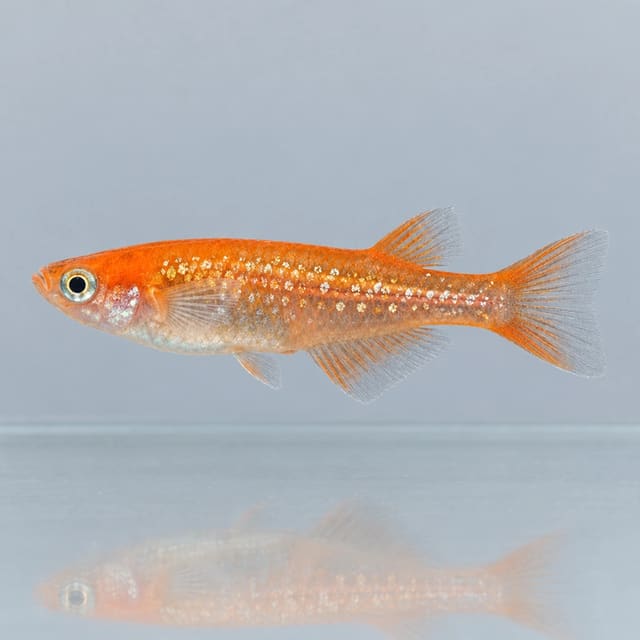
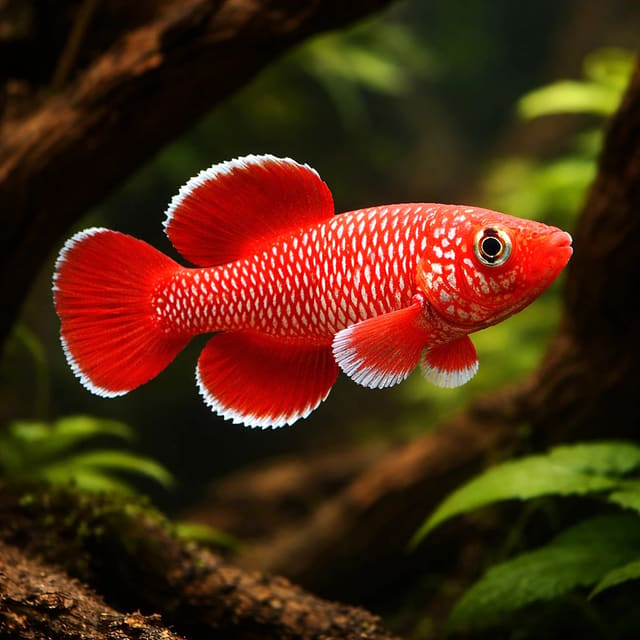
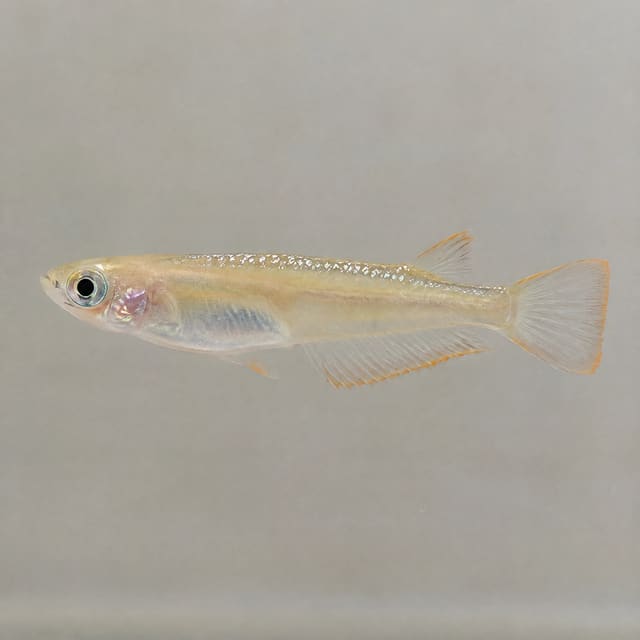
Tomoki Medaka Ricefish, Japanese Rice Fish (Oryzias latipes tomoki)
16–22°C · pH 6.5–8.5 · 41L
£11.99
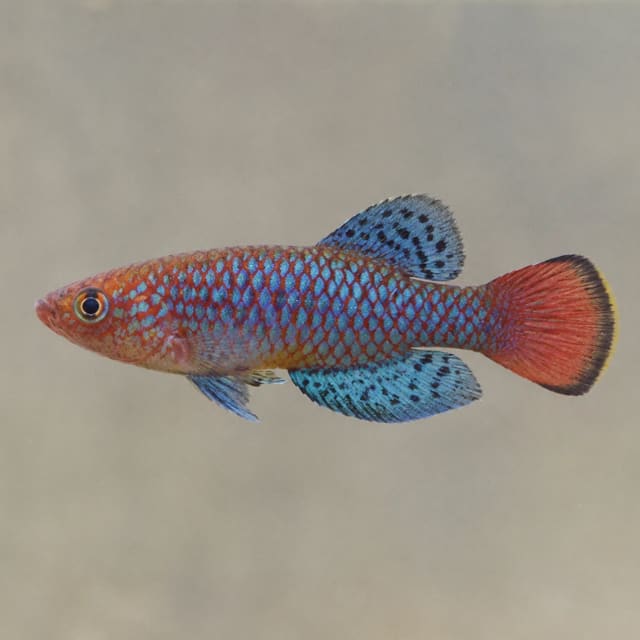
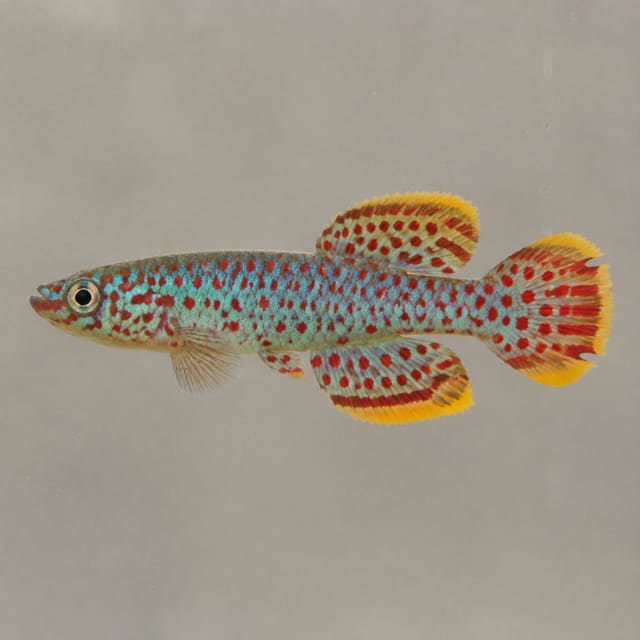
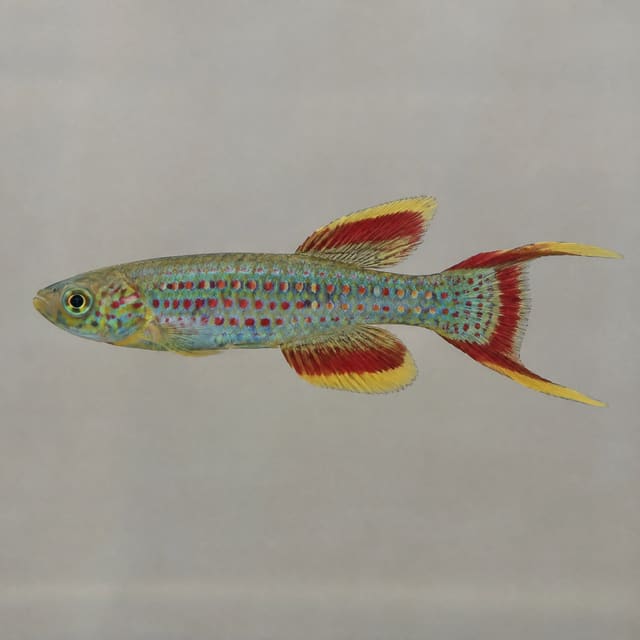
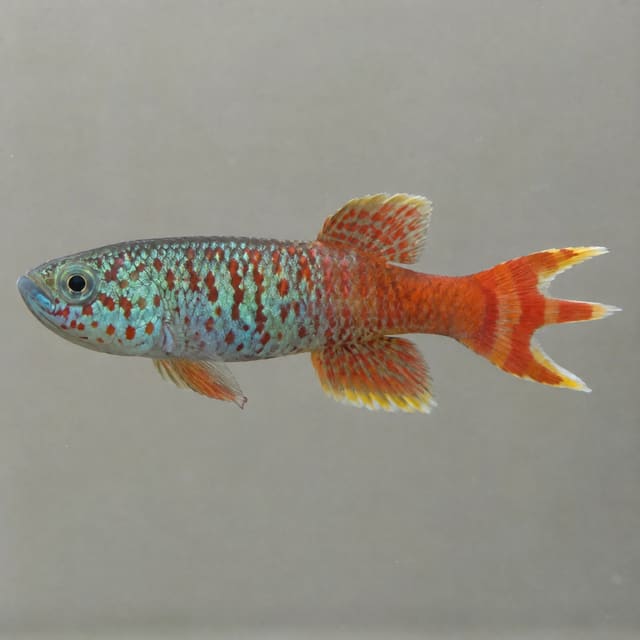
The Sulawesi Ricefish, also sold as the neon ricefish (Oryzias woworae), is a 3 cm fish from a single forest stream on Muna Island, Sulawesi, with a steel-blue body and brilliant red edges to the fins and belly. It is peaceful and shrimp-friendly, and suits a planted aquarium with a 45 × 30 cm base or larger at 23–27°C, kept in a group of eight or more. Sold individually as one live fish, medium size.
Oryzias woworae
Quantity discounts are pricing offers, not a group-size recommendation. Check the full care guidance and your existing animals before choosing a quantity.
The Sulawesi Ricefish, also sold as the neon ricefish (Oryzias woworae), is a 3 cm fish from a single forest stream on Muna Island, Sulawesi, with a steel-blue body and brilliant red edges to the fins and belly. It is peaceful and shrimp-friendly, and suits a planted aquarium with a 45 × 30 cm base or larger at 23–27°C, kept in a group of eight or more. Sold individually as one live fish, medium size.
Read the full care guidance when planning conditions for your aquarium.
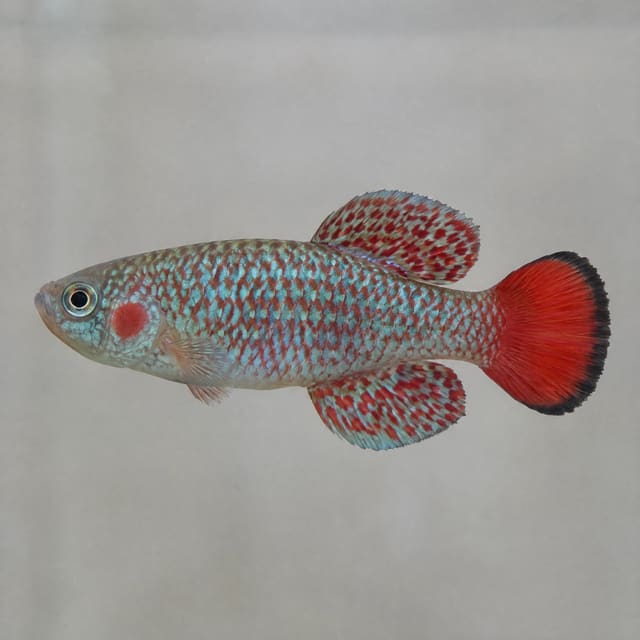
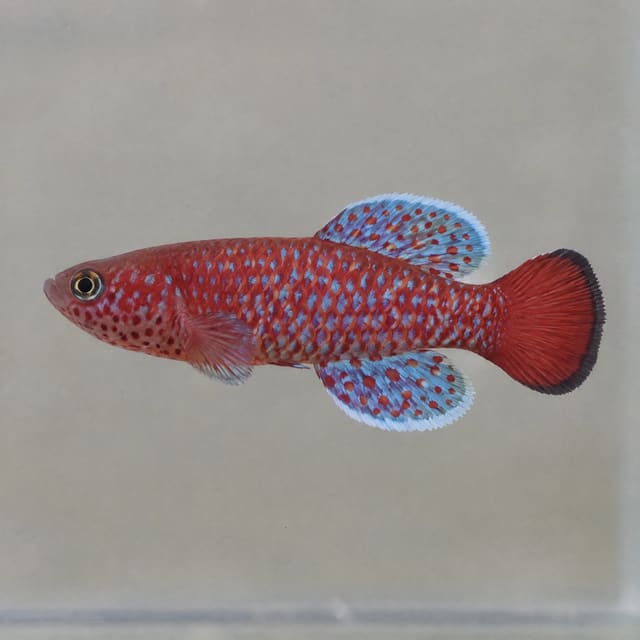
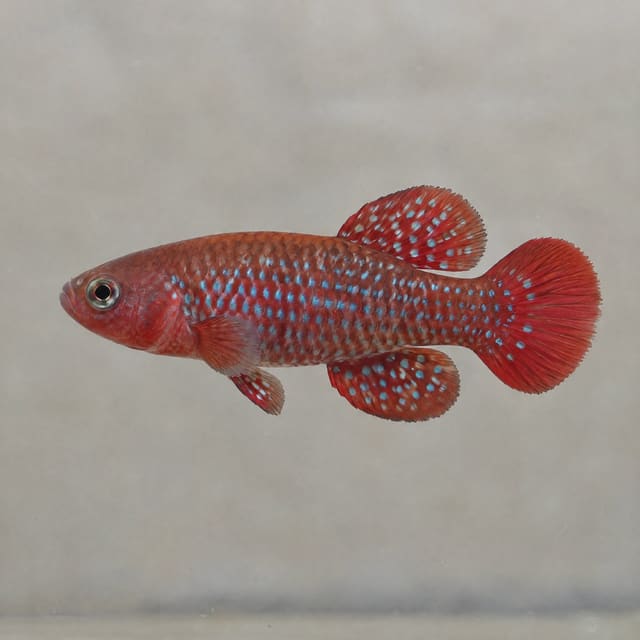
The Sulawesi Ricefish (Oryzias woworae), also sold as the neon ricefish, is one of the most colourful small fish you can keep in a planted nano aquarium. It grows to only about 3 cm, yet a group in good condition shows a shimmering steel-blue body, a silvery head and brilliant red on the throat, the fin bases and the edges of the tail. It swims in the open middle and upper water, stays peaceful with its own kind and with shrimp, and breeds readily in a well-planted tank.
It was described to science only in 2010. Seriously Fish records that it caused a sensation when it first reached the aquarium trade shortly afterwards, at very high prices. Today it is a practical choice for a keeper who wants a tiny, active schooling fish in a planted tank of 45 cm or more.
| Name | What it means |
|---|---|
| Sulawesi ricefish | Trade name, after the Indonesian island where it lives |
| Neon ricefish | Trade name, after its blue and red colours |
| Daisy's ricefish | The common name Seriously Fish uses, after Dr Daisy Wowor |
| Oryzias woworae Parenti & Hadiaty, 2010 | The scientific name; Oryzias comes from the Greek for rice, because some species live in rice paddies |
Daisy Wowor is a systematic carcinologist, a crustacean specialist, at the Museum Zoologicum Bogoriense in Java. Seriously Fish credits her with collecting the first specimens and taking the first photographs of the live fish in the field.
Both Seriously Fish and FishBase record Oryzias woworae from a single place: a stream called Mata air Fotuno in the Parigi district of Muna Island, off South-East Sulawesi, Indonesia, although it may occur over a wider area. The stream flows through karst limestone under about 80% forest cover, over mud and sand with patches of leaf litter. The fish were found schooling in a still pool around 3–4 m deep, opposite a spring, where the pH measured 6.0–7.0.
Sulawesi is a centre of diversity for ricefish: Seriously Fish counts 17 endemic Oryzias species described from the island, and this is the smallest of them. Because its known range is one stream, FishBase lists it as Endangered on the IUCN Red List (assessed 2019). Breeding it at home is a good way to enjoy it without adding demand for wild fish, and aquarium fish must never be released into the wild.
Ricefish are often sold alongside killifish, and on our site they sit in the killifish and ricefish range and the killifish category. Seriously Fish explains that ricefish, family Adrianichthyidae, were once thought to be close relatives of the toothcarps, but were moved in 1981 into the order Beloniformes, the group that also holds halfbeaks and needlefish. The best-known ricefish is the Japanese medaka, a laboratory fish for over a century and the first vertebrate to mate in space, in the mid-1990s.
One purchase quantity supplies one live Sulawesi Ricefish of the size graded "Medium". Sex is not specified. Order eight or more to start a group, because the fish settle better and colour up more in numbers, and a larger group is more likely to include both sexes.
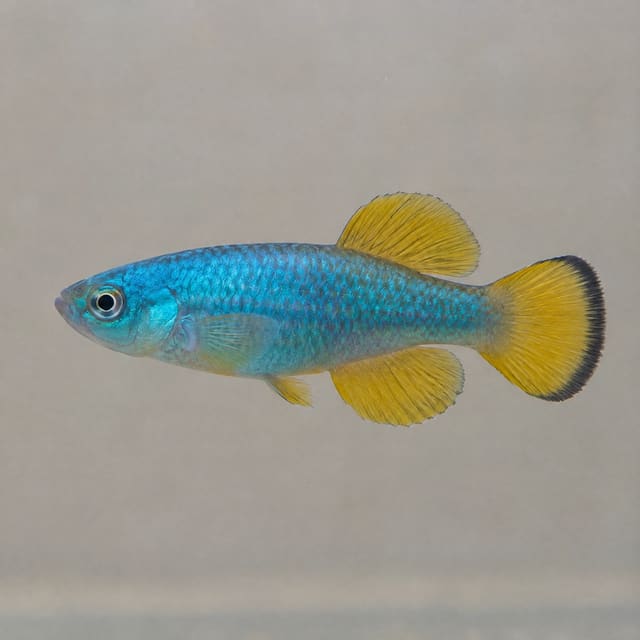
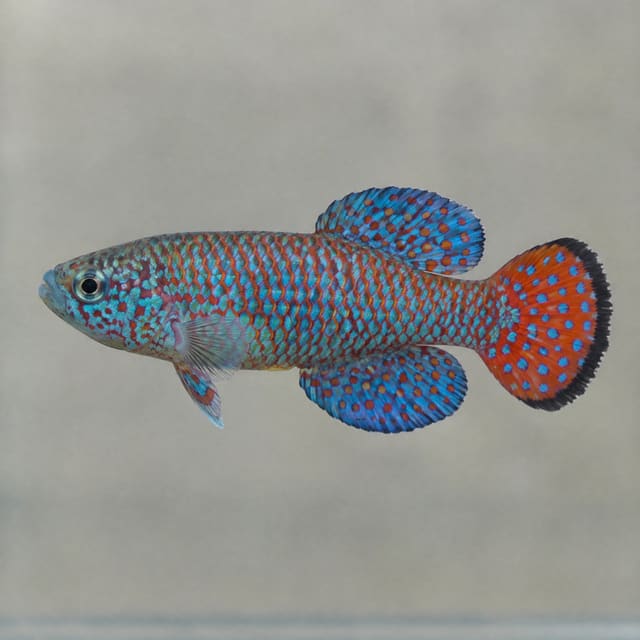
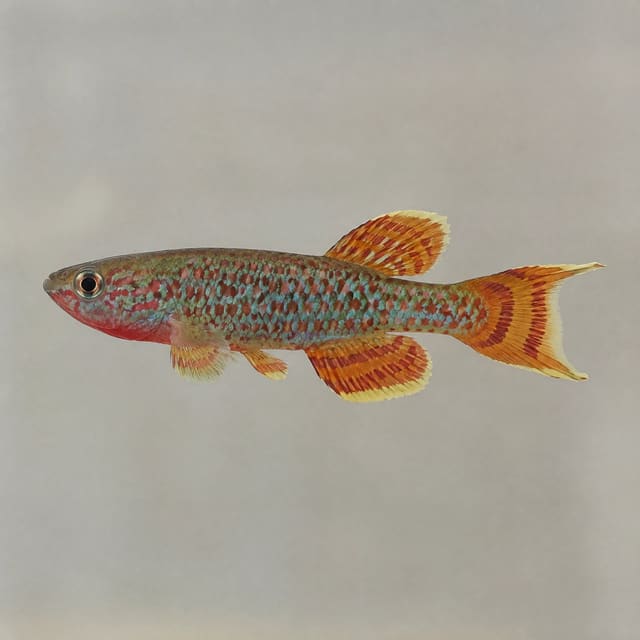
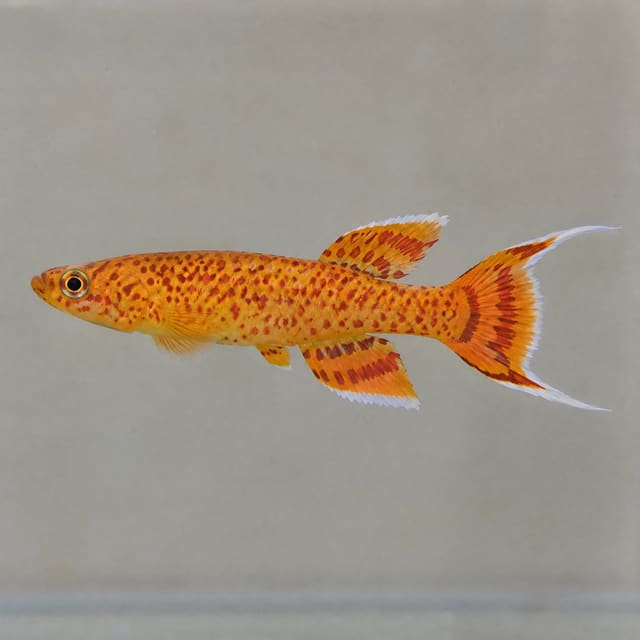
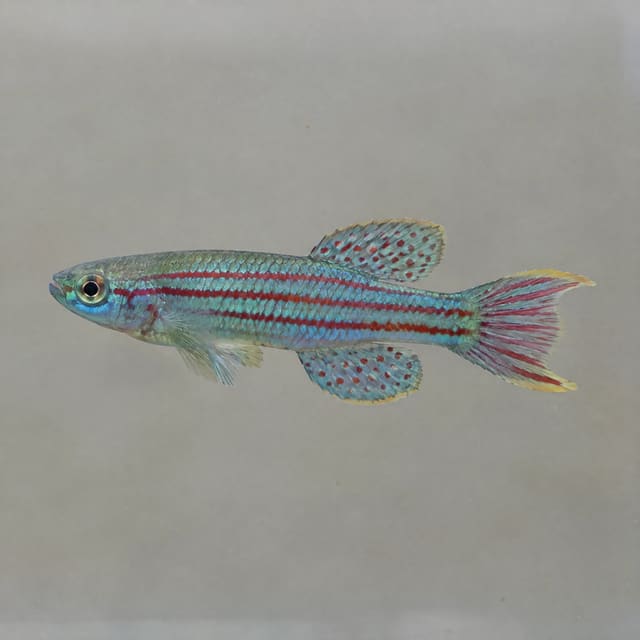
Seriously Fish describes adult males as considerably more colourful than females, with longer dorsal and anal fins and a slimmer body; in females the body is fuller and the colours softer. Seriously Fish notes that the species is less colourful in a sparsely decorated tank, so a new group may look paler until it has settled among plants. The photographs show the colour form, not the individual fish you will receive.
Seriously Fish recommends a base of at least 45 × 30 cm, about 41 litres, for a group. A larger tank holds its temperature and water quality more steadily, which OATA notes for every aquarium, and leaves room for a bigger group or a few tiny companions. Our stocking calculator helps you plan numbers for the tank you have.
| Planning point | Figure | Source |
|---|---|---|
| Adult size | 30 mm standard length; 2.8 cm SL | Seriously Fish; FishBase |
| Aquarium base | 45 × 30 cm or more, about 41 litres | Seriously Fish |
| Group | Eight or more | Seriously Fish |
| Filter | About 165–205 litres per hour for a 41-litre tank | Seriously Fish |
| Heater | Roughly 50–75 W for 41 litres in a room near 20°C | Seriously Fish |
Seriously Fish says the species adapts to most layouts, but it is less colourful in a sparsely decorated tank. It looks best in a set-up inspired by its home stream: a sandy floor, a few water-worn roots and branches, and a scattering of dried leaf litter. Planted aquariums suit it just as well and give fry a better chance of surviving alongside the adults. Mix open swimming space at the front with dense planting at the back and sides, keep the current gentle, and fit a lid. Our easy live plants guide lists reliable plants for a first planted tank, and our fish for planted aquariums range has more species that share this kind of tank.
| Value | Seriously Fish | In the wild |
|---|---|---|
| Temperature | 23–27°C | Not recorded |
| pH | 6.0–7.5 | 6.0–7.0 at the collection site |
| General hardness | 5–15 dGH | Not recorded |
| Ammonia and nitrite | Zero at all times (OATA) | |
Hold the temperature steady inside 23–27°C with a thermostatic heater. Seriously Fish rates the species flexible about water chemistry, so treated tap water inside the ranges above is fine. If your tap water is harder than 15 dGH or above pH 7.5, blend it with reverse osmosis water to bring it into range, and make any change gradually. Enter your readings into our water matcher to check the fit.
Mature the filter fully before the fish arrive: OATA explains that ammonia and nitrite must have risen, fallen and stayed at zero before stocking continues, and that stocking should then rise slowly. After that, change up to 25% of the water each week, treat new water with conditioner and match its temperature, and rinse filter media only in old aquarium water, never under the tap. Test ammonia, nitrite, nitrate and pH every week while the tank is new.
Seriously Fish describes the Sulawesi Ricefish as unfussy, provided the food is small enough. A mix of crushed or small-grade dried food with live microworm, newly hatched brine shrimp (Artemia nauplii) or similar suits it best. Adults have also been seen grazing from surfaces, so the wild diet probably includes some algae, which makes a mature planted tank with soft growth on leaves and wood a useful extra food source.
| Food | How to use it |
|---|---|
| Small-grade flake or micro-granules | The daily base; crush flake between your fingers |
| Live microworm or newly hatched Artemia | Several times a week, and especially for breeding |
| Frozen Artemia and other small frozen foods | Thawed, as a treat that keeps the colours strong |
Offer only what the group eats within a few minutes, which is OATA's rule for small fish such as killifish too. With a 3 cm fish that is a very small pinch; split the day's food into two small feeds rather than one large one, and siphon away anything that sinks and is not eaten.
OATA describes two ways to acclimatise new fish. For the floating-bag method, switch off the aquarium light, float the unopened bag for at least 10 minutes, then add small amounts of aquarium water to the bag over up to 20 minutes before netting the fish out. Drip acclimatisation, in which aquarium water is dripped slowly into a container holding the fish, suits sensitive species or water that differs greatly from the water the fish travelled in. Either way, add as little bag water to the tank as possible.
Keep the lights low for the rest of the day and feed lightly from the next morning. Watch the group for the first week: OATA's signs of a healthy fish are clear bright eyes, undamaged fins, intact scales, normal swimming and steady breathing. Clamped fins, flicking against the decor or shimmying are warning signs, so test the water first and then ask us for advice.
Seriously Fish calls the species very peaceful, but notes that its small size rules out many community tanks. Its own suggestions for companions are equally tiny fish, plus freshwater shrimp.
| Suits | Avoid |
|---|---|
| Tiny cyprinids such as Microdevario, Sundadanio, Eirmotus and Trigonostigma | Any fish large enough to swallow a 3 cm fish |
| Blue-eyes (Pseudomugil) | Fast, boisterous feeders that take all the food |
| Pygmy Corydoras and small Otocinclus | Other Oryzias species, because of hybridisation |
| Caridina and Neocaridina shrimp | Tank mates if you want to raise many fry |
From our range that means fish such as the Neon Green Rasbora, the Glowlight Rasbora, the Spotted Blue-Eye, the Pygmy Corydoras and the Golden Otocinclus, and shrimp such as the Cherry Shrimp. Our nano tank fish range has more small species.
Seriously Fish advises against keeping Oryzias woworae with other ricefish, including its close relatives O. asinua and O. wolasi and the fish traded as Oryzias sp. "Kendari", because they may hybridise. That includes the Tomoki Medaka, which in any case prefers cooler water. A Nomorhamphus halfbeak shared the pool where the Sulawesi Ricefish was discovered; our Celebes Halfbeak belongs to that genus, but it is not among the companions Seriously Fish suggests, so keep it in its own tank. Compare other small, unusual species in our killifish buying guide.
Seriously Fish describes the species as non-aggressive towards its own kind apart from sparring between courting males. In the morning, males darken and each defends a small, temporary patch of the tank while trying to attract females. Seriously Fish describes this as sparring between courting males, part of normal breeding behaviour. Dense plants and a group of eight or more give each fish room and places to retreat.
Seriously Fish describes the species as quite easy to breed and fairly prolific. A female in good condition can produce 10–20 eggs every few days, or even daily. Spawning usually happens in the early morning: the eggs are released as a single mass and fertilised together, then hang from the female's vent for a while before she brushes them off, singly or in small clumps, among plants.
The adults ignore the eggs but do eat free-swimming fry, which is why dense planting or a separate rearing tank matters. For the best chance of raising young, Seriously Fish suggests keeping the species on its own.
Yes. Sulawesi ricefish and neon ricefish are trade names for Oryzias woworae, which Seriously Fish calls Daisy's ricefish after Dr Daisy Wowor, who collected the first specimens.
About 3 cm. Seriously Fish gives 30 mm standard length and FishBase 2.8 cm, which makes it the smallest ricefish known from Sulawesi.
Eight or more. Seriously Fish says it looks best and behaves more confidently in a group of eight or more, and a group lets you see the males display.
Seriously Fish recommends an aquarium with a base of at least 45 × 30 cm, about 41 litres, for a group. Fill it with plants, keep the current gentle and fit a lid.
Yes. Seriously Fish lists Caridina and Neocaridina shrimp as suitable companions. Give the shrimp dense moss or fine-leaved plants so their young always have cover.
No. Ricefish were long grouped with killifish, and many shops still list them together, but they were moved to the order Beloniformes in 1981, the same order as halfbeaks and needlefish.
It is better not to. Seriously Fish advises against keeping it with other Oryzias species because of the risk of hybrids, and the medaka also prefers cooler water.
Yes. Seriously Fish describes them as easy and fairly prolific: a healthy female can lay 10–20 eggs every few days. The eggs hatch in one to three weeks, and dense fine-leaved plants or a spawning mop help fry survive.
Read our delivery information for dispatch days and our live arrival guarantee.
No reviews for this item yet. Bought one? Honest reviews only, good or bad.
What customers say about ordering from us
Easy website plenty of info on fish your buying great to pick a time slot
TRACEY DURRANT · 7 Oct 2026
Got some lovely fish thank you
Kevin Mackie · 7 Oct 2026
Reviews of our shop, collected by Judge.me, an independent third-party review collector. Newest first.
Moved by UK carriers licensed to handle live animals
Hand-packed with oxygen bags, poly box, heat pack
Email photos the same day; an optional unboxing video helps us review problems faster — claim terms apply
Klarna & PayPal Pay in 3 at checkout