New Guinea Red Rainbowfish (Glossolepis incisa)
22–25°C · pH 7–8 · 108L
£12.29

Add the Spotted Blue-Eye Rainbowfish to your tank for vivid colour and lively movement. A moderate-care live fish with UK delivery available.
Adult size is the maximum length this species reaches at full maturity (scientific sources). The livestock you receive will be younger and smaller — pick a size above for the actual shipping size. Product-photo provenance and any image-specific limitations are stated on the listing.
Pseudomugil gertrudae
Shoaling fish: kept in a group they feel safer, stay calmer and show their best colour.
Confirm your email, then we’ll send an availability message for this exact item if it returns within 180 days.
This request is only for this product—no newsletter or other promotions. A mail-provider retry may very rarely duplicate the same availability message. Unconfirmed addresses are removed after 48 hours. See our privacy policy.
Add the Spotted Blue-Eye Rainbowfish to your tank for vivid colour and lively movement. A moderate-care live fish with UK delivery available.
Adult size is the maximum length this species reaches at full maturity (scientific sources). The livestock you receive will be younger and smaller — pick a size above for the actual shipping size. Product-photo provenance and any image-specific limitations are stated on the listing.
Maintain these water conditions for optimal health and vibrant colors
Spotted Blue-Eye Rainbowfish - Pseudomugil gertrudae is one of the most charming tropical fish UK aquarists can keep if they want a small, peaceful, and genuinely eye-catching species. This tiny rainbowfish from northern Australia and Papua New Guinea brings constant movement, flashing fins, and subtle metallic colour into a home aquarium without needing a huge footprint. Adults reach around 4 cm, live for about 3 years, and are best described as moderate care fish: not difficult, but they do reward good husbandry, stable water, and a well-planted layout. If you are searching for aquarium rainbowfish UK options that work in a community setting, this species is a standout choice for a planted tank, a calm nano setup, or a carefully planned community tropical fish UK display. See our detailed photos showing the delicate finnage, spotted patterning, and the bright contrast that makes Spotted Blue-Eye Rainbowfish so popular with hobbyists looking for colourful tropical fish UK stock. Whether you are comparing best rainbowfish for community tank options, checking spotted blue-eye rainbowfish tank size, or researching pseudomugil gertrudae care, this guide covers the essentials in plain English so you can set up the right home from day one.
The spotted blue-eye is a small freshwater rainbowfish relative that has become a favourite in the aquarium hobby because it combines beauty with a manageable size. It sits alongside other freshwater rainbowfish UK favourites such as threadfins, forktailed blue-eyes, and dwarf rainbowfish. In the trade you may also see it listed as delicate blue-eye, Gertrude's blue-eye, or northern blue-eye. Hobbyists often choose it when they want a fish that looks special but still suits a modest home aquarium rather than a large show tank.
Spotted blue-eye rainbowfish habitat comes from shallow, slow-moving freshwater environments in northern Australia, Papua New Guinea, and parts of Indonesia. In the wild, these fish are usually found in vegetated creeks, swampy margins, lagoons, and quiet backwaters where roots, leaf litter, and dense plant cover provide shelter. That natural setting explains why spotted blue-eye rainbowfish in planted tank setups work so well: they feel secure when they can weave through stems and hover near cover. Their wild environment is typically warm, soft to moderately hard, and gently acidic to neutral, which is why spotted blue-eye rainbowfish water parameters matter so much in captivity. They are not a fish for harsh, unstable water or strong flow.
In a pseudomugil gertrudae biotope, the fish would encounter fine roots, submerged grasses, and a constant supply of tiny invertebrates and micro foods. That is why a varied diet in captivity helps maintain colour and condition. Their natural diet is small prey, algae films, and drifting organisms, which also makes them useful as algae eating tropical fish uk companions in a balanced aquarium, though they should not be relied on as a true algae-control fish. They are peaceful, quick, and slightly nervous in open spaces, so the best results come from a heavily planted aquascape with shaded areas and calm tankmates. If you are searching for wild tropical fish uk inspiration or planning a natural-style display, this species fits beautifully into a soft-water community with leaf litter and fine-leaved plants.
Conservation status can vary by population, and local habitat changes matter, so sensible sourcing is important. In the hobby, captive-bred fish are preferred whenever possible because they adapt better to tropical fish care in uk conditions and usually settle faster after transport. A customer who recently added a group to a 60-litre planted tank reported that the fish stopped hiding within two days once floating plants and dim lighting were added. That is the kind of response you can expect when the aquarium matches the species’ natural rhythm.
Mimic the natural habitat with fine plants, dark substrate, and gentle filtration. Spotted blue-eyes show better colour, stronger feeding response, and more confident spotted blue-eye rainbowfish behaviour when they feel sheltered.
The spotted blue-eye rainbowfish minimum tank size is 40 litres, but that is only suitable for a small group in a carefully maintained setup. For the best long-term results, 60 litres or more is preferable, especially if you want a proper shoal and room for plants, open swimming space, and stable water quality. Because these fish are active and should be kept in groups of 8+ (schooling), a larger tank reduces stress and helps spread the bioload. If you are using an aquarium fish calculator uk to plan stocking, remember that these fish are small but still need space for social behaviour. A larger aquarium also makes it easier to maintain the spotted blue-eye rainbowfish ideal conditions without sudden swings.
For spotted blue-eye rainbowfish temperature, aim for 24-28°C, with 25-26°C often being the sweet spot for everyday maintenance. This also matches common tropical fish tank temperature uk guidance and sits comfortably within tropical fish tank temperature uk celsius ranges used by most home aquarists. The species prefers a pH of 6.0-7.5 and water hardness of roughly 5-15 dGH. If you are comparing spotted blue-eye rainbowfish water temperature to other rainbowfish, they are slightly more forgiving than some delicate species, but they still dislike extremes. Stable spotted blue-eye rainbowfish water hardness and clean, oxygen-rich water are more important than chasing a perfect number on paper. Many UK homes run cooler than tropical standards, so a reliable heater is essential for tropical fish water temperature uk consistency.
Spotted blue-eye rainbowfish filtration needs are moderate but non-negotiable. They do best with a mature sponge filter, small internal filter, or gentle hang-on-back unit that provides biological filtration without blasting their fins. Strong currents can make them hide, while weak filtration can quickly lead to poor water quality. If you are wondering can tropical fish live without a filter, the answer for this species is no, not in a healthy long-term setup. You may also ask how long can tropical fish live without a filter; for spotted blue-eyes, the safe answer is not long at all, because they are sensitive to ammonia and nitrite. Keep the flow soft, oxygenation high, and maintenance regular.
Fine dark sand or smooth gravel works well, especially when paired with driftwood, leaf litter, and dense planting. In a spotted blue-eye rainbowfish aquarium setup, use background plants such as Vallisneria, stem plants, Java moss, and floating cover to create layers of security. A spotted blue-eye rainbowfish tank setup looks best when the front has open swimming space but the sides and back are heavily planted. This species also excels in a spotted blue-eye rainbowfish in planted tank layout with subdued lighting and natural hardscape. For equipment and aquascaping, consider pairing the tank with a dependable aquarium heater for tropical fish UK, a quiet sponge filter for nano aquariums, and a natural-looking dark aquarium substrate. Add floating plants such as Salvinia or Amazon frogbit to soften the light and encourage natural courtship displays.
Moderate lighting is ideal. Too much light without cover can make them skittish, while dim, plant-friendly lighting helps their spots and fin markings stand out. A 6-8 hour photoperiod is a sensible starting point. If you are setting up a new tank, cycle it for 4-6 weeks before adding fish, and test ammonia, nitrite, and nitrate regularly. That advice matters for anyone asking what is a good size fish tank for a beginner or what size fish should i get when they want a small, attractive community fish. For many first-time keepers, this species is a better answer than larger rainbowfish because it is manageable, peaceful, and visually rewarding.
Always cycle the aquarium for 4-6 weeks before stocking. A stable nitrogen cycle is the single biggest factor in keeping spotted blue-eye rainbowfish health strong and reducing stress-related disease.
The spotted blue-eye rainbowfish diet is naturally varied, and that should be mirrored in captivity. They are omnivores that take micro foods, tiny crustaceans, insect larvae, and algae films in the wild. In the aquarium, the spotted blue-eye rainbowfish feeding guide should focus on high-quality small foods that fit their tiny mouths. Good staples include micro pellets, crushed flakes, frozen daphnia, baby brine shrimp, and finely chopped live foods. If you are looking for the best tropical fish food uk options, choose foods designed for small tropical species rather than large community fish.
For daily staples, many keepers use King British tropical fish flake food or King British tropical fish mini pellets because they are easy to portion and widely available in the UK. A quality tropical fish food UK mix should be supplemented with frozen and live foods to support colour, condition, and breeding readiness. If you buy online, you may see searches for amazon uk tropical fish food or tropical fish food amazon uk, but the real priority is protein size, freshness, and ingredient quality. Some aquarists also keep live tropical fish food uk such as daphnia or brine shrimp for conditioning adults before breeding.
Feed small amounts once or twice a day. That answers common questions like how often should you feed tropical fish, should you feed tropical fish every day, and how many times a week do you feed tropical fish. For this species, a tiny portion in the morning and another in the evening is usually ideal, but only if the fish clear the food quickly. If you are asking how long can small tropical fish go without food, healthy adults can usually manage a short fast, but regular feeding is better for growth and colour. Use an automatic tropical fish feeder UK only if you are away briefly and the tank is stable; it should not replace proper observation.
| Time | Food | Amount |
|---|---|---|
| Morning | Micro pellets or crushed flake | Small pinch, fully eaten in 30-60 seconds |
| Evening | Frozen daphnia, baby brine shrimp, or live food | Small portion, no leftovers |
Foods to avoid include large sinking wafers, oversized pellets, and anything that quickly breaks down into waste. Overfeeding is the most common mistake, especially in small aquariums. If you want to compare shopping options, people often search for tropical fish food ebay uk or tropical fish food uk, but whichever brand you choose, portion control matters more than packaging. A balanced diet also supports spawning success and better fin display.
Spotted blue-eyes are tiny fish with tiny stomachs. Feed only what they can finish quickly, remove leftovers, and keep nitrate low to protect appetite, colour, and long-term spotted blue-eye rainbowfish health.
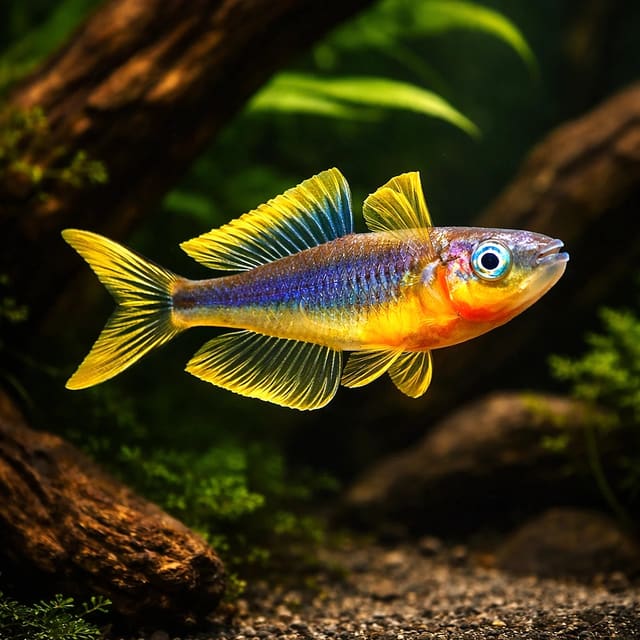
Adult Spotted Blue-Eye Rainbowfish are petite, elegant fish with an elongated body, transparent to pale silver-white base colour, and distinctive black spotting and striping across the rear half of the body. Males often show stronger fin extension and more intense colour, while females are usually a little rounder and less dramatic in the fins. This makes spotted blue-eye rainbowfish male vs female identification fairly straightforward once the fish mature. The fins are typically yellow with black markings, and in good light the fish can flash subtle blue, gold, and silver tones that make them look much brighter than their size suggests.
At around 4 cm, they are small enough for compact tanks but still lively enough to be the focal point of a planted display. If you are comparing spotted blue-eye rainbowfish vs neon rainbowfish or spotted blue-eye rainbowfish vs praecox rainbowfish, the key difference is scale and delicacy: spotted blue-eyes are smaller, more refined, and better suited to calm communities. They are also a strong choice if you want a fish that is less robust-looking than spotted blue-eye rainbowfish vs boesemani rainbowfish and more subtle than larger show species. Some hobbyists prefer them over threadfins because they are a little more active in the midwater zone, while others choose them for their fine markings and easy pairing with plants.
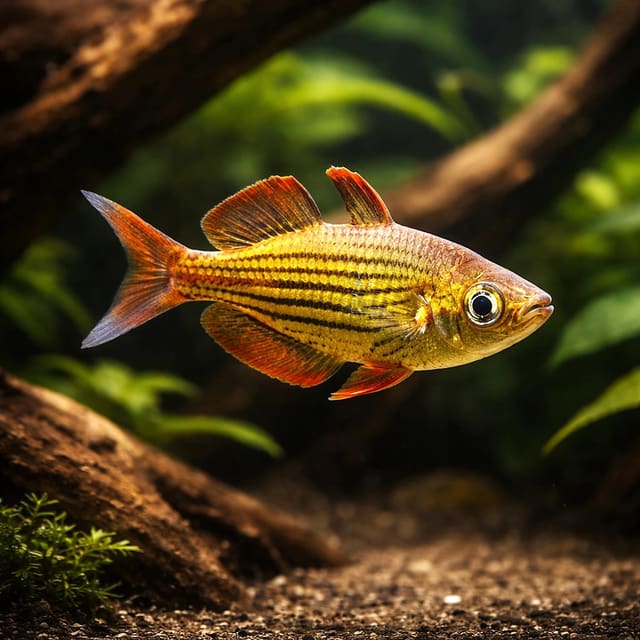
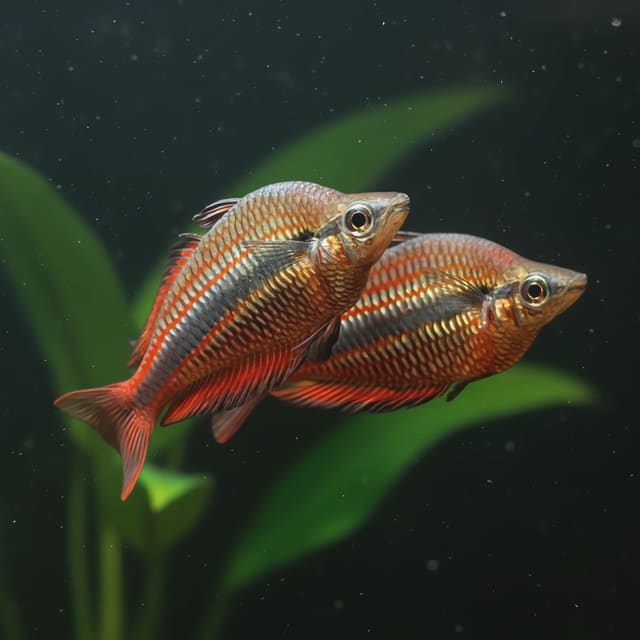
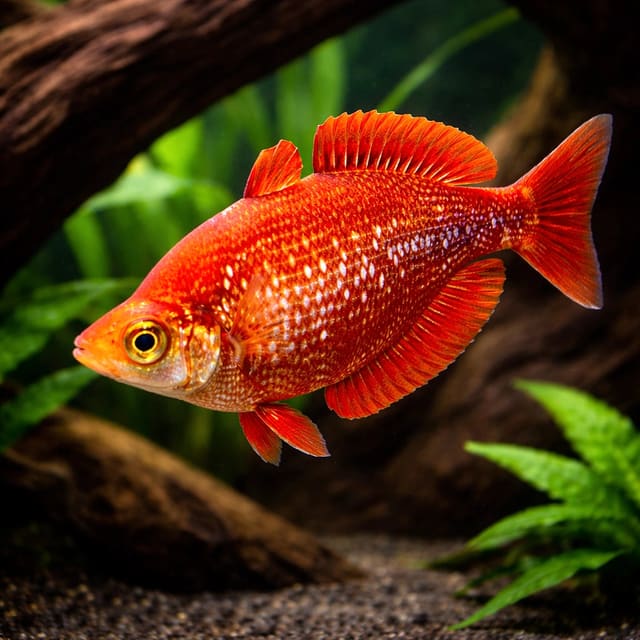
Our photos show how the fish’s colour changes depending on lighting, substrate, and diet. Dark backgrounds and live foods often bring out the strongest contrast. In a well-run aquarium, the body can appear almost translucent, with the black spotting and bright fin edges standing out clearly. That visual contrast is one reason they are often recommended as spotted blue-eye rainbowfish for beginners who want something more unusual than common tetras but still manageable. They are also a good fit for aquarists seeking rare tropical fish uk options that remain practical in a home tank.
The spotted blue-eye is peaceful, quick, and social, which makes it an excellent fit for a carefully chosen community. The best spotted blue-eye rainbowfish tank mates are small, calm fish that will not outcompete them for food or intimidate them with aggression. Good companions include small rasboras, ember tetras, pygmy corydoras, otocinclus, and other gentle species that suit the same water range. If you are searching for spotted blue-eye rainbowfish compatible fish, think “small, peaceful, and not fin-nippy.” That is especially important in a tank where the fish need to feel secure to show natural colour and courtship behaviour.
For many aquarists, they are among the best rainbowfish species comparison winners for smaller community aquariums because they are less boisterous than larger rainbowfish. They work well in community tropical fish UK setups with soft water, live plants, and moderate stocking. If you are wondering what tropical fish are aggressive, avoid cichlids, large barbs, and anything known for fin-nipping. A good rule is to choose tankmates that stay under 5 cm, prefer similar temperatures, and do not dominate the tank. They also do well with other fish when the group size is correct and the aquarium is not overcrowded.
| Species | Compatible? | Notes |
|---|---|---|
| Threadfin Rainbowfish | ✅ Yes | Similar size and temperament; best in planted tanks with gentle flow. |
| Paska'S Blue-Eye | ✅ Yes | Great for a mixed blue-eye display if the tank is spacious enough. |
| Forktail Blue-Eye Rainbowfish | ✅ Yes | Compatible in soft, planted aquariums with calm tankmates. |
| Large barbs | ❌ Avoid | Too boisterous and likely to stress or nip fins. |
For a 60-litre aquarium, a sensible community might include 8 spotted blue-eyes, 6 ember tetras, and 6 pygmy corydoras, provided filtration is mature and the tank is heavily planted. In a 90-litre tank, you can add a small otocinclus group once the aquarium is well established. If you are asking how many spotted blue-eye rainbowfish in a tank, remember that a larger group is better than a small pair. They are shoaling fish and become more confident when kept in numbers. Avoid mixing them with highly territorial fish, and do not assume that snail eating tropical fish uk species are suitable just because they are small; many are still too rough for this fish.
Quarantine helps protect spotted blue-eyes from parasites, bacterial infections, and stress-related losses. It also gives you time to observe feeding, breathing, and fin condition before adding them to the main display.
Spotted blue-eye rainbowfish breeding is considered moderate, but it is very achievable once the fish are settled, well fed, and kept in excellent water. Breeding is one reason this species is popular with tropical fish breeders uk and uk tropical fish breeders who enjoy small egg-scattering species. The easiest way to start is with a group of young fish and allow a pair or small harem to form naturally. Males display to females with extended fins and brighter colour, so spotted blue-eye rainbowfish male vs female differences become more obvious during courtship.
A breeding tank of 20-40 litres with fine-leaved plants, spawning mops, or moss is ideal. Slightly warmer water around 26-27°C and frequent small water changes can trigger spawning. The fish often lay adhesive eggs among plants or mops, and adults may eat eggs if given the chance, so remove the spawning material or separate the parents once eggs appear. The eggs usually hatch in about 10-14 days depending on temperature. Fry are tiny and need infusoria, green water, or commercial fry foods for the first stage, followed by newly hatched baby brine shrimp as they grow.
If you are looking for buy live fish online uk options to start a breeding project, choose healthy, well-conditioned fish from a reliable source rather than the cheapest listing. Searches such as buy tropical fish online uk free delivery, spotted blue-eye rainbowfish for sale UK, and live spotted blue-eye rainbowfish UK are common, but breeding success starts with strong stock. Conditioning adults with best tropical fish food uk quality foods, especially live and frozen items, improves spawn frequency and egg quality. The species is also listed by some sellers as pseudomugil gertrudae ficha or pseudomugil paskai ficha in multilingual listings, so always check the scientific name carefully.
Use a separate breeding tank with floating plants, a sponge filter, and a dark substrate. Feed conditioning foods for 10-14 days before spawning, then collect eggs daily to prevent predation and improve fry survival.
Comparing species helps you choose the right fish for your tank size, water, and personality preferences. If you want a tiny rainbowfish that stays peaceful and looks best in a planted display, the spotted blue-eye is often the sweet spot. It is smaller and more delicate than many other rainbowfish for sale UK options, but it still delivers movement and colour. For aquarists searching buy rainbowfish UK or browsing live rainbowfish UK stock, it is worth comparing it with similar blue-eyes before making a decision.
| Feature | Spotted Blue-Eye Rainbowfish | Threadfin Rainbowfish |
|---|---|---|
| Max Size | 4 cm | 4-5 cm |
| Care Level | Moderate | Moderate |
| Temperature | 24-28°C | 24-28°C |
| Price | £11.61 | Varies |
| Best For | Planted nano and community tanks | Graceful display tanks with gentle flow |
Choose spotted blue-eyes if you want a compact, active, and slightly more patterned fish. Choose threadfins if you prefer a softer, ribbon-like look and a more delicate swimming style. Compared with larger rainbowfish, this species is easier to house in smaller aquariums and better suited to hobbyists asking what tropical fish should i get for a calm community. If you are deciding between spotted blue-eye rainbowfish or threadfin rainbowfish, the answer usually comes down to whether you want more spotting and a little more activity, or a more flowing fin display.
| Feature | Spotted Blue-Eye Rainbowfish | Paska'S Blue-Eye |
|---|---|---|
| Body Shape | Slender, elongated | Slender, slightly more streamlined |
| Display | Spots and black fin markings | Brighter blue eye emphasis |
| Tank Use | Small planted community | Small planted community |
For many keepers, the spotted blue-eye is the best balance of beauty, size, and practicality. It is a good answer to the question what size fish should i get if you want something more interesting than a livebearer but less demanding than a large rainbowfish shoal.
Healthy spotted blue-eyes are active, alert, and eager to feed. They should swim evenly, hold their fins open, and show clear eyes with no clamped fins or white spots. Good spotted blue-eye rainbowfish health starts with clean water, stable temperature, and a varied diet. The most common problems are stress, fin damage, bacterial infections after poor transport, and parasites introduced by unquarantined fish. If you are searching spotted blue-eye rainbowfish diseases, most issues are actually husbandry-related rather than species-specific.
Prevention is straightforward: keep ammonia and nitrite at zero, perform regular water changes, and avoid overcrowding. A mature filter and gentle maintenance routine matter more than expensive additives. If fish become pale, hide constantly, or stop eating, check water quality first. For treatment, move affected fish to a hospital tank if needed, improve aeration, and use medication only when you know the diagnosis. Because these fish are small, they can deteriorate quickly in poor conditions, so early action is important. This is especially true for anyone keeping them as spotted blue-eye rainbowfish for beginners in a first planted aquarium.
If your aquarium also contains shrimp or snails, treat with extreme care and read labels closely. Copper can kill invertebrates even at low doses, so always separate treatment tanks when possible.
Many customers ask about aquarium fish delivery uk and whether transport stress affects health. It can, which is why acclimation matters. A slow drip or float acclimation helps new fish adjust to UK water conditions and reduces shock. If you are shopping for aquarium fish for sale near me, aquarium fish for sale near me open now, or aquarium fish on sale near me, remember that the healthiest fish are usually the ones from sellers who quarantine properly and pack carefully.
Spotted blue-eye rainbowfish behaviour is one of the main reasons people fall in love with them. They are active midwater swimmers that spend much of the day darting between plants, exploring open spaces, and displaying to each other. They are not aggressive, but males can show off with extended fins and quick chasing during courtship. In a proper group, this is normal and usually harmless. If the fish are kept singly or in too-small numbers, they may become shy and lose colour.
They are best described as shoaling fish rather than strict schoolers, although a larger group still improves confidence. Keep at least 8 together if possible, because that helps them settle and show more natural behaviour. They are most comfortable in a tank with cover near the surface and midwater, plus some open lanes for swimming. If you want to encourage natural behaviour, keep the tank calm, avoid sudden light changes, and feed small portions at consistent times. This species also responds well to a well-structured aquascape and is a good match for aquarists who enjoy observing subtle social interaction rather than constant drama.
We prepare Spotted Blue-Eye Rainbowfish with the same care we would want for our own planted community tanks. Each group is held in clean, stable water, monitored closely before sale, and packed to reduce stress during transit. That matters if you are looking for the best place to buy tropical fish online uk, the best online tropical fish uk seller, or the best tropical fish shop uk for a species that can be sensitive to poor handling. We also focus on acclimating fish to typical UK water conditions before dispatch, which helps them settle more quickly after arrival.
All live fish are professionally packed in insulated materials, and heat packs are used in colder months when needed. Orders are sent with tracked delivery, and our live arrival process is designed to give you confidence when you buy aquarium fish online uk or buy live fish online uk. If you are comparing best tropical fish delivery uk options, the difference is in the packing, the water quality, and the way the fish are conditioned before shipping. We also include care guidance so you know how to set up the tank, acclimate the fish, and feed them correctly from day one.
Whether you are searching tropical fish uk for sale, buy tropical fish online uk, buy tropical fish online uk cheap, or even cheap tropical fish uk, the real value is healthy fish that arrive ready to settle. If you need help choosing a community, we can also advise on stock levels and compatibility, which is especially useful for customers asking about aquarium with fish for sale near me or aquarium fish wholesale uk style stocking plans.
Order your Spotted Blue-Eye Rainbowfish today with confidence if you want a peaceful, attractive species that brings movement and colour to a planted aquarium.
Complete your setup with compatible species and practical foods that suit a calm tropical community. For similar blue-eye options, consider Pacific Blue-Eye, Paska'S Blue-Eye, or Dwarf Rainbowfish. If you are building a planted tank, pair them with King British Tropical Fish Flake Food and King British Tropical Fish Mini Pellets for a reliable feeding routine. For a cleaner, easier setup, add a gentle sponge filter for tropical fish and a dependable aquarium heater for UK tropical tanks. These additions help create the stable, low-stress environment that spotted blue-eyes need to thrive.
No reviews for this item yet. Bought one? Honest reviews only, good or bad.
What customers say about ordering from us
I have a small group of long finned mountain minnows. So was delighted to be able to order ten of this variety to increase the genetics in my tank . The ones I recieved are healthy but it’s to early to give a verdict on wether they are of a long finned type since they are small currently.
Gordon Walker · 23 Sept 2026
100% success travel and "installation". Pleased with quality of purchase. The Siamese fighter a bit "shy" so have not yet seen him at his best yet but looking good. Happy customer. GG
George E Garratt · 21 Sept 2026
Reviews of our shop, collected by Judge.me, an independent third-party review collector. Newest first.