Easy
Neon Dwarf Rainbowfish (Melanotaenia praecox)
23–27°C · pH 6.8–7.5 · 54L
£5.99

An active, peaceful northern Australian rainbowfish sold individually in two size options. Keep 6–8 or more in a mature, filtered aquarium at least 120 × 30 × 30cm, with open swimming room and robust, similarly sized companions.
Adult size is the maximum length this species reaches at full maturity (scientific sources). The livestock you receive will be younger and smaller — pick a size above for the actual shipping size. Product-photo provenance and any image-specific limitations are stated on the listing.
Melanotaenia trifasciata
Shoaling fish: kept in a group they feel safer, stay calmer and show their best colour.
An active, peaceful northern Australian rainbowfish sold individually in two size options. Keep 6–8 or more in a mature, filtered aquarium at least 120 × 30 × 30cm, with open swimming room and robust, similarly sized companions.
Adult size is the maximum length this species reaches at full maturity (scientific sources). The livestock you receive will be younger and smaller — pick a size above for the actual shipping size. Product-photo provenance and any image-specific limitations are stated on the listing.
Maintain these water conditions for optimal health and vibrant colors
The scientific name is Melanotaenia trifasciata. FishBase places it in the family Melanotaeniidae and genus Melanotaenia, and gives its conservation status as Least Concern. It is a freshwater rainbowfish from northern Australia. You can also browse the current rainbowfish collection when comparing species by adult space, activity and social needs.
The species record and Seriously Fish aquarium profile describe an active, peaceful shoaling fish from northern Australia that can become deeper-bodied and colourful with maturity. Its adult build and rapid swimming are best suited to spacious communities with robust companions. Provide an aquarium measuring at least 120 × 30 × 30cm, approximately 108 litres, with the long base needed by this active species. Keep at least six to eight Banded Rainbowfish, preferably more when the aquarium can accommodate the complete adult shoal. Aim for 27–29°C, pH 6.5–8.0 and hardness of 8–20°dGH.
This fish suits a prepared keeper who can provide a spacious, fully matured and filtered aquarium, maintain stable water quality and plan for a comparatively large shoal. Its social requirement and rapid swimming make it a poor choice for a small starter tank, an incomplete group or a community dominated by timid fish. A keeper ready to test the water, maintain the filter and reserve an open swimming route can manage the species without needing specialist breeding equipment.
Choose this rainbowfish when you want conspicuous midwater activity and can make the shoal a central part of the stocking plan. Its peaceful disposition makes community keeping possible, but adult body size and speed remain the decisive compatibility checks.
One purchase quantity supplies one Banded Rainbowfish of the selected option. The selector offers two recurring size options covering fish from 4cm upward: 4-6 cm and > 6 cm. Use the live selector to see the exact grade available for selection. The size you select is the size supplied, not the adult size.
Sex is guaranteed only when the selected option explicitly states male or female. This Banded Rainbowfish listing has no sex-guaranteed option.
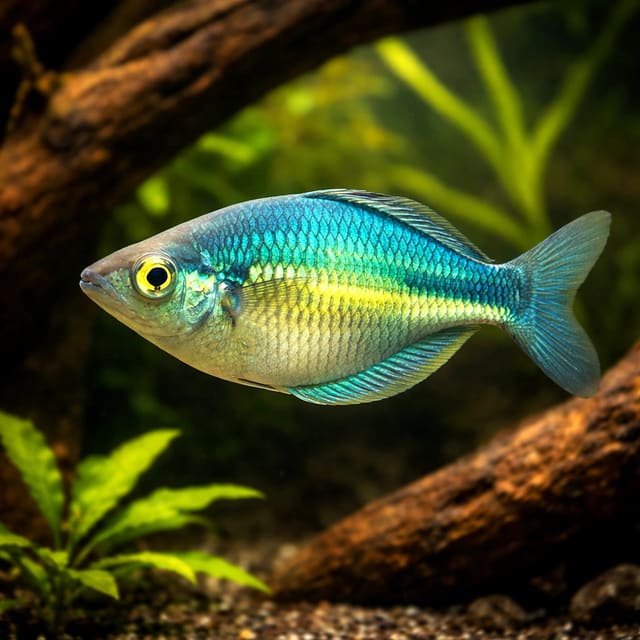
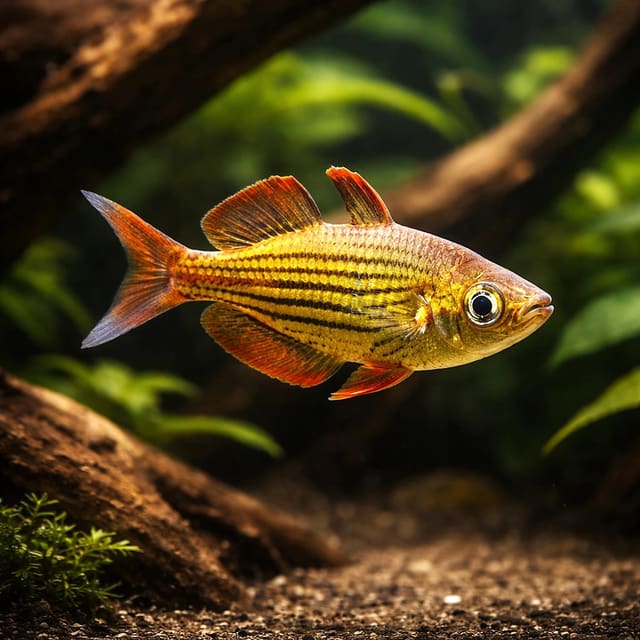
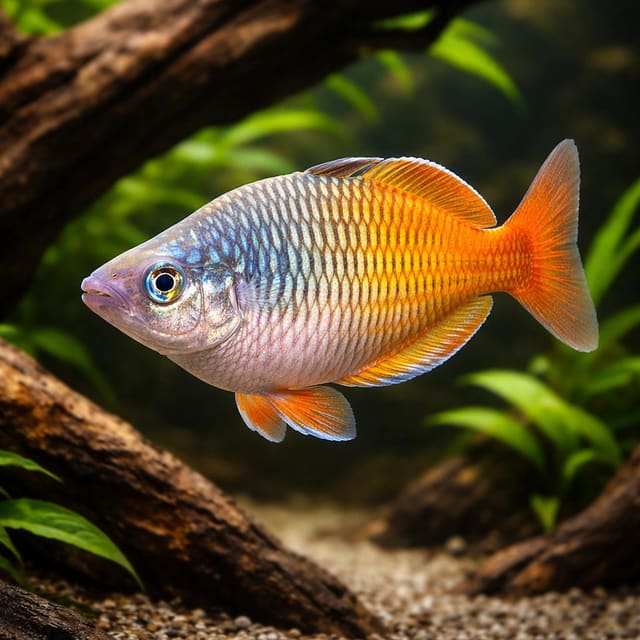
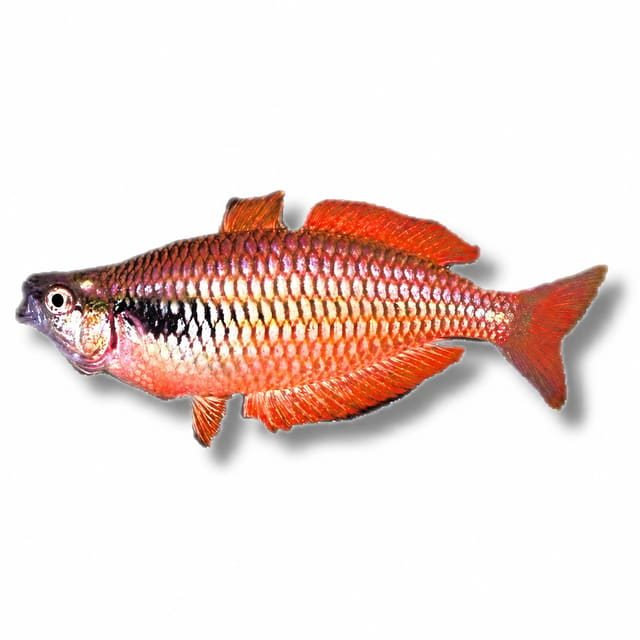
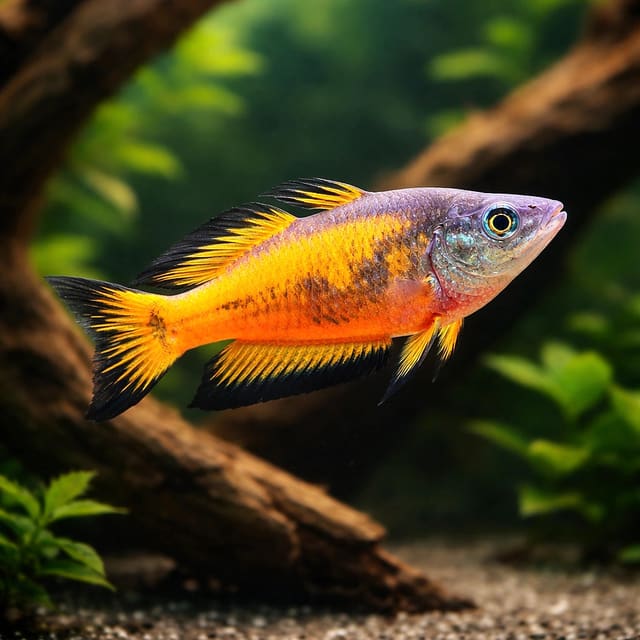
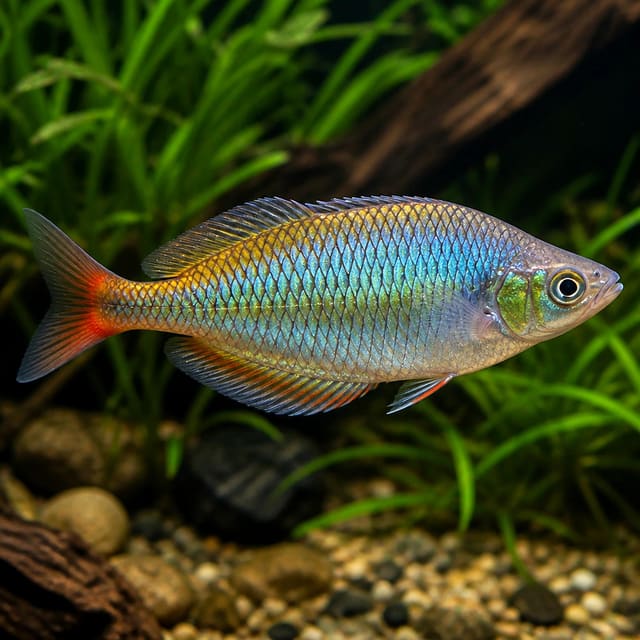
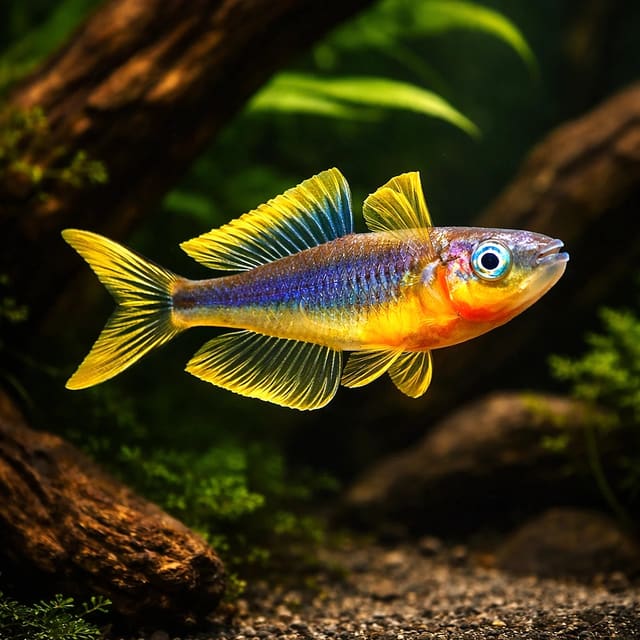
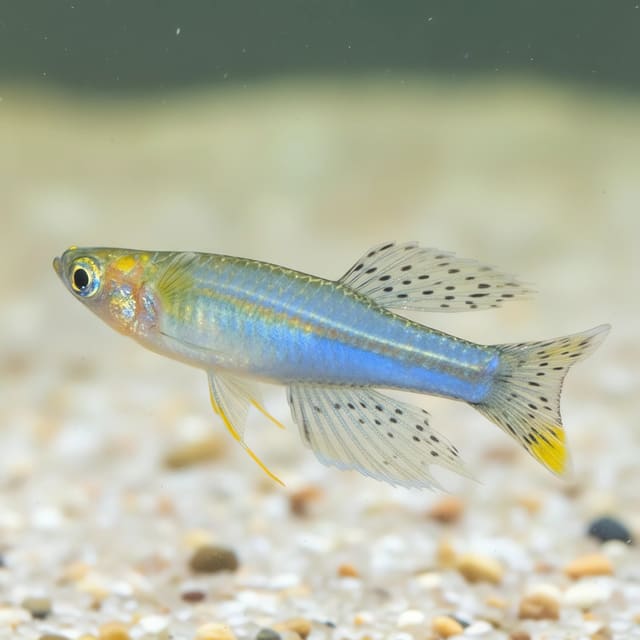
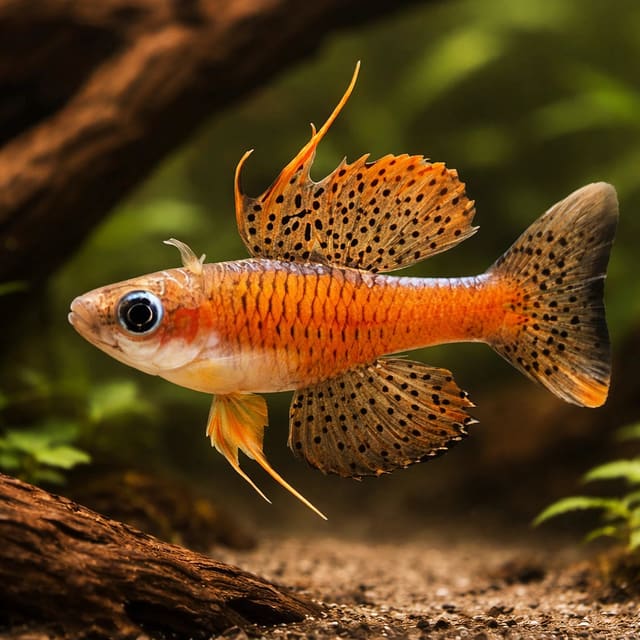
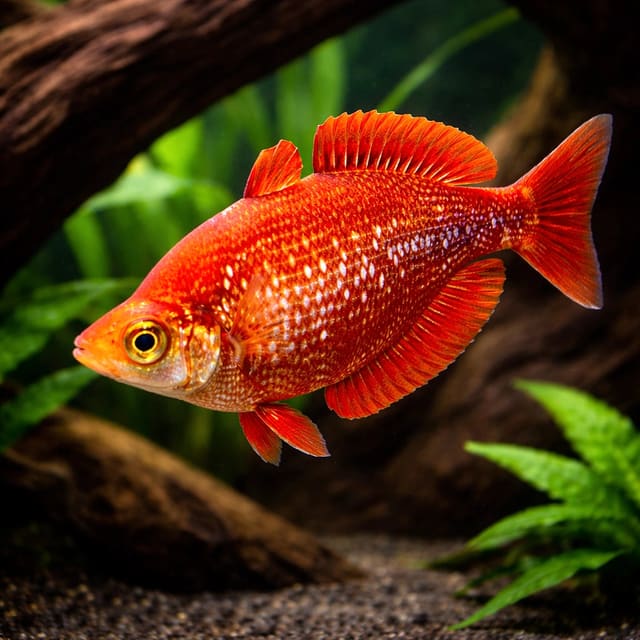
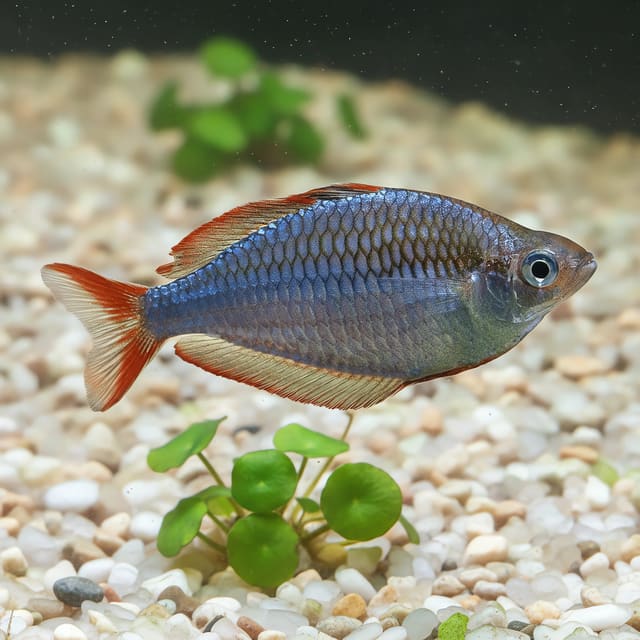
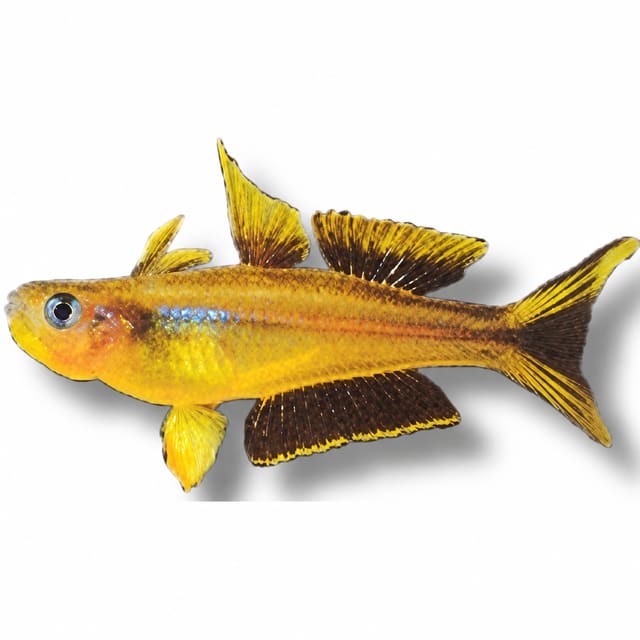
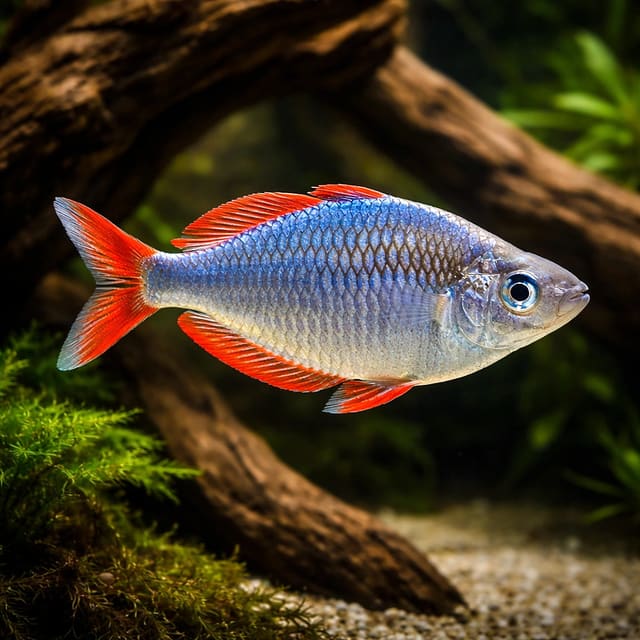
The gallery shows two Banded Rainbowfish side by side, with red-orange horizontal stripes, red fins, a dark background and green leaves behind them. The image represents the listed animal type rather than the exact specimen supplied. Some gallery photos were digitally enhanced to improve image quality, so colours can look slightly different from the live animal.
Current policy lists Wednesday dispatch and Thursday delivery. Read the delivery and Live Arrival Guarantee terms before ordering to check the current dispatch arrangements and claim conditions directly.
This freshwater species occurs in Australia's Northern Territory and Queensland, where the distribution entry classifies it as benthopelagic. Its northern Australian origin places it among the tropical members of Melanotaeniidae, but the aquarium still needs controlled, stable conditions rather than relying on room temperature or seasonal outdoor weather.
Keep it in a properly matured, filtered tropical freshwater aquarium. Biological filtration must already be functioning before fish are introduced because the system needs to process their waste from the first feeding onwards. Stable temperature and chemistry are more useful than repeatedly changing values in pursuit of a single reading.
The conservation classification concerns the species in nature and does not change its aquarium requirements. Space, group size, filtration, water stability and suitable companions remain the practical checks for a home aquarium.
Give Banded Rainbowfish clean, stable water, a social shoal, planted cover and generous open swimming room. Arrange dense vegetation around selected parts of the aquarium while preserving broad open areas where the group can travel and display. This division gives the fish shelter without breaking the main swimming route into short, obstructed pockets.
Prioritise a long aquarium footprint and leave capacity for the complete adult shoal and every compatible tank mate. Volume alone does not show how much usable swimming room remains after substrate, plants, ornaments and other fish are included. The minimum base of 120 × 30cm is therefore a starting point, and a larger footprint becomes important as the group or community grows.
Keep water movement slow to moderate. Heavily planted sections may benefit from gentler flow, while the filter still needs to deliver the required turnover across the complete system. Positioning the outflow to preserve both functions is more useful than driving every part of the aquarium with the same current.
Expect fast, conspicuous swimming. Open water prevents the shoal from repeatedly crowding planted cover and gives slower bottom-oriented companions a clearer route away from the busiest midwater activity. Check the usable route after plants and ornaments are in place rather than assuming the empty tank dimensions will remain fully available.
For everyday aquarium care, aim for 27–29°C, pH 6.5–8.0 and hardness of 8–20°dGH. Separately, the natural-environment record gives an environmental range of 25–30°C, pH 7.0–8.0 and hardness 9–19°dH. Keep the aquarium stable within the husbandry target instead of deliberately moving it through the wider environmental range.
OATA's broad rainbowfish guidance, not a species-specific optimum, gives 22–27°C, pH 6.5–8.0, general hardness 4–12°dH, carbonate hardness 3–10°dKH, zero ammonia, zero nitrite and nitrate no more than 20mg/L above the normal tap-water level. It also gives at least five fish for rainbowfish generally, while the species-level recommendation for Banded Rainbowfish is at least six to eight.
The water-chemistry guide explains each reading and why ammonia, nitrite, nitrate, pH and hardness matter. Use the same test method and a consistent schedule so a change in the result reflects the aquarium rather than a different testing routine.
Enter your measured values into the water matcher to compare the aquarium with the stated guidance. Make that comparison before adding the shoal and repeat it when the tap-water supply or aquarium chemistry changes noticeably.
Use the 27–29°C aquarium target for routine husbandry, the FishBase figures only as a description of the recorded natural environment, and the OATA figures as broad context for rainbowfish generally. These ranges have different scopes and should not be merged into one wider target. For compatibility, compare each proposed companion with the aquarium target that will actually be maintained.
Use a properly established and maintained biological filter. Fish should not be kept in an unfiltered aquarium because toxic waste must be processed continuously. RSPCA aquarium-environment guidance explains biological filtration, waste processing, testing and water stability for pet fish generally. Beneficial bacteria convert ammonia through nitrite into the less harmful nitrate that maintenance can then control.
Mature the biological filter fully before livestock arrives. The first tropical tank guide takes you through preparing and maturing the aquarium before fish are introduced. A running filter is not enough by itself; its biological population must be capable of handling the waste produced by the planned occupants.
Seriously Fish recommends filtration turnover of four to five times aquarium volume per hour. For the approximately 108-litre aquarium example, it gives a filter rating of 430–540 litres per hour. That rating belongs to the example volume rather than every suitable aquarium, so calculate the turnover from the actual aquarium volume when choosing equipment for a larger system.
Stocking too quickly can outpace the filter's nitrifying bacteria, allowing toxic ammonia and nitrite to rise in new tank syndrome. Gradual additions reduce that mismatch, but they do not make it appropriate to leave a social rainbowfish alone indefinitely. Do not keep rainbowfish singly or in an undersized group, as inadequate social contact can cause stress.
Plan the sequence before purchase so the aquarium has room and biological capacity for the required shoal. If the community is being assembled in stages, each stage still needs appropriate social provision and measurable water quality; gradual stocking is a filter-management method, not a solitary-care option.
Filtration capacity must be judged after accounting for the whole adult community. A larger filter cannot replace swimming space, and a long footprint cannot replace biological processing. Both requirements have to be met together, with the equipment sized for the final planned load rather than only the first fish introduced.
OATA recommends changing about 25% of the water at least weekly and siphoning solid waste from the substrate during the change. This removes accumulated waste while leaving most of the aquarium water and biological system in place.
Clean filter media gently only when needed. Rinse it lightly in water removed from the aquarium, never directly under the tap, to preserve beneficial bacteria. Chlorine or chloramine in untreated tap water can damage the bacterial population that performs biological filtration.
Check the filter regularly for blockages rather than waiting for flow to stop. Cleaning every component aggressively can remove too much established biology, while ignoring a restriction can reduce circulation and filtration performance. Use the observed condition and flow of the filter to decide when light cleaning is necessary.
Keep maintenance predictable. A consistent partial-change routine, careful treatment of replacement water and restrained filter cleaning protect stability without turning routine care into repeated large disturbances.
Banded Rainbowfish are omnivorous and receptive to suitable dried, frozen and live foods. Offer a varied diet that combines a quality dried staple with appropriately sized frozen or live foods. Variety gives the shoal access to different food forms without relying on a single product for every meal.
Regular frozen or live variety can support stronger colour, while the dried staple provides a practical base. Choose particle sizes that the fish can take cleanly in open water. Watch the whole group feed so less assertive individuals have access rather than concentrating every portion in one small point.
OATA's rainbowfish guidance recommends feeding once daily and offering only what the fish can finish within a few minutes. Follow the food manufacturer's portion guidance as well, then adjust the offered amount to the number and size of fish actually feeding.
Avoid overfeeding. Uneaten food breaks down into toxic waste and can degrade water quality, adding a burden that the biological filter must process. Remove obvious leftovers rather than adding another meal to compensate for food that was poorly sized or placed.
Assess the result through steady feeding interest and appropriate body condition. A sudden reduction in appetite belongs in the health check, while persistent competition at feeding time calls for better distribution of the same controlled ration rather than automatically increasing the total.
The maximum species record gives 13.0cm standard length, while the aquarium planning profile uses 15cm standard length and notes wide colour and pattern variation by locality. Use 15cm as the more cautious space-planning reference and recognise that two locality forms may not develop identical colours or patterns.
The dispatch grade and adult planning size serve different buying decisions. The grade tells you which size is supplied, while the adult reference tells you how much room the established shoal may require. Do not use the smaller dispatch figure to calculate permanent swimming clearance or community capacity.
Fish offered by dealers are often juveniles and may look much drabber than fully developed adults. This general trade pattern does not assign a life stage to the fish supplied through this offer. Judge the selected option by its stated dispatch grade and allow the individual animal's mature appearance to emerge over time.
Use the representative gallery to identify the listed animal type, not as a promise that every fish will arrive with the same stripe intensity, fin colour, body depth or locality pattern.
The species profile reports that mature males are generally larger, brighter and deeper-bodied than females, with longer dorsal and anal fins. Males may display to one another frequently as adults come into breeding condition, and the presence of other Banded Rainbowfish encourages their strongest colour display. Even with a good diet, full colour development can take more than 12 months. The species is an egg scatterer and is not considered difficult to spawn, although raising the fry can be challenging. Keep different locality forms of Melanotaenia trifasciata separate in the aquarium because they can hybridise freely.
When fish are sold with a locality name, treat that locality identity as an important part of the group rather than mixing forms for visual variety. Separation prevents free hybridisation between distinct forms and preserves the meaning of any locality information attached to the fish.
These mature biological differences do not provide a sex guarantee for the animal selected from this offer. Use them to understand adult social display and body development, not to infer the supplied fish's sex from colour, shape, size or an image.
OATA recommends more females than males in rainbowfish groups to reduce fighting between males. That recommendation can only guide a deliberately sexed group; this offer has no male or female option, so build the shoal without assuming a particular sex ratio.
Banded Rainbowfish can be skittish, but they settle more confidently when housed in a suitably sized shoal with room to swim. For cautious breeding preparation, condition adults separately with plentiful live and frozen foods before selecting well-conditioned fish. Keep breeding preparation separate from ordinary community care because fry-rearing demands do not define the routine needs of the display shoal.
A healthy purchase candidate should have clear bright eyes, intact scales, undamaged fins and appropriate swimming behaviour, without ulcers or unexplained bumps. Look at the whole fish rather than relying on colour alone, because normal colour varies with locality and development.
If behaviour, breathing, colour or appetite changes, test the aquarium water promptly before deciding what action is needed. Compare the results with that aquarium's normal readings and use the established maintenance routine to correct a water-quality problem. Persistent or worsening signs need individual assessment rather than a treatment chosen from one outward symptom.
Choose peaceful, similarly sized companions that tolerate rapid open-water activity and share compatible water requirements.
Plan the community around the adult shoal, the eventual size of every companion and the biological filter's capacity rather than following a fixed stocking recipe. Compatibility remains conditional on footprint, layout, water overlap, group sizes and the behaviour of the individual fish involved.
The named groups are starting points for screening, not universal tank-mate promises. A Corydoras species, barb, danio, characin, goby or another rainbowfish still needs its own suitable temperature, chemistry, adult space and social group. Reject the pairing if any one of those needs conflicts with the aquarium planned for the Banded Rainbowfish shoal.
Observe whether every species can feed, rest and use its preferred area without being displaced by the rainbowfish group's speed. A peaceful fish can still be unsuitable when its normal movement repeatedly unsettles slower or more timid occupants.
It is the northern Australian freshwater rainbowfish Melanotaenia trifasciata, an active, peaceful shoaling member of Melanotaeniidae.
One purchase supplies one Banded Rainbowfish (Melanotaenia trifasciata) from the size option selected in the live selector.
The two recurring size grades are 4-6 cm and > 6 cm; the live selector shows which grade can currently be selected.
A Banded Rainbowfish shoal needs at least 120 × 30 × 30cm, approximately 108 litres, with open swimming room, planted shelter and suitable filtration.
No. Keep at least six to eight together, preferably more when the aquarium can accommodate the complete adult shoal.
Aim for 27–29°C, pH 6.5–8.0 and hardness of 8–20°dGH in a stable, mature and filtered aquarium.
Feed once daily with a quality flake or suitable granule, adding appropriately sized frozen or live foods for variety and limiting the portion to what is finished within a few minutes.
Confirm that the aquarium is mature and filtered, ammonia and nitrite are undetectable, and temperature, pH and hardness match the stated guidance before introduction.
Screen peaceful, similarly sized fish that share its water requirements and can cope with rapid midwater activity; use caution with slow, timid or much smaller companions.
No reviews for this item yet. Bought one? Honest reviews only, good or bad.
What customers say about ordering from us
I have a small group of long finned mountain minnows. So was delighted to be able to order ten of this variety to increase the genetics in my tank . The ones I recieved are healthy but it’s to early to give a verdict on wether they are of a long finned type since they are small currently.
Gordon Walker · 23 Sept 2026
100% success travel and "installation". Pleased with quality of purchase. The Siamese fighter a bit "shy" so have not yet seen him at his best yet but looking good. Happy customer. GG
George E Garratt · 21 Sept 2026
Reviews of our shop, collected by Judge.me, an independent third-party review collector. Newest first.