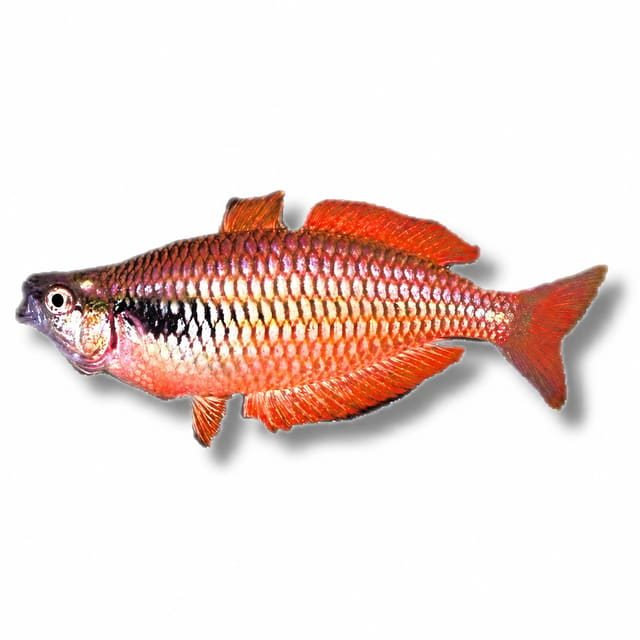
Lake Kurumoi Rainbowfish (Melanotaenia parva)
22–27°C · pH 6.5–8
£14.19

One unsexed 4-5 cm fish from an assorted rainbowfish trade selection. Exact species, colour and sex are not selectable. Plan a compatible social group and adult aquarium before ordering.
Melanotaenia spp.
Shoaling fish: kept in a group they feel safer, stay calmer and show their best colour.
One unsexed 4-5 cm fish from an assorted rainbowfish trade selection. Exact species, colour and sex are not selectable. Plan a compatible social group and adult aquarium before ordering.
Maintain these water conditions for optimal health and vibrant colors
Assorted Rainbowfish are active, colourful freshwater fish from a mixed Melanotaenia trade selection. Each quantity is one unsexed fish at approximately 4-5 cm dispatch size. The exact species, colour pattern and sex are not selectable, so this listing is best for aquarists who are comfortable receiving a healthy representative from the assortment rather than one named strain.
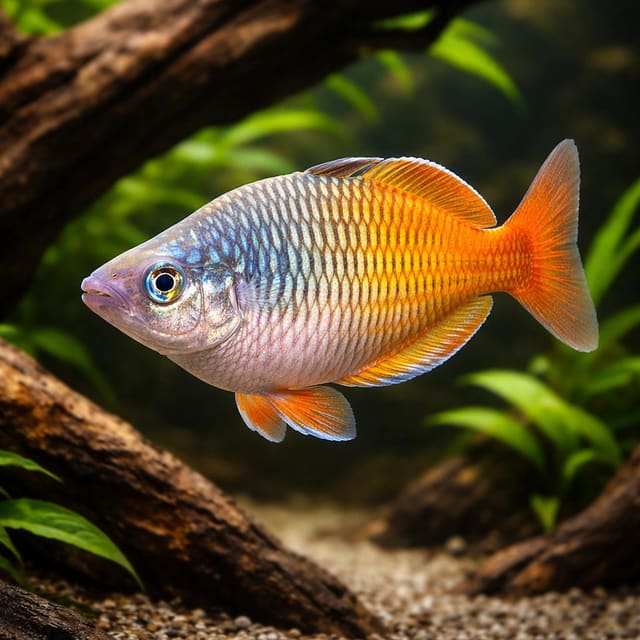
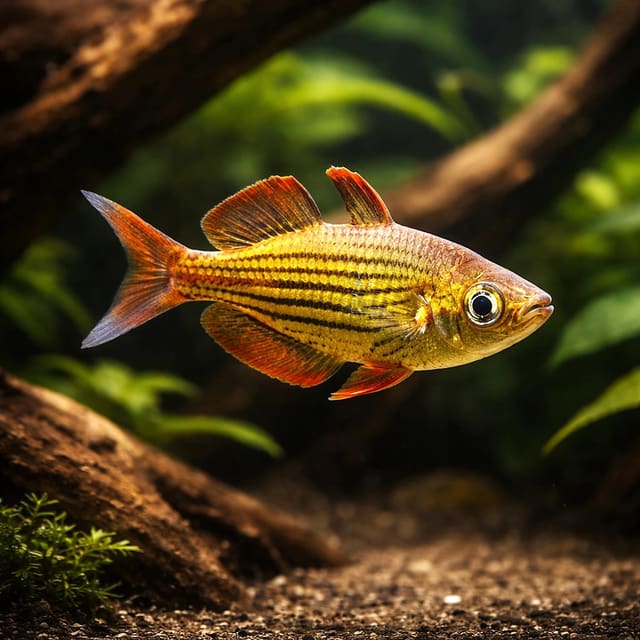
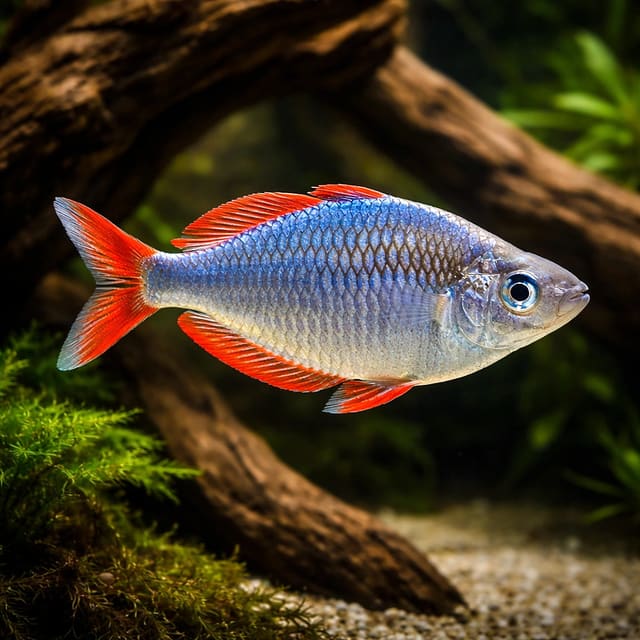
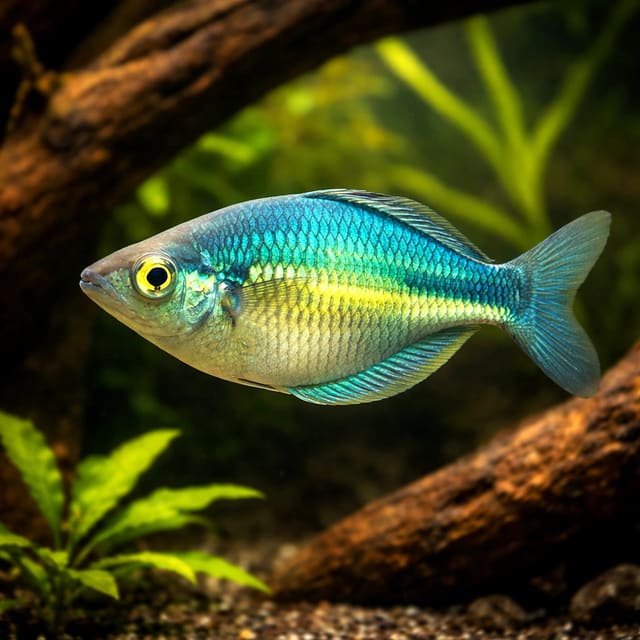
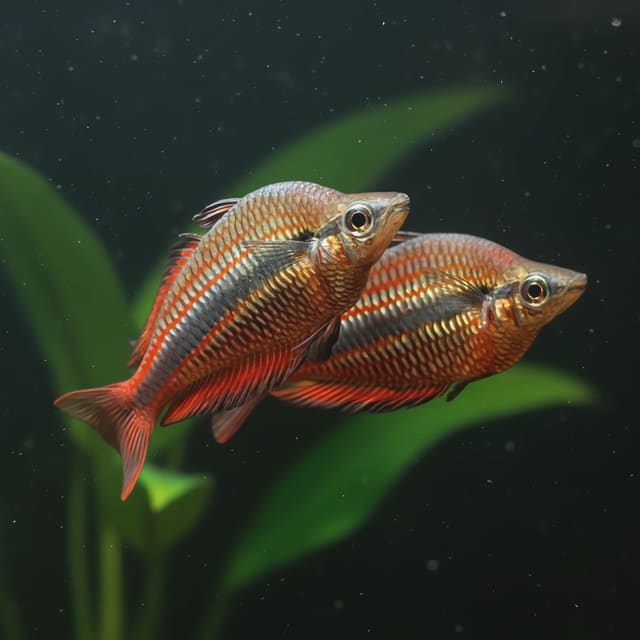
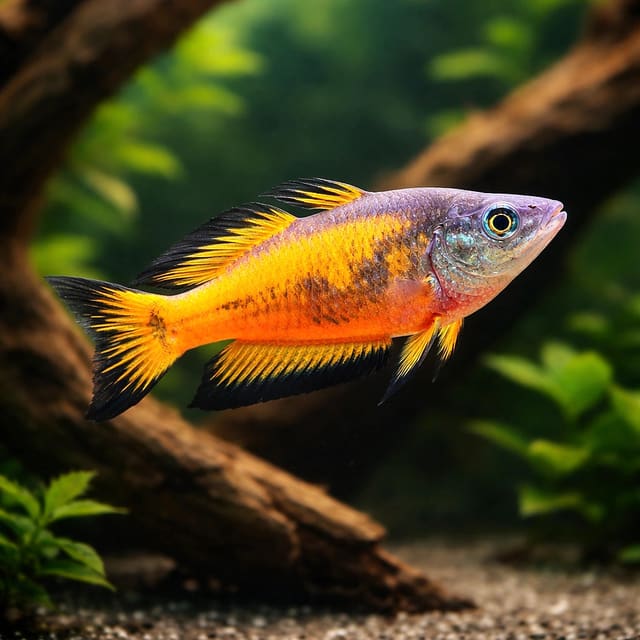
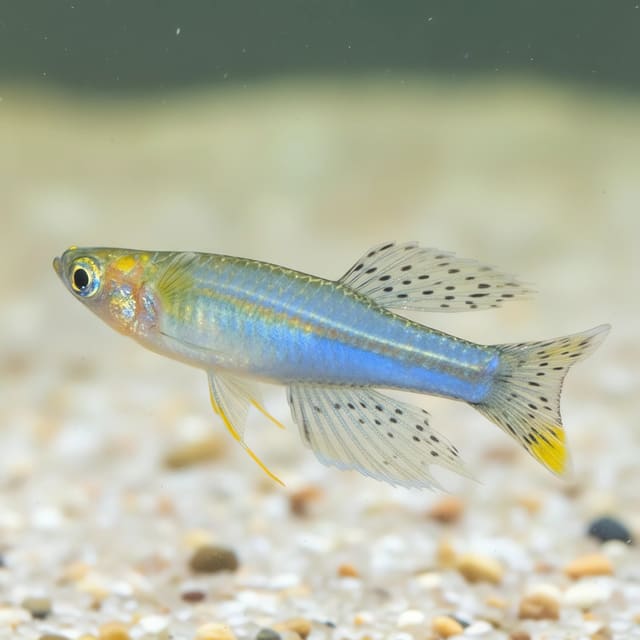
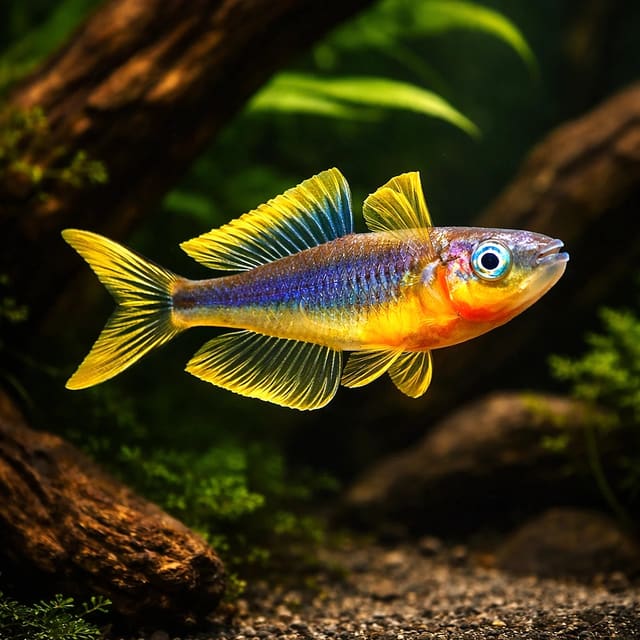
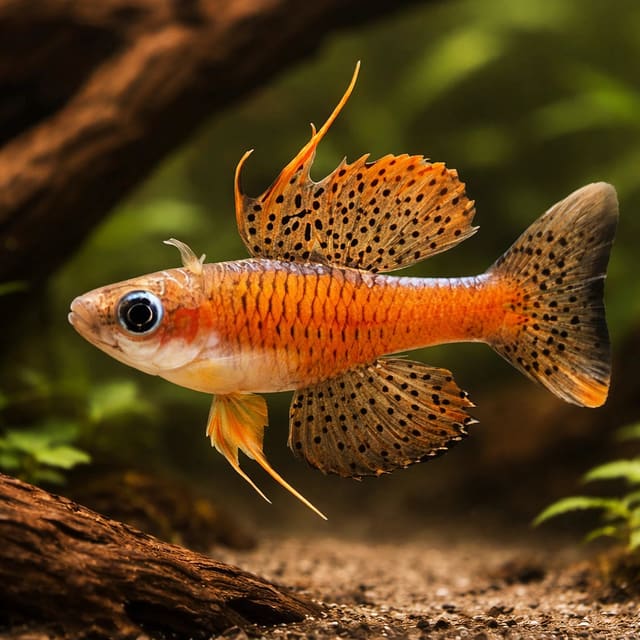
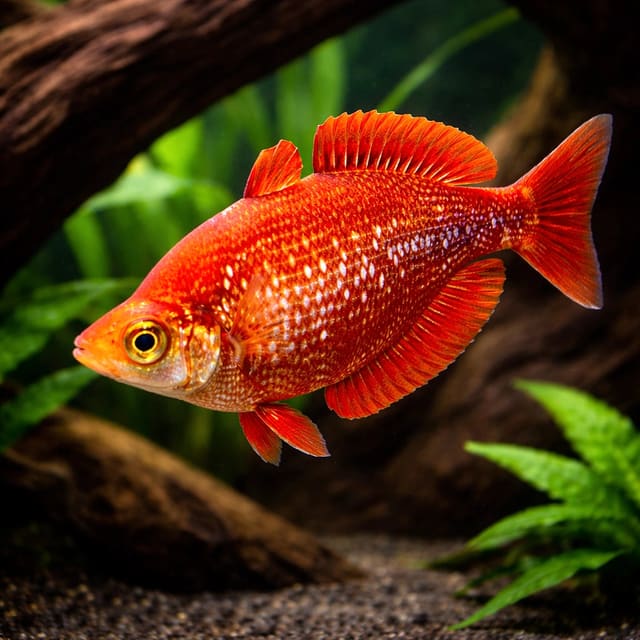
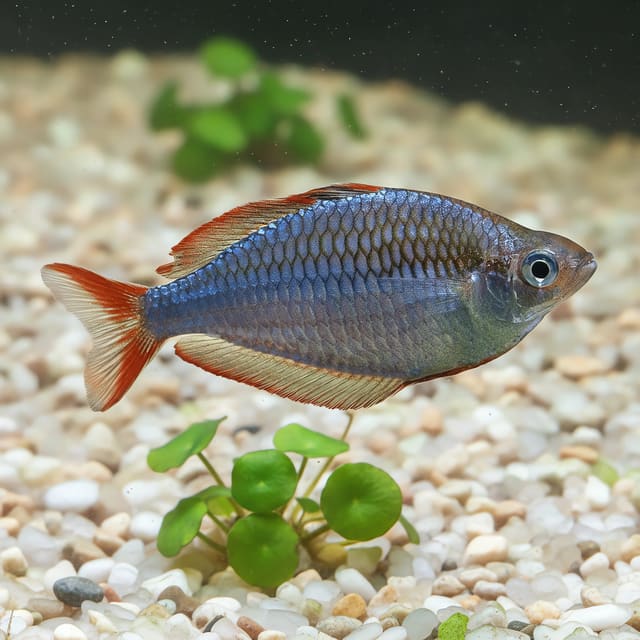
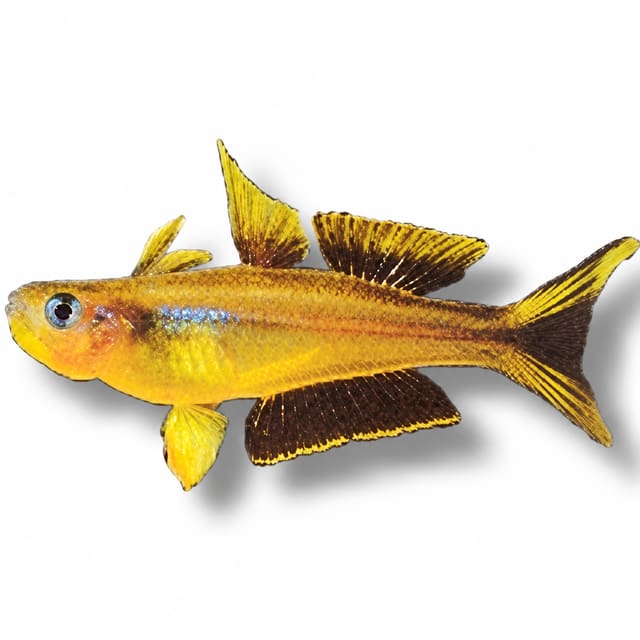
Rainbowfish are social, open-water swimmers. Plan to keep at least five and preferably six or more compatible rainbowfish, but remember that ordering several assorted fish does not guarantee that every individual will be the same species. If a matched single-species group is important to your aquarium plan, choose one of our named rainbowfish listings instead. The current gallery image is a representative digital illustration; it does not show the exact fish that will be packed for your order.
Because the exact species in this assortment is not identified, responsible care starts with conservative planning. Allow for an active fish that may reach the larger end of the commonly kept rainbowfish range, provide a long aquarium with open swimming space, and treat the broad water values below as a starting range rather than a species guarantee. Once your fish has matured enough to identify confidently, refine its care using a reliable species-specific source.
| What one quantity buys | One unsexed assorted rainbowfish |
|---|---|
| Dispatch size | Approximately 4-5 cm |
| Trade identity | Melanotaenia spp., assorted trade selection; exact species not specified |
| Adult size | Species dependent; commonly kept rainbowfish span roughly 4-13 cm, so plan for the larger end |
| Social needs | At least five, preferably six or more compatible rainbowfish |
| Aquarium planning | Use 120 litres as a conservative starting floor for a larger active group; exact needs may be greater |
| General temperature | 22-27 C as a broad rainbowfish starting range |
| General pH | 6.5-8.0, kept stable |
| General hardness | GH 4-12 dH and KH 3-10 dH as broad starting values |
| Diet | Omnivorous: quality prepared food with suitable live or frozen variety |
| Temperament | Generally peaceful, social and very active |
| Image disclosure | Representative digital illustration, not the exact dispatch fish |
This product is sold as one fish per quantity. It is not a pack of six, a ready-made mixed shoal or a pair. If you select a quantity of one, one fish is supplied; if you select a larger quantity, that number of fish is supplied, subject to current stock and the checkout confirmation.
The dispatch size is approximately 4-5 cm. That measurement describes the size of the fish when prepared for sale, not its expected adult length. Natural variation between individuals is normal, and a small difference in measured size can occur because live fish do not remain perfectly still. Sex is not guaranteed at this size, and colour or species selection is not available within the assortment.
The fish chosen may look different from the representative gallery illustration. Juvenile rainbowfish are often less intensely coloured than settled adults, and transport stress can temporarily mute colour. Lighting, background, diet, social confidence, age and sex can also change how iridescence appears. Purchase this item for the character of an assorted rainbowfish, not for an exact shade shown on a screen.
This item is sold under the mixed Melanotaenia trade label. The abbreviation spp. means that more than one species may be involved or that the exact species has not been identified. It is not the name of a single species.
Melanotaenia belongs to the rainbowfish family Melanotaeniidae. Fishes of Australia describes this family as a diverse group of colourful freshwater fishes centred on Australia, New Guinea and nearby islands. More than one genus is sold under the broad aquarium name "rainbowfish", and their eventual size and detailed care are not identical. This is why an assorted trade label cannot support one precise adult length, lifespan or breeding recipe.
The trade label places the fish in the mixed rainbowfish group, but it does not justify guessing a species. The Melanotaenia anchor is therefore paired with a clear statement that the exact identity remains unknown.
Identification can become easier as the fish grows and develops adult colour and body shape. Even then, visual identification may be uncertain because young fish, females and related species can look similar, and aquarium-trade hybrids exist. If exact identity affects care or breeding plans, use clear side-on photographs and consult an experienced rainbowfish specialist rather than relying on colour alone.
Many Melanotaenia rainbowfish originate from freshwater habitats in Australia and New Guinea. Across the family, natural environments include rivers, tributaries, lakes, floodplain waters and vegetated margins. Conditions vary considerably between species and locations, so the assortment should not be assigned one exact wild river, country locality or biotope.
What these fish broadly share is an active open-water lifestyle. A useful aquarium interpretation is to provide clear swimming lanes, good oxygen exchange and structure around the margins. Plants, wood or rock can create security, but the centre and upper part of the aquarium should not be so crowded that a group cannot move comfortably.
A natural-range summary should never be used as an excuse to expose fish to unstable conditions. Seasonal variation in the wild does not mean rapid temperature, pH or hardness changes are harmless in an aquarium. Captive fish benefit from consistency, a mature biological filter and gradual adjustments. Stability is more important than repeatedly chasing an ideal number with chemical additives.
Rainbowfish are named for the reflective colours that can appear across their flanks and fins. Depending on the individual supplied, an assorted fish may develop silver, blue, green, yellow, orange or red tones. Some have deeper bodies, some remain more slender, and fin shape differs between species and sexes. None of those outcomes is guaranteed by this mixed listing.
At 4-5 cm, the fish may still be juvenile and may not show its final body depth or colour. Males of some species become more strongly coloured or deeper-bodied as they mature, while females can remain subtler. Other species show less obvious sexual difference. It would therefore be misleading to label a dispatch fish male or female solely from a small juvenile photograph.
Colour is also responsive to care. A settled social group, suitable water, low chronic stress and a varied diet usually produce a better display than isolation or overcrowding. A dark background and planted edges can help reflective colours stand out, but aquarium lighting should support the fish and plants rather than be run excessively for appearance.
Expect a healthy assorted fish, not a copy of the illustration. Give new arrivals time to settle before judging colour. A fish that is pale in the bag may brighten after acclimation, feeding and social confidence improve.
One precise adult size is not supportable for an unidentified assortment. OATA's general rainbowfish care guidance notes that commonly kept types can range from about 4 cm to around 13 cm, while family references also show substantial variation. The fish supplied may remain modest or may grow into a larger, deeper-bodied and more demanding swimmer.
Plan for the upper end until the fish can be identified. Adult length is only part of the space calculation: body depth, swimming speed, group size, tank mates and waste production matter too. Six active fish require more usable room than one fish of the same measured length, and a long front-to-back swimming lane can be more valuable than extra height.
Do not choose this listing for a small aquarium on the assumption that the fish will remain 4-5 cm. Dispatch size is temporary. If your aquarium could not house a 13 cm active rainbowfish as part of a suitable group, choose a confirmed smaller species instead. Our rainbowfish collection can help you compare named options before ordering.
| Planning question | Why it matters for an assortment | Safer response |
|---|---|---|
| How large will it grow? | Exact species is not supplied | Plan for the larger common rainbowfish range |
| Will 120 litres be enough? | Final size, group and companions change the answer | Treat 120 litres as a starting floor, not a universal promise |
| Can I upgrade later? | Delays can leave an active social fish crowded | Have the adult aquarium ready before purchase |
| Can I keep one? | Rainbowfish are social | Plan a compatible group from the beginning |
Rainbowfish should not normally be kept alone. OATA recommends a shoal of at least five, with more being better where the aquarium has enough space and filtration. For practical home-aquarium planning, six or more is a sensible target. A group distributes social attention, encourages normal open-water behaviour and helps shy individuals feel secure.
This assorted product adds an important complication: several fish are not guaranteed to be one species. Related rainbowfish may coexist peacefully, but an individual can associate most naturally with its own kind. Buying six assorted fish creates a group of rainbowfish; it does not guarantee a six-fish, single-species shoal. Monitor whether every fish is feeding, swimming confidently and participating socially.
If one individual remains isolated, hides persistently or receives repeated attention, do not simply add random fish. First check water quality, illness, sex imbalance, aquarium space and compatibility. Once the fish is identified, adding appropriate same-species companions may be more useful than enlarging the assortment blindly.
A group also changes the required aquarium capacity. Six larger rainbowfish plus tank mates can create considerable activity and waste. Stocking should be based on adult size and the filter's established capacity, not a simple centimetres-per-litre rule. Leave room for growth, maintain swimming space and avoid filling every level of the aquarium with equally fast species.
Use 120 litres as a conservative starting floor when housing an assorted group that may include rainbowfish growing beyond 8 cm. This is not a guarantee that every combination will fit long term. A larger aquarium may be necessary for bigger species, a larger group, active companions or a layout that reduces usable swimming room.
Footprint matters. Choose a long rectangular aquarium rather than relying on height or headline volume alone. Rainbowfish spend much of their time in the middle and upper water and benefit from uninterrupted horizontal movement. Plants and decor should frame that space rather than divide it into narrow corridors.
Before ordering, calculate the space needed by the complete adult community. Include the assorted fish's future social group, not just the single quantity in the basket. Consider the adult size of existing fish, territorial zones, feeding competition and the amount of water displaced by substrate and decor. A nominal 120-litre tank holds less actual water once furnished.
Use a secure, well-fitting lid. Active fish can jump through surprisingly small gaps, particularly when startled, chased or newly introduced. Cover openings around cables and filter pipes without restricting ventilation. Keep the aquarium away from repeated shocks, slamming doors and sudden night-time lighting changes.
For an unidentified rainbowfish, use broad group guidance cautiously. OATA gives a general starting range of 22-27 C, pH 6.5-8.0, GH 4-12 dH and KH 3-10 dH. These values are not proof that every possible fish in the assortment has identical preferences. Once the species is known, compare those readings with species-specific guidance.
Do not force your aquarium to the centre of every range if the fish is already healthy in stable, suitable water. Rapid pH or hardness adjustment can be more harmful than a steady value near one end of an accepted range. Test source water as well as the aquarium so you understand what routine water changes will do.
Ammonia and nitrite should remain at zero in a functioning aquarium. Nitrate should be controlled through appropriate stocking, feeding, plant growth where used and regular partial water changes. A sudden change in appetite, clamped fins, gasping or unusual hiding should trigger immediate water testing before medication is considered.
Temperature should be measured with a reliable aquarium thermometer rather than relying only on the heater dial. Warm water carries less oxygen, while rainbowfish are active swimmers, so surface movement and circulation remain important. Avoid placing the tank where direct sun or a radiator causes daily temperature swings.
For a practical explanation of GH, KH, pH and nitrogen-cycle readings, see our aquarium water chemistry guide. Record test results during the first weeks after introduction; a short log often reveals trends that a single reading misses.
Choose filtration for the finished group, not only the juvenile fish arriving today. The filter should provide dependable biological processing and capture suspended waste without turning the whole aquarium into a high-pressure jet. Position the outlet so water moves through the tank and the surface ripples gently.
Rainbowfish generally appreciate clean, oxygen-rich water and moderate circulation. Watch the fish rather than assuming the pump setting is correct. Constant struggle against the current, sheltering behind equipment or inability to rest can indicate excessive flow. Congregating at the surface, rapid gill movement or lethargy can indicate poor oxygenation or another water-quality problem.
Clean mechanical media often enough to prevent severe clogging, but protect the biological filter. Rinse established media in removed aquarium water when needed and avoid replacing all mature media at once. Any maintenance that substantially reduces beneficial bacteria can expose an active group to ammonia or nitrite.
A balanced layout combines open water with security. Plant the back, ends or corners and keep a broad central swimming area. Robust rooted plants, attached plants and floating cover can all work, provided they do not form a complete ceiling or trap waste. Wood and smooth rock can create visual breaks for tank mates without filling the route used by the rainbowfish group.
Substrate colour is a design choice rather than a care requirement. Darker gravel or sand can make reflective fish appear more vivid and may reduce glare, but it must still be aquarium-safe and practical to clean. Avoid sharp decor that could damage fast-swimming fish during a startle response.
Moderate, consistent lighting supports viewing and plant growth. Provide a normal day-night rhythm and a dark period. Switching the aquarium light on in a completely dark room can startle fish; allowing ambient room light before the main light changes can make transitions gentler.
Rainbowfish are broadly omnivorous. Use a high-quality flake, small granule or suitably sized pellet as the regular foundation, then rotate appropriate frozen or live foods such as daphnia, brine shrimp or similar clean aquarium foods. Variety supports condition and natural feeding behaviour, but more food is not automatically better care.
Match food size to the fish's mouth. A 4-5 cm juvenile may struggle with large pellets even if an adult of the eventual species could eat them. Crush or select smaller food where needed, and observe each fish rather than judging the meal by the fastest individual.
Feed small portions that are consumed promptly. Spreading food across part of the surface can help several fish feed at once. Watch for one dominant fish taking most of the meal and for timid fish hanging back. If necessary, offer more than one feeding point while keeping the total portion controlled.
Remove persistent leftovers and review the quantity if nitrate rises or the substrate collects food. Enthusiastic feeding behaviour can make overfeeding easy. A fish rushing to the front does not prove that it needs another full meal. Body condition, growth, waste and water-test trends give a better picture.
| Food type | Role | Practical note |
|---|---|---|
| Quality flake or small granule | Regular balanced staple | Choose a size all fish can take easily |
| Suitable frozen foods | Dietary variety and feeding enrichment | Thaw and portion cleanly; avoid excess liquid and leftovers |
| Suitable live foods | Occasional enrichment | Use trusted aquarium sources to reduce contamination risk |
| Large or hard food | Often unsuitable for juveniles | Do not assume every 4-5 cm fish can swallow it safely |
Expect an alert fish that uses the middle and upper water. A settled group may cruise together, spread out to explore and regroup when disturbed. Tight schooling every minute is not required for normal behaviour. The pattern depends on species, confidence, aquarium layout and the presence of other fish.
Short displays or chasing can occur as social positions develop, particularly where sexes or species differ. Persistent pursuit, damaged fins, a fish pinned into one area or loss of feeding access is not acceptable simply because rainbowfish are active. Increase observation, test water and review group composition, cover and space.
New arrivals may initially hide, colour down or remain close to the group. Give them a quiet environment and stable routine. Sudden frantic swimming, repeated jumping, heavy breathing or inability to maintain position warrants immediate investigation.
Suitable companions are generally peaceful fish that tolerate similar water, have enough size and confidence to share an active community, and can feed without being outpaced. Compatibility cannot be decided by temperament labels alone. Adult size, mouth size, swimming speed, preferred water, group needs and the footprint of the aquarium must overlap.
Avoid very small fish that could be swallowed by a larger adult rainbowfish, and be cautious with slow or timid feeders. Long-finned fish may be stressed by constant fast movement even when no biting occurs. Highly aggressive or territorial species can prevent a rainbowfish group from using the open water it needs.
Bottom-dwelling fish can use a different zone, but they still add to total waste and may need different flow or substrate. Do not treat the lower level as unused capacity. Check the adult requirements of every species and leave room for maintenance access and resting areas.
Other rainbowfish can be useful comparisons, but a related product link is not an automatic stocking recommendation. The Lake Kurumoi Rainbowfish, Highlands Rainbowfish and Boesemani Rainbowfish have their own adult sizes and care requirements. Compare their pages before deciding whether the aquarium can support more than one group.
Do not add this fish to a community solely because both listings say "peaceful". A peaceful fish can still be too large, too fast, too competitive or unsuitable for the other species' water conditions.
An assorted rainbowfish is a good fit when you enjoy variation, have generous space and can adapt the care plan once the fish develops. A named species is better when you need predictable adult size, a locality-correct display, a carefully balanced breeding group or highly specific water conditions.
| Priority | Assorted listing | Named-species listing |
|---|---|---|
| Exact identity | Not guaranteed | Declared, subject to normal trade verification |
| Final colour | Variable | More predictable, though sex and maturity still matter |
| Adult-size planning | Plan conservatively for the larger range | Use species-specific evidence |
| Breeding project | Not recommended without identification | More appropriate with verified stock and records |
| Mixed display | Useful for keepers comfortable with variation | Useful for a consistent single-species group |
Neither choice is automatically better. The important point is to match the type of listing to the aquarium goal. This page makes the assortment limits prominent so customers can decide before the fish is dispatched.
Prepare the aquarium before delivery day. Test temperature, ammonia, nitrite, nitrate and any relevant hardness readings; check that the filter and heater are operating; and make sure the lid is secure. Do not plan a major clean, filter replacement or large stocking change at the same time as a new arrival.
On arrival, inspect the unopened bag and follow the current acclimation instructions included with the order. Keep aquarium lights low while the fish adjusts. Avoid leaving a shipping bag open for a prolonged improvised drip process unless the supplied instructions specifically call for it, because opening a bag changes its gas balance and can alter ammonia risk.
After release, allow the fish quiet time and watch breathing, balance and swimming. Do not force food immediately if the fish is not ready. A small first meal can be offered once it is settled, but remove uneaten food. Continue observation over the following days rather than assuming that a fish swimming normally in the first hour needs no further checks.
Quarantine is strongly recommended for new livestock. A separate mature quarantine aquarium makes it easier to observe appetite, waste, skin, fins and breathing without exposing an established community. Quarantine equipment should not be shared wet between systems unless disinfected appropriately.
Stable husbandry matters more than a complicated routine. Test water often enough to understand the aquarium's pattern, carry out regular partial water changes, remove trapped waste and check equipment. The appropriate water-change volume depends on stocking, feeding, source water and test results; there is no single percentage that fits every aquarium.
Match replacement water closely for temperature and use a suitable conditioner where required for the local supply. Add new water in a way that does not throw fish around or disturb the substrate heavily. Sudden large changes in hardness or pH should be avoided.
Inspect the group during feeding because differences are easiest to spot then. Check that every fish approaches food, maintains body condition and is not excluded. Look for split fins, white spots, excess mucus, swelling, hollow areas, rapid breathing or unusual posture. Early observations are more useful than waiting for a severe change.
Review the aquarium as the fish grows. A setup suitable for a 4-5 cm juvenile may become crowded. Reassess swimming room, filter performance, group balance and tank-mate size rather than assuming the original stocking plan remains valid forever.
A healthy settled rainbowfish is normally alert, balanced and responsive, with fins held naturally and regular breathing. Colour alone is not a reliable health test because it changes with stress, lighting, age and social context. Compare behaviour over time and look at the whole group.
Heavy breathing, surface gasping, sudden inactivity or several fish becoming distressed together often points to an environmental problem. Test ammonia, nitrite, temperature and oxygenation immediately. Medication should not replace water-quality investigation, and mixing treatments without a diagnosis can cause further harm.
One fish losing weight while others remain normal may be losing access to food or may have an individual health issue. Isolate only when doing so is safer and a suitable hospital aquarium is ready. Seek qualified aquatic-veterinary or experienced specialist advice for persistent or severe signs.
Do not release aquarium fish, plants or water into the wild. If your circumstances change, contact a responsible aquatic retailer or fishkeeping group to discuss rehoming. Rainbowfish sold for aquariums do not belong in UK waterways.
An exact lifespan cannot be verified for an unidentified fish. Commonly kept rainbowfish can live for several years, but longevity varies by species, genetics, adult size and long-term care. Treat this purchase as a multi-year commitment without relying on one number as guaranteed.
Long-term planning includes the adult aquarium, electricity, water testing, food, filter media, quarantine space and care during holidays. The social group must also be maintained responsibly if individuals are lost over time. Identification becomes especially useful here because it helps future replacements match the fish already present.
Rainbowfish are commonly egg scatterers, but breeding behaviour, egg development and fry care vary between species. This mixed listing should not be promoted as universally easy to breed. The exact identity and sex of the supplied fish are not guaranteed, so a planned breeding group cannot be assembled reliably from the product description alone.
Deliberately breeding unidentified assorted rainbowfish can create hybrids and make accurate records difficult. Hybridisation may obscure conservation-significant locality lines and can result in fish that are later sold under an incorrect name. Keep named, verified stock separately when breeding is the goal, label offspring carefully and never represent hybrids as a wild species.
If spawning occurs unexpectedly in a community aquarium, avoid distributing fry under a species name unless parentage is certain. A specialist rainbowfish group can help with identification and responsible record keeping.
The gallery contains one representative digital illustration of a rainbowfish in a planted aquarium. It is provided to communicate the general product type and is not a photograph of the individual fish supplied. It cannot prove exact species, sex, colour or eventual pattern.
Use the illustration as a general visual guide only. The fish you receive should be assessed against the sale description: one healthy assorted rainbowfish at the stated dispatch size, with normal live-animal variation.
Live-fish delivery depends on destination, weather, livestock readiness and the services available at checkout. Review the current live-fish delivery information and Live Arrival Guarantee before ordering.
Make sure someone can receive the parcel and move it promptly to a suitable indoor location. Check your delivery details carefully and avoid ordering before a period when the aquarium will be unattended. For policy questions, see the current returns and livestock-support information.
If this is your first livestock order, our guide to buying tropical fish online explains preparation, delivery and acclimation in more detail. Current checkout information takes priority if a delivery service or timing changes.
This listing suits an aquarist who wants an active freshwater rainbowfish and accepts natural variation. It provides an opportunity to receive a fish from an assorted trade selection without pretending that colour, species or sex can be chosen. Those limits are stated clearly before purchase.
Tropical Fish Co presents the sale unit, dispatch size, general care and image provenance separately so they cannot be confused. The useful promise is not that every fish will look identical; it is that the product is described honestly and supported by current delivery and livestock policies.
Before adding the item to your basket, confirm that you can provide the complete social group and adult space. If a known final size or a matched group is more important than variety, compare the named options in the freshwater rainbowfish collection.
No. One quantity includes one unsexed assorted rainbowfish at approximately 4-5 cm dispatch size. Increase the quantity only after planning the full adult group and aquarium.
No. This is a mixed supplier selection. Exact species, strain, colour, pattern and sex are not selectable. Choose a named-species listing when those details are essential.
No. Melanotaenia is a genus and spp. indicates multiple or unspecified species. The label records the supplier's general assortment rather than identifying one species.
The exact adult size cannot be promised without an exact species. General rainbowfish guidance spans roughly 4-13 cm across commonly kept types. Plan for the larger end until the fish is confidently identified.
Use 120 litres as a conservative starting floor for a group that may include larger active rainbowfish, with a long open footprint. More space may be required for the final species, group and tank mates.
Rainbowfish are social and should normally be kept in a compatible group of at least five, preferably six or more. Remember that several assorted fish are not guaranteed to be the same species.
As broad starting guidance, use 22-27 C, pH 6.5-8.0, GH 4-12 dH and KH 3-10 dH, kept stable and well oxygenated. Confirm species-specific needs once identity is known.
Offer a quality omnivore flake or small granule as the staple, with suitable frozen or live variety. Match food size to the 4-5 cm fish, feed modest portions and make sure every group member eats.
They are generally peaceful but fast and active. Choose companions that share suitable water, have compatible adult size and can compete safely at feeding time. Avoid very small, timid or aggressive fish.
No. The gallery image is a representative digital illustration, not the exact fish supplied. Appearance varies with species, age, sex, lighting and condition.
Commonly kept rainbowfish can live for several years, but no exact lifespan applies to an unidentified assortment. Stable water, suitable social care, diet and adult space all influence longevity.
Breeding is not recommended until identity and sex are confirmed. Different rainbowfish can hybridise, and unidentified offspring should not be sold or distributed under a species name.
The general husbandry values on this page follow rainbowfish guidance from the Ornamental Aquatic Trade Association. Family-level identity and distribution were checked against Fishes of Australia, with Aqueon's care guide used as supplementary husbandry context. General sources cannot replace a species-specific profile once the fish has been identified.
No reviews for this item yet. Bought one? Honest reviews only, good or bad.
What customers say about ordering from us
I have a small group of long finned mountain minnows. So was delighted to be able to order ten of this variety to increase the genetics in my tank . The ones I recieved are healthy but it’s to early to give a verdict on wether they are of a long finned type since they are small currently.
Gordon Walker · 23 Sept 2026
100% success travel and "installation". Pleased with quality of purchase. The Siamese fighter a bit "shy" so have not yet seen him at his best yet but looking good. Happy customer. GG
George E Garratt · 21 Sept 2026
Reviews of our shop, collected by Judge.me, an independent third-party review collector. Newest first.