Lake Tebera Rainbowfish (Melanotaenia herbertaxelrodi) - Live tropical fish for sale UK

Melanotaenia herbertaxelrodi

X Lake Tebera Rainbowfish - UK

Beginner Friendly
Peaceful
£27.99In Stock

Add colour and movement with X Lake Tebera Rainbowfish, a peaceful shoaling species suited to community tanks. Order now with live arrival guarantee.

FishFreshwaterModerate CarePeacefulRainbowfishShoaling SpeciesTropical

Care at a Glance

Scientific Name
Melanotaenia herbertaxelrodi
Adult Size
10 cm
Lifespan
8 years
Care Level
Easy
Temperament
Peaceful
Temperature
24–28°C
pH Range
7–8
Hardness
10–20 dGH
Minimum Tank
150L
Diet
Omnivore - flakes, pellets, frozen foods

Premium Quality

Healthy, vibrant fish from trusted suppliers

Expert Care

Detailed care guides and support

Live Arrival Guarantee

Your fish arrives healthy or we'll replace it

Acclimated

Properly quarantined and ready for your tank

Quick Care Guide

Temperature
24–28°C
pH Range
7–8
Minimum Tank
150L
Adult Size
10 cm
Lifespan
8 years
Care Level
Easy
Temperament
Peaceful
Diet
Omnivore - flakes, pellets, frozen foods
Water Hardness
10–20 dGH
Tank Region
Middle

Water Parameters

Maintain these water conditions for optimal health and vibrant colors

Temperature
24–28°C
24°CIdeal Range28°C
pH Level
7–8
7Ideal Range8
Water Hardness
10–20 dGH
10 dGHIdeal Range20 dGH

Why Choose This Fish?

Add colour and movement with X Lake Tebera Rainbowfish, a peaceful shoaling species suited to community tanks. Order now with live arrival guarantee.

If you are looking for the best tropical fish for beginners that still looks special in a larger display, the Lake Tebera Rainbowfish (Melanotaenia herbertaxelrodi) is an excellent choice. Native to Lake Tebera in Papua New Guinea, this striking rainbowfish combines easy care, peaceful behaviour, and vivid yellow-blue sheen in one active schooling species. It reaches a practical lake tebera rainbowfish size of around 10 cm, lives up to 8 years with stable care, and is widely considered a lake tebera rainbowfish easy care fish for aquarists moving beyond very small community species. For anyone building a tropical fish for beginners guide around hardy, attractive fish, this species deserves serious attention.

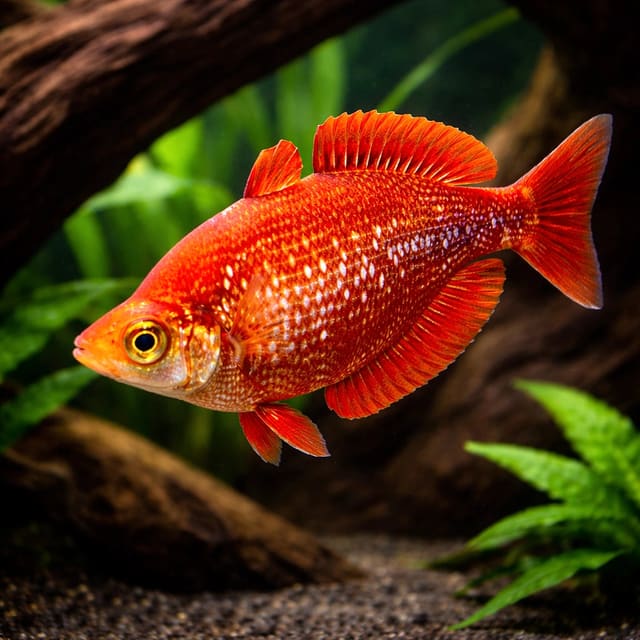
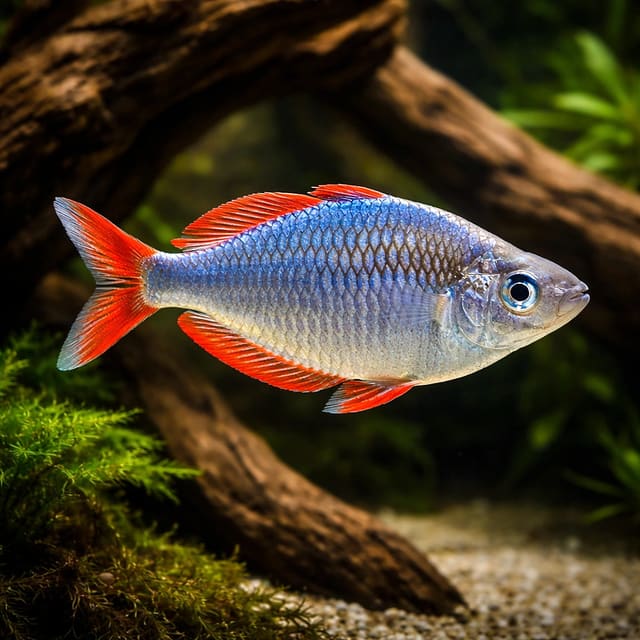
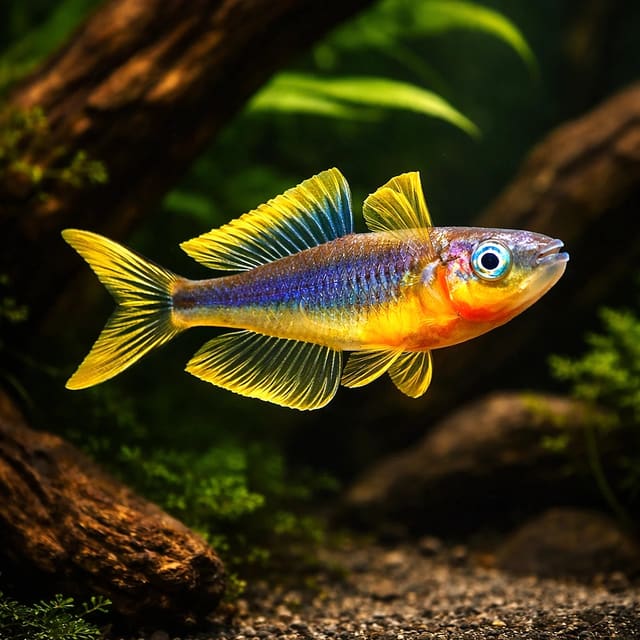
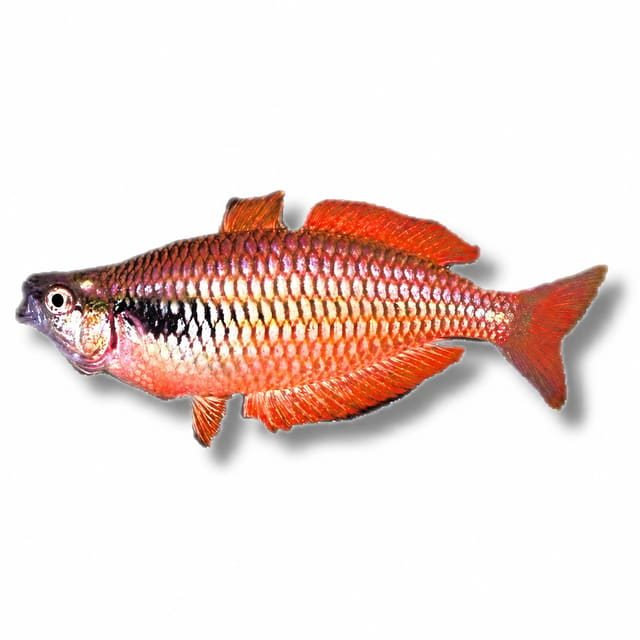
The appeal is simple: the Lake Tebera Rainbowfish is energetic without being troublesome, colourful without being delicate, and social without being demanding. In a properly planned lake tebera rainbowfish freshwater aquarium, a group of six or more creates constant movement in the middle levels of the tank. That makes them ideal for aquarists asking what tropical fish are best for beginners, or planning the best tropical fish combination for beginners in a peaceful display. See our detailed photos showing body shape, fin extension, and the reflective colours that make this a colourful lake tebera rainbowfish for aquarium centrepiece. If you want one of the best fish for beginners in a spacious community setup, this species offers beauty, resilience, and rewarding behaviour in equal measure.

🔹 Quick Facts

  • Scientific Name: Melanotaenia herbertaxelrodi
  • Care Level: Easy
  • Min Tank Size: 150 litres (about 33 gallons)
  • Temperature: 24-28°C (75-82°F)
  • pH Range: 7.0-8.0
  • Lifespan: Up to 8 years
  • Temperament: Peaceful
  • Diet: Omnivore

Classification

  • Order: Atheriniformes
  • Family: Melanotaeniidae
  • Genus: Melanotaenia

The Lake Tebera Rainbowfish belongs to the rainbowfish family, a group well known in the aquarium hobby for active schooling behaviour, metallic colours, and suitability for peaceful community tanks. Within the broader aquarium fish species guide, rainbowfish sit between small beginner fish like danios and more specialised oddballs, offering a great step up for keepers who want more colour and movement without the challenges of aggressive or delicate species.

Where Do Lake Tebera Rainbowfish Come From? Natural Habitat Explained

The Lake Tebera Rainbowfish fish comes from Lake Tebera in Papua New Guinea, a region known for clear tropical freshwater habitats. In the wild, these fish inhabit open water areas with submerged vegetation, fallen branches, and steady access to oxygen-rich water. Their native environment helps explain why how to care for lake tebera rainbowfish successfully starts with space, clean water, and a group setting. They are not a cramped nano species; they are open-water swimmers that thrive when given room to move.

Natural waters in this region are typically warm, mineral-rich, and slightly alkaline, which aligns closely with captive lake tebera rainbowfish pH requirements and preferred hardness. This is one reason they adapt well in the UK when aquarists provide stable, mature conditions rather than soft, acidic setups designed for blackwater fish. If you are reading a lake tebera rainbowfish care guide because you want a species that fits a bright, active community tank, their natural habitat tells you exactly why they do so well in planted but open aquascapes.

In the wild, rainbowfish feed opportunistically on small insects, tiny crustaceans, algae films, and drifting organic matter. That broad diet is why the lake tebera rainbowfish diet is straightforward in captivity. They are adaptable omnivores, and that flexibility is part of what makes them a lake tebera rainbowfish for beginners option. Unlike some endangered tropical fish species that require highly specialised conditions, this fish is practical, robust, and rewarding when kept correctly.

For hobbyists in Britain searching buy lake tebera rainbowfish UK, lake tebera rainbowfish for sale UK, or lake tebera rainbowfish shop UK, the main takeaway is this: recreate a warm, alkaline, spacious environment and the species settles quickly. It is also a strong candidate for a lake tebera rainbowfish for planted aquarium display, provided you leave enough open swimming space through the centre of the tank.

💡 Expert Tip

Mimicking the natural habitat of Lake Tebera Rainbowfish improves colour, feeding response, and social confidence. Use dense planting around the back and sides, but leave a long open lane in the middle of the aquarium so the group can school naturally.

How to Set Up the Perfect Tank for Lake Tebera Rainbowfish

A proper lake tebera rainbowfish tank setup starts with swimming room. The documented lake tebera rainbowfish minimum tank size is 150 litres, and that should be treated as the true starting point rather than an ideal. Because these fish are active, social, and should be kept in groups of at least six, the practical lake tebera rainbowfish tank size for best results is often 180 litres or more. This is one of the most important lake tebera rainbowfish tank requirements to understand. They are not hard to keep, but they do need space.

Tank Size Requirements

For a group of 6-8 fish, a 150-180 litre aquarium works well. Larger aquariums give better schooling behaviour and reduce tension among males during display sparring. Aquarists asking about the best fish for beginners small tank should note that this species is beginner-friendly, but not a nano fish. If your goal is a compact setup, species such as Red Parrot Platy may be a better fit. For a long, lively community display, however, Lake Tebera Rainbowfish is far more impressive.

Water Parameters

The ideal lake tebera rainbowfish water temperature range is 24-28°C, with a target lake tebera rainbowfish temperature of 25-26°C for mixed community tanks. The preferred pH sits between 7.0 and 8.0, matching the species' natural alkaline tendency. Their tropical fish requirements also include moderate to hard water, ideally around 10-20 dGH. Stability matters more than chasing exact numbers. Sudden swings in temperature or pH will stress them more than being slightly off the midpoint.

24-28°C
Temperature
7.0-8.0
pH
10-20 dGH
Hardness
150L+
Minimum Tank

Filtration

Use a reliable external or high-capacity internal filter that can turn the tank over around 5-8 times per hour. Rainbowfish appreciate clean, oxygen-rich water but do not need a torrent. Aim for steady circulation rather than harsh current. If you are planning a larger community with active swimmers, pair the tank with a quality external filter and a dependable heater sized for the full water volume. This helps maintain the stable lake tebera rainbowfish tank requirements needed for long-term success.

Substrate

A dark sand or fine gravel substrate is ideal. Darker bases improve contrast and make the yellow and blue tones appear stronger. The substrate itself is not critical for the fish, but it affects how secure they feel and how good they look. In a display aquarium, this small choice makes a noticeable difference.

Plants & Decor

The best lake tebera rainbowfish tank setup includes hardy plants around the edges and rear. Java fern, Vallisneria, Amazon swords, and floating plants all work well. These fish enjoy cover but should never be boxed into a dense jungle. Open swimming space is essential. Add wood or branch decor for structure, but keep the centre lane clear. If you are building a broader freshwater fish list for a peaceful display, this species mixes beautifully with planted layouts.

Lighting Requirements

The lake tebera rainbowfish lighting requirements are moderate rather than extreme. Around 7-9 hours of aquarium lighting per day is usually enough to support plants and show off the fish without causing excessive algae. Bright light from above can intensify body sheen, especially in mature males, but always provide shaded zones with plants. Too much light in a bare tank can make them skittish.

Quick Setup Checklist

  • Choose a tank of at least 150 litres, ideally longer rather than taller
  • Keep a group of 6 or more to reduce stress and improve schooling
  • Maintain 24-28°C with stable heating
  • Target pH 7.0-8.0 and moderate to hard water
  • Use strong biological filtration and weekly water changes
  • Plant the sides and back, leaving open midwater swimming space

💡 Pro Tip

Always cycle the aquarium for 4-6 weeks before adding rainbowfish. A mature filter is the easiest way to avoid ammonia spikes, and stable water quality is one of the biggest reasons beginners succeed with this species.

What Do Lake Tebera Rainbowfish Eat? Complete Feeding Guide

The lake tebera rainbowfish feeding guide is refreshingly simple. These fish are omnivores and accept quality flakes, micro pellets, frozen foods, and occasional live foods. In the wild, rainbowfish pick at insects, tiny invertebrates, and plant matter, so a varied menu is best. If you have ever searched what do danios eat, what do danios fish eat, or what do killifish eat, the answer is similar in principle: small, varied, protein-supported meals offered regularly.

Staple Foods

A high-quality tropical flake or small floating pellet should form the base of the lake tebera rainbowfish diet. Choose foods with fish meal, insect protein, spirulina, and added vitamins rather than filler-heavy formulas. Because these fish feed in the mid to upper water column, floating or slow-sinking foods are ideal.

Supplemental Foods

Supplement 3-4 times per week with frozen daphnia, bloodworm, brine shrimp, or mosquito larvae. This encourages colour, body condition, and breeding readiness. Hobbyists comparing species often ask what can danios eat, what danios eat, or what do killifish eat in the wild; in all cases, variety matters. Rainbowfish respond especially well to mixed protein and plant content.

Treats & Conditioning Foods

For conditioning adults before spawning, add live or frozen foods daily for 1-2 weeks. This mirrors the richer feeding periods used in killifish breeding setup planning and in species where keepers study killifish diet or danio margaritatus diet. The principle is the same: better nutrition supports egg production, stronger colours, and more active courtship.

Feeding Frequency & Portion Control

Feed adults twice daily in portions they can finish within 30-60 seconds. Juveniles can take 3 smaller meals per day. People often ask when to feed danios, what time danios eat, what day danios eat, when killifish eat, or even what day killifish eat; the truth is that most tropical community fish do best on a regular morning-and-evening routine rather than a specific day-based schedule.

Time Food Amount
Morning Quality tropical flake or micro pellet Small pinch, eaten in under 1 minute
Evening Frozen brine shrimp, daphnia, or mixed omnivore food Small portion, no leftovers
Small tropical community foods

Ideal for rainbowfish that feed actively in the upper and middle water layers and benefit from varied omnivore nutrition.

⚠️ Feeding Warning

Overfeeding causes ammonia spikes, cloudy water, and long-term health issues. Rainbowfish are eager eaters and will often beg for more, but extra food does not mean better health.

What Does Lake Tebera Rainbowfish Look Like? Colors, Patterns & Varieties

The Lake Tebera Rainbowfish tropical fish is valued for its sleek, laterally compressed body, fast swimming style, and reflective colour. Adults reach around 10 cm, making this a medium-sized rainbowfish with enough presence to stand out in a community aquarium without dominating it. The base colour often shows blue to silver along the flanks, overlaid with warm yellow or golden tones that intensify under good lighting.

When discussing lake tebera rainbowfish male vs female, males are usually deeper-bodied, more colourful, and show stronger fin extension. Females tend to be slimmer and slightly softer in colour. In a group, mature males display to one another by flaring fins and intensifying body sheen, which is one of the main reasons this species is such a rewarding display fish.

Compared with a black tetra tropical fish, cherry barb tropical fish, or green swordtail tropical fish, the Lake Tebera Rainbowfish looks more refined and reflective rather than boldly patterned. It also offers a different visual effect from a blue zanzibar killifish or small danios green fish species. If you are building a list of tropical fish with pictures, this species earns its place through motion and sheen as much as colour alone.

To enhance appearance, use a dark substrate, stable warm water, and a varied diet with carotenoid-rich foods. Our product image, best-tropical-fish-for-beginners.webp, shows the clean body line and metallic finish that make this fish so attractive in a mature planted aquarium.

What Fish Can Live With Lake Tebera Rainbowfish? Compatibility Guide

One of the biggest reasons this species ranks among the best tropical fish for beginners is compatibility. The lake tebera rainbowfish peaceful community fish temperament makes it suitable for many medium-sized tropical setups. If you are asking what tropical fish can be kept together, rainbowfish are often near the top of the answer because they are active, social, and rarely aggressive when kept in proper numbers.

The best lake tebera rainbowfish tank mates are peaceful fish that enjoy similar water parameters and can handle an active midwater species. Good companions include livebearers, other rainbowfish, larger tetras, peaceful barbs, and some calm bottom dwellers. In the UK hobby, this makes them a strong choice for a community tank fish UK layout or a bright colourful schooling fish UK display.

Ideal Tank Mates

Suitable companions include Red Parrot Platy for colour and easy care, peaceful tetras such as neon tetra tropical fish in larger groups, and other midwater community species sold through our tropical fish collection. Aquarists comparing guppy tropical fish options should note that guppies can work in some setups, but long-finned strains may be stressed by very active tankmates. Rainbowfish also pair well with many peaceful bottom fish, assuming the tank is large enough.

Species to Avoid

Avoid very aggressive fish, fin nippers, or species that prefer much softer and more acidic water. Questions like what tropical fish are aggressive matter here: many cichlids, territorial species, and boisterous fin-biters are poor choices. A siamese fighting fish aquarium is usually not the best match because male bettas often dislike fast, active midwater fish. Likewise, if you wonder can danios live with bettas, the same caution applies. Fast schooling fish can stress slow, long-finned species.

People also ask can danios live with angelfish. In larger tanks it can sometimes work, but the principle is useful here too: body shape, speed, and temperament matter more than labels. The lake tebera rainbowfish compatible fish list should focus on similarly peaceful, moderately active species.

Community Tank Stocking Examples

In a 150-litre aquarium, a sensible plan is 6 Lake Tebera Rainbowfish with a peaceful bottom group and one additional midwater species. In a 200-litre aquarium, you can build the best tropical fish combination with 8 rainbowfish, a group of platies, and a bottom-cleaning crew. For keepers planning best fish for 100 gallon tank communities, this species works brilliantly in larger mixed schools.

Species Compatible? Notes
Red Parrot Platy ✅ Yes Similar temperament, colourful, and suitable for alkaline community setups
Other peaceful community fish ✅ Yes Works well with medium active species chosen for similar water conditions
Male Betta ⚠️ Caution Fast schooling movement may stress long-finned solitary fish
Aggressive cichlids ❌ Avoid Territorial behaviour and mismatched temperament create chronic stress

If you use a community fish compatibility chart, treat the Lake Tebera Rainbowfish as a peaceful midwater schooling fish. Similar hobby questions such as are danios community fish, are danios schooling fish, are killifish community fish, are killifish schooling fish, are killifish aggressive, and are killifish peaceful all show why compatibility is never one-size-fits-all. Rainbowfish are among the easier answers: in the right group and tank size, they are dependable community residents.

💡 Compatibility Tip

Always quarantine new arrivals for 2-4 weeks before adding them to a community aquarium. This protects established fish from parasites and gives you time to confirm that new stock is feeding well and behaving normally.

How to Breed Lake Tebera Rainbowfish: Complete Breeding Guide

Lake tebera rainbowfish breeding is considered achievable for home aquarists and is one more reason the species appeals to experienced beginners. Like many rainbowfish, they are egg scatterers that spawn among fine plants or mops. If you have researched killifish how to breed, killifish breeding behavior, or danios breeding behaviour, you will recognise the broad pattern: condition adults well, provide spawning media, and remove eggs or adults to prevent predation.

Breeding Setup

A dedicated breeding aquarium of 60-90 litres works well, even though the main display should be much larger. Use mature sponge filtration, 25-27°C water, and fine-leaved plants or spawning mops. This differs from a typical killifish tank setup or killifish minimum tank size, but the principle of a calm, controlled breeding tank is similar. Keep one or two males with several females to spread attention and reduce stress.

Spawning Behaviour

Males intensify in colour and display by circling females and flaring fins. Spawning usually occurs in the morning, with adhesive eggs deposited over several days. Aquarists often ask when do danios breed, when danios lay eggs, or when danios start laying eggs; rainbowfish are similar in that good food, warm stable water, and regular water changes are strong triggers.

Egg Care & Hatching

Remove the spawning mop or adults after eggs are laid. Eggs hatch in roughly 7-12 days depending on temperature. If you have searched what do danios eggs look like or what do killifish eggs look like, rainbowfish eggs are likewise small, clear to amber, and adhesive. Good hygiene is essential because fungus can spread quickly through a clutch.

Fry Care & Growth

New fry need infusoria, liquid fry food, or very fine powdered food at first, followed by newly hatched brine shrimp. Growth is steady rather than explosive. Compared with species people mention when asking what tropical fish breed the most, rainbowfish are manageable rather than overwhelming, which many aquarists prefer.

Common Breeding Challenges

The most common issues are infertile eggs, fungus, and losses from poor first foods. Adults may also eat eggs if left together too long. As with killifish breeding or may killifish breeding projects, success comes from preparation and observation rather than luck. Questions such as what day danios have babies, what day killifish have babies, and when killifish have babies show that many beginners expect a fixed schedule, but real breeding depends on condition and environment.

Advanced Breeding Tip

Condition breeders for 10-14 days on small live and frozen foods, then move the spawning mop to a separate hatching container every morning. This simple rotation method greatly improves fry yield because adults never get repeated access to the eggs.

Lake Tebera Rainbowfish vs Similar Species: Which Should You Choose?

Choosing between peaceful community fish is easier when you compare size, behaviour, and long-term tank needs rather than just colour. The Lake Tebera Rainbowfish is ideal for aquarists who want a larger, more dynamic schooling fish than many entry-level species. If you are building an aquarium fish list with pictures and price, it helps to compare this fish with common alternatives rather than buying on impulse.

Feature Lake Tebera Rainbowfish Red Parrot Platy
Max Size 10 cm 5-6 cm
Care Level Easy Easy
Temperature 24-28°C 22-26°C
Price £27.10 Varies
Best For Larger peaceful schooling displays Smaller colourful livebearer communities

Choose the Lake Tebera Rainbowfish if you want a more active midwater show fish and have the room for a proper group. Choose a platy if you need a smaller species for a mixed beginner tank. Compared with zebrafish tropical fish and other danios, rainbowfish are larger, calmer in appearance, and better suited to spacious alkaline displays. If you have ever compared danios fish size, danios tank size, danios minimum tank size, or danios fish tank size, you will notice that rainbowfish need more room but reward you with stronger colour and a more substantial presence.

They also differ from many killifish. Searches like killifish tank size, killifish tank requirements, killifish requirements, and what can killifish live with often lead to species with more specialised care or shorter lifespans. Rainbowfish are generally simpler for community aquariums. For hobbyists wanting unique freshwater fish without the complications of very niche species, this is a smart middle ground.

Common Health Problems in Lake Tebera Rainbowfish & How to Prevent Them

Good lake tebera rainbowfish health starts with stable water, proper group size, and a varied diet. Healthy fish are alert, swim in the open, feed eagerly, and show clear eyes with intact fins. Males should display to one another without constant damage. If your fish hide all day, clamp fins, or lose colour, something in the environment needs attention.

Common Diseases & Symptoms

The most common lake tebera rainbowfish diseases are not unique to the species. Ich, fin rot, bacterial infections, and external parasites can all appear if water quality drops or new fish are introduced without quarantine. Many aquarists search for aquarium fish diseases pictures, freshwater fish diseases pictures, tropical fish diseases pictures, tropical fish diseases pictures pdf, or tropical fish parasites pictures when trying to diagnose problems. While pictures are useful, behaviour and water tests are just as important.

Treatment Options

Start with water testing, a large partial water change, and isolation of visibly sick fish if possible. Increase aeration during treatment. Use medications only after identifying the likely issue, and always follow dosing instructions carefully. Rainbowfish are hardy, but they still suffer when treatment is delayed or random medications are mixed together.

Prevention Tips

Prevention is easier than cure. Keep nitrate controlled through weekly maintenance, avoid overfeeding, quarantine all new fish, and maintain the correct lake tebera rainbowfish water temperature range. Avoid mixing them with incompatible species such as aggressive tropical fish cichlid species that cause constant stress. Stress weakens immunity faster than most beginners realise.

Quarantine Procedures

A separate bare-bottom quarantine tank with heater, sponge filter, and hiding places is ideal. Observe new arrivals for 2-4 weeks before adding them to the main display. This is especially important when buying mixed community species or comparing unfamiliar fish from broad search terms like freshwater fish species michigan or odd hobby comparisons such as killifish vs mummichog, where identification and care can vary widely.

⚠️ Health Warning

Never use copper-based medications in aquariums that contain shrimp or other sensitive invertebrates. Copper can be lethal even at low levels, and many beginners do not realise a general parasite treatment may not be safe for all tank residents.

Quarantine Protocol

  • Use a separate tank for 2-4 weeks
  • Match temperature and pH closely to the main aquarium
  • Observe appetite, swimming, breathing, and fin condition daily
  • Test ammonia and nitrite frequently in smaller quarantine tanks
  • Only move fish once they are feeding strongly and symptom-free

How Do Lake Tebera Rainbowfish Behave in the Aquarium?

The Lake Tebera Rainbowfish is an active, social midwater swimmer that behaves best in a group. This is not a shy solitary fish. Kept singly or in pairs, it often becomes nervous and washed out. Kept in a proper school of six or more, it becomes confident, colourful, and constantly visible.

Much like hobbyists ask are danios schooling fish, the answer here is also yes in practical terms: rainbowfish need companions of their own kind to show natural behaviour. Males perform short display bouts, especially in the morning, but serious aggression is rare in a spacious tank. This makes them a standout option for aquarists researching what tropical fish can be kept together in a peaceful larger setup.

They are most active during the day and respond strongly to feeding times. Provide current, oxygenation, and open swimming lanes to encourage natural movement. In a mature lake tebera rainbowfish tropical aquarium, their constant motion is one of the main reasons they are often described as some of the coolest freshwater aquarium fish for a lively home display.

Why Buy Lake Tebera Rainbowfish from Tropical Fish Co?

When customers search where to buy lake tebera rainbowfish UK, lake tebera rainbowfish buy online UK, or order lake tebera rainbowfish online UK, they usually want more than just a low price. They want healthy stock, accurate identification, and fish that settle quickly into UK home aquariums. That matters with rainbowfish because colour, body shape, and social behaviour all depend on receiving strong, well-started juveniles or adults.

Our Lake Tebera Rainbowfish are selected for active swimming, clean finnage, and good feeding response before dispatch. Because this species is often bought as a schooling group, we pay close attention to even sizing and condition so the fish establish naturally once introduced. Customers looking for live lake tebera rainbowfish for sale UK, rainbowfish for sale UK, or live rainbowfish delivery UK benefit from stock that has already been observed for appetite and stability before packing.

Each order is packed in insulated boxes, with heat packs in cold weather and professional fish-bagging methods designed to reduce stress in transit. If you are comparing aquarium fish price, aquarium fish price list, danios fish price, or even niche searches like japanese killifish for sale and danios fish for sale, remember that the cheapest fish is not always the best value. Healthy, properly conditioned rainbowfish settle faster, feed sooner, and show better colour.

We also include practical care support for acclimation, group size, and long-term maintenance. That is especially useful for hobbyists in the tropical fish for beginners uk market who want a species that looks impressive without requiring specialist care. If you have been comparing lake tebera rainbowfish price UK, cheap lake tebera rainbowfish UK, or browsing a broad aquarium fish list with pictures and price, this species stands out as a durable, eye-catching investment for a serious community tank.

Why Choose Tropical Fish Co for Lake Tebera Rainbowfish

  • Schooling groups are selected for even size and active feeding response
  • Fish are observed before dispatch so they arrive stronger and settle faster
  • Insulated UK shipping helps maintain stable temperature during transport

You Might Also Like

To build a balanced community around your rainbowfish, consider adding Red Parrot Platy for contrasting colour and easy compatibility in alkaline tropical setups. Browse our wider tropical fish collection if you are comparing peaceful schooling species for a larger display. If you are planning a full beginner-friendly stocking list, these links are a practical starting point for a best tropical fish combination for beginners aquarium.

Many keepers pair rainbowfish with peaceful livebearers, medium tetras, and calm bottom dwellers, then support them with strong filtration, stable heating, and varied omnivore foods. If you are assembling a freshwater fish list for a planted community, Lake Tebera Rainbowfish offers colour, movement, and reliability in one package.