Easy
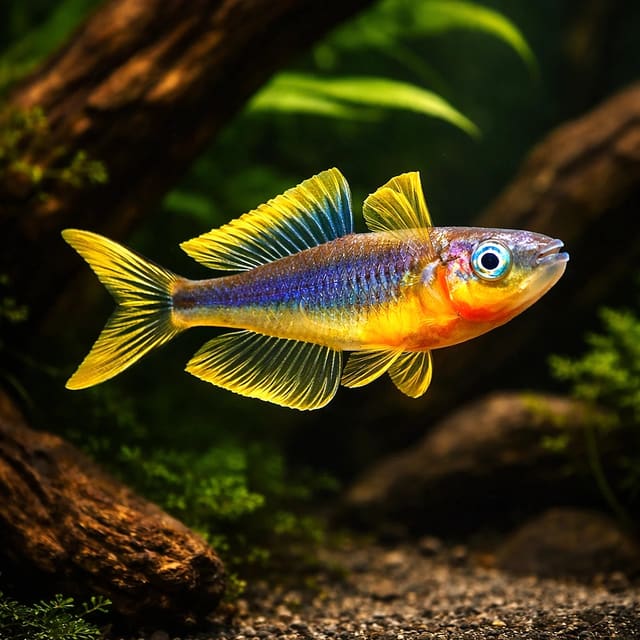
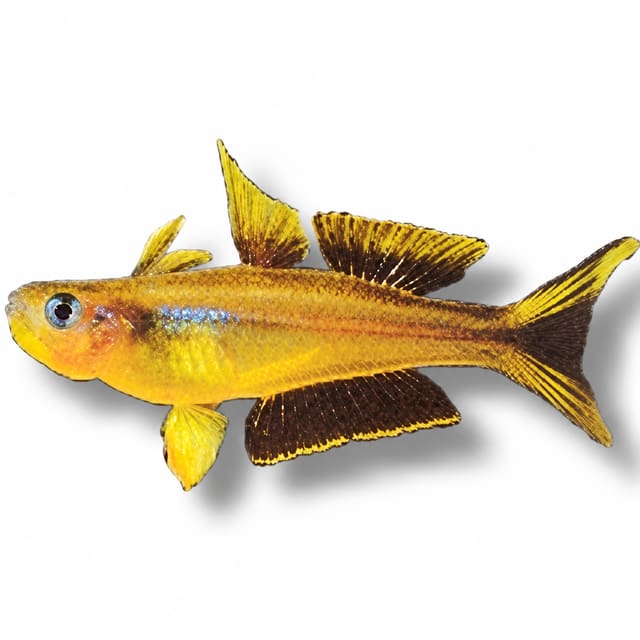
Neon Dwarf Rainbowfish (Melanotaenia praecox)
23–27°C · pH 6.8–7.5 · 54L
£5.99

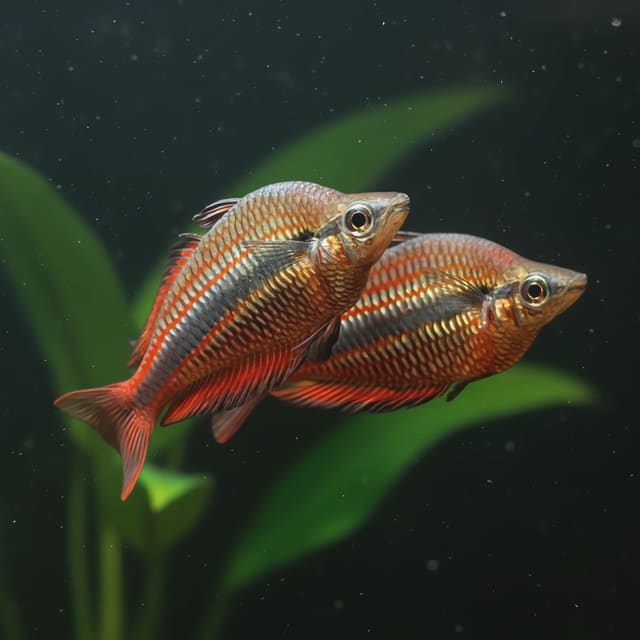
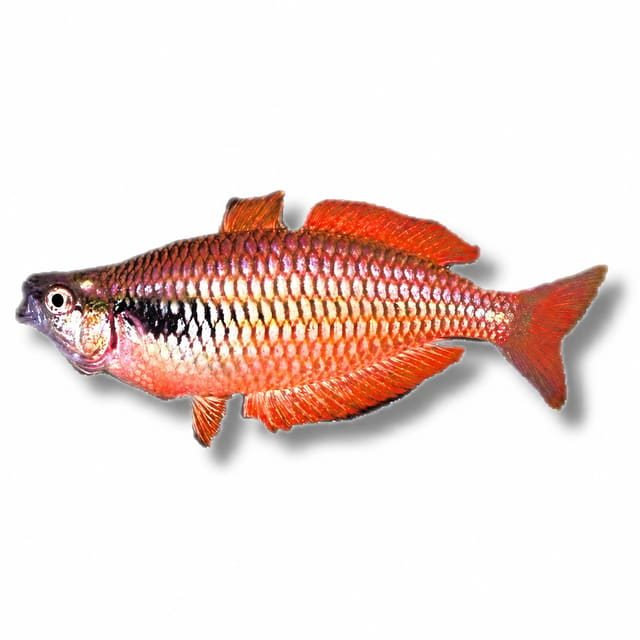
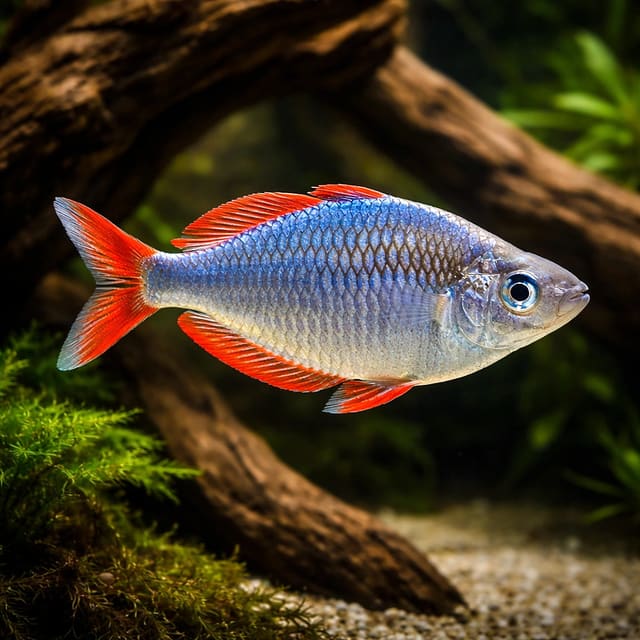
The New Guinea Red Rainbowfish (Glossolepis incisa) is an active rainbowfish from Lake Sentani that reaches 12 cm standard length. It suits a keeper prepared for 6–8 fish in a 120 × 30 cm-base aquarium at 22–25°C, pH 7.0–8.0 and 10–20 dGH, following Seriously Fish species guidance. Sold individually in sizes from 4.5–5.5 cm to 7–8 cm.
Adult size is the maximum length this species reaches at full maturity (scientific sources). The livestock you receive will be younger and smaller — pick a size above for the actual shipping size. Product-photo provenance and any image-specific limitations are stated on the listing.
Glossolepis incisa
Shoaling fish: kept in a group they feel safer, stay calmer and show their best colour.
The New Guinea Red Rainbowfish (Glossolepis incisa) is an active rainbowfish from Lake Sentani that reaches 12 cm standard length. It suits a keeper prepared for 6–8 fish in a 120 × 30 cm-base aquarium at 22–25°C, pH 7.0–8.0 and 10–20 dGH, following Seriously Fish species guidance. Sold individually in sizes from 4.5–5.5 cm to 7–8 cm.
Adult size is the maximum length this species reaches at full maturity (scientific sources). The livestock you receive will be younger and smaller — pick a size above for the actual shipping size. Product-photo provenance and any image-specific limitations are stated on the listing.
Maintain these water conditions for optimal health and vibrant colors
The New Guinea Red Rainbowfish (Glossolepis incisa) is a large, active freshwater rainbowfish from the family Melanotaeniidae. FishBase records it as endemic to Lake Sentani in Indonesian New Guinea, with a maximum of 12 cm standard length, and lists the wild population as Endangered. It suits a keeper prepared to maintain a proper shoal, a long open swimming lane and mineral-bearing water. Its rapid movement and relatively large adult body make it poorly suited to a cramped aquarium or a community built around very small, timid fish.
FishBase lists the scientific name as Glossolepis incisa. The older aquarium spelling Glossolepis incisus also appears in established husbandry writing, but both names refer here to the New Guinea Red Rainbowfish.
FishBase records a maximum of 12 cm standard length for male or unsexed fish. Standard length excludes the tail. Seriously Fish uses 15 cm standard length as its aquarium-planning reference, so allow for a substantial, deep-bodied adult rather than treating the dispatch size as the finished size. The 15 cm figure is a planning reference, not a guaranteed final measurement for every individual.
| Suits | Not suited to |
|---|---|
| A shoal of at least 6–8 fish | Solitary, pair or trio planning |
| A base of at least 120 × 30 cm | A cramped aquarium without open swimming space |
| 22–25°C and mineral-bearing water | Soft, acidic conditions |
| Peaceful companions able to live with rapid movement | Very small, timid or slow-moving fish |
Mature males develop the characteristic red colour and a higher back as they grow. Colour should be treated as adult biology rather than a promise about the appearance or sex of an individual animal selected for dispatch.
One purchase supplies one animal in the selected size. The live size selector shows 4.5–5.5 cm, 6–7 cm and 7–8 cm. Select the size there, then set the quantity to match the number of animals you intend to receive.
The size you select is the size supplied, not the adult size. For example, selecting six animals at 4.5–5.5 cm means planning immediately for six growing rainbowfish, not planning the aquarium around six fish that will remain close to 5 cm. Use the adult group, swimming footprint and filtration load for every setup decision.
Sex is guaranteed only when the selected option explicitly states male or female. This New Guinea Red Rainbowfish listing has no sex-guaranteed option.
Do not calculate a precise male-to-female ratio from size or colour. Mature male colour and body shape are useful biological characteristics, but they do not change the terms of this offer.
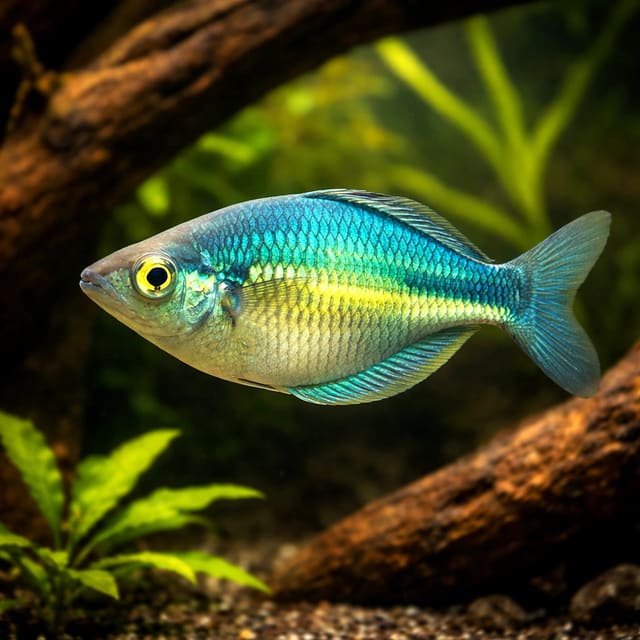
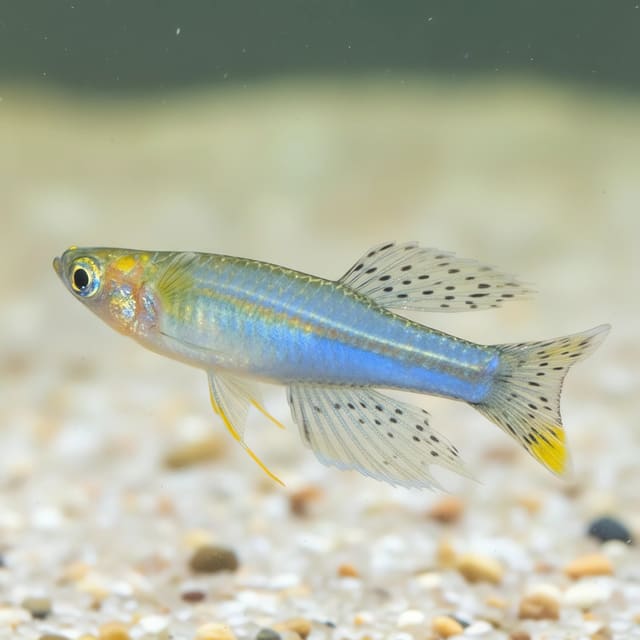
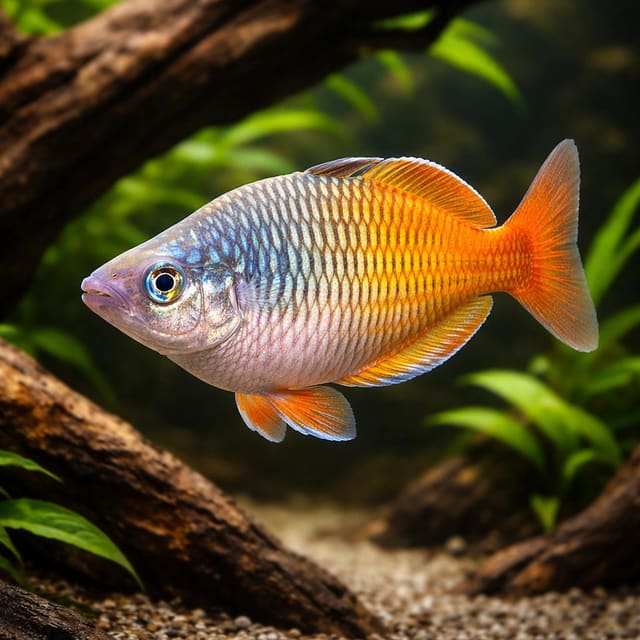
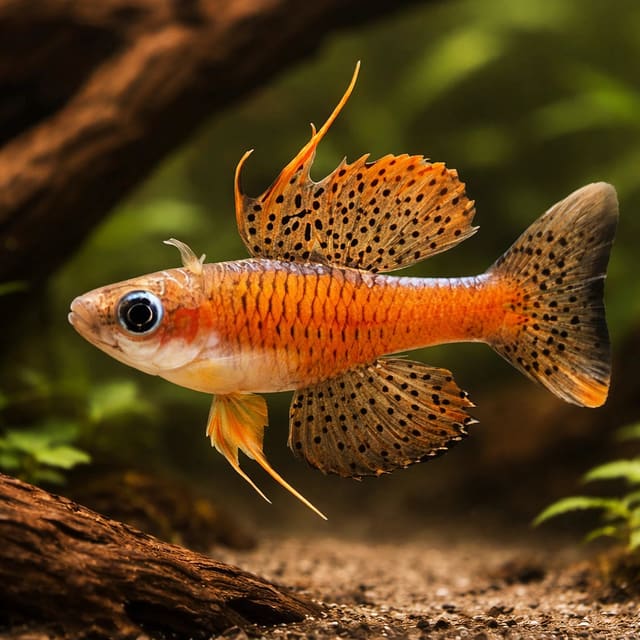
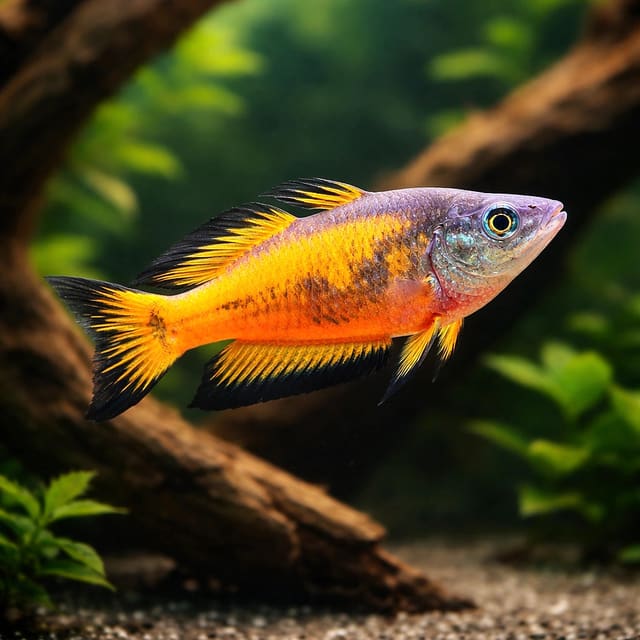
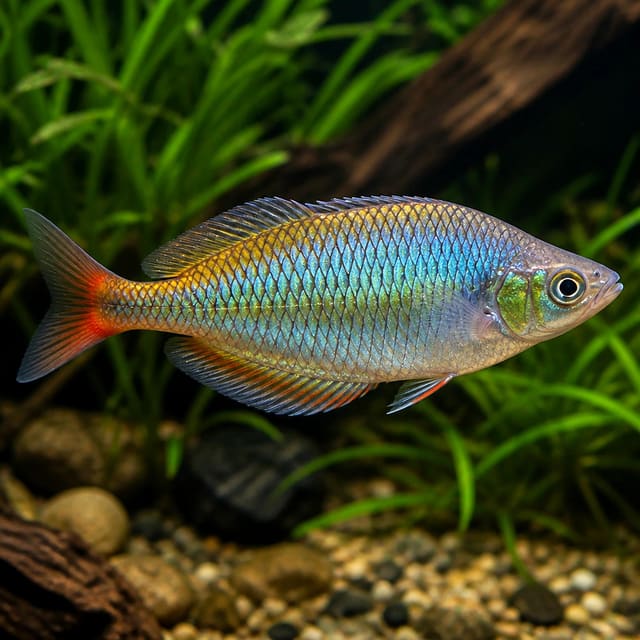
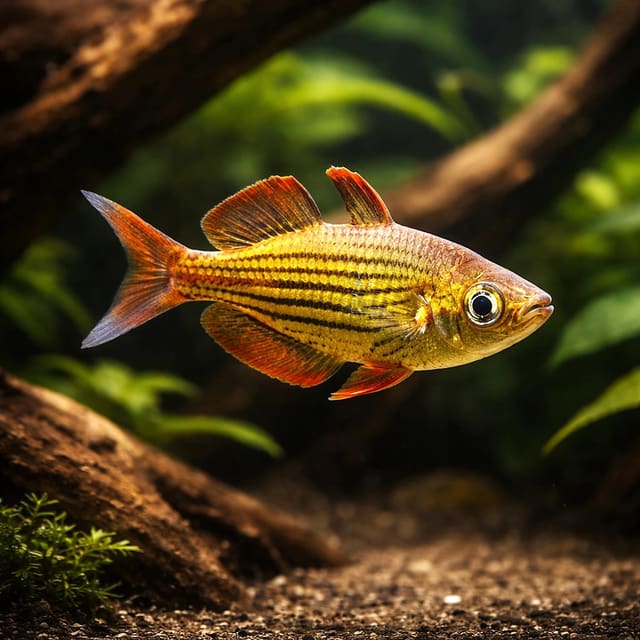
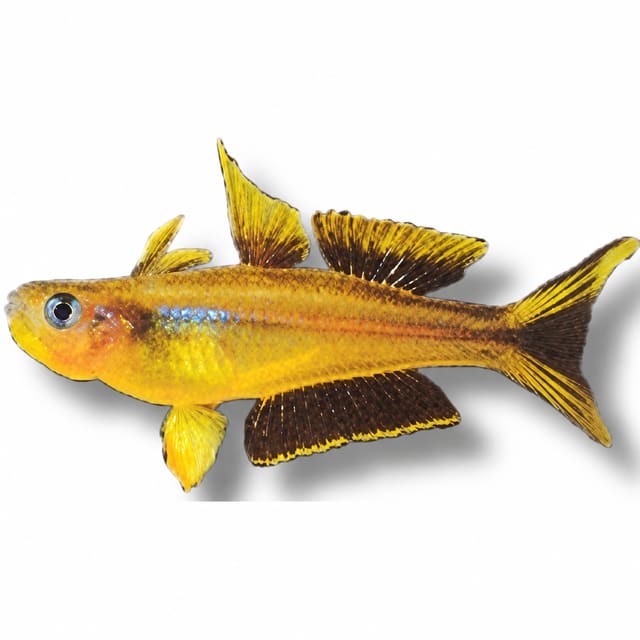
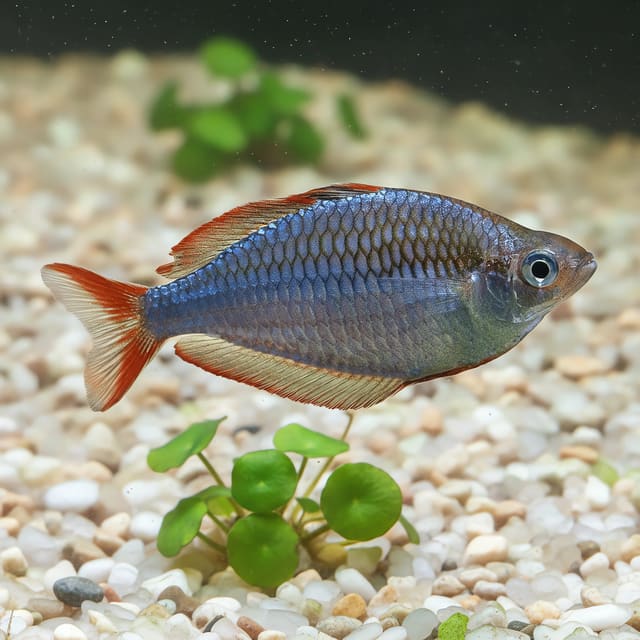
The gallery images are representative, based on reference photographs of this species, so colours can look slightly different from the live animal.
| Offer decision | What to plan |
|---|---|
| Purchase unit | One animal per purchase |
| Dispatch sizes | 4.5–5.5 cm, 6–7 cm or 7–8 cm |
| Adult group | At least 6–8 fish, preferably more |
| Species aquarium range | 22–25°C, pH 7.0–8.0, 10–20 dGH |
| Minimum base | 120 × 30 cm |
Choose the dispatch size only after confirming that the aquarium can support the full group. A larger starting size changes the fish received, but it does not reduce the need for a shoal, open water, mature biological filtration or compatible companions.
Seriously Fish recommends an aquarium at least 120 × 30 × 30 cm for this active swimmer, with a volume of roughly 108 litres. The 120 × 30 cm base is the decisive measurement because it establishes the length and turning width of the swimming lane.
OATA’s rainbowfish guidance uses at least 120 litres for larger rainbowfish over 8 cm. A practical aquarium should therefore provide the species footprint and at least 120 litres, with additional space when the group is larger or the aquarium contains other complete social groups.
This arrangement lets a skittish group move into cover while preserving the open space required by an active rainbowfish. Filling every part of the aquarium with dense décor would remove the main swimming area even if the nominal volume remained unchanged.
For the roughly 108-litre example, Seriously Fish recommends filtration turning over four to five times the aquarium volume each hour, equivalent to a filter rated around 430–540 litres per hour. It also gives a heater reference of roughly 75–100 W for holding 22–25°C when the room is around 20°C.
Those equipment figures belong to the 108-litre worked example. Choose equipment for the actual aquarium volume and room conditions when using a larger tank. Preserve gentle movement in the display while ensuring that water reaches the biological filter reliably.
Use 22–25°C, pH 7.0–8.0 and 10–20 dGH as the routine aquarium range. These species husbandry values from Seriously Fish are the appropriate targets for aquarium planning and are narrower than broad rainbowfish ranges.
| Measurement | Routine target |
|---|---|
| Temperature | 22–25°C |
| pH | 7.0–8.0 |
| General hardness | 10–20 dGH |
| Ammonia | 0 mg per litre |
| Nitrite | 0 mg per litre |
This rainbowfish does not do well in soft, acidic conditions. Test the aquarium and source water before selecting it, paying particular attention to hardness as well as pH. A pH reading alone cannot show whether the water contains the mineral content represented by 10–20 dGH.
An aquarium reading of 24°C, pH 7.5 and 12 dGH falls inside all three ranges. There is no need to force those values towards a single midpoint. Instead, keep the aquarium inside the stated boundaries and avoid abrupt movement between readings.
If a test gives 6.8 pH or 8 dGH, the water is outside the species aquarium range even though the difference may look small. Resolve the preparation method before introducing the shoal rather than relying on repeated sudden adjustments around the fish.
Our water chemistry guide explains temperature, pH, general hardness, ammonia, nitrite and nitrate. Enter measured values into the water matcher to compare the aquarium against the stated range.
FishBase also records warmer environmental temperatures and slightly different chemistry from the natural habitat. Treat those as natural-history values, while using the 22–25°C species aquarium range for routine care.
A mature biological filter is essential before the group is introduced. The RSPCA’s aquarium welfare guidance explains that fish release toxic ammonia, which filter bacteria convert first to toxic nitrite and then to safer nitrate. A filter must therefore be established, working and maintained rather than treated as simple water circulation.
If this is your first setup, follow our guide to preparing and maturing a tropical aquarium before arranging livestock. A newly filled tank is not mature merely because the heater and filter are running.
For routine water quality, OATA’s group guidance sets ammonia and nitrite at zero, nitrate at no more than 20 mg per litre above the normal tap-water level, and recommends testing at least weekly. It also strongly recommends a 25% partial water change at least once every week.
In a nominal 120-litre aquarium, 25% is 30 litres. Measure the removed volume rather than estimating from a small change in water level.
Do not rinse biological media under the tap because chlorine or chloramine may kill its established bacteria. When cleaning is needed, rinse the media lightly in aquarium water removed during the partial water change. The aim is to clear obstructing debris without stripping away the bacterial population responsible for processing waste.
Increase livestock numbers slowly. More fish and more food increase the waste load, and the filter’s bacterial population needs time to respond.
Keep New Guinea Red Rainbowfish in a shoal of at least 6–8 fish, preferably more. Seriously Fish describes the species as skittish and reports that it does much better in a proper shoal. OATA likewise explains that rainbowfish are social and will often become stressed when kept alone or in a group that is too small.
A pair or trio does not provide the recommended social setting. If the aquarium cannot house at least six adults with the full swimming footprint, filtration and water quality required by the group, choose a smaller species rather than reducing the number of New Guinea Red Rainbowfish.
| Group decision | Required response |
|---|---|
| 6–8 fish | Use the full species footprint and mature filtration |
| More than 8 | Increase aquarium space and filtration capacity |
| Community aquarium | Allow room for every species’ complete group |
| Single fish | Do not use solitary keeping as the plan |
Mature males may display stronger red colour when kept with their own kind. They also develop a higher back than females as they grow. These characteristics can emerge with maturity, but they should not be used to assign the sex of an animal from this offer.
Watch how the shoal uses the aquarium. Healthy social activity should leave every fish able to move through open water and reach its normal feeding opportunity. A fish that begins hiding more than usual, changes temperament or separates from its established pattern needs closer observation and an immediate water-quality check.
More fish can create a more visible shoal, but group size cannot be increased independently of aquarium capacity. A very large group requires a suitably larger aquarium, even when the starting fish are from a smaller dispatch size.
New Guinea Red Rainbowfish accepts most dried, frozen and live foods. Use a good-quality flake, granule or other suitable dried food as the regular base, then include appropriately sized frozen or live items for variety. Seriously Fish notes that regular frozen and live feeding can support the best colouration.
OATA’s rainbowfish feeding guidance recommends one feed each day, limited to what the fish can eat within a few minutes. That schedule gives a clear portion test and reduces the risk of uneaten food decomposing into toxic waste.
| Food role | Supported choices |
|---|---|
| Regular base | Good-quality flake or granule |
| Small live or frozen variety | Daphnia, small bloodworm or tubifex |
| Larger suitable item | Brine shrimp |
Choose food pieces the fish can take cleanly. The listed examples are options for variety rather than a requirement to provide every item in one meal.
Rapid feeding enthusiasm is normal for an active fish, but it is not a reason to continue adding food without limit. Consistent small portions protect water quality more effectively than occasional heavy feeds.
Complete the aquarium, establish the biological filter and confirm the species water range before the fish arrives. Test for 0 mg per litre ammonia, 0 mg per litre nitrite, 22–25°C, pH 7.0–8.0 and 10–20 dGH. Check that the group will enter an aquarium with the required swimming footprint and planted cover already in place.
Read the current delivery and Live Arrival Guarantee policy when planning receipt. It contains the delivery and claim details that apply to an order.
Acclimation begins with matching the animal to a suitable mature aquarium, not with trying to correct an unsuitable tank during introduction.
Observe the group at the same times each day. Note how rapidly they settle into open-water swimming, whether every fish joins the shoal and whether each animal shows interest at the daily feed. Clear eyes, undamaged fins, intact scales and appropriate swimming provide useful reference points for later comparisons.
Test water during the first week rather than waiting for the next routine date if the aquarium population has increased. OATA warns that stocking too quickly can exceed the bacterial population’s ability to process extra waste, leading to unhealthy ammonia or nitrite.
Keep the introduction measured: stable water, a working filter, a complete group and close observation give the fish a stronger start than repeated changes to food, décor or chemistry.
Learn the group’s normal pattern so that a change becomes obvious. Individual fish vary, but a marked departure in swimming, breathing, colour, temperament, appearance, body condition or feeding can be an early sign that attention is needed.
| Change to notice | First response |
|---|---|
| Hanging at the surface | Test water and check filter operation |
| Sitting on the bottom | Compare with normal behaviour and test water |
| Erratic swimming | Check ammonia, nitrite and aquarium conditions |
| Faster or slower gill movement | Test water promptly and observe the whole group |
| Darker or paler colour | Check for other behavioural or condition changes |
| White spots or fluffy growth | Separate observation from diagnosis and seek guidance |
| Reduced food intake | Check water, behaviour and body condition |
| Fin or scale loss | Inspect the aquarium and monitor companions |
When behaviour or appearance changes, test ammonia and nitrite first and compare temperature, pH and hardness with the normal aquarium readings. Confirm that the filter is running and unobstructed. These checks can identify an environmental problem that affects the whole group.
Do not respond to a single symptom by adding food or repeatedly changing chemistry. Record what changed, when it began and whether one fish or the whole shoal is affected. If you are concerned about livestock health, contact us after testing the water so the observed signs and measurements can be considered together.
At the end of the first month, compare the group with the baseline from its first week. Look for steady participation in the shoal, consistent daily feeding and stable body condition. Review the recorded water tests at the same time; a gradual rise in nitrate or recurring trace of ammonia points to a husbandry issue even before dramatic behaviour appears.
New Guinea Red Rainbowfish is described as very peaceful, but peaceful does not mean suitable for every community. Its rapid movement and relatively large adult size may disturb smaller or slow-moving fish even without predatory or aggressive behaviour.
Seriously Fish names similarly sized rainbowfish, characins, danios, barbs and catfish such as Corydoras as possible companions. Treat those as conditional examples, not automatic matches: each exact species must share the aquarium range and have enough room for its own adult size and social group.
| Screen | Required match |
|---|---|
| Water | 22–25°C, pH 7.0–8.0 and 10–20 dGH |
| Adult size | Not very small beside a large, fast rainbowfish |
| Activity | Able to live with rapid open-water movement |
| Space | Room for every species’ complete group |
Avoid very small fish. OATA advises against mixing larger rainbowfish with very small species because of the risk created by the size difference. Use extra caution with timid or slow-moving fish, which may be unsettled by constant fast movement or lose opportunities during community activity.
A similarly sized companion still fails the screen if it needs soft, acidic water or a temperature outside 22–25°C. Conversely, matching water does not rescue a combination in which a timid fish cannot settle around the rainbowfish shoal.
Browse the rainbowfish collection to compare identities and adult requirements, then assess each exact species rather than treating the family as interchangeable. If a proposed combination falls outside the examples here, contact us for a stocking and compatibility assessment with the aquarium dimensions, water readings and full livestock plan.
Compatibility is a whole-aquarium decision. A companion may match the water and temperament yet still make the plan unsuitable if the aquarium cannot hold both species at adult size in their proper social groups.
An aquarium measuring 120 × 30 cm at the base, running at 24°C, pH 7.5 and 12 dGH passes the basic footprint and water screens. Those measurements do not automatically establish capacity for six to eight rainbowfish plus another shoal and a catfish group. The total adult groups, open swimming area and filter load must still be assessed.
A companion described as peaceful but very small fails the size screen. A similarly sized fish that needs soft, acidic water fails the chemistry screen. A robust fish within the same water range may pass the initial screens, but it still needs sufficient adult space and an appropriate social group.
Species not named in the examples may still be suitable when all of these conditions align. Equally, a named characin, danio, barb, rainbowfish or catfish may be unsuitable when its exact water, size, activity or group needs conflict with the setup.
FishBase records a maximum of 12 cm standard length. Seriously Fish uses 15 cm standard length as an aquarium-planning reference, so allow space for a substantial, deep-bodied adult.
Use a mature filtered aquarium with a base of at least 120 × 30 cm. Seriously Fish gives roughly 108 litres for a 120 × 30 × 30 cm aquarium, while OATA recommends at least 120 litres for larger rainbowfish over 8 cm.
Keep at least 6–8 fish, preferably more. Seriously Fish describes this species as skittish and says it does much better in a proper shoal.
It suits a keeper who can provide 6–8 fish, a 120 × 30 cm-base mature aquarium, stable mineral-bearing water and weekly testing and maintenance. It is a poor choice where those group, space and water requirements cannot be met.
Feed good-quality flake or granules once daily, offering only what the fish eat within a few minutes. Add suitable frozen or live foods such as daphnia, small bloodworm, tubifex or brine shrimp for variety.
Keep it at 22–25°C and pH 7.0–8.0, with general hardness of 10–20 dGH, following Seriously Fish species guidance. Keep ammonia and nitrite at 0 mg per litre.
Seriously Fish describes it as very peaceful, but its rapid movement and relatively large size may disturb smaller or slow-moving fish. Screen companions for adult size, activity, water requirements and space.
Consider similarly sized rainbowfish, characins, danios, barbs and catfish such as Corydoras when their exact water, group and space needs match. Avoid very small fish and use caution with timid or slow-moving companions.
Be present to receive the parcel. Film every delivery continuously from the sealed parcel as it is opened, keeping the fish visible inside the sealed bag; then float the bag for 20–30 minutes before release and never pour the bag water into the aquarium.
No reviews for this item yet. Bought one? Honest reviews only, good or bad.
What customers say about ordering from us
I have a small group of long finned mountain minnows. So was delighted to be able to order ten of this variety to increase the genetics in my tank . The ones I recieved are healthy but it’s to early to give a verdict on wether they are of a long finned type since they are small currently.
Gordon Walker · 23 Sept 2026
100% success travel and "installation". Pleased with quality of purchase. The Siamese fighter a bit "shy" so have not yet seen him at his best yet but looking good. Happy customer. GG
George E Garratt · 21 Sept 2026
Reviews of our shop, collected by Judge.me, an independent third-party review collector. Newest first.