Lake Kurumoi Rainbowfish (Melanotaenia parva)
22–27°C · pH 6.5–8
£18.99

A peaceful, active Papua New Guinea rainbowfish for spacious planted community aquariums. Best kept in a shoal of six or more.
Adult size is the maximum length this species reaches at full maturity (scientific sources). The livestock you receive will be younger and smaller — pick a size above for the actual shipping size. Product-photo provenance and any image-specific limitations are stated on the listing.
Melanotaenia parkinsoni
Shoaling fish: kept in a group they feel safer, stay calmer and show their best colour.
Confirm your email, then we’ll send an availability message for this exact item if it returns within 180 days.
This request is only for this product—no newsletter or other promotions. A mail-provider retry may very rarely duplicate the same availability message. Unconfirmed addresses are removed after 48 hours. See our privacy policy.
A peaceful, active Papua New Guinea rainbowfish for spacious planted community aquariums. Best kept in a shoal of six or more.
Adult size is the maximum length this species reaches at full maturity (scientific sources). The livestock you receive will be younger and smaller — pick a size above for the actual shipping size. Product-photo provenance and any image-specific limitations are stated on the listing.
Maintain these water conditions for optimal health and vibrant colors
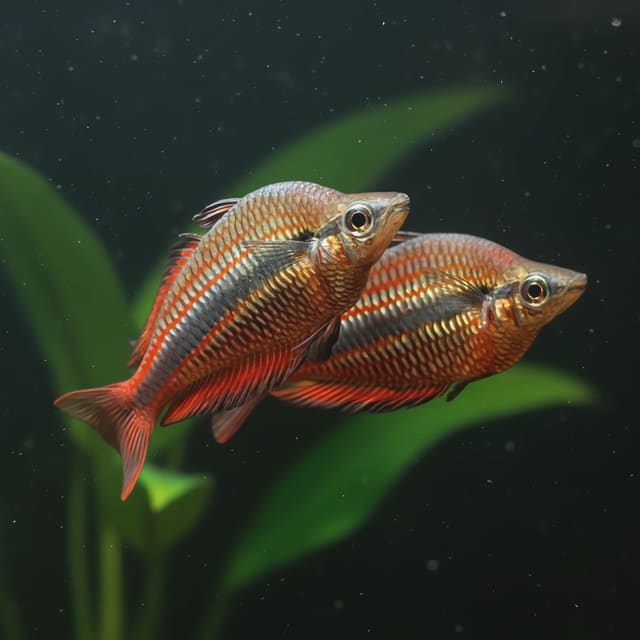
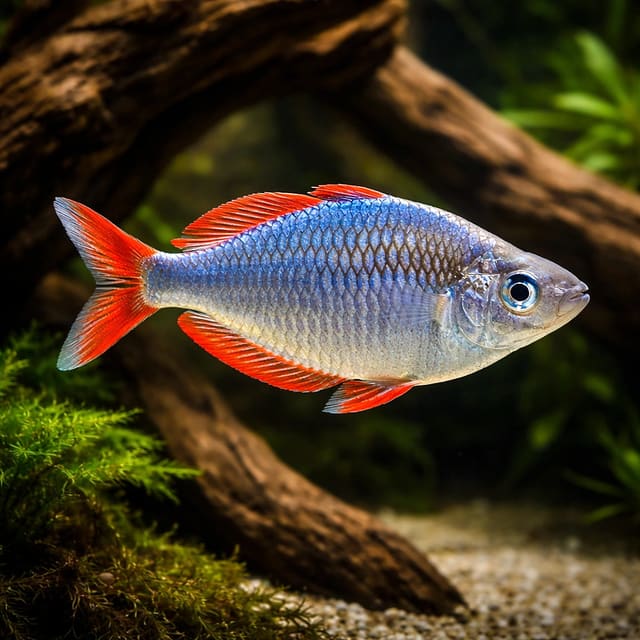
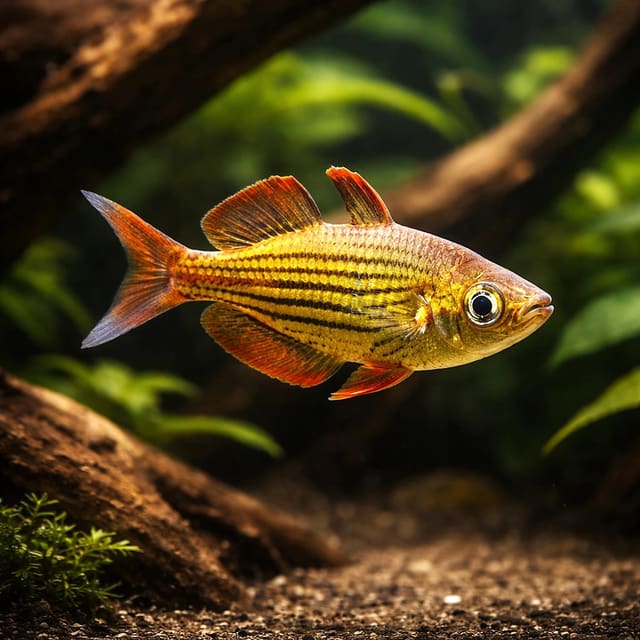
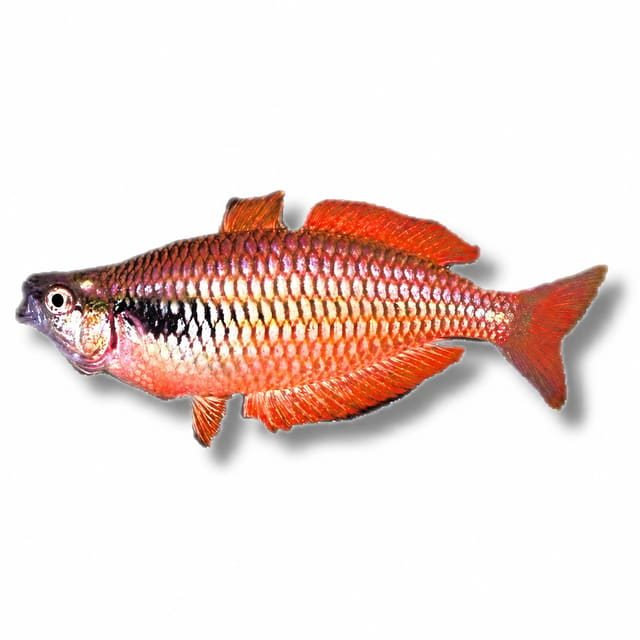
Parkinson's Rainbowfish (Melanotaenia parkinsoni) is a colourful, active rainbowfish from Papua New Guinea. It is also traded as Parkinsoni Rainbowfish or Orange Rainbowfish because mature males develop glowing orange to golden markings across the rear body and fins, contrasting with a blue-silver front half. This is a lively midwater species for aquarists who can provide space, clean water and a proper shoal.
Choose from the 4-5 cm and 5-7 cm size options shown on this page, checking availability before ordering. These are purchase sizes, not adult sizes.
| Scientific name | Melanotaenia parkinsoni |
|---|---|
| Common names | Parkinson's Rainbowfish, Parkinsoni Rainbowfish, Orange Rainbowfish |
| Sale size | 4-5 cm and 5-7 cm size options; check the selector for availability |
| Adult planning size | Plan for 11-15 cm depending on sex, age and measuring method |
| Group size | Keep six or more; larger groups show better colour and confidence |
| Water | Stable warm freshwater, around 24-28C for routine aquarium care, pH about 7.0-8.0 |
| Diet | Quality flakes, micro-pellets, granules and small frozen foods |
FishBase places Melanotaenia parkinsoni in the family Melanotaeniidae and records its natural range in Papua New Guinea between the Kemp Welsh River and Milne Bay. It is associated with lowland rainforest streams, while aquarium references describe seasonal habitats where streams may reduce to pools during the dry season. This background explains why the species is hardy once settled, but still needs excellent water quality and oxygen.
Give this fish a long, open aquarium with room to swim. A 150 litre aquarium is the practical starting point for a modest group, and a four-foot tank or larger is better for long-term adult behaviour. Use planting along the back and sides, open swimming space in the centre, a darker substrate if you want colours to stand out, and a secure lid because active rainbowfish can jump.
Filtration should be mature and reliable, with enough movement to keep oxygen high without turning the aquarium into a harsh torrent. Warmer water holds less oxygen, so surface movement and regular water changes are important. Keep ammonia and nitrite at zero, and avoid sudden swings in temperature or pH.
Parkinson's Rainbowfish are omnivores and usually feed confidently once settled. Use quality flake, micro-pellets or small granules as the everyday base, then add frozen daphnia, mosquito larvae, brine shrimp or bloodworm as variety. Vegetable-rich flakes and occasional duckweed grazing can also be useful, matching their natural habit of taking small foods from the water column and around plants.
Feed small portions that are eaten quickly. A varied diet, clean water and a settled shoal are the best way to bring out the orange colour in mature males.
This is a peaceful community fish, but it is fast, active and bold at feeding time. Choose companions that enjoy similar water and will not be stressed by constant midwater movement. Good options can include other suitably sized rainbowfish, peaceful barbs, larger tetras, danios, Corydoras that suit the same temperature range and calm dwarf cichlids in large enough aquariums.
Compare Lake Kurumoi Rainbowfish, Banded Rainbowfish and Neon Dwarf Rainbowfish when exploring related species. Check each species' adult size and temperature needs before planning a mixed display.
Mature males are deeper-bodied and much more colourful, often showing stronger orange markings and more extended fins. Females are generally slimmer and more silver-blue. As with many rainbowfish, breeding is possible in mature, stable aquariums, but a separate spawning setup gives better control. Use fine-leaved plants or spawning mops, condition adults with varied foods, then move eggs or mops away from adults if you want to raise fry.
Eggs and fry need clean water and very small first foods. Treat breeding as a planned project rather than something to leave unmanaged in a community tank.
Eligible live-fish orders are supported by our Live Arrival Guarantee when the policy conditions are followed. Read the delivery and live-arrival information before ordering, and have a cycled, covered aquarium ready for a shoal of active rainbowfish.
Acclimate slowly on arrival, keep lights low for the first few hours and avoid heavy feeding on day one. If you are unsure whether your tank is large enough or whether your water suits this species, ask before ordering so the fish has the best possible start.
No reviews for this item yet. Bought one? Honest reviews only, good or bad.
What customers say about ordering from us
I have a small group of long finned mountain minnows. So was delighted to be able to order ten of this variety to increase the genetics in my tank . The ones I recieved are healthy but it’s to early to give a verdict on wether they are of a long finned type since they are small currently.
Gordon Walker · 23 Sept 2026
100% success travel and "installation". Pleased with quality of purchase. The Siamese fighter a bit "shy" so have not yet seen him at his best yet but looking good. Happy customer. GG
George E Garratt · 21 Sept 2026
Reviews of our shop, collected by Judge.me, an independent third-party review collector. Newest first.