Easy
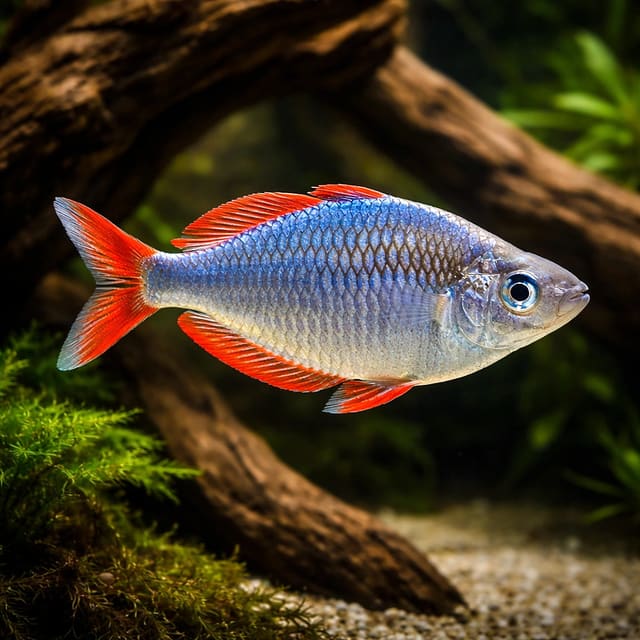
Neon Dwarf Rainbowfish (Melanotaenia praecox)
23–27°C · pH 6.8–7.5 · 54L
£5.99

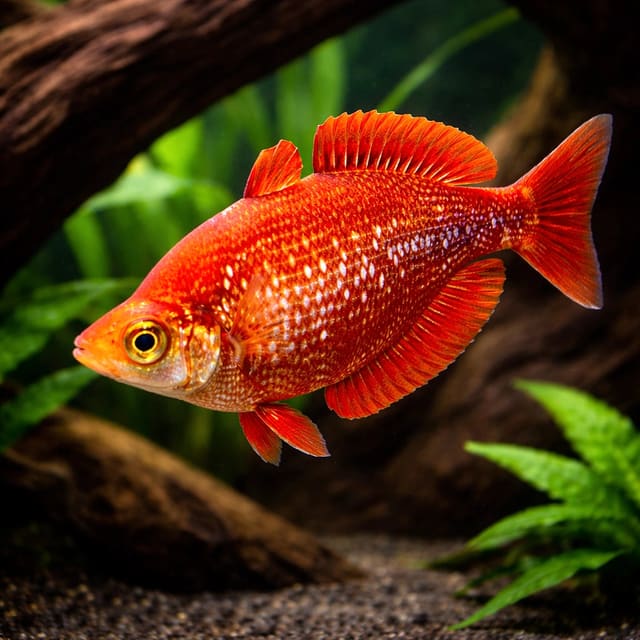
The Red Neon Blue-Eye (Pseudomugil sp. red neon) is a Pseudomugilidae fish from a genus endemic to Australia and New Guinea. OATA’s rainbowfish guidance supports a group of at least five at 22–27°C, pH 6.5–8.0 and 4–12°dH. Sold individually as one live fish.
Pseudomugil sp.
Shoaling fish: kept in a group they feel safer, stay calmer and show their best colour.
The Red Neon Blue-Eye (Pseudomugil sp. red neon) is a Pseudomugilidae fish from a genus endemic to Australia and New Guinea. OATA’s rainbowfish guidance supports a group of at least five at 22–27°C, pH 6.5–8.0 and 4–12°dH. Sold individually as one live fish.
Maintain these water conditions for optimal health and vibrant colors
The Red Neon Blue-Eye (Pseudomugil sp. red neon) is a freshwater fish in the family Pseudomugilidae. The accepted genus Pseudomugil is endemic to Australia and New Guinea, where its members occur in freshwater rivers and streams as well as bodies of brackish water. It suits a keeper prepared to maintain a mature biological filter, keep a social group of at least five and provide open swimming room alongside cover. WoRMS places Pseudomugil in Pseudomugilidae and the order Atheriniformes.
The abbreviation “sp.” means that the name stops at genus level rather than assigning one species. Do not borrow an adult length, narrow water target or fixed temperament from the profile of a named Pseudomugil species. Use the group ranges and practical safeguards below, then retain enough aquarium capacity to adapt the setup as the fish develops.
Wikipedia’s Pseudomugil summary gives the genus-level distribution and habitats described above. Those habitats explain why the name can cover fish associated with both fresh and brackish waters, while this offer is for a freshwater aquarium fish.
Plan around the complete social group rather than one small individual. A mature filter, zero ammonia, zero nitrite, stable water and gradual stocking are the foundations of the setup. Plants or suitable ornaments provide cover, while an unobstructed area preserves the swimming room described in the rainbowfish guidance.
One purchase supplies one animal.
The exact species has not been identified, so the care advice here follows the genus Pseudomugil and its care group.
If you want to compare this fish with other members of the wider group, browse our rainbowfish collection without assuming that different products share an adult size or identical care needs.
Sex is guaranteed only when the selected option explicitly states male or female. This Pseudomugil sp. red neon listing has no sex-guaranteed option.
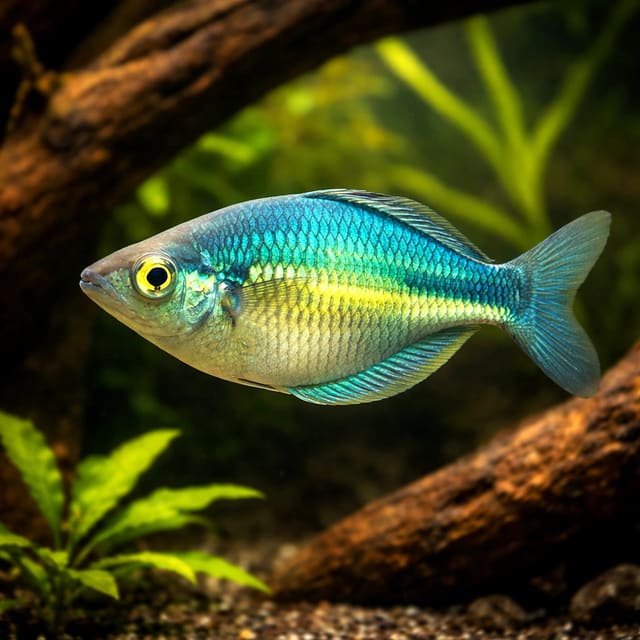
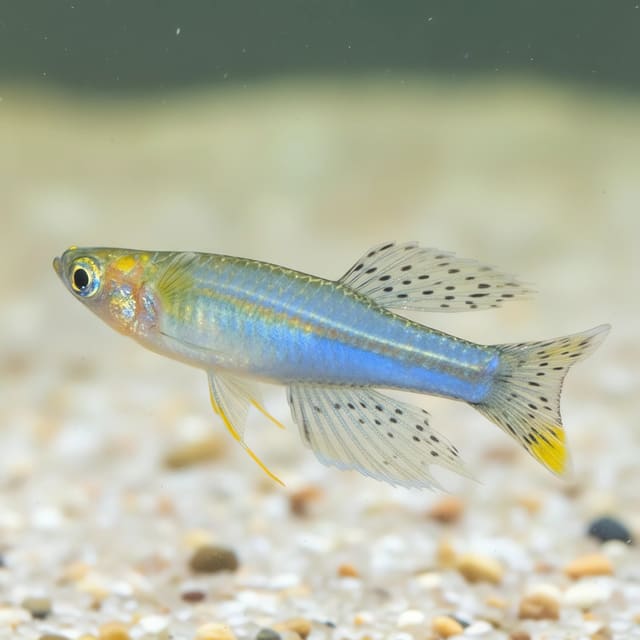
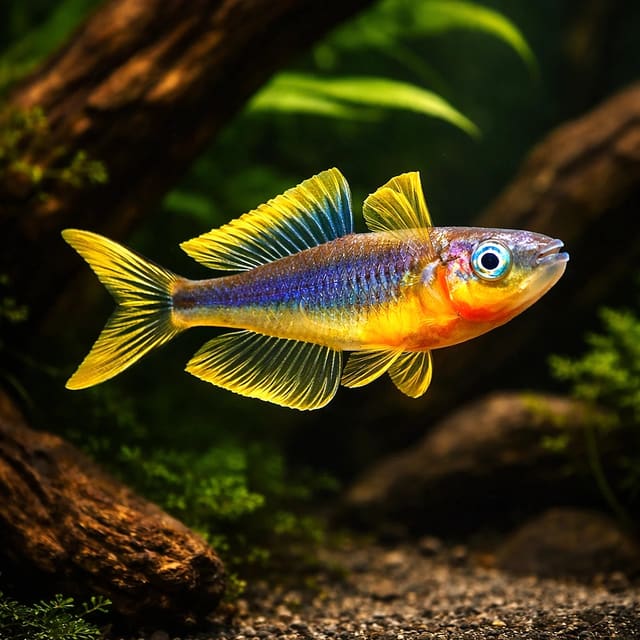
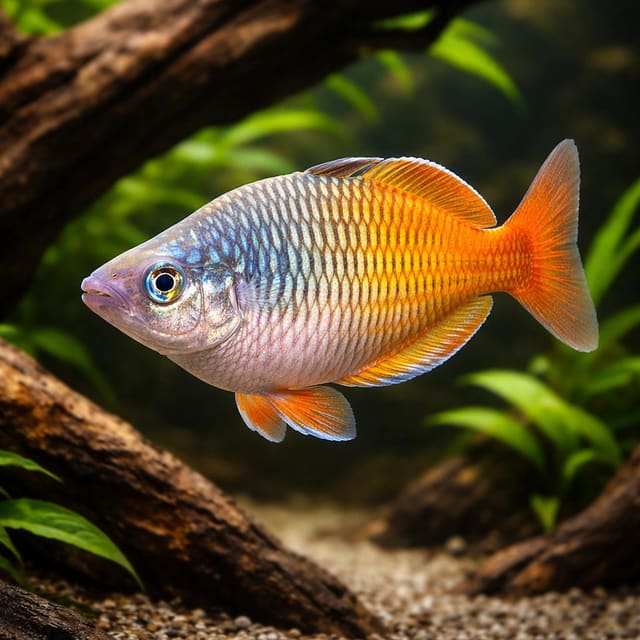
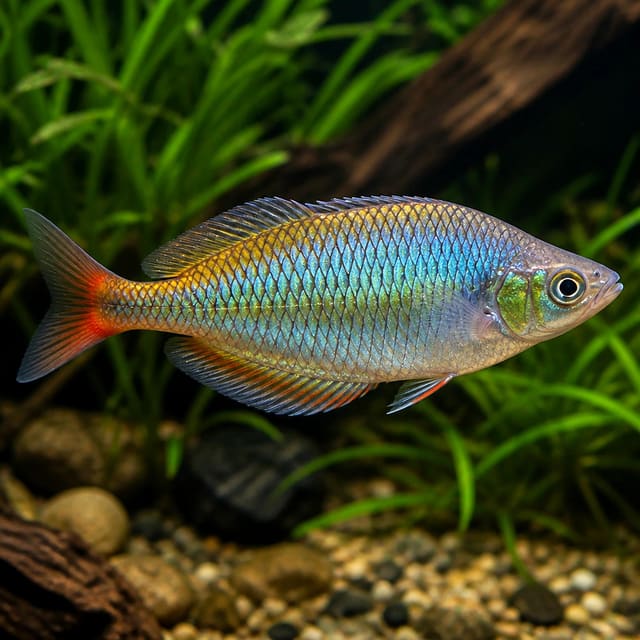
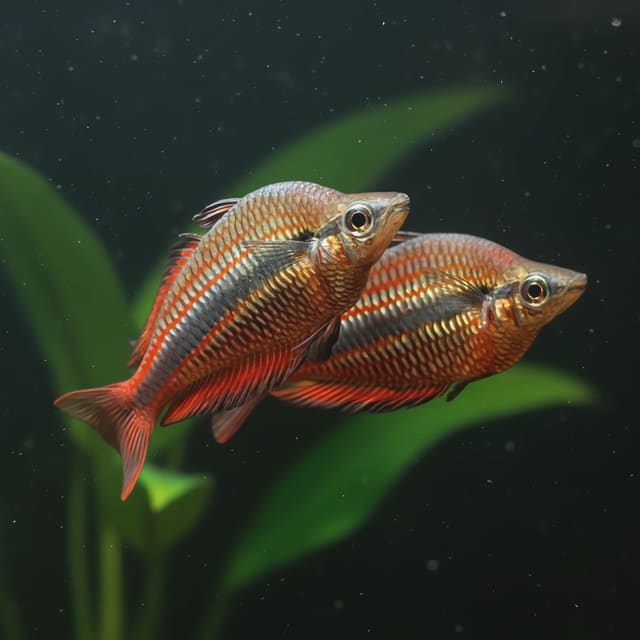
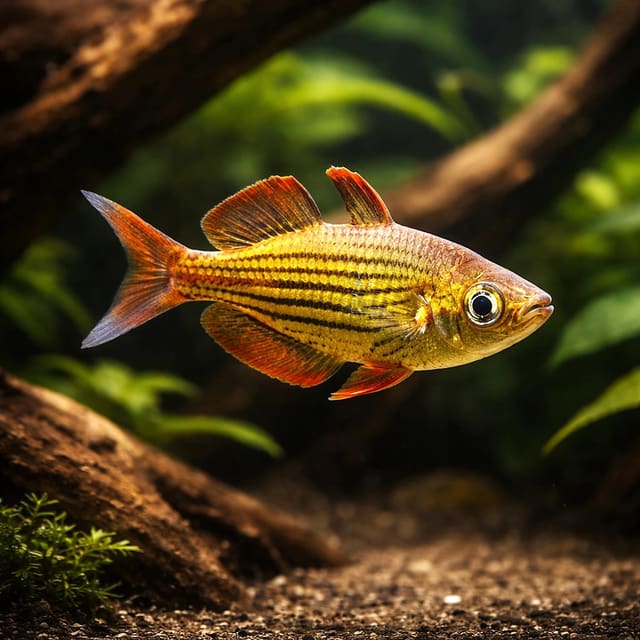
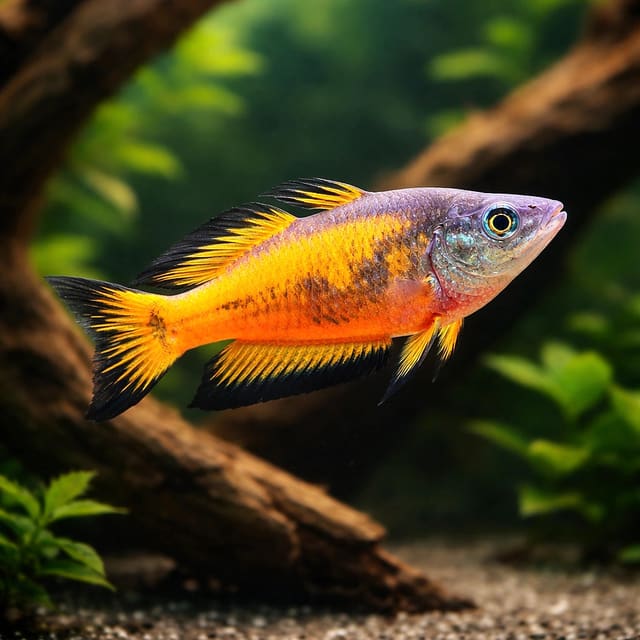
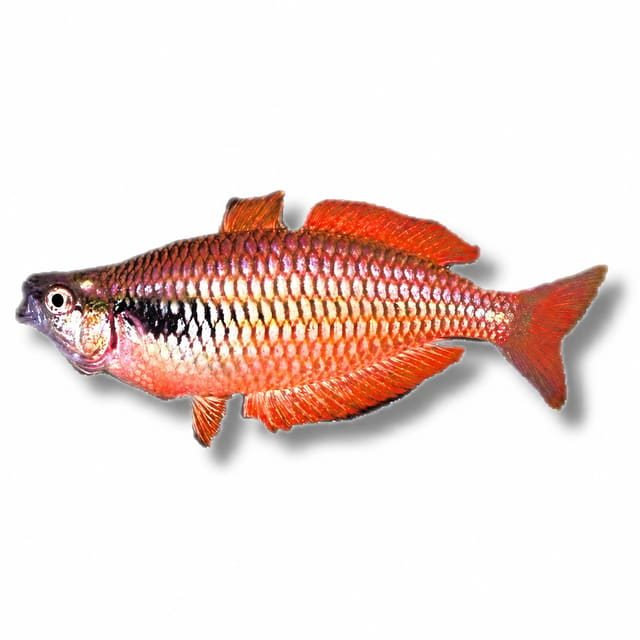
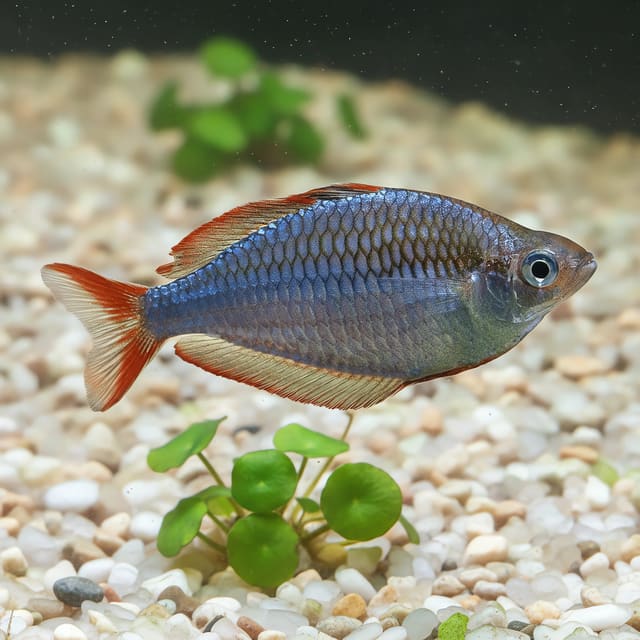
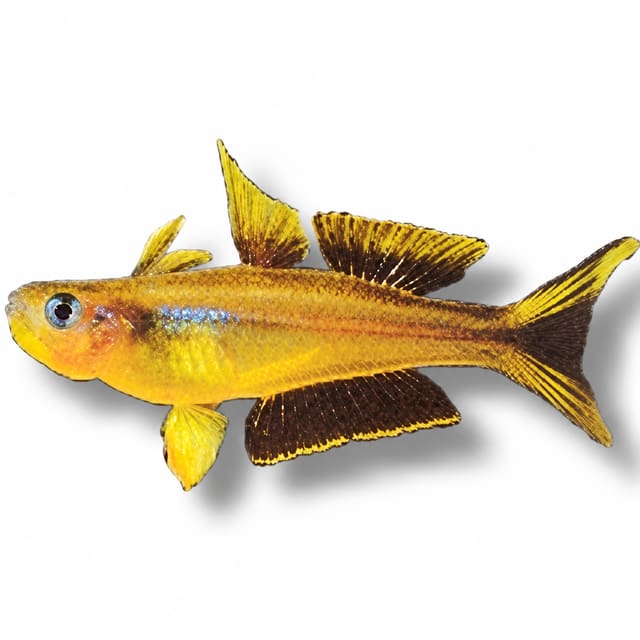
The gallery images are representative, based on reference photographs of this kind of animal, so colours can look slightly different from the live animal.
Make the purchase decision from the identity, group requirement and aquarium plan rather than treating colour, fin shape or apparent sex in a representative scene as a promise about the individual supplied.
OATA’s rainbowfish guidance gives 22–27°C, pH 6.5–8.0 and 4–12°dH as broad group values; use them as the working range rather than a species-specific optimum. It also gives carbonate hardness of 3–10°dKH, zero ammonia, zero nitrite and nitrate no more than 20 mg per litre above the normal tap-water level.
| Decision | Planning point |
|---|---|
| Social group | Keep at least five; more is better when aquarium capacity allows. |
| Space | Retain open swimming room alongside plants or other cover. |
| Filtration | Use a mature, well-maintained filter and add fish gradually. |
| Feeding | Feed once daily, offering only what is eaten within a few minutes. |
| Tank mates | Match adult size, activity, water needs and fin-nipping risk. |
| Suits | Not suited to |
|---|---|
| A mature, filtered aquarium planned for at least five fish | Solitary keeping or a group smaller than five |
| Open swimming room with plants or suitable ornaments for cover | An aquarium with inadequate swimming room for the full group |
| Stable water at 22–27°C and pH 6.5–8.0 | Tank mates whose water requirements do not align |
| Peaceful companions screened for activity and fin-nipping risk | Bullying or fin-nipping companions where elongated fins are present |
OATA uses at least 45 litres for a shoal of its smallest rainbowfish and at least 120 litres for species over 8 cm. Because this genus-level name carries no adult-size category, use at least 120 litres as the cautious planning benchmark. Aquarium dimensions, the intended group and existing occupants all affect the final decision.
Set the aquarium within 22–27°C, pH 6.5–8.0, general hardness 4–12°dH and carbonate hardness 3–10°dKH. These are practical rainbowfish-group targets for this genus-level offer. Stability within the range is more useful than repeatedly moving the water towards either end.
Keep ammonia at zero mg/l and nitrite at zero mg/l. Nitrate should not rise by more than 20 mg/l above the normal tap-water level. The tap-water comparison matters: test the source water as well as the aquarium so the nitrate result has a meaningful baseline.
| Test result | Action |
|---|---|
| Ammonia or nitrite detected | Pause further livestock additions, check filtration and carry out the required maintenance. |
| Nitrate more than 20 mg/l above tap water | Use the weekly partial water change to bring waste accumulation under control. |
| pH or hardness outside the range | Compare the measured aquarium and source water before changing the stocking plan. |
| Values inside the range | Continue regular testing and avoid unnecessary changes. |
Our water chemistry guide explains what the main readings mean. After measuring your aquarium, the water matcher helps compare those readings with the working range above.
For example, if the tap water measures 10 mg/l nitrate, the group limit places the aquarium ceiling at 30 mg/l because that is 20 mg/l above the baseline. If the aquarium then measures 35 mg/l, treat the result as above the guidance even though the number may appear moderate on its own. Record both readings and use the difference between them to guide maintenance.
A larger aquarium generally changes more slowly than a small one, which gives you more time to notice and correct a developing water-quality problem. Volume does not replace testing, filtration or maintenance, but it adds useful stability when a social group and other fish share the same system.
Begin with the social requirement: rainbowfish guidance says to keep a group of at least five, and more is better. A single fish or undersized group will often become stressed, so calculate space and filtration for the whole intended group rather than buying one fish and treating group planning as a later decision.
OATA’s planning benchmarks are at least 45 litres for a shoal of its smallest rainbowfish and at least 120 litres for larger species over 8 cm. Use at least 120 litres as the cautious group benchmark for this unidentified species, while leaving capacity for development and every existing occupant.
Judge a proposed aquarium by usable swimming length, open area, shelter, mature filtration and total stocking, not litres alone. A tall aquarium with little clear horizontal room may offer the same nominal volume as a longer aquarium while giving the group a different amount of swimming space.
Start with at least five Pseudomugil, then add every established occupant to the calculation. A nominally large aquarium may still be a poor choice when decoration removes most of the open area or the existing community already uses that space actively. Conversely, removing unnecessary obstructions can improve swimming room, but it does not increase filtered volume or justify exceeding the aquarium’s biological capacity.
Before combining the group with an established community, list every occupant’s expected adult size and activity. If that comparison leaves uncertainty, ask us for a stocking and compatibility assessment using the aquarium dimensions, test results, current fish and intended Pseudomugil group.
A working biological filter is essential. RSPCA aquarium welfare guidance explains that fish release toxic ammonia. Beneficial bacteria in a well-established filter convert ammonia into nitrite, which is also toxic, and then into the safer waste product nitrate.
Prepare and mature the filter before adding fish. Our first tropical aquarium guide sets out that preparation in a practical order. Do not judge readiness from clear-looking water alone; confirm that ammonia and nitrite both read zero.
Adding a full community too quickly can create new tank syndrome: the filter bacteria cannot process the increased waste, allowing ammonia or nitrite to rise. The same risk applies when a mature aquarium receives several new fish and feeding increases sharply. Test after stocking changes rather than assuming an established filter has unlimited capacity.
Test after the group is introduced and continue the regular weekly checks while the filter adjusts to the increased waste and feeding. A zero result for ammonia and nitrite supports the next observation period; a detectable result means the stocking plan pauses. Check for a blockage, review feeding and complete the necessary water maintenance before considering another addition.
Use zero ammonia and zero nitrite as decision thresholds. If either is detected, postpone further additions and focus on water quality, filter function and partial water changes. Resume the stocking plan only when the aquarium is stable again.
Filtration and swimming space solve different problems. The filter processes waste, while the aquarium’s dimensions determine how much usable room and shelter the group receives. A powerful filter cannot compensate for an unsuitable social or spatial plan.
Use the OATA rainbowfish diet as group guidance for this unidentified Pseudomugil. Rainbowfish are described as omnivorous and should receive a good-quality flake or granule in the home aquarium. Choose food that the fish can take readily rather than leaving pieces that go uneaten.
Offer only the amount the group can eat within a few minutes, once a day. This time limit is the main portion-control tool. A larger handful is not more nutritious if food remains in the aquarium and breaks down into toxic waste.
Watch the entire feeding response for those few minutes. Normal interest lets you see that food is being taken, while reduced intake or a lack of interest can be an early health warning. Also notice whether activity or the presence of tank mates prevents part of the group from feeding effectively.
If food is still visible after a few minutes, make the next daily portion smaller. When every item disappears immediately, continue observing rather than automatically adding more; the instruction remains one controlled daily feed. If one fish consistently misses food while others feed, examine social pressure and access instead of increasing the total amount for the whole aquarium.
Overfeeding affects more than body condition. Uneaten food decomposes, adds to the filter’s workload and can contribute to unhealthy ammonia or nitrite. If waste begins to accumulate, reduce the amount at the next daily feed and check the water rather than adding another food in an attempt to encourage appetite.
Keep the routine consistent enough that changes are easy to recognise. A fish that suddenly stops feeding, loses condition or behaves differently needs a water-quality check alongside the wider health observations described below.
Carry out a 25% partial water change at least once a week. Use a siphon to remove solid waste from the gravel or sand, and treat all replacement tap water with conditioner to remove harmful chlorine or chloramine before adding it to the aquarium.
Test the water at least weekly. Record ammonia, nitrite and nitrate, then compare the result with the previous test and the normal tap-water nitrate level. A written sequence makes gradual deterioration easier to recognise than isolated readings.
| Weekly task | Purpose |
|---|---|
| Test ammonia and nitrite | Both should remain at zero mg/l. |
| Compare nitrate | Keep it within 20 mg/l above normal tap water. |
| Change 25% of the water | Dilute accumulated waste and refresh the aquarium. |
| Siphon solid waste | Remove debris held around the substrate. |
| Check the filter | Find blockages before flow and biological performance suffer. |
| Observe every fish | Notice changes in swimming, colour, breathing, condition or appetite. |
Filter media does not need tap-water washing. When it requires cleaning, rinse it lightly in the old aquarium water removed during the water change. This preserves more of the beneficial bacterial population than exposure to chlorinated or chloraminated tap water.
Keep the same testing method, tap-water comparison and maintenance day through the first month. A sequence of zero ammonia and zero nitrite readings is more useful than one isolated result because it shows how the aquarium responds between water changes. Rising nitrate, accumulating debris or reduced filter flow identifies the part of the routine that needs attention before another stocking change.
Maintenance should respond to results without becoming erratic. A routine 25% change is the baseline; any detected ammonia, nitrite or excessive nitrate is a reason to review stocking pace, feeding, waste removal and filter condition together.
Finish by confirming that cover remains secure in position, open swimming room has not become obstructed and the filter is operating normally. These checks link the physical setup with the water-quality routine rather than treating maintenance as water replacement alone.
Arrange for someone to receive the live-fish parcel so it is not left unattended. Follow the tracking details associated with the order, then use the current delivery and Live Arrival Guarantee policy when the parcel reaches you.
Individual fish naturally vary, so compare behaviour and appearance over time. Warning changes include hanging at the surface, sitting on the bottom, erratic swimming, unusual hiding, altered aggression, darker or paler colour, or gill covers moving faster or slower than normal.
Look closely for white spots, fluffy growths, missing fins or scales, ulcers, bumps, and an increase or decrease in body condition. Reduced food intake or a complete lack of interest in food also deserves attention.
If any of these changes appear, test water quality first because ammonia, nitrite, nitrate and filter performance directly affect fish health. Check recent feeding, maintenance and stocking changes at the same time. Contact us for further guidance about a health change after recording the test results and what you have observed.
Each day, compare swimming, breathing, colour and feeding with the previous observation. Keep the daily ration within the few-minute limit and note whether every fish reaches food. At the weekly checkpoint, test the water, complete the 25% partial change and inspect the filter for blockages before deciding whether the aquarium is ready for any further livestock.
During the first week, keep to the established feeding and weekly testing plan while watching the whole group. Avoid adding more livestock until the aquarium remains stable and the new fish are behaving and feeding consistently.
Choose companions by comparing water requirements, expected adult size, activity and feeding behaviour. A shared “community fish” label is not enough: two fish may both be generally easy-going yet make a poor match if one is much more active, occupies the available swimming room or prevents the other from feeding.
OATA notes that some rainbowfish, including threadfin types, need peaceful tank mates that will not nip elongated fins or bully them. It also says active rainbowfish should not be mixed with timid fish or animals much smaller than themselves. Larger rainbowfish are best kept apart from very small fish, even though the group is described as seldom predatory or aggressive towards other species.
| Screen | Decision rule |
|---|---|
| Water | Use companions whose routine ranges overlap 22–27°C, pH 6.5–8.0 and 4–12°dH. |
| Activity | Avoid mixing a highly active fish with a timid one. |
| Fins | For fish with elongated fins, avoid fin-nipping or bullying companions. |
| Very small fish | Avoid mixing them with a rainbowfish that develops into a larger species. |
| Space | Assess the complete group and every current occupant, not one new fish in isolation. |
First compare the companion’s routine water range with 22–27°C, pH 6.5–8.0 and 4–12°dH. Next compare expected adult scale. Then check whether either fish is notably timid, highly active, inclined to bully or likely to nip elongated fins. Finally, confirm that the aquarium retains open room and filtered capacity for at least five Pseudomugil plus every existing occupant.
A match fails when one decisive condition conflicts, even if the other checks appear suitable. Shared water values do not cancel a bullying risk, and peaceful behaviour does not correct a water mismatch. This ordered screen prevents one reassuring label from hiding a practical conflict.
The genus-level name leaves genuine variation within Pseudomugil, so use this screening method instead of a universal tank-mate list. A proposed companion is suitable only when all of the relevant conditions align.
Introduce additions slowly after confirming zero ammonia and nitrite. This protects both compatibility observation and biological filtration: a gradual change makes it easier to recognise whether altered behaviour follows the new social combination or a water-quality problem.
Plan for at least five fish because rainbowfish are shoaling fish and small groups or solitary individuals will often become stressed. More is better when the aquarium has enough filtered volume and open swimming room for the enlarged group.
OATA generally prefers more female rainbowfish than males because males may fight. For this offer, build the aquarium plan around group size and behaviour rather than a precise sex ratio. Do not identify or select sex from colour, fins, body size or a gallery scene.
If one fish is repeatedly displaced or cannot feed within the daily few-minute feeding window, treat that as a compatibility warning rather than simply increasing the ration. More food can create waste while leaving the social problem unchanged.
Use plants or suitable ornaments to provide shelter while retaining open swimming space. Cover and open room are complementary: shelter gives a shy fish somewhere to withdraw, while clear space allows the group to move without every route passing through a confined area.
A successful plan therefore combines a proper group, compatible activity levels, usable swimming space, stable water and gradual stocking. No single tank-mate name can replace those checks.
Treat its eventual size as a planning variable because the name identifies a genus rather than one species. Use OATA’s larger-rainbowfish space category and monitor development rather than treating the size at arrival as the adult length.
Use at least 120 litres as the cautious OATA group benchmark, with mature filtration, open swimming room and plants or suitable ornaments for cover. The final aquarium must accommodate at least five fish and every existing occupant.
OATA’s rainbowfish guidance says to keep a group of at least five because solitary fish or undersized groups will often become stressed. More is better when the aquarium has enough filtered capacity and swimming room.
OATA describes rainbowfish generally as easy to keep, but this fish suits a prepared keeper who can mature the filter, maintain zero ammonia and nitrite, test weekly and plan for a group of at least five.
OATA’s rainbowfish guidance recommends good-quality flake or granule once daily, limited to what the fish eat within a few minutes. Small live or frozen daphnia, small bloodworm or tubifex can add variety.
OATA’s rainbowfish-group guidance gives 22–27°C, pH 6.5–8.0, general hardness 4–12°dH and carbonate hardness 3–10°dKH. Keep ammonia and nitrite at zero and nitrate no more than 20 mg/l above normal tap water.
OATA describes rainbowfish as seldom predatory or aggressive towards other species, but activity and fin behaviour still need screening. Avoid bullying or fin-nipping companions where elongated fins are present, and avoid mixing highly active fish with timid fish.
Choose peaceful fish whose water requirements, adult size and activity align with the group. Avoid fin-nipping or bullying companions where elongated fins are present, and avoid mixing a rainbowfish that develops into a larger species with very small fish.
Someone must be present to receive the parcel. Film every delivery continuously from the sealed parcel as it is opened, showing the fish still in the sealed bag; then float the bag for 20–30 minutes and release the fish without pouring the bag water into the aquarium.
No reviews for this item yet. Bought one? Honest reviews only, good or bad.
What customers say about ordering from us
I have a small group of long finned mountain minnows. So was delighted to be able to order ten of this variety to increase the genetics in my tank . The ones I recieved are healthy but it’s to early to give a verdict on wether they are of a long finned type since they are small currently.
Gordon Walker · 23 Sept 2026
100% success travel and "installation". Pleased with quality of purchase. The Siamese fighter a bit "shy" so have not yet seen him at his best yet but looking good. Happy customer. GG
George E Garratt · 21 Sept 2026
Reviews of our shop, collected by Judge.me, an independent third-party review collector. Newest first.