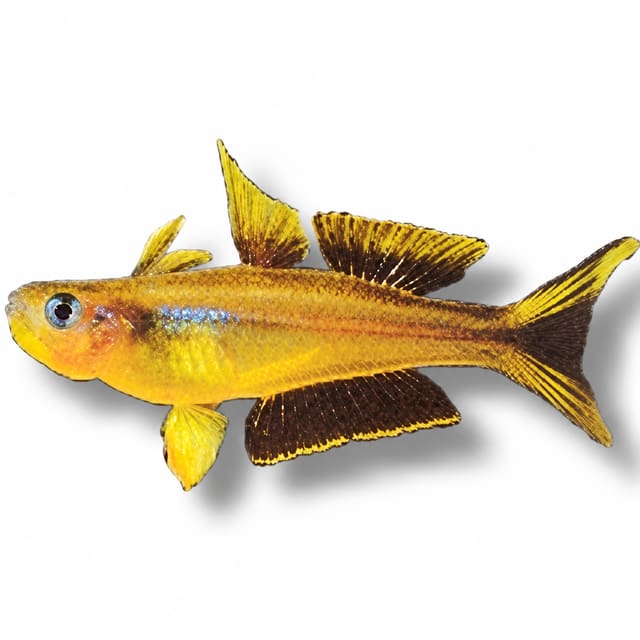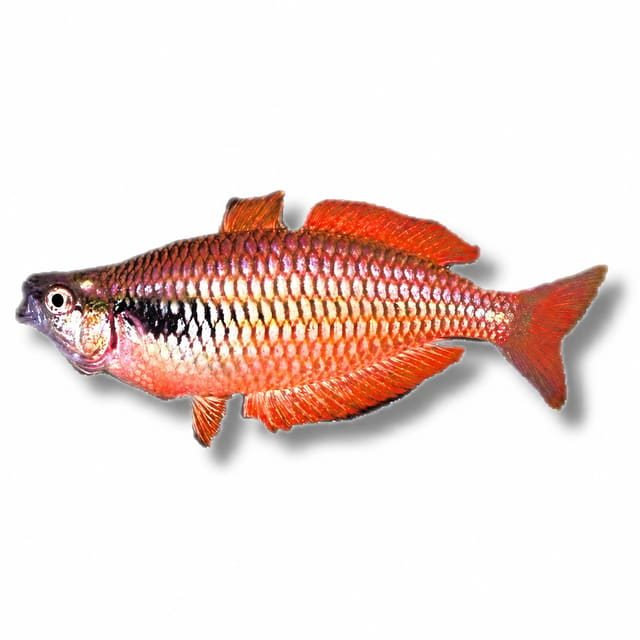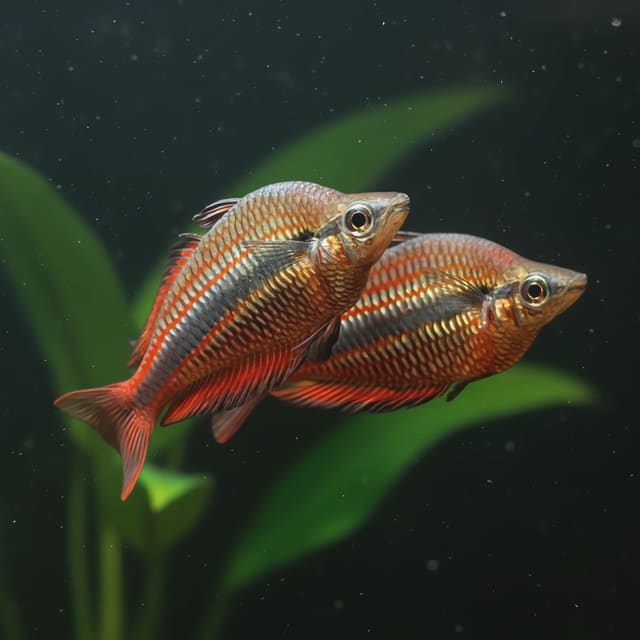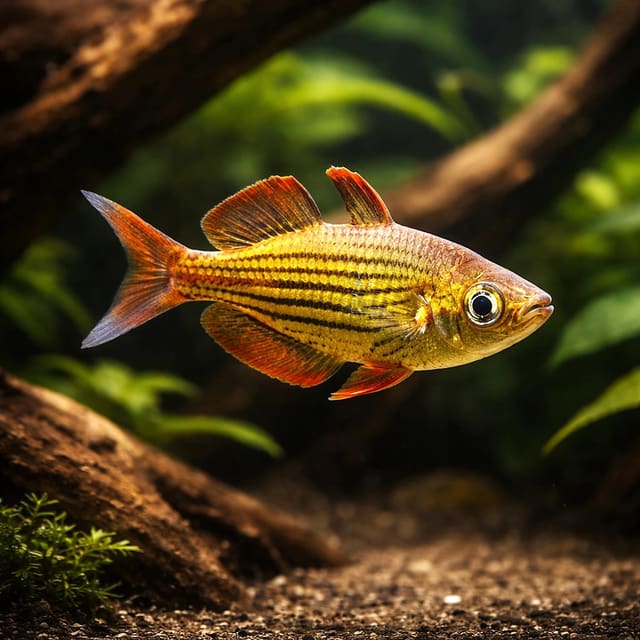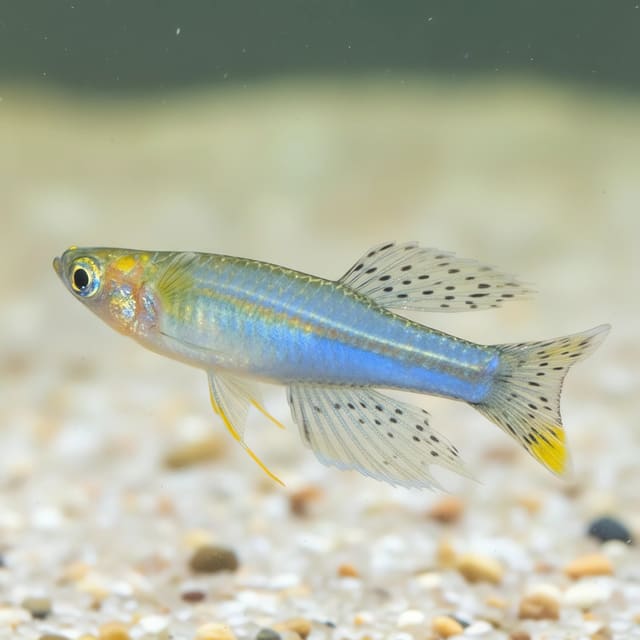
10 × Forked-Tail Rainbowfish (Popondetta furcata)
24–26°C · pH 7–8 · 54L
£40.99

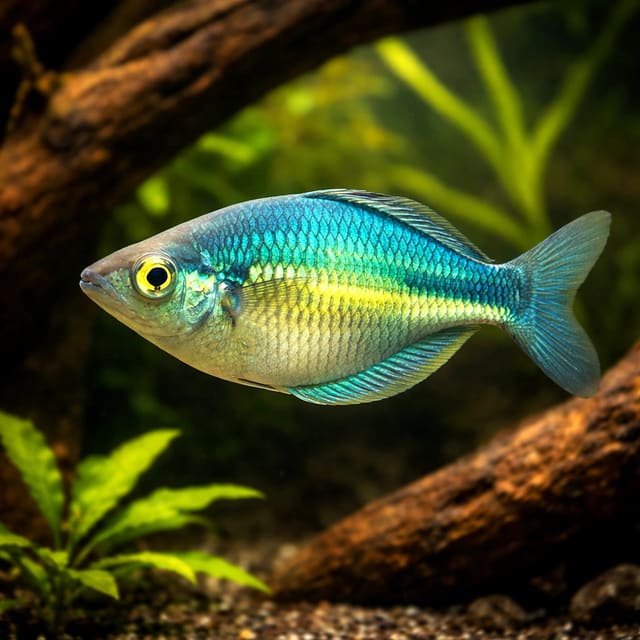
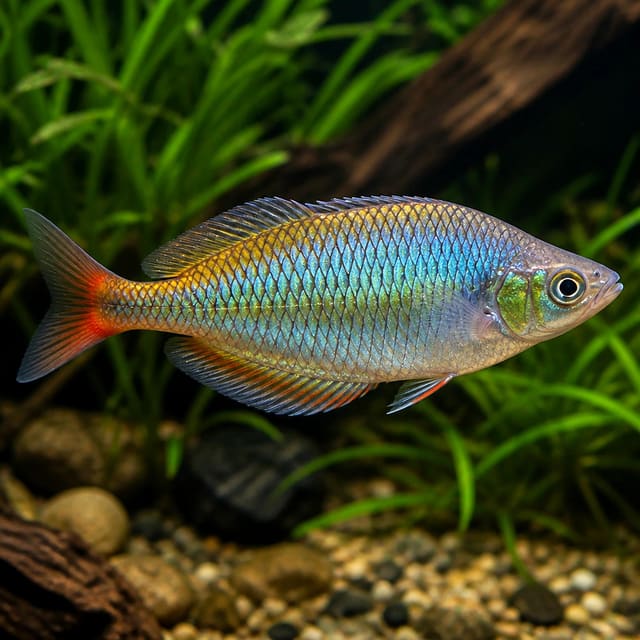
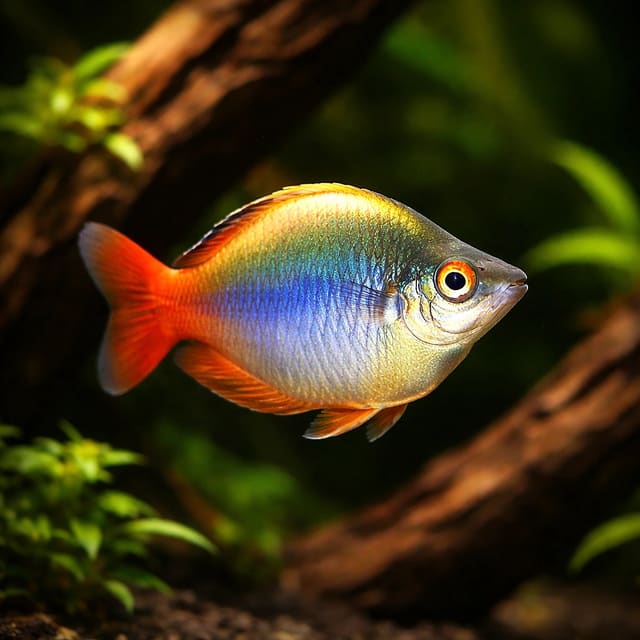
The Neon Dwarf Rainbowfish (Melanotaenia praecox) is a freshwater member of Melanotaeniidae from the Mamberamo River in northern Irian Jaya, Indonesia, that reaches 8 cm standard length. It suits a mature planted community aquarium in a shoal of at least six, preferably eight or more, with routine water kept at the Seriously Fish and OATA overlap of 23–27°C, pH 6.8–7.5 and 5–12 dGH. Sold as a pack of six live fish.
Adult size is the maximum length this species reaches at full maturity (scientific sources). The livestock you receive will be younger and smaller. Product-photo provenance and any image-specific limitations are stated on the listing.
Melanotaenia praecox
The Neon Dwarf Rainbowfish (Melanotaenia praecox) is a freshwater member of Melanotaeniidae from the Mamberamo River in northern Irian Jaya, Indonesia, that reaches 8 cm standard length. It suits a mature planted community aquarium in a shoal of at least six, preferably eight or more, with routine water kept at the Seriously Fish and OATA overlap of 23–27°C, pH 6.8–7.5 and 5–12 dGH. Sold as a pack of six live fish.
Adult size is the maximum length this species reaches at full maturity (scientific sources). The livestock you receive will be younger and smaller. Product-photo provenance and any image-specific limitations are stated on the listing.
Maintain these water conditions for optimal health and vibrant colors
The Neon Dwarf Rainbowfish (Melanotaenia praecox) is a freshwater rainbowfish in the family Melanotaeniidae from the Mamberamo River in northern Irian Jaya, Indonesia. FishBase records a maximum of 5 cm standard length. This pack suits a keeper prepared to maintain a proper shoal in a mature, filtered and planted community aquarium with generous open swimming room.
Although compact, this is an active fish rather than a choice for a very small display. FishBase gives a minimum aquarium size of 80 cm, while the Seriously Fish species profile recommends at least 60 × 30 × 30 cm and approximately 54 litres. Plan around the longer 80 cm figure, retain at least a 30 cm front-to-back dimension and do not go below the approximately 54-litre volume.
Keep routine aquarium water at 23–27°C, pH 6.8–7.5 and 5–12 dGH. These targets are the overlap of the Seriously Fish profile and OATA’s group-level rainbowfish guidance. The overlap gives a practical target for daily care while remaining inside the species profile.
| Suits | Not suited to |
|---|---|
| A mature, biologically filtered aquarium | An uncycled or unfiltered aquarium |
| A planted layout with open swimming space | A cramped layout filled from end to end |
| A shoal of at least six, preferably eight or more | A plan to keep one fish alone |
| Similarly-sized community fish after screening | Timid or much smaller fish |
| Routine water at 23–27°C, pH 6.8–7.5 and 5–12 dGH | An aquarium outside those routine targets |
One purchase supplies a pack of six live Neon Dwarf Rainbowfish. The pack already meets the lower end of the shoal recommended by Seriously Fish, which says this species does far better in a group of at least six to eight and preferably more. If the aquarium can support a larger shoal after all existing livestock and filtration capacity are considered, eight or more gives the fish a broader social group.
Plan the aquarium for six adult fish. Judge the aquarium by the adult planning figures and activity level rather than assuming that the fish will remain at their arrival size. The aquarium and biological filter must be ready for all six fish together.
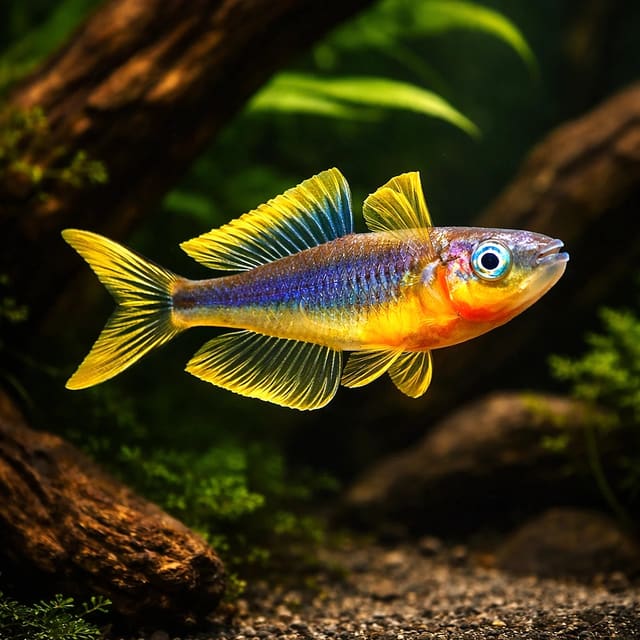
Sex is guaranteed only when the selected option explicitly states male or female. This 6 × Neon Dwarf Rainbowfish listing has no sex-guaranteed option. Mature males are larger and brighter than females and develop a much deeper body as they grow, but appearance in a gallery image does not determine which sexes will be supplied.
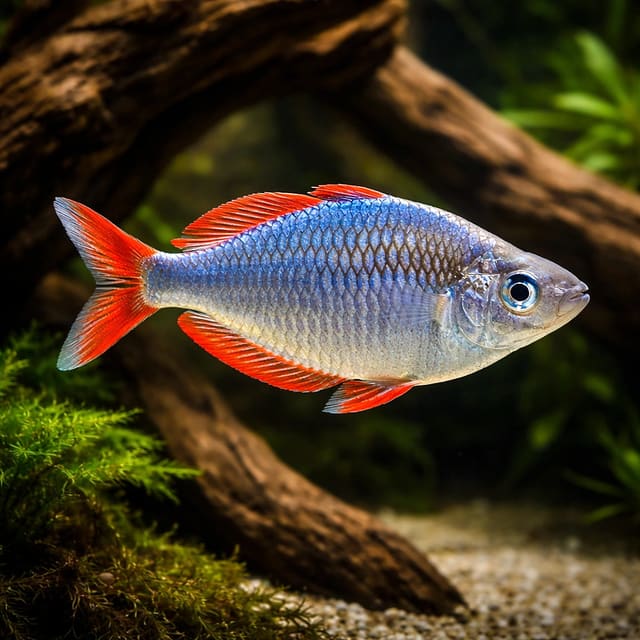
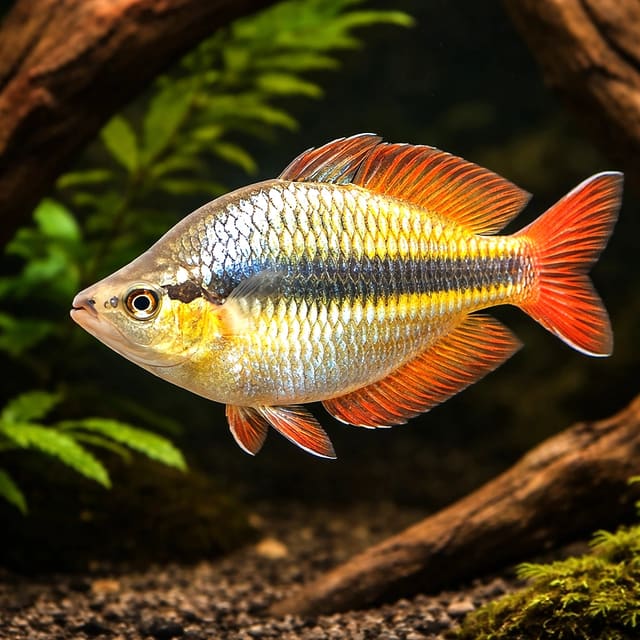
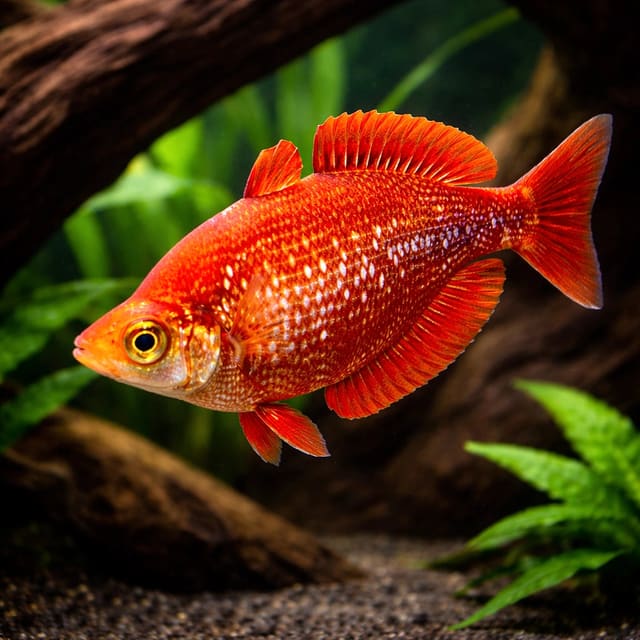
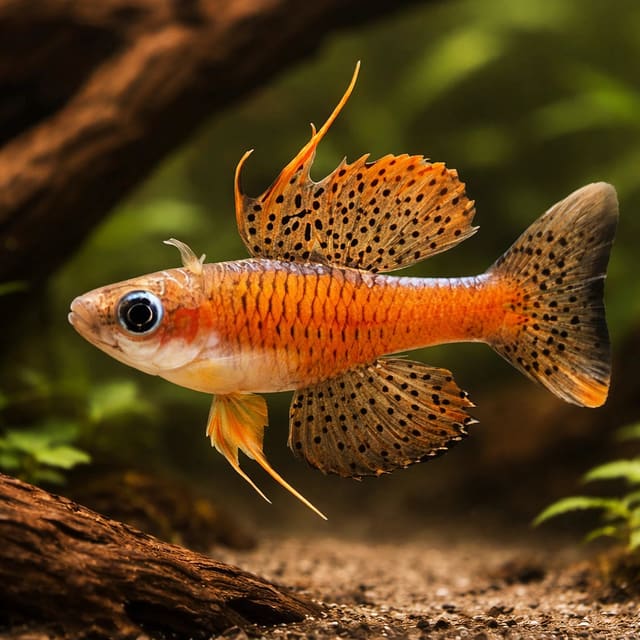
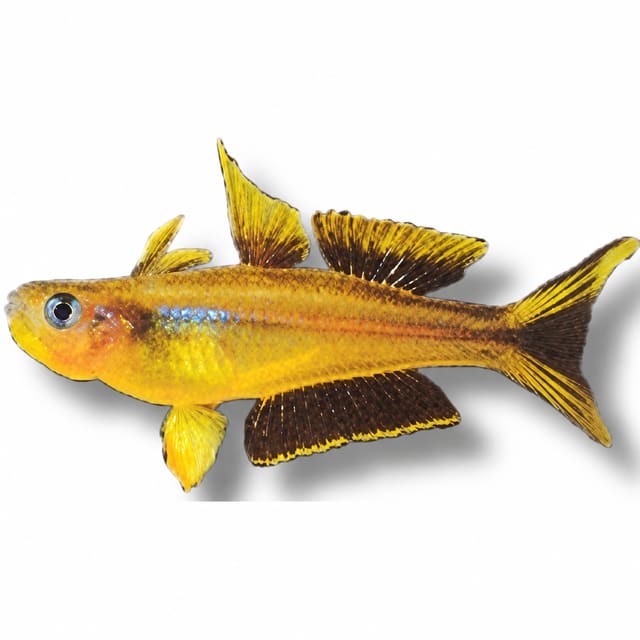
The gallery images are representative of this type of animal rather than photographs of the exact animal supplied, so colours can look slightly different from the live animal. Use the images to recognise the general body form and markings, not to select an individual fish or infer its sex.
Before adding the pack, account for the six fish in the aquarium’s total stocking plan. OATA advises increasing aquarium populations slowly because the beneficial bacteria in the filter must process the extra waste created by more fish and feeding. Avoid combining this pack with several other livestock additions at the same time.
Plan every part of the care around an adult size of 5 cm standard length. Build around the species’ activity and the stated aquarium dimensions rather than using body length alone to justify a smaller tank.
A worked check is straightforward. An aquarium that holds approximately 54 litres but is shorter than 80 cm meets the Seriously Fish volume example but not the FishBase length figure. An 80 cm aquarium with a narrow footprint below 30 cm front to back misses the recommended width. Choose a design that satisfies length, footprint and volume together.
Do not plan a smaller temporary aquarium around the fish’s arrival size. The pack is six active shoalers from the start, and their social group, swimming route, filtration load and adult planning dimensions apply from the day they enter the aquarium.
Create a planted aquarium with open spaces between groups of vegetation. Seriously Fish recommends a heavily planted setup but also calls for clear swimming areas and display space. The useful balance is cover around the edges or in defined islands, with an uninterrupted route through the aquarium for the shoal.
Check the layout from end to end before the fish arrive. If decorations force the shoal through a single narrow channel, remove or regroup some items. If the tank is almost entirely bare, add planted cover without blocking the main route. The aim is not maximum decoration; it is a useful combination of refuge, softened light and continuous swimming room.
Watch how the group uses the aquarium after introduction. Regular movement through the open areas and the ability to move into cover show that both functions are accessible. Persistent crowding in one small area calls for checks of water quality, lighting, neighbouring fish and whether the layout provides enough usable space.
Keep the planted design compatible with routine maintenance. Leave enough access to siphon waste from the substrate, inspect the fish and check filter inlets for blockage. A layout that cannot be cleaned reliably will work against the high water quality this rainbowfish needs.
Keep the aquarium at 23–27°C, pH 6.8–7.5 and 5–12 dGH. This is the overlap of the Seriously Fish values for Melanotaenia praecox and OATA’s rainbowfish figures, so each routine target stays inside both sets of guidance.
| Value | Routine target |
|---|---|
| Temperature | 23–27°C |
| pH | 6.8–7.5 |
| General hardness | 5–12 dGH |
| Ammonia | 0 mg per litre |
| Nitrite | 0 mg per litre |
| Nitrate | No more than 20 mg per litre above the normal tap-water level |
Measure the aquarium rather than relying on a heater setting or the water’s appearance. Use the same test method consistently so changes are easier to recognise. Our guide to understanding aquarium water chemistry explains what the main readings mean, and the water matcher can help compare measured values with the stated range.
A single reading inside the range is only a starting point. Check whether the aquarium remains there over time, particularly before livestock is introduced and after the population changes. If temperature, pH or hardness sits outside the target, resolve that difference before adding the pack rather than expecting the fish to bridge incompatible conditions.
For an aquarium of approximately 54 litres in a room around 20°C, Seriously Fish estimates a heater rating of roughly 75–100 W. That wattage is tied to those stated conditions. Choose equipment for the aquarium’s actual volume and room temperature, then confirm the result with a thermometer.
Keep ammonia and nitrite at zero. OATA warns that even small amounts can stress rainbowfish, while nitrate should not exceed 20 mg per litre above the normal tap-water level. When a reading moves in the wrong direction, test again carefully, check filtration and feeding, and correct water quality before adding more livestock.
Use a well-established biological filter before the six fish arrive. The RSPCA explains that fish release toxic ammonia; beneficial bacteria in a working biological filter convert it first to nitrite and then to the safer nitrate. A filter is therefore part of the life-support system, not simply a way to make the water look clear.
Seriously Fish recommends four to five aquarium turnovers per hour for this species. In its approximately 54-litre example, that corresponds to a filter rated around 215–270 litres per hour. Use that rating only for an aquarium around the example volume; choose equipment suited to the actual volume while retaining the stated turnover target.
Do not judge maturity by elapsed time alone. The relevant test is whether the biological filter can maintain zero ammonia and zero nitrite while the aquarium is operating normally. Clear water can still contain dissolved ammonia or nitrite, so visual inspection cannot replace testing.
The pack creates one defined stocking event involving six fish. OATA advises increasing fish populations slowly because bacterial capacity must rise as waste and feeding increase. Prepare for the whole pack, avoid unrelated additions at the same time and monitor the aquarium after introduction.
Feed a good-quality flake or granule as the regular dried food. Melanotaenia praecox is described by Seriously Fish as an unfussy omnivore that accepts dried, frozen and live foods. OATA recommends small live or frozen items such as daphnia, small bloodworm or tubifex to add variety.
Offer only what the shoal can eat within a few minutes, once a day. Keep to that single daily meal. Watch the whole group during that short period so the portion is judged by what all six fish consume, not by the fastest fish taking the first pieces.
Variety means rotating suitable foods within the daily allowance, not adding several full meals. Uneaten food breaks down and releases waste into the water, increasing pressure on the biological filter. If food remains after a few minutes, remove the leftovers and reduce the next portion.
A reduced interest in food is a health and water-quality warning rather than a reason to keep adding different foods. Check ammonia, nitrite, temperature and the fish’s breathing and swimming behaviour. Resume a controlled amount only after considering why feeding behaviour changed.
Keep each item appropriately small for a compact rainbowfish. Choose small live and frozen foods that the shoal can eat promptly rather than large pieces.
At least once every week, carry out a 25% partial water change. OATA recommends this frequency and amount for rainbowfish, together with weekly water testing. Use the routine to remove solid waste, check equipment and compare current readings with the aquarium’s normal pattern.
If the filter needs cleaning, rinse its media lightly in aquarium water removed during the partial water change. Do not run it under the tap. Chlorine or chloramine may kill part of the beneficial bacterial population established in the media, reducing the filter’s ability to process waste.
Keep to that weekly routine.
Compare nitrate with the normal tap-water level because OATA expresses the limit as no more than 20 mg per litre above that baseline. For example, if tap water measures 10 mg per litre nitrate, the stated ceiling in the aquarium is 30 mg per litre. Ammonia and nitrite remain at zero regardless of the tap-water nitrate reading.
Record results if patterns are difficult to remember. A sequence of readings makes gradual deterioration easier to spot than isolated tests and helps connect changes with feeding, filter flow or livestock additions.
Be present to receive the parcel because live fish must not be left unattended. Tropical Fish Co hand-bags fish in pure oxygen, uses an insulated poly box and adds a heat pack when the weather calls for it. A licensed live-animal courier carries the parcel.
Before delivery, confirm that the aquarium is operating at 23–27°C, pH 6.8–7.5 and 5–12 dGH, with ammonia and nitrite at 0 mg per litre.
The continuous video should show the parcel still sealed, the outer box, the opening and the fish still in the sealed bag before anything is disturbed. Filming every delivery from the sealed parcel onward preserves the complete sequence if a claim is needed.
Read the current delivery and Live Arrival Guarantee policy before the delivery day. It contains the policy conditions and current claim process. The aquarium must already be mature and suitable; arrival day is not the time to begin establishing filtration or adjusting basic water chemistry.
Learn the group’s normal swimming, colour, feeding response and breathing pattern, then investigate any clear change. OATA identifies altered swimming, colour, temperament, breathing, appearance, body condition and feeding as signs that deserve attention.
| If you see | First action |
|---|---|
| Hanging at the surface, sitting on the bottom or erratic swimming | Test water quality and check filter operation |
| Faster or slower gill movement | Test ammonia and nitrite and inspect the fish closely |
| Darker or paler colour than normal | Check water, lighting and interactions |
| More hiding or altered aggression | Review tank mates, shoal size and usable cover |
| White spots, fluffy growths, damaged fins, missing scales, ulcers or bumps | Test water and contact us for guidance |
| Reduced feeding or changing body condition | Stop increasing food and investigate water and health |
Water testing comes first because ammonia and nitrite are toxic and rainbowfish can be stressed by small amounts. Confirm both are at 0 mg per litre, check nitrate against the tap-water baseline and verify the routine temperature, pH and hardness.
Do not use increased feeding to compensate for reduced body condition until the cause has been considered. Extra uneaten food can worsen water quality and increase the load on the filter. Likewise, a partial water change should follow measured conditions and the established maintenance routine rather than replacing careful observation.
Inspect all six fish. A change affecting several fish at the same time points towards a shared aquarium factor that needs immediate checking, while one affected individual still requires close attention. Keep observations factual: note what changed, when it was seen and the test readings taken at the time.
Choose similarly-sized community fish whose water needs overlap with 23–27°C, pH 6.8–7.5 and 5–12 dGH. Seriously Fish describes Melanotaenia praecox as very peaceful and names similarly-sized rainbowfish, characins, danios, barbs, dwarf cichlids, freshwater gobies and catfish such as Corydoras as good tank-mate categories.
Those names begin the assessment rather than completing it. Check the candidate animal’s adult size, social needs, temperament, aquarium-space requirement and water range. The aquarium must also have enough capacity for the six rainbowfish and the proposed companions without compromising the swimming route or filtration.
Peaceful behaviour does not make every community species compatible. Activity can unsettle timid animals even without predatory or overtly aggressive behaviour. A much smaller fish also falls outside OATA’s recommended mix for active rainbowfish.
For invertebrates or any fish category not named above, apply the same screening process and accept that the outcome depends on the exact candidate. Check adult size, water requirements, behaviour and space before combining them. If the match remains unclear, contact us for a stocking assessment with the aquarium dimensions, water readings and current livestock list.
Plan the whole community on paper before adding the pack. Begin with six Neon Dwarf Rainbowfish, reserve their open swimming route and aquarium dimensions, then add the full adult requirements of every existing and proposed companion. This prevents a peaceful-looking list from exceeding the aquarium’s space or filtration capacity.
A similarly-sized characin shares the water range: it belongs to a category named by Seriously Fish, so continue by checking its own group size and the total aquarium capacity. Do not count one social species as part of the other species’ shoal.
A danio fits the water but leaves no open swimming room: the stocking plan fails on space even though the animal category is named as a good tank mate. Choose a larger aquarium or a smaller total community.
A candidate fish is timid or much smaller: do not mix it with this active rainbowfish. OATA places those combinations outside its compatibility guidance for active rainbowfish.
A Corydoras species is being considered: Seriously Fish names Corydoras as a suitable catfish category, but the exact species must still fit the water, social and space plan.
An invertebrate is being considered: use its exact adult size, water values and behaviour to assess the match. Do not assume that every freshwater invertebrate is automatically compatible.
After introduction, watch whether every group can feed normally and use its intended space. Increased hiding, changed colour, persistent chasing, damaged fins or interrupted feeding are reasons to reassess the combination and test the water. Do not respond by adding more livestock.
The six-fish pack meets the lower end of the recommended shoal for this species. If expanding towards eight or more, confirm that filtration and total stocking capacity can support the extra fish before increasing the group. A larger shoal is beneficial only when the aquarium remains suitable for all its inhabitants.
FishBase records the Neon Dwarf Rainbowfish at a maximum of 5 cm standard length. Plan the aquarium around that adult figure, the activity of a six-fish shoal and the stated aquarium dimensions rather than the fish’s arrival size.
Use an aquarium at least 80 cm long, retain a base of at least 60 × 30 cm and do not go below approximately 54 litres. FishBase gives the 80 cm minimum, while Seriously Fish gives at least 60 × 30 × 30 cm and approximately 54 litres.
Keep at least six Neon Dwarf Rainbowfish together, preferably eight or more. Seriously Fish says they do far better in a shoal of at least six to eight, while this purchase supplies a pack of six.
Choose it once you have a mature, filtered aquarium at least 80 cm long, room for a shoal of at least six and a weekly routine of water testing and a 25% water change. It is not a suitable first addition to an uncycled aquarium.
Feed Neon Dwarf Rainbowfish a good-quality flake or granule, with small live or frozen daphnia, small bloodworm or tubifex for variety. Offer only what the shoal eats within a few minutes, once a day.
Keep it at 23–27°C, pH 6.8–7.5 and 5–12 dGH. These routine values are the overlap of the Seriously Fish species profile and OATA’s rainbowfish guidance; ammonia and nitrite must remain at 0 mg per litre.
Seriously Fish describes it as very peaceful. Treat activity as the main compatibility issue: avoid timid or much smaller fish, and investigate persistent chasing, increased hiding, damaged fins or interrupted feeding.
Assess similarly-sized rainbowfish, characins, danios, barbs, dwarf cichlids, freshwater gobies and catfish such as Corydoras. Each exact candidate must also match the water, adult space, social and temperament requirements; invertebrates require an individual assessment.
The six fish are hand-bagged in pure oxygen, placed in an insulated poly box with a heat pack when the weather calls for it and carried by a licensed live-animal courier. Be present, film continuously from the sealed parcel, open and inspect it the same day, float the bag for 20–30 minutes and retain the video and order number for the Live Arrival Guarantee process.
No reviews for this item yet. Bought one? Honest reviews only, good or bad.
What customers say about ordering from us
I have a small group of long finned mountain minnows. So was delighted to be able to order ten of this variety to increase the genetics in my tank . The ones I recieved are healthy but it’s to early to give a verdict on wether they are of a long finned type since they are small currently.
Gordon Walker · 23 Sept 2026
100% success travel and "installation". Pleased with quality of purchase. The Siamese fighter a bit "shy" so have not yet seen him at his best yet but looking good. Happy customer. GG
George E Garratt · 21 Sept 2026
Reviews of our shop, collected by Judge.me, an independent third-party review collector. Newest first.