Dwarf Australian Rainbow (Melanotaenia maccullochi)
20–30°C · pH 5.5–8 · 54L
£8.99

Peaceful, active Australian rainbowfish with a black mid-lateral band. Best in planted groups with open swimming space; 23-28C, pH 5.5-7.0.
Adult size is the maximum length this species reaches at full maturity (scientific sources). The livestock you receive will be younger and smaller — pick a size above for the actual shipping size. Product-photo provenance and any image-specific limitations are stated on the listing.
Melanotaenia nigrans
Shoaling fish: kept in a group they feel safer, stay calmer and show their best colour.
Confirm your email, then we’ll send an availability message for this exact item if it returns within 180 days.
This request is only for this product—no newsletter or other promotions. A mail-provider retry may very rarely duplicate the same availability message. Unconfirmed addresses are removed after 48 hours. See our privacy policy.
Peaceful, active Australian rainbowfish with a black mid-lateral band. Best in planted groups with open swimming space; 23-28C, pH 5.5-7.0.
Adult size is the maximum length this species reaches at full maturity (scientific sources). The livestock you receive will be younger and smaller — pick a size above for the actual shipping size. Product-photo provenance and any image-specific limitations are stated on the listing.
Maintain these water conditions for optimal health and vibrant colors
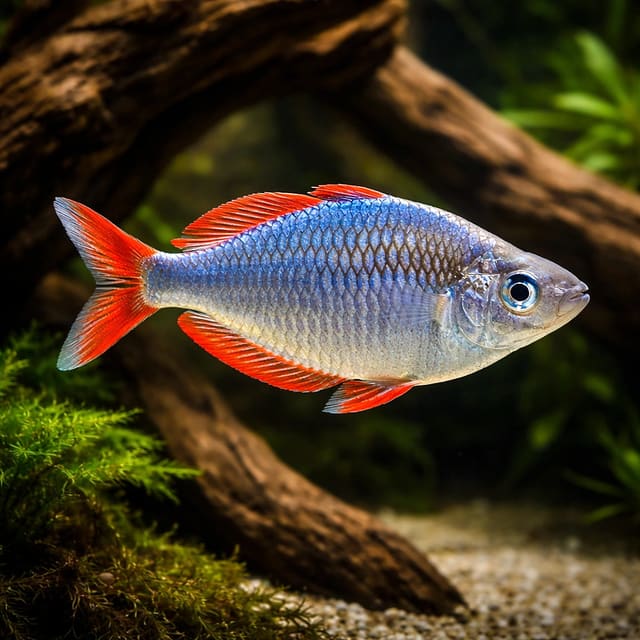
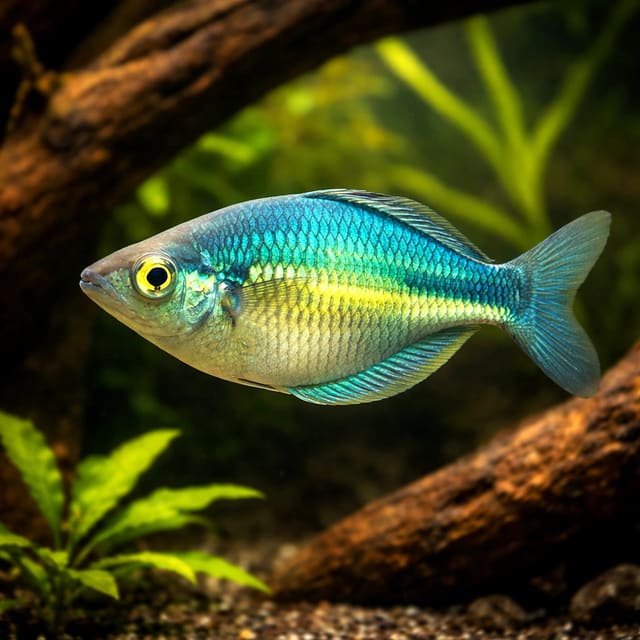
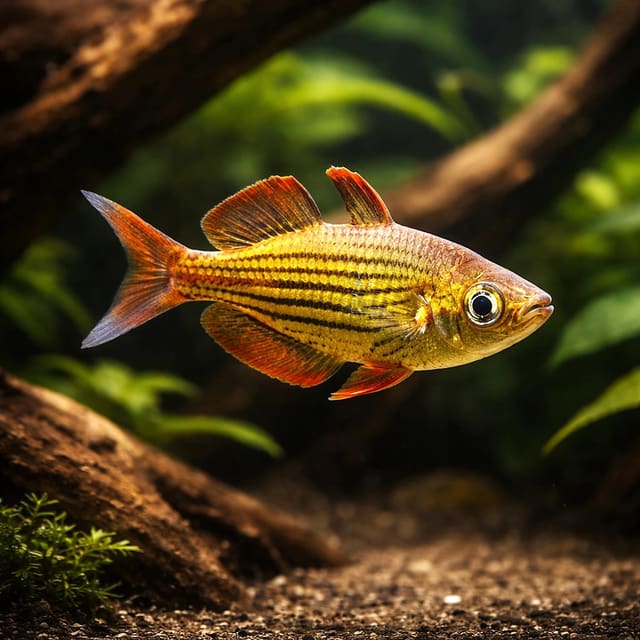
The Australian Rainbowfish (Melanotaenia nigrans) is a peaceful, active rainbowfish from northern Australia, also known as the Black-banded Rainbowfish. It is sold in the trade as Australian Rainbow, but the scientific name is the useful anchor here because it separates this fish from other Australian rainbowfish sold under similar common names. Expect a slender, lively fish with a dark mid-lateral band, soft lavender-silver sheen, warm yellow to orange tones on mature fish and constant shoaling movement through the middle of the aquarium.
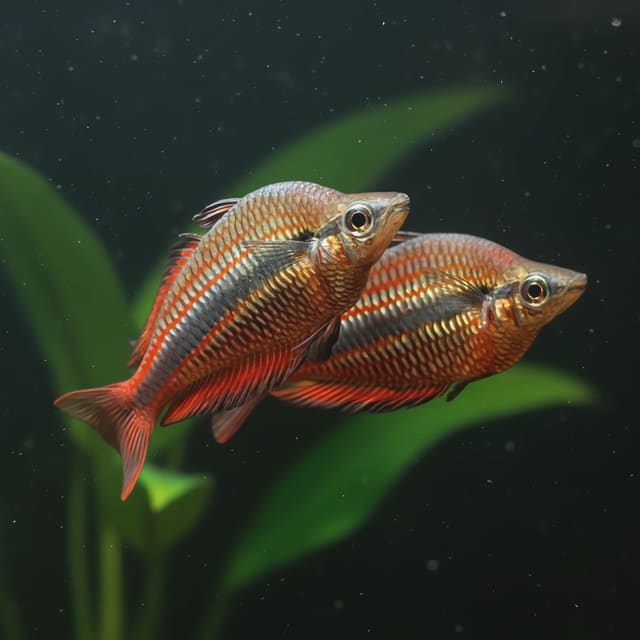
This listing covers the current Shopify product with two size options: 4.5-5.5 cm under SKU 5044 and >6 cm under SKU 5045. The product page keeps the original reference photo alongside the existing aquarium lifestyle images, so you can compare the real supplied fish shape and markings with the richer planted-tank presentation. The species is hardy once settled, but it is still a fast-moving shoaler rather than a single centrepiece fish, so it looks and behaves best in a proper group.
Melanotaenia nigrans is more elegant than loud. The body is relatively slender for a rainbowfish, with a bold black band running along the flank and iridescent silver to lavender tones above it. Mature males can show stronger fin colour, a brighter head area and a fuller body shape, while females are usually slimmer and softer in colour. The exact colour varies by population, sex, age, stress level and aquarium condition, which is why settled groups often improve noticeably after a few weeks in a calm planted tank.
This species is endemic to northern Australia, with isolated populations across the Kimberley region, the Northern Territory, Groote Eylandt, Cape York and nearby island systems. Wild fish are associated with slow-flowing clear streams, billabongs, lily lagoons, swamps, vegetated backwaters and the margins of larger waterways. They are usually found around submerged plants, logs, branches and shoreline vegetation, which explains why they appreciate cover nearby while still needing open water for cruising.
Use a mature aquarium of at least 100 litres for a small group, with more length and volume preferred if you plan to keep a larger shoal. Plant the sides and rear of the tank, then leave the front and middle open for swimming. Driftwood, smooth stones and leaf-litter-style cover suit the species well, but avoid a cluttered layout that blocks movement. A dark substrate can help the black band and warm fin tones stand out. Good filtration, gentle to moderate flow and a secure lid are sensible because rainbowfish are active and can startle.
For normal home aquarium care, aim for 23-28°C and a pH around 5.5-7.0. Keep ammonia and nitrite at zero and manage nitrate with regular water changes. The species is recorded from a range of northern Australian freshwater habitats, so do not make sudden adjustments trying to force a number. Slow acclimation, clean water and consistency are the real priorities. If your local water is very hard or alkaline, ask us before mixing this species with more demanding soft-water fish.
Australian Rainbowfish are omnivores. Use a quality flake or small floating micro-pellet as the daily base, then rotate in daphnia, brine shrimp, mosquito larvae, finely chopped frozen foods and occasional vegetable-based foods such as spirulina flake. Small meals once or twice a day are better than heavy feeding. A varied diet helps colour, body condition and breeding display without polluting the aquarium.
This is a peaceful community fish, but it is not a slow, shy species. Keep it with similarly peaceful fish that enjoy active midwater movement: other compatible rainbowfish, danios, larger rasboras, peaceful barbs, Corydoras, bristlenose plecos and robust community tetras all make sense when water requirements overlap. Avoid fin-nippers, aggressive cichlids, very tiny fry-sized tank mates and long-finned fish that may be stressed by fast shoaling movement.
Melanotaenia nigrans is an egg-scattering rainbowfish. In planted aquariums, pairs may deposit adhesive eggs among fine-leaved plants, moss or spawning mops, often a few at a time over repeated sessions. Adults may eat eggs, so dedicated breeding setups usually remove the mop or plants to a separate hatching tank. Fry are small and need suitable first foods before moving to newly hatched brine shrimp or fine prepared fry food.
Every order is packed for live-fish transport and sent with a licensed live-animal courier. Your order is covered by our Live Arrival Guarantee, and first-time customers can use WELCOME10 where the promotion is available. We never remove the real source context from listings: this page keeps the original reference image and the existing visual media so you can judge the fish with more confidence before ordering online in the UK.
No reviews for this item yet. Bought one? Honest reviews only, good or bad.
What customers say about ordering from us
I have a small group of long finned mountain minnows. So was delighted to be able to order ten of this variety to increase the genetics in my tank . The ones I recieved are healthy but it’s to early to give a verdict on wether they are of a long finned type since they are small currently.
Gordon Walker · 23 Sept 2026
100% success travel and "installation". Pleased with quality of purchase. The Siamese fighter a bit "shy" so have not yet seen him at his best yet but looking good. Happy customer. GG
George E Garratt · 21 Sept 2026
Reviews of our shop, collected by Judge.me, an independent third-party review collector. Newest first.