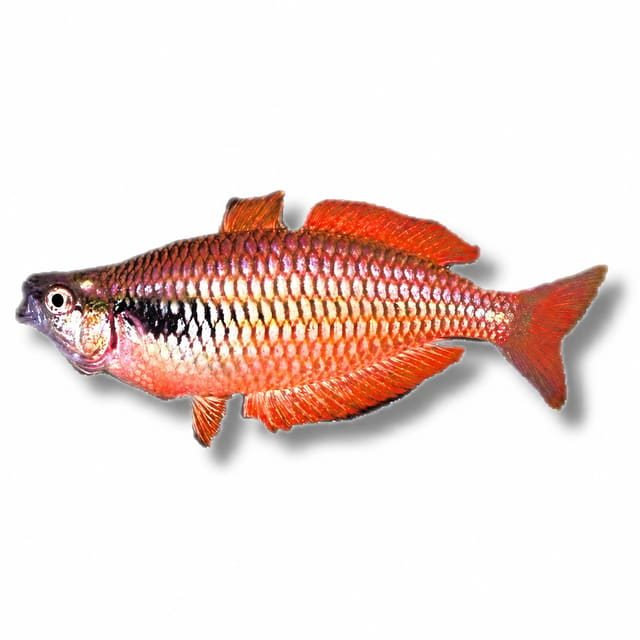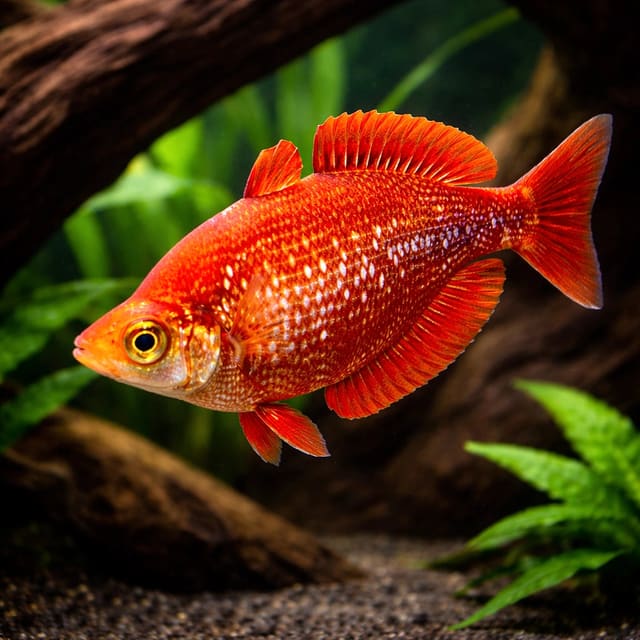
New Guinea Red Rainbowfish (Glossolepis incisa)
22–25°C · pH 7–8 · 108L
£12.99

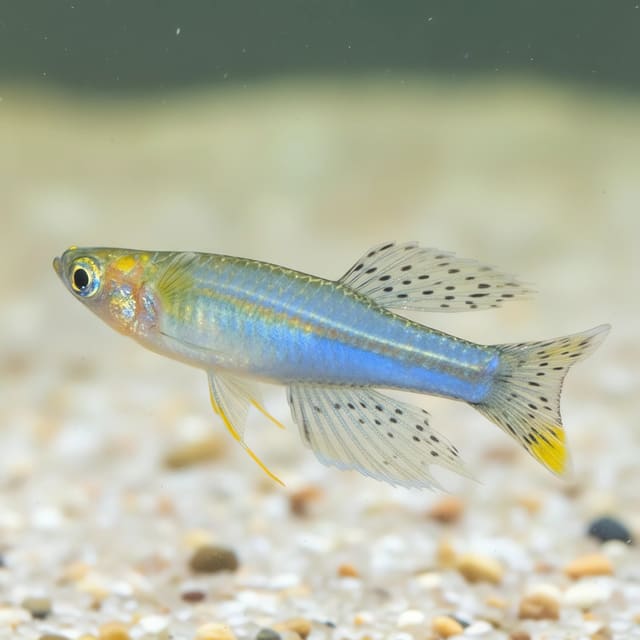
Spotted Rainbowfish (Glossolepis maculosus) is a rare Papua New Guinea rainbowfish with golden shimmer, blue-green iridescence and bold flank spots. Supplied at 3-4 cm and best kept in a peaceful planted shoal.
Adult size is the maximum length this species reaches at full maturity (scientific sources). The livestock you receive will be younger and smaller. Product-photo provenance and any image-specific limitations are stated on the listing.
Glossolepis maculosus
Shoaling fish: kept in a group they feel safer, stay calmer and show their best colour.
Confirm your email, then we’ll send an availability message for this exact item if it returns within 180 days.
This request is only for this product—no newsletter or other promotions. A mail-provider retry may very rarely duplicate the same availability message. Unconfirmed addresses are removed after 48 hours. See our privacy policy.
Spotted Rainbowfish (Glossolepis maculosus) is a rare Papua New Guinea rainbowfish with golden shimmer, blue-green iridescence and bold flank spots. Supplied at 3-4 cm and best kept in a peaceful planted shoal.
Adult size is the maximum length this species reaches at full maturity (scientific sources). The livestock you receive will be younger and smaller. Product-photo provenance and any image-specific limitations are stated on the listing.
Maintain these water conditions for optimal health and vibrant colors
Spotted Rainbowfish (Glossolepis maculosus) is a lively Papua New Guinea rainbowfish with blue-green shimmer, warm golden flanks and the dark side markings that give the species its common name. It is a rare, elegant choice for aquarists who want constant movement without aggressive behaviour.
Scientific databases now commonly list the accepted name as Glossolepis maculosa, while the aquarium trade and our stock records still use Glossolepis maculosus. We keep the trade name on the listing so customers can find the fish they recognise, and we include the accepted-name context here for accuracy.
The source photo shows why this species is so distinctive. Mature fish develop a slim, laterally compressed rainbowfish shape with reflective blue, green and yellow tones across the body. The sides carry a row of bold dark blotches rather than a plain stripe, and males in good condition can show stronger colour through the fins and shoulder. Females and younger fish are usually subtler, but still show the spotted pattern and metallic sheen.
Glossolepis maculosus is known from the Markham and Ramu river systems of Papua New Guinea. Published sources describe it from highland swamps and creeks, including clear, slower-flowing waters with aquatic plants and cover. This habitat tells us how to keep it well at home: stable warm water, clean oxygen-rich conditions, plant cover around the edges and open space for the group to cruise.
The species is listed as Endangered globally, so responsible sourcing and careful aquarium husbandry matter. Avoid impulse mixing, keep a proper group, and give the fish a settled tank where stress is low.
Use a mature, well-filtered aquarium with a secure lid. Spotted Rainbowfish are quick midwater swimmers and may jump if startled, so leave plenty of horizontal swimming room rather than filling the whole tank with hardscape. A planted layout works beautifully: taller background plants, patches of fine-leaved plants or moss, a few pieces of smooth wood, and open water across the front.
A 90 litre aquarium is the practical minimum for a small group, but a longer 120 litre tank gives a better adult display. Gentle to moderate flow is ideal. Strong, blasting current is not needed; the aim is clean, oxygenated water with calm areas where the shoal can settle.
This is an unfussy omnivore when settled, but it looks best on a varied diet. Use a high-quality flake or small floating pellet as the staple, then rotate in daphnia, brine shrimp, cyclops, mosquito larvae, finely chopped frozen foods and a small amount of spirulina or vegetable-based food. Feed small amounts once or twice daily so the group eats cleanly without waste building up.
Spotted Rainbowfish are peaceful, social and active. They should not be kept singly or as a pair; in low numbers rainbowfish can become nervous, washed out or over-focused on one another. A group of 6 is the baseline, while 8-10 or more gives the best natural movement. Males may display to one another, but serious aggression is not expected when there is space and a balanced group.
They usually occupy the middle and upper levels of the aquarium. Good tank mates include other peaceful rainbowfish of similar size, larger tetras, rasboras, danios, peaceful barbs, Corydoras and gentle loaches. Avoid fin nippers, boisterous cichlids, predators and very shy fish that may be unsettled by constant rainbowfish activity.
Like other rainbowfish, this species is an egg scatterer and can spawn among fine-leaved plants or spawning mops. Adults do not guard the eggs, so breeders usually move the mop or plant material to a separate rearing container. Fry are tiny and need very fine first foods before moving on to newly hatched brine shrimp.
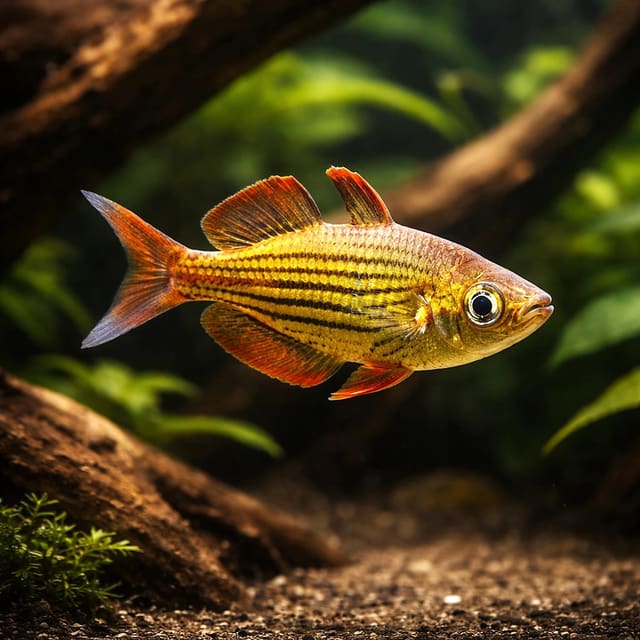
Your listing includes the original reference photo as a visual reference alongside aquarium scene images, so you can inspect the real species markings before ordering. First-time customers can use WELCOME10 where eligible, and live fish orders are supported by our Live Arrival Guarantee when the delivery instructions are followed. We pack livestock carefully for licensed live-animal courier delivery, with care checks before dispatch.
No reviews for this item yet. Bought one? Honest reviews only, good or bad.
What customers say about ordering from us
I have a small group of long finned mountain minnows. So was delighted to be able to order ten of this variety to increase the genetics in my tank . The ones I recieved are healthy but it’s to early to give a verdict on wether they are of a long finned type since they are small currently.
Gordon Walker · 23 Sept 2026
100% success travel and "installation". Pleased with quality of purchase. The Siamese fighter a bit "shy" so have not yet seen him at his best yet but looking good. Happy customer. GG
George E Garratt · 21 Sept 2026
Reviews of our shop, collected by Judge.me, an independent third-party review collector. Newest first.