Moderate
Rachow's Nothobranch (Nothobranchius rachovii)
20–24°C · pH 6–7 · 41L
£16.99

A rare Kayuni locality/trade notho supplied as Nothobranchius spec. kayuni, with orange-blue colour, annual-killifish breeding behaviour and specialist species-first care. Supplied 2.5-3.5 cm.
Adult size is the maximum length this species reaches at full maturity (scientific sources). The livestock you receive will be younger and smaller. Product-photo provenance and any image-specific limitations are stated on the listing.
Nothobranchius spec. kayuni
Save when buying multiple fish. Each quantity is one fish; sex and pair formation are not guaranteed unless the selected variant explicitly states them.
Confirm your email, then we’ll send an availability message for this exact item if it returns within 180 days.
This request is only for this product—no newsletter or other promotions. A mail-provider retry may very rarely duplicate the same availability message. Unconfirmed addresses are removed after 48 hours. See our privacy policy.
A rare Kayuni locality/trade notho supplied as Nothobranchius spec. kayuni, with orange-blue colour, annual-killifish breeding behaviour and specialist species-first care. Supplied 2.5-3.5 cm.
Adult size is the maximum length this species reaches at full maturity (scientific sources). The livestock you receive will be younger and smaller. Product-photo provenance and any image-specific limitations are stated on the listing.
Maintain these water conditions for optimal health and vibrant colors
Kayuni's Notho is a rare African annual killifish supplied to us under the trade and supplier label Nothobranchius spec. kayuni. For customer clarity we describe it as Nothobranchius sp. Kayuni, because the Kayuni name is best treated as a locality or trade form rather than a fully settled formal species name. kayuni. That means the honest approach is to preserve the supplier name buyers search for, but avoid overclaiming a precise described species or unsupported Tanzanian origin.
This is still exactly the kind of fish specialist notho keepers look for: compact, colourful, fast-maturing and full of display behaviour. The fish are supplied at around 2.5-3.5 cm. Plan adult care as you would for a small to medium Nothobranchius, with excellent water quality, a covered aquarium, rich small foods and a species-first layout.
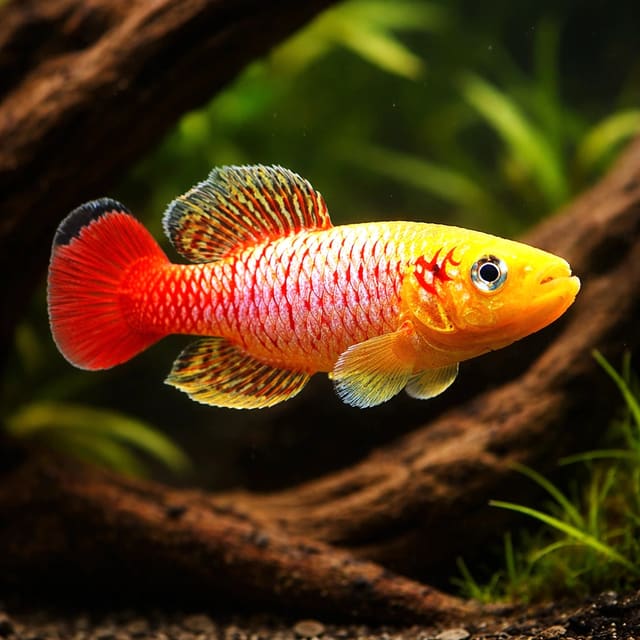
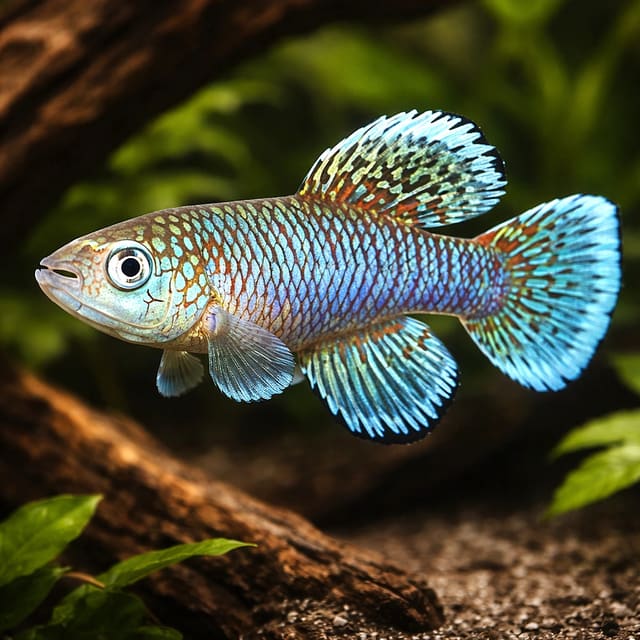
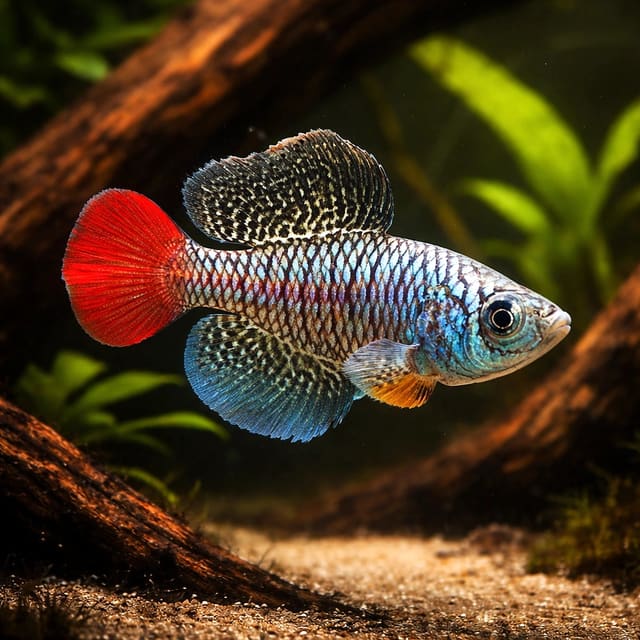
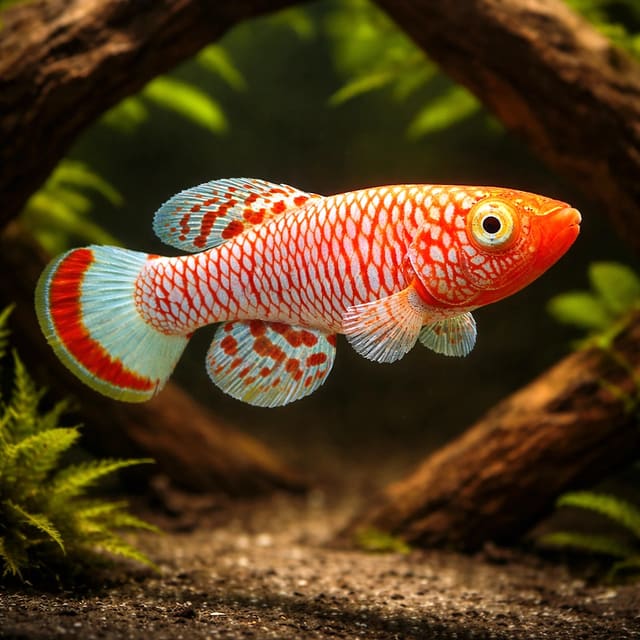
The original reference photo shows the appeal clearly: a warm orange to pink body, pale spotting along the flanks, turquoise-blue patterning through the fins and a bold tail edge. Males are the display fish, especially once settled and conditioned. Females are usually plainer and shorter-finned, which is normal for Nothobranchius. A dark base, plant cover and gentle lighting help these colours look their best without pushing the fish into a stressful bright display tank.
Annual nothos are adapted to temporary seasonal water. The wider Nothobranchius group lives in pools, floodplain wetlands, marshes and ditches that may dry for part of the year. The adults grow and breed quickly while water is present; the eggs survive in damp substrate and hatch when rains return. Published and hobby records for Kayuni State Farm forms place Kayuni material in Zambia, especially around Kayuni State Farm / Monze in the Kafue or upper Zambezi context, and list it with Nothobranchius kafuensis. Because this retail fish is supplied as Nothobranchius spec. kayuni, we keep that label visible while presenting the locality evidence carefully.
Use a covered aquarium of at least 40 litres for a pair or carefully balanced small group. A lid matters, because killifish jump. Use gentle filtration, mature biological media and regular water changes rather than strong flow. Fine sand, leaf litter, spawning mops or a removable peat/coir spawning pot all suit the fish. Add Java moss, floating plants and shaded areas so females can rest and males can break line of sight. Avoid a bare, bright tank; it makes the fish look poorer and increases chasing.
For day-to-day care, aim for stable, clean water rather than chasing extremes. A routine range around 22-25°C, pH 6.5-7.5 and soft to moderately hard water is sensible for UK aquaria. Cooler water may slow growth slightly; warmer water can speed growth and shorten the already brief annual-fish rhythm. Keep nitrate low and remove uneaten food quickly.
Kayuni's Notho is a small carnivorous killifish and should not be kept on dry flake alone. Offer small live and frozen foods such as daphnia, baby brine shrimp, adult brine shrimp, mosquito larvae, bloodworm, grindal worms and fine quality micro-pellets. Feed small portions once or twice daily. Good feeding makes a visible difference to colour, body condition and breeding readiness, but heavy feeding must be matched with clean water.
This is a specialist fish, not a general community-tank filler. Males can display, spar and pressure females, especially in small aquaria. The safest choice is a species-focused setup with cover and, where possible, more females than males. If you try tank mates, choose only calm fish of similar size in a larger aquarium, and watch the group closely. Avoid fin-nippers, boisterous barbs, aggressive cichlids, large fast feeders and tiny shrimp that may be eaten.
Annual Nothobranchius are substrate spawners. In aquaria, keepers normally provide peat, coir or fine spawning media, then remove and incubate the eggs damp. Source references for the Kayuni / kafuensis-type group and related nothos point to peat-style spawning and incubation over several months; FishBase lists bottom spawning for Nothobranchius kafuensis, while WildNothos and hobby reports commonly discuss three to five month egg development depending on temperature and conditions. This is rewarding work, but it is not a casual breeding project.
You will receive fish from the listed SKU and size band, with the original reference photo now included on the gallery for transparency. Use code WELCOME10 for 10% off your first order where the promotion is active. Livestock orders are packed for live-animal courier delivery, and eligible fish are covered by our Live Arrival Guarantee when the delivery instructions are followed.
This listing keeps the supplier label Nothobranchius spec. kayuni and uses specialist records from FishBase, WildNothos, the Nothobranchius Maintenance Group and Killi.co.uk to keep the care guidance cautious.
No reviews for this item yet. Bought one? Honest reviews only, good or bad.
What customers say about ordering from us
I have a small group of long finned mountain minnows. So was delighted to be able to order ten of this variety to increase the genetics in my tank . The ones I recieved are healthy but it’s to early to give a verdict on wether they are of a long finned type since they are small currently.
Gordon Walker · 23 Sept 2026
100% success travel and "installation". Pleased with quality of purchase. The Siamese fighter a bit "shy" so have not yet seen him at his best yet but looking good. Happy customer. GG
George E Garratt · 21 Sept 2026
Reviews of our shop, collected by Judge.me, an independent third-party review collector. Newest first.