Easy
Tomoki Medaka Ricefish, Japanese Rice Fish (Oryzias latipes tomoki)
16–22°C · pH 6.5–8.5 · 41L
£11.99

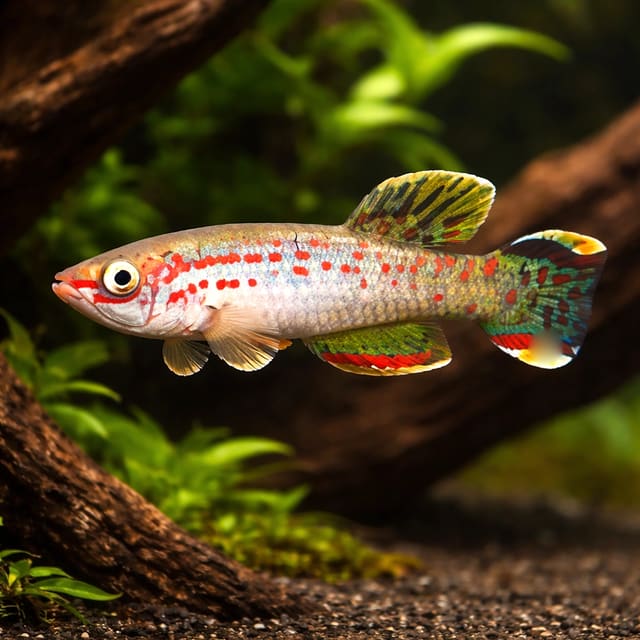
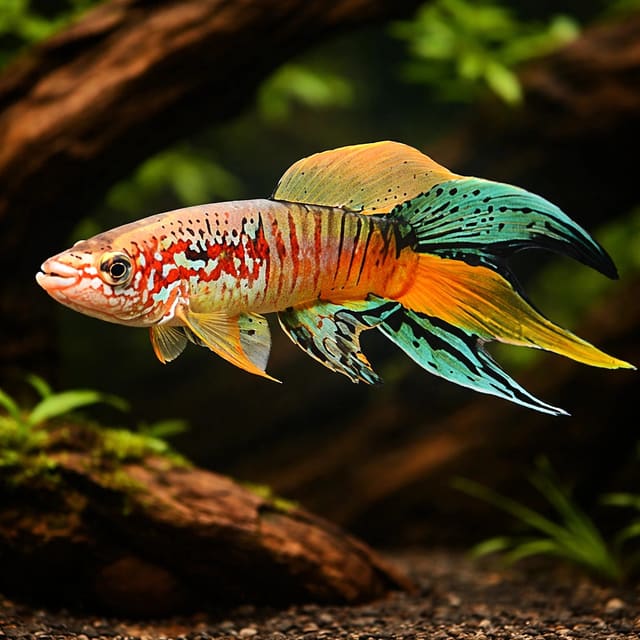
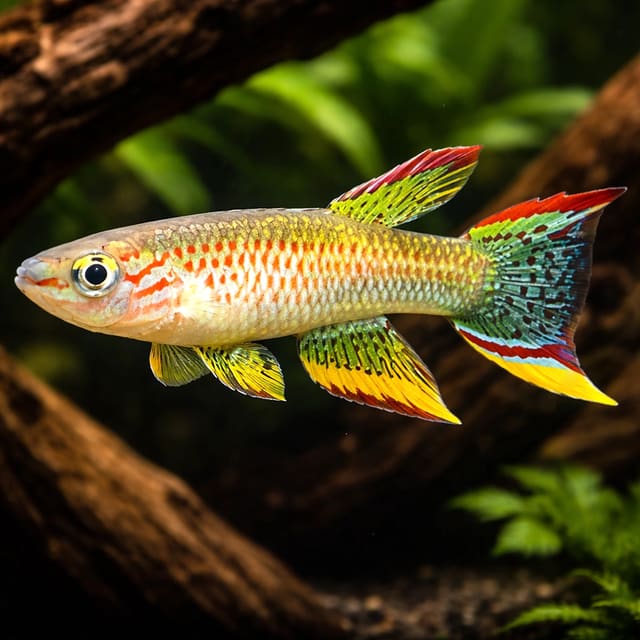
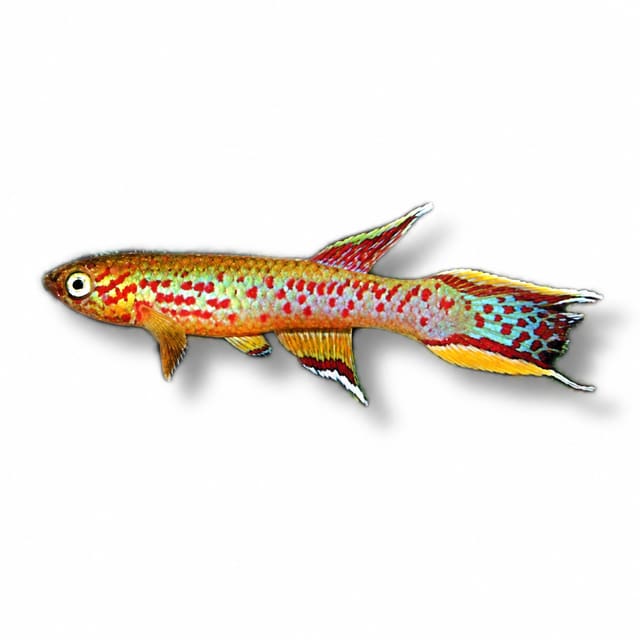
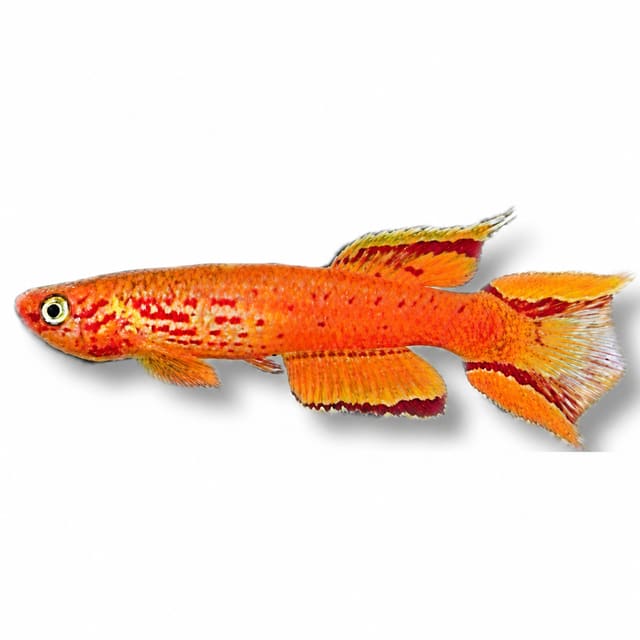
Gold Gardneri Killifish (Fundulopanchax gardneri), also known by the synonym Aphyosemion gardneri, is an ornamental gold form for a planted aquarium with a secure cover. Plan refuges and group composition to manage male attention. Sold as one live fish in the 3–4 cm supply grade.
Fundulopanchax gardneri
Save when buying multiple fish. Each quantity is one fish; sex and pair formation are not guaranteed unless the selected variant explicitly states them.
Gold Gardneri Killifish (Fundulopanchax gardneri), also known by the synonym Aphyosemion gardneri, is an ornamental gold form for a planted aquarium with a secure cover. Plan refuges and group composition to manage male attention. Sold as one live fish in the 3–4 cm supply grade.
Maintain these water conditions for optimal health and vibrant colors
Gold Gardneri Killifish bring warm colour and close-up interest to a planted aquarium. The gold form is an ornamental strain of Fundulopanchax gardneri, a small West African killifish. Its appeal goes beyond its colour: a display arranged around cover, quiet feeding areas and manageable social interactions gives you plenty to observe without needing a busy mixture of fish.
The species is often encountered under the older name Aphyosemion gardneri. FishBase treats that name as a synonym of Fundulopanchax gardneri; both refer to the same species here. Gold describes the ornamental form rather than an extra part of the scientific name. This makes it easier to recognise the fish when comparing older care books with current references.
One purchase supplies one live fish in the 3–4 cm supply grade. That is the size offered, rather than its adult maximum. Sex is guaranteed only when the selected option explicitly states male or female. This Gold Gardneri Killifish listing has no sex-guaranteed option.
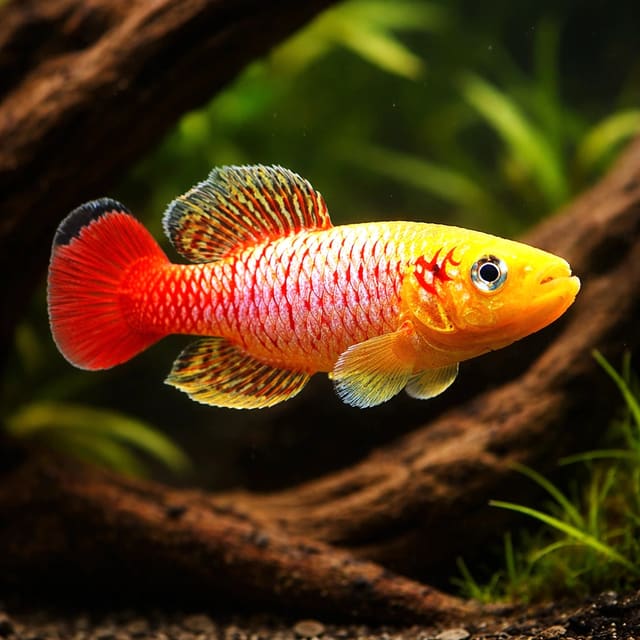
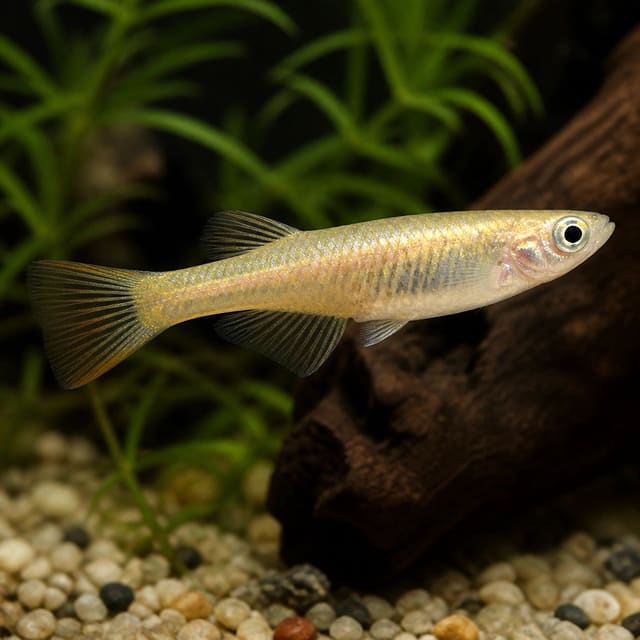
Plan any intended group around its actual composition. A colourful gallery view of two fish is useful for seeing the form, but an order quantity does not establish a breeding pair or a particular balance of males and females. If you already keep this species, think about how an additional individual would fit the aquarium and its existing occupants before adding it.
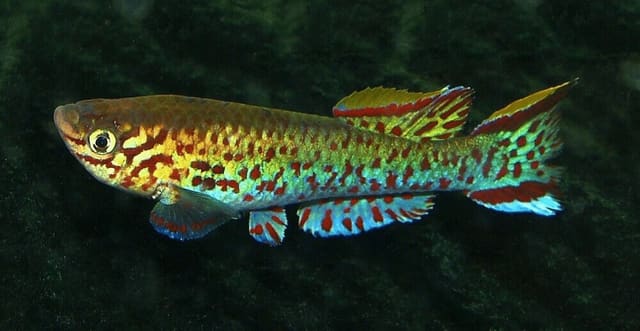
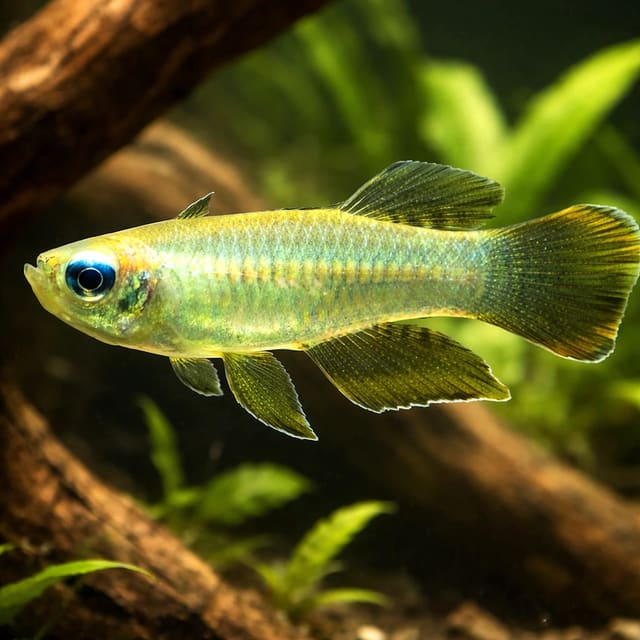
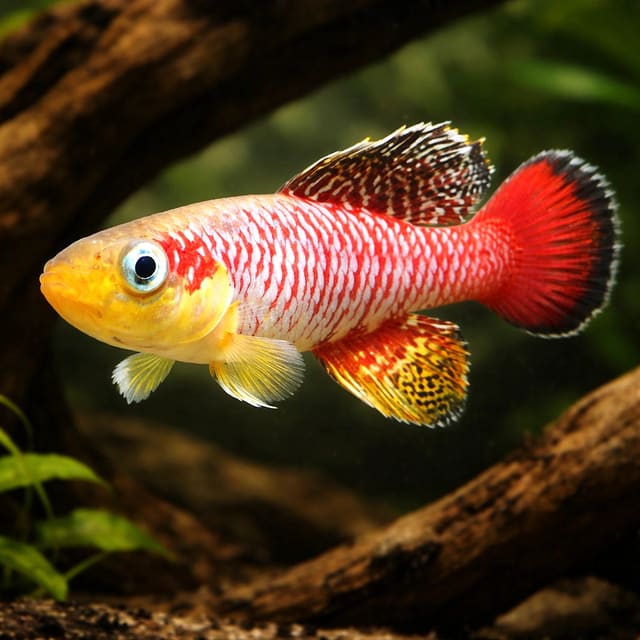
The gallery images are representative of this type of animal rather than photographs of the exact animal supplied, so colours can look slightly different from the live animal.
A secure lid is an essential part of the aquarium. Killifish can jump, and the cover needs to remain effective around equipment as well as over the main opening. Plants and other refuges give the fish somewhere to withdraw, while open routes between them let you observe feeding and interactions. The display can be visually simple as long as it works for the animals.
These fish are not tightly schooling community inhabitants. Males may challenge one another, and a quiet-looking aquarium can still contain social pressure that is easy to miss. The useful questions are whether each fish can reach food, leave an encounter and use more than one area of the tank. A keeper who enjoys noticing those details is well placed to appreciate them.
The natural range is in Nigeria and Cameroon, including the Cross River and Benue drainage regions. The species inhabits smaller waters such as brooks, streams, swamps and pools. That background helps explain the appeal of sheltered planting in an aquarium, while an ornamental aquarium form has its own breeding history.
Gold is one of the aquarium forms developed by breeders. Enjoy it as an ornamental form rather than assigning it a wild population name. The familiar names Gardner's killi and blue lyretail may appear in species references even when a page discusses a different colour form. Match the scientific identity and the form separately when comparing information.
Common aquarium forms of this species are regarded by Seriously Fish as useful choices for people new to keeping killifish. That is most helpful for someone who already understands filter maturation, testing and routine aquarium care. The next step is learning the group's particular needs, especially secure covers and the management of attention between fish.
FishBase describes the species as non-seasonal. It should not be treated as a disposable short-lived inhabitant simply because some other killifishes come from temporary pools. Prepare a permanent aquarium that can support the fish over the long term, with a routine you can maintain during ordinary busy weeks as well as during the excitement of setting up.
If you are comparing different displays, browse the killifish collection with your tank dimensions and water results beside you. Choose the species whose social behaviour, feeding needs and environment fit the home you can provide. The gold form offers a distinct visual character, while the care decision still rests on the animal underneath the colour.
FishBase records a maximum of 6.5 cm total length for male or unsexed Fundulopanchax gardneri. Total length includes the tail. Seriously Fish gives 55 mm standard length, or 5.5 cm excluding the tail fin. These are different measurements, so they should not be read as competing guarantees of the size an individual fish will reach.
Use the larger total-length record when thinking about the adult space to provide, while keeping its male or unsexed species scope in mind. Fish supplied at 3–4 cm still need room to grow. A juvenile-sized animal should arrive in a home planned for its continuing growth and behaviour.
FishBase's species record includes a minimum aquarium length of 60 cm. OATA's broader killifish advice recommends at least 40 litres for a small group of the smallest species. That volume is group-level guidance rather than a species-specific litre minimum. Consider the aquarium's length, furnished layout and intended group together, and provide more space when they need it.
A tall narrow tank and a longer tank may hold similar amounts of water while offering very different living space. Refuges should separate fish from one another rather than simply provide a shaded corner. Check what remains after plants, filter equipment and ornaments are in place. The fish need routes between sheltered areas, and you need access to clean and observe them.
Dense planting and other cover are useful, particularly when more than one male is present. Use the layout to interrupt long views across the aquarium. A fish leaving a refuge should have a route towards another sheltered area, not be funnelled directly past the same rival each time. Practical separation matters more than the number of ornaments.
Live plants are a good choice when you can maintain them well. Suitable artificial plants or safe aquarium ornaments can also provide shelter, as OATA notes in its general guidance. Arrange them so that you can check the fish without repeatedly dismantling the tank. Refuges that hide both a struggling fish and uneaten food for long periods are difficult to manage.
Choose lighting to suit the plants and the way you maintain the display. Keep the focus on useful cover rather than an arbitrary brightness or daily lighting duration for the fish. A clear view of feeding areas helps you notice changes while the planted retreats give the occupants a choice about exposure.
A well-fitting aquarium cover deserves attention before fish are introduced. This species is a strong jumper. Check the main lid, feeding flap and the areas around pipes and cables as a single system: an otherwise covered aquarium can still leave an escape route where equipment passes through.
Think through ordinary jobs such as feeding, siphoning water and checking the filter. A lid that is awkward to replace may be left open longer than intended. Keep access manageable and make closing the aquarium the final step of every job. If another person will care for the fish, show them how the cover fits rather than assuming that its position is obvious.
Inspect the cover again whenever equipment is moved. A change to the outlet or a new cable can alter how neatly the lid sits. Plant growth should also remain clear of the closing surfaces. The goal is a dependable enclosure throughout daily use, not simply a secure tank on the day it is first assembled.
Have the equipment for a water change or transfer ready before opening the aquarium. Move steadily and keep track of where the fish are while working around cover. If an individual needs separating because of social problems, prepare the receiving aquarium first. That reduces the time spent improvising while the fish's home is open.
A cover does not replace careful observation or suitable conditions. Fish still need a functioning filter, good water quality and an arrangement in which they can avoid persistent attention. Include the lid check in that wider routine, alongside temperature, filter flow and a quick look at every animal.
The Seriously Fish species profile gives aquarium guidance of 20–26°C, pH 6.0–7.5 and general hardness 1–10 dGH. These values apply to keeping the species in an aquarium. Use them with the recommendations on cover, space and social composition rather than treating a matching thermometer reading as the whole care requirement.
| Measure | Species aquarium guidance |
|---|---|
| Temperature | 20–26°C |
| pH | 6.0–7.5 |
| General hardness | 1–10 dGH |
FishBase records environmental values of 22–25°C, pH 6.0–7.2 and hardness 5–8 dH. Those are natural-history records, separate from the aquarium range above. OATA's killifish sheet provides broader group advice and should likewise be read with that purpose in mind.
Measure the aquarium and the water used for changes. pH and hardness tell you different things: one cannot reliably stand in for the other. The water chemistry guide helps explain these terms and the tests behind them. Keep a simple record so that a gradual shift is easier to recognise.
Choose a water-preparation routine you can repeat consistently. If you use a prepared mix, make each batch in the same measured way. Avoid guessing at treatments or making sudden adjustments simply because one number looks different from a preferred target. Stability is the result of a reliable process and regular checks, not of continually adding another product.
Use a thermometer to confirm the water temperature. A heater dial indicates a setting, whereas a thermometer shows what the aquarium is doing. Look at the tank during ordinary room conditions and warmer weather, particularly if sunlight or nearby equipment can heat the display. A system that works comfortably in one season may need a different room arrangement in another.
Keep replacement water reasonably matched to the aquarium conditions as part of your planned maintenance. Organise the work before removing water so the fish are not left waiting while equipment or conditioner is found. Consistency is easier when the materials needed for each change are kept together and the routine is simple enough to follow.
The water matcher can help compare your measurements with stated care ranges. Use it to organise the water question, then assess behaviour and space separately. Two species can share numerical ranges while still being unsuitable companions because of chasing, feeding competition or very different social needs.
A working biological filter is essential, even in a densely planted aquarium. The RSPCA's aquarium guidance explains how beneficial bacteria process the ammonia released by fish through nitrite to nitrate. Ammonia and nitrite are toxic, and a tank can contain them while looking perfectly clear.
Set up and mature the filter before bringing livestock home. Use a fishless preparation method and test the water to judge readiness. Judge the filter by waste-processing test results rather than a fixed number of weeks. Our first aquarium guide provides a useful sequence for planning and preparing the system.
OATA's general guidance calls for zero ammonia and zero nitrite before fish are introduced. Keep the tests available afterwards, because feeding and stocking continue to influence the amount of waste the filter must handle. Introduce livestock at a measured pace and check how the aquarium responds rather than filling all its apparent spare space at once.
Position the filter so that the intake and outlet can be inspected without pulling apart the planted retreats. Watch for debris or leaves reducing flow. Clear access makes it more likely that small maintenance jobs will happen promptly, while a hidden filter can make a gradual change easy to overlook.
Check the equipment during feeding, when you are already looking closely at the aquarium. Listen and look for departures from normal operation, but use water testing to assess the biological result. Use test results to check that the filter is handling the current waste load, even when it sounds normal. Keep its function, the fish's behaviour and test results in the same picture.
This killifish feeds mainly on small animal foods. The species profile describes a micropredator taking items such as tiny crustaceans, worms and insect larvae, with some plant material also consumed. In an aquarium, dried foods are accepted in most cases, and regular small live or frozen foods such as Artemia, Daphnia or bloodworm add variety.
Match food size to the fish in front of you. The supply grade is small, so check that particles can be swallowed comfortably. A fish repeatedly taking and rejecting the same item may need a smaller or more suitable food. Watching the meal gives more useful information than assuming all products labelled for tropical fish are equally appropriate.
Offer the food in a place where the fish can reach it and watch what happens before adding more. Refuges should allow a quieter individual to approach a feeding area without repeatedly passing a dominant male. If attention between fish prevents one from feeding, resolve that access problem rather than expecting a larger portion to compensate.
OATA's broad killifish advice recommends feeding once a day, giving only what the fish eat within a few minutes. Use that as general portion-control guidance and check appetite and body condition. A fixed pinch is not a precise measure: different foods vary greatly in particle size and how they move through the water.
Remove uneaten food rather than allowing it to break down among the planting. If leftovers are a regular problem, reduce the amount and inspect the feeding response more closely. If one fish is losing condition while others look well fed, consider both food access and social pressure. The average appearance of the group can hide a problem affecting one individual.
Keep the routine clear for anyone feeding in your absence. Show the food and the portion rather than leaving a vague instruction to give a little. It helps to demonstrate where the fish usually feed and what uneaten food looks like in the aquarium. That makes it easier for another keeper to notice when the usual routine changes.
The OATA killifish care sheet recommends a partial water change of 25% at least once every week, with testing at least weekly. Siphon out settled waste and condition replacement tap water to remove chlorine or chloramine before adding it to the aquarium.
OATA gives general guidance of zero ammonia, zero nitrite and nitrate no more than 20 mg per litre above the normal tap-water level. Check the supply when interpreting that nitrate comparison. If the aquarium's results worsen, review feeding, stocking and filtration alongside the maintenance schedule. The measured result matters alongside the maintenance routine.
Inspect the planted areas during maintenance. Remove debris without unnecessarily stripping away the fish's cover. Check whether growing plants have closed a route between refuges or made an area difficult to clean. The layout should remain useful as it matures, not only look good when first planted.
Check filter components for blockages. When media needs cleaning, rinse it lightly in aquarium water removed during the water change. Do not rinse filter media under the tap, because chlorine or chloramine can damage the bacteria that process waste. Restore flow while preserving the biological function.
Keep a brief note of significant maintenance, changes in feeding and any new inhabitants. Add the test results and temperature when something seems different. A small record can make a conversation about a concern much more useful than trying to reconstruct several weeks from memory.
Watch swimming, breathing, appetite, body condition and the condition of fins and skin. OATA recommends attention to persistent hiding, unusual breathing, altered colour, loss of fins or changes in feeding. Compare an individual with its own normal behaviour rather than expecting every fish to act like the boldest one in the aquarium.
If a fish stops eating, stays confined to a corner or appears damaged, test the water and inspect interactions before assuming a cause. Several problems can produce similar outward signs. Seek advice with the water results, a description of the change and clear images where possible. Treatment should follow an assessment of the problem rather than a guess based on a single symptom.
Prepare the aquarium and arrange for someone to receive the delivery. Tropical Fish Co's delivery and Live Arrival Guarantee policy describes fish hand-bagged with pure oxygen in insulated packaging, with a heat pack when the weather calls for it. A licensed live-animal courier carries the parcel, and the confirmed delivery date and tracking are sent by email.
A Live Arrival Guarantee claim requires a continuous unboxing video: show the sealed parcel, the box being opened and the fish still in the sealed bag. The recording establishes their condition before the contents are disturbed. Someone must receive the parcel, and it must be opened and inspected on the day it arrives.
If there is a problem, contact Tropical Fish Co that day with the order number and video. Read the policy beforehand so the person receiving the delivery understands the steps. Keeping claim evidence is separate from providing the fish with an appropriate aquarium and careful acclimatisation.
The store advises slow acclimatisation, including floating the bag for 20–30 minutes to equalise temperature, and keeping the bag water out of the aquarium. Follow the arrival instructions and have the equipment ready before opening the parcel. Keep the aquarium securely covered again after the fish have been introduced.
Observe the new fish in the layout you prepared. Pay particular attention to whether it can leave another fish's attention and find shelter. Continue water testing and watch the first feeding responses. An attractive appearance on arrival is only the beginning of the ongoing care routine.
Gold Gardneri Killifish are best approached as the focus of a deliberately planned display. Seriously Fish describes the species as capable of living with other fishes but unsuitable for a general community aquarium. A simple arrangement centred on its needs makes feeding, cover and social interactions easier to observe and manage.
Males can be aggressive towards each other. The species profile recommends ideally two to three females per male and enough refuges for a group to share the aquarium. That ratio spreads attention, while the layout gives fish somewhere to go. It is a keeping recommendation rather than a promise that any group will remain peaceful.
Look beyond brief displays to the effect on the individual receiving attention. Does it return to feeding and ordinary movement, or does it remain hidden and lose access to the rest of the tank? Repeated pursuit of the same fish, worsening fin condition or missed meals calls for action. Arrange a suitable alternative home before a separation becomes urgent.
Buying several fish does not establish a particular sex ratio, and the images do not demonstrate a bonded pair. Plan around the sexes actually present. Avoid treating a group count as a substitute for observing what is happening after introduction. A larger aquarium may allow more separation, but a large open space without cover can still leave individuals exposed.
OATA's general killifish guidance warns about boisterous tankmates and about aggression towards long-finned fishes in some species. Apply a cautious planning approach: avoid fish that crowd feeding areas, harass the killifish or offer long fins as a target. A quiet display with fewer demands is often easier to maintain than a mixture in which every feeding needs intervention.
Assess adult size, feeding style and water requirements together. Small animals should not automatically be classed as safe merely because they occupy little space. Equally, a bottom-dwelling fish can still compete for food or change how the killifish use their shelters. Leave enough usable area for each inhabitant's own social needs.
A general description of peaceful behaviour is only one part of a tankmate assessment. It says little about the balance between two particular fish, or about the effects of a cramped layout. Watch the result after any introduction and have a practical way to respond if the arrangement is not working.
The Clown Killifish offers another killifish display to explore if you are deciding what to keep. Read its own care requirements and compare them with your aquarium. A related product is an alternative choice to investigate, not an instruction to house the two together.
When your main aim is breeding shrimp, raising fish fry or protecting other very small animals, plan their housing separately. Feeding on small animal foods is part of this species' natural history, so the survival of tiny companions should not depend on an assumption that ornamental colour or a generally calm appearance makes them harmless to everything smaller.
FishBase records 6.5 cm total length for male or unsexed fish of the species, including the tail. Seriously Fish gives 55 mm standard length, excluding the tail. Plan for the species' adult size and social needs rather than assuming the smaller supply grade is its final size.
For Gold Gardneri Killifish, FishBase records a minimum aquarium length of 60 cm. OATA recommends at least 40 litres for small groups of the smallest killifishes as broad group guidance. Consider both the footprint and the furnished layout, and provide more space when the intended group needs it.
Seriously Fish recommends ideally two to three females per male, with sufficient refuges. Males may compete, so observe whether every individual can feed, retreat and rest. A purchase quantity does not establish the sex balance, and the aquarium may need adjustment or an individual separating if attention becomes persistent.
Common aquarium forms of this species can suit someone new to killifish who understands filter maturation and routine testing. A secure cover, suitable water, controlled feeding and management of male attention are the main practical commitments. Prepare the aquarium fully before adding fish.
Gold Gardneri Killifish usually accept suitable dried foods, alongside regular small live or frozen foods such as Artemia, Daphnia and bloodworm. Watch each fish swallow its share. Remove leftovers and review food access if one individual misses meals while the others feed readily.
Seriously Fish gives species aquarium guidance of 20–26°C, pH 6.0–7.5 and general hardness 1–10 dGH for Fundulopanchax gardneri. Test aquarium and replacement water, use a thermometer and follow a consistent preparation routine. FishBase environmental records serve a different natural-history purpose.
Males can show aggression towards each other. Cover and a suitable balance of sexes help manage attention, but persistent chasing or exclusion from food needs intervention. OATA also advises caution about long-finned companions in killifish aquariums, so avoid treating a calm appearance as a guarantee of compatibility.
A display focused on the killifish is a useful starting point. The species can live with selected other fishes, but Seriously Fish advises that it is unsuitable for a general community. Avoid boisterous or long-finned companions and assess adult size, food access and water needs before mixing inhabitants.
Tropical Fish Co uses oxygen-filled bags, insulated packaging and a licensed live-animal courier. Receive and inspect the parcel the same day. For a Live Arrival Guarantee claim, record a continuous unboxing video showing the sealed parcel being opened and the fish still in their sealed bag, then contact the store that day with your order number and video.
FishBase's synonym table connects the familiar name Aphyosemion gardneri with the accepted Fundulopanchax gardneri. The species record covers natural history and recorded size; Seriously Fish covers aquarium conditions and social behaviour. OATA and the RSPCA provide general maintenance and welfare guidance. Keeping these purposes clear helps when two references use different kinds of measurements or discuss different groups of fish.
No reviews for this item yet. Bought one? Honest reviews only, good or bad.
What customers say about ordering from us
I have a small group of long finned mountain minnows. So was delighted to be able to order ten of this variety to increase the genetics in my tank . The ones I recieved are healthy but it’s to early to give a verdict on wether they are of a long finned type since they are small currently.
Gordon Walker · 23 Sept 2026
100% success travel and "installation". Pleased with quality of purchase. The Siamese fighter a bit "shy" so have not yet seen him at his best yet but looking good. Happy customer. GG
George E Garratt · 21 Sept 2026
Reviews of our shop, collected by Judge.me, an independent third-party review collector. Newest first.