Advanced
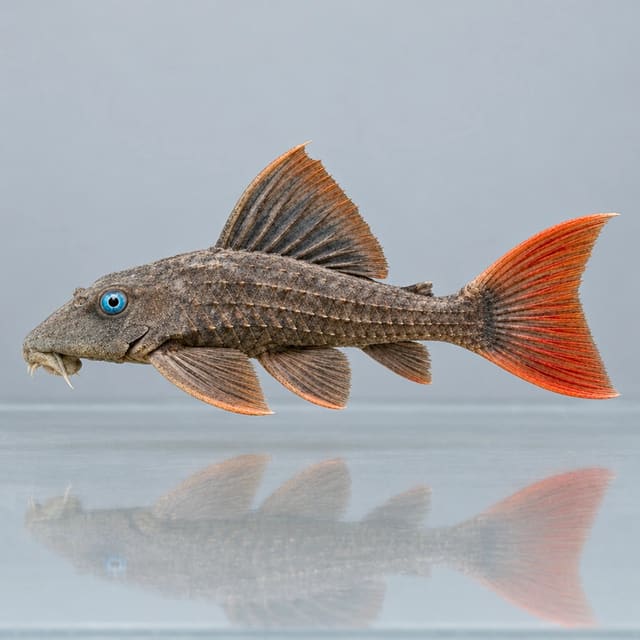
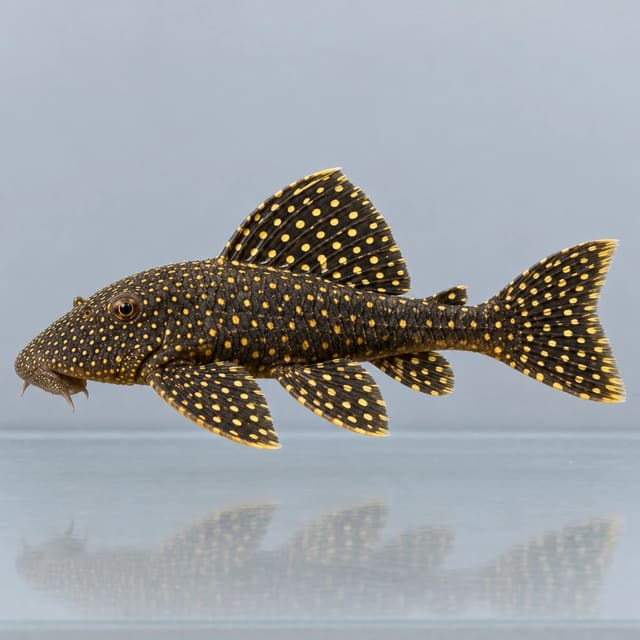
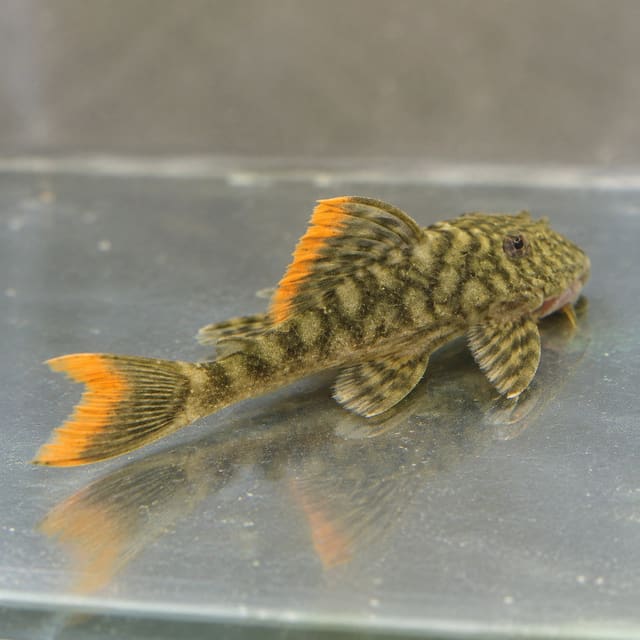
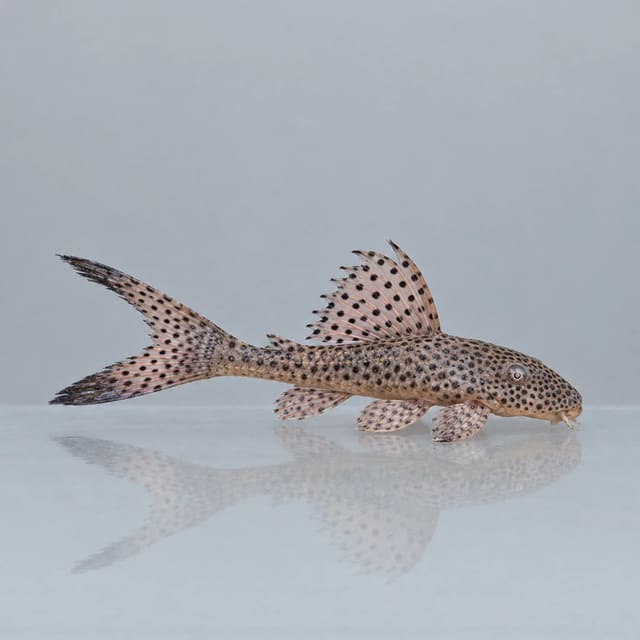
L011 Red Fin Thresher Pleco (Aphanotorulus emarginatus)
pH 6.4–7.2
£52.39
Lamontichthys filamentosus, the Kite Pleco or Sturgeon Catfish, is a slender Amazon whiptail catfish with long filaments on its dorsal, pectoral and tail fins. It grows to 167 mm standard length and needs a group, a 120 × 45 cm base, strong, clean, well-oxygenated flow and patient feeding, so it suits experienced keepers. One live fish per purchase.
Lamontichthys filamentosus
Quantity discounts are pricing offers, not a group-size recommendation. Check the full care guidance and your existing animals before choosing a quantity.
Lamontichthys filamentosus, the Kite Pleco or Sturgeon Catfish, is a slender Amazon whiptail catfish with long filaments on its dorsal, pectoral and tail fins. It grows to 167 mm standard length and needs a group, a 120 × 45 cm base, strong, clean, well-oxygenated flow and patient feeding, so it suits experienced keepers. One live fish per purchase.
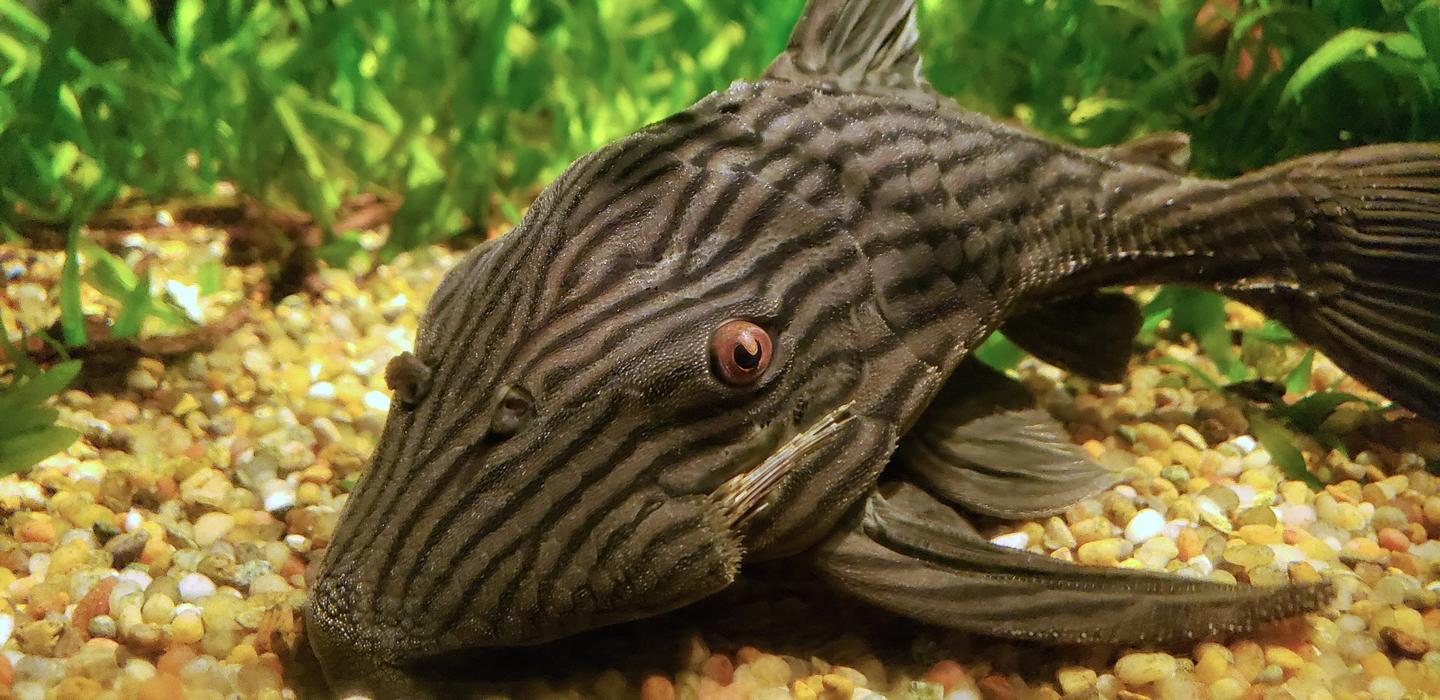
‘Pleco’ is a loose aquarium-trade label, not one species or one care sheet. Before buying, confirm the scientific name or defensible L-number, adult size and measurement method, required footprint, temperature and water, diet, social plan and source. No universal pleco tank size, menu or algae result is honest.
Read the full care guidance when planning conditions for your aquarium.
Lamontichthys filamentosus is a slender, armoured suckermouth whiptail catfish from the Amazon, prized for the long, trailing filaments on its dorsal, pectoral and tail fins. Seriously Fish calls it the Sturgeon Catfish and Planet Catfish the Kite Pleco; we sell it as the Kite Pleco Whiptail Catfish. It was first described as Harttia filamentosa in 1935 and is named after Francesca LaMonte, while filamentosus refers to those fin extensions. Planet Catfish notes that it keeps its filaments even through rough shipping.
Seriously Fish gives its range as the central and western Amazon basins in Brazil, Peru, Ecuador and Bolivia, in rivers including the Juruá, Madeira, Marañón, Purus, Ucayali and the Amazon itself, and Planet Catfish says most aquarium fish are exported from Iquitos in Peru. It comes from fast-flowing water and, despite its delicate look, enjoys a strong current. FishBase lists it as Least Concern on the IUCN Red List (assessed in 2020).
Be clear-eyed before buying. Seriously Fish recommends this species only for experienced aquarists, and Planet Catfish warns that it often fades away after a few months in captivity because it is hard to wean onto aquarium foods. Kept well, in a group, in clean, fast water, it is one of the most elegant catfish in the hobby.
| Feature | What to look for (Seriously Fish and Planet Catfish) |
|---|---|
| Pectoral fins | In fish over 60 mm standard length, the first pectoral spine extends into a filament more than four times as long as the first branched ray; no other Lamontichthys has this |
| Dorsal fin | The spine can carry a filament long enough to reach the tail margin; only L. llanero shares this |
| Pectoral rays | Seven branched rays in each pectoral fin across the genus, where most whiptails have six |
| Lower lip | Semicircular rather than semi-oval, though Planet Catfish notes this can vary between the sexes |
| Head | Broader than in L. llanero |
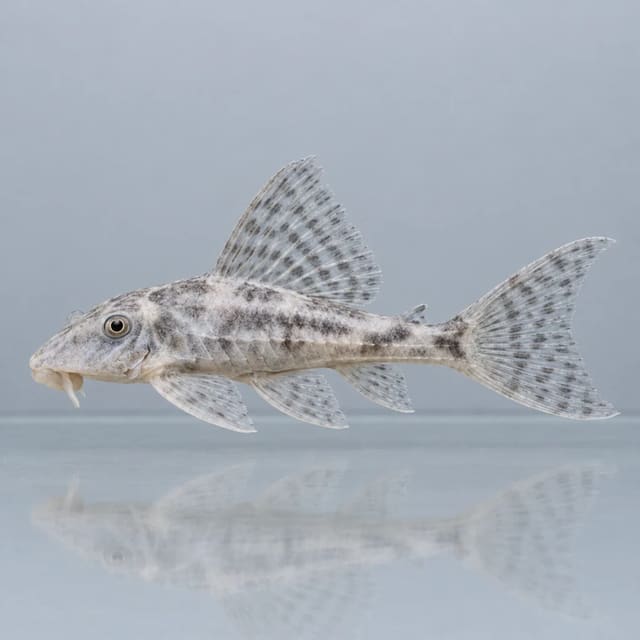
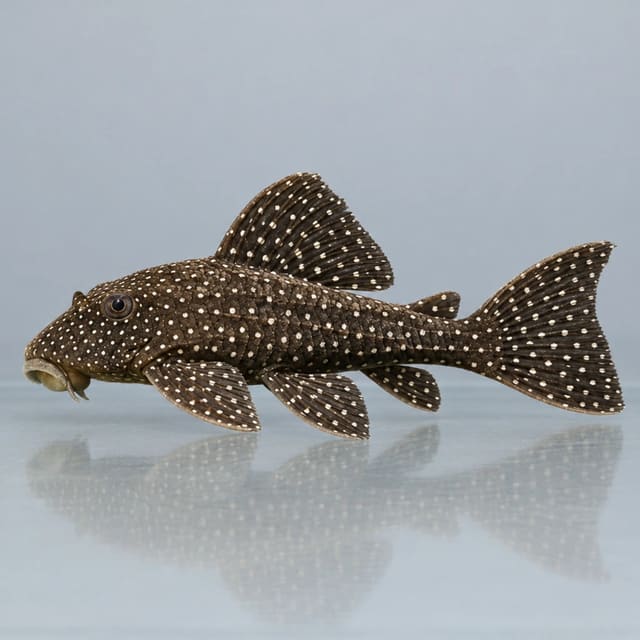
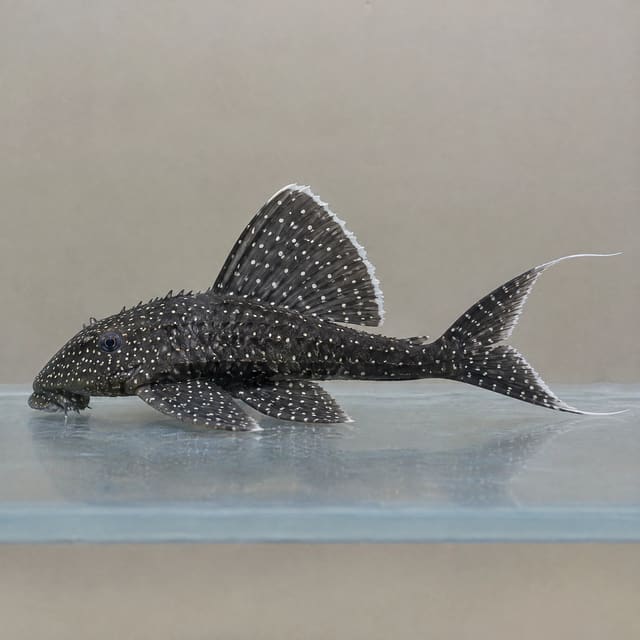
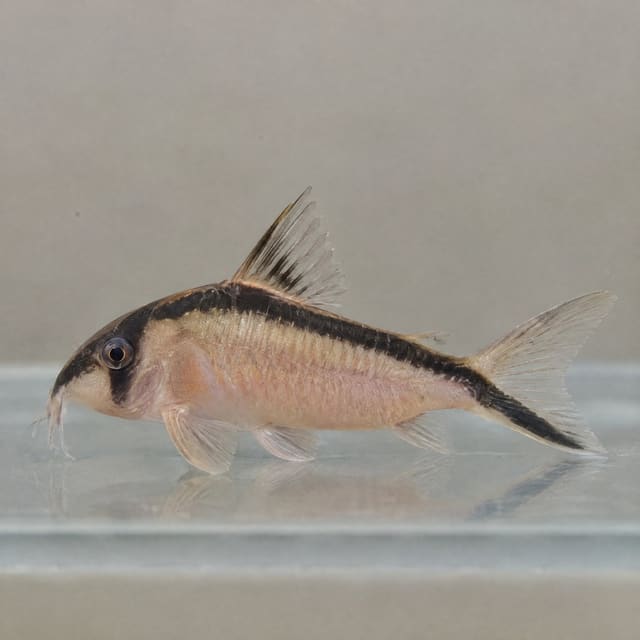
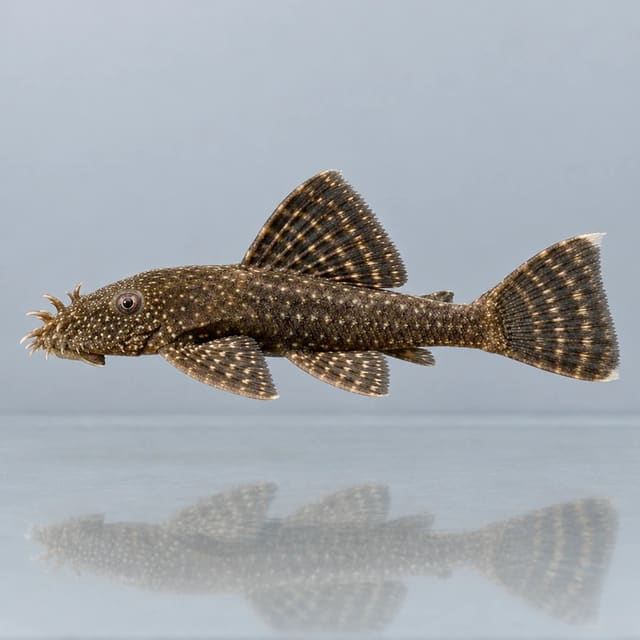
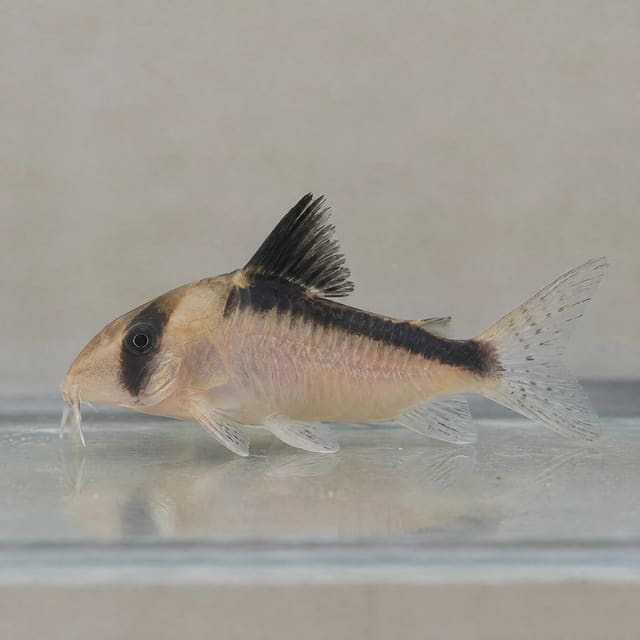
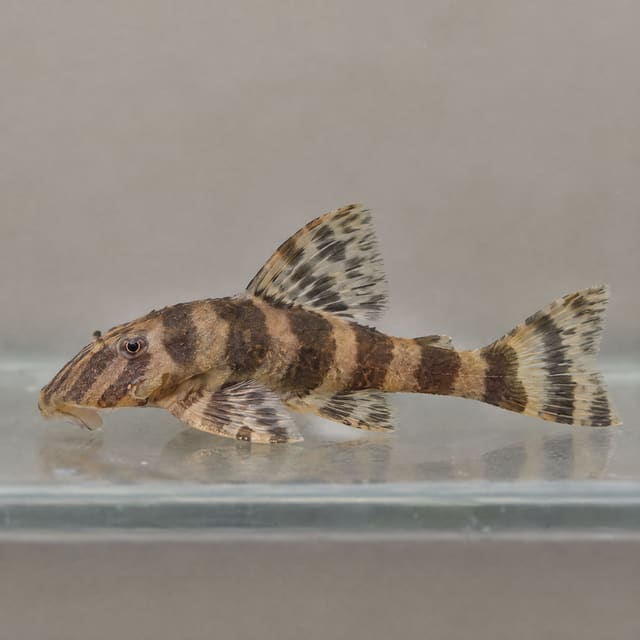
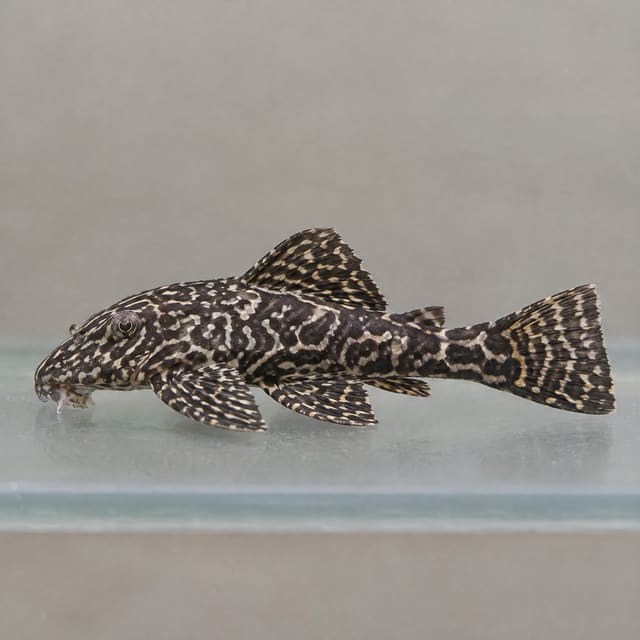
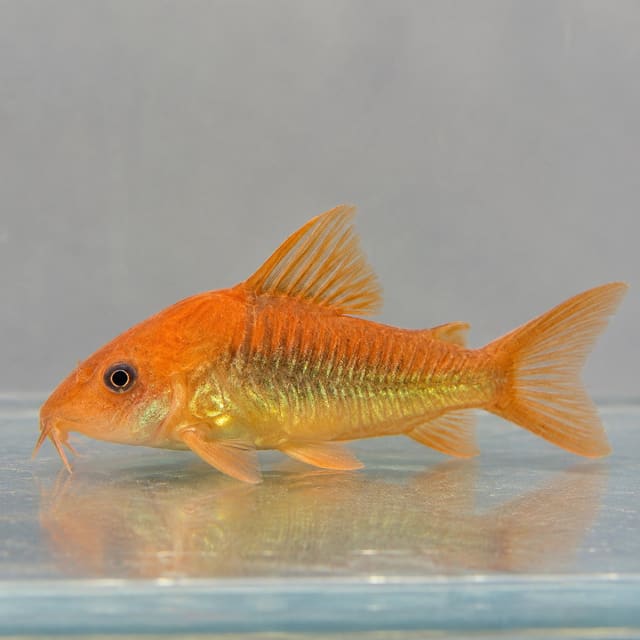
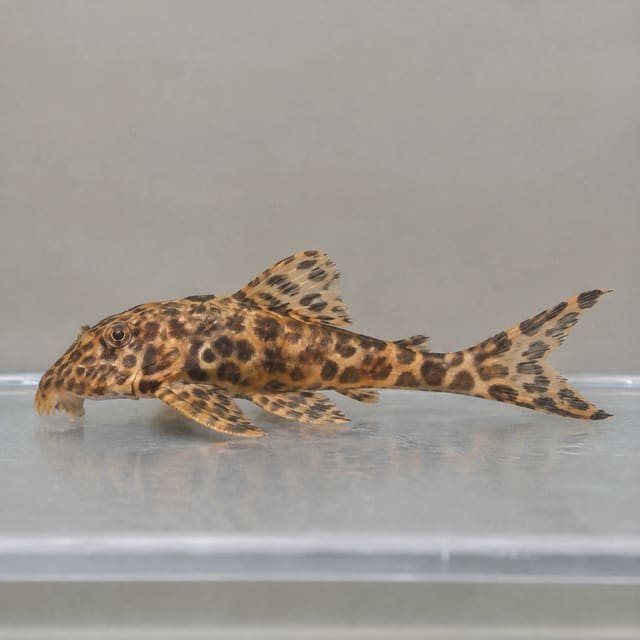
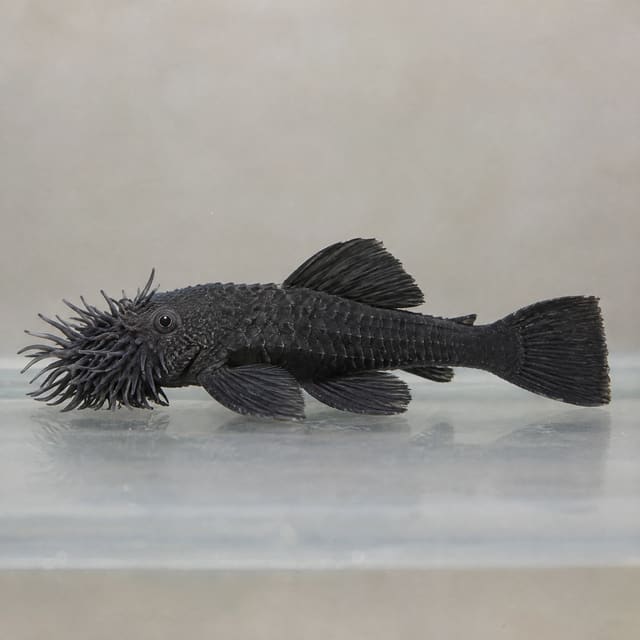
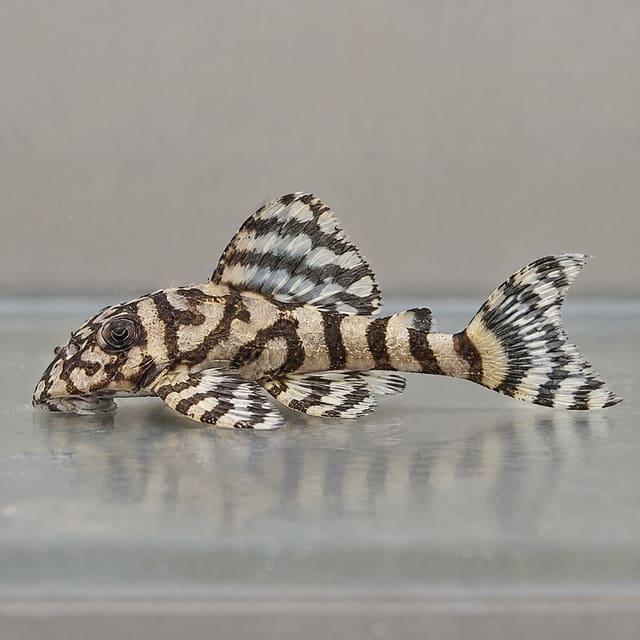
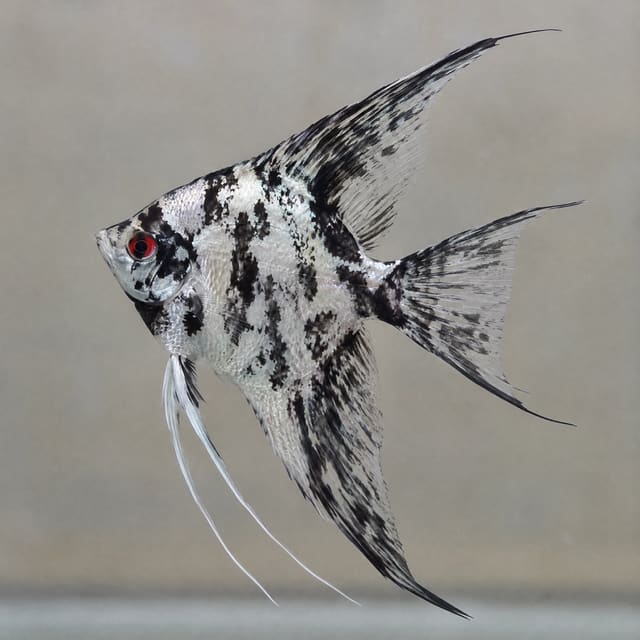
One purchase supplies one live fish in the standard size we receive. Sex is not specified, and the sources do not give a reliable outward way to sex young fish. The gallery images are representative, prepared from a reference photograph, and do not show the individual you will receive.
Read our delivery and Live Arrival Guarantee policy before you order.
Seriously Fish, FishBase and Planet Catfish all give 167 mm standard length, measured without the tail, and the fin filaments add noticeably to the overall length. Some sellers quote 18–20 cm; we use the published figure. Seriously Fish states that an aquarium with a base of at least 120 × 45 cm, about 243 litres, is required for long-term care. Our tank volume calculator turns any set of measurements into litres.
Planet Catfish recommends long, sweeping pieces of driftwood, broad, flat stones and, especially for younger fish, long, flat-leaved plants such as Vallisneria. Its keepers found that this catfish feeds only from flat surfaces, and that success comes from experimenting with flow and decoration to create areas of strong current alongside quieter feeding areas. OATA advises sand or fine gravel for all catfish to protect their sensitive barbels.
| Area | Purpose |
|---|---|
| Strong-current lane along the back | The fast, oxygen-rich water the species enjoys |
| Broad, flat stones in calmer water | Feeding surfaces where food can be placed and grazed |
| Long, sweeping driftwood | Resting places and grazing surfaces along the current |
| Vallisneria or similar long-leaved plants | Cover and leaf surfaces, especially for young fish |
Browse our Sturisoma whiptails, close relatives that use similar wood-and-flow layouts.
The published temperature ranges barely overlap, so this fish needs a steady, carefully chosen setting rather than a wide band.
| Value | Seriously Fish | Planet Catfish | FishBase | Our target |
|---|---|---|---|---|
| Temperature | 22–30°C | 22–24°C | 24–27°C | A steady 24°C |
| pH | 5.5–7.5 | 6.0–7.6 | Not given | 6.0–7.5 |
| Hardness | 2–15 dGH | Not given | Not given | 2–15 dGH |
Seriously Fish stresses clean, well-oxygenated, stable water. UK tap water varies widely in hardness and pH from region to region; your water company publishes figures for your postcode, and our water matcher compares them with this fish. Our water chemistry guide explains how to adjust readings slowly.
| Reading | Target |
|---|---|
| Ammonia | Zero mg/l |
| Nitrite | Zero mg/l |
| Nitrate | No more than 20 mg/l above your tap water |
These limits come from OATA's catfish care sheet, which warns that some catfish are stressed by even small amounts of ammonia and nitrite.
Seriously Fish advises an oversized filter as a minimum, and Planet Catfish notes the strong current this species enjoys. Combine a powerful filter with a circulation pump to drive water along the tank, keep the surface moving for oxygen, and fit guards to intakes. Our guide to aquarium filtration explains how to size and combine the stages.
Seriously Fish describes a natural diet of benthic algae and the micro-organisms living in them, rasped from surfaces. In the aquarium it accepts quality dried foods and live or frozen bloodworm, but Seriously Fish warns that it may suffer internal problems if the diet holds too much protein, and recommends home-made gelatin-bound foods with plenty of fresh vegetables. Planet Catfish puts the main risk plainly: this fish often fades away after a few months because algae are hard to replace in the aquarium, and success lies in weaning it onto prepared foods.
Before the fish arrive, confirm a mature filter, zero ammonia and nitrite, 24°C and a pH of 6.0–7.5, and have the feeding stones in place. Use OATA's floating bag method: switch off the lights, float the sealed bag for about 10 minutes, add small amounts of aquarium water over up to 20 minutes, and release the fish with as little bag water as possible. Our guide to acclimatising new fish covers each step.
| Checkpoint | What to do |
|---|---|
| First evening | Lights off; place a small amount of gel food on a flat stone |
| Every day, week one | Count the fish and check every belly |
| Mid-week | Retest ammonia and nitrite |
| Weeks two to four | Adjust food type and position until every fish is feeding |
| End of month | Confirm stable weight across the group before adding other fish |
A healthy Kite Pleco rests on wood, stones or glass in the current with its filaments trailing, and grazes steadily. OATA's catfish care sheet lists the warning signs worth acting on.
| If you see | Do this |
|---|---|
| A sunken belly | Change the food or where it is placed, and check tank mates are not taking it |
| Hiding in still corners | Check flow and oxygen; this species needs moving water |
| Fast breathing or hanging near the surface | Test ammonia, nitrite and temperature at once and increase aeration |
| Frayed or missing filaments | Look for fin-nipping tank mates and remove them |
| White spots or fluffy growths | Test the water and seek fish-health advice before treating |
Seriously Fish advises choosing tank mates carefully. For whiptails in general, Practical Fishkeeping suggests similarly mild-tempered companions such as small tetras, and warns against species that might nip the tail filaments. Because Lamontichthys feeds slowly from flat surfaces, also keep it away from fish that compete hard for food on the bottom.
| Suits | Avoid |
|---|---|
| A group of its own kind | Fin-nippers that target the filaments |
| Calm midwater fish that tolerate strong flow | Boisterous bottom feeders |
| Small, peaceful tetras | Large plecos that take over the feeding surfaces |
| Fish happy at a steady 24°C | Large or aggressive fish |
A shoal of Rummy Nose Tetra or another of our peaceful tetras can work in midwater once you confirm the temperature suits both. For related whiptails, compare the Royal Whiptail Catfish, Black-Nosed Whiptail Catfish, Bearded Whiptail Catfish and the Twig Catfish (Farlowella acus); our pleco care guide covers the wider family. Browse all South American catfish, our rare and collector fish and catfish and plecos, and check any mix with our tank mates tool.
Planet Catfish summarises a captive spawning reported by Evers and Seidel at the Zoo Aquarium in Basel, Switzerland. A group of five, four full-size fish and one smaller 12 cm fish that proved to be the spawning male, lived in a 280-litre tank filtered at 4,000 litres per hour, with the current directed to the back. For two weeks beforehand water was changed every second day, lowering the conductivity; at spawning the water was 27°C, 50 µS/cm and pH 7.3. About 45–50 eggs of 3.7–3.9 mm were laid on the glass behind stones and wood, hatched after eight days, and produced fry of 12 mm plus a 1 mm filament. The young died some weeks later through an oversight. These are breeding conditions, not routine keeping values.
It is a slender, armoured suckermouth whiptail catfish (family Loricariidae) from the central and western Amazon. Seriously Fish calls it the Sturgeon Catfish and Planet Catfish the Kite Pleco; it is known for long filaments on its dorsal, pectoral and tail fins.
Seriously Fish, FishBase and Planet Catfish all give 167 mm standard length, measured without the tail. The fin filaments add noticeably to the overall length.
Seriously Fish gives a minimum base of 120 × 45 cm, about 243 litres, for long-term care. A group needs that floor area at least.
The sources differ: Seriously Fish gives 22–30°C, Planet Catfish 22–24°C and FishBase 24–27°C. A steady 24°C is the only value inside all three ranges, so we suggest holding it there.
Yes. Seriously Fish recommends it only for experienced aquarists, and Planet Catfish notes that it often fades away after a few months because it is hard to wean onto aquarium foods. Strong flow, flat feeding surfaces and patient feeding are the keys.
In the wild it rasps algae and the tiny organisms living in them from surfaces. In the aquarium offer quality dried foods, home-made gel foods with plenty of vegetables, and some bloodworm, but avoid a high-protein diet.
Yes. Seriously Fish says it needs to be kept in a group, and Planet Catfish describes it as peaceful and well mannered with its own kind.
Calm midwater fish that tolerate a strong current, such as small tetras. Avoid fin-nippers that target its filaments, and boisterous bottom feeders or large plecos that take over the feeding surfaces.
No reviews for this item yet. Bought one? Honest reviews only, good or bad.
What customers say about ordering from us
Easy website plenty of info on fish your buying great to pick a time slot
TRACEY DURRANT · 7 Oct 2026
Got some lovely fish thank you
Kevin Mackie · 7 Oct 2026
Reviews of our shop, collected by Judge.me, an independent third-party review collector. Newest first.
Moved by UK carriers licensed to handle live animals
Hand-packed with oxygen bags, poly box, heat pack
Email photos the same day; an optional unboxing video helps us review problems faster — claim terms apply
Klarna & PayPal Pay in 3 at checkout