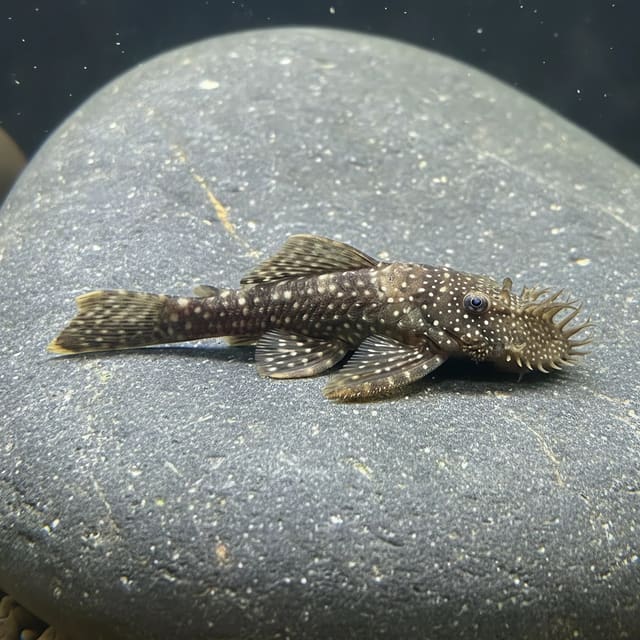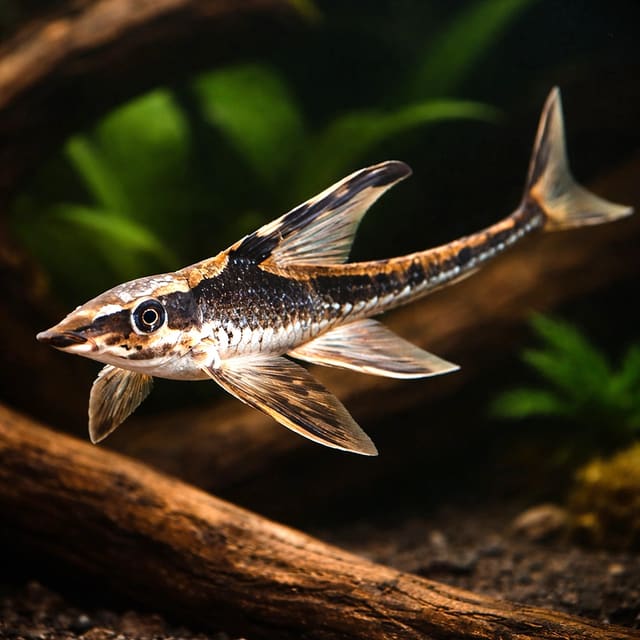
Royal Whiptail Catfish (Sturisomatichthys panamensis)
£19.99

A graceful South American whiptail catfish for mature planted aquariums, with high oxygen, stable water, vegetable-rich feeding and peaceful tank mates.
Adult size is the maximum length this species reaches at full maturity (scientific sources). The livestock you receive will be younger and smaller — pick a size above for the actual shipping size. Product-photo provenance and any image-specific limitations are stated on the listing.
Sturisoma barbatum
Confirm your email, then we’ll send an availability message for this exact item if it returns within 180 days.
This request is only for this product—no newsletter or other promotions. A mail-provider retry may very rarely duplicate the same availability message. Unconfirmed addresses are removed after 48 hours. See our privacy policy.
A graceful South American whiptail catfish for mature planted aquariums, with high oxygen, stable water, vegetable-rich feeding and peaceful tank mates.
Adult size is the maximum length this species reaches at full maturity (scientific sources). The livestock you receive will be younger and smaller — pick a size above for the actual shipping size. Product-photo provenance and any image-specific limitations are stated on the listing.
Maintain these water conditions for optimal health and vibrant colors
Sturisoma barbatum is a long-nosed whiptail catfish with the lean, twig-like outline that makes this group so distinctive. It suits a mature planted aquarium where the water is clean, oxygen-rich and stable, with driftwood, smooth stones and broad leaves for grazing. The fish is peaceful and elegant rather than bold or boisterous, so the best results come from a calm community built around good water quality and steady feeding.
Think of this fish as a specialist grazer rather than a general-purpose clean-up animal. It can help pick at soft growth and biofilm, but it still depends on the keeper for suitable prepared foods, low waste levels and quiet tank mates. A thin belly, clamped fins or constant hiding usually points to competition, poor oxygen or an immature aquarium rather than a fish that is simply shy.
| Care area | Recommended target | Why it matters |
|---|---|---|
| Tank style | Mature planted community with wood, flat stones and open glass/leaf surfaces. | Gives this grazing catfish natural resting and feeding areas. |
| Water quality | Zero ammonia/nitrite, low nitrate and regular partial water changes. | Sturisoma are far less forgiving of stale water than many robust plecos. |
| Oxygen and flow | Good surface movement, strong filtration and a gentle river-style current. | They come from flowing South American systems and do best with high oxygen. |
| Temperature | Keep on the cooler tropical side, around 22-25C for everyday care. | Very warm, low-oxygen aquariums are a poor fit for long-term health. |
| Diet | Biofilm, algae wafers, spirulina foods and blanched vegetables. | A vegetable-rich, grazing diet supports body condition and digestion. |
Sturisoma barbatum has a slender armored body, a long snout, a flattened underside and a whip-like tail. The colour is usually tan, brown and darker mottling rather than bright display colour, but the shape gives it real visual impact. Mature males can develop bristle-like odontodes around the snout and pectoral area, while females usually stay smoother. In the aquarium it often rests on wood, leaves or glass, then moves in a measured, deliberate way rather than darting around the tank.
| SKU / size | Best fit | Planning note |
|---|---|---|
| 8260 / 4-5 cm | Best for keepers happy to grow the fish on. | Needs a mature tank from day one even when the fish is still small. |
| 8261 / 6-7 cm | Useful for a larger peaceful community. | Easier to see body shape and condition, but still needs careful settling. |
| 8262 / XL | For established spacious aquariums only. | Match with calm tank mates and avoid crowded, competitive feeding setups. |
FishBase records a much larger maximum size for the species than most young shop specimens show, so plan the adult aquarium rather than buying only for the size on arrival. A long tank with stable water is more important than a tall display tank with little grazing area.
FishBase places Sturisoma barbatum in the Paraguay River basin, with reports from the Paraná and Uruguay systems. These river habitats explain the care priorities: oxygen, flow, clean water and surfaces where biofilm can develop. It is not a fish for a brand-new aquarium with sterile decor. A mature tank with wood, plants and established microbial growth gives it something to work with between prepared feeds.
Use a soft sand or smooth gravel base, add driftwood and give the fish broad resting surfaces. Strong filtration is valuable, but avoid blasting the fish around the aquarium; the best flow is steady and oxygenating, with calmer resting zones. Keep a tight lid because long-bodied catfish can move surprisingly quickly when startled. A planted layout with open front glass works well because it leaves viewing space while still giving shelter.
When placing the decor, leave several horizontal surfaces at different heights. Juvenile fish may use leaves and glass more often, while larger fish often spend long periods braced against wood or flat stone. Keep those resting areas clear of sharp edges and avoid heavy territorial plecos that may push them away from food.
| Feature | Good choice | Avoid |
|---|---|---|
| Tank maturity | Established biofilm, stable filter and settled plants. | Freshly set up tanks with unstable water. |
| Decor | Wood, smooth stones, broad leaves and shaded resting areas. | Sharp rockwork or bare tanks with no grazing surfaces. |
| Flow | Moderate current and good oxygenation. | Dead spots, low oxygen or excessive heat. |
| Maintenance | Weekly water changes and careful nitrate control. | Letting waste build up because the fish is a catfish. |
A practical aquarium target is soft to moderately hard water around pH 6.4-7.5, with temperature kept on the cooler tropical side where oxygen remains high. The previous local care range said 22-28C, but the safer working range for day-to-day care is narrower: aim for 22-25C unless the rest of the community has a specific reason to sit warmer. Stability, oxygen and cleanliness matter more than chasing a perfect number.
This species grazes biofilm, soft algae and aufwuchs, but it still needs deliberate feeding in captivity. Offer algae wafers, spirulina-based sinking foods and blanched vegetables such as courgette, cucumber and spinach. Remove uneaten vegetable pieces before they spoil. Small protein feeds can be used occasionally, but this is not a predator catfish and should not be fed like one.
Competition is the main feeding risk. If mid-water fish or larger bottom dwellers take every wafer before the whiptail settles, feed after lights dim or place food near its chosen resting area. A healthy fish should keep a gently filled belly and spend time grazing across several surfaces rather than sitting motionless with a pinched body.
| Food type | How often | Notes |
|---|---|---|
| Algae/spirulina wafers | Most days in small amounts. | Feed after lights dim if faster fish steal food. |
| Blanched vegetables | Several times per week. | Use clips or a clean weight, then remove leftovers. |
| Biofilm and wood grazing | Constant background food. | Helpful, but not enough by itself in a clean aquarium. |
| Protein extras | Occasional small portions. | Keep modest so the diet stays plant-led. |
Sturisoma barbatum is peaceful and should not be mixed with aggressive cichlids, rough plecos or fin nippers. Good companions include calm tetras, pencilfish, hatchetfish, peaceful dwarf cichlids and non-boisterous Corydoras in a layout that suits all species. Avoid fish that constantly outcompete bottom foods. If you want to browse related groups, see our South American catfish, catfish and Farlowella-style whiptail sections.
Sturisoma species are open surface spawners, often using glass, wood or broad leaves. The male may guard the eggs. Breeding success depends on excellent water quality, good oxygenation, a vegetable-rich diet and low stress. Raising fry is usually the difficult part because they need constant access to clean grazing foods and stable water.
| Before checkout | What to check |
|---|---|
| Tank readiness | The aquarium should be mature, oxygen-rich and already stable. |
| First order | Use WELCOME10 where eligible for 10% off a first order. |
| Delivery | Livestock is packed for specialist courier delivery with weather-aware packing. |
| Arrival support | Eligible livestock orders are covered by our Live Arrival Guarantee when the delivery and acclimation steps are followed. |
No reviews for this item yet. Bought one? Honest reviews only, good or bad.
What customers say about ordering from us
I have a small group of long finned mountain minnows. So was delighted to be able to order ten of this variety to increase the genetics in my tank . The ones I recieved are healthy but it’s to early to give a verdict on wether they are of a long finned type since they are small currently.
Gordon Walker · 23 Sept 2026
100% success travel and "installation". Pleased with quality of purchase. The Siamese fighter a bit "shy" so have not yet seen him at his best yet but looking good. Happy customer. GG
George E Garratt · 21 Sept 2026
Reviews of our shop, collected by Judge.me, an independent third-party review collector. Newest first.