Moderate
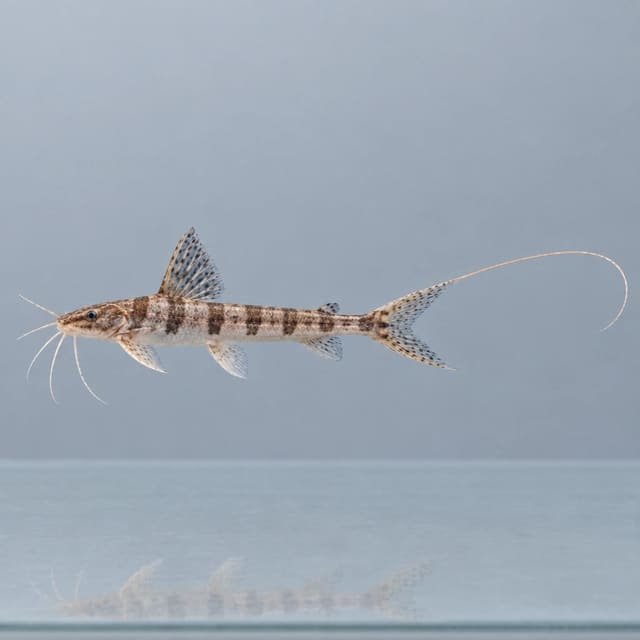
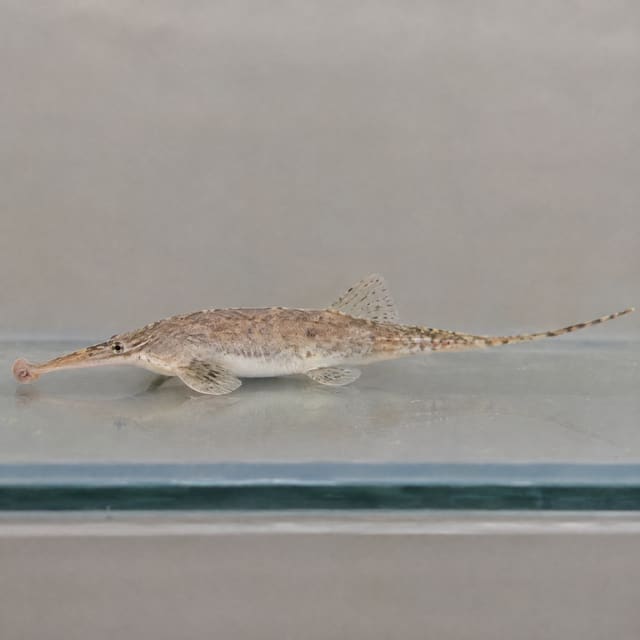
Knobnose Whiptail Catfish (Hemiodontichthys acipenserinus)
24–28°C · pH 6–7.5 · 75L
£84.99
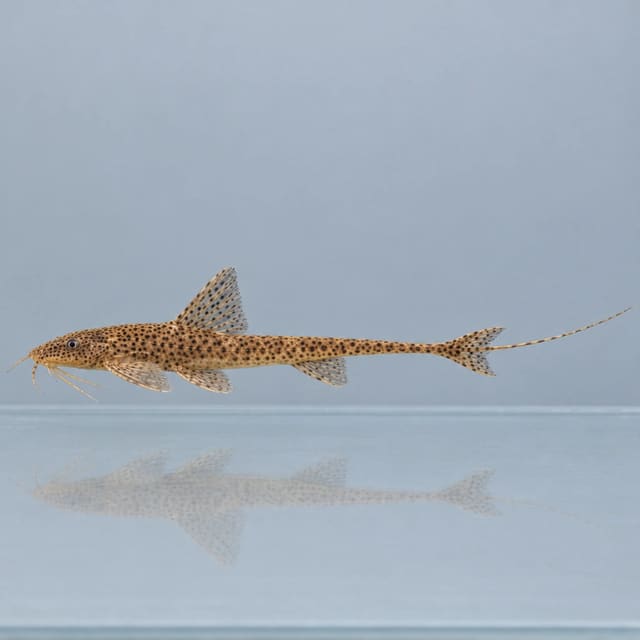
The L011 Red Fin Thresher Pleco (Aphanotorulus emarginatus, formerly Squaliforma emarginata) is a long, peaceful suckermouth catfish from the Amazon with a crescent-shaped, red-edged tail. It is often sold small but grows to about 40 cm, so it needs a very large aquarium with sand, open space and well-oxygenated, flowing water at 25–28°C. Sold individually as one live fish.
Aphanotorulus emarginatus
The L011 Red Fin Thresher Pleco (Aphanotorulus emarginatus, formerly Squaliforma emarginata) is a long, peaceful suckermouth catfish from the Amazon with a crescent-shaped, red-edged tail. It is often sold small but grows to about 40 cm, so it needs a very large aquarium with sand, open space and well-oxygenated, flowing water at 25–28°C. Sold individually as one live fish.
‘Pleco’ is a loose aquarium-trade label, not one species or one care sheet. Before buying, confirm the scientific name or defensible L-number, adult size and measurement method, required footprint, temperature and water, diet, social plan and source. No universal pleco tank size, menu or algae result is honest.
Read the full care guidance when planning conditions for your aquarium.
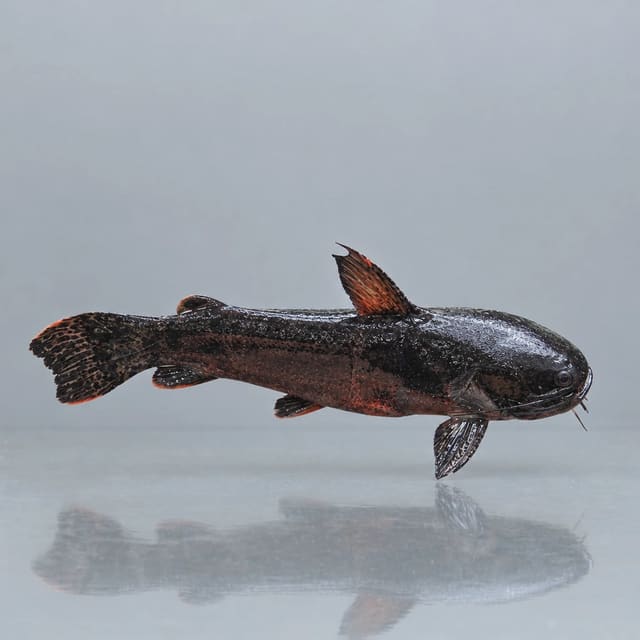
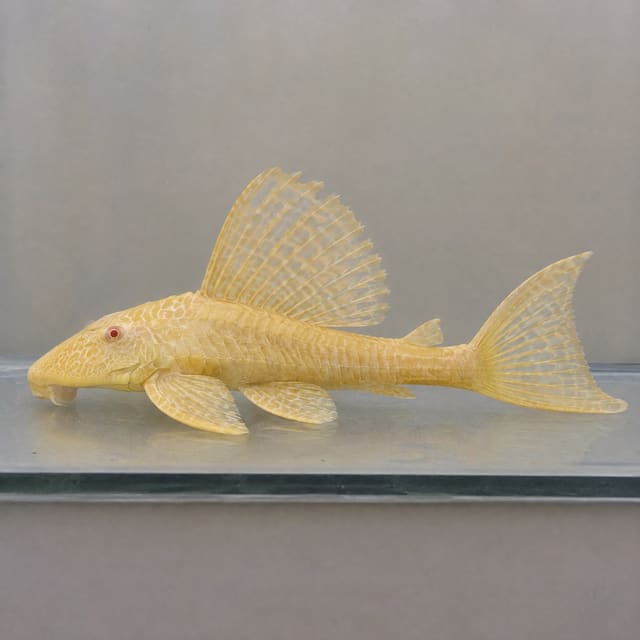
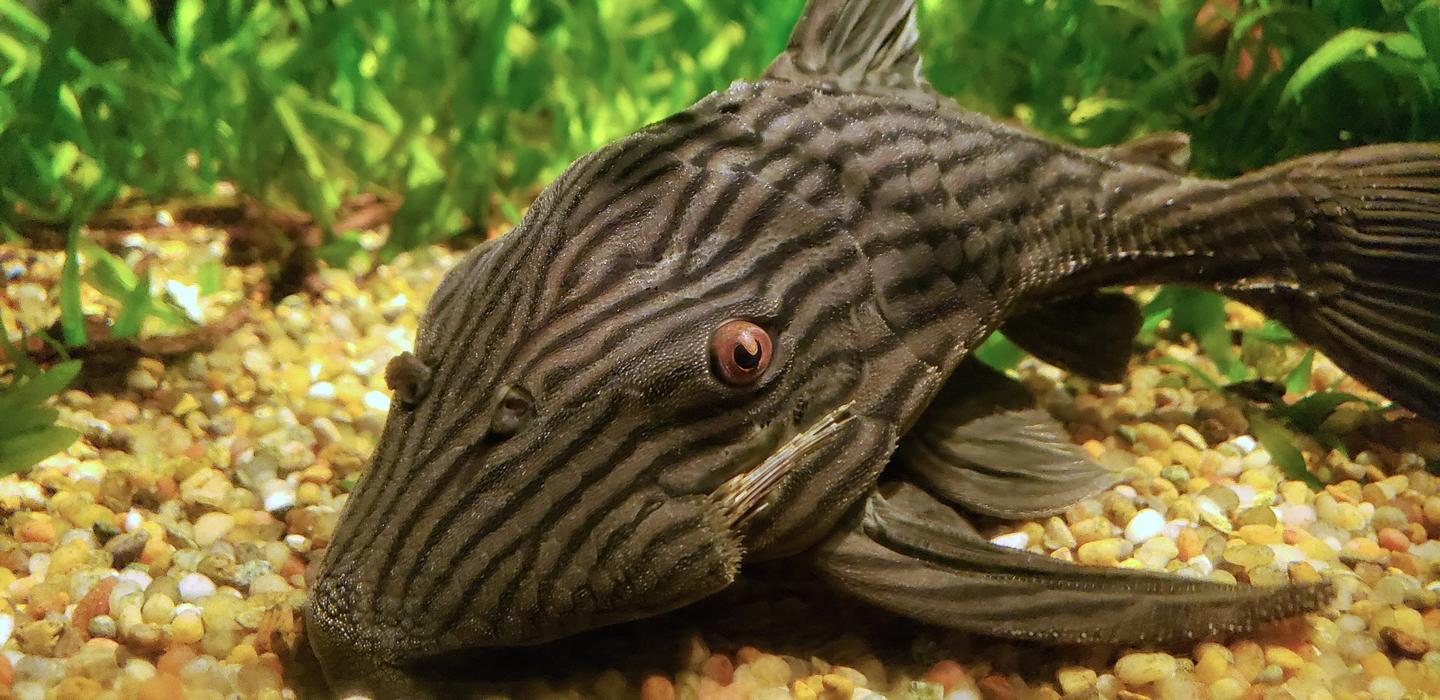
The L011 Red Fin Thresher Pleco (Aphanotorulus emarginatus) is a long, flattened suckermouth catfish that grows far larger than most aquarium plecos: Seriously Fish and Planet Catfish both give a maximum of 40 cm standard length. Its common name comes from its long, crescent-shaped tail, which Planet Catfish says has a red or orange outer margin. The body is light tan, covered with small dark spots that are less than half the width of a body plate.
It is one of the most widespread plecos in South America. FishBase lists it from the upper Orinoco, the Essequibo and the lower Amazon, including the Rio Negro, Tapajós and Xingu, and Seriously Fish adds Ecuador, Peru and Bolivia. The fish coded L011 comes from the Rio Xingu at Altamira in Brazil. Planet Catfish compares the species' huge range and regional variation among plecos to that of the bronze corydoras among the armoured catfish.
| Name | What it means |
|---|---|
| L011 (also L11) | The form from the Rio Xingu at Altamira, Brazil |
| L035 | The same species from the Rio Araguaia, just upstream of the Tocantins |
| L108 | The same species from the upper Rio Napo in Ecuador |
| L116 | The same species from the Rio Trombetas, Brazil |
| Red Fin Thresher Pleco, thresher pleco | English trade names, from the long tail with its red edge |
| Squaliforma emarginata, Hypostomus emarginatus | Older names still used in the trade; Seriously Fish says it is often sold at 3–4 inches as Hypostomus cf. emarginata |
| Aphanotorulus emarginatus (Valenciennes, 1840) | The current name, following Ray and Armbruster's 2016 revision of the genus |
Because the four L-numbers belong to one variable species, fish from different rivers can look a little different, but Seriously Fish notes that all share the elongated tail that gives the fish its name. Browse other large plecos in our L-number plecos range, the wider South American catfish category and our catfish and plecos collection.
This is the most important point on this page. The Red Fin Thresher Pleco is often sold small, at about 8–10 cm (3–4 inches), but Seriously Fish warns that it grows large and is not a good choice for a general community aquarium. FishBase gives a slightly smaller maximum of 33.6 cm total length, while Seriously Fish and Planet Catfish give 40 cm standard length; either way, plan for a fish of 35–40 cm.
OATA's guidance on very large fish, which includes the larger plecos, says that an off-the-shelf aquarium is unlikely to be large enough in the long term, that these fish often need aquariums of more than 500 litres, and that their long lives mean the decision to keep one should be made very carefully.
Use our tank volume calculator to work out what your current tank holds, and our pleco care guide for the general routines of suckermouth catfish. If you want a big, unusual pleco and have the space, it sits well alongside the fish in our rare and collector fish range.
One purchase supplies one live Red Fin Thresher Pleco at the standard size offered on this listing. Whatever its size on arrival, it is the same species that reaches 35–40 cm.
Sex is not specified. Planet Catfish says that all Aphanotorulus show clear differences between the sexes and that males in breeding condition grow extremely long, bristle-like odontodes covering the back and sides behind the dorsal fin; Seriously Fish lists sexual differences as unknown. Young fish cannot be sexed reliably.
The photographs are representative of the species and do not show the individual you will receive. Spotting and the strength of the red tail edge vary between the regional forms and between individual fish.
Read our delivery and Live Arrival Guarantee information before ordering, and have the aquarium mature and running first.
Seriously Fish describes its habitat as flowing, highly oxygenated water over sandy bottoms scattered with rocks and stones. FishBase adds that it lives under tree roots and among rocks and comes out onto sandbanks to feed at night. Planet Catfish notes that it likes to swim in and out of cover fast, so it needs open, shaded spaces with enough room to avoid accidents when it bolts.
| Area | Purpose |
|---|---|
| Open sandy floor | Matches its sandbank feeding grounds and gives it room to move at speed |
| Large terracotta pipes | Planet Catfish calls them ideal retreats, sized to the fish |
| Smooth rocks and driftwood | Seriously Fish suggests them for hiding places and shade |
| Décor raised off the floor | Seriously Fish advises this where possible, because it moves very fast when startled |
| Dim, shaded areas | Seriously Fish says dim lighting is beneficial |
Keep the middle of the tank clear and avoid sharp edges, because a startled thresher pleco can injure itself on décor. OATA's very-large-fish guidance adds that rocks and ornaments must be securely positioned so a big fish cannot dislodge them, and that a fish-proof cover is wise because large fish can jump, especially when newly introduced.
Planet Catfish notes that it does not appear to need bogwood or plants. Plants are fine if you want them, but choose robust species fixed to rock or wood, away from its main swimming route.
Seriously Fish and Planet Catfish both give 25–28°C and pH 6.4–7.2. FishBase gives a slightly cooler 24–27°C, so the three sources agree on 25–27°C. Seriously Fish gives a hardness of 5–10 dGH, while Planet Catfish gives about 5–6 dH. Seriously Fish lists a steady pH and a steady temperature among its needs, so stability matters as much as the numbers.
| Reading | Target |
|---|---|
| Temperature | 25–28°C (25–27°C suits all three sources) |
| pH | 6.4–7.2, held steady |
| General hardness | 5–10 dGH |
| Ammonia | Zero mg/l |
| Nitrite | Zero mg/l |
| Nitrate | No more than 20 mg/l above your tap water |
The waste limits come from OATA, whose catfish and very-large-fish sheets both set zero ammonia and nitrite and nitrate no more than 20 mg/l above tap water. Tap water in parts of the UK, particularly southern and eastern England, is harder and more alkaline than this fish's range, so you may need to blend it with reverse-osmosis water to stay within 5–10 dGH and pH 6.4–7.2. Your water company publishes the hardness for your postcode. Our water matcher compares your water with the target, and our water chemistry guide explains how to adjust it gradually.
Seriously Fish says this species needs well-oxygenated water and an efficient filter, because it produces a heavy waste load. Following the four to five turnovers an hour that Seriously Fish uses for its pleco profiles, a 243-litre tank needs roughly 970–1,215 litres per hour of filtration, and a bigger tank needs proportionally more. OATA's very-large-fish guidance notes that several large aquarium filters, or even a pond filter, may be needed to deal with both water quality and solid waste.
Add a powerhead or airstone for the flowing, oxygen-rich water of its rivers, and protect the heaters from damage, as OATA advises for big fish.
A rising nitrate reading is the first sign that a growing thresher pleco is outgrowing the filter or the tank. Increase water changes, review feeding, and plan the next step up in tank size.
Planet Catfish describes it as an adaptable omnivore with a preference for greens, which does well on most sinking pellet foods and should be offered cucumber or similar periodically. Seriously Fish calls it unfussy and recommends regular greens such as cucumber, courgette and blanched spinach, along with dried, live and frozen foods, a good-quality dried food and algae wafers.
Because FishBase notes that wild fish come out to feed on sandbanks at night, the evening is a good time to offer its main meal. OATA advises feeding catfish once a day with what they eat in a few minutes, and up to 30 minutes for grazing species.
Watch its belly and growth. A thresher pleco that stays thin while tank mates grab every pellet needs its food dropped near its retreat after lights-out.
Add it only to a tank with a mature filter, zero ammonia and nitrite, and a temperature already within 25–28°C. OATA recommends the floating-bag method: lights off, float the bag for 10 minutes to match temperatures, add small amounts of tank water over up to 20 minutes, then release the fish with as little bag water as possible. Our guide on how to acclimatise new fish covers each step. For a large fish delivered in a box or bucket, OATA suggests dripping tank water in slowly through an airline until the conditions match.
Because it is flighty, keep the room quiet and the lights low for the first day, and avoid chasing it with a net. Its fin spines can catch in netting, and OATA advises double-bagging catfish because spines can puncture bags.
| Checkpoint | What to do |
|---|---|
| Before release | Test the water and make sure the pipes and cover are in place |
| First evening | Keep the lights off and offer a small meal of sinking food |
| Days 2–3 | Check for scrapes from bolting; move any décor it keeps hitting |
| Mid-week | Retest ammonia and nitrite as the filter adjusts |
| End of week | Do the normal water change and check its belly |
If it keeps dashing around the tank after the first week, add more shade and cover and check the water; persistent panic is a sign that something in the set-up is wrong.
Seriously Fish describes the Red Fin Thresher Pleco as peaceful and surprisingly non-territorial: it can be kept in a group of its own species or with other peaceful loricariids, and it suits larger characins, cyprinids, peaceful cichlids and other catfish. It warns that smaller species may be intimidated by its size. Planet Catfish says it is more flighty than the sailfin plecos (Pterygoplichthys), peaceful with plecos even a third of its size, a good addition to a South American cichlid tank, and a fish that rarely leaves the bottom.
From our range, the Silver Dollar is a larger characin, and the Trombetas Eartheater is a South American cichlid of the kind both sources suggest. For comparison among big plecos, see the sailfin Gold Spot Pleco L001 and the Common Pleco, a member of Hypostomus, the genus this fish was once placed in. Check every combination with our tank mates tool, including temperature and adult size.
| Suits | Avoid |
|---|---|
| Larger characins such as silver dollars | Small, timid fish that its size may intimidate |
| Peaceful South American cichlids such as eartheaters | Any tank too small for a 35–40 cm adult |
| Other peaceful loricariids with their own retreats | Cluttered layouts with no room to dash |
| Medium to large community fish that share 25–28°C | Fish that need water far outside pH 6.4–7.2 |
When buying any pleco, Seriously Fish advises checking for a rounded belly and eyes that are not sunken, because emaciation is common in newly imported fish. After arrival, watch for the warning signs OATA lists for catfish, and for injuries caused by bolting into décor, which is the particular risk with this flighty species.
| If you see | Do this |
|---|---|
| Hollow belly or sunken eyes | Feed after lights-out near its retreat and check tank mates are not taking the food |
| Scrapes on the snout or body | Clear the swimming route, remove sharp edges and add shade |
| Fast breathing or gasping | Test ammonia and nitrite and boost oxygen and flow |
| White spots or fluffy growths | Test the water and seek treatment advice |
| Rising nitrate week after week | Increase water changes and plan a larger tank or more filtration |
| Reduced appetite | Check temperature, water readings and how much food reaches it |
Test the water before reaching for any treatment, and change one thing at a time. If signs persist once the water is right, contact us with your readings.
The sources disagree here. Planet Catfish records that the species has been bred in the aquarium, although no breeding report is published there; Seriously Fish says breeding is unreported in the hobby. Given its size, breeding needs a very large aquarium, and OATA notes that many plecos need changes in conditions that do not happen in a normal home aquarium before they will spawn.
It is Aphanotorulus emarginatus, a long, flattened suckermouth catfish found across much of the Amazon, the upper Orinoco and the Essequibo. The L011 form comes from the Rio Xingu at Altamira in Brazil. Its name comes from its long, crescent-shaped tail with a red or orange outer edge.
Much bigger than most plecos. Seriously Fish and Planet Catfish give 40 cm standard length; FishBase gives a maximum of 33.6 cm total length. It is often sold at only 8–10 cm, so plan for the adult.
Seriously Fish calls a 120 × 45 × 45 cm aquarium (about 243 litres) just about adequate for a single fish and says more than one needs a much bigger tank. Plan to provide more space as it grows.
Yes. Squaliforma emarginata and Hypostomus emarginatus are older names. Since a 2016 revision by Ray and Armbruster it is called Aphanotorulus emarginatus.
Yes. Planet Catfish and Seriously Fish list all four codes under Aphanotorulus emarginatus: L011 from the Xingu, L035 from the Araguaia, L116 from the Trombetas and L108 from the upper Napo in Ecuador.
No. Seriously Fish describes it as peaceful and surprisingly non-territorial, and Planet Catfish says it is peaceful even with plecos a third of its size. It is flighty, though, so it needs room to dash without hitting décor.
It is an adaptable omnivore with a preference for greens. Feed good sinking pellets or wafers, regular vegetables such as cucumber, courgette and blanched spinach, and some frozen or live foods.
Seriously Fish and Planet Catfish give 25–28°C and pH 6.4–7.2; FishBase gives 24–27°C. Seriously Fish gives 5–10 dGH. Keep the pH and temperature steady and the water well oxygenated and flowing.
No reviews for this item yet. Bought one? Honest reviews only, good or bad.
What customers say about ordering from us
Easy website plenty of info on fish your buying great to pick a time slot
TRACEY DURRANT · 7 Oct 2026
Got some lovely fish thank you
Kevin Mackie · 7 Oct 2026
Reviews of our shop, collected by Judge.me, an independent third-party review collector. Newest first.
Moved by UK carriers licensed to handle live animals
Hand-packed with oxygen bags, poly box, heat pack
Email photos the same day; an optional unboxing video helps us review problems faster — claim terms apply
Klarna & PayPal Pay in 3 at checkout