Moderate
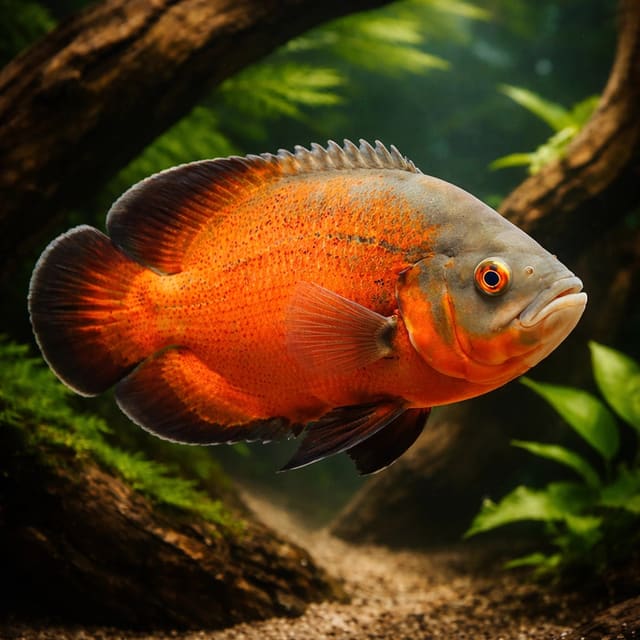
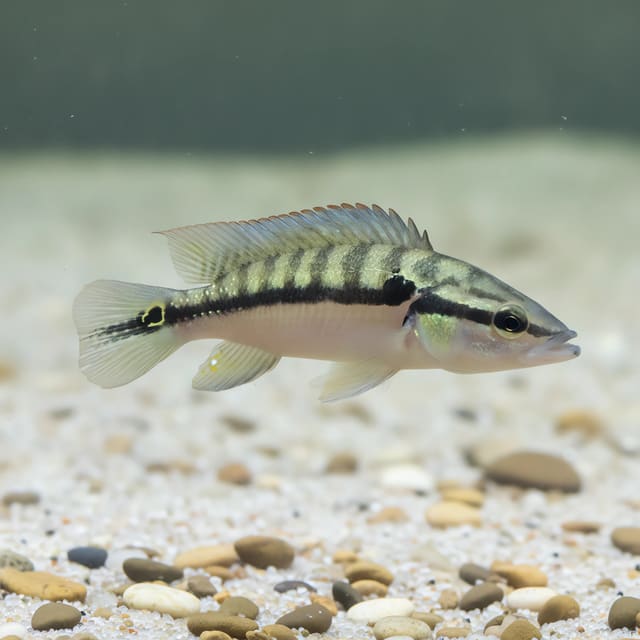
Blue Jack Dempsey Cichlid (Rocio octofasciata)
24–30°C · pH 6.5–8 · 300L
From £28.47Some sizes on sale

Large Amazonian Trombetas locality eartheater for mature soft-sand aquariums, with natural sand-sifting behaviour, group planning and warm soft-water care.
Geophagus altifrons
Save when buying more.
Confirm your email, then we’ll send an availability message for this exact item if it returns within 180 days.
This request is only for this product—no newsletter or other promotions. A mail-provider retry may very rarely duplicate the same availability message. Unconfirmed addresses are removed after 48 hours. See our privacy policy.
Large Amazonian Trombetas locality eartheater for mature soft-sand aquariums, with natural sand-sifting behaviour, group planning and warm soft-water care.
Maintain these water conditions for optimal health and vibrant colors
The Trombetas Eartheater is the locality form of Geophagus altifrons, listed in the trade as Geophagus altifrons Trombetas. This listing keeps the Trombetas label for traceability while writing the care advice around the established G. altifrons profile. It is an elegant Amazonian eartheater with a deep body, long dorsal fin, iridescent blue-green markings and the bottom-feeding behaviour that gives the genus its name.
The current SKU 0423 fish is the 4-5 cm size, so it is a juvenile of a large species rather than a small community fish. The listing therefore avoids hard delivery promises or discount copy and focuses on identity, care and planning for when stock is available again.
FishBase lists Geophagus altifrons at up to 26.5 cm total length and places it in the Amazon River basin in Brazil. Maidenhead Aquatics notes that the species is known from many lower-middle Amazon tributaries, including the Rio Trombetas, and is often encountered in clear or blackwater settings over muddy or sandy substrates. That matters: this fish should be planned as a large, social, sand-sifting cichlid with a mature aquarium and careful tankmates.
Start with a biologically mature aquarium and a large open area of soft sand. Geophagus altifrons feeds by taking mouthfuls of substrate, sorting edible particles and expelling the rest through the mouth and gills. Coarse or sharp gravel can interfere with this behaviour, so use smooth fine sand across the main feeding zone.
Use driftwood, smooth rocks, root-like structures and shaded areas to echo clearwater or blackwater Amazon margins. Plants can be included, but rooted plants in the substrate may be lifted as the fish forages. Hardy plants attached to wood or rock, such as Anubias or Java fern, are safer choices. Leave enough open floor space for natural sifting rather than filling the base with hardscape.
Filtration should be strong, stable and easy to maintain. This is a sizeable cichlid that works the bottom and produces waste, so use efficient biological filtration, mechanical polishing and regular water changes. Nitrate control matters because eartheaters are constantly in contact with the substrate and are less forgiving of neglected bottom conditions than many midwater fish.
Feed small sinking foods that reach the sand. Good staples include quality cichlid granules, soft sinking pellets, fine bottom-feeding tablets and slow-sinking prepared foods. Rotate frozen foods such as daphnia, bloodworm, white mosquito larvae, brine shrimp, mysis and chopped krill or prawn. Add some spirulina or vegetable-rich foods so the diet stays balanced.
Juveniles do best with smaller feeds offered more often. Adults can be fed measured portions once or twice daily, with the quantity adjusted to body condition and water quality. Avoid large hard pellets and avoid surface-only feeding routines, because the fish is built to browse near the bottom.
Trombetas Eartheaters are usually calmer than their adult size suggests, but they are not suitable for tiny fish, shrimp or cramped aquariums. Good companions can include deep-bodied tetras, peaceful medium-to-large South American cichlids, suitable plecos and other calm fish that enjoy warm, soft water. Upper-water species often work better than fish competing directly on the sand.
If keeping a group, give them room. Maidenhead notes that G. altifrons is found in loose aggregations and is best kept in groups where space allows, because a natural hierarchy spreads minor aggression. In smaller adult displays, a carefully chosen pair or single specimen may be more practical than a group. Avoid very aggressive cichlids, fin nippers and bottom fish that will lose every feeding contest.
FishBase records G. altifrons as an ovophilic mouthbrooder. During breeding, a pair may become more territorial and will need quiet space away from pushy tankmates. Even outside breeding, the fish spends much of the day sifting, browsing and turning over the sand, so the aquarium should be built around that behaviour rather than fighting it.
For comparison with other eartheaters, review the smaller Pindare Eartheater, the robust Pearl Eartheater and the Surinam Geophagus. The main difference is adult planning: Altifrons is a bigger, more space-hungry choice than Pindare and needs a mature aquarium from the start.
No reviews for this item yet. Bought one? Honest reviews only, good or bad.
What customers say about ordering from us
I have a small group of long finned mountain minnows. So was delighted to be able to order ten of this variety to increase the genetics in my tank . The ones I recieved are healthy but it’s to early to give a verdict on wether they are of a long finned type since they are small currently.
Gordon Walker · 23 Sept 2026
100% success travel and "installation". Pleased with quality of purchase. The Siamese fighter a bit "shy" so have not yet seen him at his best yet but looking good. Happy customer. GG
George E Garratt · 21 Sept 2026
Reviews of our shop, collected by Judge.me, an independent third-party review collector. Newest first.