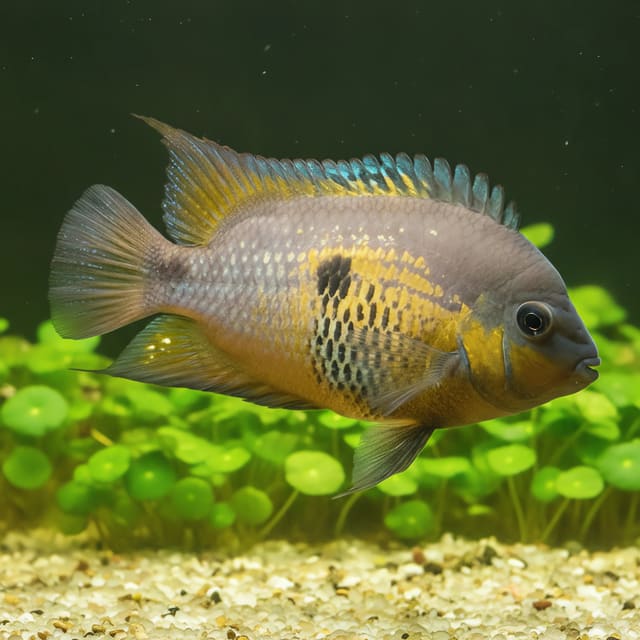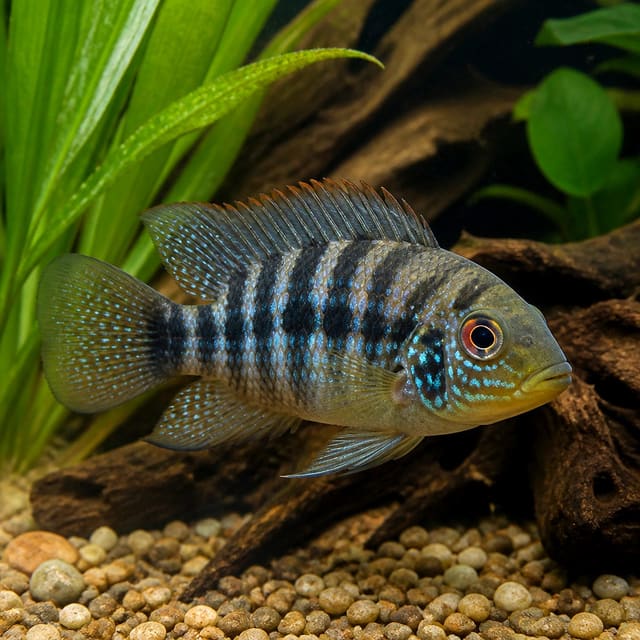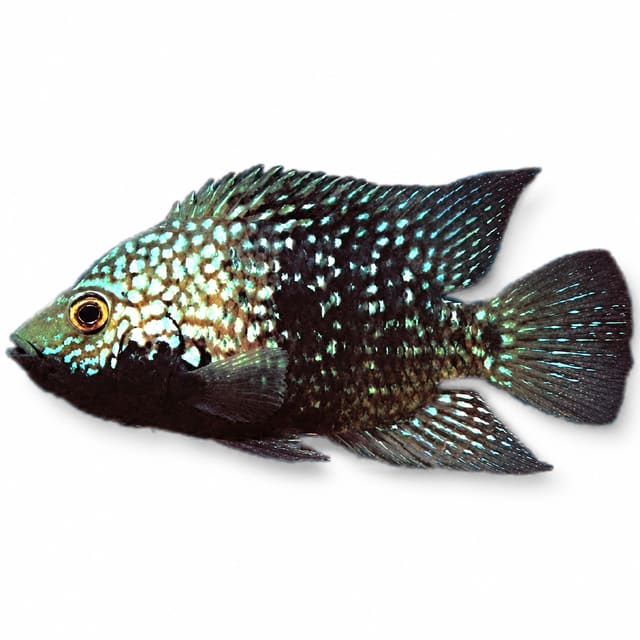
Pearlscale Texas Cichlid (Herichthys carpintis)
24–26°C · pH 7–8
£9.99

Smaller Rio Pindare eartheater for mature sand-bottom aquariums, with natural foraging behaviour, calm South American compatibility and adult-size planning.
Geophagus sp. Pindare
Save when buying more.
Confirm your email, then we’ll send an availability message for this exact item if it returns within 180 days.
This request is only for this product—no newsletter or other promotions. A mail-provider retry may very rarely duplicate the same availability message. Unconfirmed addresses are removed after 48 hours. See our privacy policy.
Smaller Rio Pindare eartheater for mature sand-bottom aquariums, with natural foraging behaviour, calm South American compatibility and adult-size planning.
Maintain these water conditions for optimal health and vibrant colors
Pindare Eartheater (Geophagus sp. Pindare) is a locality-linked South American cichlid associated with the Rio Pindare region of Maranhao, north-eastern Brazil. It has the classic eartheater shape: a deep body, a downward-facing mouth, visible flank markings and a calm, deliberate way of working across the substrate. This listing is for the 4-5 cm size supplied under SKU 0420, so it should be planned as a juvenile that still needs room to mature.
The appeal of this fish is natural behaviour rather than show-only colour. In the right aquarium it spends time taking fine sand into the mouth, sorting edible particles and releasing the clean sand through the mouth and gills. That behaviour is what makes the group so interesting, but it also means the setup must be designed around the fish. Smooth sand, clean water, stable filtration and open floor space matter more than decorative gravel or a crowded display.
The focus is practical keeper guidance: adult size, aquarium footprint, sand choice, feeding rhythm, compatibility, breeding behaviour, current livestock trust cues and how to decide whether this eartheater is right for your tank.
| Care point | Practical guidance |
|---|---|
| Adult planning size | About 15 cm. Plan footprint and territories for the adult fish, not only the 4-5 cm juvenile size. |
| Minimum aquarium | About 240 litres for a carefully planned pair or small group. Larger is better for mixed cichlid communities. |
| Temperature | 24-28 C with stable, well-oxygenated water. |
| pH and hardness | Approx. pH 6.0-7.5 and soft to moderate hardness; avoid sudden swings. |
| Substrate | Fine smooth sand across the main foraging zone. Avoid sharp gravel. |
| Temperament | Generally peaceful for a cichlid, but territorial when breeding or cramped. |
Geophagus sp. Pindare is often treated as one of the more manageable eartheaters because it stays smaller than many of the large Geophagus forms. Aquarium Glaser gives an approximate adult size of 15 cm and describes it as attractive, relatively easy to keep in biologically clean water, and strongly connected to sand-sifting behaviour. TFH's broader eartheater guidance also places Geophagus choices around tank size, maintenance capacity and temperament rather than impulse buying.
That does not make it a tiny community fish. It is still a cichlid with floor-space needs, social judgement and breeding behaviour. The best home is a mature aquarium where the keeper enjoys observing natural foraging, provides enough open sand, keeps water quality high and avoids boisterous tankmates that dominate the bottom.
| Good fit if you want | Think twice if |
|---|---|
| A smaller eartheater with visible sand-sifting behaviour | The aquarium has coarse gravel, sharp substrate or no open floor area |
| A calm South American cichlid for a mature warm setup | You need a fish for a small new aquarium |
| A fish that benefits from thoughtful aquascaping | The tank already has aggressive bottom-feeders or territorial cichlids |
| A natural display with tetras, wood, sand and moderate flow | You want a heavily planted Dutch-style layout with delicate rooted plants everywhere |
A settled Pindare Eartheater should spend long periods browsing calmly over the sand rather than hiding constantly or racing around the glass. Juveniles may be cautious after transport, but they should begin to explore once the lights are calm, the tank is quiet and feeding is predictable. Normal behaviour includes short mouthfuls of sand, gentle hovering over open areas, social checking with tankmates and returning to cover when startled.
Colour can vary with age, mood, lighting and hierarchy. The fish may look paler in a bag, during acclimation or in a bright bare aquarium. Stronger flank markings and warmer colour usually appear once the fish is settled, feeding and comfortable with the layout. A darker stressed fish, clamped fins, rapid breathing or refusal to leave cover should prompt a water-quality and compatibility check before adding more livestock.
| Sign | Usually positive | Check if you see |
|---|---|---|
| Foraging | Slow sand-sifting and browsing | Repeated glass pacing or no interest in food |
| Breathing | Steady gill movement at rest | Rapid breathing, surface hanging or hiding near flow only |
| Fins | Open, balanced posture | Clamped fins, torn fins or repeated chasing damage |
| Colour | Gradual improvement after settling | Persistent dark stress colour with no clear cause |
| Social behaviour | Loose group movement and short displays | One fish pinned in a corner or blocked from feeding |
The substrate is the foundation of the whole aquarium. Use fine, rounded sand deep enough for normal foraging, and keep a broad open area at the front or centre of the tank. Eartheaters are named for the way they process substrate, so the wrong substrate can turn a natural behaviour into a health risk. Sharp gravel can irritate the mouth and gills, and large gravel prevents the fish from feeding in a normal way.
Use driftwood, rounded stones and root structures to break up lines of sight. Leave enough open sand that the fish can browse without constantly colliding with hardscape. Plants are possible, but the layout should not depend on delicate stems in the main digging zone. Hardy epiphytes attached to wood or rock, protected root systems and plants placed away from the busiest sand areas are safer choices.
Filtration should be mature and steady. Pindare Eartheaters are not extreme blackwater specialists in everyday aquarium care, but they do not do well in neglected water. Aim for stable temperature, good oxygenation, sensible flow and regular sand-bed maintenance. When cleaning, avoid turning the whole substrate aggressively at once; instead, remove trapped waste gently and keep the biological filter stable.
| Layout element | Best choice | Reason |
|---|---|---|
| Substrate | Fine smooth sand | Supports natural mouth-and-gill sifting |
| Hardscape | Rounded stones, wood, stable root structures | Creates territories without sharp contact points |
| Plants | Epiphytes, protected roots, robust species | Reduces uprooting problems in the foraging zone |
| Open area | Clear sand path at the front or centre | Lets the fish browse naturally and be seen clearly |
| Maintenance | Regular water changes and light sand cleaning | Keeps the bottom clean without destabilising the tank |
Use the numbers below as a working care range, not as an excuse to chase daily test results. The safest aquarium is stable, mature and clean. A pH in the soft-to-neutral range is suitable, but a slightly different tap-water value can be easier on the fish than constant chemical adjustment. Match new livestock carefully during acclimation and avoid sharp swings after water changes.
| Parameter | Target range | Keeper note |
|---|---|---|
| Temperature | 24-28 C | Keep stable; avoid cold-water dips during maintenance |
| pH | 6.0-7.5 | Stable soft to neutral water is the practical aim |
| Hardness | Approx. 2-12 dGH | Soft to moderate hardness suits most planned homes |
| Nitrate | Keep low | Eartheaters reward clean water and regular husbandry |
| Flow | Moderate with good oxygenation | Avoid blasting the sand bed into unstable dunes |
Feed in a way that reaches the substrate. Small sinking cichlid granules, soft micro-pellets and bottom-feeding foods that break apart on the sand are more useful than large floating pellets. Rotate frozen foods such as brine shrimp, bloodworm, daphnia, cyclops and mysis, then include some vegetable or spirulina-based foods for variety. Aquarium Glaser notes that the fish accepts dry food but naturally prefers frozen or live foods, so a varied diet is the safest long-term approach.
Juveniles are best fed smaller meals more often, especially while settling. Adults can be maintained on measured daily feeds with adjustments for body condition and water quality. Do not overfeed just because the fish keeps sifting; eartheaters are built to search constantly, and excess food hidden in the sand can damage water quality quickly.
| Food type | How to use it |
|---|---|
| Soft sinking granules | Main staple, sized so juveniles can process it easily |
| Frozen brine shrimp or daphnia | Useful small foods that spread through the foraging area |
| Bloodworm or mysis | Use as rotation foods, not the only diet |
| Spirulina or vegetable-inclusive foods | Add dietary variety and help avoid a one-note protein diet |
| Large hard pellets | Avoid for juveniles; they are awkward for sand-sifting fish |
Pindare Eartheaters are generally peaceful for cichlids, especially when they have enough floor space and are not forced to compete constantly for food. Good companions can include larger peaceful tetras, calm pencilfish in spacious aquariums, suitable plecos, peaceful dwarf cichlids that stay out of the sand zone, and mild South American cichlids where the aquarium is large enough.
The safest community plan is built in layers. Keep the open sand as the eartheater's working area, use midwater schooling fish for movement above it, and choose algae grazers or plecos that will not bully the fish away from food. If the tank already has dominant bottom-dwellers, feed in more than one spot and watch whether the eartheater gets a fair chance to settle.
Avoid tiny fish that may be swallowed as the eartheater grows, fin nippers, aggressive Central American cichlids and bottom-feeders that take over the feeding area. Corydoras need special thought because they also work the substrate; they can suit some peaceful South American aquariums, but crowding several bottom-foraging species into the same small footprint is not fair on either fish.
If you want more than one eartheater, plan the group before purchase. Juveniles often show stronger grouping instincts, while adults may form pairs or hierarchies. Extra floor area, sight breaks and multiple feeding spots reduce stress. If a pair begins breeding, expect more territory around the chosen site.
Aquarium Glaser describes Geophagus sp. Pindare as a larvophile mouthbrooder. In practical terms, the pair may lay on a stone, root or prepared surface, then protect developing young in the mouth after hatching. Even if breeding is not your goal, this explains why mature fish can become more assertive around chosen territories.
Provide smooth stones, stable wood and visual barriers rather than a bare tank. During courtship, watch for repeated cleaning of surfaces, pair guarding and increased chasing around the bottom. If community tankmates are being pushed too hard, separate planning may be needed. As with most cichlids, breeding behaviour is fascinating when the aquarium is prepared and stressful when it is cramped.
The main long-term risk with eartheaters is not that they are difficult to feed; it is that their natural feeding style keeps waste moving through the substrate. Clean filtration, sensible stocking and consistent maintenance are more important than chasing rare additives. Keep the sand surface open enough to inspect, remove trapped waste gently and do not let uneaten food disappear under wood or stones.
| Routine | Why it matters for this fish |
|---|---|
| Weekly water testing while settling | Confirms the mature filter is handling the extra bottom-feeding load |
| Regular partial water changes | Keeps dissolved waste low and supports clear gill function |
| Gentle sand surface cleaning | Removes waste without destroying the biological balance |
| Multiple small feeding points | Prevents dominant fish from taking every sinking food item |
| Monthly hardscape check | Ensures stones and wood remain stable as the fish browses around them |
If the fish begins breathing hard, sulking, flashing or avoiding food, check water quality first. Then review aggression, temperature stability and whether the substrate has trapped waste. Many eartheater problems are solved by improving the aquarium environment rather than changing the fish's diet again and again.
The 0420 listing is a 4-5 cm juvenile. That size is easier to settle than a large adult, but it also means the fish still needs growth room and careful feeding. On arrival, keep lights low, acclimate steadily and let the fish find cover before expecting full colour or confident sand-sifting. Newly moved eartheaters often need a quiet period before feeding strongly.
Tropical Fish Co backs suitable livestock orders with a Live Arrival Guarantee, and first-time customers can use WELCOME10 where eligible. Those trust details are included here because they matter to the keeper reading the page, not because the same phrase needs repeating. The care decision should still come first: mature aquarium, fine sand, stable water and compatible tankmates.
If you are comparing eartheaters, use adult size and temperament as the deciding factors. The Pearl Eartheater is a bigger and more robust choice. The Red Pearl Eartheater gives a different colour form and temperament profile. The Surinam Geophagus needs more adult-size caution and space planning. If you prefer a smaller South American cichlid with different behaviour, browse the wider South American cichlid collection.
The most common mistake is treating a 4-5 cm juvenile as if it will stay that size. A small Pindare Eartheater can look suitable for a modest aquarium in the short term, but the adult fish needs much more floor space and cleaner water than the juvenile suggests. Plan the adult aquarium now, especially if the fish will live with other cichlids.
The second mistake is using a decorative substrate that looks tidy but does not suit an eartheater. Coarse gravel, crushed coral and sharp mixed gravel all work against the fish's natural feeding style. If your current aquarium uses that kind of substrate, it is better to change the layout before adding the fish rather than hoping it will adapt.
The third mistake is pairing this fish with tankmates that are technically similar in water requirements but wrong in behaviour. A warm South American tank can still fail if a dominant cichlid controls the bottom, if fast feeders take every sinking food item, or if very small fish make the eartheater behave like a predator. Compatibility is about space, feeding access and temperament, not only temperature and pH.
| Mistake | Better choice |
|---|---|
| Planning around the juvenile size only | Plan for a 15 cm adult with a proper footprint |
| Using sharp or coarse substrate | Use fine smooth sand in the main browsing area |
| Adding too many bottom-feeders | Keep the sand zone open and easy to feed |
| Relying on one large daily feed | Use measured sinking foods that spread naturally |
| Ignoring early stress signs | Check water quality, bullying and breathing quickly |
Many older eartheater pages use broad Geophagus language that fits several species only loosely. This listing is kept specific to the Pindare locality form, the 4-5 cm supply size and the SKU-owned media already attached to this product. That matters because a keeper comparing South American cichlids needs to know whether they are looking at a manageable smaller eartheater, a much larger adult form, a more aggressive species or a fish that needs unusually specialised water.
The product page also keeps the commercial details separate from the care advice. The care sections should help you decide whether the fish belongs in your aquarium. The trust details, such as WELCOME10 and the Live Arrival Guarantee, support the order once the care match is right. That separation keeps the wording natural for humans and clearer for search engines.
No reviews for this item yet. Bought one? Honest reviews only, good or bad.
What customers say about ordering from us
I have a small group of long finned mountain minnows. So was delighted to be able to order ten of this variety to increase the genetics in my tank . The ones I recieved are healthy but it’s to early to give a verdict on wether they are of a long finned type since they are small currently.
Gordon Walker · 23 Sept 2026
100% success travel and "installation". Pleased with quality of purchase. The Siamese fighter a bit "shy" so have not yet seen him at his best yet but looking good. Happy customer. GG
George E Garratt · 21 Sept 2026
Reviews of our shop, collected by Judge.me, an independent third-party review collector. Newest first.