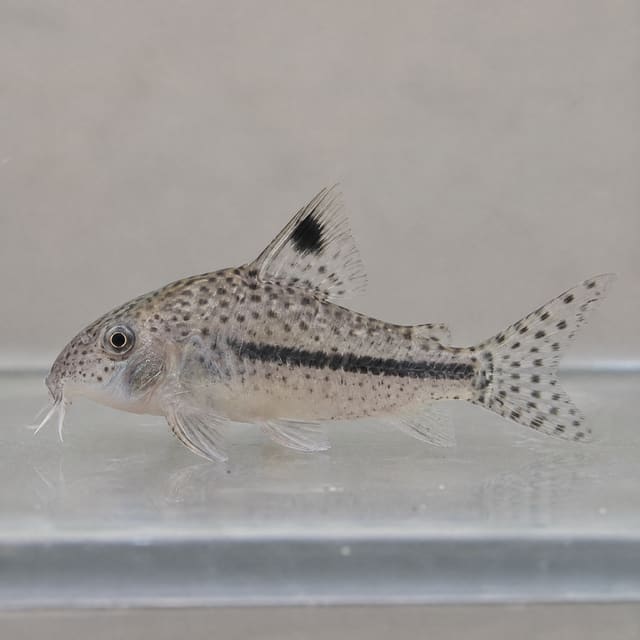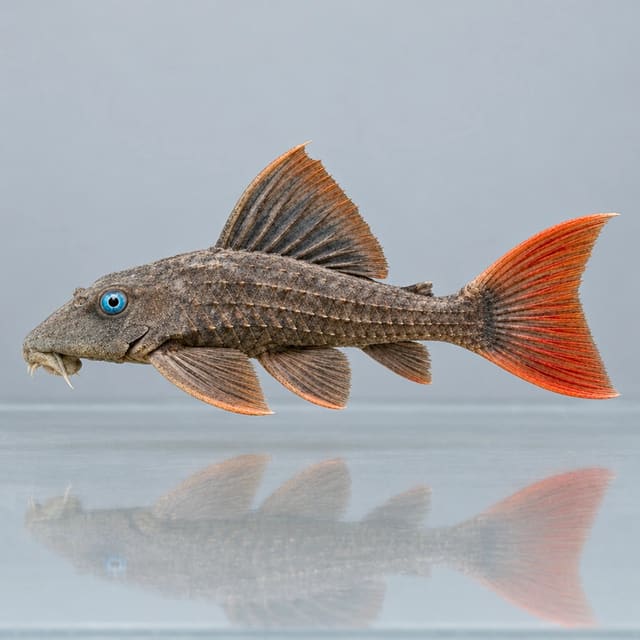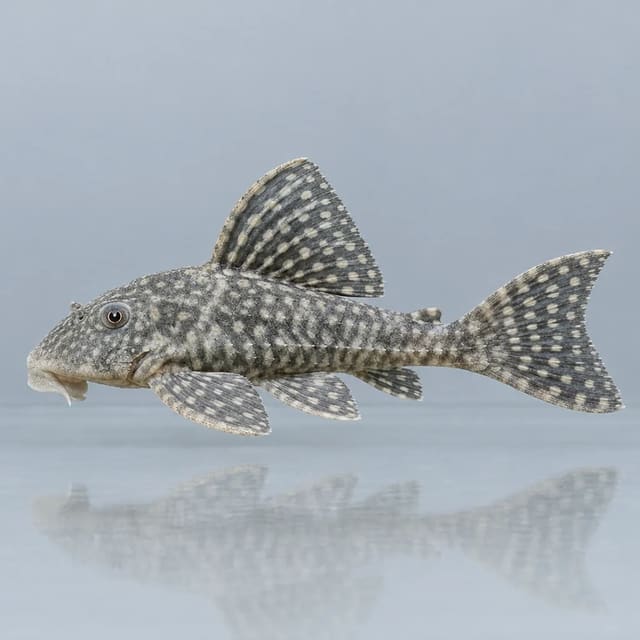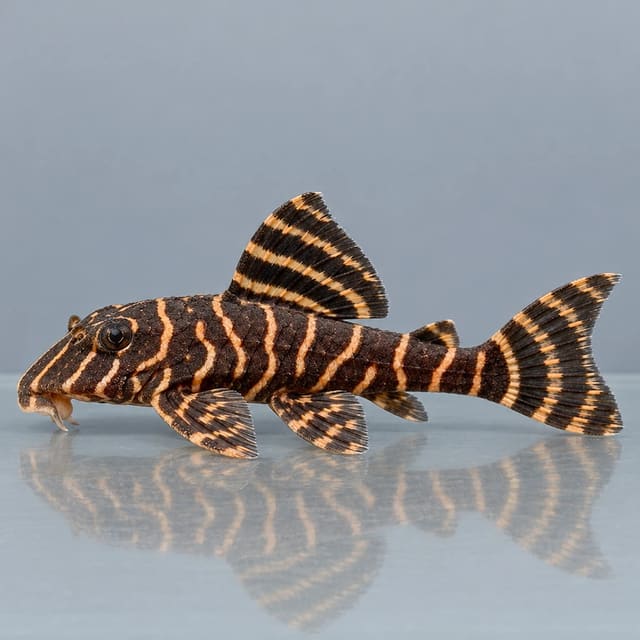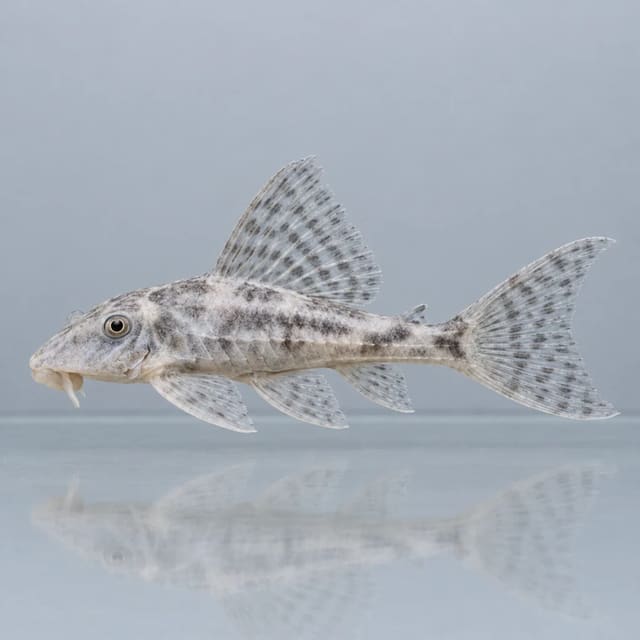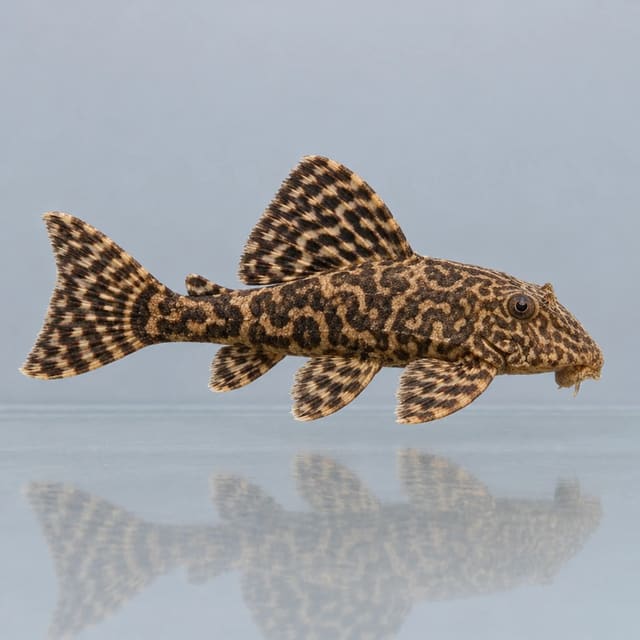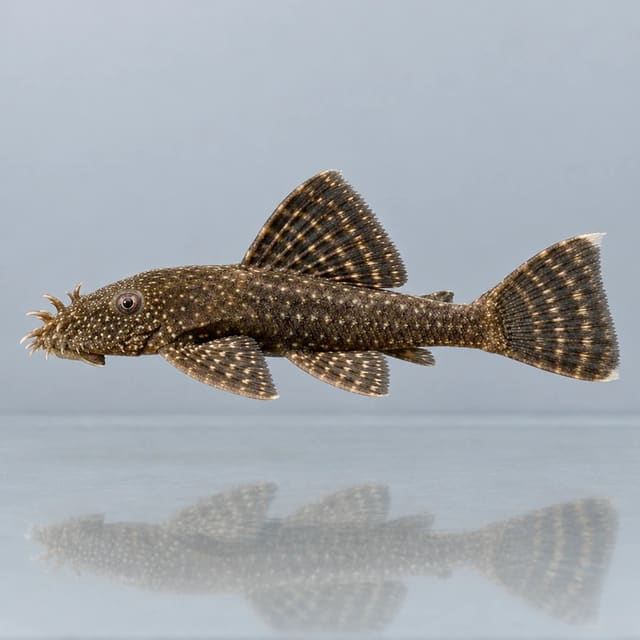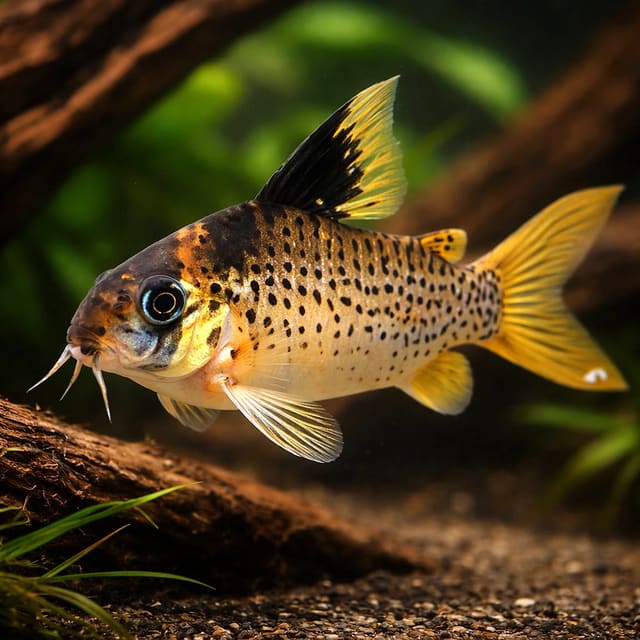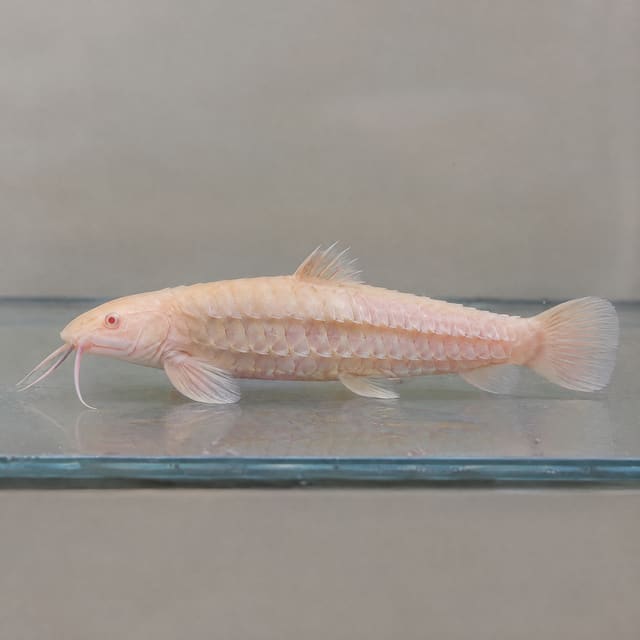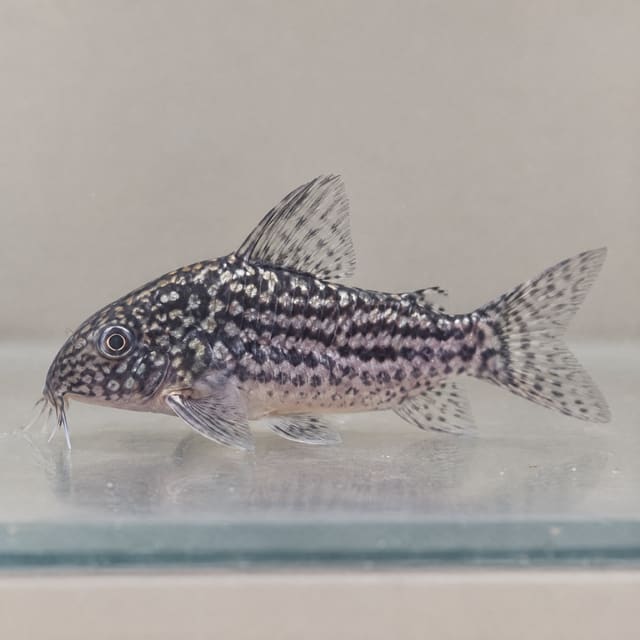
Elegant Cory (Corydoras elegans)
22–26°C · pH 6–7.5
From £6.19Some sizes on sale
The Gulper Catfish (Asterophysus batrachus) is a 25 cm driftwood catfish from the blackwaters of the Rio Negro and Orinoco with an enormous, trapdoor-like mouth. It swallows fish almost twice its own size, so it must live alone or only with much larger, peaceful fish, in a soft-water tank with a 150 × 60 cm base or more. One live fish per purchase.
Asterophysus batrachus
The Gulper Catfish (Asterophysus batrachus) is a 25 cm driftwood catfish from the blackwaters of the Rio Negro and Orinoco with an enormous, trapdoor-like mouth. It swallows fish almost twice its own size, so it must live alone or only with much larger, peaceful fish, in a soft-water tank with a 150 × 60 cm base or more. One live fish per purchase.
Read the full care guidance when planning conditions for your aquarium.
The Gulper Catfish, Asterophysus batrachus, is one of the strangest predators in the catfish world. It is a driftwood catfish of the family Auchenipteridae, the only species in its genus, from blackwater tributaries of the Rio Negro in Brazil and the Orinoco in Venezuela. Seriously Fish describes it hunting in shallow water, mostly at night. It is also sold as the Ogre Catfish, and Planet Catfish calls it the Gulper Driftwood Catfish. The species name batrachus means frog, after its squat, wide-mouthed look.
We want to be completely frank before you buy. This fish swallows other fish whole, including fish far larger than you would expect. Seriously Fish says it can eat fish almost twice its own size, and Planet Catfish shows a 24 cm gulper that had just swallowed a 40 cm pike cichlid. It is not a community fish in any sense. It is a fascinating animal for a specialist who wants a single, extraordinary predator in a tank of its own.
| Question | What the sources say |
|---|---|
| Adult size | 25 cm standard length (Seriously Fish, FishBase, Planet Catfish, ScotCat) |
| Prey | Fish almost twice its own size (Seriously Fish) |
| Aquarium | Base of at least 150 × 60 cm, about 540 litres (Seriously Fish) |
| Water | Soft, acidic blackwater; about 24-28°C and pH 6.0-7.0 suits all sources |
| Feeding | Adults only once or twice a week (Seriously Fish) |
| Conservation | Least Concern (FishBase, assessed 2020) |
One purchase quantity supplies one live Gulper Catfish. There is a single option, Standard, because no size grade is recorded for this fish; expect a young fish below the 25 cm adult size. The photographs show the species, not the individual you receive, and gallery images are representative. Breeding in aquariums has never been reported, so fish in the trade are imported from the wild. Planet Catfish notes that the species is uncommon in nature and only exported from time to time.
The genus name refers to the swim bladder. Seriously Fish and Planet Catfish both explain that Asterophysus combines the Greek words for star and bellows, after the unusual finger-like processes around the edge of its swim bladder.
A 25 cm fish may not sound big, but Seriously Fish recommends a base of at least 150 × 60 cm, about 540 litres. There are good reasons. A predator produces a lot of waste after each meal, the gulper prowls the whole tank at night, and Planet Catfish advises leaving at least three quarters of the aquarium as open swimming space. Use our tank volume calculator to confirm the real volume once sand and wood are in.
In the day the gulper likes to rest in piles of driftwood; at night it cruises. Planet Catfish suggests driftwood piles for daytime hiding with most of the tank left open, and says tall plants can coax the fish out at daytime feeding. Seriously Fish suggests dim lighting, a soft sandy substrate if possible, and chunks of driftwood and scattered roots or branches as refuges.
| Area | Purpose |
|---|---|
| Driftwood pile at one end | Daytime refuge where it rests |
| Open sand covering most of the floor | Night-time cruising and feeding area |
| Tall plants or roots at the back | Cover that encourages it out during the day |
| Dim, diffuse light | Matches its blackwater home and keeps it calm |
Seriously Fish notes that, once settled, the gulper is often active by day and surprisingly tame. Keep the layout simple and stable: rearranging large pieces of wood unsettles it and makes cleaning harder.
Planet Catfish describes the Gulper Catfish as a blackwater species, and all three sources point to warm, soft, acidic water. Their ranges differ slightly, so we recommend the overlap.
| Source | Temperature | pH | Hardness |
|---|---|---|---|
| Seriously Fish | 22-28°C | 5.0-7.0 | 1-8 dGH |
| Planet Catfish | 24-29°C | 5.6-7.0 | Blackwater |
| ScotCat | 23-28°C | 6.0-7.0 | Not given |
| Our target | 24-28°C | 6.0-7.0 | Soft |
Much of the south and east of England has hard, alkaline tap water, while much of Scotland, Wales and the north-west is softer. Test your supply and compare it with the target in our water matcher. If your water is hard, our water chemistry guide explains how to blend in RO water to bring hardness and pH down steadily. Whatever the values, keep ammonia and nitrite at zero and nitrate no more than 20 mg per litre above tap water, as OATA advises for all large fish.
Seriously Fish says efficient filtration is a must for predators because of the waste they produce. It suggests one or more external canister filters or a sump, with the return set to create some surface movement and flow. Our guide to aquarium filtration explains how to size it for a tank of this volume.
Seriously Fish also considers weekly water changes of 30-50% mandatory, because this species can be sensitive to organic pollutants, and says it must never go into a biologically immature tank. That is more than OATA's general minimum of 25% a week for large fish, and we follow the species advice. Read our guide to the nitrogen cycle if your tank is new.
Seriously Fish calls the Gulper Catfish an obligate predator, but captive fish readily accept strips of white fish, whole shrimp, earthworms and similar foods once they recognise them as food. Planet Catfish says it will try to eat anything, with krill a real favourite, and ScotCat lists krill, shrimp, prawns, earthworms, Daphnia and fish. A keeper quoted by Planet Catfish even saw his gulpers filter Daphnia from the water.
How often to feed is where the sources differ. Seriously Fish says adults are unlikely to need feeding every day and that one or two meals a week are enough. Planet Catfish suggests feeding less and less often with age, about weekly for an adult. ScotCat recommends every other day, warning that older fish regurgitate food if overfed. Young, growing fish need more frequent meals than adults.
| Food | How to use it |
|---|---|
| Large frozen krill or whole shrimp | Thawed; a staple the fish takes eagerly |
| Strips of white fish | Thawed, sized so it swallows them easily |
| Frozen mussel meat and earthworms | For variety |
| Mammal or bird meat, live feeder fish | Do not use: Seriously Fish warns against both |
Offer one meal, remove anything it has not eaten within a few minutes, and wait until the belly has gone down before feeding again. A fish that brings its food back up is being overfed. If tank mates are present, Planet Catfish suggests smaller, more regular portions, which may also keep the gulper less restless by day.
A keeper quoted by Planet Catfish describes gulpers trying to swallow anything new in the tank, "no matter if it is a net, arm or person", and snorkellers in the wild having the fish try to fit a hand into its mouth. It cannot swallow you, but it can grab and startle. Keep hands out of its way at feeding time and use a long-handled siphon and tools.
OATA advises care when handling any catfish because most have spines on the pectoral fins, and recommends that catfish are double-bagged to stop spines puncturing the bag. Move a gulper with a large net into a container rather than by hand.
Have the tank fully matured, with stable soft water, before the fish arrives. Large fish may travel in a box or bucket; OATA recommends dripping aquarium water into the container through an airline until conditions match, keeping the temperature from dropping, and then netting the fish across without the transport water. Turn the lights off and keep the room quiet. Our guide to acclimatising new fish explains the method.
Read our delivery and Live Arrival Guarantee policy before ordering so you know the dispatch days and what to do if anything goes wrong.
| Sign | What to check |
|---|---|
| Food brought back up | Meals too large or too frequent; feed less often |
| Gasping or fast gill movement | Oxygen, temperature and ammonia after a large meal |
| Belly swollen with water when not fed | ScotCat describes harmless "belly ballooning" in fasting gulpers; it should expel the water and return to shape |
| Wounds or torn skin | Attempts to swallow a tank mate; separate the fish and check water quality |
| Cloudy eyes, white spots or fluffy growths | Water quality first; OATA lists these among the signs to act on |
The same keeper reported never seeing a skin infection in his gulpers, even after deep gouges from attempts to swallow each other, but do not rely on that: clean water is the best protection.
Seriously Fish does not recommend the Gulper Catfish for any community aquarium, and ScotCat suggests a species tank on its own. Planet Catfish's advice for anyone who tries is precise: tank mates must be large enough not to be eaten, which for this species means at least twice the gulper's size, and peaceful enough not to eat the gulper themselves. It suggests larger characins, doradids and loricariids. Test any idea in our tank mates tool.
| Suits | Avoid |
|---|---|
| Living alone, the usual and safest choice | Every fish less than about twice the gulper's length |
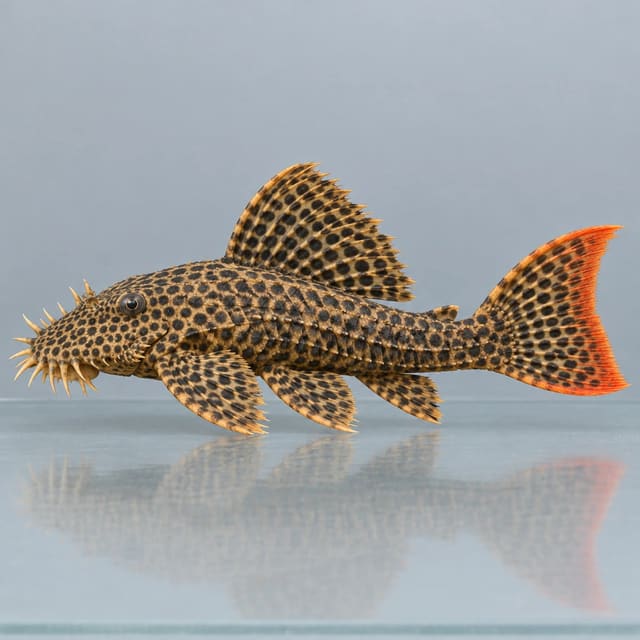
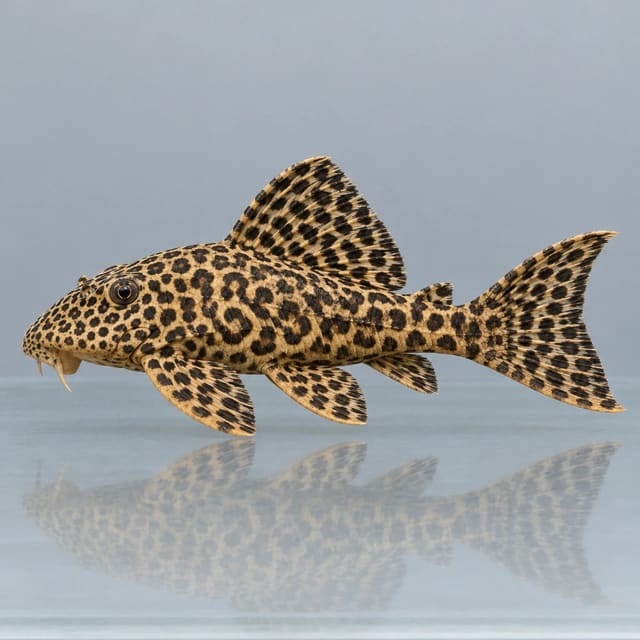
| A fully grown, much larger armoured catfish, such as an adult Leopard Sailfin Pleco, in a tank sized for both | Small relatives such as Perugia's Woodcat, which would be eaten |
| Other very large, peaceful, non-predatory fish that share soft, acidic water | Big predators such as the Red-Tailed Catfish, which could eat the gulper |
Keeping gulpers together is possible but risky. The keeper quoted by Planet Catfish kept six together for four years with no interaction except attempts to swallow each other at feeding time. If you like large-mouthed ambush catfish but cannot give one a tank of its own, the much smaller Angler Catfish (Chaca chaca) is another remarkable oddball, though it too needs a species set-up. Browse more South American catfish and our rare and collector fish in the catfish and plecos range, and see our pleco care guide if you plan an armoured companion.
ScotCat summarises a 2005 study by Zuanon and Sazima that watched the gulper feed in an aquarium. It scoops large, unaware prey head-first into its cavernous mouth, then lets the prey's own attempts to flee push it further into the very stretchy stomach. The prey ends up folded, with both its head and tail pointing towards the catfish's head. The same study named it the ogre catfish.
Breeding has not been reported in aquariums. Like other driftwood catfishes it uses internal fertilisation: in sexually active males the first anal-fin rays become thickened, elongated and fused to support the sexual organ (Seriously Fish, Planet Catfish), which makes adult males possible to recognise. FishBase lists the species as Least Concern on the IUCN Red List.
It is Asterophysus batrachus, a predatory driftwood catfish (family Auchenipteridae) from blackwater tributaries of the Rio Negro in Brazil and the Orinoco in Venezuela. It is also called the Ogre Catfish. Its huge, trapdoor-like mouth and stretchy belly let it swallow other fish whole.
Yes. Seriously Fish says it can swallow fish almost twice its own size, and Planet Catfish records a 24 cm gulper that swallowed a 40 cm pike cichlid. Treat every fish that is not much larger than the gulper as food.
Seriously Fish, FishBase, Planet Catfish and ScotCat all give 25 cm standard length. A keeper quoted by Planet Catfish saw none larger than about 25 cm in the wild.
Seriously Fish recommends a base of at least 150 × 60 cm, about 540 litres, with powerful filtration, driftwood refuges and plenty of open water for swimming at night.
Soft, acidic water. Seriously Fish gives 22-28°C, pH 5.0-7.0 and 1-8 dGH; Planet Catfish 24-29°C and pH 5.6-7.0; ScotCat 23-28°C and pH 6.0-7.0. Aim for 24-28°C and pH 6.0-7.0, which suits all three.
Less often than most fish. Seriously Fish says adults need only one or two meals a week, Planet Catfish suggests weekly for adults, and ScotCat suggests every other day. Young fish eat more often; never overfeed, as overfed gulpers may bring food back up.
Sometimes, but with risk. One keeper ran six together for four years, yet they tried to swallow each other at feeding time and left deep gouges. Most keepers house one fish on its own.
No breeding has been reported. Like other driftwood catfishes it uses internal fertilisation: in mature males the front anal-fin rays thicken and fuse to support the sexual organ.
No reviews for this item yet. Bought one? Honest reviews only, good or bad.
What customers say about ordering from us
Easy website plenty of info on fish your buying great to pick a time slot
TRACEY DURRANT · 7 Oct 2026
Got some lovely fish thank you
Kevin Mackie · 7 Oct 2026
Reviews of our shop, collected by Judge.me, an independent third-party review collector. Newest first.
Moved by UK carriers licensed to handle live animals
Hand-packed with oxygen bags, poly box, heat pack
Email photos the same day; an optional unboxing video helps us review problems faster — claim terms apply
Klarna & PayPal Pay in 3 at checkout