Expert
Albino Iridescent Shark Catfish (Pangasianodon hypophthalmus)
22–26°C · pH 6.5–7.5 · 14580L
£12.99
The Salmon Catfish (Neoarius graeffei) is a shark-shaped sea catfish from northern Australia and southern New Guinea that lives in rivers, lagoons, estuaries and coastal seas. It grows to 35–60 cm, has venomous fin spines and eats small fish, so it suits only experienced keepers with an exceptionally large, hard-water system. One live fish per purchase.
Neoarius graeffei
The Salmon Catfish (Neoarius graeffei) is a shark-shaped sea catfish from northern Australia and southern New Guinea that lives in rivers, lagoons, estuaries and coastal seas. It grows to 35–60 cm, has venomous fin spines and eats small fish, so it suits only experienced keepers with an exceptionally large, hard-water system. One live fish per purchase.
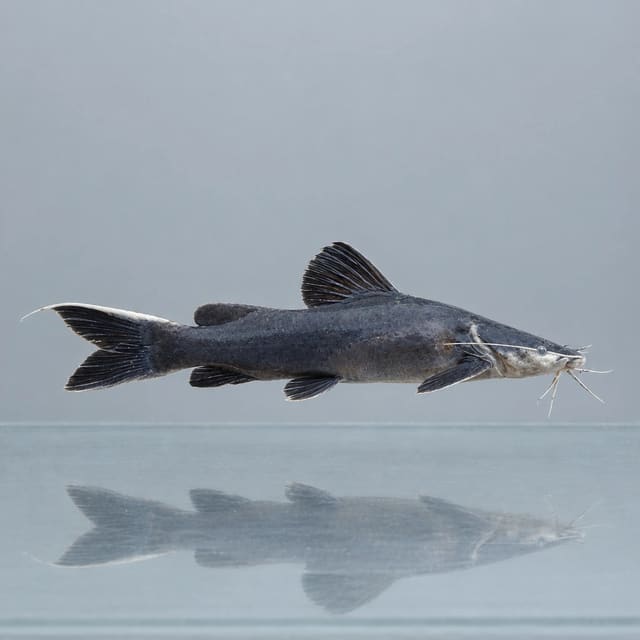
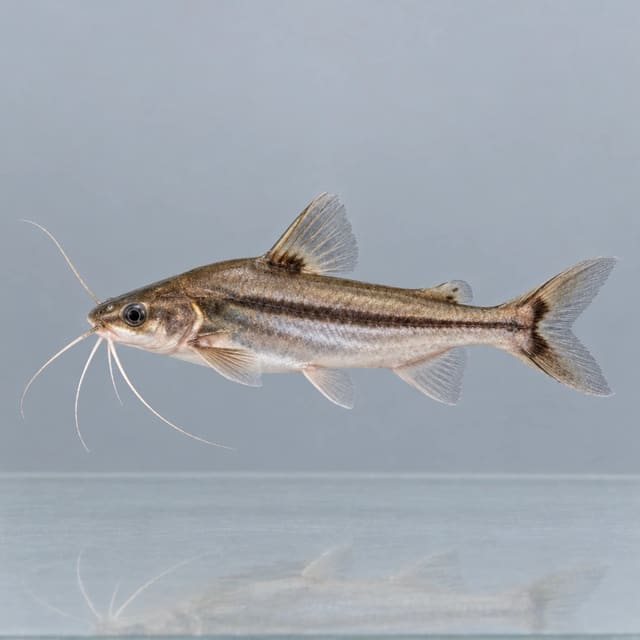
The Salmon Catfish is Neoarius graeffei, a sea catfish of the family Ariidae from northern Australia and southern New Guinea. Its tall, pointed dorsal fin and deeply forked tail give it the look of a small shark, which is why it is also sold as the Australian Shark Catfish. Fishes of Australia lists Blue Catfish, Blue Salmon Catfish, Forktail Catfish, Lesser Salmon Catfish and Smaller Salmon Catfish among its names, and older books call it Arius graeffei or Arius australis. Planet Catfish describes it as dusky grey overall, often with a bluish tinge, and white underneath; Fishes of Australia says creamy to pinkish below.
We want every buyer to know the facts first. This fish grows to 35–60 cm, it carries venomous fin spines, it swims actively in groups in the wild, and it eats fish. It is a specialist animal for an experienced keeper with an exceptionally large aquarium or indoor pond, not for a community tank. If that is you, it is a striking, characterful fish; if not, please choose something smaller.
| Question | What the sources say |
|---|---|
| Adult size | 60 cm standard length (FishBase, Planet Catfish); commonly 35 cm (Fishes of Australia); about 50 cm (ScotCat) |
| Home waters | Freshwater rivers and lagoons, brackish estuaries and coastal seas (FishBase) |
| Water | Hard and alkaline suits every source; salt is not required |
| Behaviour | Active and shoaling; keep with fish of equal size or larger (Planet Catfish) |
| Safety | Venomous serrated fin spines that can cause a very painful wound (Fishes of Australia) |
The name comes from the Greek arios, warlike, a reference to the well-developed fin spines, and the species honours the naturalist E. Gräffe. FishBase lists it as Least Concern on the IUCN Red List (assessed in 2019).
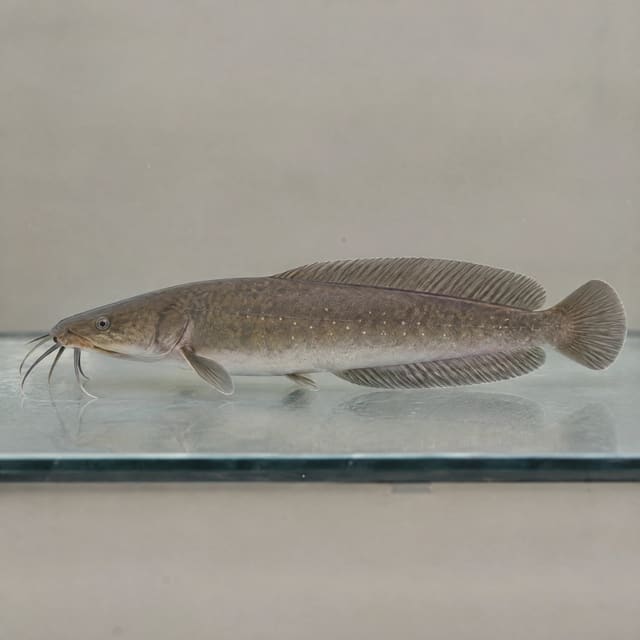
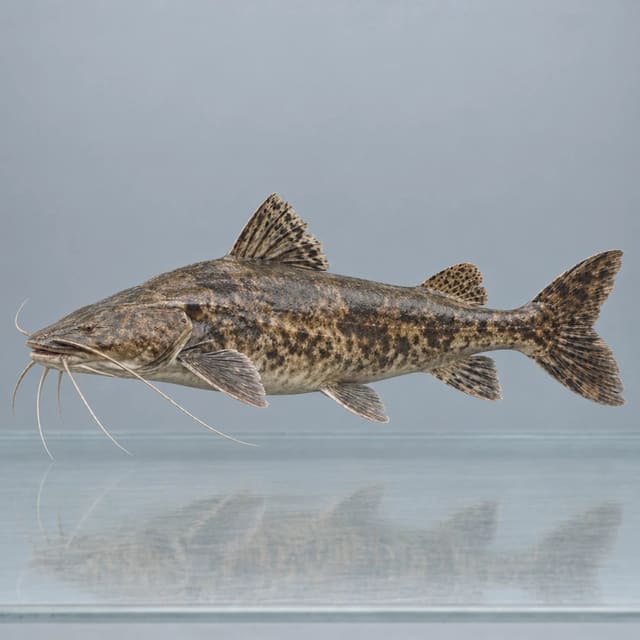
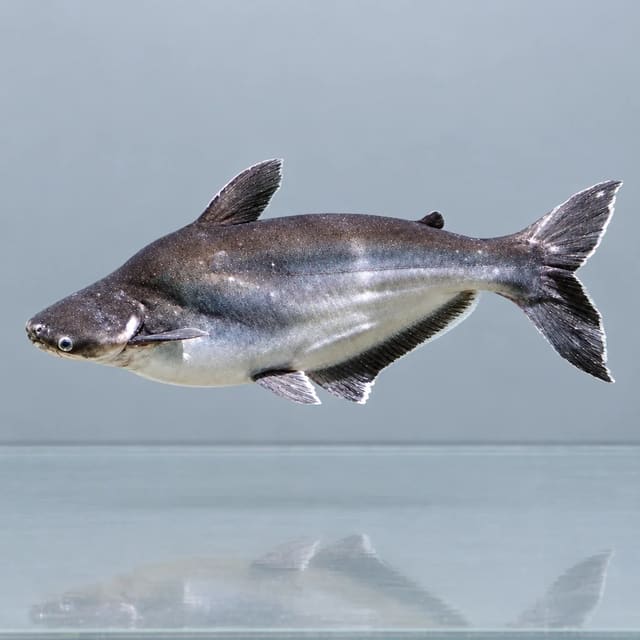
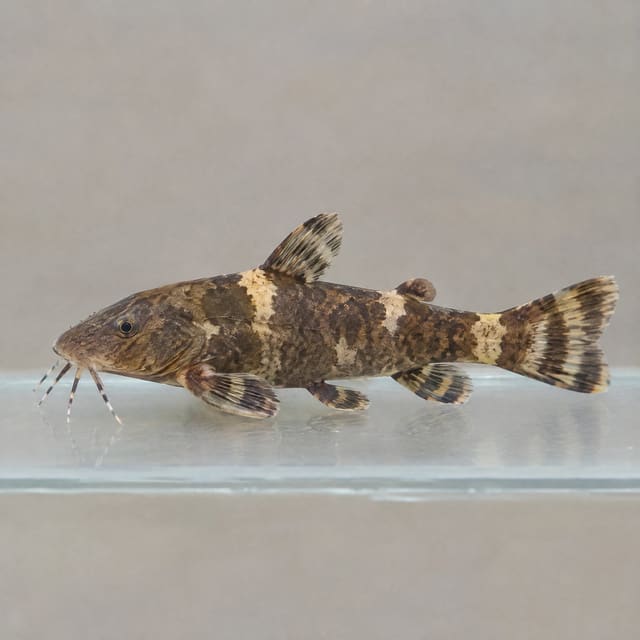
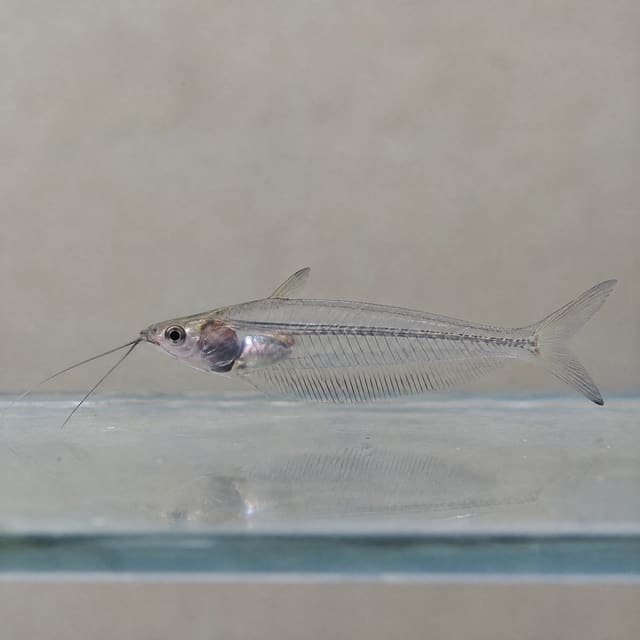
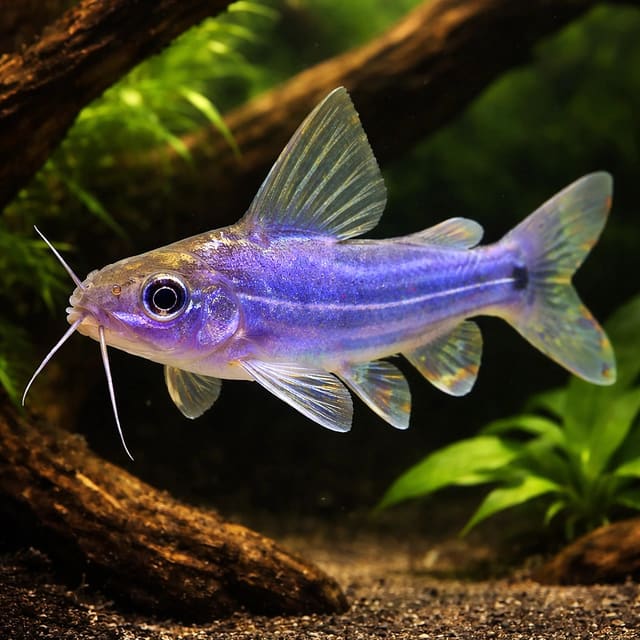
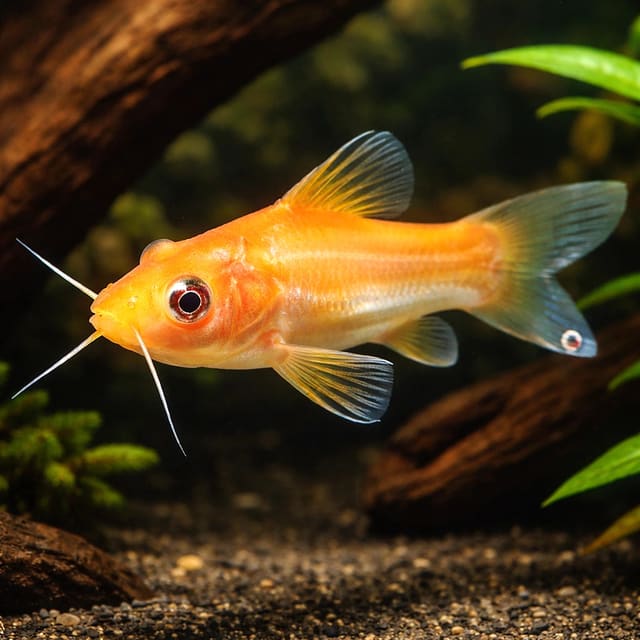
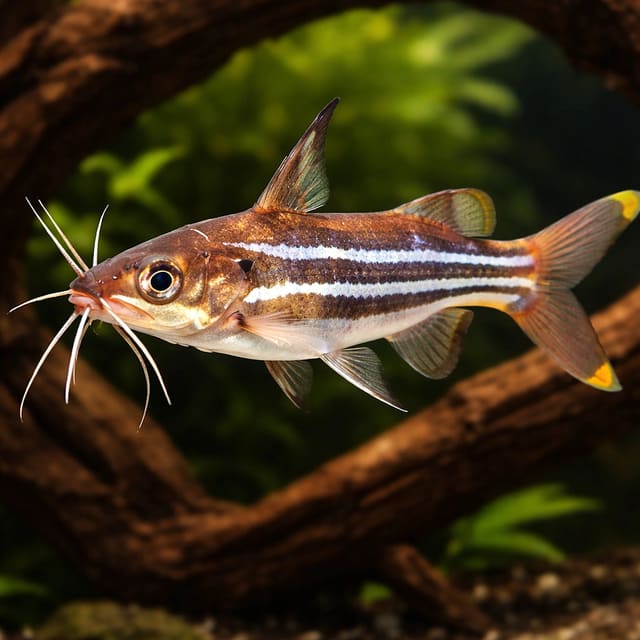
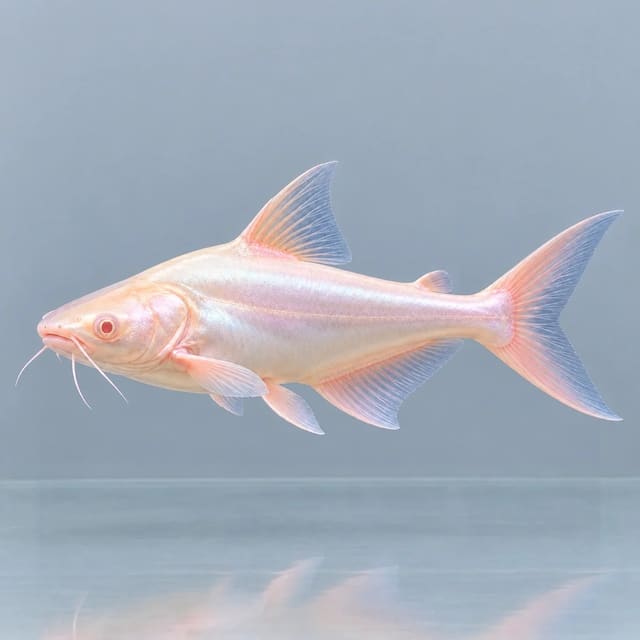
One purchase supplies one live Salmon Catfish in the standard size we receive, which is a young fish far smaller than the adult. Sex is not specified. Planet Catfish notes that females have longer, more rounded pelvic fins than males, but young fish are hard to sex. The gallery images are representative, prepared from a reference photograph, and do not show the individual you will receive.
FishBase notes that large groups of juveniles are often found in the wild, and Planet Catfish calls it an active, shoaling species. A group of adults, however, needs space on the scale of a public aquarium. Be realistic: size the system for the number of adult fish you will keep, not the number of juveniles that fit today, and buy only what the finished system can hold. Read our delivery and Live Arrival Guarantee policy before ordering a large fish.
None of the species sources we checked publishes a minimum aquarium size for this fish. OATA's care sheet for very large fish says such species usually need an exceptionally large aquarium, often in excess of 500 litres, that an off-the-shelf aquarium is unlikely to be big enough in the long term, and that indoor heated ponds are an alternative. It adds that active swimmers need more space than sedentary fish of the same size, and the Salmon Catfish is an active swimmer.
As a yardstick, Seriously Fish asks for a base of at least 240 × 90 cm for another catfish of the same 60 cm standard length, the sailfin pim, which spends its days resting in cover and cruises mainly at night. Treat that as a starting point for one adult Salmon Catfish, not a target. Our tank volume calculator converts any set of measurements into litres.
Planet Catfish recommends driftwood and rocks as hiding places, and its feature on the species adds soft sand or fine gravel, several hiding places among bogwood roots and rocks, and subdued lighting so that new fish settle quickly. OATA's guidance for large fish is to fix rocks and ornaments securely so they cannot be dislodged, to protect heaters from damage, and to choose a substrate without sharp edges that can be kept clean.
| Area | Purpose |
|---|---|
| Long open water through the middle | Swimming space for an active, shoaling fish |
| Soft sand or fine gravel floor | Protects the barbels as it searches for food |
| Large driftwood roots and rocks at the ends | Shaded cover that does not block the swimming lanes |
| Guarded heaters and secured décor | Prevents a strong fish breaking equipment or toppling rocks |
The published ranges differ, so the target column uses the band where all three overlap. FishBase also notes that adults tolerate a much wider spread, from 11°C to 38°C, but a stable aquarium should stay well inside the target.
| Value | FishBase | Planet Catfish | ScotCat | Our target |
|---|---|---|---|---|
| Temperature | 24–32°C | 17–27°C | 20–27°C | 24–27°C |
| pH | 7.5–8.2 | 6.4–8.0 | 6.5–8.0 | 7.5–8.0 |
| Hardness | 18–30 dH | Not given | Not given | Hard |
ScotCat advises keeping the pH on the alkaline side and not letting it drop too low. Many UK areas have hard, alkaline tap water that already suits this fish, while soft-water areas will need buffering; your water company publishes figures for your postcode, and our water matcher compares them with the target. Our water chemistry guide explains how to raise and hold hardness and pH safely.
FishBase records it in fresh, brackish and marine water, and notes that sea-going populations migrate upriver to breed while river populations studied did not. None of the aquarium care sources we checked requires salt or gives a salinity for aquarium keeping, so we do not quote one. Hard, alkaline fresh water is the simplest choice. If you run a brackish system, change the salinity in small steps and measure each step.
| Reading | Target |
|---|---|
| Ammonia | Zero mg/l |
| Nitrite | Zero mg/l |
| Nitrate | No more than 20 mg/l above your tap water |
OATA gives these limits for every very large fish and warns that such fish can be stressed by even small amounts of ammonia and nitrite.
Large meat-eating fish produce a great deal of solid waste. OATA advises that several large aquarium filters, or a pond filter, may be needed to control water quality and remove that waste, and that a heater is required year-round. Mature the filter fully before the fish arrives; our guide to the nitrogen cycle explains why, and our guide to aquarium filtration explains how to combine mechanical and biological stages.
FishBase lists a wild diet of insects and other arthropods, molluscs, prawns, crayfish, fish, aquatic plants and bottom detritus, and Fishes of Australia adds worms and even small mammals. Planet Catfish says it accepts a wide variety of live and prepared foods. ScotCat's keepers fed earthworms, frozen brine shrimp, prawns, pellets, tablets and large flake. OATA recommends large pellets for very large fish, with larger frozen foods such as mussel, shrimp and lancefish for carnivores.
Fishes of Australia warns that this catfish has venomous serrated fin spines that may inflict a very painful wound, and ScotCat describes the dorsal and pectoral spines as poisonous, with punctures taking a long time to heal. FishBase classes it as traumatogenic, able to wound people. OATA advises double-bagging catfish so that spines cannot puncture the bag.
Large fish may travel in boxes or buckets as well as bags. Use OATA's floating method: lights off, float the sealed bag for about 10 minutes to equalise the temperature, add small amounts of aquarium water over up to 20 minutes, then guide the fish into the aquarium with as little transport water as possible. Our guide to acclimatising new fish covers each step.
| Checkpoint | What to do |
|---|---|
| Before introduction | Test the water and confirm 24–27°C and pH 7.5–8.0 |
| First day | Keep the lights low and the lid closed; do not feed for the first few hours |
| First feed | A small portion of sinking pellets or prawn in the evening |
| Mid-week | Retest ammonia and nitrite rather than waiting for the weekly test |
| End of week | Full test and a partial water change |
OATA lists the changes worth watching in any large fish. A healthy Salmon Catfish swims steadily, feeds eagerly and keeps its fins spread.
| If you see | Do this |
|---|---|
| Hanging at the surface or fast breathing | Test ammonia, nitrite and temperature at once and add aeration |
| Sitting on the bottom or erratic swimming | Check water readings and look for injuries from décor |
| Loss of appetite | Check temperature, pH and recent changes before changing the diet |
| White spots, fluffy growths or damaged fins | Test the water and seek fish-health advice before treating |
Planet Catfish advises keeping it only with fish of equivalent size or larger, and ScotCat suggests larger cichlids because it can be carnivorous. In the wild it eats small fish, so assume that anything that fits in its mouth will be eaten as it grows.
| Suits | Avoid |
|---|---|
| Robust fish of equal size or larger | Any fish small enough to swallow |
| Large, sturdy cichlids | Slow, delicate or long-finned fish |
| In brackish systems, large brackish-tolerant fish | Fish that need soft, acidic water |
Fish that can match it as adults include the Oscar Cichlid (see our Oscar care guide) and, for a brackish system, the Spotted Scat; the Tinfoil Barb is another large, fast fish for very big aquariums, but introduce it only once it is too large to swallow. For related large catfish, compare our Shark Catfish (Arius jordani) and Silver Catfish, or browse other catfish, brackish fish, centrepiece fish and all our catfish and plecos. Check every mix with our tank mates tool before buying.
The male is a mouthbrooder, and the sources differ on the details. Planet Catfish says it spawns in the wild in spring or early summer at about 26°C, with males carrying up to 120 eggs for six to eight weeks. Fishes of Australia says males brood the eggs and young fry for four to six weeks, that females lay large eggs up to 14 mm across, and that breeding is annual in late spring and early summer. ScotCat gives two to four weeks of brooding and reports young of about 6 cm at two months. FishBase gives a breeding season from September to February. OATA notes that it would be unusual for very large fish to breed in a home aquarium.
It is Neoarius graeffei, a sea catfish of the family Ariidae from northern Australia and southern New Guinea. It is also sold as the Blue Salmon Catfish, Lesser Salmon Catfish, Blue Catfish, Forktail Catfish and Australian Shark Catfish.
FishBase and Planet Catfish give 60 cm standard length, measured without the tail. Fishes of Australia says it commonly reaches 35 cm, and ScotCat suggests about 50 cm, somewhat smaller in aquariums. Plan for a fish of at least 35–50 cm.
No species minimum is published by the sources we use. OATA says very large fish usually need an exceptionally large aquarium, often well over 500 litres, or an indoor heated pond. As a yardstick, Seriously Fish asks for a 240 × 90 cm base for another 60 cm catfish.
No. It lives in rivers and lagoons as well as estuaries and the sea. The aquarium care sources we checked do not require salt and favour hard, alkaline water. None gives an aquarium salinity, so we do not quote one; if you choose a brackish set-up, change it slowly and measure every step.
Yes. Fishes of Australia warns that its serrated fin spines are venomous and can give a very painful wound, and ScotCat notes that puncture wounds can take a long time to heal. Never handle it with bare hands.
It is an opportunistic predator. Offer large sinking pellets and meaty frozen foods such as prawn, mussel and lancefish, plus earthworms. It will eat any fish small enough to swallow.
Only robust fish of equal size or larger, as Planet Catfish advises, such as large cichlids or, in brackish water, scats. Avoid every fish that could fit in its mouth.
Very unlikely. Males brood the large eggs and young in their mouths for several weeks, and breeding is recorded in the wild rather than in home aquariums.
No reviews for this item yet. Bought one? Honest reviews only, good or bad.
What customers say about ordering from us
Easy website plenty of info on fish your buying great to pick a time slot
TRACEY DURRANT · 7 Oct 2026
Got some lovely fish thank you
Kevin Mackie · 7 Oct 2026
Reviews of our shop, collected by Judge.me, an independent third-party review collector. Newest first.
Moved by UK carriers licensed to handle live animals
Hand-packed with oxygen bags, poly box, heat pack
Email photos the same day; an optional unboxing video helps us review problems faster — claim terms apply
Klarna & PayPal Pay in 3 at checkout