Expert
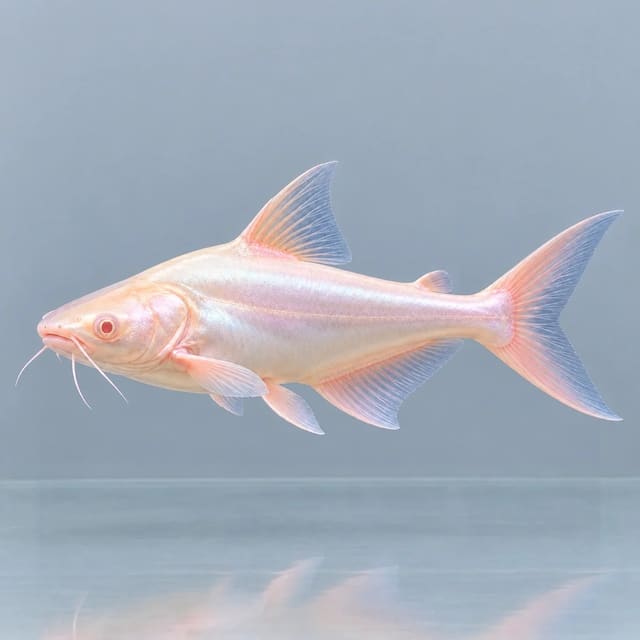
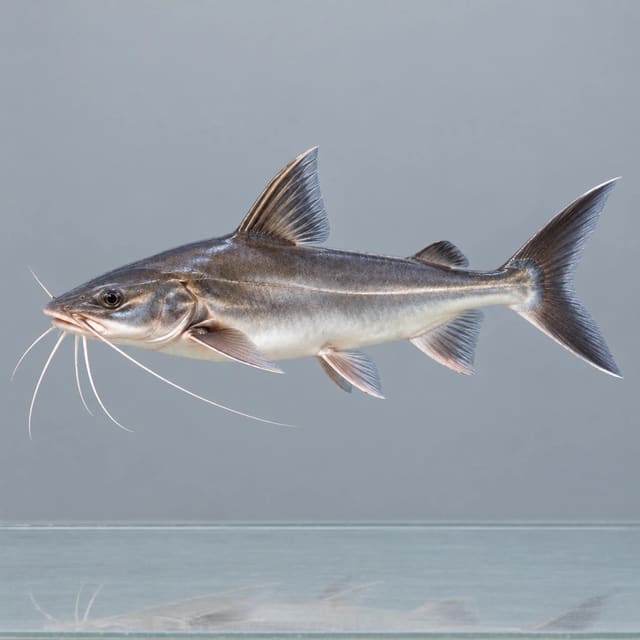
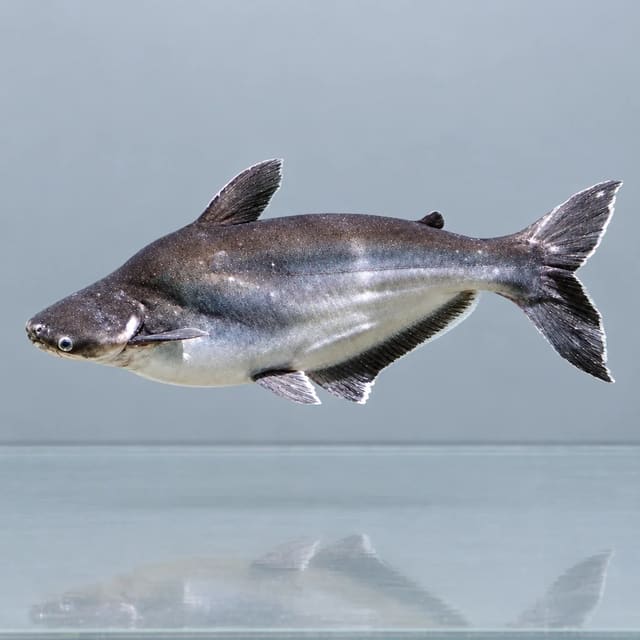
Iridescent Shark Catfish (Pangasianodon hypophthalmus)
22–26°C · pH 6.5–7.5 · 14580L
£10.39
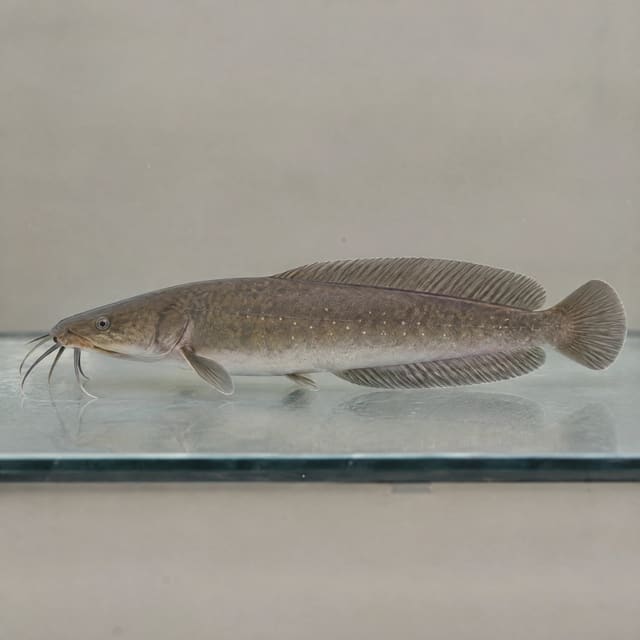
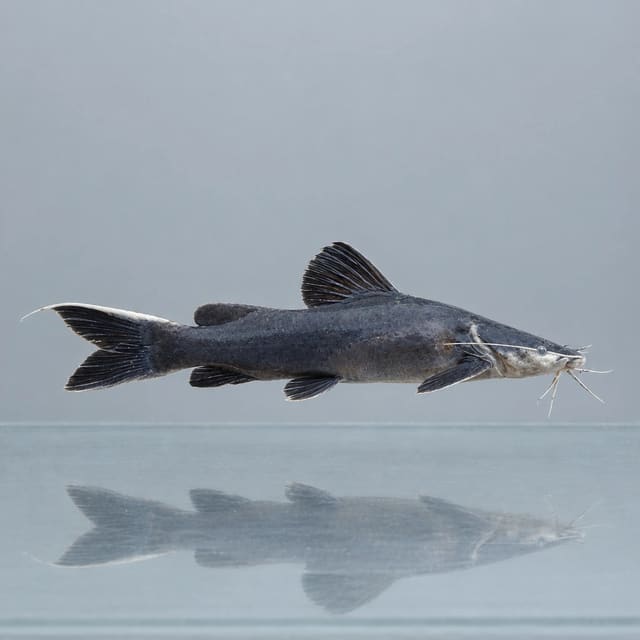
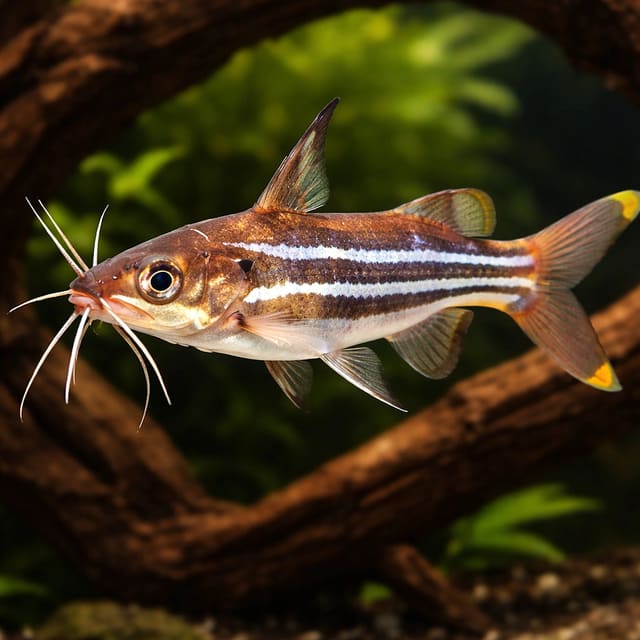
Mystus nigriceps, the Two-Spot Catfish, is a slender South-East Asian bagrid catfish with long barbels and a long adipose fin. Published sizes run from about 20 cm to 30 cm, so it needs at least a 120 × 45 cm aquarium at 22–26°C and pH 6.0–7.0, with tank mates too big to swallow. Sold individually.
Mystus nigriceps
Mystus nigriceps, the Two-Spot Catfish, is a slender South-East Asian bagrid catfish with long barbels and a long adipose fin. Published sizes run from about 20 cm to 30 cm, so it needs at least a 120 × 45 cm aquarium at 22–26°C and pH 6.0–7.0, with tank mates too big to swallow. Sold individually.
Read the full care guidance when planning conditions for your aquarium.
Mystus nigriceps, the Two-Spot Catfish, is a bagrid catfish (family Bagridae) from South-East Asia. It has a long, slender body, a long, low adipose fin on the back and the long barbels that give the genus its name: FishBase explains that Mystus comes from the Greek mystax, meaning whiskered. Published sizes differ. Wikipedia, citing an earlier FishBase version, gives 19.8 cm, while FishBase and ScotCat now give a maximum of 30 cm total length (TL, including the tail). ScotCat warns that Mystus nigriceps will prove predatory in the aquarium, so it is a fish for a large tank with robust companions.
The species name nigriceps means black head (ScotCat). It was described by Valenciennes in 1840 as Bagrus nigriceps; Bagrus micracanthus, described by Bleeker in 1846, is a junior synonym, and older books may call it Mystus micracanthus. Wikipedia records that the fish was sold in aquarium circles without a scientific name until it was matched to Bleeker's description. The common name has its own history: an early artist's impression showed no obvious markings, but a researcher in the early 1940s described two body spots, which is where the name Two-Spot (FishBase: Twospot catfish) comes from.
Sources disagree about its range. ScotCat restricts it to Java and southern Sumatra in Indonesia, with Java as the type locality. FishBase lists the Mekong basin, Malaysia and Indonesia, and Wikipedia gives Cambodia, Indonesia, Laos, Malaysia, Singapore and Thailand. FishBase and ScotCat agree on the habitat: lowland streams and peat waters, with adults living in large rivers. FishBase lists it as Least Concern on the IUCN Red List (assessed 2019), and ScotCat notes that it is common where it occurs in Java.
| Feature | Description | Source |
|---|---|---|
| Body shape | Elongated and slender | FishBase |
| Head | Blackish, hence the name nigriceps | ScotCat |
| Adipose fin | Long, and separated from the base of the dorsal fin | FishBase; ScotCat |
| Body markings | Two body spots described in the early 1940s; an earlier illustration showed no obvious markings | ScotCat; Wikipedia |
| Barbels | Long, whisker-like barbels, typical of the genus | FishBase (genus name) |
| Gill rakers | Over 40 on the lower arm of the first gill arch, a laboratory feature | FishBase |
Markings vary between fish and change with age and mood, so look at the body shape and the long adipose fin as well as the spots. Browse our other Mystus catfish, the Asian catfish section, or the wider other catfish category.
We stock several catfish from the same genus, and they are not interchangeable. The closest in name is our Mystus Catfish (Mystus sp.), an undescribed form whose adult size is unverified; its page expects it to stay below about 15 cm. M. nigriceps is a described species that FishBase and ScotCat record to 30 cm TL, so it needs a larger aquarium and bigger companions.
| Point | Mystus nigriceps (this listing) | Mystus Catfish (Mystus sp.) |
|---|---|---|
| Name status | Described species (Valenciennes, 1840) | Undescribed form, identified only to genus |
| Adult size | 19.8 cm (Wikipedia) to 30 cm TL (FishBase; ScotCat) | Unverified; probably under 15 cm (our listing) |
| Origin | Indonesia, with wider South-East Asian records (see above) | Exact locality unknown (our listing) |
| Tank planning | 120 × 45 cm base as a minimum, more for a full-size adult | See its own listing |
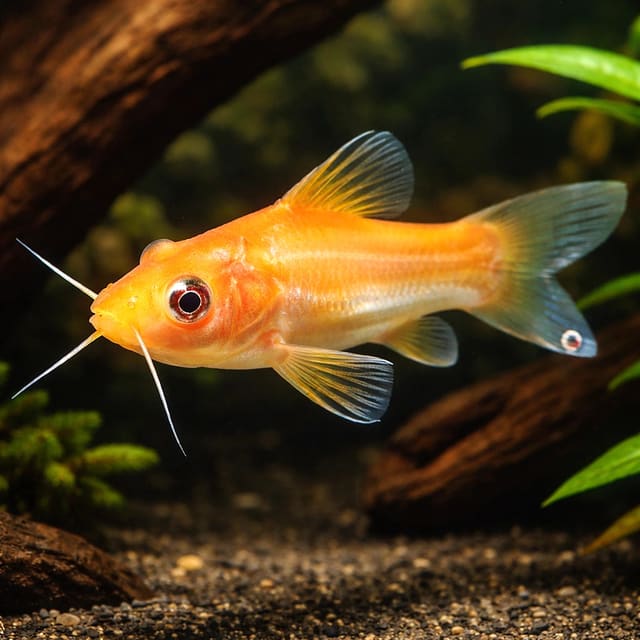
Our Pyjama Catfish (Mystus vittatus), Long Whiskered Catfish (Mystus gulio) and Albino Yellow Mystus Catfish are other members of the genus. Read each page for its own size and care rather than assuming they match this one.
No source describes how M. nigriceps behaves towards its own kind. For Mystus singaringan, a species of similar maximum size, Seriously Fish says it is usually intolerant of its own kind and advises keeping only one unless the aquarium is very large. Until better information exists, plan on one fish per aquarium, or a very large tank with a separate shelter for each fish if you want more. Read our delivery and Live Arrival Guarantee terms before you order.
No care sheet gives a tank size for this species. Seriously Fish's profile of Mystus singaringan, which reaches 300 mm standard length, sets a minimum base of 120 × 45 cm, about 243 litres, and we use that as the floor here. Because M. nigriceps can reach 30 cm TL, extra length and width are always better. OATA's guidance on large fish adds a planning rule: choose a tank that can house the fish at full size from the start, because many large species grow quickly.
Our tank volume calculator turns your measurements into litres, so you can compare your tank with the 243-litre guide figure.
Seriously Fish says décor is not critical for M. singaringan but that it needs hiding places, such as driftwood shelters, flowerpots or lengths of PVC pipe, and ideally a soft, sandy substrate. It also notes that the fish is seen more often when floating plants cut the light reaching the bottom. OATA recommends sand or fine gravel for all catfish because of their sensitive barbels, with cover from plants, wood, pots or caves. That suits the lowland streams, peat waters and large rivers where M. nigriceps lives (FishBase).
| Area | Purpose |
|---|---|
| Soft sand across the floor | Foraging with the barbels without damage (OATA; Seriously Fish) |
| Driftwood shelter or a pipe cave | A daytime retreat the fish can claim (Seriously Fish) |
| Floating plants | Shade, so the fish comes out more (Seriously Fish) |
| Open water above | Swimming room for robust mid-water companions |
| Tight-fitting lid | Large fish can be jumpy, especially in new surroundings (OATA) |
If you keep more than one bottom-dwelling fish, give each its own shelter at opposite ends of the tank so they do not compete for the same cave.
Three sources give values for this fish or a close relative, and they overlap well. FishBase gives 20–26°C, pH 6.0–7.0 and 5–19 dH. ScotCat gives 22–27°C and pH 6.0–7.0. Seriously Fish gives 22–27°C, pH 5.6–7.0 and 1–12 dGH for M. singaringan. The aim column is the range where they agree.
| Value | FishBase | ScotCat | Seriously Fish (M. singaringan) | Aim for |
|---|---|---|---|---|
| Temperature | 20–26°C | 22–27°C | 22–27°C | 22–26°C |
| pH | 6.0–7.0 | 6.0–7.0 | 5.6–7.0 | 6.0–7.0 |
| Hardness | 5–19 dH | Not given | 1–12 dGH | 5–12 dGH |
Tap water in many parts of the UK is hard, with a pH above 7, so test yours before you buy. Stable values matter more than chasing an exact figure, so avoid repeated chemical adjustments, and treat every water change with a conditioner that removes chlorine and chloramine. Our water matcher compares your readings with the ranges above, and our water chemistry guide explains pH and hardness.
| Reading | Target |
|---|---|
| Ammonia | Zero mg/l |
| Nitrite | Zero mg/l |
| Nitrate | No more than 20 mg/l above your tap water |
These limits come from OATA's catfish guidance. A large predatory catfish produces a lot of waste, so test weekly and after every new addition.
For an aquarium of about 243 litres, Seriously Fish suggests a filter rated at 970–1,215 litres per hour, four to five turnovers of the tank volume every hour, and a heater of about 175–275 W in a room at around 20°C. Keep the filter mature by cleaning it gently and never all at once. Our guide to aquarium filtration explains the choices.
In the wild M. nigriceps eats insect larvae and zooplankton (FishBase). In aquariums it takes most prepared foods (Wikipedia, citing Planet Catfish), and Seriously Fish calls the similar M. singaringan an unfussy feeder that accepts most small live, frozen and dried foods, and advises keeping the diet varied. OATA recommends sinking foods for catfish, fed once a day in amounts eaten within a few minutes.
From our range, Welsi Gran sinking catfish granules make a good daily base, with frozen red mosquito larvae and frozen Mysis through the week.
Before the fish arrives, make sure ammonia and nitrite read zero and that the temperature and pH sit within the ranges above. Use OATA's floating-bag method: switch off the aquarium lights, float the sealed bag for 10 minutes to equalise the temperature, add small amounts of tank water over up to 20 minutes, then release the fish, leaving as much bag water behind as possible. Our guide to acclimatising new fish walks through each step.
Catfish carry spines on their pectoral fins and just behind the gills, so OATA advises handling them with care and double-bagging them for transport. Spines catch easily in a net; lifting the fish in a container is gentler for both of you.
| Checkpoint | What to do |
|---|---|
| Before arrival | Test the water; check the shelters, lid and heater |
| Day of arrival | Lights off, slow acclimatisation, then leave the fish to find its shelter |
| First feed | Next day, a small sinking meal near the shelter |
| Every day | Watch breathing, feeding and how tank mates react |
| End of the week | Full water test, then the normal weekly routine |
Expect the catfish to hide for the first days. A fish that never comes out to feed, breathes rapidly or shows damaged fins needs attention.
ScotCat warns that M. nigriceps will prove predatory in the aquarium, and Wikipedia notes that it is not safe with smaller fish because it will eat them. For the similar M. singaringan, Seriously Fish describes a somewhat robust species that can be territorial and aggressive depending on the individual, says it should not share a tank with other territorial bottom-dwellers, and suggests larger barbs such as tinfoil or lemon-finned barbs, Apollo sharks and large cichlids as companions.
From our range, the Tinfoil Barb and the Albino Tinfoil Barb match that advice. Check each pairing in our tank mates tool, and browse our catfish and plecos if you are planning a larger mixed tank.
| Suits | Avoid |
|---|---|
| Larger barbs such as Tinfoil Barbs (Seriously Fish, for M. singaringan) | Small fish such as tetras, rasboras and small barbs |
| Apollo sharks and large cichlids (Seriously Fish, for M. singaringan) | Other territorial bottom-dwelling catfish |
| Robust mid-water fish too big to swallow | A second Mystus in a tank that is not very large |
FishBase notes that the genus Mystus breathes air facultatively: as well as using their gills, the fish can take air at the surface. FishBase also describes M. nigriceps as demersal, living near the bottom, so expect a fish that spends much of its time on or near the floor and in its shelter, coming out more under floating plants and in dimmer light.
| Behaviour | What it means | When to act |
|---|---|---|
| Quick trips to the surface to gulp air | Normal for an air-breathing genus | If it is constant, test the water and check oxygen and temperature |
| Claims a cave and chases fish away from it | Territorial behaviour | Add more shelters; remove other territorial bottom-dwellers |
| Small fish disappear | Predation | Move small fish to another tank and choose bigger companions |
| Hides for most of the day | Normal under bright light | Add floating plants to dim the light |
| Constant hiding and refusing food | Stress or illness | Check the water values and the tank mates |
OATA lists the warning signs that something is wrong in a catfish aquarium. Check them at every feed, and when you see one, test the water before doing anything else.
| If you see | Do this |
|---|---|
| Hanging at the surface, sitting on the bottom or swimming erratically | Test ammonia, nitrite and temperature; check filter flow and aeration |
| Gills moving faster or slower than usual | Check oxygen, temperature and water quality straight away |
| Colour much darker or paler than normal, or more hiding or aggression | Check the water values, the group and the tank mates |
| White spots, fluffy growths, or lost fins or scales | Test the water and seek fish-health advice before treating |
| Clamped fins, flicking against objects or shimmying | Test the water and watch closely for other signs |
| Weight loss or poor appetite | Review water quality and the feeding routine |
OATA adds a rule for every aquarium fish: never release an unwanted fish or plant into the wild. If the catfish outgrows your tank, ask a fish shop or club to rehome it.
FishBase records that M. nigriceps lays eggs and that its pairing behaviour is possibly like that of other bagrid catfish, but it gives no details, and we found no report of aquarium breeding. Seriously Fish says the related M. singaringan is not thought to have been bred in aquariums either.
Mystus nigriceps, the Two-Spot Catfish, is a bagrid catfish from South-East Asia with a long, slender body, a long adipose fin and long barbels. It lives in lowland streams, peat waters and large rivers, eats smaller fish in the aquarium and needs a large tank with robust tank mates.
An early illustration of the species showed no obvious markings, but a researcher in the early 1940s described it with two body spots, and the common name comes from that description. FishBase lists it as the Twospot catfish. The Latin name nigriceps means black head.
Published sizes differ. Wikipedia, citing an earlier FishBase version, gives 19.8 cm, while FishBase and ScotCat now give a maximum of 30 cm total length. Plan the aquarium for a catfish of up to 30 cm.
No. Our Mystus Catfish (Mystus sp.) is an undescribed form whose adult size is unverified and probably under 15 cm. Mystus nigriceps is a described species recorded to 30 cm, so it needs a bigger aquarium and bigger tank mates.
Yes. ScotCat warns that it will prove predatory in the aquarium, and Wikipedia notes that it is not safe with smaller fish because it will eat them. Keep it only with fish too large to swallow.
Its behaviour towards its own kind is not documented. Seriously Fish says the similar-sized Mystus singaringan is usually intolerant of its own kind and advises keeping one unless the aquarium is very large, so plan on one fish per tank.
No species sheet gives a figure. Seriously Fish sets a minimum base of 120 × 45 cm, about 243 litres, for the similar-sized Mystus singaringan, and that is the floor we recommend. A larger tank is better for a fish that can reach 30 cm.
FishBase gives 20–26°C, pH 6.0–7.0 and 5–19 dH, and ScotCat gives 22–27°C and pH 6.0–7.0. Aim for 22–26°C and pH 6.0–7.0, with zero ammonia and nitrite and nitrate no more than 20 mg/l above your tap water.
In the wild it eats insect larvae and zooplankton. In the aquarium it takes most prepared foods: feed sinking granules or pellets with frozen bloodworm and Mysis, once a day and only what it eats within a few minutes.
No reviews for this item yet. Bought one? Honest reviews only, good or bad.
What customers say about ordering from us
Easy website plenty of info on fish your buying great to pick a time slot
TRACEY DURRANT · 7 Oct 2026
Got some lovely fish thank you
Kevin Mackie · 7 Oct 2026
Reviews of our shop, collected by Judge.me, an independent third-party review collector. Newest first.
Moved by UK carriers licensed to handle live animals
Hand-packed with oxygen bags, poly box, heat pack
Email photos the same day; an optional unboxing video helps us review problems faster — claim terms apply
Klarna & PayPal Pay in 3 at checkout