−10%
Dwarf Marbled Catfish (Microglanis poecilus)
22–27°C · pH 6–8
£8.09£8.99

A nocturnal, boldly barred Asian bagrid catfish for spacious aquariums with caves, soft sand and robust tank mates too large to swallow.
Adult size is the maximum length this species reaches at full maturity (scientific sources). The livestock you receive will be younger and smaller — pick a size above for the actual shipping size. Product-photo provenance and any image-specific limitations are stated on the listing.
Pseudomystus siamensis
Confirm your email, then we’ll send an availability message for this exact item if it returns within 180 days.
This request is only for this product—no newsletter or other promotions. A mail-provider retry may very rarely duplicate the same availability message. Unconfirmed addresses are removed after 48 hours. See our privacy policy.
A nocturnal, boldly barred Asian bagrid catfish for spacious aquariums with caves, soft sand and robust tank mates too large to swallow.
Adult size is the maximum length this species reaches at full maturity (scientific sources). The livestock you receive will be younger and smaller — pick a size above for the actual shipping size. Product-photo provenance and any image-specific limitations are stated on the listing.
Maintain these water conditions for optimal health and vibrant colors
Asian Bumblebee Catfish is Pseudomystus siamensis, a bold yellow-and-dark barred bagrid catfish from mainland Southeast Asia. The old supplier name Leiocassis siamensis and the phrase “Eight Barbels Loach” still appear in older trade lists, but this is not a loach. It is a nocturnal predatory catfish with strong sheltering behaviour, a broad head, short barbels and a high rounded adipose fin.
This listing is best read as a specialist bottom-dweller for keepers who enjoy dusk-active behaviour. It is hardy once settled, but it should not be treated like a small peaceful community fish. Adults can reach around 16-18 cm, become territorial around hiding places and will eat fish or shrimp small enough to fit in the mouth, especially after the lights go down.
For the right aquarium, it is a character fish: quiet in the day, alert at feeding time, and striking under subdued light. Give it a cave system, soft sand, clean oxygenated water and tank mates chosen for size and confidence rather than delicacy.
| Scientific name | Pseudomystus siamensis |
|---|---|
| Older trade names | Leiocassis siamensis, Asian Bumblebee Catfish, Barred Eight-Barbel Catfish |
| Family | Bagridae |
| Adult size | Plan for 16-18 cm, even when buying a smaller juvenile |
| Origin | Chao Phraya, Mekong, Maeklong and related Thai river systems |
| Temperament | Nocturnal, predatory and territorial around shelters |
| Minimum aquarium | 150 litres for a single fish; larger if using active tank mates |
| Best substrate | Soft sand with shaded caves, wood and visual barriers |
Use a mature aquarium with stable water quality and efficient filtration. Asian Bumblebee Catfish spend much of the day wedged in shade, so the tank should include more retreats than you think it needs: driftwood arches, rock caves with stable bases, ceramic tubes, broad-leaved plants and dim corners all help the fish feel secure. A fish that has only one cave may defend it heavily; several retreats spread across the aquarium reduce stress and help tank mates move around naturally.
Soft sand is strongly preferred. This species works the bottom after dark and can rub against decor when reversing into cover. Avoid sharp gravel and unstable rock stacks. If the aquarium uses stronger flow, keep quiet resting zones behind wood or stones so the catfish can leave the current when it wants to rest.
Lighting should be gentle. Floating plants, taller plants or shaded hardscape can make the fish bolder because it has cover close by. A blue or low-output evening light is useful if you want to watch feeding behaviour without startling it under bright daytime lighting.
| Temperature | 20-26 C is the evidence-backed range; 22-25 C suits most community setups |
|---|---|
| pH | 6.0-8.0 tolerated; avoid sudden swings |
| Hardness | 4-25 dGH tolerated; moderately soft to medium water is ideal |
| Flow | Moderate filtration with quieter shaded resting pockets |
| Decor | Wood, caves, ceramic tubes, broad plants and open feeding patches |
| Maintenance | Regular gravel-line cleaning and water changes because meaty foods pollute quickly |
Feed after the lights dim, when the fish naturally becomes active. In nature it feeds heavily on aquatic insect larvae and other animal foods, so offer a varied sinking diet: quality carnivore pellets, catfish tablets, insect-based pellets and frozen foods such as bloodworm, mysis, krill or enriched brine shrimp. It will usually learn prepared foods, but it should not be left competing only in bright daytime feeding.
Do not rely on it as a clean-up fish. It is a predator, not a waste-management tool. Uneaten frozen food should be removed, and the feeding area should be easy to siphon. A slightly underfed Asian Bumblebee Catfish is more likely to test fins or hunt small tank mates, so a predictable dusk feeding routine matters.
Choose companions that are too large to swallow, confident enough to share the aquarium and not built with trailing fins. Medium barbs, larger rasboras, danios, rainbowfish and robust non-similar mid-water fish are usually more sensible than tiny tetras, fancy guppies, dwarf shrimp or delicate long-finned fish. Avoid other similarly shaped bottom-dwelling catfish unless the aquarium is large and has multiple separated territories.
| Tank mate type | Recommendation | Reason |
|---|---|---|
| Small tetras, fry, shrimp | Avoid | They can become food after dark |
| Medium barbs, danios, rainbowfish | Often suitable | Active, confident and generally too large to swallow |
| Slow long-finned fish | Use caution | Fins can be nipped overnight |
| Similar catfish or cave dwellers | Use caution | Territory disputes are more likely around shelters |
The same species is listed here in several size bands. Smaller fish are easier to settle into a prepared aquarium, while larger fish need the final layout and tank mates chosen from day one. Do not buy the 4-5 cm size for a nano tank; it is still the same species and should be planned around adult behaviour.
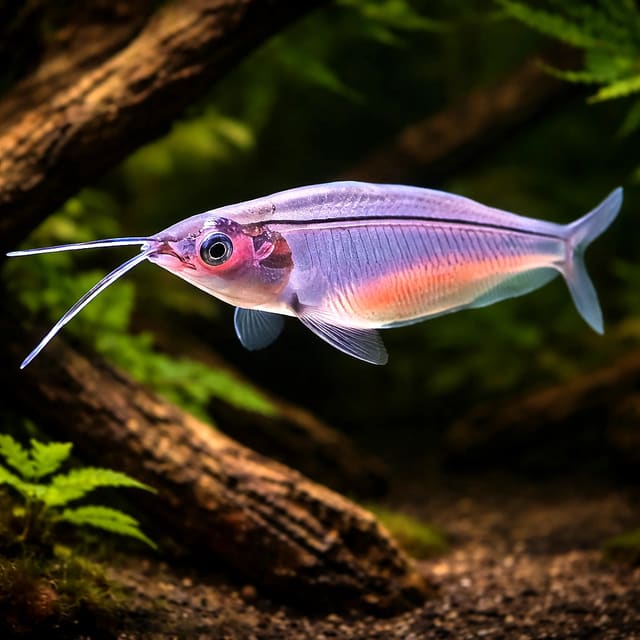
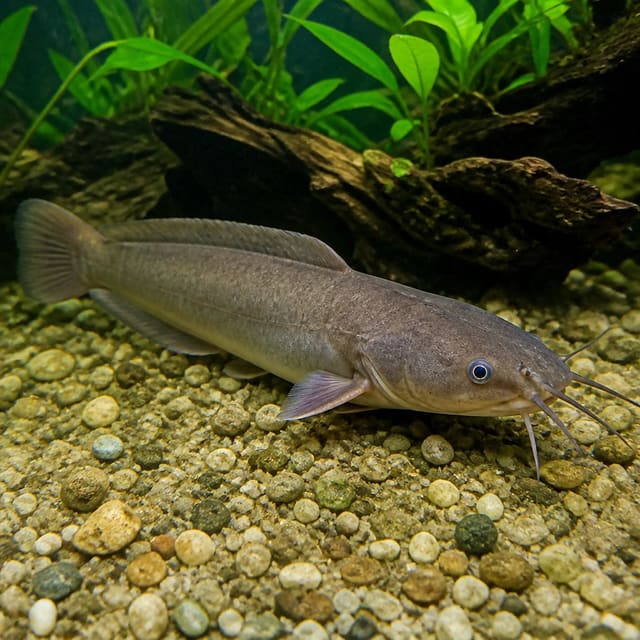
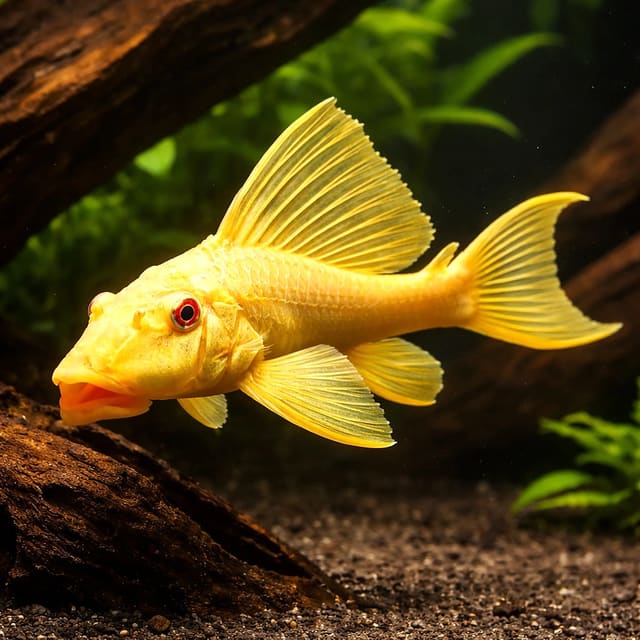
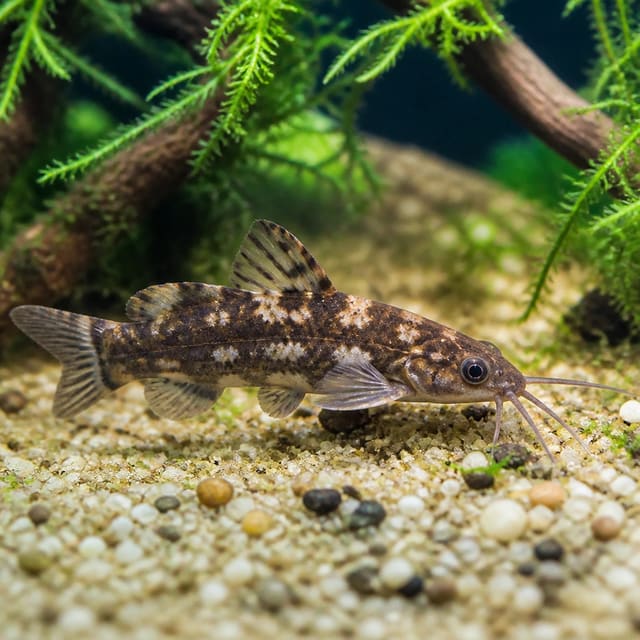
We keep the listing images as a visual guide to the barred body pattern and overall catfish shape, and this update adds the exact source-style product image without removing the existing aquarium-scene images. Look for a dark body with pale yellowish bands, a broad head, whiskers and a compact bottom-dwelling build. Some individuals show stronger or softer contrast depending on mood, age and lighting.
Livestock orders are packed for temperature-aware transport and sent with a licensed live-animal courier. Eligible livestock deliveries are covered by our Live Arrival Guarantee. First-time customers can use code WELCOME10 for 10% off their first order when the basket qualifies.
If you are unsure whether this catfish suits your tank, check the adult size and tank-mate notes before ordering. It is a rewarding fish for the right setup, but it is not suitable for small peaceful community aquariums with tiny fish.
This listing was checked against FishBase for the accepted name, size, water range, river habitat and insect-larvae diet; ScotCat for the older Leiocassis trade-name bridge, UK hobby notes and territorial/nocturnal behaviour; and Fishkeeper/Maidenhead Aquatics for practical aquarium setup, soft-sand care, dim lighting and tank-mate cautions.
No. The old supplier wording used “Eight Barbels Loach”, but the fish is a bagrid catfish, Pseudomystus siamensis. The older name Leiocassis siamensis is useful for matching older books and trade lists.
Yes, it can. Small fish, fry and shrimp are risky because this catfish hunts after dark. Choose tank mates by adult mouth size, not by how quiet the catfish looks during the day.
A single specimen is the safest plan. Groups need a much larger aquarium with several separated shelters, because similar catfish can argue over cover at night.
Hiding is normal for this species. More cover usually makes it more confident, because the fish can move between safe places rather than feeling exposed.
No reviews for this item yet. Bought one? Honest reviews only, good or bad.
What customers say about ordering from us
I have a small group of long finned mountain minnows. So was delighted to be able to order ten of this variety to increase the genetics in my tank . The ones I recieved are healthy but it’s to early to give a verdict on wether they are of a long finned type since they are small currently.
Gordon Walker · 23 Sept 2026
100% success travel and "installation". Pleased with quality of purchase. The Siamese fighter a bit "shy" so have not yet seen him at his best yet but looking good. Happy customer. GG
George E Garratt · 21 Sept 2026
Reviews of our shop, collected by Judge.me, an independent third-party review collector. Newest first.