Easy
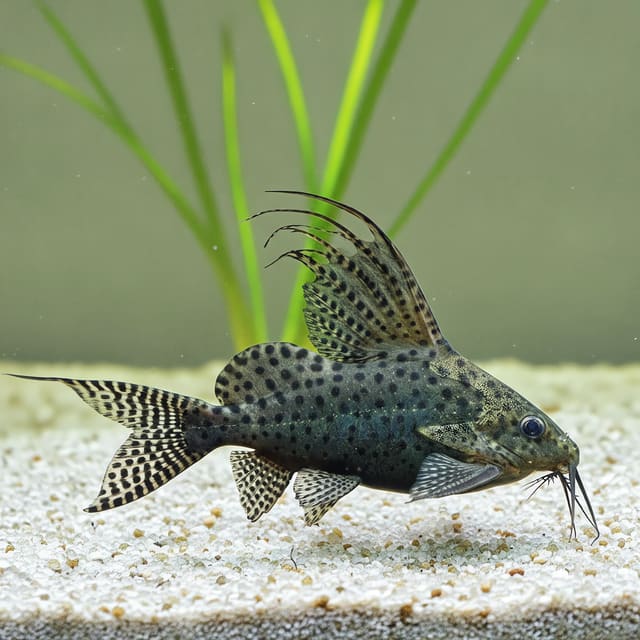
Large-Spot Synodontis (Synodontis ocellifer)
23–27°C · pH 6.2–8 · 81L
£20.99

South Asian air-breathing predator catfish for large, secure aquariums; best for experienced keepers because of adult size, predatory behaviour and painful pectoral-spine risk.
Heteropneustes fossilis
Shoaling fish: kept in a group they feel safer, stay calmer and show their best colour.
Confirm your email, then we’ll send an availability message for this exact item if it returns within 180 days.
This request is only for this product—no newsletter or other promotions. A mail-provider retry may very rarely duplicate the same availability message. Unconfirmed addresses are removed after 48 hours. See our privacy policy.
South Asian air-breathing predator catfish for large, secure aquariums; best for experienced keepers because of adult size, predatory behaviour and painful pectoral-spine risk.
Maintain these water conditions for optimal health and vibrant colors
The Asiatic Stinging Catfish is Heteropneustes fossilis, a powerful South Asian air-breathing catfish also seen in the trade as Asiatic Brown Catfish, Stinging Catfish or Fossil Catfish.
This is a tough, fascinating fish for the right aquarium. It can breathe air at the surface, it hunts confidently after dark, and it carries sharp pectoral spines associated with a painful sting. That combination makes it impressive, but it also means the keeper needs a secure lid, calm handling, robust filtration and tank mates chosen with adult size in mind. Buy it because you want a large character catfish with unusual behaviour, not because you need a bottom cleaner for a small tank.
| Common names | Asiatic Stinging Catfish, Asiatic Brown Catfish, Stinging Catfish, Fossil Catfish |
|---|---|
| Scientific name | Heteropneustes fossilis |
| Natural range | South Asia, with records from Pakistan and India through Sri Lanka, Bangladesh and Myanmar |
| Adult size | Often around 25-30 cm in aquaria; FishBase lists larger wild records up to about 41 cm total length |
| Care level | Moderate to experienced because of adult size, predatory behaviour and spine safety |
| Temperament | Predatory, mostly nocturnal, territorial around shelters, and best with sturdy tank mates |
| Best for | Large covered aquariums, predator-community setups and experienced catfish keepers |
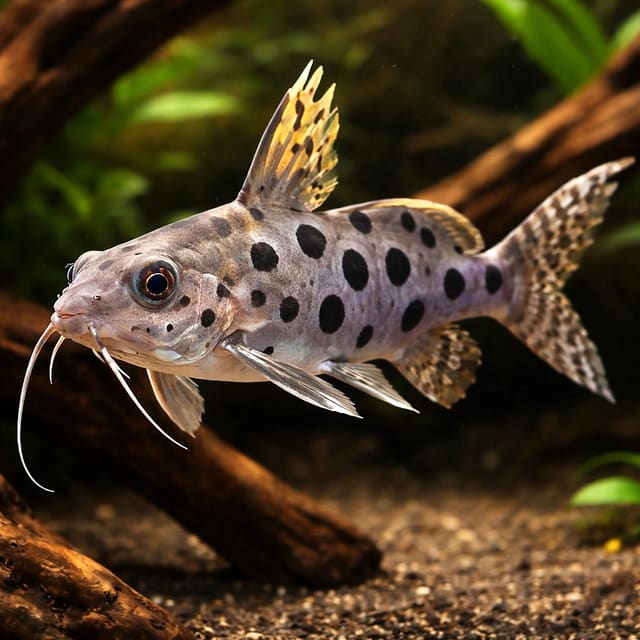
Heteropneustes fossilis has a long, eel-like catfish body with a broad head, sensory barbels and a smooth scaleless look. Colour varies from olive-brown to grey-brown or darker chocolate tones depending on age, mood, substrate and lighting. It is not a brightly patterned show fish in the way many plecos or Synodontis are, but it has a distinctive silhouette and a purposeful, predatory way of moving through cover.
The most important identification point is not colour; it is the body shape and the stinging-catfish anatomy. The species has strong pectoral spines, and reputable references note venom-associated structures near those spines. For a home aquarist, the practical lesson is simple: do not hand-catch this fish, do not let it tangle in a fine net if a container would be safer, and keep children or visitors from trying to touch it.
In the wild, Stinging Catfish are associated with warm, still or slow-moving waters such as ponds, ditches, marshes, swamps, floodplains and rice-field type habitats. They are adaptable fish, which is part of their appeal, but adaptable does not mean they should be kept in poor water. Large carnivorous catfish produce waste quickly, so stable filtration and regular maintenance matter more than chasing one perfect number.
This species is a facultative air-breather. It must be able to reach the surface, and it should never be kept under a tight internal cover sheet, floating mat or decor layout that blocks a clear route upward. A secure aquarium lid is still essential because air-breathing catfish can be determined escape artists when startled or exploring after lights out.
| Minimum aquarium | Plan around 300 litres for juveniles growing on; larger is better for adults and mixed predator setups |
|---|---|
| Temperature | Keep stable in the warm tropical range. Reference sources commonly sit around 21-25 C; supplier trade ranges may be broader when acclimation is gradual. |
| pH | Generally adaptable from slightly acidic to neutral or mildly alkaline water; avoid sudden swings |
| Substrate | Soft sand or smooth fine gravel to protect the belly and barbels |
| Decor | Large caves, pipes, wood and shaded retreats, with enough open floor space for turning |
| Flow | Moderate, well-oxygenated filtration without blasting the fish out of its shelter |
| Lid | Tight, weighted and gap-free, with surface access still available inside the tank |
Expect a fish that rests by day and becomes more confident at dusk or after feeding routines are established. It may learn the keeper and come out for food, but it is still a predator with a strong feeding response. If the tank is too bright, too open or too busy, the fish may hide constantly; if the tank is cramped, it may become defensive around its chosen shelter.
Give it a cave large enough to enter without scraping the body and arrange decor so the fish cannot wedge itself into a dead end. Because it can gulp air, leave an open path to the surface. The best setups feel secure rather than sterile: shaded cover, open swimming lanes, stable water, and no sharp rockwork that can damage skin during sudden movements.
| Good choices | Robust medium to large fish that are too deep-bodied or too large to swallow, chosen for similar water conditions |
|---|---|
| Use caution | Other large bottom dwellers, territorial catfish, cichlids and nocturnal species competing for the same caves |
| Avoid | Small tetras, rasboras, guppies, shrimp, delicate Corydoras, slow long-finned fish and anything mouth-sized |
| Group care | Usually kept singly unless the aquarium is very spacious and shelters are abundant |
| Feeding risk | Tank mates that sleep on the bottom can be at greater risk after dark |
When judging tank mates, think about the adult catfish, not the arrival size. A juvenile may appear harmless in a mixed aquarium, then gradually outgrow the community around it. If a fish can fit in the Stinging Catfish's mouth, sooner or later it should be treated as food.
Use a sinking carnivore pellet as the staple because it is measurable, complete and less messy than relying only on frozen foods. Add variety with earthworms, bloodworm, mussel, prawn pieces, chopped fish or other suitable meaty aquarium foods. Feed after lights dim if shy, and remove uneaten food quickly so the filter is not overloaded.
Avoid feeder fish. They can introduce disease, encourage rough hunting behaviour and make nutrition less predictable. Also avoid hand-feeding. This species has a fast strike and defensive spines, so tongs or a feeding stick are the calmer choice if you need to target food.
This is the section customers must read before ordering. The pectoral spines can cause a painful sting, and fine-mesh nets can snag the fish or force the handler into a risky position. For routine movement, use a rigid container under water whenever possible. If a net is needed, use a large, soft, coarse net and move slowly. Never squeeze the fish, never lift it by hand, and never let it flop on a dry surface.
During delivery acclimation, open the bag carefully, dim the room lights, and keep the fish contained. Transfer with water-quality discipline rather than speed: temperature match first, then gradual mixing if your routine uses it, then a calm release into a prepared aquarium. The first night should be quiet, covered and low stress.
Asiatic Stinging Catfish suits keepers who already understand large fish waste, predator compatibility and safe fish handling. It is a rewarding species if you like unusual catfish behaviour and can give it space, cover and a serious lid. It is not a beginner community fish, not a nano aquarium option and not suitable for households where people may try to touch aquarium fish.
If you are building a large catfish or predator community, this species can be a memorable centrepiece. If your aquarium is a peaceful planted community with small fish, choose a smaller, safer catfish instead.
We pack live fish with insulated packaging, oxygenated bags and livestock-focused dispatch timing. Eligible orders are covered by our Live Arrival Guarantee when the delivery and acclimation steps are followed. First-time customers can also use the current first-order discount when available; check the live checkout or promotion banner before paying, as offer terms can change.
Because this species is out of stock at times, use the page to plan the aquarium before the next batch. A prepared covered tank matters more than rushing the order when stock returns.
No reviews for this item yet. Bought one? Honest reviews only, good or bad.
What customers say about ordering from us
I have a small group of long finned mountain minnows. So was delighted to be able to order ten of this variety to increase the genetics in my tank . The ones I recieved are healthy but it’s to early to give a verdict on wether they are of a long finned type since they are small currently.
Gordon Walker · 23 Sept 2026
100% success travel and "installation". Pleased with quality of purchase. The Siamese fighter a bit "shy" so have not yet seen him at his best yet but looking good. Happy customer. GG
George E Garratt · 21 Sept 2026
Reviews of our shop, collected by Judge.me, an independent third-party review collector. Newest first.