Expert
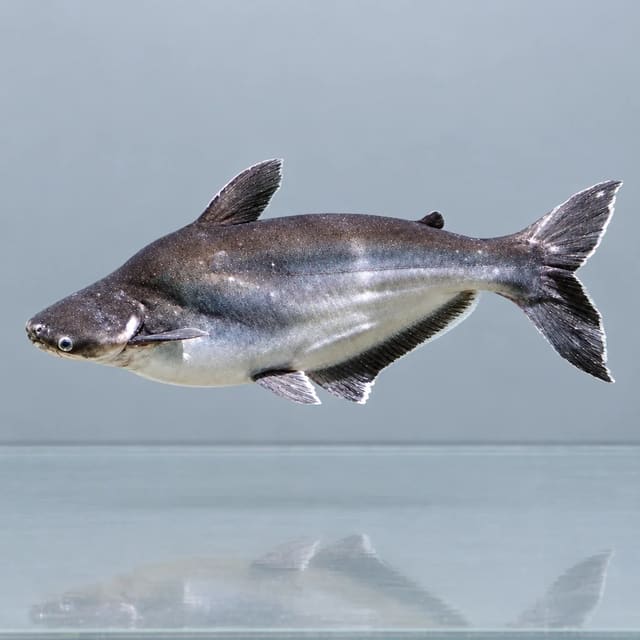
Iridescent Shark Catfish (Pangasianodon hypophthalmus)
22–26°C · pH 6.5–7.5 · 14580L
£10.39
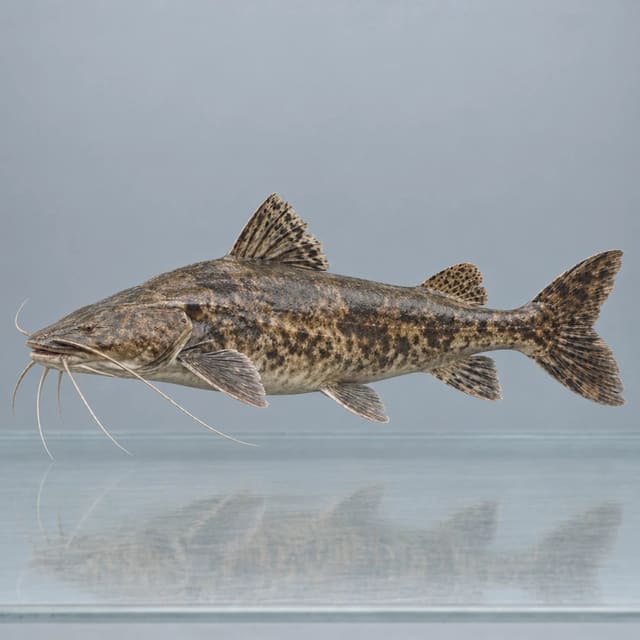
The Albino Iridescent Shark Catfish is a pale, red-eyed albino form of Pangasianodon hypophthalmus, a shoaling Mekong catfish that is sold small but easily grows past 90 cm and can live 20 years or more. One adult needs around 450 × 180 × 180 cm or a large heated indoor pond. Sold individually at 5–6 cm.
Pangasianodon hypophthalmus
The Albino Iridescent Shark Catfish is a pale, red-eyed albino form of Pangasianodon hypophthalmus, a shoaling Mekong catfish that is sold small but easily grows past 90 cm and can live 20 years or more. One adult needs around 450 × 180 × 180 cm or a large heated indoor pond. Sold individually at 5–6 cm.
Read the full care guidance when planning conditions for your aquarium.
The Albino Iridescent Shark Catfish is a pale, red-eyed albino form of Pangasianodon hypophthalmus (Sauvage, 1878), a river catfish from Southeast Asia. It is sold here at 5–6 cm, but it is one of the biggest fish in the aquarium trade. Seriously Fish says it rarely reaches 130 cm in captivity but easily exceeds 90 cm, and that it can live for 20 years or more. FishBase records wild fish up to 130 cm standard length and 44 kg.
Seriously Fish describes how this species is usually sold as small juveniles, often without any information about its adult size, and how many end up in beginners' community tanks before being given away, because public aquariums and hobbyists rarely have room for them. Its advice is not to buy one unless you already have the resources to keep it for life. We agree, and we would rather you read this page and choose a different fish than buy one you cannot house.
| Suits | Not suited to |
|---|---|
| A keeper with a very large heated aquarium or indoor pond already planned | A standard home community aquarium |
| One fish, or a group in an exceptionally large system | A small tank "for now" with no plan for the adult |
| Large, peaceful companions of similar size | Small fish it can swallow, or shy, slow fish |
| A heavy, secure cover and strong filtration | An open-topped tank or a light lid |
| A commitment of 20 years or more | A short-term purchase |
Compare it with the other big fish in our catfish and plecos collection and in the other catfish category before you decide.
The species has many names. Planet Catfish lists iridescent shark, iridescent shark catfish, striped catfish, sutchi catfish and the Thai name pla sawai, and FishBase uses striped catfish. Older books call it Pangasius sutchi or Pangasius hypophthalmus, and Seriously Fish notes the misspelling Pangasionodon, which has since been corrected. It belongs to the Pangasiidae, the shark catfishes, and is not related to true sharks.
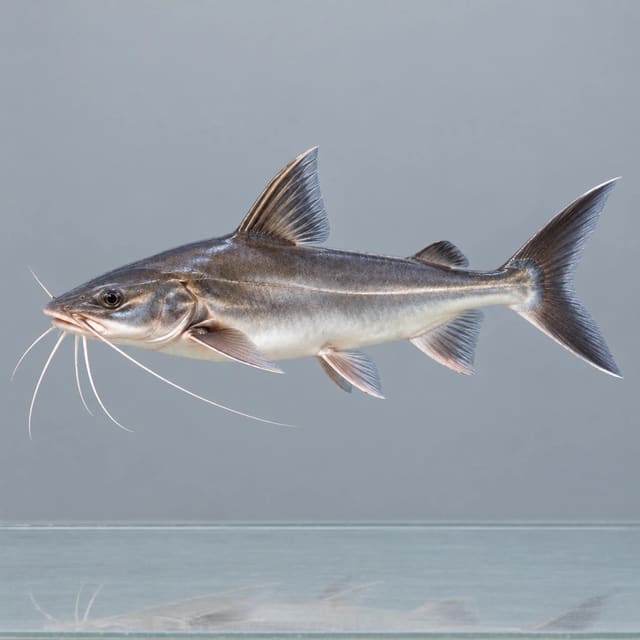
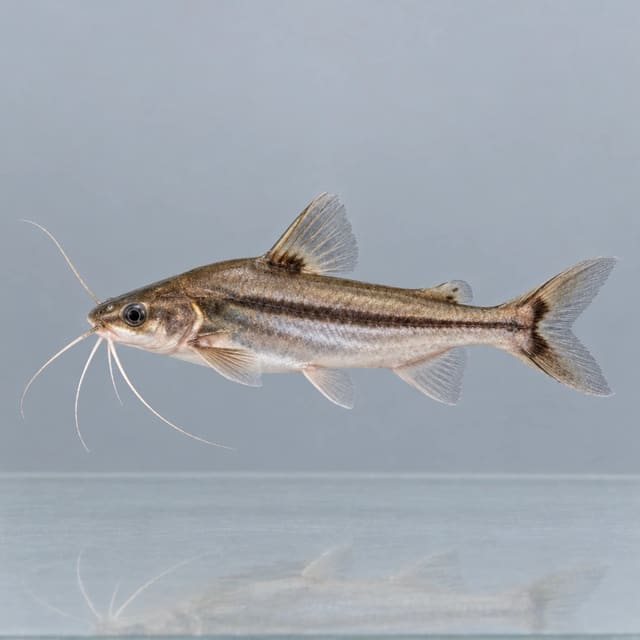
Both Seriously Fish and Planet Catfish confirm that albino strains are commonly available. Albinism removes the dark pigment, so this form has a pale pink-white body and red eyes in place of the silvery colour of the normal fish. FishBase notes that normal juveniles carry dark stripes that fade as they grow. Seriously Fish also describes a selectively bred "short-body" or "balloon" form that is deformed and stays much smaller than the wild fish. The fish on this page is a normally shaped albino and will grow to the full size of the species.
| Form | Appearance | Adult size |
|---|---|---|
| Normal (wild colour) | Silvery-blue when young, with dark stripes that fade with age | Easily over 90 cm in captivity |
| Albino (this listing) | Pale pink-white body and red eyes | The same as the normal form |
| Short-body or balloon | Shortened, deformed body | Stays much smaller (Seriously Fish); not sold here |
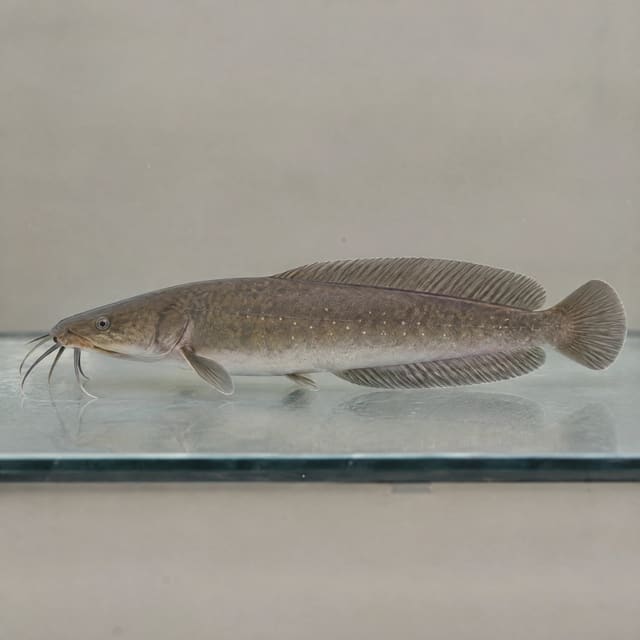
Our photographs show the albino form, not the individual you will receive. Each fish differs slightly in shade and size.
One purchase supplies one live Albino Iridescent Shark Catfish at 5–6 cm. Sex is not specified. Seriously Fish reports that females are stockier with lighter patterning, but the differences cannot be seen at sale size.
Never release an aquarium fish, and never pass one on to someone without room for the adult. OATA points out that releasing aquarium fish into the wild is illegal and usually fatal for the fish. Dispatch days and our Live Arrival Guarantee are on our delivery page.
In the wild this is a pelagic fish of main river channels and larger tributaries, adapted to flowing, well-oxygenated water. FishBase adds that it is a facultative air-breather, able to gulp air at the surface, and that adults migrate upstream to spawn. In the aquarium that means a fish that swims constantly and needs length, width and depth.
Seriously Fish gives a minimum of 450 × 180 × 180 cm, about 14,580 litres, for a single adult kept long term, and says juveniles can be kept in smaller tanks until they outgrow them. OATA's care sheet for very large "tankbuster" fish says such species often need more than 500 litres, that a heated indoor pond can be an alternative, and that the tank should be chosen for the adult size rather than the size you buy.
| Stage | Space guidance |
|---|---|
| Arrival at 5–6 cm | A smaller mature tank, but only until it outgrows it (Seriously Fish) |
| Adult, one fish | 450 × 180 × 180 cm, about 14,580 litres (Seriously Fish) |
| Any tankbuster | Often more than 500 litres, or a heated indoor pond (OATA) |
The gap between those figures is the honest message of this page: a fish that starts in an ordinary tank will need a system many times larger within its lifetime.
Seriously Fish says décor is optional for adults if the lighting is dim, that any heavy décor must be secured, and that a heavy, secure lid is essential because the fish sometimes leaps out during panic episodes. Planet Catfish recommends as little décor as possible because the fish needs space, and notes that floating plants reduce its skittishness.
| Area | Purpose |
|---|---|
| Open water | Most of the tank, so the fish can swim and turn without hitting anything |
| Edges and back | Smooth, secured rocks or wood only, kept out of the swimming lane |
| Surface | Floating plants to shade the water and calm the fish |
| Lid | Heavy, close-fitting and fixed down against panic jumps |
| Lighting | Dim, with no sudden switching from dark to bright |
Seriously Fish describes the species as very active and skittish in confined spaces, often banging into the glass and décor and injuring itself. Turn the room lights on before the tank lights, approach the tank calmly and avoid tapping the glass.
The main sources agree closely on water values, and Seriously Fish adds that hardness can vary widely because seasonal flooding changes the water in its rivers.
| Value | Seriously Fish | FishBase | Planet Catfish | Aim for |
|---|---|---|---|---|
| Temperature | 22–26°C | 22–26°C | 22–26°C | 22–26°C |
| pH | 6.5–7.5 | 6.5–7.5 | 6.5–7.5 | 6.5–7.5 |
| Hardness | 2–30 dGH | 2–29 dH | Not given | 2–29 dGH |
Temperature, pH and hardness describe the habitat; ammonia, nitrite and nitrate describe waste. OATA's targets are zero mg/l ammonia and nitrite, with nitrate no more than 20 mg/l above your tap water. UK tap water varies from soft to very hard by region, and this species' hardness range is wide; what matters most is that every water change is treated with a tap water conditioner to remove chlorine or chloramine. Our aquarium water chemistry guide explains each test.
Seriously Fish calls for a large biological filter and recommends a sump. OATA's tankbuster guidance points to large aquarium filters, several filters or a pond filter to cope with the solid waste, and a partial water change of about 25% at least weekly with the substrate siphoned.
A sump or external filter also lets you keep heaters out of the main tank, where a panicking fish could break them.
FishBase describes the wild fish as omnivorous, eating fish, crustaceans and plant debris. Seriously Fish says juveniles need plenty of protein, such as chopped earthworm, bloodworm and pelleted foods, while adults need more plant matter, such as spinach, frozen peas, Spirulina-based foods and occasional fruit. Planet Catfish agrees that youngsters are more carnivorous than adults, suggests bloodworm and catfish tablets at first, then shrimp and spinach, and eventually mostly vegetable-based floating pellets.
| Stage | Foods | How much |
|---|---|---|
| 5–6 cm on arrival | Frozen bloodworm, catfish tablets and small pellets | What it finishes within a few minutes, once a day (OATA) |
| Growing fish | Shrimp, chopped earthworm and spinach, with larger pellets | As above, with plant food in most meals |
| Adult | Mostly vegetable-based pellets, spinach, peas and Spirulina foods, plus occasional fruit | Portions it clears quickly; remove leftovers |
A sinking Spirulina food such as Tropical Super Spirulina Forte Granulat helps with the move towards plant-rich adult meals. OATA warns that uneaten food breaks down and releases toxic waste, so feed what is eaten promptly and siphon leftovers.
Only add the fish to a fully established aquarium with zero ammonia and nitrite. OATA advises getting fish home quickly, acclimatising them with the floating-bag method, or by slowly adding tank water if they arrive in a box or bucket, and watching water quality closely during the first week.
| When | Check | Action |
|---|---|---|
| Arrival | Bag and tank temperature | Acclimatise with the tank lights off and the lid ready |
| Day 1 | Swimming calmly rather than dashing | Keep the room quiet and the lights dim |
| Days 2–3 | Ammonia and nitrite | Offer a small meal and remove leftovers |
| Days 4–7 | Water tests, fins and snout | Change water if readings rise; look for knocks from the glass |
Seriously Fish describes the species as not aggressive, but likely to eat much smaller tank mates. Its constant activity can stress sedentary or shy fish, and it is easily intimidated by boisterous species. Suitable companions are large, peaceful bottom-dwellers and mid-to-upper-water shoaling fish; the examples given are large doradid catfish such as Oxydoras niger, Megalodoras uranoscopus and Pterodoras granulosus, pacu and larger cyprinids. Planet Catfish suggests large active fish, the bigger barbs, Labeo "sharks", loricariids and pacu.
| Suits | Avoid |
|---|---|
| Large, peaceful fish of similar adult size | Any fish small enough to swallow |
| Big barbs and other large cyprinids | Boisterous or aggressive fish that make it panic |
| Pacu and large doradid catfish | Shy, slow or sedentary fish stressed by constant movement |
In our range, the Red-Bellied Pacu, the Albino Tinfoil Barb and the Bala Shark are the kind of large, active fish the sources describe, but each grows big and needs its own adult space. Our tank mates checker helps you test a mix before you buy.
Most health problems in this species come from panic in a tank that is too small, and from water quality that slips as the fish grows.
| You notice | Likely cause | Action |
|---|---|---|
| Scrapes on the snout or torn fins | Collisions with glass or décor | Remove obstacles, dim the lighting and add floating cover |
| Dashing and jumping at the lid | Sudden light, noise or a cramped tank | Keep the room calm and plan the move to a bigger system |
| Frequent gulping at the surface | It can breathe air, so occasional gulps are normal; frequent gulping suggests poor water | Test, change water and increase surface movement |
| Thin body despite feeding | Competition from tank mates | Feed where it can reach food first and review the mix |
| Loss of appetite | Temperature or water quality | Correct the water before trying new foods |
Seriously Fish describes the species as migratory, spawning upstream in late spring and summer, and considers aquarium breeding very unlikely. It is bred commercially in large ponds on fish farms in the Far East, it is farmed for food in its native countries, and Seriously Fish says most fish in the trade are mass-bred. Planet Catfish describes home breeding as unknown and probably impossible. FishBase calls it one of the most important aquaculture species in Thailand, while listing wild populations as Endangered on the IUCN Red List (assessed 2011).
OATA reminds keepers that the Animal Welfare Act 2006 gives pet owners a legal duty of care, including a suitable environment and the ability to behave normally. For this fish, that means planning for the adult before you buy the young one.
No. It is a catfish of the family Pangasiidae, often called the shark catfishes. Seriously Fish notes that names like this are used to help sell the fish.
Seriously Fish says it easily exceeds 90 cm in captivity and can live for 20 years or more. FishBase records wild fish up to 130 cm standard length and 44 kg.
No. It is the same species and grows just as large. Only the deformed short-body or balloon form stays smaller, and that is not the fish sold here.
Seriously Fish gives a minimum of 450 × 180 × 180 cm, about 14,580 litres, for one adult kept long term. A young fish can live in a smaller tank only until it outgrows it.
Not for long. It eats much smaller fish, its constant activity stresses shy fish, and it soon outgrows community tanks. Suitable companions are large, peaceful fish such as pacu, big barbs and large doradid catfish.
It is an omnivore. Give young fish protein such as bloodworm, chopped earthworm and pellets, and move adults onto more plant matter, including spinach, peas and Spirulina-based foods.
Keep it at 22 to 26°C, pH 6.5 to 7.5 and roughly 2 to 29 dGH, with zero ammonia and nitrite and nitrate no more than 20 mg/l above your tap water.
It is a shoaling fish and calmer in a group, but Seriously Fish points out that a group needs an impractically large tank, so most keepers can only house one.
No reviews for this item yet. Bought one? Honest reviews only, good or bad.
What customers say about ordering from us
Easy website plenty of info on fish your buying great to pick a time slot
TRACEY DURRANT · 7 Oct 2026
Got some lovely fish thank you
Kevin Mackie · 7 Oct 2026
Reviews of our shop, collected by Judge.me, an independent third-party review collector. Newest first.
Moved by UK carriers licensed to handle live animals
Hand-packed with oxygen bags, poly box, heat pack
Email photos the same day; an optional unboxing video helps us review problems faster — claim terms apply
Klarna & PayPal Pay in 3 at checkout