Advanced
Clarias batrachus
20–26°C · pH 5.5–8 · 2268L
£16.99

Albino Walking Catfish is the pale form of Clarias batrachus, a large air-breathing catfish for experienced keepers with a secure covered aquarium.
Clarias batrachus
Shoaling fish: kept in a group they feel safer, stay calmer and show their best colour.
Confirm your email, then we’ll send an availability message for this exact item if it returns within 180 days.
This request is only for this product—no newsletter or other promotions. A mail-provider retry may very rarely duplicate the same availability message. Unconfirmed addresses are removed after 48 hours. See our privacy policy.
Albino Walking Catfish is the pale form of Clarias batrachus, a large air-breathing catfish for experienced keepers with a secure covered aquarium.
Maintain these water conditions for optimal health and vibrant colors
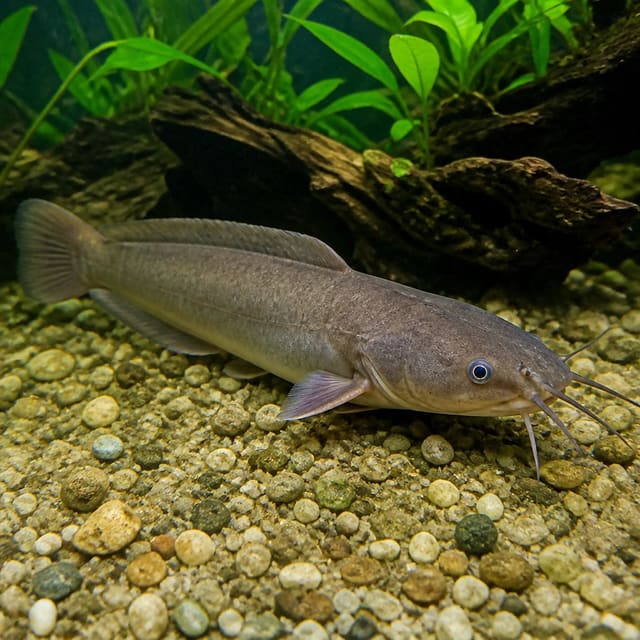
Albino Walking Catfish is the pale aquarium form of Clarias batrachus, one of the best-known air-breathing catfish in the hobby. The albino colour is a trade form, not a different scientific name, so the care plan should still be built around the real animal: a strong, fast-growing, predatory catfish that can breathe atmospheric air, push against weak covers and investigate every gap in the aquarium.
This is not a casual community fish. It is best suited to experienced keepers who already understand large catfish, secure lids, heavy filtration and the long-term space needed by a fish that may reach around 40-47 cm in aquarium care. Kept properly it becomes an impressive, intelligent centrepiece. Kept in a small mixed tank, it quickly becomes a problem for tank mates, equipment and water quality.
The priority with this listing is honest, useful care information: enough detail for Google and human shoppers to understand the fish before ordering, without forcing keywords into the text. The natural search terms are already in the real subject: Albino Walking Catfish, Walking Catfish, Clarias batrachus, air-breathing catfish, large predatory catfish and secure-lid aquarium care.
| Scientific name | Clarias batrachus |
|---|---|
| Common name | Albino Walking Catfish, Walking Catfish |
| Family | Clariidae |
| Adult size | Plan for 40-47 cm in aquarium care; some wild/native reports can be larger. |
| Care level | Moderate to experienced; the main challenge is size, strength, waste and escape prevention. |
| Temperament | Predatory, powerful, usually best kept alone. |
| Diet | Omnivorous predator: sinking carnivore pellets, worms, crustacean-based foods and suitable frozen meaty foods. |
| Best for | Large, covered, specialist aquariums with keepers who want a bold catfish rather than a peaceful community fish. |
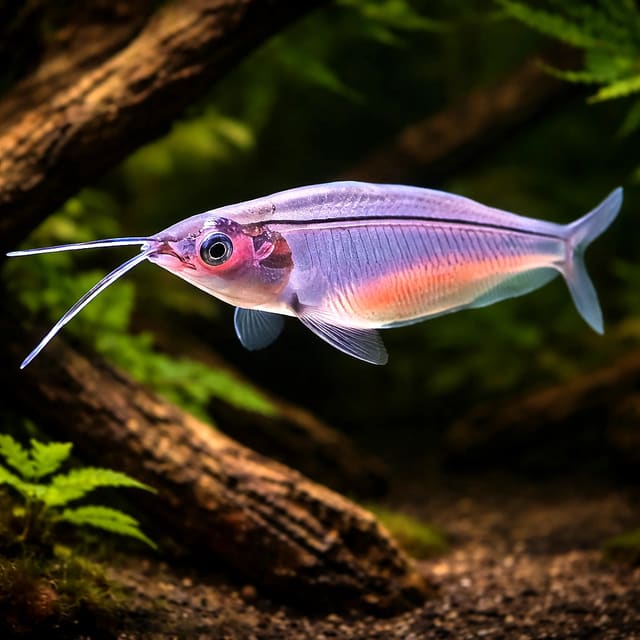
The albino form has a pale cream to pinkish body, reduced dark pigment and visible contrast around the eyes, barbels and fin edges. Like other Clarias catfish it has long sensory barbels, a long dorsal fin, a long anal fin and a muscular body built for searching through lowland water, mud, plants and submerged cover.
There is some taxonomic caution around older records of Clarias batrachus, because FishBase and other references note that many non-Javan records may represent related or misidentified Clarias forms. For aquarium care, that uncertainty does not make the fish easier: the animal sold under this name should still be treated as a large air-breathing Clarias catfish needing a secure, spacious setup.
Walking Catfish are associated with lowland streams, swamps, ponds, ditches, rice fields, canals and other slow or muddy freshwater habitats. They are demersal fish, spending much of their time close to the bottom, but they also use atmospheric oxygen. That air-breathing ability is the reason they can survive short periods out of water when moist and why the species is famous for moving over damp ground.
In an aquarium this behaviour becomes a practical husbandry issue. A loose lid, open feeding hole, heater-cable gap or uncovered filter return can become an exit route. The fish does not need to be frightened to test a gap; exploratory pushing and night activity are enough. A secure cover is therefore not decoration. It is part of the life-support system.
| Adult aquarium size | Plan around 450 litres or more for long-term care, with strong floor space and a length of at least 120 cm; 150 cm is better for an adult. |
|---|---|
| Grow-out use | Smaller systems can only be temporary while the fish is young. Do not buy it for a small tank expecting it to stay small. |
| Temperature | 22-28 C |
| pH | 6.0-8.0 |
| Filtration | Oversize the filter, protect intakes and expect heavy waste from protein-rich feeding. |
| Decor | Use smooth caves, large wood, robust plants if desired and open turning space. Avoid sharp rockwork. |
| Lid security | Use a tight, weighted or clipped lid. Seal gaps around pipes, cables and filter returns. |
Keep the layout simple enough to clean. This fish can shift decor, wedge itself into cover and produce a lot of waste, so a beautiful aquascape is less important than a secure, accessible tank with stable water. Large shelters help it rest during bright periods, but every cave should be big enough that the fish cannot trap itself as it grows.
Because this species can be invasive where released, it must never be put into ponds, streams, canals or outdoor water systems. Unwanted fish should be rehomed responsibly through a specialist keeper or aquatic retailer.
Use a quality sinking carnivore or large-catfish pellet as the staple. Rotate in earthworms, bloodworm, chopped prawn, mussel, krill, insect larvae and other appropriate frozen or fresh meaty foods. FishBase records a broad diet that can include insect larvae, worms, crustaceans, small fish, plant matter and debris, which fits the practical aquarium approach: protein-rich, varied feeding without relying on live feeder fish.
Do not hand-feed. A confident Clarias catfish can strike quickly, and fingers should not be part of the feeding routine. Feed with tongs or drop food in a consistent area, remove leftovers and watch body shape. Adults do not need constant heavy feeding; overfeeding can foul the water and create fatty, unhealthy fish.
| Best option | Single-specimen care in a large secure aquarium. |
|---|---|
| Possible with caution | Very large, robust fish that cannot be swallowed, only in an oversized system with careful observation. |
| Avoid | Small fish, livebearers, tetras, rasboras, dwarf cichlids, shrimp, snails and any fish that can fit in the mouth. |
| Also avoid | Slow, delicate, long-finned or easily stressed fish. They may be harassed, damaged or outcompeted. |
| Breeding behaviour | Can become more territorial. Do not rely on mixed-species peace if a pair forms or the fish matures. |
Most community compatibility mistakes happen because the fish is bought small. A 4-5 cm juvenile may look harmless, but it is still the beginning of a large predator. Choose tank mates based on the adult fish, not the size in the bag on delivery day.
Prepare the aquarium before dispatch day. The tank should be cycled, covered, heated and ready, with lights kept low for the first evening. Float and acclimate carefully, then release into a quiet tank. Offer food only after the fish has settled; many catfish feed better after lights dim.
Check the lid again after release. Juvenile Walking Catfish are often most active at night and may explore immediately. Also check ammonia and nitrite after the first feeds, because meaty food and large-catfish waste can push weak filtration very quickly.
We pack live fish with insulated packaging and oxygenated bags, then dispatch through a licensed live-animal courier. Eligible livestock orders are covered by our Live Arrival Guarantee when the delivery and acclimation steps are followed.
Albino Walking Catfish can be a brilliant specialist fish for the right keeper. It is hardy, responsive, unusual and visually striking. The same qualities make it unsuitable for small aquariums: it grows, eats smaller tank mates, moves strongly through decor and needs a lid that would be excessive for peaceful community fish. If you want a bold wet-pet style catfish and can provide the space, it is worth considering. If you want a peaceful mixed tank, choose a smaller catfish species instead.
No. The scientific name is Clarias batrachus. Albino describes the pale colour form sold in the aquarium trade.
Yes. A secure lid with sealed gaps is essential because Clarias catfish can breathe air and may push through small openings, especially at night.
It is not a normal community fish. It is a predatory catfish and is usually best kept alone or only with very large, robust fish in a suitably oversized aquarium.
Plan for at least 450 litres for long-term care, with strong filtration, a tight cover and enough length for a powerful 40 cm plus fish to turn and move properly.
No reviews for this item yet. Bought one? Honest reviews only, good or bad.
What customers say about ordering from us
I have a small group of long finned mountain minnows. So was delighted to be able to order ten of this variety to increase the genetics in my tank . The ones I recieved are healthy but it’s to early to give a verdict on wether they are of a long finned type since they are small currently.
Gordon Walker · 23 Sept 2026
100% success travel and "installation". Pleased with quality of purchase. The Siamese fighter a bit "shy" so have not yet seen him at his best yet but looking good. Happy customer. GG
George E Garratt · 21 Sept 2026
Reviews of our shop, collected by Judge.me, an independent third-party review collector. Newest first.