Expert
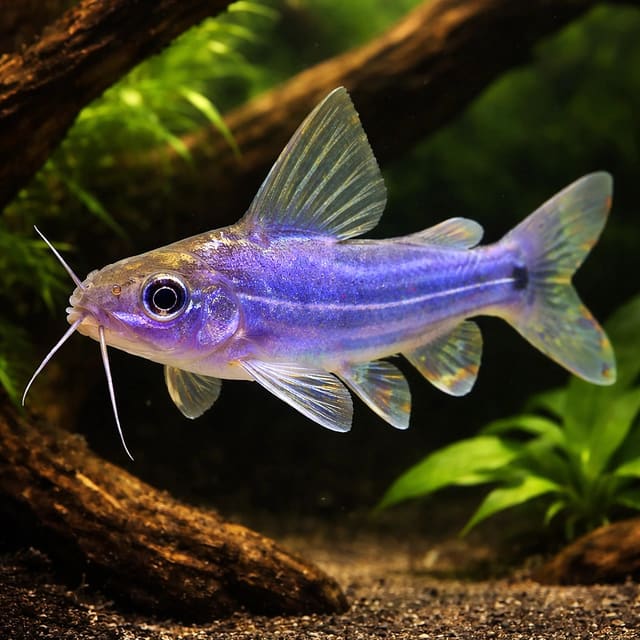
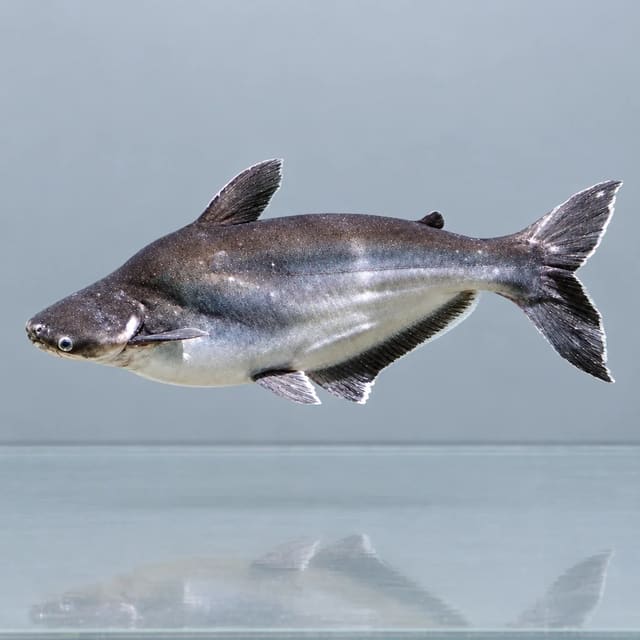
Iridescent Shark Catfish (Pangasianodon hypophthalmus)
22–26°C · pH 6.5–7.5 · 14580L
£10.39
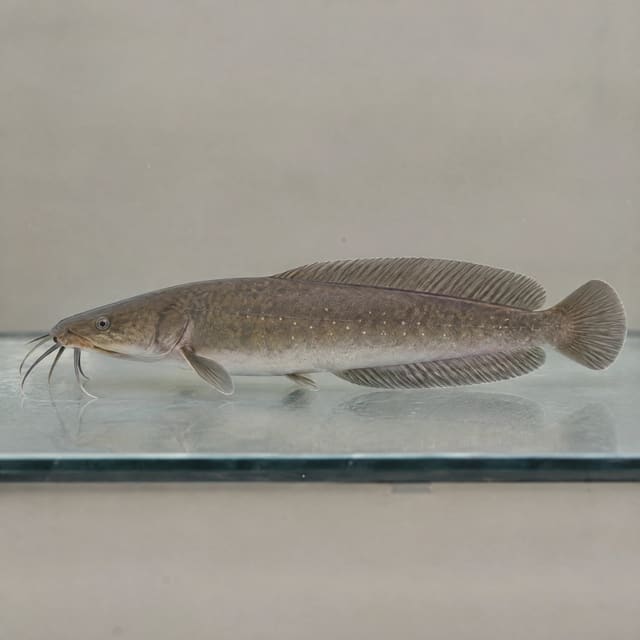
The Goonch Catfish (Bagarius bagarius) is a giant, mottled predator from the fast, rocky rivers of the Indian subcontinent that can reach about 2 metres. It needs cool, fast, highly oxygenated water and a system at least 2 m long to start with, so it is unsuitable for nearly all home aquaria. One live fish per purchase.
Adult size is the maximum length this species reaches at full maturity (scientific sources). The livestock you receive will be younger and smaller. Product-photo provenance and any image-specific limitations are stated on the listing.
Bagarius bagarius
The Goonch Catfish (Bagarius bagarius) is a giant, mottled predator from the fast, rocky rivers of the Indian subcontinent that can reach about 2 metres. It needs cool, fast, highly oxygenated water and a system at least 2 m long to start with, so it is unsuitable for nearly all home aquaria. One live fish per purchase.
Adult size is the maximum length this species reaches at full maturity (scientific sources). The livestock you receive will be younger and smaller. Product-photo provenance and any image-specific limitations are stated on the listing.
Read the full care guidance when planning conditions for your aquarium.
The Goonch Catfish, Bagarius bagarius, is one of the largest catfish in Asia. It lives among boulders in the fast, turbulent rapids of big rivers on the Indian subcontinent, and it is a powerful predator of fish, crustaceans and other animals. Seriously Fish says it reaches about 2 metres, FishBase records 230 cm total length, and Planet Catfish gives 2000 mm standard length. It is also known as the Devil Catfish, Giant Devil Catfish, Giant Painted Catfish and Sand Shark, and it is fished for food and sport across its range.
We will be completely honest: this fish is unsuitable for nearly all home aquaria. Seriously Fish calls it clearly unsuitable for the home aquarium given its eventual size and behaviour, and suitable only for public installations or the very largest, highly specialised private systems. We list it for those few keepers and institutions, and we would rather you read this page and choose a different fish than buy a goonch you cannot house for life.
| Question | What the sources say |
|---|---|
| Adult size | About 2 m (Seriously Fish); 2000 mm standard length (Planet Catfish); 230 cm total length (FishBase); 90 cm in an older ScotCat sheet |
| Home waters | Indus, Ganges and Brahmaputra drainages and rivers of peninsular India |
| Aquarium | A tank at least 2 m long just to start (Seriously Fish); public-aquarium scale for an adult |
| Water | Cool, fast, highly oxygenated; about 18-23°C and pH 7.2-7.5 fit every source |
| Behaviour | Obligate predator, best kept alone |
| Conservation | Vulnerable on the IUCN Red List (FishBase, assessed 2022) |
The name has changed meaning, and that matters to a buyer. Seriously Fish explains that in 2021 Ng and Kottelat restricted Bagarius bagarius to the Indian subcontinent and treated Bagarius yarrelli, the name long used for the giant goonch, as the same species. The large Southeast Asian fish once sold as B. yarrelli is now B. lica, and a small fish common in Indochina that was long called B. bagarius was described as a new species, B. vegrandis. ScotCat reports that seven Bagarius species had been described by June 2025.
| Species | Where it lives | Maximum size |
|---|---|---|
| Bagarius bagarius | Indian subcontinent | About 2 m; 230 cm total length (FishBase) |
| Bagarius lica | Southeast Asia, including the Malay Peninsula, Sumatra, Borneo and Java | 200 cm standard length (FishBase) |
| Bagarius vegrandis | Chao Phraya and Mekong drainages | 22.0 cm standard length (FishBase) |
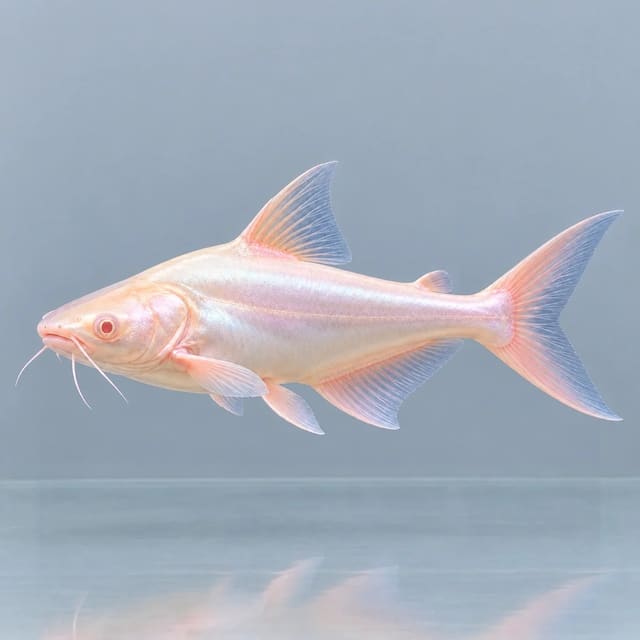
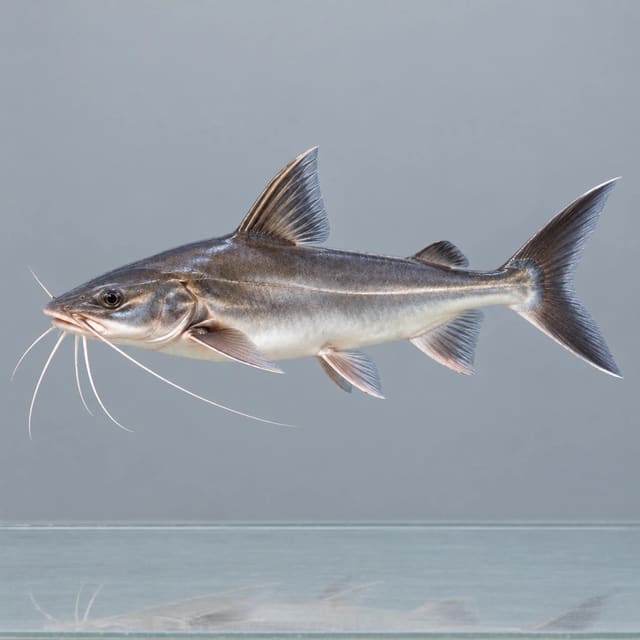
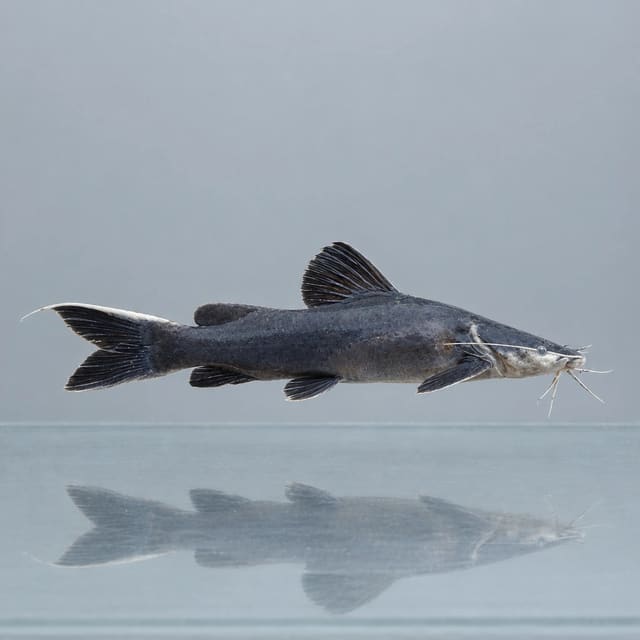
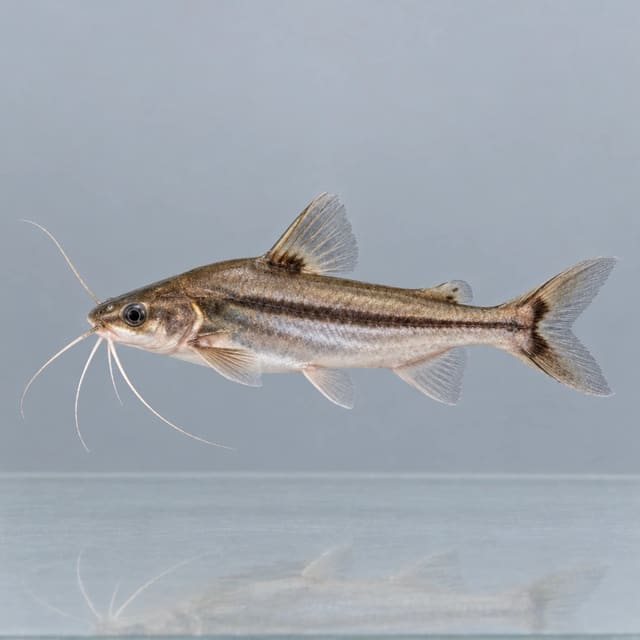
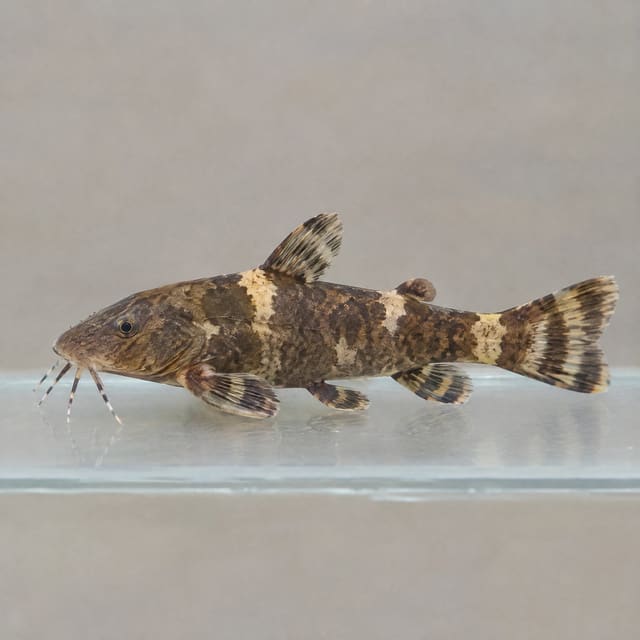
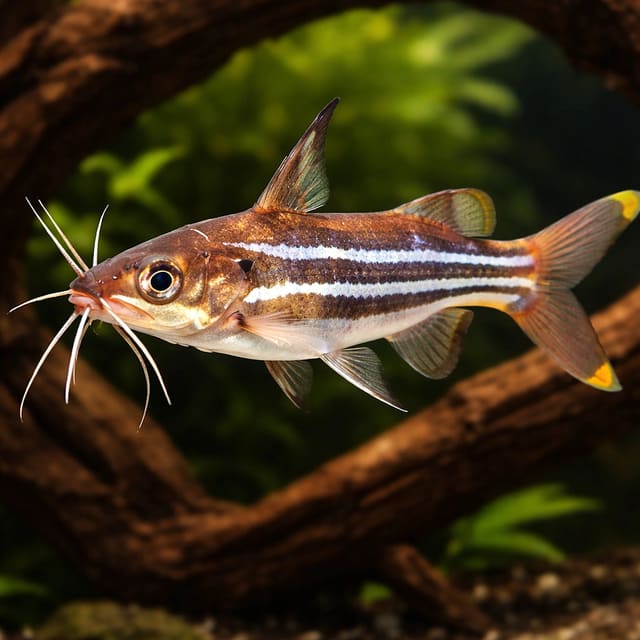
One purchase quantity supplies one live fish sold as Goonch Catfish, Bagarius bagarius, in a single Standard option because no size grade is recorded; it will be a juvenile. Young Bagarius look very alike, and FishBase separates B. vegrandis from its relatives by details such as the adipose fin starting well behind the start of the anal fin. We cannot guarantee which species an individual fish belongs to, so the only safe plan is to assume it will grow into a giant. The photographs show the type of fish, not the individual you receive.
Go ahead only if every answer below is yes. If any is no, please look at the smaller fish linked further down this page instead.
Never release a Goonch Catfish, or any aquarium fish, into the wild. Releasing non-native fish is illegal in the UK and harms native wildlife.
Seriously Fish rates the Goonch Catfish as needing a tank at least 2 m long, and adds that it knows of only a handful of private aquarists with the facilities required to house it long-term. OATA's guidance on very large fish, often called tankbusters, says such fish usually need exceptionally large aquaria, often more than 500 litres, that many grow quickly from the small size at which they are sold, and that indoor heated ponds can be built for them. Use our tank volume calculator to work out what your system really holds.
In the wild the goonch shelters among boulders and large rocks in turbulent rapids (Seriously Fish). Planet Catfish suggests large, smooth, rounded stones over a sandy substrate, and Seriously Fish advises dim lighting with refuges of driftwood, large rocks or lengths of plastic piping. ScotCat explains that the sisorid family, the Asian hillstream catfishes, have flattened heads and folded belly skin that help them hold on to rocks in strong currents.
| Area | Purpose |
|---|---|
| Large, smooth boulders, firmly bedded | Shelter in the current; OATA advises securing rocks so big fish cannot dislodge them |
| Open sand | Resting and feeding area that is easy to siphon |
| Wide pipe or driftwood refuge | A dim hiding place out of the main flow |
| Guarded heaters and pump intakes | Large fish damage unprotected equipment |
If you love fast-water Asian fish but cannot build a system on this scale, a stream tank for hillstream loaches gives a similar look at a fraction of the size; see our hillstream loach guide.
This is a cooler-water catfish than most. ScotCat's keeper Chris Ralph found that his goonch tolerated lower temperatures than most catfish and kept it at around 22°C, and he found good circulation and aeration more important than exact pH and hardness. Published ranges differ, so we recommend the values that sit inside all of them.
| Source | Temperature | pH | Hardness |
|---|---|---|---|
| FishBase | 18-25°C | 6.5-7.8 | 12-30 dH |
| Planet Catfish | 18-23°C | 7.2-7.6 | Not given |
| Seriously Fish (older yarrelli profile) | 16-23°C | 6.0-7.5 | 2-12 dGH |
| ScotCat | 18-25°C | 6.5-7.8 | Juveniles up to 12 dGH, adults up to 30 |
| Our target | 18-23°C | 7.2-7.5 | Moderately hard |
Much UK tap water, especially in the south and east of England, is already moderately hard and slightly alkaline, which suits this fish better than it suits soft-water species. Test your supply and check it against the target with our water matcher, and read our water chemistry guide if you need to adjust it. Keep ammonia and nitrite at zero and nitrate no more than 20 mg per litre above tap water, as OATA advises for large fish.
Seriously Fish considers a large, mature filter system, weekly water changes of 50-70% of the tank volume and highly oxygenated water with plenty of movement mandatory. Its profile also asks for a strong current, with the filtration turning the tank volume over 8-12 times an hour. OATA notes that big fish may need several large aquarium filters or even a pond filter to handle their solid waste. Our guide to aquarium filtration explains how turnover and media work.
Chris Ralph changed 25% weekly, which is OATA's general minimum; we follow the larger Seriously Fish figure, because a big predator fouls water fast. Never add the fish to a new, uncycled system: our guide to the nitrogen cycle explains why.
Seriously Fish describes the goonch as an obligate predator that eats smaller fishes, amphibians, crustaceans and other invertebrates in nature, but in most cases adapts well to dead foods in captivity. Chris Ralph's fish ate cockles, whole prawns, mussels, dead fish and large earthworms, and did not like being watched while it fed.
| Stage | Foods |
|---|---|
| Young fish | Bloodworm, small earthworms, chopped prawn (Seriously Fish) |
| Growing and adult fish | Strips of fish, whole prawns or shrimp, mussels, frozen cockle meat, larger earthworms and whole frozen smelts |
| Never | Mammal or bird meat such as beef heart or chicken, or live feeder fish (Seriously Fish) |
OATA advises feeding large fish only what they eat within a few minutes, once a day, and removing leftovers so they do not foul the water. Feed after dark or from out of sight, watch the body shape rather than the clock, and cut back if the belly stays swollen or uneaten food appears.
Seriously Fish notes that Bagarius have unusual teeth in the lower jaw: rows of close-set conical teeth with an inner row of much larger, widely spaced conical teeth. OATA warns that most catfish also carry spines on the pectoral fins. Never put your hands near the mouth, and move the fish with a large net into a container rather than by hand.
Large fish often travel in a box or bucket. OATA recommends dripping aquarium water into the container through an airline until conditions match, keeping the temperature from falling, then netting the fish across without the transport water. Dim the lights and keep the room quiet. Our guide to acclimatising new fish covers the method, and our delivery and Live Arrival Guarantee policy explains dispatch days and what to do if there is a problem.
| Sign | What to check |
|---|---|
| Fast gill movement or hanging near the surface | Oxygen, flow and temperature; this fish needs cool, oxygen-rich water |
| Refusing food for many days | Disturbance at feeding time, water quality or temperature |
| Damaged skin or fins | Sharp décor, collisions in a cramped tank, or a tank mate |
| White spots, fluffy growths or cloudy eyes | Water quality first; OATA lists these among the signs to act on |
Seriously Fish says the Goonch Catfish is best kept alone. Planet Catfish describes it as an excellent predator in nature that often hunts in groups, but very anti-social in captivity: it reportedly eats the scales and fin parts of large fish kept with it and will eat anything smaller. ScotCat's keeper would not risk housing any other fish with his. Check any idea in our tank mates tool, but expect it to say no.
| Suits | Avoid |
|---|---|
| Living alone in a very large, cool, fast-flowing system | Every fish small enough to swallow |
| A dim refuge of its own, with open sand to feed on | Large fish, whose scales and fins it may eat, including other giants such as the Red-Tailed Catfish or the Tiger Shovelnose Catfish |
| Meals given after dark or from out of sight | Small relatives such as the Anchor Catfish (Hara jerdoni), a tiny sisorid that would be eaten |
If what draws you is an Asian oddball with real character, the Angler Catfish or the little Anchor Catfish give you that in an aquarium that fits a home. Browse other catfish and Asian catfish, our centrepiece fish and our rare and collector fish in the catfish and plecos range.
ScotCat describes the goonch as light brown with dark brown to black mottling over the eyes, around the dorsal and adipose fins and at the base of the tail, with mottled fins. It has four pairs of barbels, the maxillary pair with broad bases, and a deeply forked tail whose lobes, the upper one longer, end in soft filaments. Seriously Fish reports that adults make seasonal spawning migrations when rivers swell and turn muddy.
No captive breeding has been recorded, and no external differences between males and females are known. FishBase lists Bagarius bagarius as Vulnerable on the IUCN Red List (assessed 2022) and records it as a minor commercial and game fish. ScotCat notes that wild goonch are heavily harvested for food, sport and the ornamental trade, which is one more reason to buy one only if you can give it a lifelong home.
It is Bagarius bagarius, a giant predatory catfish of the family Sisoridae from fast, rocky rivers of the Indian subcontinent: the Indus, Ganges and Brahmaputra systems and the rivers of peninsular India. It is also called the Devil Catfish, Giant Devil Catfish and Sand Shark.
Very big. Seriously Fish says it reaches about 2 metres, Planet Catfish gives 2000 mm standard length and FishBase records 230 cm total length. An older ScotCat factsheet gives 90 cm. Plan for a fish that can grow far beyond any ordinary aquarium.
For nearly everyone, no. Seriously Fish calls it clearly unsuitable for the home aquarium and suitable only for public installations or the very largest, highly specialised private systems, with a tank at least 2 m long as the starting point. Buy one only if you already have, or are building, a system on that scale.
We cannot guarantee it. Since 2021 the name belongs to the giant fish of the Indian subcontinent, but it was long used in the trade for other Bagarius, including the small Indochinese B. vegrandis (22 cm) and the giant Southeast Asian B. lica (200 cm). Young Bagarius look alike, so plan for the giant.
Cool, clean, fast and very well oxygenated. Published ranges differ, but 18-23°C and pH 7.2-7.5 sit inside all of them, in moderately hard water. Seriously Fish asks for weekly water changes of 50-70% and strong flow.
It is an obligate predator. Young fish take bloodworm, small earthworms and chopped prawn; adults take strips of fish, whole prawns, mussels, cockles and large earthworms. Do not feed mammal or bird meat or live feeder fish.
It is best kept alone. It eats anything that fits in its mouth, and Planet Catfish and ScotCat report Bagarius eating the scales and fins of larger fish kept with them.
FishBase lists Bagarius bagarius as Vulnerable on the IUCN Red List (assessed 2022). It is fished for food and sport across its range. It has not been bred in aquariums.
No reviews for this item yet. Bought one? Honest reviews only, good or bad.
What customers say about ordering from us
Easy website plenty of info on fish your buying great to pick a time slot
TRACEY DURRANT · 7 Oct 2026
Got some lovely fish thank you
Kevin Mackie · 7 Oct 2026
Reviews of our shop, collected by Judge.me, an independent third-party review collector. Newest first.
Moved by UK carriers licensed to handle live animals
Hand-packed with oxygen bags, poly box, heat pack
Email photos the same day; an optional unboxing video helps us review problems faster — claim terms apply
Klarna & PayPal Pay in 3 at checkout