Moderate
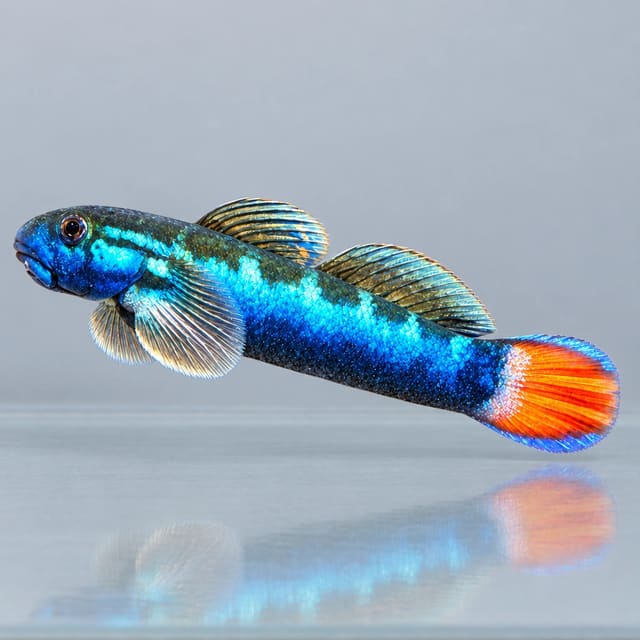
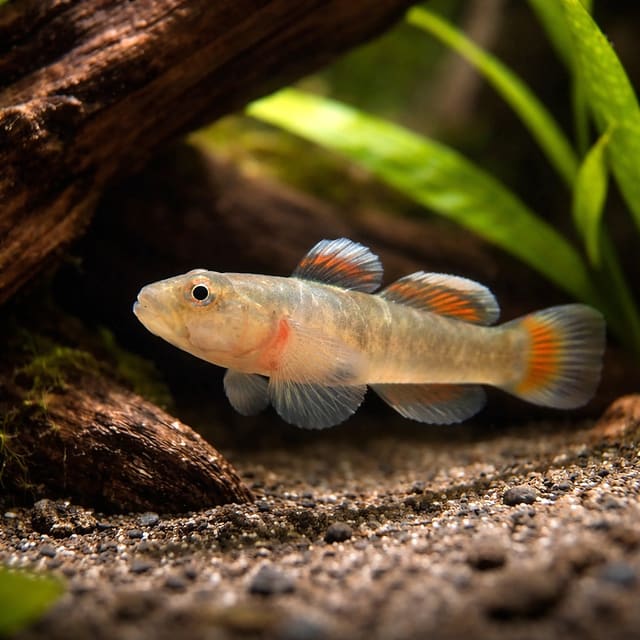
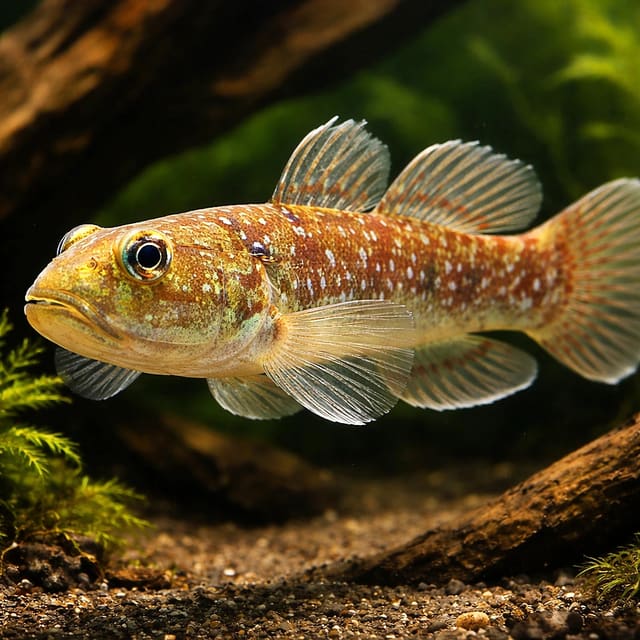
Red Neon Sumatra Goby (Stiphodon sp.)
22–26°C · pH 6.5–7.8 · 90L
£15.99
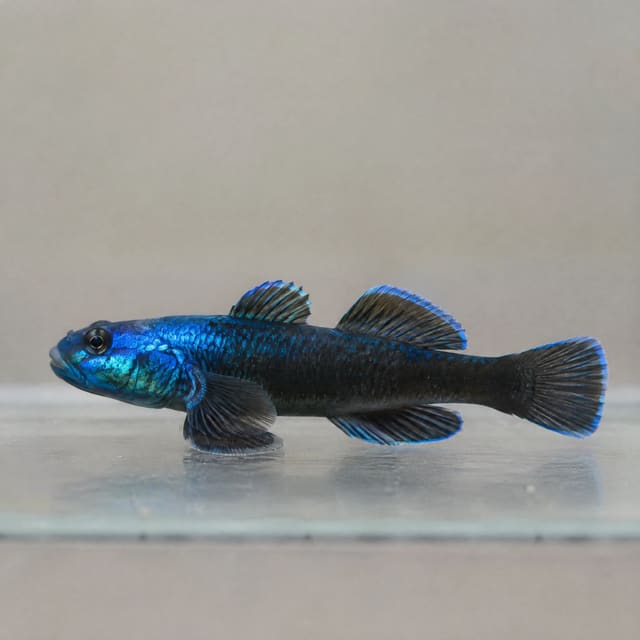
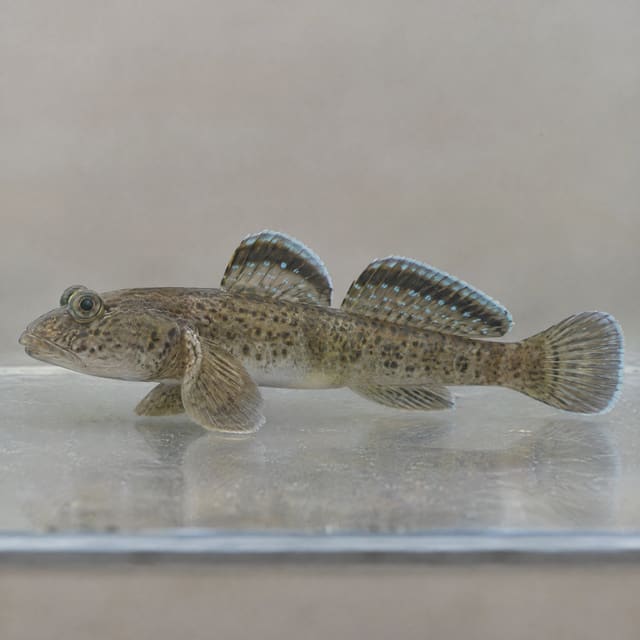
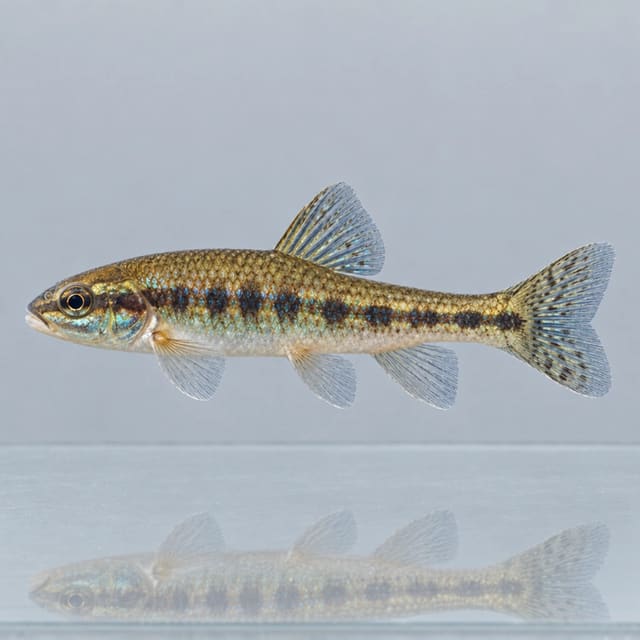
The Black Kumpay Goby is a dark form of Stiphodon, a small freshwater stream goby that clings to rocks with a sucker disc and grazes the algae and biofilm growing on them. It grows to about 5 cm and needs a mature, well-lit aquarium with smooth stones, strong oxygenation and a tight lid. One live fish per purchase.
Stiphodon sp.
Quantity discounts are pricing offers, not a group-size recommendation. Check the full care guidance and your existing animals before choosing a quantity.
The Black Kumpay Goby is a dark form of Stiphodon, a small freshwater stream goby that clings to rocks with a sucker disc and grazes the algae and biofilm growing on them. It grows to about 5 cm and needs a mature, well-lit aquarium with smooth stones, strong oxygenation and a tight lid. One live fish per purchase.
Read the full care guidance when planning conditions for your aquarium.
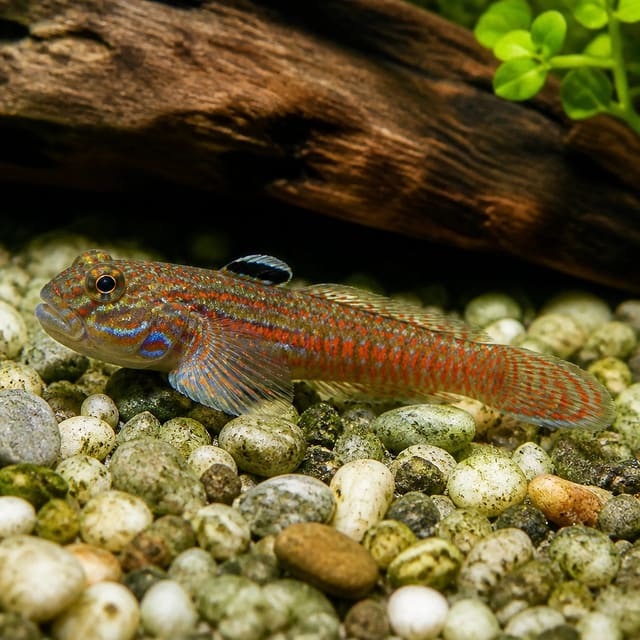
The Black Kumpay Goby, also sold as the Kumpay Black Goby, is a dark form of Stiphodon, a genus of small freshwater gobies from fast, clear streams on tropical islands. These are not the stout, sit-and-wait gobies of muddy estuaries. A Stiphodon is slim and lively, clings to rocks in strong current with a sucker disc formed from its joined pelvic fins, and spends the day grazing the thin film of algae and microorganisms that coats every stone.
"Black Kumpay" is a trade name rather than a scientific one, and the fish sold under it are not always named consistently. Some sellers label it Stiphodon atropurpureus. Seriously Fish notes that more than 30 Stiphodon species have been described, with a similar number awaiting description, that several look very alike and that many fish in the trade are mislabelled. We therefore sell it as Stiphodon sp. and base the care on the genus, which is the same for the dark forms.
| Name you may see | What it tells you |
|---|---|
| Black Kumpay Goby, Kumpay Black Goby | The trade name for this dark form |
| Stiphodon sp. | A Stiphodon stream goby whose species is not confirmed |
| Stiphodon atropurpureus | A species label some sellers use; the name means dark purple |
| Neon goby, stream goby | Common names used for the whole genus |
| Sicydiinae | The subfamily of climbing gobies to which Stiphodon belongs |
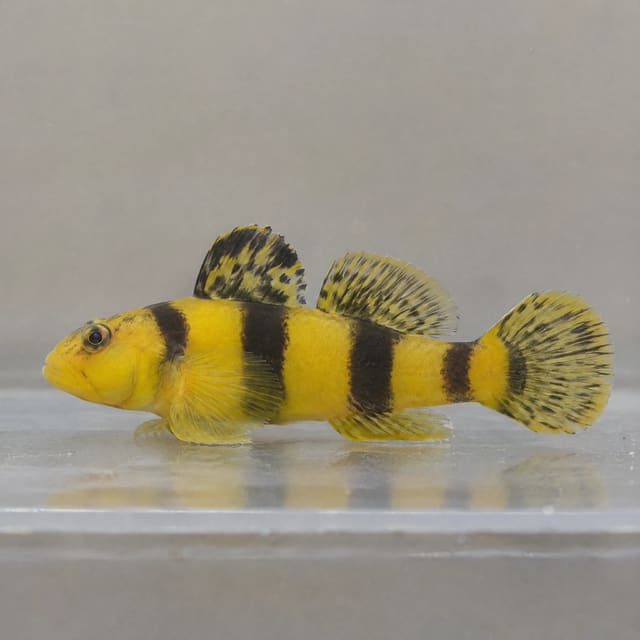
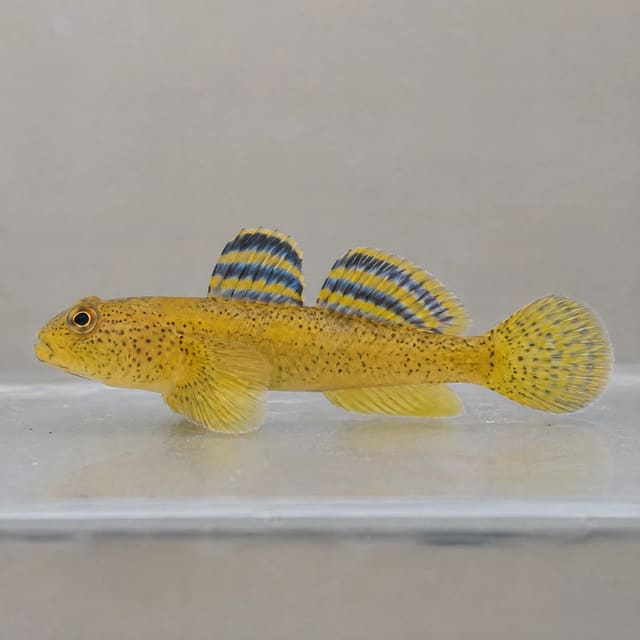
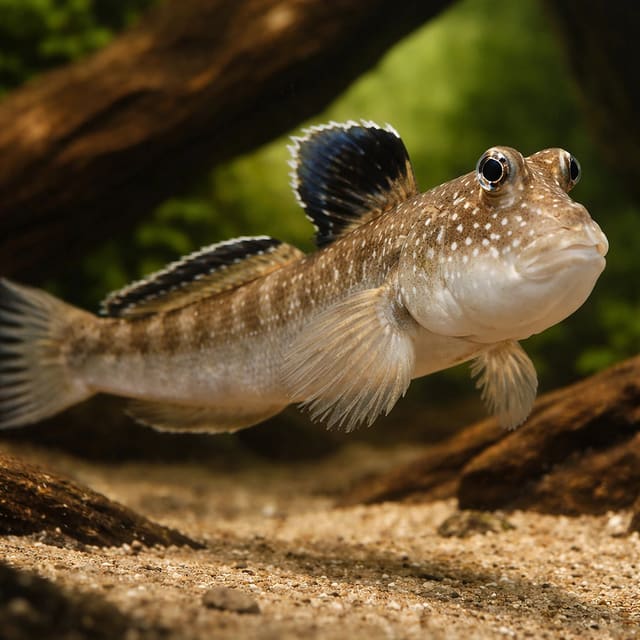
Browse our other Stiphodon stream gobies, such as the Blue Neon Goby and the Red Neon Sumatra Goby, the wider freshwater gobies and mudskippers range, or our bottom dwellers for more fish that live on the floor and the rocks.
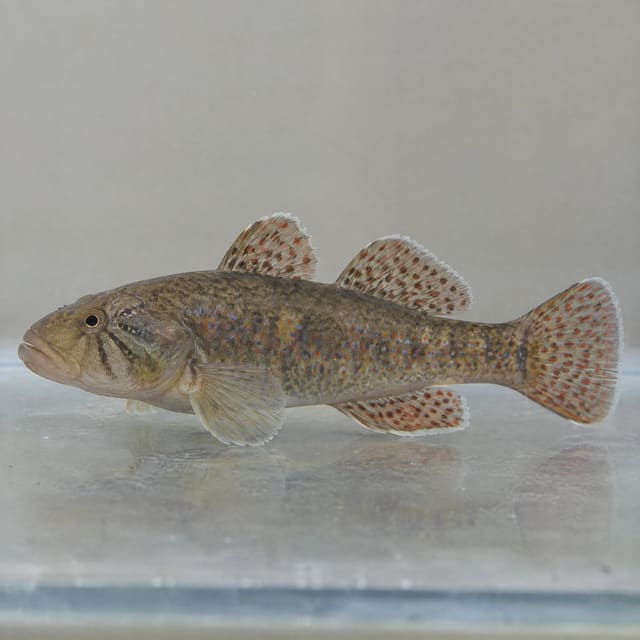
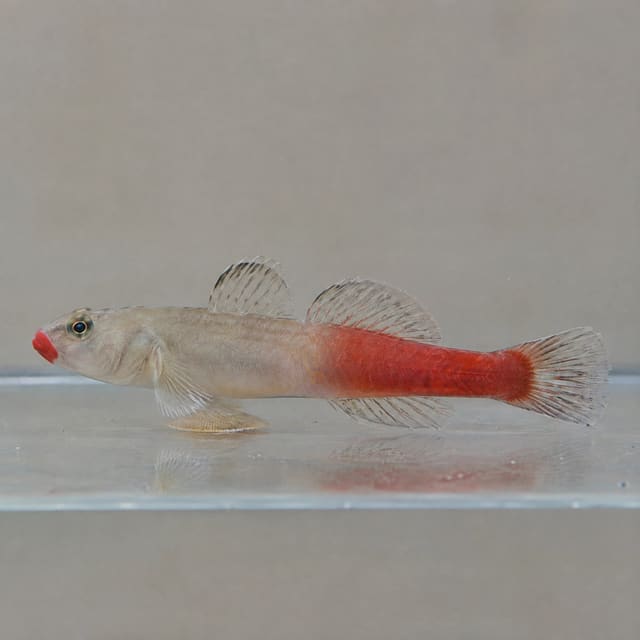
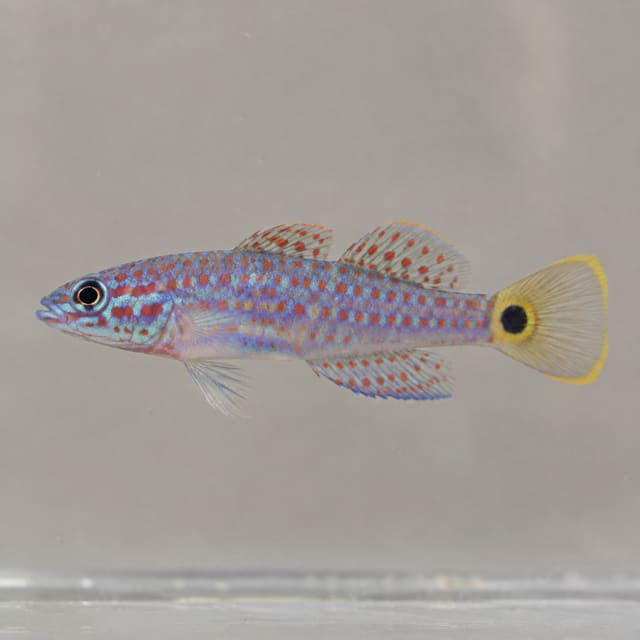
One purchase supplies one live Black Kumpay Goby in the standard size we stock. Stream gobies are normally wild-collected, so size, colour and pattern vary between fish, and the photographs show the type rather than the individual. The sex is not selected or guaranteed.
The sexes look different. In S. atropurpureus, Seriously Fish describes males as greyish with a bright blue to green stripe along the side, and females as much lighter with a dark, zig-zag stripe; as the trade name suggests, the fish sold as Black Kumpay are a dark form. Expect colours to be duller on arrival and to deepen once the fish settles, feeds well and starts to display.
Because sex cannot be chosen, buying three or four gives the best chance of a mix. Check our delivery and Live Arrival Guarantee policy before ordering.
The fish itself is small: Seriously Fish gives a maximum of 50 mm standard length, and FishBase gives 5.0 cm total length for S. atropurpureus. The tank needs to be sized for the habitat, not the fish. Seriously Fish recommends a base of at least 60 x 30 cm, about 54 litres, for a pair or small group, and a larger aquarium if you plan several males or more than one goby species. OATA's freshwater goby care sheet gives at least 40 litres for a group of the smallest gobies and adds that larger tanks are more stable.
A long, shallow tank suits these gobies better than a tall one: the action happens on the floor and on the stones, and a shallow tank is easier to keep well lit and well oxygenated. Our tank volume calculator converts your measurements into litres, and the nano tank fish range lists other small species that share similar set-ups.
| In the wild (Seriously Fish) | In the aquarium |
|---|---|
| Short coastal streams, often above waterfalls | Strong, even flow along the length of the tank |
| Bedrock with scattered rocks and boulders | Sand or gravel covered with water-worn stones and pebbles |
| Very clear, well-oxygenated water | Oversized filter plus powerhead or airstone |
| Rich biofilm on sunlit rocks | Strong lighting so algae grows on the stones |
| Little vegetation or leaf litter | A few hardy plants tied to rock or wood |
Seriously Fish recommends a substrate of sand, gravel or a mix, covered with a layer of water-worn rocks and pebbles, with larger stones placed directly on the base glass so they cannot be undermined. Aged driftwood can be added; new wood leaches tannins that cloud the clear water these fish come from. Hardy plants such as Microsorum, Crinum and Anubias cope with the flow. OATA advises fine gravel or sand to protect a goby's sensitive skin.
Fit a tight lid. Seriously Fish warns that Stiphodon can climb the glass, which is how juveniles climb waterfalls in the wild, and OATA says gobies can jump when startled. Cover filter inlets with sponge so a small goby cannot be drawn in.
| Area | Purpose |
|---|---|
| Brightly lit stones near the outflow | Grazing surfaces where algae grows fastest |
| Stacked flat stones with gaps | Hiding places and male territories |
| Several separate rock piles | Broken sight lines so a dominant male cannot watch the whole tank |
| Calmer corner behind rocks | Resting spot out of the strongest current |
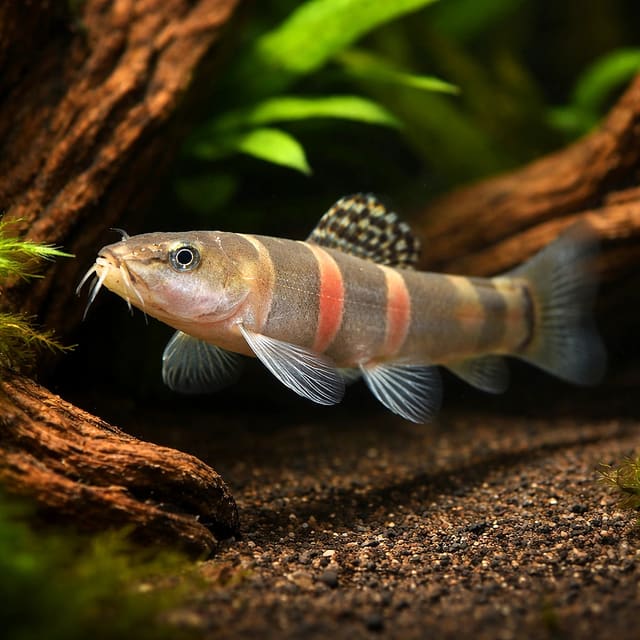
Our hillstream loach guide describes the same kind of river-tank layout, and many of its tips on flow and stones apply directly to Stiphodon.
The two published sources aim at different fish. Seriously Fish gives values for this genus; OATA's sheet covers freshwater gobies as a group, including brackish species, so its pH and hardness run higher. Aim for the species values and keep them stable.
| Reading | Seriously Fish, S. atropurpureus | OATA, freshwater gobies | Aim for |
|---|---|---|---|
| Temperature | 22-26°C | 24-27°C | 23-25°C |
| pH | 6.5-7.5 | 7.5-8.5 | 7.0-7.5 |
| General hardness | 2-12 dGH | 8-18 dGH | 5-12 dGH |
| Ammonia and nitrite | not given | zero | zero |
| Nitrate | not given | below 50 mg/l | as low as possible |
Oxygen matters as much as the numbers. Warm water holds less oxygen, so Seriously Fish asks for extra surface movement towards the top of the range. In a heatwave, add an airstone and keep the room cool rather than letting the tank drift above 26°C.
Many UK areas, especially in the south and east, supply hard, alkaline water above the species range. Test your tap water first. If it is very hard, mix it with reverse-osmosis or rainwater-quality water to bring the hardness down, and make every water change with the same mix. Our water chemistry guide explains how, and the water matcher compares your readings with this fish.
Seriously Fish asks for clean, well-oxygenated water from an oversized filter, powerheads, flow pumps or airstones, and gives several turnover figures: 10 to 15 times the tank volume per hour in one place, 8 to 12 in another, and 5 to 10 if the water is otherwise well oxygenated. In practice, choose a filter rated well above your tank volume and add a powerhead to push water along the stones. Our guide to aquarium filtration explains turnover.
Seriously Fish recommends changing 30 to 50% of the water every week and says Stiphodon should not go into an immature tank. OATA's minimum for gobies is 25% a week; the higher figure suits these stream fish better.
Stiphodon are specialised grazers. FishBase records that they feed mainly on epiphytes and biofilm on rocks in the wild, and Seriously Fish explains that their staple is algae-covered surfaces, ideally soft diatoms and green algae rather than tough black brush algae. Seriously Fish adds that sinking dried foods and small meaty foods such as bloodworm may be accepted but should be offered only now and then, and warns that wild-caught or poorly kept fish are often sold thin.
That means the tank must produce food. Bright lighting on the stones, a mature tank and a light hand with algae scraping keep a grazing film going. Seriously Fish also suggests an algae nursery: a separate container of stones kept in a bright spot, swapped into the tank as the stones in the aquarium are grazed clean. Our guide to aquarium algae explains which algae grow in which conditions.
A well-fed Stiphodon has a gently rounded belly. A pinched, hollow belly means the tank is not producing enough algae for the number of grazers.
Add the gobies only to a mature tank with algae already growing on the stones. OATA advises checking that ammonia and nitrite read zero first, adding fish slowly so the filter bacteria keep pace, and, for wild-caught fish, keeping lighting dim at first and quarantining new arrivals where possible. Our guide to acclimatising new fish covers the steps in detail.
| Checkpoint | What to look for |
|---|---|
| Day 1 | Gobies clinging to stones or glass, lights off |
| Days 2-3 | Grazing on the stones; offer a small supplementary meal |
| Days 3-7 | Males starting to colour and display; check bellies daily |
| Day 7 | Test ammonia, nitrite and nitrate after the stocking rise |
Stiphodon can live in a community if the companions are chosen carefully. Seriously Fish suggests Tanichthys, Microdevario, smaller danios, small characins and livebearers, and Caridina or Neocaridina shrimp for the upper levels, and small hillstream loaches such as Gastromyzon and Pseudogastromyzon on the bottom. Other stream gobies, including Sicyopus and Rhinogobius, also make good companions. It advises against aggressive feeders such as many Schistura loaches, and against most cichlids and territorial fish.
| Suits | Avoid |
|---|---|
| White Cloud Mountain Minnows | Cichlids, including dwarf cichlids |
| Neon Green Rasbora | Pushy loaches that take all the food |
| Sucker-Belly Loach | Large or fast fish that outcompete grazers |
| Red Lipstick Goby or Red White Edge Goby | Warm, still community tanks with little oxygen |
| Amano Shrimp and Cherry Shrimp | Too many algae grazers for the rock surface available |
Every grazer competes for the same film on the stones, so count shrimp, loaches and gobies together when you judge how much algae the tank can supply. Our tank mates tool helps you check a planned community. If you are setting up a grazing tank from scratch, the algae eaters range shows other fish that share the same food.
Most problems with Stiphodon come from three things: too little algae, too little oxygen and an open lid. Check the gobies every day, ideally when the lights come on and they start grazing, and compare their bellies and colour with the day before.
| What you see | What to do first |
|---|---|
| Hollow belly, fish hanging at the glass | Add algae-grown stones and a supplementary food |
| Fish gasping or resting near the surface | Test the water, add aeration and lower the temperature |
| One male chasing others constantly | Add stones to break sight lines or add more females |
| Fish missing from the tank | Check the floor behind the tank and seal the lid |
Stiphodon breed in their home streams but have not been raised in aquaria: Seriously Fish says no one has yet raised the fry of any Stiphodon species. OATA says the same of freshwater gobies in general, because their fry wash out to sea in the wild and are unlikely to survive in a home aquarium. Buy these fish for their behaviour and colour, not to breed them.
It is a trade name for a dark freshwater stream goby of the genus Stiphodon, a group of small gobies from fast, clear island streams in Asia and the Pacific. The name is also written Kumpay Black Goby. Some sellers label it Stiphodon atropurpureus, but Stiphodon species are hard to tell apart, so we sell it as Stiphodon sp.
Small. Seriously Fish gives 50 mm standard length (body without the tail) for Stiphodon atropurpureus and FishBase gives 5 cm total length. Plan for a fish of about 5 to 6 cm.
An aquarium with a base of at least 60 x 30 cm, about 54 litres, for one male and a few females, as Seriously Fish recommends. Use a larger tank for more than one male or for a mixed stream community.
It grazes algae and the film of microorganisms that grows on rocks, and it needs that film to stay healthy. It is not a clean-up fish: plan to grow algae for it rather than buying it to remove algae.
It needs very clean, oxygen-rich water with plenty of movement. Seriously Fish suggests a filter turnover of roughly 8 to 15 times the tank volume per hour, or less if powerheads and airstones keep the oxygen level high.
Yes. Males are loosely territorial, so the best start is one male with two or more females. Several males can live together in a larger tank with plenty of rocks and sight breaks.
Not realistically. Stiphodon larvae drift to the sea and live there for months before returning to fresh water, and no one has yet raised Stiphodon fry in an aquarium.
Yes. Seriously Fish lists Caridina and Neocaridina shrimp as suitable companions, and the goby grazes rather than hunts.
No reviews for this item yet. Bought one? Honest reviews only, good or bad.
What customers say about ordering from us
Easy website plenty of info on fish your buying great to pick a time slot
TRACEY DURRANT · 7 Oct 2026
Got some lovely fish thank you
Kevin Mackie · 7 Oct 2026
Reviews of our shop, collected by Judge.me, an independent third-party review collector. Newest first.
Moved by UK carriers licensed to handle live animals
Hand-packed with oxygen bags, poly box, heat pack
Email photos the same day; an optional unboxing video helps us review problems faster — claim terms apply
Klarna & PayPal Pay in 3 at checkout