Golden Band Bumblebee Goby (Brachygobius sp.)
24–28°C · pH 7–8.2 · 45L

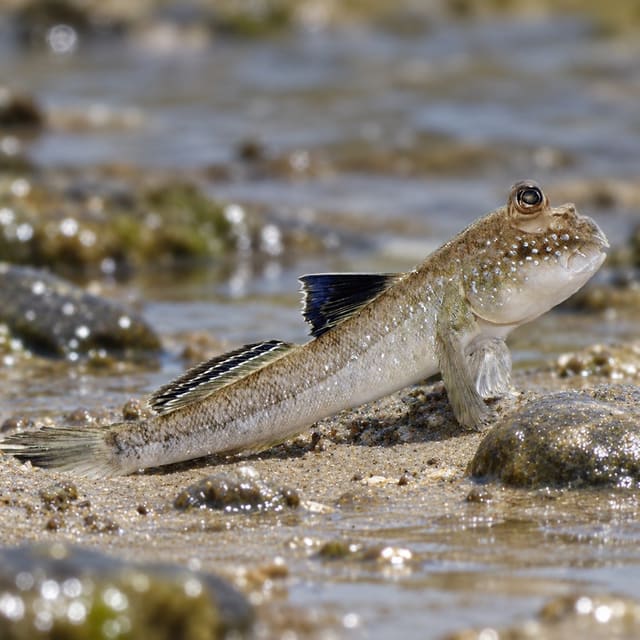
Atlantic Mudskipper (Periophthalmus barbarus) is an amphibious brackish goby for specialist paludariums with damp land, shallow water and humid air.
Adult size is the maximum length this species reaches at full maturity (scientific sources). The livestock you receive will be younger and smaller — pick a size variant above for the actual shipping size. Photos are AI-enhanced, so the animal may show subtle colour or marking differences.
Periophthalmus barbarus
Atlantic Mudskipper (Periophthalmus barbarus) is an amphibious brackish goby for specialist paludariums with damp land, shallow water and humid air.
Adult size is the maximum length this species reaches at full maturity (scientific sources). The livestock you receive will be younger and smaller — pick a size variant above for the actual shipping size. Photos are AI-enhanced, so the animal may show subtle colour or marking differences.
Maintain these water conditions for optimal health and vibrant colors
Atlantic Mudskipper (Periophthalmus barbarus) is an amphibious brackish goby for a specialist paludarium, not a normal freshwater community fish. It spends much of its time out of the water on damp land, using its pectoral fins to move, perch and defend space. Keep this species only if you can provide brackish water, humid air, exposed land and a secure escape-proof setup.
| Scientific name | Periophthalmus barbarus |
|---|---|
| Common name | Atlantic Mudskipper |
| Adult size | Up to around 15 cm |
| Minimum enclosure | 150 litres or larger, with most usable space as land and shallow water |
| Water type | Brackish; not a standard freshwater aquarium fish |
| Temperature | 24-28°C with warm, humid air above the water |
| Temperament | Territorial, especially between males |
| Diet | Meaty foods such as insects, worms, crustaceans and frozen foods |
Atlantic Mudskippers are adapted to muddy estuaries, mangrove edges and exposed intertidal areas. They breathe air when moist and secure, then move over land to feed and display. A deep aquarium with only a small rock sticking out is not suitable. The enclosure should work more like a brackish shoreline: shallow water, broad damp land, smooth slopes and humid air under a tight lid.
| Good mudskipper setup | Poor mudskipper setup |
|---|---|
| Broad damp land area with shallow brackish water | Deep freshwater community aquarium |
| Warm humid air and secure covers | Open-top tank where fish can dry out or escape |
| Smooth slopes, mud/sand-style surfaces and stable salinity | Sharp rocks, dry basking ledges or unstable water chemistry |
Use marine salt mix to create stable brackish water and keep the land area damp. The water should be shallow enough for natural movement, with no strong suction points or deep open sections that trap the animal away from land. Mudskippers must stay moist, so the air space above the land should be warm and humid. Covers need to be secure because these fish climb and jump.
| Care point | Practical target |
|---|---|
| Salinity | Stable brackish water; avoid sudden freshwater-to-salt swings |
| Land area | Large, damp, smooth and easy to climb |
| Water depth | Shallow sections suited to an amphibious goby |
| Cover | Tight lid with no escape gaps |
Feed small crickets, worms, chopped prawn, bloodworm, mysis, brine shrimp and other meaty foods. Offer food on the land area or in very shallow water so the mudskipper can hunt naturally. They are messy feeders, so remove leftovers quickly and keep filtration maintained without creating dangerous suction near shallow areas.
Atlantic Mudskippers are territorial. Males can be especially aggressive with one another, and the species is often best kept singly unless the enclosure is large enough to create separate territories. Ordinary freshwater fish, shrimp and delicate tank mates are not suitable because the salinity, shallow layout and land-based behaviour are completely different from a normal aquarium.
| Better plan | Avoid |
|---|---|
| Single specimen in a well-planned brackish paludarium | Mixed freshwater community aquarium |
| Carefully managed group only in a large specialist enclosure | Multiple males in a small land area |
| Minimal stocking and close observation | Tiny fish, shrimp and delicate species |
This is an out-of-the-ordinary livestock listing, so please have the paludarium ready before ordering. Check the selected variant and stock status before checkout. Livestock is packed carefully and sent by licensed live-animal courier where live-animal shipping applies. Follow the receiving and acclimation instructions to keep the Live Arrival Guarantee valid. New customers can use WELCOME10 when the order is eligible.
| Before ordering | Check |
|---|---|
| Brackish setup | Marine salt mix, salinity testing and stable water prepared |
| Land area | Broad damp area with easy access from shallow water |
| Security | Tight lid, covered gaps and safe filtration |
| Stocking | Plan as a specialist paludarium animal, not a community fish |
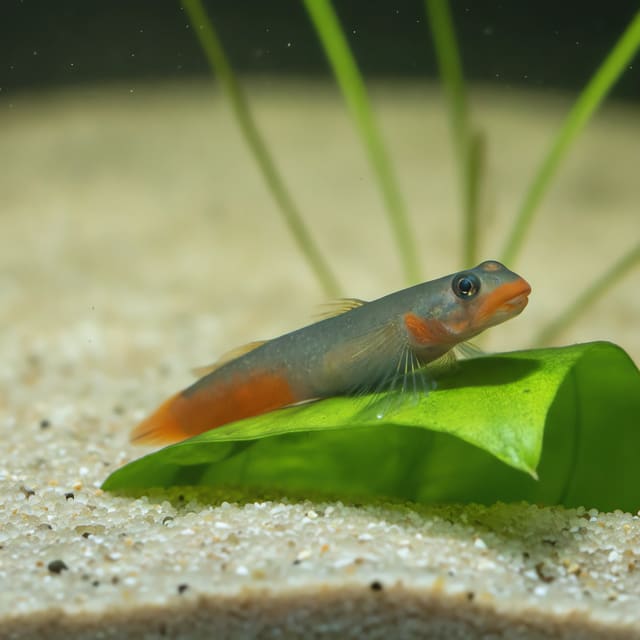
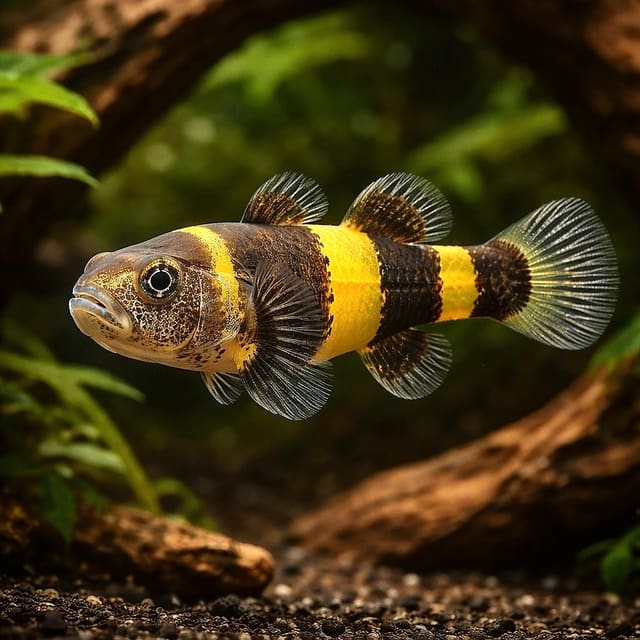
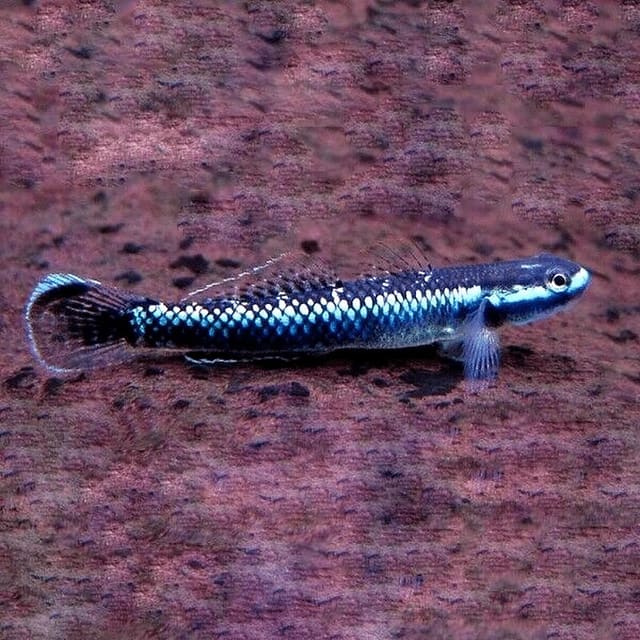
For other unusual fish, compare specialist needs with Golden Band Bumblebee Goby, Green Spotted Pufferfish and Reedfish. Freshwater gobies such as Blue Neon Goby and Red Lipstick Goby are not direct substitutes, but they help shoppers compare goby-style body shape with very different aquarium requirements.
| Is an Atlantic Mudskipper freshwater? | No. It is an amphibious brackish species and should not be kept as a normal freshwater community fish. |
|---|---|
| Does it need land? | Yes. A large damp land area, shallow water and humid air are essential. |
| Can I keep more than one? | Only with caution and enough land territory. Males can be very aggressive with each other. |
| Can it live with ordinary tropical fish? | Usually no. The brackish paludarium layout and territorial behaviour make normal community stocking unsuitable. |
| What should I feed it? | Offer insects, worms, chopped prawn, bloodworm, mysis and other meaty foods on land or in shallow water. |

24–28°C · pH 7–8.2 · 45L

24–28°C · pH 7.8–8.5 · 150L

24–28°C · pH 6.5–7.5 · 250L

22–26°C · pH 6.5–7.5 · 54L

22–26°C · pH 7–8 · 60L

18–26°C · pH 6.5–8 · 30L

23–27°C · pH 7.4–8.4 · 500L

20–27°C · pH 6–7 · 54L

23–27°C · pH 7.4–8.4 · 150L

24–28°C · pH 6.5–7.8 · 300L

20–24°C · pH 7–8 · 45L

24–28°C · pH 6.5–7.5 · 2000L

24–28°C · pH 7.5–8.5 · 200L

24–28°C · pH 5.5–7 · 60L

18–25°C · pH 6–8 · 100L

24–28°C · pH 7–8 · 120L

18–28°C · pH 6.5–8 · 20L

24–27°C · pH 7.5–8.8 · 150L

22–26°C · pH 6–7.5 · 60L

24–28°C · pH 7.5–8.5 · 40L

24–28°C · pH 7.5–8.5 · 500L