−13%
Moderate
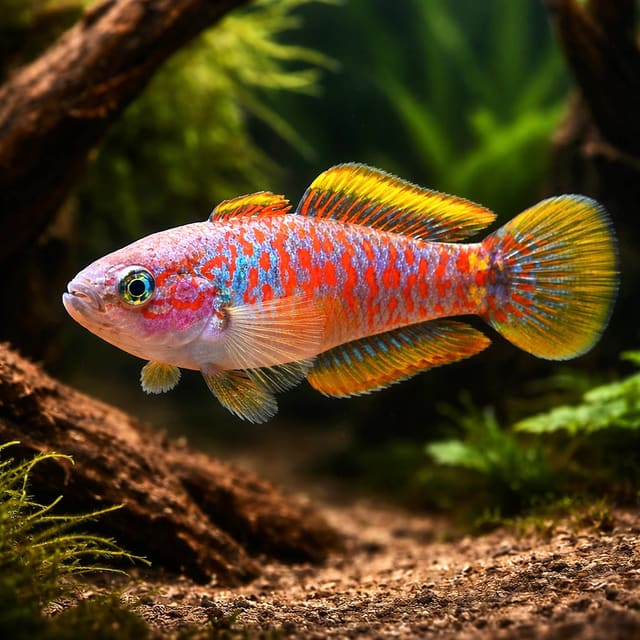
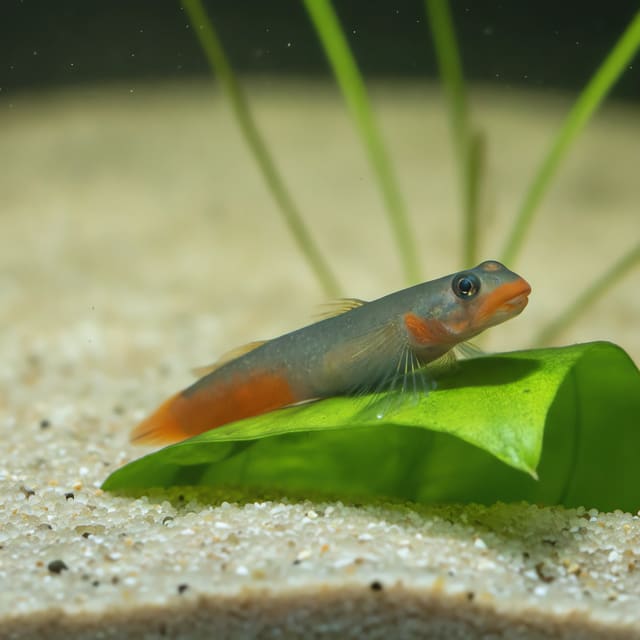
Red Lipstick Goby (Sicyopus jonklaasi)
£17.39£19.99

Electric-blue Stiphodon stream goby for mature, oxygen-rich freshwater aquariums with clean flow, algae and biofilm grazing surfaces.
Stiphodon sp. undio blue
Shoaling fish: kept in a group they feel safer, stay calmer and show their best colour.
Electric-blue Stiphodon stream goby for mature, oxygen-rich freshwater aquariums with clean flow, algae and biofilm grazing surfaces.
Maintain these water conditions for optimal health and vibrant colors
The Blue Neon Goby is a small, high-colour stream goby for aquarists who enjoy natural behaviour as much as bright fish. A settled male can show metallic blue, blue-green and violet tones while grazing over rockwork, glass and wood. It is not a generic bottom cleaner and it is not a still-water scavenger. This is a freshwater stream fish that does best in a mature aquarium with clean water, high oxygen and plenty of biofilm to browse.
Stiphodon sp. undio blue. Published references for related Stiphodon stream gobies provide useful care context. The husbandry facts that make or break this fish are current, oxygen, mature surfaces, careful feeding and peaceful tank mates.
Stiphodon gobies are specialised freshwater stream fish. Their flattened profile, gripping behaviour and constant grazing make them very different from the rounder, predatory gobies many aquarists first think of. They are best bought by keepers who can provide flow, clean water and a tank that has been running long enough to grow a natural film on hard surfaces.
Published Stiphodon stream-goby references describe clear coastal streams where water moves over smooth stones, gravel and wood. That context is useful for this Stiphodon sp. undio blue because the aquarium lesson is the same: keep it like a current-loving grazer, not like an ordinary community bottom dweller.
In nature, Blue Neon Gobies spend much of the day attached to rocks and browsing the surface layer. That surface layer is where algae, diatoms, detritus and tiny invertebrates collect. A brand-new aquarium with sterile stones and spotless glass does not provide enough grazing. A mature planted tank with rounded pebbles, established wood and a light film of algae is far more suitable.
Let at least some hardscape mature before the fish arrive. A tank that has visible biofilm on stones and glass usually settles Blue Neon Gobies faster than a freshly scrubbed display.
The best Blue Neon Goby aquarium looks more like a shallow stream than a still tropical display. Use a long footprint, rounded stones, patches of open substrate and visible flow. The fish stays small, but the tank needs enough floor space for grazing territories. A 60 x 30 cm footprint, usually around 54 litres, is a better long-term baseline than a tiny cube because it gives more usable rock surface and more stable water quality.
A single male with females or a small loose group can work well when the layout has several grazing zones. Males may flare, brighten and defend a favourite stone, but they are not normally damaging if the aquarium has broken sight lines. For a compact setup, aim for 2-3 fish in a mature tank. Larger groups need more floor space and more food-growing surface, not just more water volume.
If this page shows shoal or multi-buy pricing, use it only when the aquarium can support the group properly. The value option is best for a mature, oxygen-rich setup with enough rockwork for each fish to feed without constant pressure.
Keep the temperature at 22-26°C, with the middle of that range around 24°C as a sensible target. Aim for pH 6.5-7.5 and moderate hardness. Stability matters more than chasing a perfect number. These gobies react badly to low oxygen, dirty substrate and sudden changes, so maintenance should be steady and predictable.
Good filtration is essential, but the aim is circulation rather than chaos. A mature internal filter, external filter or hang-on-back filter with steady output works well. Add a small powerhead in larger aquariums if the water feels still near the bottom. Position stones and wood so there are strong-flow areas for grazing and calmer pockets for resting. Surface movement is useful because oxygen levels drop fastest in warm, small tanks.
Sponge pre-filters are helpful because they protect small tank mates, add biological capacity and grow extra grazing film. Avoid letting mulm build up behind rocks. Blue Neon Gobies feed from surfaces, but they should not be living in trapped waste.
Use fine sand or smooth small gravel. The decor is more important than the substrate: rounded cobbles, flat stones, mature driftwood and hardscape with broad surfaces all help. Plants such as Anubias, Java fern, Bucephalandra and mosses suit the style because they can be attached to rock or wood without blocking flow. A layout with green plants and darker stones also shows the male blue colour at its best.
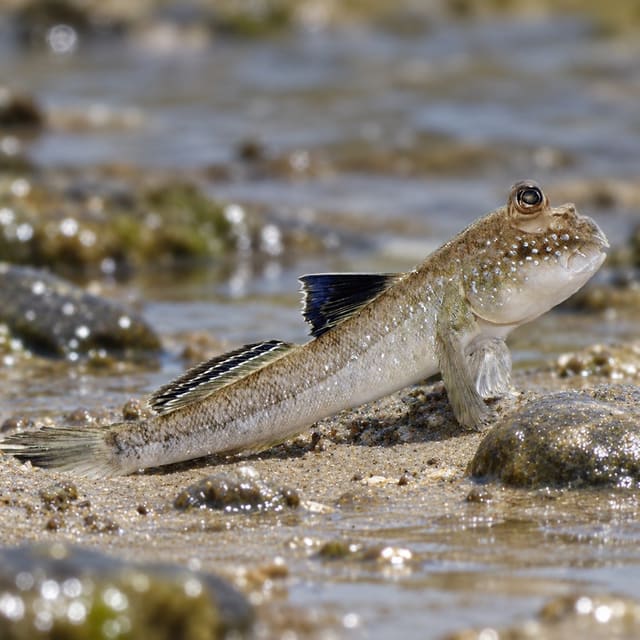
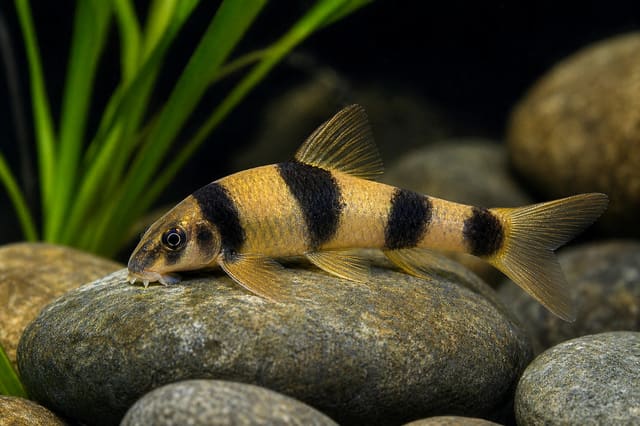
Good comparison species for a similar high-oxygen setup include the Red Lipstick Goby and the Hillstream Loach, although food competition must be considered before mixing multiple grazers.
Moderate lighting for 7-9 hours a day encourages a useful film of algae without turning the aquarium into a nuisance algae farm. Do not keep every surface spotless. Clean the front viewing pane, but allow side glass, stones and wood to develop natural grazing patches.
A simple river-bank layout uses sand, a line of rounded stones and a filter outlet running along the front glass. This gives the gobies an obvious feeding lane, while plants at the back soften the current for tank mates. A planted stream layout uses wood and epiphyte plants, with open stones in the middle and moss in quieter corners. This style is especially good for shrimp, young fish and timid females because it creates cover without blocking all water movement.
A larger community layout can work if the flow is planned in zones. Put the strongest current across the rockwork where the gobies feed, and leave a slower upper area for danios, small rasboras or gentle guppies. The mistake is trying to make the whole aquarium suit every fish equally. Blue Neon Gobies want the bottom and rock surfaces to feel like moving water, while many tank mates prefer a calmer midwater route.
Whichever layout you choose, avoid sharp lava rock that can scrape the belly, avoid unstable stone piles that can collapse, and avoid decor that traps old food behind it. A clean-looking aquascape can still be mature. The goal is not dirt; it is living surface.
Feeding is the most common success point and the most common failure point. Blue Neon Gobies are mainly surface grazers. They rasp at algae, diatoms, biofilm and tiny organisms living on stones and wood. They may take prepared foods, but they should not be kept as if one large daily pellet is enough.
Start with a mature tank that already offers natural food. Then supplement with spirulina granules, soft algae wafers broken into small pieces, grazer gel foods, blanched courgette or spinach, and tiny frozen foods such as cyclops, daphnia or baby brine shrimp. A small amount of protein helps new arrivals recover condition, but too much rich food can cause digestive stress and water-quality problems.
Offer small food portions once or twice daily while leaving natural grazing available all day. Place food where the gobies already browse, not in the busiest midwater feeding zone. If faster fish take everything first, feed the upper-level fish at the opposite end and then place a small grazer food near the gobies.
| Food Type | Use | Notes |
|---|---|---|
| Biofilm and soft algae | Main natural diet | Best grown on mature stones, wood and glass |
| Spirulina or algae grazer food | Staple supplement | Use small portions; remove leftovers |
| Blanched vegetables | Occasional supplement | Courgette and spinach work well; remove within 12-24 hours |
| Cyclops, daphnia, baby brine shrimp | Conditioning food | Useful 2-3 times weekly, especially for thin arrivals |
Do not put Blue Neon Gobies into a sterile new tank and expect prepared foods to replace every natural surface. A thin goby with a hollow belly needs less competition, mature grazing surfaces and very small foods it can take confidently.
If a Blue Neon Goby is not feeding, first check competition. Many community fish learn to take sinking foods quickly, and the goby may simply be too slow or too cautious at first. Feed the faster fish on one side, then place a tiny amount of grazer food directly near the stones. Watch from a distance; new gobies often feed better when the keeper is not moving close to the glass.
If the belly stays flat or hollow, increase natural grazing rather than only increasing meal size. Move algae-covered stones from a healthy established tank if you have one, leave side glass unpolished, and use powdered or soft foods that cling to surfaces. Large hard wafers can be ignored if the fish has not yet learned to recognise them as food. Breaking food into crumbs or smearing a thin layer of grazer gel onto a stone often works better.
If water becomes cloudy after feeding, reduce the portion immediately. These fish need frequent access to food, but small aquariums can be polluted quickly by uneaten vegetables or sinking tablets. A mature filter and regular water changes are part of the feeding plan, not a separate subject.
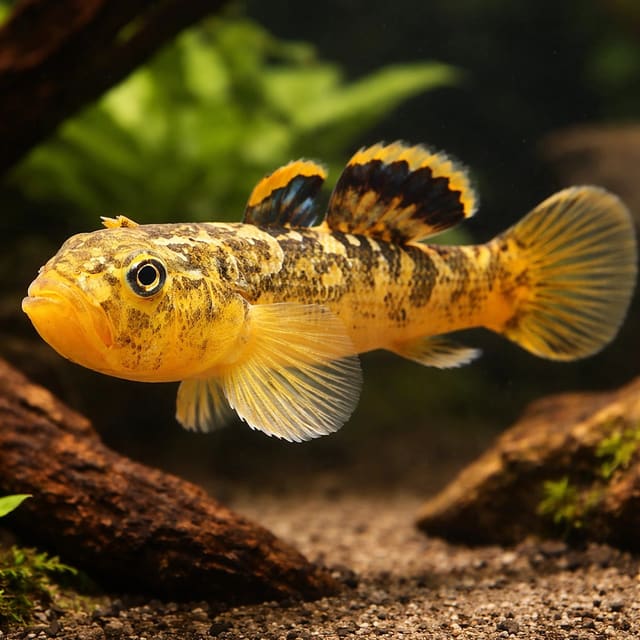
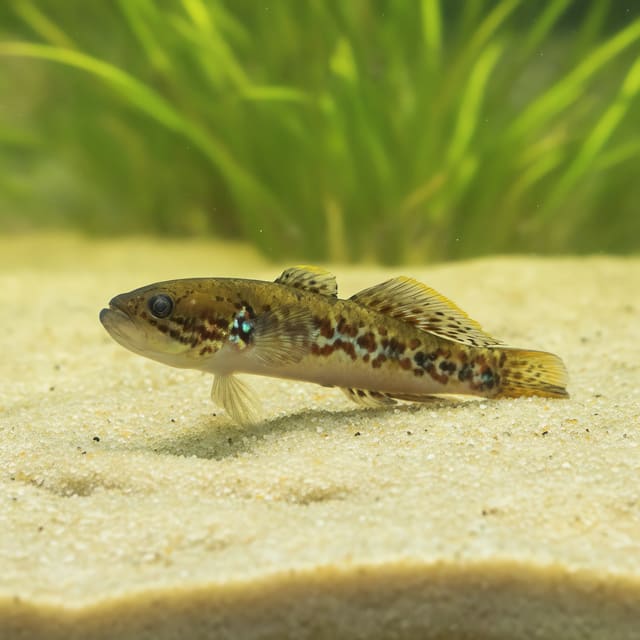
Adult Blue Neon Gobies are slender, rock-hugging fish usually around 4-5 cm. Males are the showpiece fish. Depending on mood, light and angle, they can flash blue, turquoise, violet and dark purple tones. Females are normally paler, often beige or silver with softer markings. Colour improves when the fish is settled, feeding and able to choose a favourite grazing stone.
New arrivals may look dull at first. That does not automatically mean poor quality. Stiphodon males often fade during stress, transport or social pressure and colour back up once they feel secure. Darker rock, moderate light and calm tank mates help the metallic body colour show properly.
Males are usually the fish buyers picture when they search for Blue Neon Gobies. They carry the strongest electric-blue side colour and show more obvious display behaviour. Females are still attractive, but they are normally softer in tone and can be easier to overlook in a shop tank. A group with females often behaves more naturally than a tank made only of males, because males have something to display around and the social pressure is spread out.
Colour is not fixed like paint. A male can look bright under one angle and much darker under another. Stress, shipping, poor food access and pale surroundings all reduce the effect. Do not judge the fish only by the first hour after arrival. Give it hiding places, current, mature stones and time to settle before expecting full display colour.
The Blue Neon Goby is peaceful, but it has specific needs. Choose tank mates that tolerate the same temperature, do not mind some current and do not outcompete it at the bottom. Calm midwater fish are usually the easiest match because they leave the rock surfaces available for grazing.
Suitable companions include small peaceful danios, rasboras, gentle livebearers and other calm community fish. The Emerald Dwarf Danio, Celestial Pearl Danio, Albino Sky Blue Guppy Pair and Blue Moscow Male Guppy can all suit peaceful community planning when the tank size and flow are appropriate.
Adult shrimp are usually safe, but very small shrimplets can be at risk with almost any small fish. If keeping shrimp, provide moss, fine plants and rock crevices. Avoid adding too many algae grazers to the same small tank, because the limiting factor is often natural food rather than aggression.
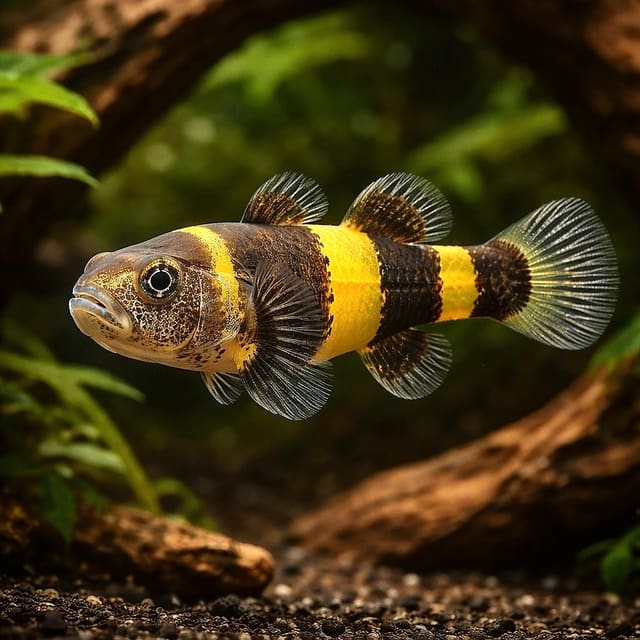
Avoid large cichlids, predatory oddballs, giant gouramis, pacu, bichirs and aggressive barbs. Also avoid heavy bottom feeders that bulldoze the rocks and steal every sinking food. A Blue Neon Goby is not equipped to compete with large catfish or boisterous cichlids. If you want a visually similar but calmer comparison fish, the Peacock Gudgeon is worth viewing, but it is a different style of fish and does not need the same strong stream setup.
| Tank Mate Type | Suitability | Reason |
|---|---|---|
| Small rasboras, danios and calm guppies | Good | Use the upper water and leave grazing surfaces alone |
| Adult shrimp | Usually suitable | Provide hiding places for young shrimp |
| Other stream grazers | Possible with care | Watch food competition in small tanks |
| Large predators or aggressive cichlids | Avoid | A 4-5 cm goby can be bullied or eaten |
Introduce Blue Neon Gobies before adding pushier bottom fish. If the gobies already know the rockwork and feeding points, they are more confident. When adding new tank mates later, watch the first few feeding sessions closely. A fish can be peaceful in temperament but still unsuitable if it eats every bottom-level food before the gobies reach it.
For mixed communities, choose one main bottom feature. A pair or group of Blue Neon Gobies can be that feature in a small stream tank. If you add too many other bottom species, the aquarium may look busy but the gobies will spend less time in open view. The best setups give them a clear role: visible rock grazers with calm midwater fish above them.
Breeding is difficult in ordinary home aquariums. Adults may court, display and spawn, but raising the larvae is the challenge. Like many related stream gobies, Stiphodon are associated with an amphidromous life cycle: adults live and breed in freshwater streams, larvae drift downstream towards marine or brackish environments, and juveniles later return to freshwater. That life cycle is why successful full-cycle breeding is rare in normal freshwater community tanks.
If your fish display, the male will usually intensify colour and hold a small territory around a rock or crevice. Females may become rounder when carrying eggs. Enjoy the behaviour, but do not plan on easy fry unless you are prepared for specialist larval rearing, salinity transitions and tiny live foods.
The Blue Neon Goby suits keepers who want a small feature fish with behaviour, colour and a stream-biotope feel. Compared with many general community fish, it needs more mature surfaces and better oxygen. Compared with many bottom dwellers, it is less messy and more delicate. Compared with larger algae eaters, it has far more colour but far less ability to compete for food.
| Fish | Best For | Main Difference |
|---|---|---|
| Blue Neon Goby | Mature, high-oxygen nano or small community tanks | Colourful stream grazer with specialist feeding needs |
| Red Lipstick Goby | Another specialist stream-goby option | Different species and colour form; still needs flow |
| Peacock Gudgeon | Gentler planted community tanks | Less of an algae/biofilm specialist |
| Hillstream Loach | Cooler high-flow river-style aquariums | Stronger surface grazer, but can compete for the same food |
A healthy Blue Neon Goby grazes steadily, grips surfaces, breathes normally and carries a rounded belly. Warning signs include rapid breathing, hollow body, clamped fins, faded colour that does not improve, or hiding constantly away from current. Most problems come from immature tanks, low oxygen, shipping stress, poor feeding access or bullying from faster fish.
Acclimate gently and keep the lights low at first. Offer tiny foods near the bottom and avoid sudden medication unless you know the cause of the problem. Copper-based treatments are unsafe for shrimp and can be harsh in delicate stream-style communities. Quarantine is recommended if you have the space, especially for wild-type gobies and other imported livestock.
A good weekly routine is simple: change 25-40% of the water, rinse mechanical filter media in old tank water when flow slows, remove trapped waste from behind stones and check that the outlet still creates surface movement. Do not sterilise every stone at once. If you remove all the biofilm, you remove part of the food supply. Clean in rotation so some mature surfaces always remain.
Test nitrate and watch behaviour. A goby that hides more, breathes faster or stops gripping the glass is giving useful feedback before a test kit always shows a dramatic number. In warm weather, oxygen can fall even when the water looks clear. Extra surface agitation is usually safer than raising temperature for this species.
During the first two weeks, check the belly profile daily. A round, steady body shape is a good sign. A pinched underside means the fish is not getting enough suitable food, even if other fish in the tank look full. That is your cue to reduce competition, add mature grazing surfaces and offer finer foods.
Blue Neon Gobies are active daytime grazers. They move in short bursts, settle onto a stone, browse the surface, then shift to the next patch. Males may display to each other by flaring fins and brightening colour, but this is usually part of normal territory behaviour. A well-planned layout turns that behaviour into one of the best reasons to keep the species.
They are not schooling fish in the strict sense, but they do well as a loose group when space allows. Females are often calmer together, while males prefer defined display spots. A single fish can live in the right tank, but a small group usually shows more natural behaviour and gives the aquarium more movement.
Blue Neon Gobies need a mature aquarium, flow, oxygen, grazing surfaces and calm tank mates.
Your order is packed for live-fish transport and covered by our Live Arrival Guarantee when the guarantee conditions are followed. Current buying options, multi-buy choices and checkout offers are shown by the store when they are active.
This is a good fish to buy after the tank is ready, not while the aquarium is still cycling. The best preparation is to have the filter mature, the hardscape in place, flow adjusted and foods ready before dispatch. If you are building a new aquarium for this species, set up the stones and plants first, let the tank run, and allow light grazing film to develop. The goby will thank you by feeding sooner and showing colour sooner.
Check the weather and your availability on delivery day. Live fish should be received promptly, acclimated calmly and observed after release. The Live Arrival Guarantee exists to protect buyers when its conditions are followed, but the best outcome is always a fish that moves from bag to mature aquarium with minimal delay and stress.
Do not choose this species because of a temporary offer. Choose it because your aquarium suits it. Current offers and multi-buy options are shown by the store when they are active.
Published Stiphodon stream-goby husbandry references provide care context. Those sources support the stream-goby themes used here: clear flowing water, high oxygen, mature grazing surfaces, algae and biofilm feeding, and difficult amphidromous breeding.
If you like specialist gobies, compare this fish with the Red Lipstick Goby. For a calmer goby-like display fish, view the Peacock Gudgeon. For upper-level movement in peaceful planted tanks, the Emerald Dwarf Danio and Celestial Pearl Danio are good planning references. Keep large predators, giant species and aggressive bottom feeders for a different aquarium.
No reviews for this item yet. Bought one? Honest reviews only, good or bad.
What customers say about ordering from us
I have a small group of long finned mountain minnows. So was delighted to be able to order ten of this variety to increase the genetics in my tank . The ones I recieved are healthy but it’s to early to give a verdict on wether they are of a long finned type since they are small currently.
Gordon Walker · 23 Sept 2026
100% success travel and "installation". Pleased with quality of purchase. The Siamese fighter a bit "shy" so have not yet seen him at his best yet but looking good. Happy customer. GG
George E Garratt · 21 Sept 2026
Reviews of our shop, collected by Judge.me, an independent third-party review collector. Newest first.