Advanced
Atlantic Mudskipper (Periophthalmus barbarus)
25–30°C · pH 7–8.5 · 110L
£22.99
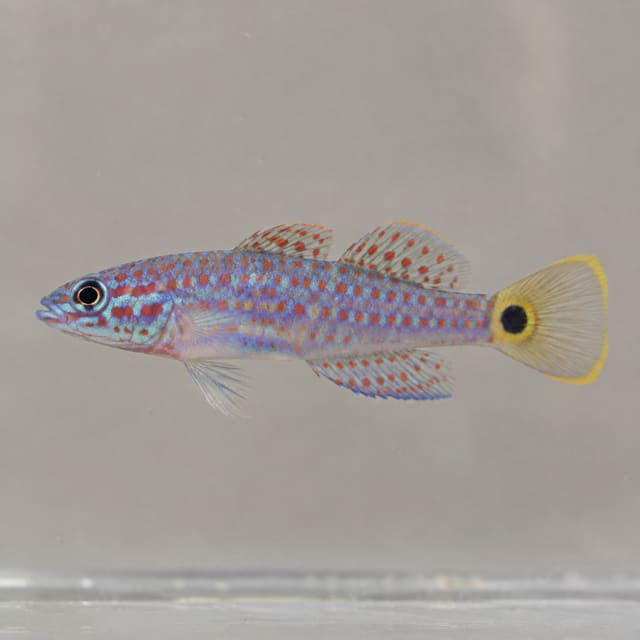
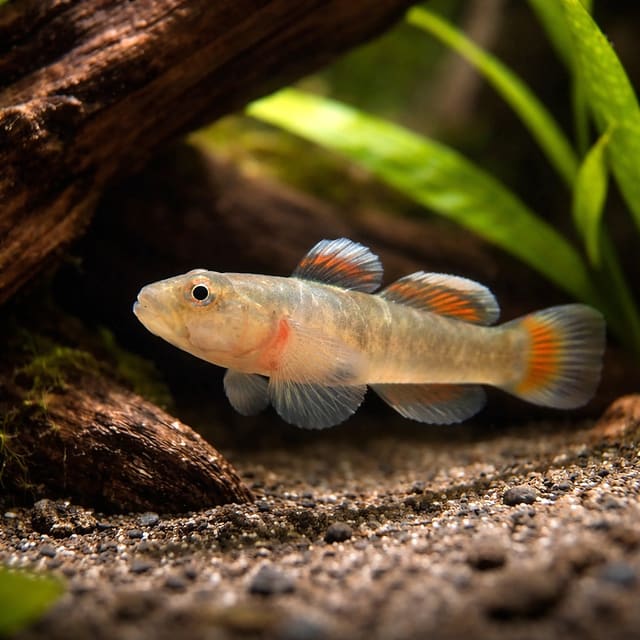
The Empire Gudgeon (Hypseleotris compressa) is a hardy Australian sleeper goby that grows to about 12 cm. Females are brown to golden, and breeding males turn orange-red with red-orange, dark- and pale-edged fins. It suits a planted aquarium of at least 80 x 30 cm with fish of similar size. One live fish per purchase.
Hypseleotris compressa
Save when buying multiple fish. Each quantity is one fish; sex and pair formation are not guaranteed unless the selected variant explicitly states them.
The Empire Gudgeon (Hypseleotris compressa) is a hardy Australian sleeper goby that grows to about 12 cm. Females are brown to golden, and breeding males turn orange-red with red-orange, dark- and pale-edged fins. It suits a planted aquarium of at least 80 x 30 cm with fish of similar size. One live fish per purchase.
Read the full care guidance when planning conditions for your aquarium.
The Empire Gudgeon (Hypseleotris compressa) is an Australian sleeper goby, a member of the family Eleotridae. Unlike the bottom-hugging gobies, sleepers have separate pelvic fins rather than a sucker disc, and this gudgeon lives among plants and submerged branches rather than on open sand. The species name means compressed, for its deep, flattened body.
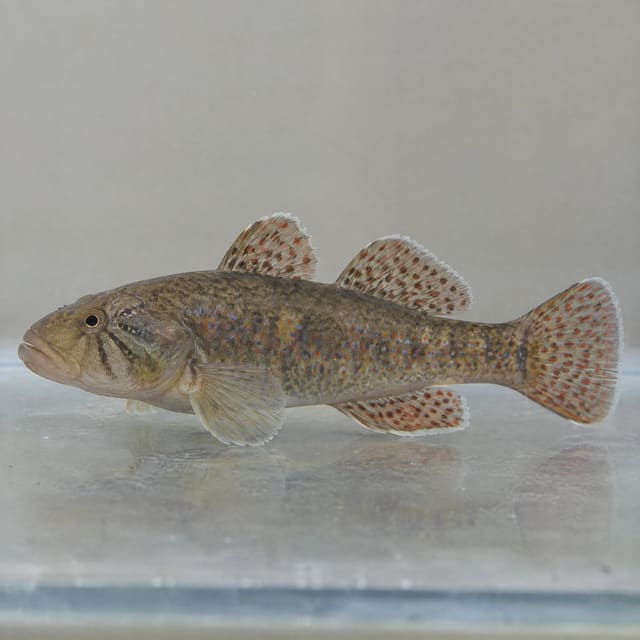
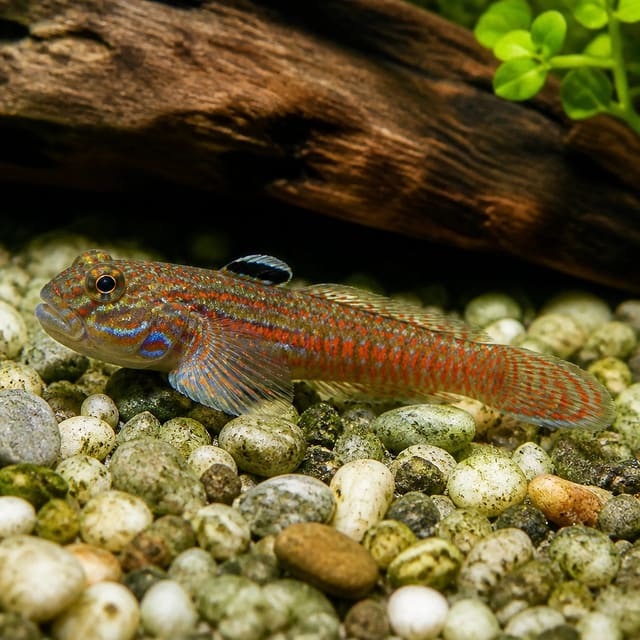
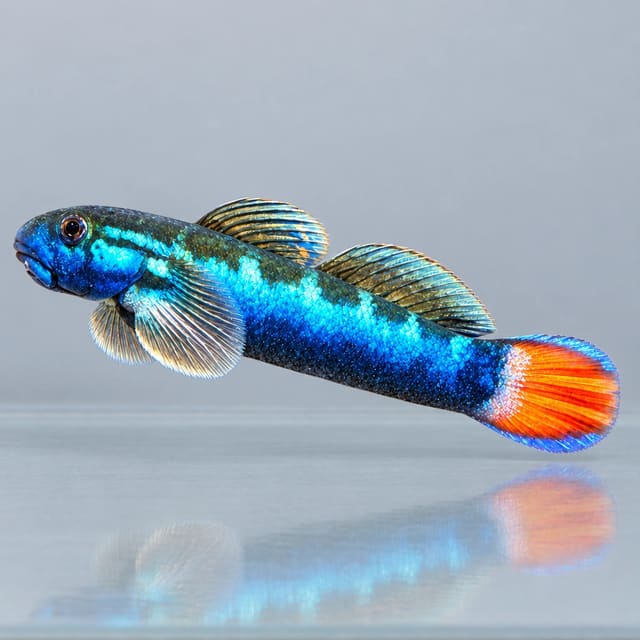
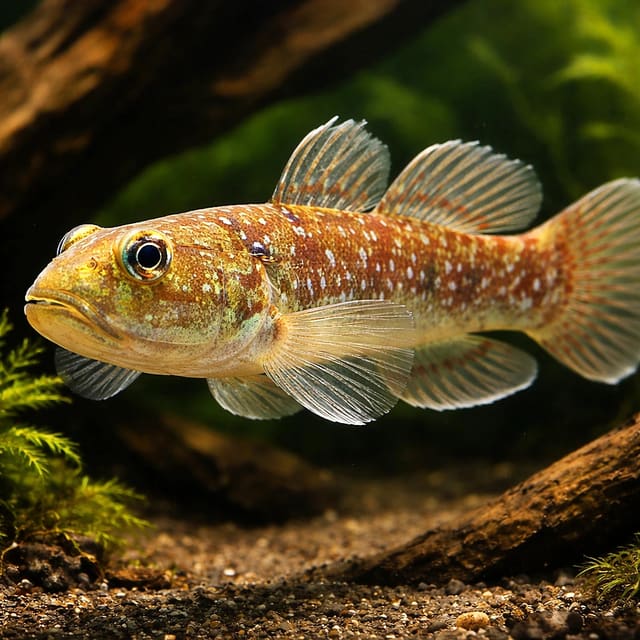
For most of the year it is an understated fish. The Australian Museum describes females as brown to golden with whitish undersides. In the breeding season the males transform: the head and belly turn bright orange-red, and the dorsal and anal fins become red-orange at the base with a dark band near the edge and a pale margin. A group of coloured males displaying to each other is the main attraction of this fish.
| Name you may see | What it tells you |
|---|---|
| Empire Gudgeon | The usual common name |
| Carp Gudgeon, Empire Fish, Northern Carp-gudgeon | Other Australian names listed by the Australian Museum |
| Hypseleotris compressa (Krefft, 1864) | The scientific name; first described as Eleotris compressus |
| Sleeper goby, gudgeon | Common names for the family Eleotridae |
Seriously Fish gives the range as northern and eastern Australia and southern New Guinea: in Australia from the Pilbara and Kimberley regions of Western Australia, around the northern and eastern coasts, south to the Towamba River system in New South Wales. FishBase adds that adults live in the lower reaches of rivers, in flowing or still water among aquatic plants or submerged branches, while juveniles are often found in fast water or brackish estuaries.
Browse our gobies, gudgeons and mudskippers, including the smaller Peacock Gudgeon, the related Mogurnda gudgeons such as the Purple Spotted Gudgeon, or our wider community tank fish.
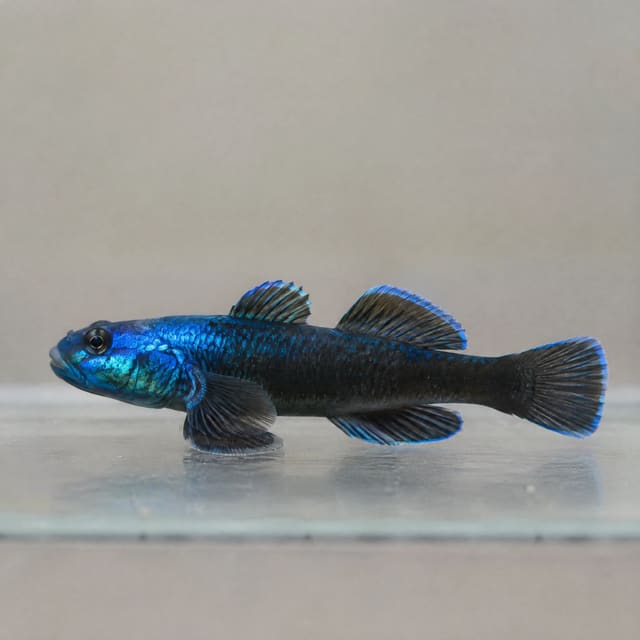
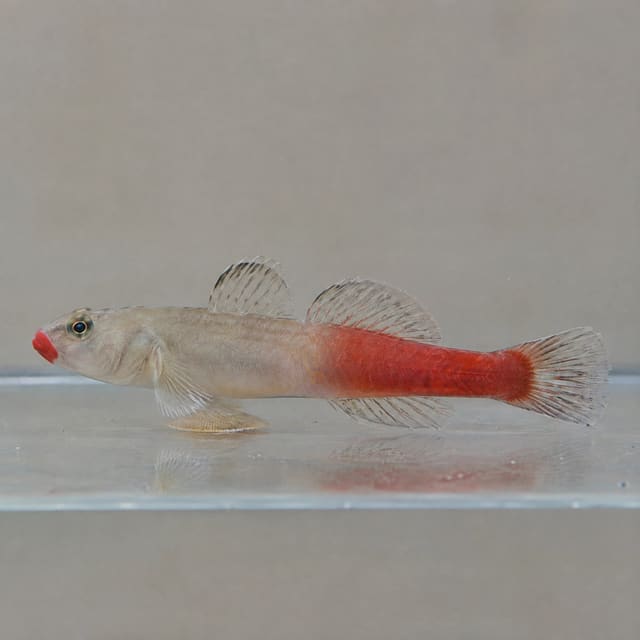
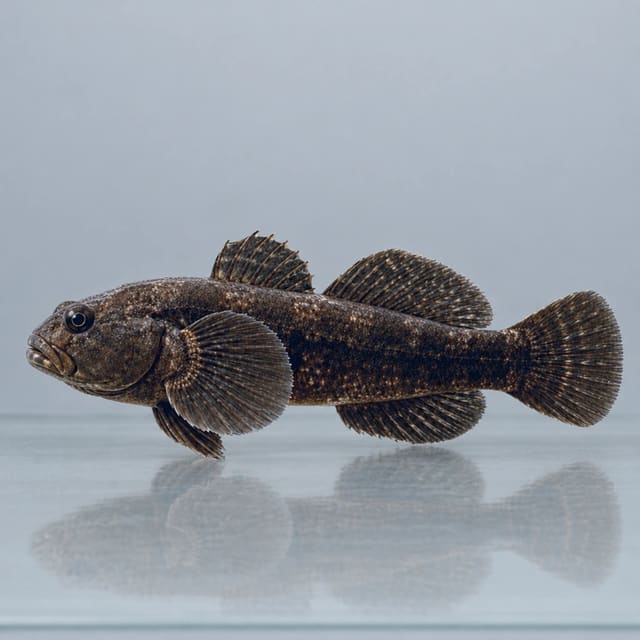
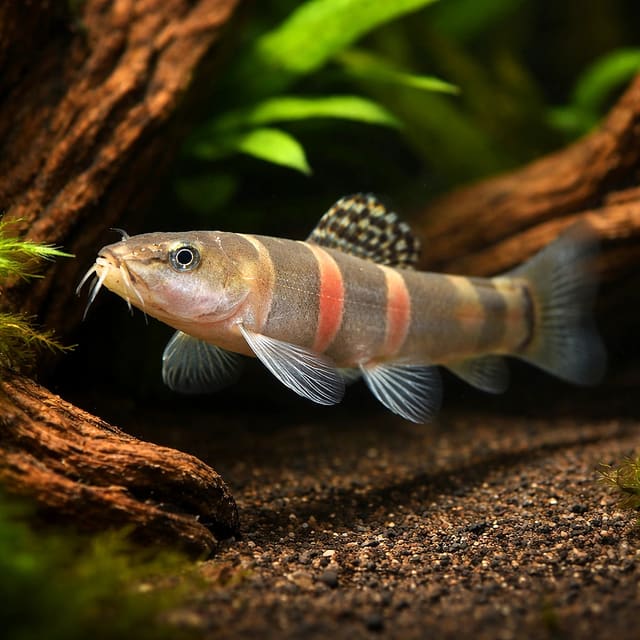
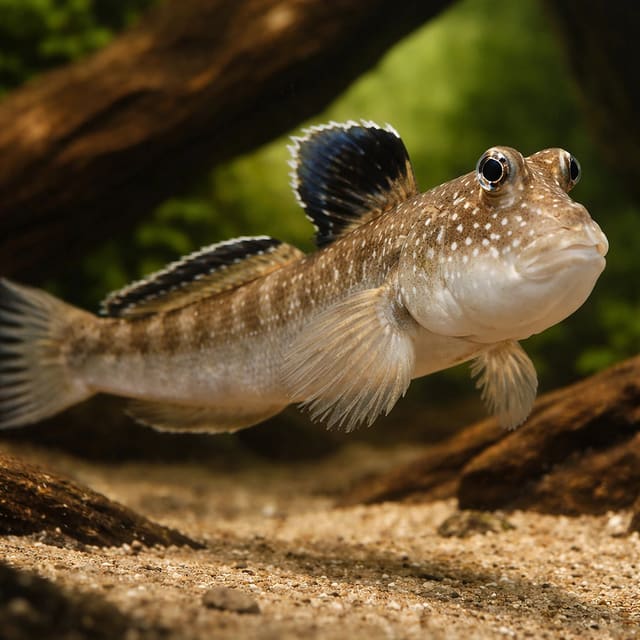
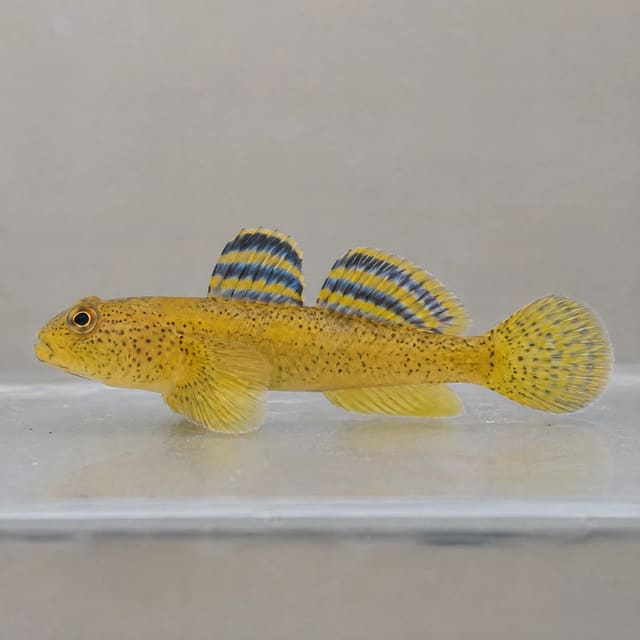
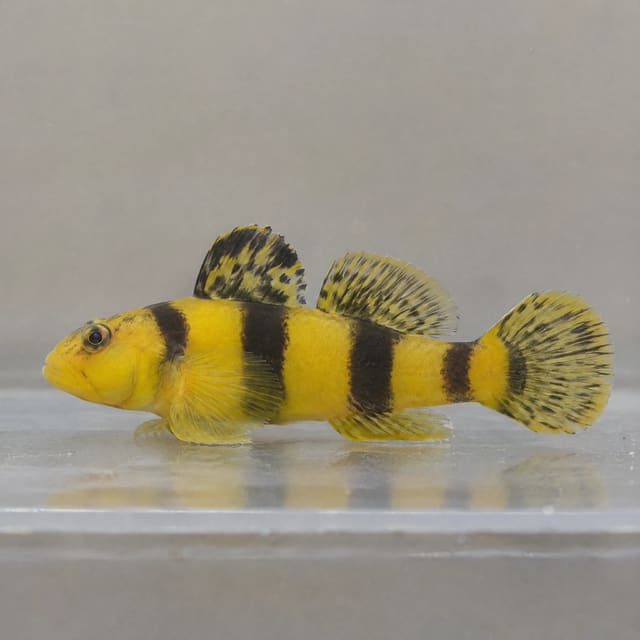
One purchase supplies one live Empire Gudgeon in the standard size we stock. That is a young or subadult fish, so expect the quieter colours of a female or non-breeding male on arrival. Seriously Fish notes that males intensify in colour when they are ready to spawn, so the orange-red breeding dress appears once the fish are mature, settled and well fed. The photographs show the species, not the individual fish; size, colour and pattern vary from fish to fish.
The sex is not selected or guaranteed. Young gudgeons are not easy to sex, and the clearest sign, the male's breeding colour, appears only later.
Read our delivery and Live Arrival Guarantee policy before ordering, and have the aquarium matured and tested first.
Seriously Fish recommends a base of at least 80 x 30 cm, about 72 litres, and gives the maximum size as 120 mm standard length; FishBase gives the same 12 cm maximum and a common length of 5 cm. OATA's freshwater goby care sheet asks for at least 80 litres for a group of the larger gobies and adds that bigger tanks are more stable. Use those as the minimum for a pair, and go larger for a group or a mixed community so that each male can hold a separate territory.
| Step | What to check |
|---|---|
| Measure | A base of at least 80 x 30 cm, about 72 litres |
| Plan the adult | Allow for fish of up to 12 cm, not the size on arrival |
| Count territories | One planted, sheltered patch for every male |
Our stocking calculator helps you add up adult sizes, and our guide to the best fish for a 100-litre tank shows how a community of this size fits together.
Seriously Fish asks for plenty of hiding places and cover to break up lines of sight, so that weaker fish can get away from dominant ones. That matches the wild habitat FishBase describes, among aquatic plants and submerged branches. OATA recommends fine gravel or sand, heavy planting with live plants, especially when several males are kept, and rounded pebbles and stones; where live plants are not used, wood, plant pots or caves provide the cover.
Fit a cover. OATA says a lid is essential for gobies because they can jump when startled, and a displaying male chasing a rival is easily startled.
| Area | Purpose |
|---|---|
| Dense planting along the back and sides | Cover and sight breaks between males |
| Driftwood branches | Hovering spots and territory markers |
| Flat stones and smooth wood | Clean surfaces where eggs are laid |
| Open sand at the front | Feeding area and display ground |
Seriously Fish notes that eggs are laid on a pre-cleaned solid surface such as a rock, driftwood or even the glass, so flat stones near cover give a breeding pair an obvious site.
The Empire Gudgeon is one of the most tolerant aquarium fish there is. In the wild it moves between rivers, estuaries and the sea, and FishBase records that it tolerates salinity equal to seawater, temperatures up to 35°C and a pH from 5.0 to 9.1. The sources still differ on the details, so keep the water steady in the middle of the overlap rather than near any extreme.
| Reading | Seriously Fish | FishBase | OATA, freshwater gobies | Aim for |
|---|---|---|---|---|
| Temperature | 20-35°C | 10-30°C (tolerates 35°C) | 24-27°C | 24-26°C |
| pH | 5.0-9.1 | 5.0-9.1 | 7.5-8.5 | 7.0-8.0 |
| General hardness | 2-25 dGH | not given | 8-18 dGH | 8-18 dGH |
| Ammonia and nitrite | not given | not given | zero | zero |
| Nitrate | not given | not given | below 50 mg/l | as low as possible |
Salt is not needed. Seriously Fish explains that adults live and spawn in fresh water; it is the larvae and juveniles that use the sea and estuaries.
Most UK tap water, soft or hard, sits within this fish's range once it is dechlorinated, so there is rarely any need to adjust it. What matters is stability: make every water change at the same temperature and from the same source. Our water chemistry guide explains the readings, and the water matcher checks your tap water against this fish.
Seriously Fish says the filtration does not need to be strong and that an air-powered sponge filter is ideal; in a larger community tank an external or internal filter with a gentle, spread-out return works as well. OATA calls a filter essential for gobies and asks for at least a 25% water change every week. Our guide to aquarium filtration explains how to size and maintain one.
In the wild the Empire Gudgeon eats small invertebrates. FishBase lists micro-crustaceans, mosquito larvae and algae, and the Australian Museum adds that it grazes on algae and detritus as well as eating water fleas and insect larvae. In the aquarium, Seriously Fish recommends small live or frozen foods such as bloodworm, mosquito larvae, brine shrimp, daphnia and mysis, and notes that dried foods are normally accepted too.
OATA's guidance for gobies is to feed once a day, only what is eaten within a few minutes. Conditioning a pair for breeding is the one time to feed more live and frozen food.
If faster tank mates take everything at the surface, drop some food near the gudgeons' cover so they get their share.
OATA advises checking that ammonia and nitrite read zero before adding fish, adding new fish slowly so that the filter bacteria keep pace, and watching water quality closely during the first week. Our guide to acclimatising new fish covers the steps in detail.
| Checkpoint | What to look for |
|---|---|
| Day 1 | Fish resting among plants, lights off |
| Days 2-3 | Taking small frozen food; fins held open |
| Days 3-7 | Males starting to claim spots; no constant chasing |
| Day 7 | Test ammonia, nitrite and nitrate after the stocking rise |
Seriously Fish's advice is to choose tank mates carefully, because males defend their territory during spawning. The Empire Gudgeon is not a large predator, but its wild diet of small crustaceans and insect larvae means that shrimplets and fish fry are likely to be eaten, and very small fish are at risk from a 12 cm adult. Pick calm fish of a similar size that use the upper and middle water, and give the gudgeons the planted lower half.
| Suits | Avoid |
|---|---|
| Dwarf Australian Rainbow | Cherry shrimp colonies and other small shrimp |
| Australian Rainbowfish | Nano fish small enough to swallow |
| Western Rainbowfish | Aggressive cichlids and large predators |
| Other calm schooling fish too large to swallow | Several males in a small, open tank |
Rainbowfish make an Australian-themed community; see our full rainbowfish range. Our tank mates tool checks size and temperament before you buy.
Empire Gudgeons spawn readily once mature, but raising the young is rarely achieved. Seriously Fish explains that the species is amphidromous: adults spawn in fresh water, the larvae drift to the sea, and young fish grow up around the coast and in estuaries before returning to rivers. The newly hatched larvae are tiny, have no working gut or rayed fins at first, and cannot even take infusoria-type foods.
Empire Gudgeons are hardy, so most problems come from bullying between males, food going to faster fish, or a sudden change in water. Look at the fish every day at feeding time.
| What you see | What to do first |
|---|---|
| One male chasing others constantly | Add plants and wood to break sight lines, or rehome a male |
| Fish hiding and pale for days | Test the water and check for bullying tank mates |
| Thin body or pinched belly | Feed near the gudgeons' cover so faster fish cannot take it all |
| Clamped fins, white spots or rapid breathing | Test ammonia, nitrite and temperature before any treatment |
| Fish found on the floor | Close every gap in the lid |
Hypseleotris compressa is a sleeper goby (family Eleotridae) from northern and eastern Australia and southern New Guinea. It is also called the carp gudgeon, empire fish and northern carp-gudgeon. Females are brown to golden; breeding males turn orange-red on the head and belly and develop red-orange fins edged with dark and pale bands.
About 12 cm. Seriously Fish and FishBase both give a maximum of 12 cm standard length, and FishBase gives a common length of 5 cm.
An aquarium with a base of at least 80 x 30 cm, about 72 litres, as Seriously Fish recommends. Give more room for a group or a mixed community, so that males can hold separate territories.
No. Adults live and spawn in fresh water. Young fish develop in estuaries and the sea, and the species tolerates salinity up to that of seawater, but an aquarium for adults should be freshwater.
Small live, frozen and dried foods. In the wild it eats tiny crustaceans, insect larvae and some algae; in the aquarium, bloodworm, mosquito larvae, brine shrimp, daphnia and mysis, plus dried foods, which it normally accepts.
Yes, with care. It is calm with fish of similar size, but males defend a territory when they spawn, and its wild diet of small crustaceans means shrimplets and fry are likely to be eaten.
Seriously Fish says it is best kept in a pair. Because sex cannot be chosen at our size, buying three or four gives you the best chance of at least one male and one female.
Adults spawn readily once mature, laying up to 3,000 tiny eggs that the male guards. Raising the fry is rarely achieved, because the larvae normally develop in the sea and are too small for ordinary first foods.
No reviews for this item yet. Bought one? Honest reviews only, good or bad.
What customers say about ordering from us
Easy website plenty of info on fish your buying great to pick a time slot
TRACEY DURRANT · 7 Oct 2026
Got some lovely fish thank you
Kevin Mackie · 7 Oct 2026
Reviews of our shop, collected by Judge.me, an independent third-party review collector. Newest first.
Moved by UK carriers licensed to handle live animals
Hand-packed with oxygen bags, poly box, heat pack
Email photos the same day; an optional unboxing video helps us review problems faster — claim terms apply
Klarna & PayPal Pay in 3 at checkout