Moderate
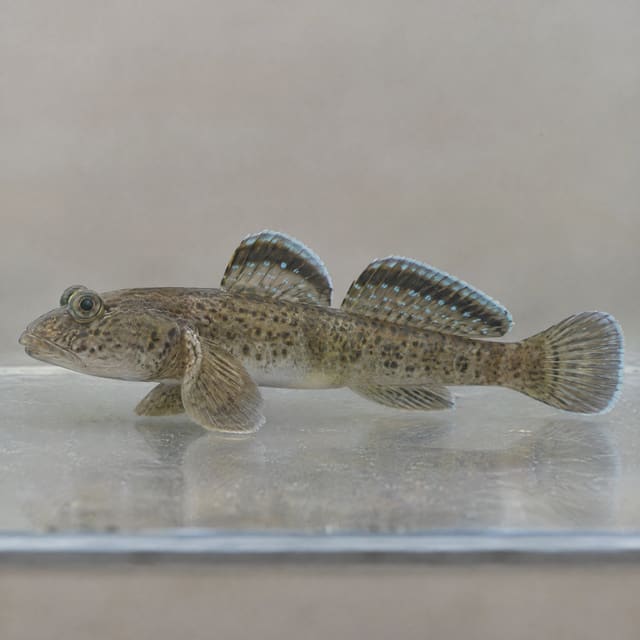
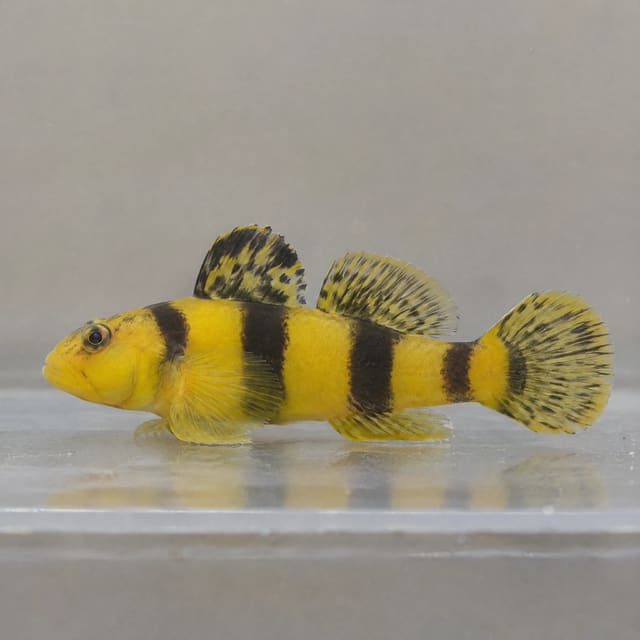
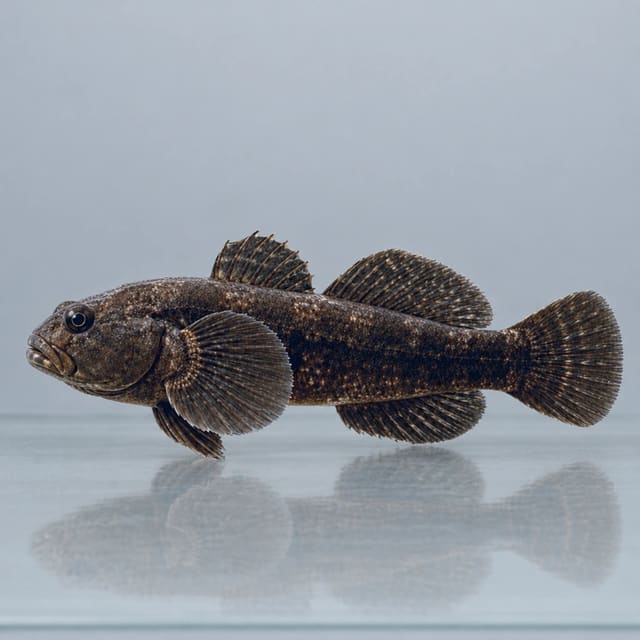
Black Kumpay Goby (Stiphodon sp.)
22–26°C · pH 6.5–7.5
£14.09
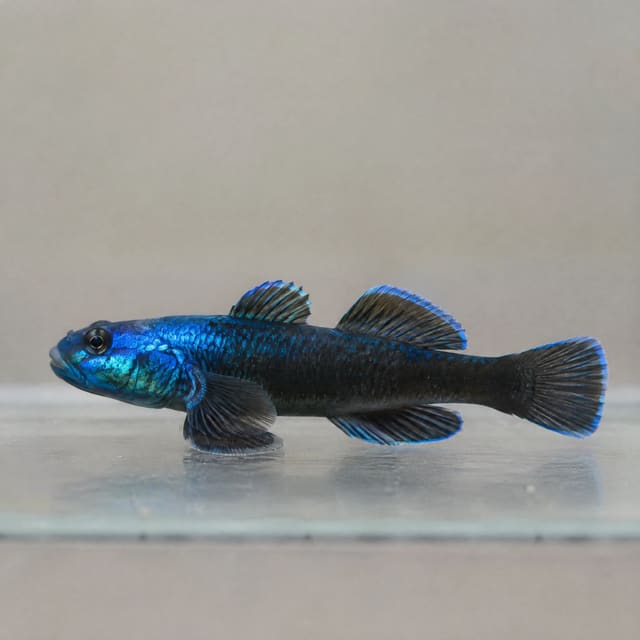
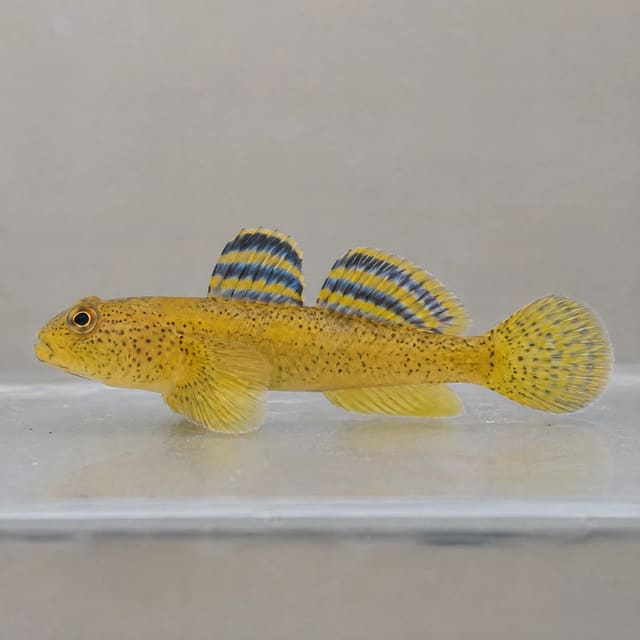
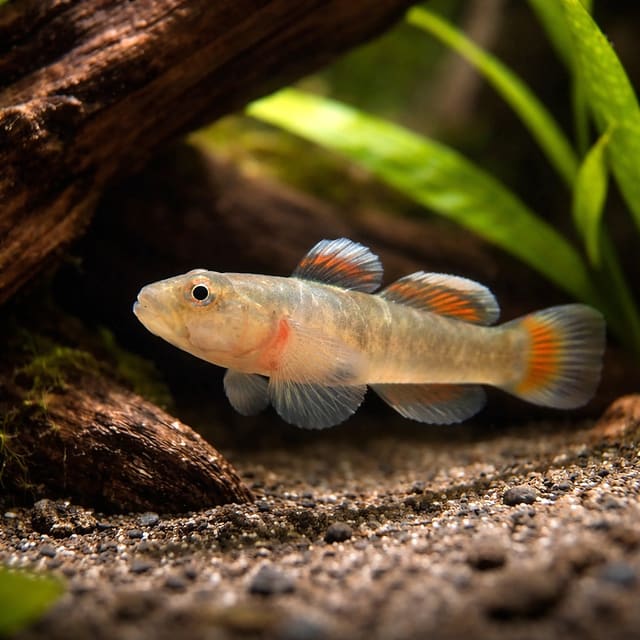
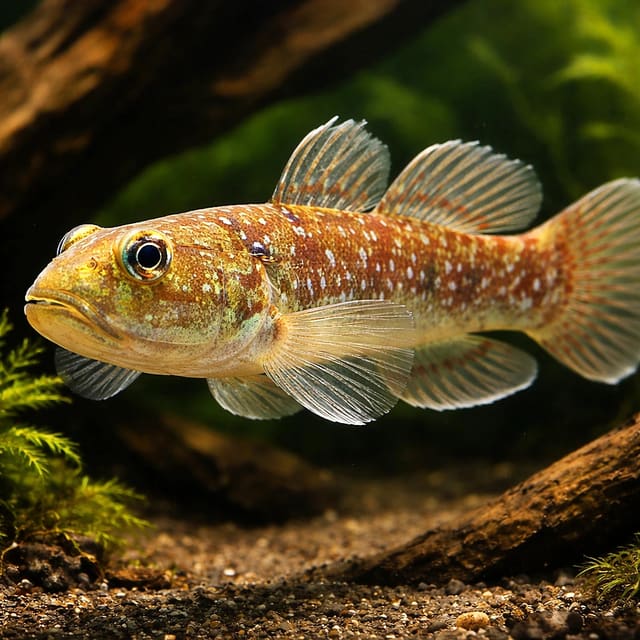
The Rainbow Stream Goby (Sicyopterus sp.) is a rock-climbing goby with an electric-blue body and an orange-red tail that grazes algae from stones in fast, clear streams. Plan for 10–13 cm adults in a mature, brightly lit, well-oxygenated tank with strong flow, smooth rocks and a tight lid. Sold individually as one live fish of 5–6 cm.
Sicyopterus sp.
Quantity discounts are pricing offers, not a group-size recommendation. Check the full care guidance and your existing animals before choosing a quantity.
The Rainbow Stream Goby (Sicyopterus sp.) is a rock-climbing goby with an electric-blue body and an orange-red tail that grazes algae from stones in fast, clear streams. Plan for 10–13 cm adults in a mature, brightly lit, well-oxygenated tank with strong flow, smooth rocks and a tight lid. Sold individually as one live fish of 5–6 cm.
The Rainbow Stream Goby is a Sicyopterus, one of the rock-climbing gobies that live in fast, clear streams on tropical islands and coasts. A coloured-up male is one of the most striking fish you can keep in a river-style aquarium: an electric-blue body with darker blotches, gold-rayed fins and a bright orange-red tail edged in blue. It spends its day working over stones in the current, scraping algae and biofilm, and holding its position with a sucker formed from its fused pelvic fins.
It is not a beginner's fish. A Rainbow Stream Goby needs a mature aquarium with strong flow, very high oxygen, bright light and a steady supply of algae to graze. Give it those and it is peaceful, active and endlessly watchable. Browse our algae eaters, our bottom dwellers and the freshwater goby category to compare it with other grazers.
| Name | Where you will see it |
|---|---|
| Rainbow Stream Goby, Rainbow Rock Goby | UK trade names for this fish |
| Blue Stream Goby, Rabbithead Cling Goby | Names used by ANGFA for Sicyopterus lagocephalus |
| Red-tailed goby | The FishBase common name for S. lagocephalus |
| Threadfin goby, Funky goby | Names for S. longifilis, a close relative |
| Sicyopterus sp. | The name we use: genus known, species not confirmed |
Sicyopterus is a large and confusing genus. Wikipedia lists 37 recognised species, while Aquarium Glaser puts the number at 27 to 33 depending on the author and explains that colour varies with mood, age and sex, so species are told apart by details such as notches and papillae on the upper lip. The colours of our fish match ANGFA's description of breeding males of S. lagocephalus, which are bluish to greenish with an orange-red tail, but we sell it honestly as Sicyopterus sp. The care below is drawn from the species of the genus that have published profiles, and from the closely related Stiphodon stream gobies.
One purchase supplies one live Rainbow Stream Goby of 5–6 cm. Sex is not chosen or guaranteed. ANGFA describes females of S. lagocephalus as drab brown, and Aquarium Glaser notes that colour depends on mood, age and sex, so a young or newly moved fish may look much plainer than the photographs, which show a male in full colour.
Read our delivery and Live Arrival Guarantee information before you order. This fish should only go into a tank that has been running for several months and already grows algae.
A 5–6 cm goby still has growing to do. FishBase gives a maximum of 13.0 cm total length for S. lagocephalus, and ANGFA gives 130 mm. The Fishkeeper profile gives 10 cm for S. longifilis, and Aquarium Glaser about 10 cm for S. microcephalus. Plan for an adult of 10–13 cm.
The Fishkeeper profile suggests a tank ideally at least 48 inches (about 120 cm) long, with many hiding places among rocks, cobbles and bogwood. A long tank matters more than a tall one: it gives the current a run to build up and gives each fish its own grazing stones. For comparison, Seriously Fish gives a 60 × 30 cm base for a pair of the much smaller Stiphodon, and OATA asks for at least 80 litres for a small group of 6 cm hillstream loaches kept in the same kind of fast-water set-up.
FishBase describes the adults' home as fast-flowing sections of clear rainforest streams over rocky bottoms, and ANGFA describes groups grazing in fast riffles. The Fishkeeper profile is blunt: fast-flowing, highly oxygenated water is essential. It recommends extra powerheads on top of the filter return, a visibly moving surface and an air pump as a back-up. OATA's hillstream loach sheet, written for a similar set-up, advises high flow from one direction, usually from a powerhead, and large, flat, smooth-edged stones.
Aquarium Glaser suggests sand, gravel and rubble with a few roots and very little planting, and notes that these gobies often burrow under flat stones. Seriously Fish advises placing large rocks directly on the base glass because stream gobies dig, and using only aged driftwood, since new wood stains the water. Hardy plants that grow on rocks or wood, such as Java fern and Anubias, cope with the flow.
| Area | Purpose |
|---|---|
| Smooth flat stones in the main current | Grazing surfaces where the fish gather |
| Rubble and cobbles with gaps underneath | Hiding places and spots to burrow |
| Sand and fine gravel between rocks | Natural floor that will not damage the sucker disc |
| Java fern or Anubias on wood | Shade and extra grazing surfaces |
| Calmer corner behind rocks | Somewhere to rest out of the strongest flow |
This is the most important part of keeping a Rainbow Stream Goby. ANGFA describes S. lagocephalus as strictly herbivorous, grazing algae from rock surfaces. Aquarium Glaser calls the genus naturally herbivorous but notes that it accepts dry and frozen foods, provided they are not too coarse. The Fishkeeper profile recommends bright lighting to encourage algal growth and only adding these gobies to a biologically mature tank with established algae.
Let algae cover the back and side glass, the rocks and the decor, and clean only the front pane. Seriously Fish suggests strong lighting to grow diatoms and green algae on every surface, and keeping a spare tank of stones growing algae under bright light so you can swap them in when the main tank is grazed bare. Our guide to aquarium algae explains which kinds grow under which conditions.
The published ranges differ. The Fishkeeper profile gives 24–28°C, pH 6.8–7.8 and a hardness of up to 18 dH for S. longifilis. Aquarium Glaser gives 20–28°C for S. microcephalus and says hardness and pH matter little, so any drinking-quality tap water is suitable. Seriously Fish gives 22–26°C, pH 6.5–7.5 and 2–12 dGH for Stiphodon. We suggest the overlap below. Oxygen matters more than any of these numbers.
| Reading | Our target | Why |
|---|---|---|
| Temperature | 24–26°C | Inside all three published ranges |
| pH | 6.8–7.5 | Overlap of Fishkeeper and Seriously Fish |
| General hardness | 4–12 dGH | Inside both published ranges |
| Ammonia and nitrite | 0 mg/l | OATA: always zero |
| Nitrate | No more than 20 mg/l above tap water | OATA limit for fast-water fish |
| Dissolved oxygen | As high as possible, never below 6 mg/l | OATA minimum; stream gobies need much more |
Treated UK tap water is usually workable: Aquarium Glaser regards hardness and pH as unimportant for this genus, so a stable supply matters more than an exact number. Much of southern and eastern England has hard, alkaline water above our suggested hardness; it is still inside the Fishkeeper limit where it stays below 18 dH, so keep it steady rather than trying to soften it. Supplies in parts of Scotland, Wales and northern and south-west England are softer; there, avoid peat or fresh driftwood that would push the pH down. Check your water with our water matcher and our water chemistry guide.
Stream gobies come from water that is constantly renewed. Seriously Fish recommends an oversized filter plus powerheads, flow pumps or airstones for Stiphodon, quoting turnovers of 10–15 times the tank volume per hour, or 5–10 times with strong extra oxygenation, and weekly water changes of 30–50%. OATA's minimum for fast-water fish is a 25% change every week. Our guide to aquarium filtration explains how to size a filter and add flow.
FishBase records that young S. lagocephalus climb waterfalls more than 10 m high on their way upstream, colonising streams up to 800 m above sea level. In an aquarium the same sucker disc lets them climb the glass, and Seriously Fish advises a tight-fitting lid because stream gobies can jump and climb out.
Seriously Fish warns that newly imported stream gobies are often thin and need food readily available without competitors to recover, and that stressed or newly introduced males of Stiphodon can lose most of their colour. Expect the same here: the first fortnight is about feeding the fish up. Acclimatise it with OATA's floating-bag method: switch off the light, float the bag for about 10 minutes, add small amounts of tank water over up to 20 minutes, then release the fish with as little bag water as possible. Our guide on how to acclimatise new fish shows each step.
| Checkpoint | What to do |
|---|---|
| Before arrival | Check algae on the stones, flow, oxygen, 24–26°C and zero ammonia and nitrite |
| Arrival day | Acclimatise with the light off; leave it to find a hiding place |
| Days 2–3 | Watch it graze; offer a wafer near its hiding place |
| Days 4–7 | Check the belly is filling out and tank mates are not chasing it off food |
| Weeks 2–4 | Expect colour to return as it settles and feeds well |
The Fishkeeper profile calls Sicyopterus a specialist community fish and suggests peaceful companions of similar size that suit fast-flowing water, such as danionins, small barbs and loaches. Aquarium Glaser describes the genus as generally peaceful, with harmless squabbles between its own kind. For Stiphodon, Seriously Fish suggests white clouds, Microdevario, small danios, small characins, small livebearers, Caridina and Neocaridina shrimp, small loaches and other stream gobies, and warns against aggressive feeders such as many Schistura loaches, cichlids and larger territorial fish.
| Suits | Avoid |
|---|---|
| White Cloud Mountain Minnows and the Neon Green Rasbora | Cichlids of any size |
| Amano Shrimp and other dwarf shrimp | Large territorial fish |
| Stream gobies such as the Blue Neon Goby and the Red Neon Sumatra Goby in a large tank | Aggressive feeders such as many Schistura loaches |
| The Marbled Hillstream Loach, if algae is plentiful | Slow-water fish that struggle in strong flow |
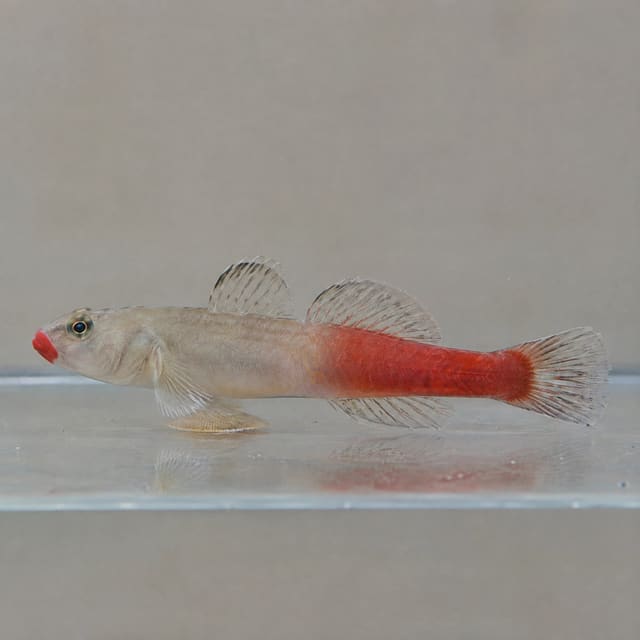
Hillstream loaches and shrimp graze the same algae, so stock fewer grazers than you think and keep the supplement going. If you like this group, compare our Stiphodon stream gobies and the Red Lipstick Goby, a Sicyopus that Seriously Fish notes is more meat-eating than the grazing genera, and read our hillstream loach guide for more fast-water ideas. Check any mix with our tank mates tool.
All sicydiine gobies are amphidromous. FishBase explains that adults spawn in fresh water, the female laying eggs on the underside of stones for the male to fertilise. The eggs hatch and the larvae drift down to the sea, and the young return to the rivers after about a month. The Fishkeeper profile gives a hatching time of 24–48 hours and says the larvae spend several weeks at sea. ANGFA notes that returning young often arrive in a synchronised pulse the day after a full moon, while FishBase says they climb upstream during new moons. On Réunion, FishBase records a commercial fishery for the returning young, known as "bichique".
Aquarium Glaser reports that S. microcephalus spawns under flat stones in the aquarium, but the Fishkeeper profile states that the genus has not been bred in home aquaria because of the complex larval stage. Treat any spawning you see as a sign of good health rather than the start of a breeding project.
| Feature | Male | Female |
|---|---|---|
| Colour | Blue to greenish with an orange-red tail when in breeding colour (ANGFA) | Drab brown |
| Dorsal fin | Longer front spines (Fishkeeper) | Shorter |
| Size | Larger | Smaller |
| Genital papilla | Pointed | Rounded |
OATA describes a healthy fish as having clear, bright eyes, undamaged fins, intact scales and steady breathing, and lists hanging at the surface, sitting on the bottom, colour change, faster or slower gill movement, weight loss and reduced appetite as signs to act on. In stream gobies, the commonest problems are hunger and low oxygen, so check both first.
| If you see | Do this |
|---|---|
| Pinched, hollow belly | Add algae-covered stones, feed wafers twice daily and remove food competitors |
| Rapid gill movement or fish at the surface | Increase flow and aeration, check the temperature and test the water |
| Fish repeatedly climbing the glass | Test ammonia and nitrite and check the flow has not dropped |
| Faded colour in a male | Look for a bully or a recent change; colour usually returns as it settles |
| White spots or fluffy patches | Test the water and get fish-health advice before treating |
It is a Sicyopterus, one of the rock-climbing or cling gobies (subfamily Sicydiinae) that live in fast, clear streams on tropical islands and coasts from the western Indian Ocean to the Pacific. It grazes algae and biofilm from stones and holds on in the current with a sucker formed by its fused pelvic fins.
It is sold as Sicyopterus sp. because these gobies are hard to identify: colours change with mood, age and sex, and species are separated by details such as the shape of the lips. The blue body and orange-red tail match descriptions of breeding males of Sicyopterus lagocephalus, the blue stream or red-tailed goby, but we do not claim a species.
Plan for 10–13 cm. FishBase gives 13.0 cm total length for Sicyopterus lagocephalus, and other Sicyopterus in the trade reach about 10 cm. Fish are sent at 5–6 cm and still have growing to do.
Yes. It needs a mature aquarium with strong, one-directional flow, very high oxygen, smooth stones, bright light for algae and a tight lid. The Fishkeeper profile for a Sicyopterus suggests a tank ideally at least 120 cm (48 inches) long.
Mainly algae and biofilm grazed from rocks, so the tank should grow algae on purpose. Add sinking algae wafers, nori or blanched vegetables, and small frozen foods now and then. New fish need plenty of food without competition.
Usually yes. Seriously Fish lists Caridina and Neocaridina shrimp as suitable companions for stream gobies of the related genus Stiphodon, and this grazer is not a hunter. Make sure the shrimp do not strip all the algae the goby needs.
You may see spawning under flat stones, but the young cannot be raised in a home aquarium. The larvae drift to the sea and live there for weeks before returning to fresh water.
Yes. Stream gobies climb glass and jump, and in the wild their young climb waterfalls more than 10 m high. Cover every gap, including around pipes and cables.
One live fish of 5–6 cm. Sex is not chosen or guaranteed, and young fish and females are much plainer than a coloured-up male.
No reviews for this item yet. Bought one? Honest reviews only, good or bad.
What customers say about ordering from us
Easy website plenty of info on fish your buying great to pick a time slot
TRACEY DURRANT · 7 Oct 2026
Got some lovely fish thank you
Kevin Mackie · 7 Oct 2026
Reviews of our shop, collected by Judge.me, an independent third-party review collector. Newest first.
Moved by UK carriers licensed to handle live animals
Hand-packed with oxygen bags, poly box, heat pack
Email photos the same day; an optional unboxing video helps us review problems faster — claim terms apply
Klarna & PayPal Pay in 3 at checkout