Moderate
Gold Sailfin Molly (Poecilia velifera)
25–28°C · pH 8 · 104L
£10.99
The Saffron Molly is an aquarium-bred, saffron-orange hybrid of the sailfin molly (Poecilia latipinna) and the common molly (Poecilia sphenops). Keep a group of at least three in hard, alkaline water at 21–26°C in a tank at least 90 cm long, and feed plenty of vegetable food. Sold individually as one live fish, medium size.
Poecilia latipinna × Poecilia sphenops
Quantity discounts are pricing offers, not a group-size recommendation. Check the full care guidance and your existing animals before choosing a quantity.
The Saffron Molly is an aquarium-bred, saffron-orange hybrid of the sailfin molly (Poecilia latipinna) and the common molly (Poecilia sphenops). Keep a group of at least three in hard, alkaline water at 21–26°C in a tank at least 90 cm long, and feed plenty of vegetable food. Sold individually as one live fish, medium size.
Read the full care guidance when planning conditions for your aquarium.
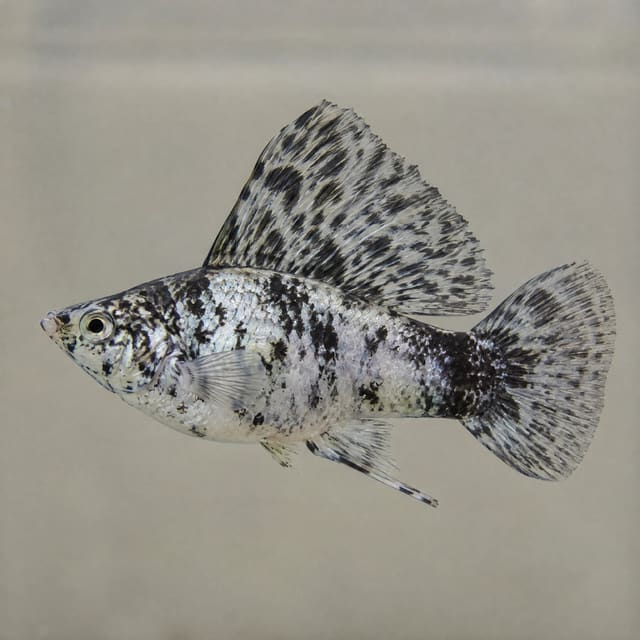
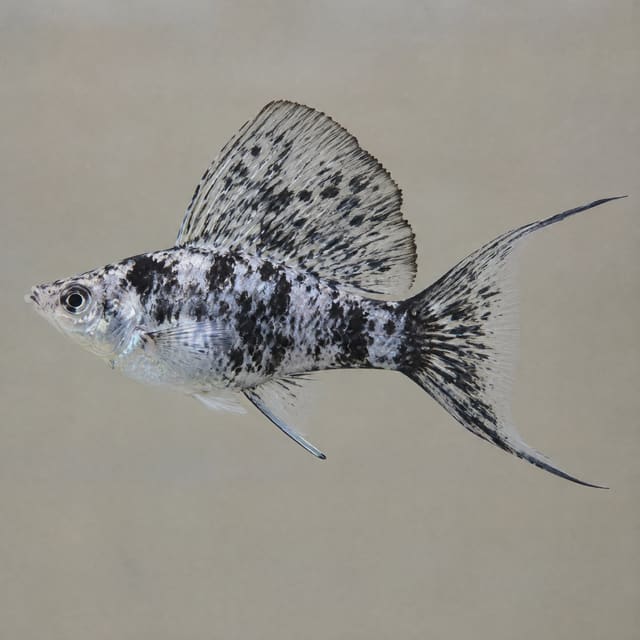
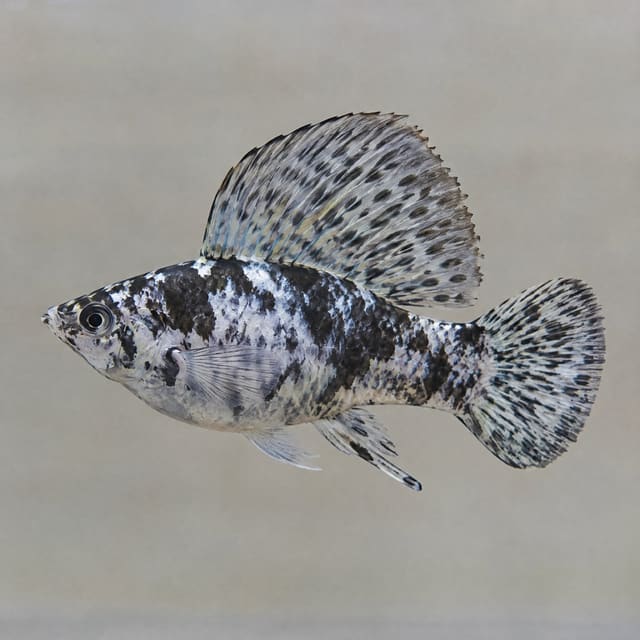
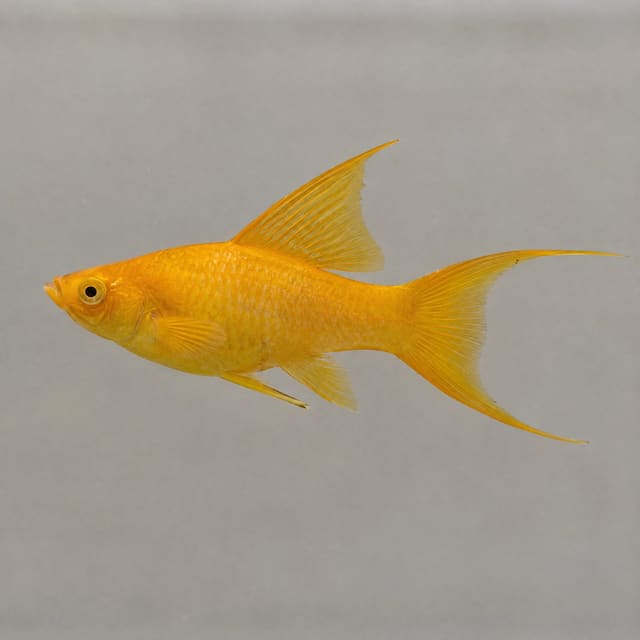
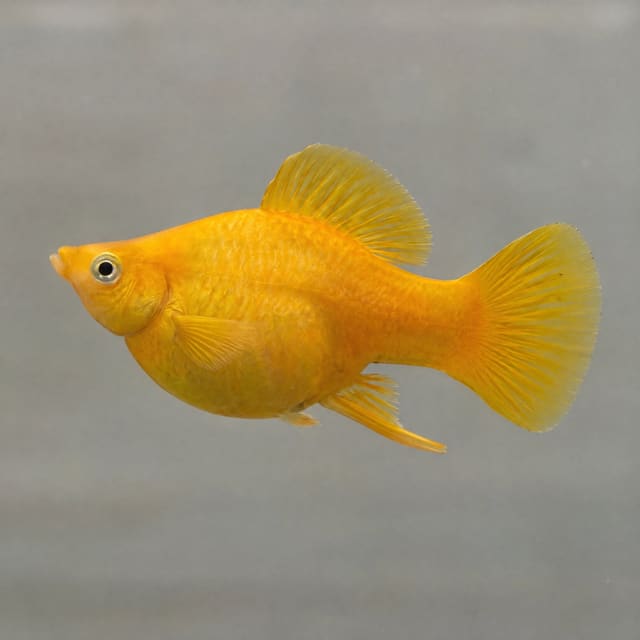
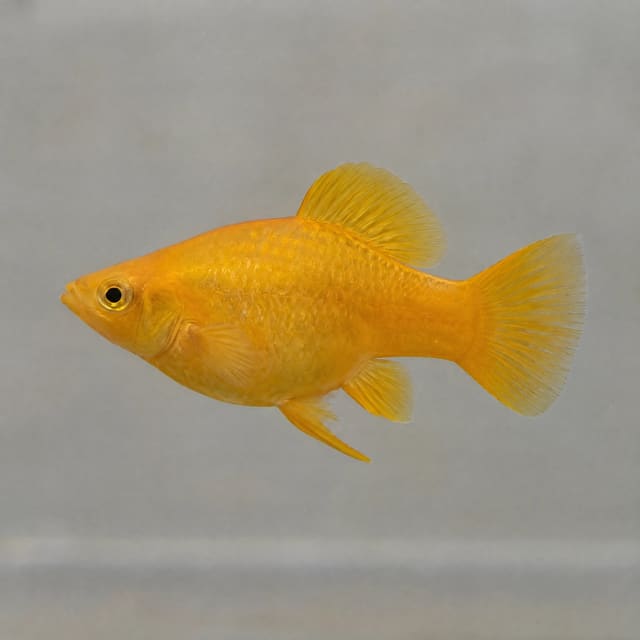
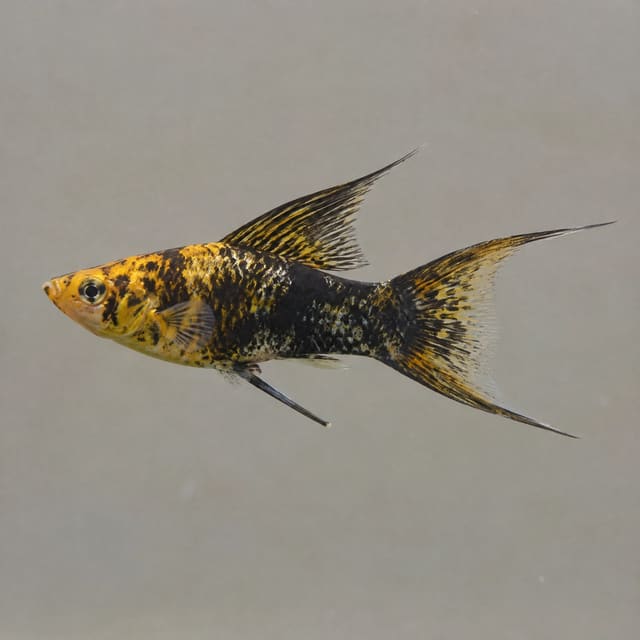
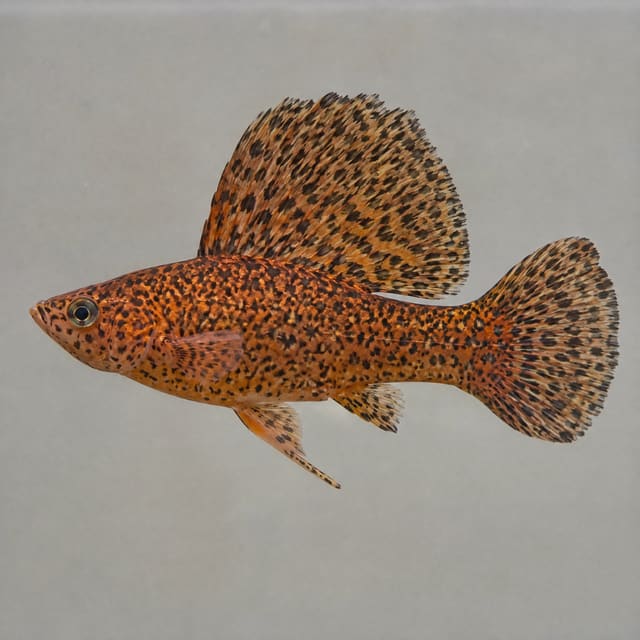
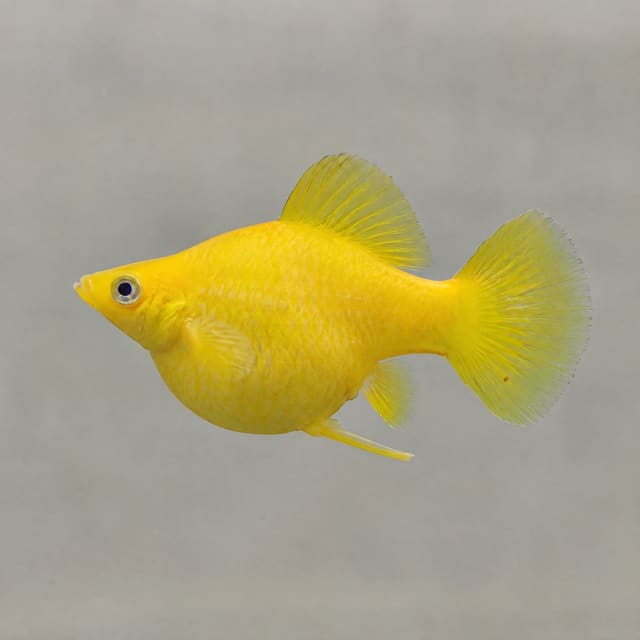
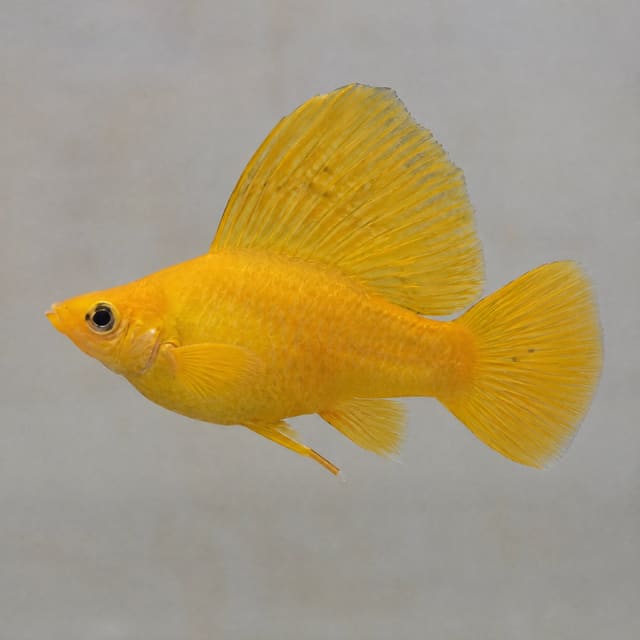
The Saffron Molly is an aquarium-bred molly in a warm saffron orange from nose to tail. In the form pictured, the body is solid orange with a slightly deeper tone on the head, and the dorsal fin, tail and lower fins carry fine orange rays that shade to smoky blue-grey at the edges. It has the normal, streamlined molly shape rather than the shortened, rounded body of a balloon molly.
Molly names in the trade describe colour rather than ancestry, so the parentage is not always certain. This fish is listed as a hybrid of the sailfin molly, Poecilia latipinna, and the common or short-finned molly, Poecilia sphenops. Seriously Fish notes that the two species cross readily and that some aquarium strains come from such crosses. Other sellers use the name “saffron” for orange forms of either parent, so treat the Saffron Molly as a colour form within the molly group (family Poeciliidae), not as a wild species.
The wild parents come from the Americas. Seriously Fish gives the range of P. latipinna as southern North America and Mexico, from the Carolinas to Veracruz, often in brackish coastal water, and that of P. sphenops as Mexico south to Venezuela and Colombia. Both are fish of hard, mineral-rich water, and that explains the Saffron Molly’s most important need: hard, alkaline water.
| Suits | Not suited to |
|---|---|
| A group of at least three, ideally two females for each male | Keeping one molly on its own |
| An aquarium at least 90 cm long holding 80–90 litres or more | Short, small or tall, narrow tanks |
| Hard, alkaline water: pH 7.0–8.0 and at least 15 dGH | Soft or acidic water |
| A hard-water community of livebearers and similar fish | Timid fish, and species that need soft water |
| A daily diet with plenty of vegetable food | A diet of meaty foods only |
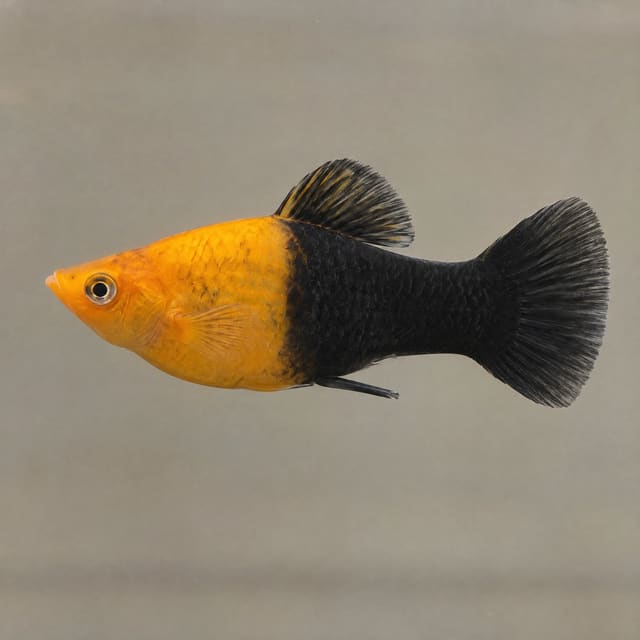
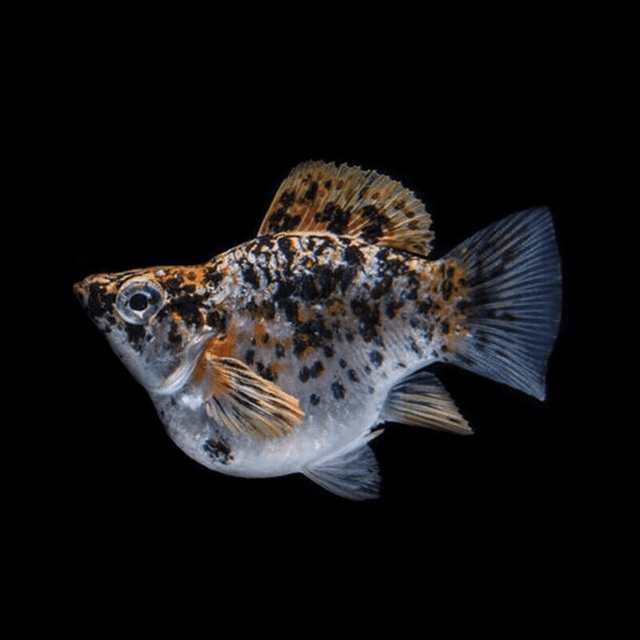
Compare it with our other molly fish and the wider range of livebearers, or browse the molly category. The photographs show the colour form, not the individual fish you will receive.
One purchase quantity supplies one live Saffron Molly, sent at medium size. Medium is a size grade at dispatch, not the adult size, so plan the aquarium for a fully grown fish. Sex is not specified. Young mollies can be hard to sex until the male’s anal fin develops into the rod-shaped gonopodium he uses for mating.
Colour strength, fin height and final size vary from fish to fish. Seriously Fish describes male common mollies as smaller and more colourful than females, while male sailfin mollies grow a tall, sail-like dorsal fin. A hybrid may lean either way, and some individuals develop a taller dorsal than others.
Because you cannot choose the sex on this listing, plan the tank for a mixed group and expect young (see the breeding section below). Read our delivery and live arrival information before you order, and have the aquarium tested and ready.
Adult size depends on which parent a fish takes after. Seriously Fish gives a maximum standard length, the body without the tail, of 80 mm for P. sphenops and 125 mm for P. latipinna. OATA’s UK care sheet says mollies stay below 10 cm, while sailfin mollies reach about 15 cm. Plan for a fish somewhere in that range, and for the larger end if yours develops the tall sailfin dorsal.
For tank size, Seriously Fish recommends 90 × 30 × 30 cm (about 81 litres) for P. sphenops and 76 × 38 × 30 cm (about 87 litres) for P. latipinna, and OATA gives at least 80 litres for sailfin mollies. A tank at least 90 cm long that also holds 80–90 litres or more meets both parents’ needs and gives an active group room to swim.
Our stocking calculator helps you check that the planned community fits the tank. The aquarium must be fully cycled before any fish arrive: a new tank that has only been filled cannot yet process fish waste.
Mollies are active mid-water swimmers that also graze on surfaces. Give them a planted tank with a long, open swimming lane along the front and middle and planting along the back and sides. Seriously Fish notes that soft-leaved plants may be eaten, and that ordinary green algae on rocks and glass is useful extra food, so a little algae growth is no bad thing in a molly tank.
| Area | Purpose |
|---|---|
| Open front and middle lane | Swimming and group feeding |
| Tough-leaved or fast-growing plants at the back | Cover that survives some nibbling |
| Dense fine-leaved or floating plants | Refuge for any young born in the tank |
| Rocks and wood | Surfaces where algae can grow for grazing |
Sand or fine gravel suits as a substrate. Fit a lid, keep the lighting on a regular day and night cycle, and leave space around the decor so you can siphon waste from the substrate during water changes.
Hard water is essential for mollies. Seriously Fish warns that in soft or acidic water mollies weaken and can show shimmying, fungus and clamped fins, and that calcium and magnesium, not salt, are what matter for long-term health. Salt is not necessary for this fish.
The sources give slightly different ranges, so the table shows each one and the overlap we recommend planning for.
| Reading | Seriously Fish, P. latipinna | Seriously Fish, P. sphenops | OATA, guppies and mollies | Plan for |
|---|---|---|---|---|
| Temperature | 21–26°C | 21–28°C | 20–28°C | 21–26°C |
| pH | 7.0–8.5 | 7.0–8.5 | 7.0–8.0 | 7.0–8.0 |
| General hardness | 15–35 dGH | 15–30 dGH | 8–18 dGH | At least 15 dGH |
| Carbonate hardness | Not given | Not given | 5–15 dKH | 5–15 dKH |
| Ammonia and nitrite | Zero mg/l (OATA) | Zero mg/l | ||
| Nitrate | No more than 20 mg/l above tap water (OATA) | Same | ||
Test your tap water before you buy, because hardness varies widely across the UK. The water matcher compares your readings with the molly’s range, and our water chemistry guide explains pH, general hardness and carbonate hardness. If your water is soft, plan how you will raise and hold the hardness before the fish arrive rather than adjusting it with fish already in the tank.
Mollies eat a lot and produce a steady stream of waste, so a well-established filter matters. OATA recommends testing ammonia, nitrite and nitrate at least once a week and changing 25% of the water at least once a week. Keep the filter running all the time and never replace all of the biological media at once.
Add new fish gradually. OATA warns that overstocking, or stocking too quickly, can cause “new tank syndrome”, when waste builds up faster than the filter bacteria can deal with it. Test again a few days after every addition.
Seriously Fish describes wild sailfin mollies as almost entirely herbivorous, grazing algae and plant material, and recommends a large share of vegetable matter for both parent species, such as vegetable flake or blanched spinach, alongside a good-quality staple food. It also notes that without enough greenery, male sailfin mollies may not develop their full dorsal fin. Wild P. sphenops also take small bottom-living invertebrates and detritus, so a varied diet suits a hybrid well.
OATA advises feeding once a day and offering only as much as the fish eat within a few minutes. Food left over decays and adds to the waste the filter has to handle.
A molly that stops feeding is a warning sign. Test the water and check its behaviour before trying richer food or larger meals.
Check the aquarium before the fish arrives: a mature filter, zero ammonia and nitrite, and temperature, pH and hardness inside the planned range. Then follow OATA’s floating-bag method. Switch off the aquarium light, float the sealed bag for 10 minutes so the temperatures even out, then add small amounts of tank water to the bag over up to 20 minutes. Release the fish, letting as little bag water as possible into the tank, and watch it closely for the first week. Our guide on how to acclimatise new fish covers the same steps in more detail.
| Checkpoint | What to do |
|---|---|
| Before arrival | Test the water and confirm the tank has room for the full group |
| Introduction | Lights off, 10 minutes floating, up to 20 minutes mixing |
| First feeding | Offer a small portion the next day and check the new fish eats |
| Every day | Compare swimming, breathing, fins and colour with the day before |
| End of the week | Retest ammonia and nitrite and do the first routine water change |
Keep the first week calm. Avoid moving decor, adding other fish or changing several water values at once, so you can judge clearly how the new molly is settling.
OATA lists the signs of a healthy fish: clear, bright eyes, undamaged fins, intact scales with no ulcers or lumps, normal swimming and steady breathing. Learn what your group looks like when all is well, and use the daily feed as your inspection time.
| If you see | Do this |
|---|---|
| Shimmying, clamped fins or fungus | Test pH and hardness first; Seriously Fish links these signs to soft or acidic water |
| Hanging at the surface or fast breathing | Test ammonia, nitrite and temperature at once |
| White spots, sores or torn fins | Test the water and ask us for advice before treating |
| One fish chased constantly | Check the male-to-female balance, cover and tank size |
| Reduced appetite | Check portion size, leftovers and water readings |
| A female growing steadily rounder over weeks | Probably pregnant: add dense plants for the young. Sudden swelling with lethargy is a health warning |
When you contact us, share the tank size, temperature, pH, hardness, ammonia, nitrite and nitrate readings, the group size and recent changes. That information makes advice faster and more accurate than a photograph alone.
OATA recommends keeping mollies in groups of at least three, with two females for each male. Seriously Fish adds that male mollies can be aggressive towards each other, especially when breeding, and that several females per male spread the males’ attention. Dense planting gives a pursued female somewhere to rest.
All mollies interbreed. Seriously Fish advises keeping one molly species per tank to avoid hybrids; this fish is already a hybrid, so the main effect of mixing it with other mollies is young of mixed colour and fin shape. Keep it with other Saffron Mollies if you want orange young.
Mollies are peaceful, but Seriously Fish stresses that they suit only fish that tolerate the same hard, alkaline water, so they are not a fit for a general soft-water community. It suggests other Poecilia, some rainbowfish, hard-water barbs and tetras, other livebearers and some catfish. It also warns that sailfin-type mollies may pick on much smaller fish as they mature, and OATA advises against keeping sailfin mollies with timid species.
| Usually suits | Avoid |
|---|---|
| Platies such as our Assorted Platies | Soft-water fish that need acidic water |
| Swordtails such as the Green Swordtail | Timid or very slow fish |
| Hard-water rainbowfish, barbs and tetras | Fish small enough to be bullied by an adult molly |
| Catfish that accept hard, alkaline water | Other mollies, if you want to keep the young orange |
Check each candidate’s own water range before you buy. Our tank mates tool helps you screen a planned community, and the shared temperature, pH and hardness must suit every species long term, not just for a short spell.
Mollies are livebearers: the female carries the developing young and gives birth to free-swimming fry. In a mixed group, breeding is close to certain. The sources disagree on timing. Seriously Fish gives about eight weeks of pregnancy for P. sphenops, with broods of up to 120 fry, and about two months for P. latipinna, with up to 50 young. OATA gives 24–30 days and 20–80 fry for mollies. Expect broods every one to two months rather than on a fixed date.
Adults eat their young. Seriously Fish suggests either a densely planted tank where some fry survive, or moving the pregnant female to a separate tank to give birth and returning her afterwards; it does not recommend breeding nets. The fry are relatively large and take brine shrimp nauplii, microworms or powdered flake from birth.
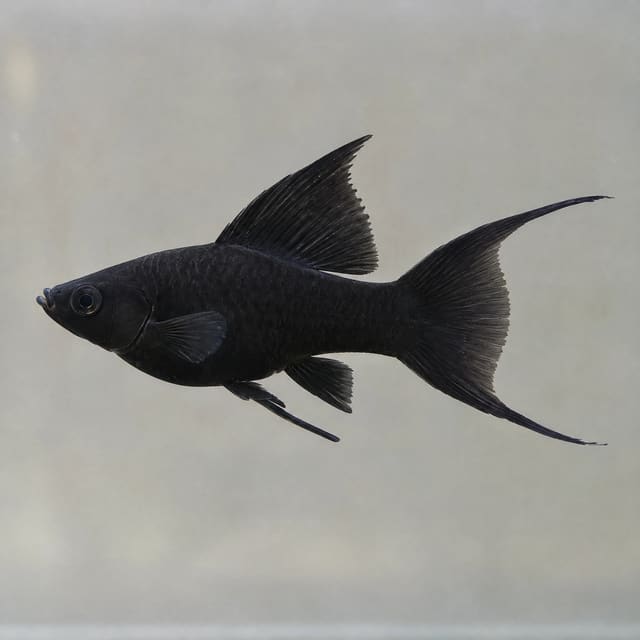
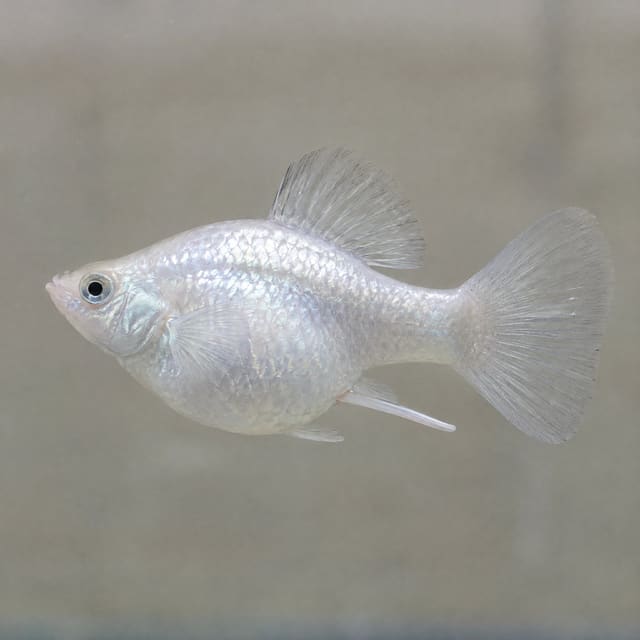
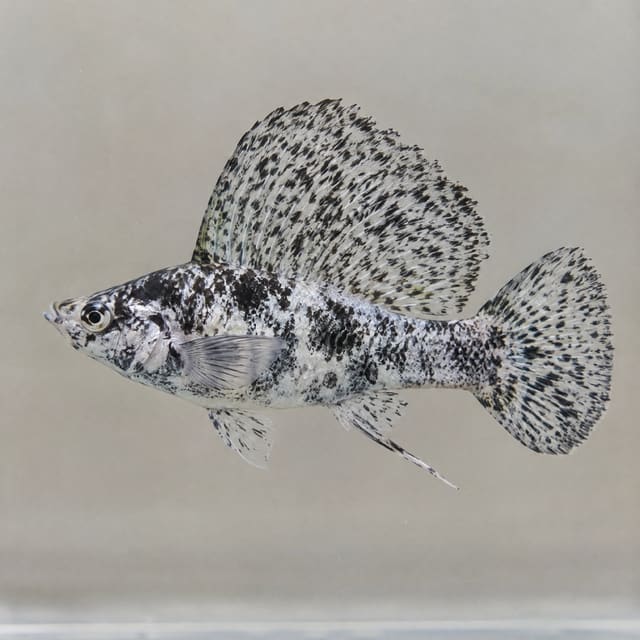
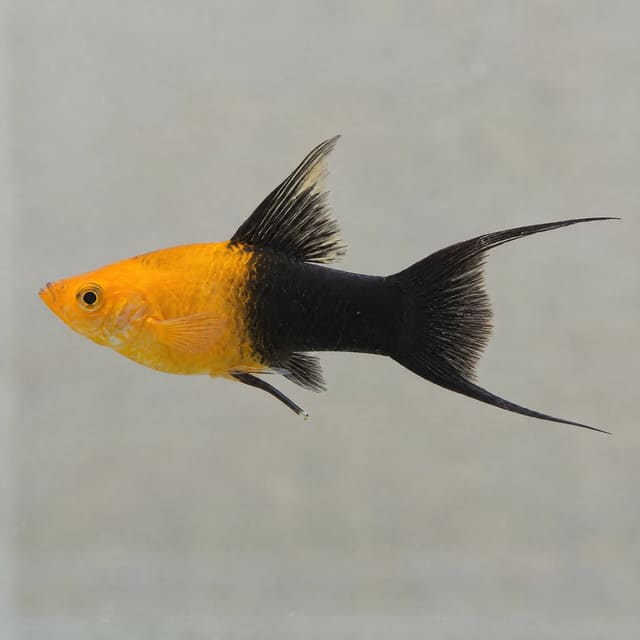
See the parent types in the Platinum Sailfin Molly and the classic Black Molly, or compare the colour with our Gold Molly. Browse the sailfin molly (Poecilia latipinna) range and the common molly (Poecilia sphenops) range, and read our molly care guide and molly fish UK guide before you plan the group. Never release mollies, plants or tank water into the wild; OATA reminds keepers that it is illegal and harms native wildlife.
No. It is an aquarium-bred orange molly, listed as a hybrid of the sailfin molly (Poecilia latipinna) and the common molly (Poecilia sphenops). The two species cross readily, and other sellers use the name for orange forms of either parent.
One live Saffron Molly, sent at medium size, sex not specified. OATA recommends a group of at least three, ideally two females for each male.
Between its parents: Seriously Fish gives 8 cm standard length for P. sphenops and 12.5 cm for P. latipinna. OATA says mollies stay below 10 cm and sailfin mollies reach about 15 cm.
A tank at least 90 cm long holding about 80–90 litres or more. Seriously Fish gives 90 × 30 × 30 cm for P. sphenops and 76 × 38 × 30 cm for P. latipinna; OATA gives at least 80 litres for sailfin mollies.
Hard, alkaline water: plan for 21–26°C, pH 7.0–8.0 and at least 15 dGH, with zero ammonia and nitrite. Salt is not needed; Seriously Fish says calcium and magnesium are what matter.
Plenty of vegetable food, such as vegetable flake or blanched spinach, alongside a quality staple. Feed once a day, only what the group finishes within a few minutes.
Peaceful fish that also want hard, alkaline water: other livebearers such as platies and swordtails, hard-water rainbowfish, barbs and tetras, and some catfish. Avoid soft-water species and timid fish.
Very likely, if you keep both sexes. Seriously Fish gives about eight weeks of pregnancy and OATA 24–30 days; the sources disagree. Adults eat their young, so give dense plants or move the female to a separate tank to give birth.
No reviews for this item yet. Bought one? Honest reviews only, good or bad.
What customers say about ordering from us
Easy website plenty of info on fish your buying great to pick a time slot
TRACEY DURRANT · 7 Oct 2026
Got some lovely fish thank you
Kevin Mackie · 7 Oct 2026
Reviews of our shop, collected by Judge.me, an independent third-party review collector. Newest first.
Moved by UK carriers licensed to handle live animals
Hand-packed with oxygen bags, poly box, heat pack
Email photos the same day; an optional unboxing video helps us review problems faster — claim terms apply
Klarna & PayPal Pay in 3 at checkout